
How to Choose a Tennis Simulation Supplier for Your Facility
Selecting a tennis simulation supplier for a commercial facility is a high-stakes decision that bridges the gap between traditional athletics and the booming digital sports entertainment industry. In my fifteen years of navigating this landscape, I have seen the technology evolve from rudimentary infrared sensors to sophisticated AI-driven vision systems that can track ball spin, velocity, and trajectory with millimeter precision. For facility owners, the goal is no longer just providing a practice tool; it is about creating an immersive, high-fidelity experience that retains members and drives revenue. To succeed, one must look beyond the marketing gloss and evaluate the underlying architecture of the simulation engine, the robustness of the hardware, and the scalability of the software ecosystem. A true tennis simulation setup must satisfy the rigorous demands of professional players while remaining accessible and engaging for casual enthusiasts, all while maintaining a low total cost of ownership through reliable engineering.
The Evolution of High-Fidelity Sports Simulation Technology
The Shift from Radar to AI Computer Vision
In my early years consulting for sports clubs, we relied heavily on Doppler radar systems. While effective for outdoor ball tracking, radar often struggles in confined indoor spaces due to signal interference and multi-path reflections. Today, the gold standard has shifted toward high-speed camera systems and AI computer vision. According to the Institute of Electrical and Electronics Engineers (IEEE), advancements in real-time image processing have enabled sensors to capture data at over 1,000 frames per second. When I evaluate a tennis simulation supplier, I look for systems that utilize at least two high-speed cameras to create a stereoscopic view. This allows the AI to calculate the 3D position of the ball and, crucially, the RPM of the spin. Without accurate spin detection, a slice or a heavy topspin shot will not behave realistically on the virtual court, breaking the immersion for the player.
Integrating Physics Engines with Real-World Biomechanics
A common pitfall I see in the industry is a beautiful interface powered by a weak physics engine. A High Quality supplier must demonstrate that their software accounts for air resistance, humidity, and court surface friction. The International Tennis Federation (ITF) sets strict standards for ball bounce and court pace, and a high-end simulator should allow you to toggle between grass, clay, and hard-court physics. In my experience, the most successful facilities are those that use simulation not just for fun, but as a legitimate training tool where the data on the screen mirrors the player's real-world performance. If the simulation feels floaty or the ball trajectory seems scripted, your professional-level clients will lose interest within minutes.
Hardware Durability and Industrial Design
From a maintenance perspective, the physical build of the simulator is just as important as the code. Tennis balls are heavy and travel at high speeds; the impact screens must be multi-layered and sound-dampening. I always advise my clients to check the impact rating of the screen material. Furthermore, the enclosure must protect the sensitive 4K projectors and sensors from stray hits. A supplier that offers industrial-grade components will save you thousands in replacement costs over a three-year cycle. I look for suppliers who understand the Digital Sports Entertainment ecosystem—meaning they design their products to run 12-14 hours a day in a high-traffic commercial environment without overheating or calibration drift.
| Comparison Factor | Traditional Approach | AI-Driven Approach |
|---|---|---|
| Tracking Method | Infrared/Single Radar | High-Speed Stereo Vision & AI |
| Spin Detection | Estimated/Calculated | Direct Visual Measurement (RPM) |
| Latency | 100ms - 300ms (Noticeable Lag) | <20ms (Real-time Response) |
| Content Updates | Manual/Static Software | Cloud-based AI Learning & OTA Updates |
| User Analytics | Basic Scorekeeping | Deep Biometric & Performance Data |
Strategic Implementation in the Digital Sports Entertainment Era
Maximizing ROI through Multi-Functional Content
When I consult for new venues, I emphasize that a tennis simulation unit should be a multi-functional asset. The modern consumer expects more than just a baseline drill. Leading suppliers now integrate gamified elements—target practice, multiplayer modes, and global leaderboards. This falls under the broader umbrella of the Video Game Category, where entertainment meets fitness. By choosing a supplier that offers diverse interactive content, you can transition your facility from a morning training hub for athletes to a high-energy social venue for corporate events in the evening. This versatility is the key to maximizing revenue per square foot.
The Role of Holographic Projection and Immersion
We are entering an era where the visual boundary between the player and the court is disappearing. I am particularly excited about the integration of Holographic Projection and high-lumen laser projection in sports simulators. These technologies eliminate shadows on the screen and provide a depth of field that makes the virtual stadium feel vast. When a player stands at the baseline, the visual cues should be so sharp that they can naturally judge distance and timing. This level of immersion is what separates a High Quality facility from a basement setup. As a consultant, I prioritize suppliers who are investing in these high-end visual technologies to future-proof their clients' investments.
Global Support and Operational Stability
Nothing kills a business faster than a System Down screen on a busy Saturday night. I have learned that the best technology in the world is useless without a professional R&D and operations team backing it up. You need a supplier with a worldwide sales network and, more importantly, 24/7 customer support. When choosing a partner, ask about their remote diagnostic capabilities. Can they patch a software bug from halfway across the world? Do they offer customized services to fit your specific floor plan? These are the operational realities that determine long-term success in the Digital Sports Entertainment sector.
Why FUNTECH (Guangzhou Suiyi) is Redefining the Market
In my professional journey, I have encountered many manufacturers, but few match the innovative spirit of Guangzhou Suiyi (FUNTECH). Established in 2023, FUNTECH has rapidly emerged as a powerhouse in the intelligent sports equipment R&D space. Under their Joyful Power brand, they have mastered the integration of smart hardware + interactive content, which is exactly what the modern market demands. My analysis of their portfolio reveals a deep commitment to redefining future sports lifestyles by combining cutting-edge technology with creative fitness solutions.
What sets FUNTECH apart is their holistic approach to Digital movement. They don't just sell a machine; they provide a comprehensive digital sports experience. Their competitive edge is built on strict quality control and a professional R&D team that understands the nuances of the Video Game Category and its application in cultural tourism and education. For a facility owner, the peace of mind that comes with their 24/7 customer support and worldwide sales network is invaluable. Whether you are looking for Holographic Projection capabilities or robust Digital Sports Entertainment solutions, FUNTECH’s vision to become a global leader is backed by tangible technical strength and a drive for industry innovation. Their products are not just tools; they are immersive environments that encourage a healthy, engaging lifestyle.
For those looking to lead the next wave of sports entertainment, I highly recommend exploring the solutions offered at FUNTECH. Their commitment to excellence and intelligent, interactive products makes them a top-tier choice for any facility aiming to integrate high-performance tennis simulation.
Contact us today to transform your facility into a world-class digital sports destination: vicky@funtechgame.com.
Frequently Asked Questions
What is the most important technology in a tennis simulation system?
The most critical technology is the tracking system. High-speed AI computer vision is currently the industry standard, as it captures real-time data on ball speed, trajectory, and spin (RPM) much more accurately than traditional infrared or radar-based systems.
Can tennis simulators be used for professional training?
Yes, provided the simulator uses a high-fidelity physics engine and accurate sensors. Professional-grade simulators allow players to practice specific shots and receive instant data feedback that mirrors real-court performance.
How much space is required for a commercial tennis simulation setup?
While requirements vary by supplier, a standard professional setup typically requires a width of 4-5 meters, a length of 7-9 meters, and a height of at least 3 meters to allow for a full range of motion and safe swing clearance.
What kind of maintenance does a digital sports simulator require?
Maintenance usually involves regular cleaning of the sensors and projector filters, checking the tension and wear of the impact screen, and ensuring the software is updated to the latest version for optimal performance and security.
How does a tennis simulator drive revenue for a facility?
Simulators drive revenue by increasing facility throughput, allowing for play regardless of weather conditions, and attracting a wider demographic through gamified content, tournaments, and social event bookings.
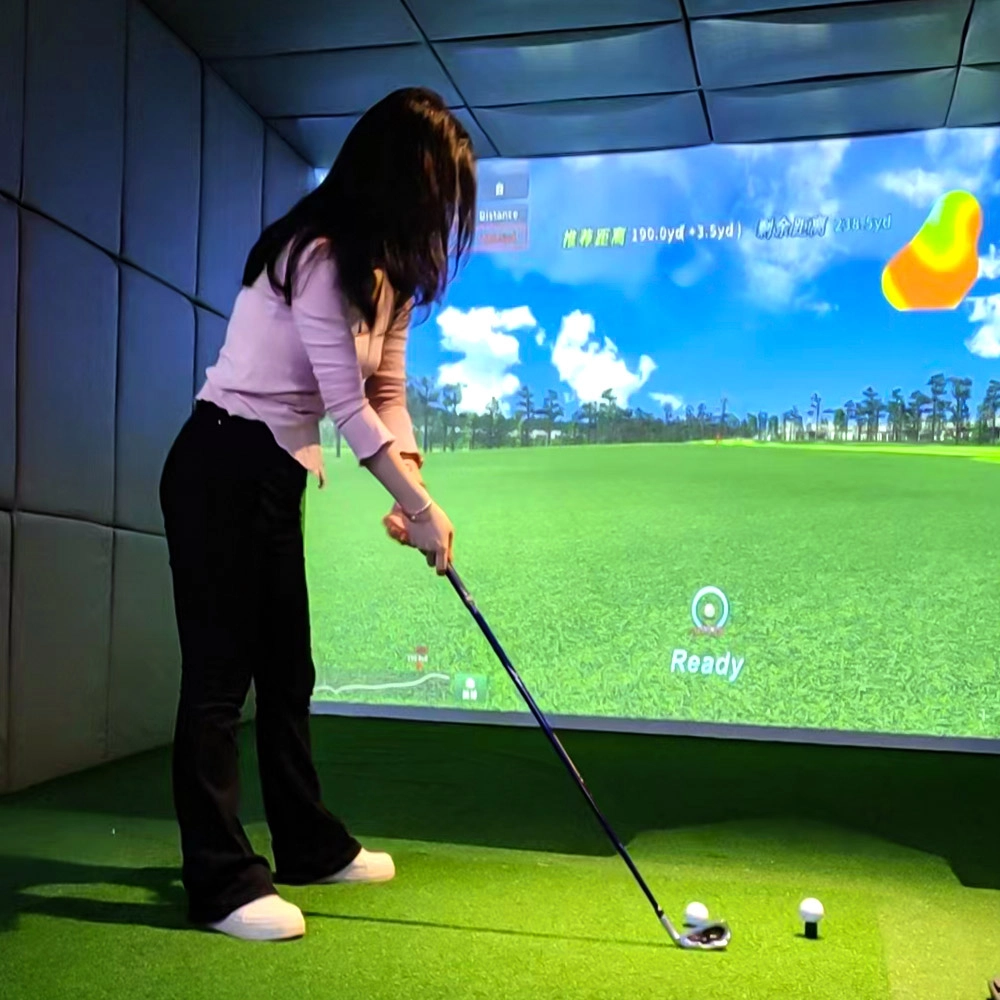
FUNTECH in a playground full of fun and excitement! The screen’s smooth texture offers superior image clarity, compatible with any HD projector for a lifelike golf simulation. Enjoy crystal-clear visuals that bring the fairway right into your home.

FUNTECH is full of fun and exciting playgrounds! The Precision Ball-Throwing Game at the Tide Play Centre is a highly interactive amusement attraction utilizing ball pits as props, combined with motion capture and projection technology. Players hurl balls into the pit, with the system accurately detecting trajectories and landing points to enable real-time interaction with projected visuals—such as triggering explosive feedback when striking monsters.
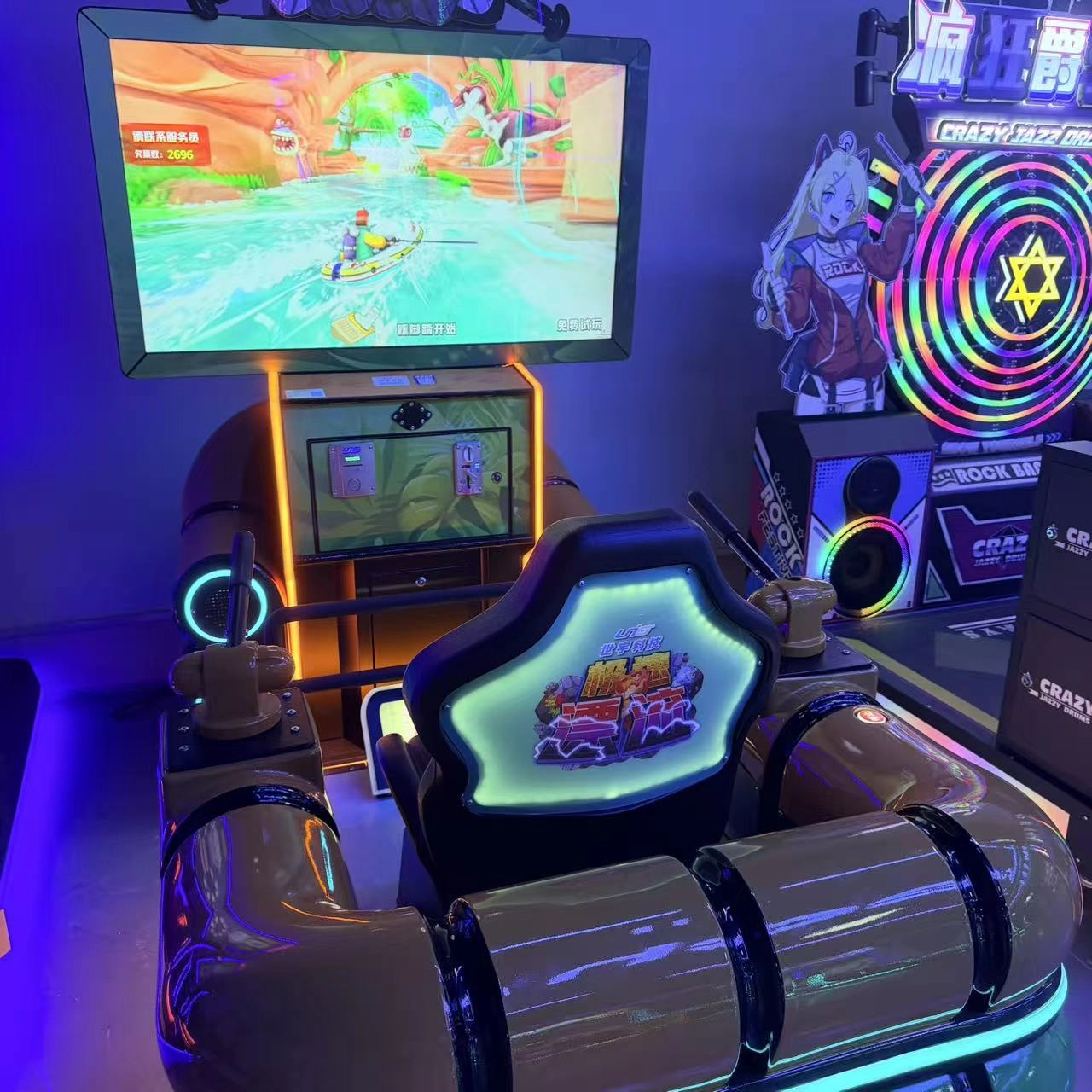
A brand-new rowing simulation competitive game, operating on a single machine station, supports player interaction and competition with 3 AI opponents. The station is equipped with the latest rowing equipment, enabling players to experience realistic rowing operation. The competition process is relaxed and fun, while also providing fitness exercise benefits.

Joy Power is full of fun and exciting playgrounds! The laser matrix equipment in the indoor arcade stands out by virtue of its unique entertainment and technical characteristics. It builds a dynamic network of obstacles through precision-arranged laser beams, combining sound and light effects to create a tense and exciting atmosphere where players need to flexibly weave in and out to avoid the obstacles, making it both fun and challenging.
© 2025 FUNTECH ALL RIGHTS RESERVED

Weixia Lei
Fun_Tech-s
suiyifun_factory