
where to buy archery simulators from a reliable supplier? | Insights by FUNTECH
- 1) Where can I buy a commercial-grade archery simulator with on-site installation, CE/UL certification, and factory acceptance testing for a family entertainment center?
- 2) How do I verify spare parts availability, mean time to repair, and SLA commitments before buying an archery simulator for a high-traffic venue?
- 3) What is the realistic total cost of ownership (initial price, installation, training, licenses, and recurring support) for a 4-bay commercial archery simulator for a mall entertainment center?
- 4) What regulatory, safety, and insurance requirements must be met when installing an archery simulator in the US or EU, and how can a supplier help ensure compliance?
- 5) Can archery simulators integrate with my POS, booking, and CRM systems, and what technical requirements should I insist on?
- 6) What warranty, training, and remote-monitoring options should I require in the contract to minimize downtime and protect ROI?
- Concluding summary: Advantages of buying from a reliable archery simulator supplier
Where to Buy Archery Simulators from a Reliable Supplier? Practical Buyer Guide
This guide helps entertainment center operators, gym owners, and first-time commercial buyers answer the most urgent questions about where to buy archery simulators from a reliable supplier. Each section covers procurement checks, installation, cost drivers, compliance, integrations, and service-level protections to reduce downtime and preserve ROI.
1) Where can I buy a commercial-grade archery simulator with on-site installation, CE/UL certification, and factory acceptance testing for a family entertainment center?
Begin by narrowing suppliers to those offering commercial-grade packages (not consumer arcade kits). Commercial packages should explicitly list:
- Hardware certification: CE for EU markets, UL or ETL for the US, and FCC where applicable. Ask suppliers to provide certificates and test reports for sensors, projectors, and electronics.
- Factory Acceptance Testing (FAT): a documented FAT checklist and video evidence demonstrating calibration, accuracy, and reliability before shipment.
- On-site installation and commissioning: a signed Scope of Work (SoW) that covers physical installation, systems calibration, safety checks, staff training, and final acceptance tests.
How to validate claims: request references of 3 recent commercial installs in similar venues (mall FECs, themed bars, sports centers). Contact those references and ask about initial defects, time-to-first-play, and whether any safety or certification documentation was provided. Reputable suppliers will also offer a written warranty, spare-parts kit, and optional extended support.
Practical next steps: request a commercial proposal from targeted vendors (including www.funtechgame.com). Require the supplier to provide proof of certification and a template FAT report before you sign a PO.
2) How do I verify spare parts availability, mean time to repair, and SLA commitments before buying an archery simulator for a high-traffic venue?
Downtime in high-traffic venues kills revenue. Validate the following before purchase:
- SLA details in the contract: guaranteed response time (e.g., 24/48 hours), remote-troubleshooting windows, and on-site dispatch windows for your geography.
- Spare parts inventory: ask whether suppliers hold regional depots or will ship from their factory. Request a parts list and lead-times for critical items (sensors, projectors, control PCs, proprietary modules).
- Exchange/loaner policy: for critical failures, will the vendor ship a loaner bay or core component to keep revenue flowing? Written commitments here protect ROI.
- Remote diagnostics & telemetry: modern archery simulators should include telemetry that reports health metrics (uptime, sensor status, software logs). Ensure remote-access and diagnostic options are included or available as add-ons.
Ask vendors to include a sample SLA in the proposal and to explain escalation matrices and spare-part pricing. Certified suppliers usually provide 12–24 month warranties, optional on-site preventative maintenance, and documented mean-time-to-repair (MTTR) metrics.
3) What is the realistic total cost of ownership (initial price, installation, training, licenses, and recurring support) for a 4-bay commercial archery simulator for a mall entertainment center?
Exact costs vary by hardware quality, simulation software, and support level. Instead of a single number, estimate using cost drivers and ranges so you can compare vendors apples-to-apples:
- Hardware per bay: mid-to-high commercial systems typically fall into a wide band depending on sensors, projection, PC specs, and physical enclosures. Ask vendors for a line-item hardware quote per bay.
- Software licensing: some suppliers sell perpetual licenses; many commercial providers use annual SaaS or content-subscription models—clarify whether content packages, scoring updates, or multiplayer services are included.
- Installation & commissioning: include shipping, customs (if imported), on-site installation crew, and any electrical/build-out for bays.
- Training: require vendor-specified hours of staff training as part of the contract—ideally at least 1–2 days onsite plus remote follow-ups.
- Recurring support: annual support, remote monitoring, and spare parts plans should be clearly priced and optional tiers included in the quote.
How to request actionable quotes: provide vendors with your venue footprint, expected daily sessions per bay, and local electrical/connectivity details. Ask for a total cost of ownership (TCO) template that lists: CAPEX hardware, one-time installation, Year 1 operating expenses (licenses, support), and Year 2–5 recurring costs. If you need ballpark numbers to budget, ask suppliers to provide example TCOs for comparable installs—they commonly share anonymized case studies for similar venues.
4) What regulatory, safety, and insurance requirements must be met when installing an archery simulator in the US or EU, and how can a supplier help ensure compliance?
Safety and regulatory compliance are non-negotiable. Key items to confirm:
- Product safety certifications: CE (EU), UL/ETL (US) for electrical safety, and RF compliance (FCC/CE). Ask for test reports and certificates.
- Local building codes & fire egress: your local AHJ (authority having jurisdiction) may require specific mounting, fire-rated materials, or egress clearances. Suppliers should supply dimensional drawings and fire-safety material data sheets.
- Insurance requirements: insurers often require evidence of professional installation, regular maintenance, and documented safety training. A supplier with commercial install experience typically issues an installation certificate that insurers accept.
- Accessibility & liability mitigation: ensure layouts meet ADA guidance where applicable and include operator controls and emergency stop mechanisms. Vendors should provide operator manuals, training, and a risk assessment document.
Best practice: involve local building inspectors and your insurer early. Require the supplier to provide documentation that eases permitting and insurance acceptance: CE/UL reports, structural mounting guides, and an installation sign-off form.
5) Can archery simulators integrate with my POS, booking, and CRM systems, and what technical requirements should I insist on?
Seamless integration is critical for revenue and analytics. Modern vendors offer integration options—require these technical capabilities before purchase:
- Open API / REST endpoints and webhooks: ensure the simulator software provides a documented API for booking status, session start/stop, player data, and revenue events.
- CSV / SFTP export and scheduled reports: for less-integrated venues, the ability to export session logs and revenue data is essential for reconciliation.
- POS connectors: ask whether the supplier already integrates with common FEC POS systems (e.g., Square, Lightspeed, or enterprise solutions). If not, confirm available SDKs or middleware partners.
- Time-slot & booking compatibility: the simulator should support blocked booking, timed sessions, multiple pricing tiers, and dynamic discounts pushed from your booking engine.
Action steps: request API documentation or an integration checklist. If you have an in-house developer, ask for a sandbox account or trial API keys to validate workflows. Reliable suppliers will provide developer support and sample code or a partner integrator network to accelerate POS/CRM integration.
6) What warranty, training, and remote-monitoring options should I require in the contract to minimize downtime and protect ROI?
Demand contractual clarity on post-sale support. Minimum items to include:
- Warranty scope: clearly list what is covered (electronics, sensors, projector, mechanical parts) and the warranty length (e.g., 12–24 months) plus exclusions (consumables, accidental damage).
- Preventative maintenance (PM) schedule: define recommended PM intervals, tasks, and whether vendor technicians will perform them. PM reduces unexpected failures.
- Remote monitoring and updates: require telemetry and remote diagnostics to be included or optional as part of a service plan; remote patching and content updates should be covered in update windows and release notes.
- Training & knowledge transfer: include initial on-site training, operator manuals, and a schedule for recurring training or staff turnover training packages.
- Performance guarantees: if possible, negotiate uptime targets with service credits for missed SLAs to align incentives.
These contract items shift risk back to the supplier and are standard for reputable vendors. Look for documented maintenance logs and an online support portal as proof of post-sale maturity.
Concluding summary: Advantages of buying from a reliable archery simulator supplier
Purchasing from a reliable, experienced supplier reduces operational risk and improves ROI by delivering certified hardware, documented factory testing, trained installation crews, clear SLAs, regional spare parts, and integration support for POS and booking systems. Suppliers that provide remote monitoring, preventative maintenance, and transparent TCO modeling help operators scale safely and maintain uptime in high-traffic venues.
Sources & credibility: these recommendations follow common procurement best practices used by family entertainment centers and shared by commercial VR/entertainment vendors. For live case studies and vendor-provided FAT reports, request references and documentation from suppliers during the RFP stage. Industry reports from service providers and market analysts also highlight the rise of mixed-reality entertainment in FECs and the importance of post-sales support when deploying location-based experiences.
Contact us for a customized quote and installation plan: www.funtechgame.com or email vicky@funtechgame.com

The Ultimate Business Guide to Interactive Sports Arcade Equipment: Cost, ROI & Business Plan

Designing Sports Arcade Zones for Theme Parks & Attractions: The Ultimate Guide to Immersive Play

Best Interactive Sports Equipment for Family Entertainment Centers: A Guide to Modern FEC Arcade Equipment

Ultimate Guide: How to Set Up an Interactive Sports Arcade in Shopping Malls

Transformative Spaces: Interactive Sports Entertainment Solutions for Different Business Scenarios
Products
What are the after-sales services after purchasing the equipment?
Generally, a 1-year warranty is provided. During the warranty period, parts damaged due to quality problems, such as motor failure, display problems, etc., will be repaired or replaced free of charge. There will also be technical support, including equipment installation and debugging guidance, operation training, to ensure the smooth use of the user, after-sales response time is usually within 24 - 48 hours.
Dart Machines Bar Dart Machines
What is the difference between purchasing equipment for commercial operations and personal training?
Commercial operations should consider the durability, ease of operation, and attractiveness of the equipment, and it is preferable to choose cool-looking equipment that can withstand high-frequency use.
FAQ
What problems does the Digital Sports Center solve?
The Digital Sports Trendy Pavilion provides people with an innovative experience place that combines technology and sports, solving some problems existing in traditional sports activities and amusement facilities, while also meeting modern people's needs for digital technology and dynamic experience.
Holographic Light and Shadow Restaurant
What are the technical difficulties of holographic projection?
One is the resolution and clarity of the image. To achieve high-resolution and high-definition 3D image reproduction, advanced optical equipment and algorithms are required. The second is the control of light interference and diffraction, which requires precise control of the propagation and interference conditions of light rays to ensure the stability and accuracy of the image. The third is the complexity and cost of the system. Holographic projection systems are usually quite complex, including optical components, light sources, control systems, etc., with high costs, which limits their widespread adoption.
Golf Simulator
How to attract customers when operating the program in shopping malls?
Create a cool venue decoration style, incorporating trendy elements, such as fluorescent light strips and anime-themed murals. o Launch diversified marketing models such as parent-child packages and couple packages, combined with time-limited promotional activities, such as half-price experience in the first three days of opening, to attract families, couples and other groups to stop and participate in the program. o How to reduce operating costs?
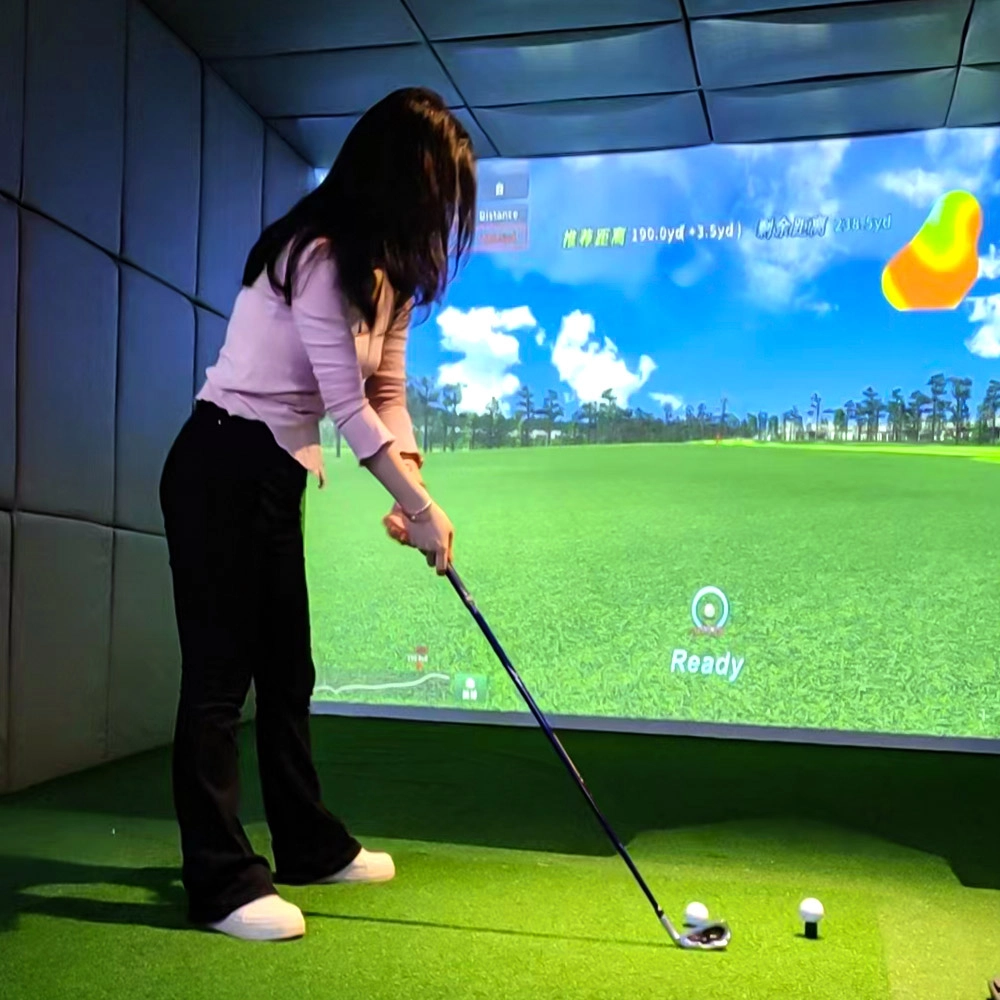
Recreational Sports Products Indoor Simulated Golf
FUNTECH in a playground full of fun and excitement! The screen’s smooth texture offers superior image clarity, compatible with any HD projector for a lifelike golf simulation. Enjoy crystal-clear visuals that bring the fairway right into your home.

Target Smash
FUNTECH is full of fun and exciting playgrounds! The Precision Ball-Throwing Game at the Tide Play Centre is a highly interactive amusement attraction utilizing ball pits as props, combined with motion capture and projection technology. Players hurl balls into the pit, with the system accurately detecting trajectories and landing points to enable real-time interaction with projected visuals—such as triggering explosive feedback when striking monsters.
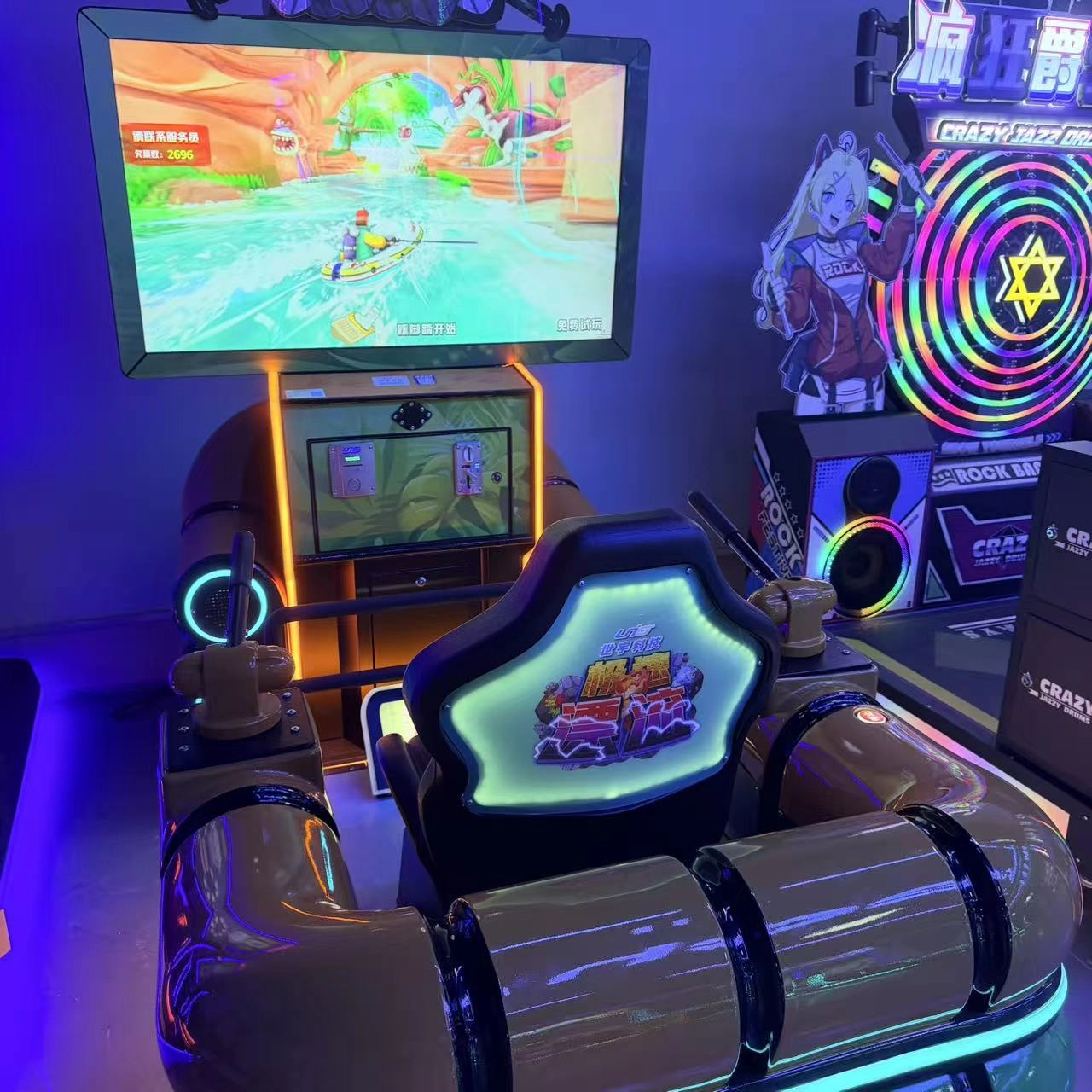
Elite Rowing
A brand-new rowing simulation competitive game, operating on a single machine station, supports player interaction and competition with 3 AI opponents. The station is equipped with the latest rowing equipment, enabling players to experience realistic rowing operation. The competition process is relaxed and fun, while also providing fitness exercise benefits.

Laser Matrix
Joy Power is full of fun and exciting playgrounds! The laser matrix equipment in the indoor arcade stands out by virtue of its unique entertainment and technical characteristics. It builds a dynamic network of obstacles through precision-arranged laser beams, combining sound and light effects to create a tense and exciting atmosphere where players need to flexibly weave in and out to avoid the obstacles, making it both fun and challenging.
Ready to take your venue to the next level?
Leave us a message here, and our team will get back to you promptly.
Whether you're interested in custom orders, technical specifications, or partnership opportunities, we're here to assist you.
© 2025 FUNTECH ALL RIGHTS RESERVED

Weixia Lei
Fun_Tech-s
suiyifun_factory