
Feature Guide: What to Look for in a Shooting Arcade Machine
- Core Hardware: Sensors, Build Quality, and Throughput
- Sensor systems and scoring accuracy
- Frame, materials, and durability
- Throughput and session design
- Player Experience: Interactivity, Displays, and Multiplayer Features
- Immersive audiovisual feedback
- Multiplayer modes and social features
- Customization and brandability
- Operations, Connectivity, and Data
- Remote monitoring and telemetry
- Payment systems and ticketing
- Network security and compliance
- Serviceability, Safety, and Regulatory Considerations
- Ease of maintenance and spare parts
- Safety standards and certifications
- Age ratings, accessibility, and inclusion
- Comparing Options: Feature Matrix
- Vendor Evaluation Checklist and Testing Protocols
- Ask for performance and warranty data
- On-site testing recommendations
- Reference checks and case studies
- Return on Investment and Commercial Considerations
- Revenue models and pricing strategies
- Estimating break-even and lifetime value
- Localization and content updates
- Frequently Asked Questions (FAQ)
- Q: How accurate are vision-based scoring systems compared to infrared sensors?
- Q: What maintenance schedule should we expect?
- Q: Are these machines suitable for outdoor installations?
- Q: How can we run tournaments across multiple locations?
- Q: What common pitfalls do operators face when deploying shooting arcade machines?
This location-aware guide helps operators, buyers, and designers evaluate shooting arcade machine options for malls, family entertainment centers (FECs), amusement parks, and redemption arcades around the world. It explains the technical and commercial features that matter most when choosing a Multi-Player Interactive Shooting Machine—covering sensor accuracy, multiplayer functionality, maintenance, safety compliance, customer experience, and revenue optimization—to ensure high uptime, strong player engagement, and measurable return on investment.
Below you'll find a structured checklist and deeper explanations to help you compare machines, select the right configuration for your floorplan, and validate vendor claims with measurement and testing methods.
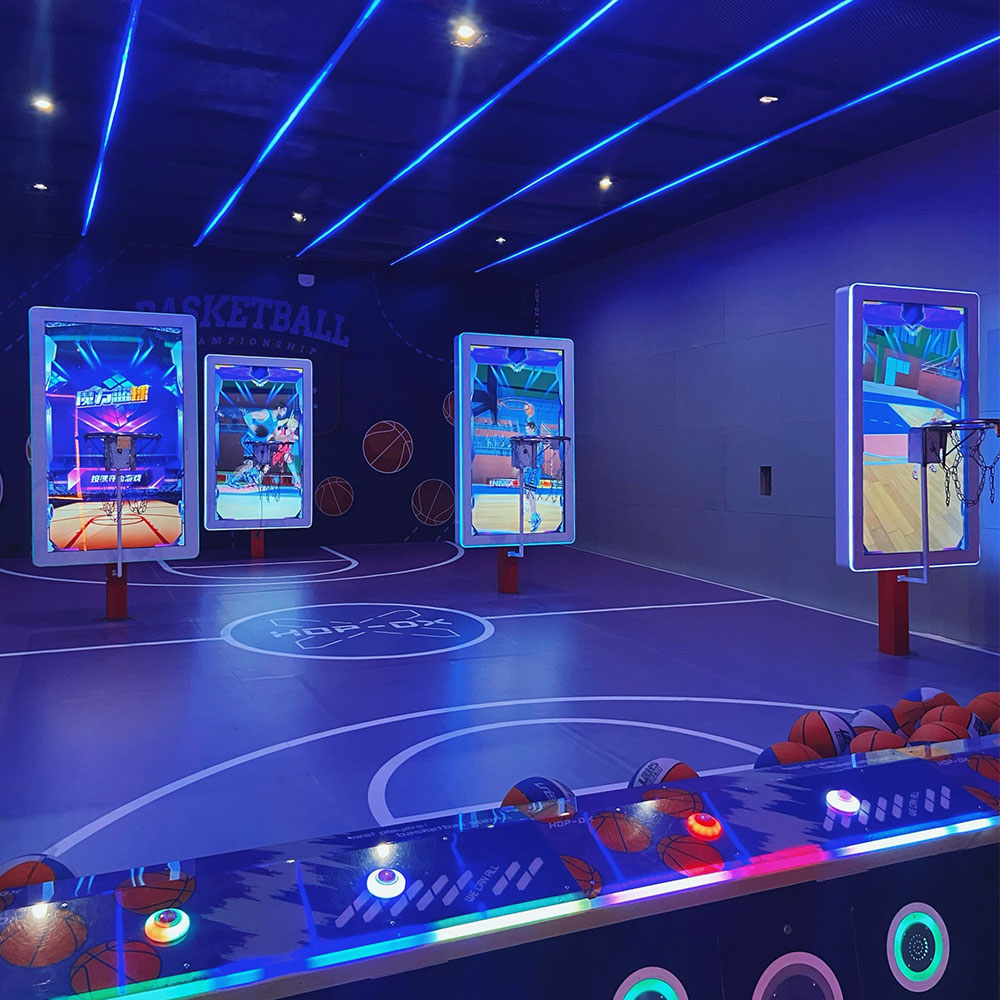
Joy Power is full of fun and exciting playgrounds! The basketball shooting machine is a classic amusement device integrating competition, entertainment, and interactivity. Based on the traditional basketball shooting sport, it integrates electronic scoring, sound and light effects, and challenge mechanisms to bring players an immersive game experience. The main body of the equipment is usually built with a metal frame, equipped with a standard-sized basket and a sturdy rim, with multiple sets of sensors to accurately capture the trajectory of the shot; when the player shoots the ball, the machine's built-in sensors count the score in real time and present the score, remaining time, and challenge goals through the LED display or LCD screen, with exciting sound effects and colorful lights to create a tense and exciting gaming atmosphere.
Core Hardware: Sensors, Build Quality, and Throughput
Sensor systems and scoring accuracy
For any shooting arcade machine, sensor reliability is the single most important technical characteristic. Systems use infrared beams, pressure sensors, camera-based tracking, or a combination. Camera and vision-based target sensors provide the most flexible scoring and can support complex target recognition and replay, while infrared and mechanical sensors tend to be lower-cost but easier to maintain.
When evaluating a Multi-Player Interactive Shooting Machine, request vendor test data on hit detection accuracy (percentage of correct detections across 1,000 recorded shots) and latency (time between shot and score display). Operators should expect better than 98% detection accuracy and sub-100ms latency for satisfying player feedback. If a vendor cites accuracy claims, ask for lab reports or in-field validation to avoid costly surprises.
Frame, materials, and durability
Arcade machines face constant physical interaction and high throughput. Inspect frame materials (steel gauge, weld quality), protective coatings (powder coat vs. paint), and impact points (rim, backboard, gun housings). Machines intended for heavy-traffic FECs should use reinforced steel frames and replaceable wear panels. Evaluate corrosion resistance if the machine will be placed in semi-outdoor or high-humidity locations.
Throughput and session design
Understand time-per-game, maximum concurrent players, and ticket/token flow. A Multi-Player Interactive Shooting Machine designed for tournaments will have shorter rounds (30–60 seconds), quick turn timers, and automated player rotation to maximize hourly throughput. Plan your floor layout to remove bottlenecks and maintain line visibility—higher throughput correlates directly with higher revenue per square meter.
Player Experience: Interactivity, Displays, and Multiplayer Features
Immersive audiovisual feedback
Sound and light are not decorative—they drive player emotion and encourage repeat play. Look for machines with programmable LED zones, spatial audio for directional cues, and dynamic lighting synchronized with scoring events. An LED or LCD scoreboard that shows real-time stats, leaderboards, and replays significantly improves engagement.
Multiplayer modes and social features
Multiplayer capability should be more than simultaneous play; it should include cooperative and competitive modes, local leaderboards, team play, and tournament brackets. Integrations with player accounts or loyalty programs (NFC cards, QR logins) increase repeat visits. For cross-location tournaments, seek network-enabled machines that can report scores to centralized competition servers.
Customization and brandability
Operators often need to align machines with event themes or venue aesthetics. Check for removable skins, customizable UI, and support for bespoke game modes. The ability to change difficulty, token-to-play ratios, and prize tables via an operator menu without firmware installation is a valuable time-saver.
Operations, Connectivity, and Data
Remote monitoring and telemetry
Modern machines should provide remote telemetry for revenue, play counts, fault codes, and ticket dispensing totals. A secure, cloud-enabled management portal reduces technician site visits and shortens downtime. Ask vendors about data retention policies and whether APIs or webhooks are available for your business intelligence platform.
Payment systems and ticketing
Support for multiple payment methods (cash, coin, card, contactless mobile pay, app-based credits) is critical. Machines should accommodate modern cashless wallets and loyalty tokens. For redemption arcades, integrated ticket dispensers or voucher printers must be tuned to ticket reliability (staples, jamming rate) and easy access for service staff.
Network security and compliance
Connected devices introduce cybersecurity risk. Verify that the machine uses TLS/HTTPS for server communication, supports firmware signing, and provides secure user roles for operators vs. service technicians. For reference on secure device best practices, consult IEEE resources on secure embedded systems and IoT security guidance such as the IEEE Xplore library (IEEE Xplore).
Serviceability, Safety, and Regulatory Considerations
Ease of maintenance and spare parts
Ask about modularity: can you replace the sensor array, LED strips, or payment module without importing full assemblies? Request a list of commonly consumed spare parts and their price/lead times. Machines with diagnostic LEDs and error codes speed up technician repairs.
Safety standards and certifications
Safety certifications minimize risk and may be required by venue insurers. Confirm electrical safety (CE, UL), EMI/EMC compliance, and mechanical safety for moving parts. For human-system ergonomics and usability guidance, ISO 9241 provides internationally recognized principles for interaction design and can be consulted at ISO 9241. Also check local regulations for warranty and product safety.
Age ratings, accessibility, and inclusion
Ensure controls are accessible to a broad age and ability range: adjustable shooting heights, clear on-screen prompts, and tactile buttons for those with vision impairments. Inclusive design broadens your customer base and supports venue accessibility goals.
Comparing Options: Feature Matrix
Use the table below when comparing potential models for your floor. It highlights key feature trade-offs between entry-level, mid-tier, and High Quality Multi-Player Interactive Shooting Machine configurations.
| Feature | Entry | Mid | High Quality |
|---|---|---|---|
| Sensor Type | Infrared beams | Hybrid (IR + pressure) | Vision-based camera + AI |
| Display | Basic LED scoreboard | Full-color LCD | High-res touch LCD + replay |
| Multiplayer | 2 players | 2–4 players, split modes | 4+ players, tournament + cloud |
| Connectivity | Offline | Wi-Fi / Ethernet | Secure cloud API + analytics |
| Serviceability | Basic modules | Modular with service docs | Hot-swap modules, remote diag |
| Typical price | Lowest | Mid-range | High Quality |
This matrix helps you prioritize—if your venue prioritizes engagement and tournaments, a High Quality model with cloud leaderboards and vision sensors is justified. If your goal is a low-cost addition for seasonal peaks, entry-level machines may suffice.
Vendor Evaluation Checklist and Testing Protocols
Ask for performance and warranty data
Request MTBF (mean time between failures), warranty coverage (parts and labor), and service level agreements (SLA) for replacement parts. Confirm whether software updates are included or sold separately.
On-site testing recommendations
Before purchase, run a two-stage acceptance test: a factory bench test and an on-site trial. For scoring systems, use a calibrated shot emulator or manual verification of 100–500 shots to confirm detection accuracy. Test payment flows with all supported payment types and simulate peak loads to validate throughput claims.
Reference checks and case studies
Ask for references from venues similar in footfall and ROI goals. Review case studies that include revenue uplift, maintenance logs, and customer satisfaction metrics. The arcade and amusement industry publishes trade reports that can help you benchmark performance—see industry analyses on arcade evolution at Wikipedia: Arcade game and consult trade organizations for regional insights.
Return on Investment and Commercial Considerations
Revenue models and pricing strategies
Consider price-per-play, promotional packages (multi-play discounts), and event-driven pricing for tournaments. Cashless and app-based systems enable dynamic pricing and loyalty integration which increase customer lifetime value.
Estimating break-even and lifetime value
Compute break-even using these inputs: machine cost, expected plays/day, average price-per-play, operating costs (power, maintenance), and expected lifetime (years). A simple ROI model: days-to-payback = (purchase price + installation) / ((plays/day * price-per-play) - daily operating cost).
Localization and content updates
For multi-location operators, ensure the vendor offers content localization (language, currency) and remote content updates to support seasonal or regional promotions. Machines that support dynamic content reduce the need to buy new hardware for changing marketing campaigns.
Frequently Asked Questions (FAQ)
Q: How accurate are vision-based scoring systems compared to infrared sensors?
A: Vision-based systems typically offer higher flexibility and recognition accuracy for complex shot types and replays, and they enable analytics like shot arcs. Infrared systems are simpler and cheaper but can be susceptible to environmental interference. Choose based on your budget and desired features.
Q: What maintenance schedule should we expect?
A: Routine inspection every 30–90 days for wear parts (rims, sensors, ticket dispensers), firmware updates quarterly, and a preventive service every 6–12 months depending on throughput. Keep a stock of consumables (tickets, gaskets, LED strips) on-site.
Q: Are these machines suitable for outdoor installations?
A: Most standard models are intended for indoor use. For outdoor or semi-outdoor locations, require IP-rated enclosures, UV-resistant materials, and climate control for electronics. Verify vendor outdoor model specifications and warranty if deployed outside.
Q: How can we run tournaments across multiple locations?
A: Use cloud-enabled machines with centralized leaderboards and synchronized game modes. Validate network reliability, anti-cheat measures, and data privacy policies before launching multi-location tournaments.
Q: What common pitfalls do operators face when deploying shooting arcade machines?
A: Common issues include underestimating maintenance needs, choosing machines with poor sensor accuracy, failing to integrate cashless payment systems, and not planning for space and sightlines that affect queueing. Thorough vendor vetting and on-site pilots mitigate these risks.
For further technical guidance on design and human-system interaction, consult established standards and literature such as the ISO ergonomics series (ISO 9241) and industry research available through IEEE (IEEE Xplore).
If you want to review a tested Multi-Player Interactive Shooting Machine suited for high-throughput FECs, view our product page or contact our sales team for a personalized ROI analysis and on-site demo. For technical sheets, warranty details, and pricing, reach out to customer service or request a demo today.
Contact / View Product: For sales and demos, contact customer service or view the Multi-Player Interactive Shooting Machine product page to schedule an on-site evaluation and receive a custom configuration quote.
Designing a Bar Space Around Dart Machines Bar Dart Machines
Selecting the Right Screen and Sound for Electronic Dart Machines
Custom basketball hoop game arcade Manufacturers and Suppliers
Top 10 3d archery simulator Manufacturers and Supplier Brands in Dubai
Dart Machines Bar Dart Machines
Why are sports arcades a hot spot for investment?
The traditional entertainment market (e.g., arcade, KTV) has become less attractive to generations, while digital hip playgrounds integrating technology, sports, and socialization are more in line with young people's needs, and the market size has exceeded 50 billion in 2023, with an annual growth rate of more than 30%.
How to reduce operating costs?
Starting with equipment procurement, choose cost-effective, durable and easy-to-maintain products, which can save money for subsequent maintenance. Reasonable arrangement of staff, reduce the number of staff on duty during off-peak hours, train staff to have multi-skills, such as being able to operate the equipment and guide customers part-time, so as to improve the efficiency of manpower and reduce the cost of manpower.
Infrared Shooting
How often does the equipment require maintenance?
For daily use, simple monthly maintenance, such as simple cosmetic cleaning and function checking after use, is sufficient. A more comprehensive quarterly maintenance is sufficient.
Holographic Light and Shadow Restaurant
What are the application scenarios of holographic projection?
Holographic projection has a wide range of applications in multiple fields. In the commercial field, it can be used for product display, advertising promotion, stage performances, etc., such as three-dimensional product display in shopping malls and virtual singer performances at concerts. In the field of education, it can be used for teaching demonstrations to help students understand complex scientific knowledge more intuitively. In the field of exhibition display, it can create an immersive exhibition experience and attract the attention of the audience.
Products
How to attract customers when operating the program in shopping malls?
Create a cool venue decoration style, incorporating trendy elements, such as fluorescent light strips, animation-themed murals, etc. o Create a new venue for the program. o Launch diversified marketing models such as parent-child packages and couple packages, combined with time-limited promotional activities, such as half-price experience in the first three days of opening, to attract different groups such as families and couples to stop by and participate in the program. o Create cool venue decoration styles and incorporate trendy elements, such as fluorescent light strips.
Dart Machines Bar Dart Machines
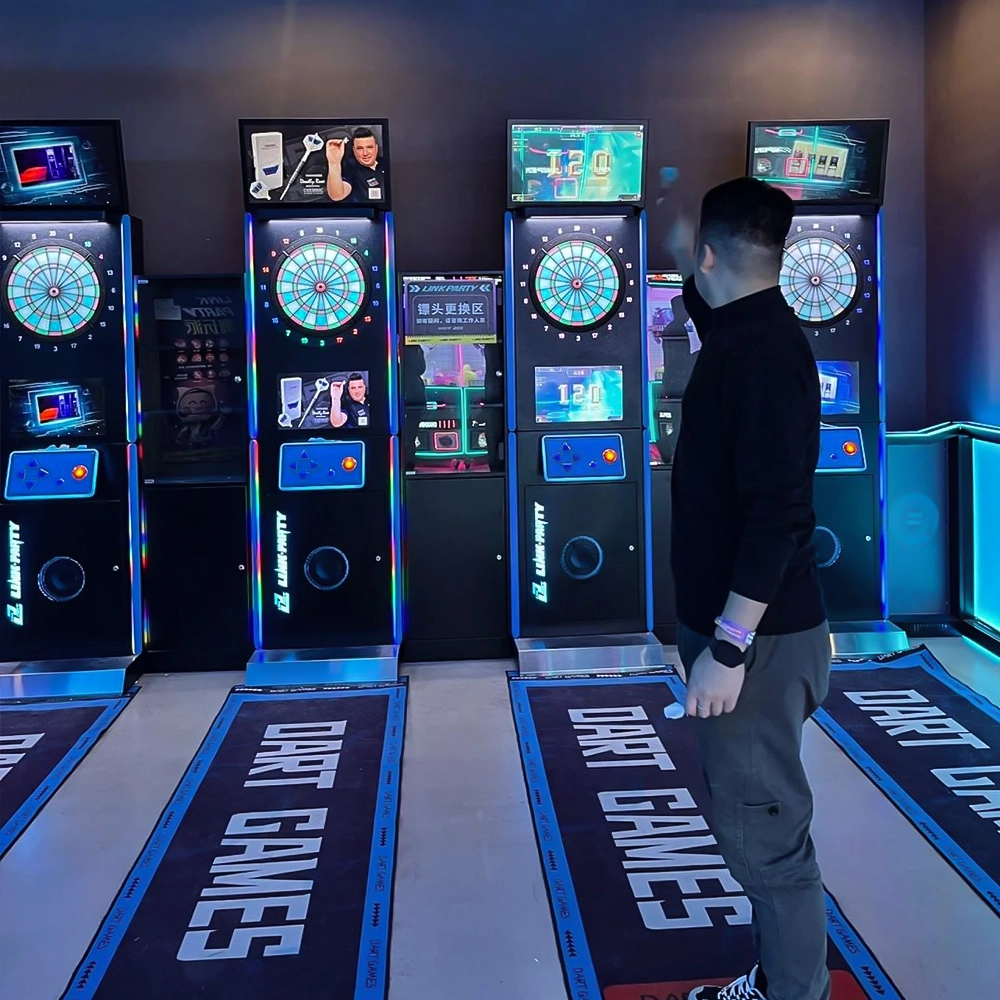
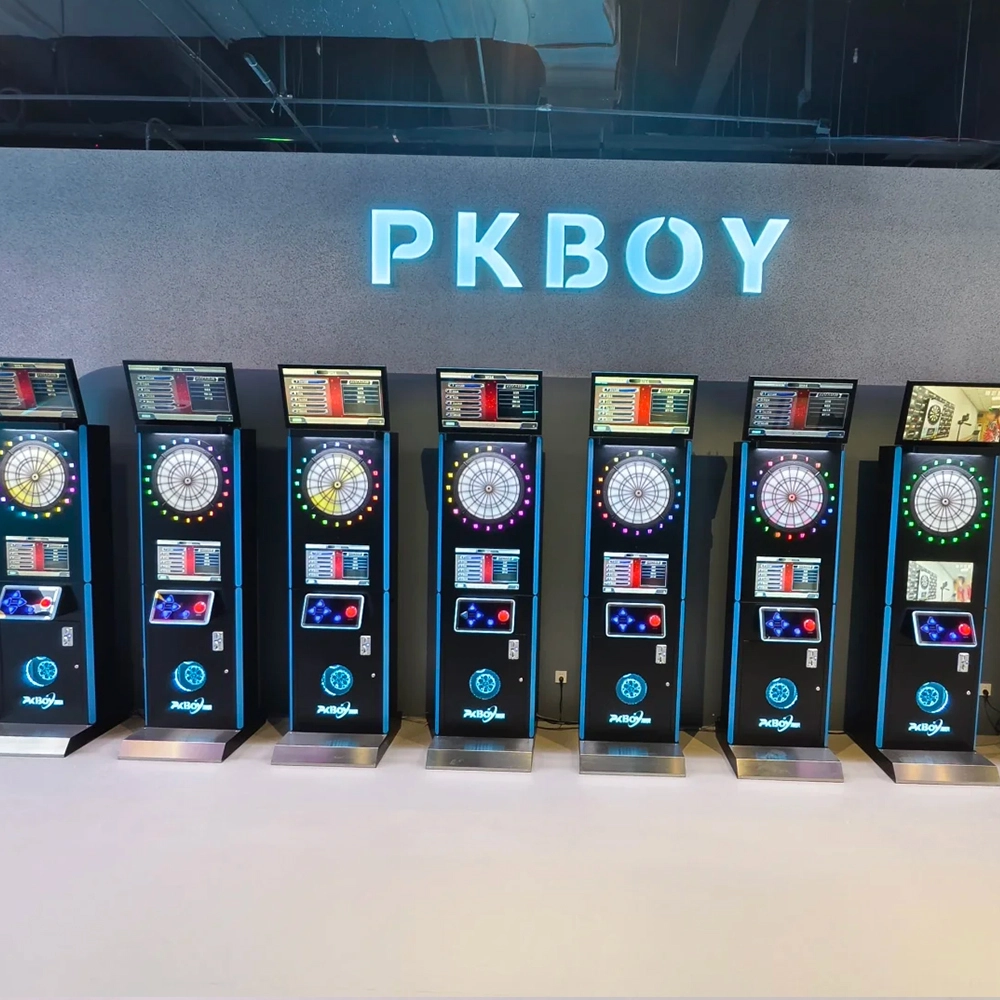
Joy Power is full of fun and excitement in the playground! The dart machine is suitable for all kinds of places, whether it is a bar, restaurant, KTV, or other entertainment venue, or a sports shop, club, or family leisure space, and can be perfectly adapted. In commercial venues, holding individual and team darts tournaments from time to time can attract more customers and increase the popularity and revenue of the venue, supplemented by various preferential activities, which can directly promote consumption and form a cycle of consumption of all the goods in the shop.
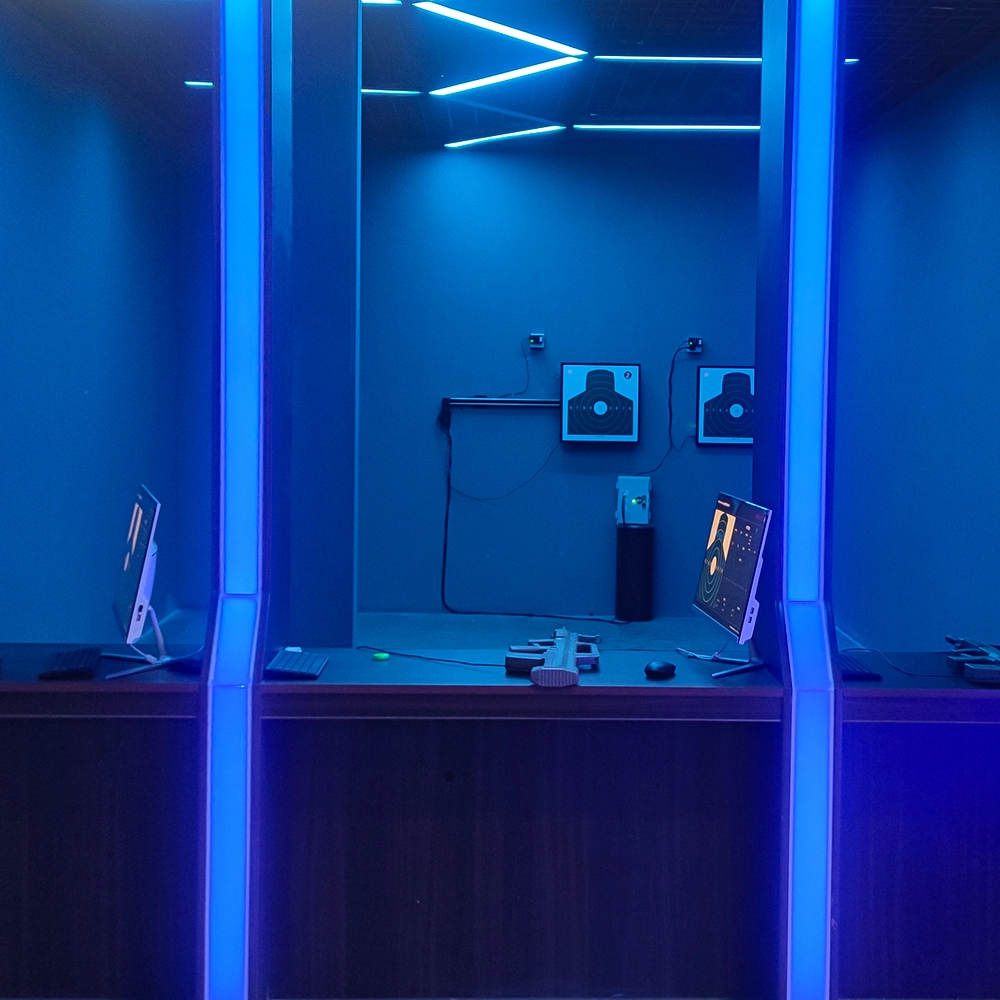
Infrared Shooting
Highly simulated simulation training analysis equipment, with advanced design concepts, fast system development, ease of operation and use, stable technical performance, less consumption of training, site dependence on a small group training is highly interesting, safe, and reliable, and other outstanding features. Product design to solve the basic skills of light weapons precision shooting as a starting point, to improve the safety of shooting training and training efficiency as the fundamental purpose, highlighting the simulation, information technology, and combat training requirements, can be in small indoor and outdoor venues and does not use live ammunition to complete the basic shooting training.
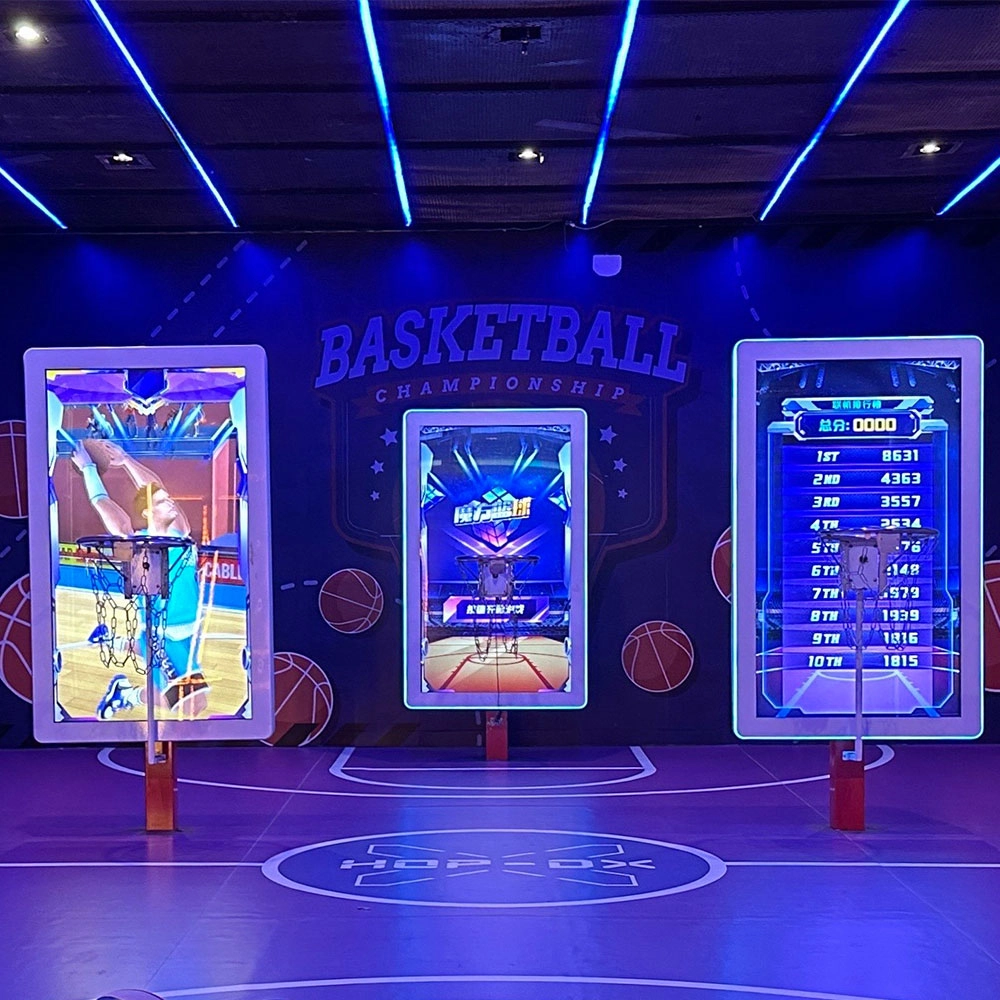
Multi-Player Interactive Shooting Machine
Joy Power is full of fun and exciting playgrounds! The basketball shooting machine is a classic amusement device integrating competition, entertainment, and interactivity. Based on the traditional basketball shooting sport, it integrates electronic scoring, sound and light effects, and challenge mechanisms to bring players an immersive game experience. The main body of the equipment is usually built with a metal frame, equipped with a standard-sized basket and a sturdy rim, with multiple sets of sensors to accurately capture the trajectory of the shot; when the player shoots the ball, the machine's built-in sensors count the score in real time and present the score, remaining time, and challenge goals through the LED display or LCD screen, with exciting sound effects and colorful lights to create a tense and exciting gaming atmosphere.
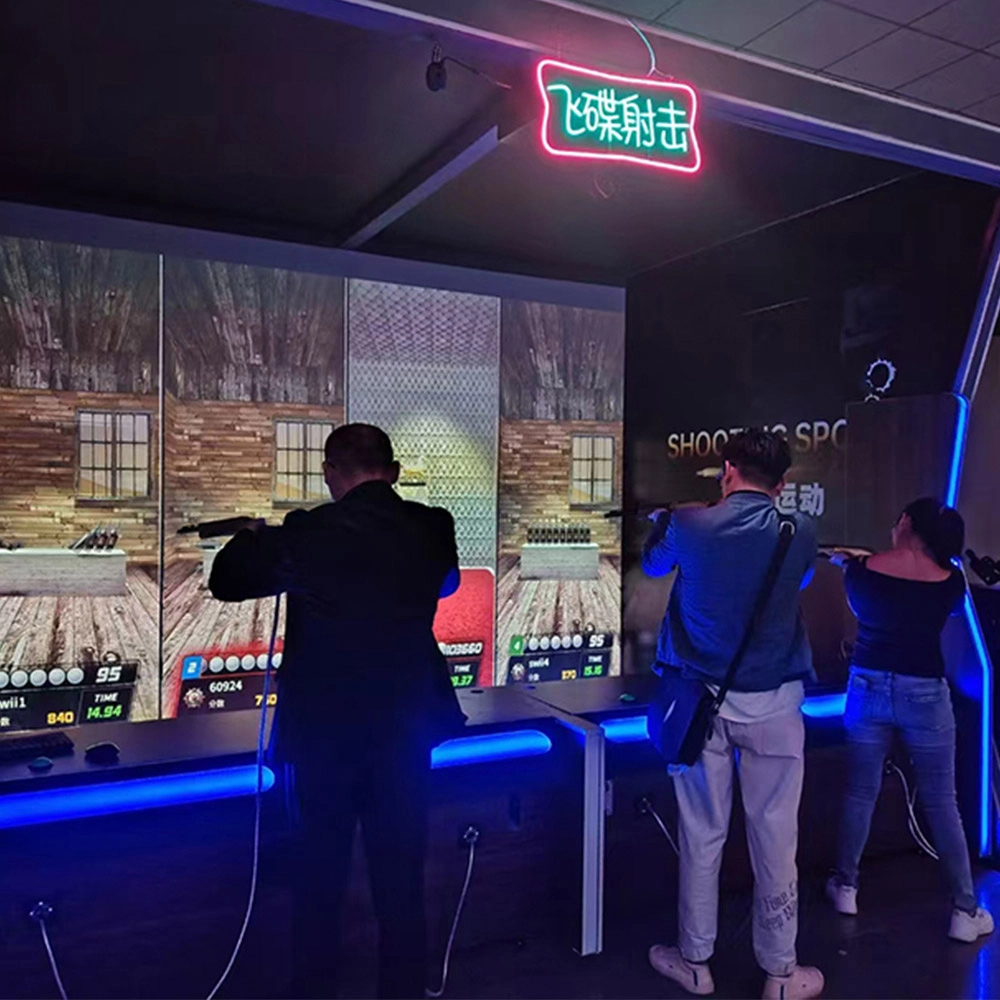
Indoor Wave Play Disc Shooting Equipment
Joy Power is full of fun and exciting playgrounds! The saucer shooting equipment in the indoor hip play hall is an immersive entertainment device integrating high-definition projection scenes, simulated air rifles, and multi-mode interactive gameplay, which allows players to experience the excitement of virtual shooting and the fun of social competition through laser-sensing scoring and multi-sensory feedback.
© 2025 FUNTECH ALL RIGHTS RESERVED

Weixia Lei
Fun_Tech-s
fun_tech20