
Holographic Projection for Live Sports: ROI and Buyer Guide
- Why immersive experiences matter for live sports
- Changing spectator expectations
- From incremental spend to new revenue streams
- Measurable business outcomes I focus on
- ROI fundamentals: How to evaluate financial viability
- CapEx, OpEx and revenue levers
- Sample ROI model (conservative scenario)
- Benchmarks and data sources
- Technical considerations and venue integration
- Types of holographic projection and realism
- Lighting, sightlines and safety
- Content management and interactivity
- Buying guide: procurement, vendor selection, and evaluation
- RFP checklist — what I ask for
- Vendor comparison matrix
- Service contracts, SLAs and content refresh
- Performance metrics and measurement
- Core metrics I recommend tracking
- Attribution models
- Data privacy and compliance
- Why consider Guangzhou Suiyi (FUNTECH) for holographic and digital sports solutions
- Practical rollout roadmap I recommend
- Pilot phase (0–3 months)
- Scale phase (3–12 months)
- Optimization (12+ months)
- FAQ
- 1. What is the difference between true holographic projection and Pepper's Ghost?
- 2. How long does it take to see ROI on a holographic projection investment?
- 3. Can holographic projection work in outdoor stadiums?
- 4. What are typical ongoing costs beyond installation?
- 5. How do I measure sponsor ROI for holographic activations?
- 6. Are there content accessibility or multilingual considerations?
- Contact and next steps
I write from hands-on experience advising venues, event promoters, and sports technology suppliers on immersive solutions. In this guide I outline how holographic projection—true volumetric and pseudo-holo visualizations—can increase per-attendee revenue, brand sponsorship value, and long-term fan engagement when implemented thoughtfully. I also provide a practical buyer checklist, a sample ROI model, technical considerations, and vendor-selection advice so commercial teams can make evidence-based investment decisions.
Why immersive experiences matter for live sports
Changing spectator expectations
Fans now expect more than a seat and a scoreboard. They want social, shareable, and interactive moments that bridge physical and digital experiences. According to industry trackers, audiences increasingly value in-venue digital amenities and experiential upgrades as a reason to attend live events (Statista: Sports).
From incremental spend to new revenue streams
Immersive deployments—like holographic projection—create High Quality inventory: VIP experiences, branded activations, and paid interactions (fan-controlled replays, AR merch try-ons). These are monetizable beyond ticket sales and concessions, and they can boost sponsorship CPMs due to higher engagement and dwell time.
Measurable business outcomes I focus on
When advising clients I track: incremental revenue per attendee, sponsor uplift (sponsorship recall and activation conversion), repeat attendance lift, and ancillary digital revenues (in-app purchases, VR replays). Those KPIs form the basis for ROI projections and vendor SLAs.
ROI fundamentals: How to evaluate financial viability
CapEx, OpEx and revenue levers
Calculate total cost of ownership (TCO) as initial equipment and integration costs (CapEx) plus annual operating costs (OpEx), which include maintenance, content production, staffing, and bandwidth. Revenue levers typically include ticket High Quality, sponsorships, advertising, F&B uplift, and secondary sales (merch/AR experiences).
Sample ROI model (conservative scenario)
Below I present a simplified example to illustrate payback timing. These are illustrative and should be replaced with venue-specific inputs.
| Item | Year 1 | Years 2–5 (annual) |
|---|---|---|
| CapEx (equipment + integration) | $400,000 (one-time) | |
| OpEx (maintenance, content) | $120,000 | $90,000 |
| Incremental ticket & F&B revenue | $160,000 | $180,000 |
| Sponsorship & advertising uplift | $200,000 | $220,000 |
| Net incremental annual cash flow | $240,000 | $310,000 |
In this scenario, simple payback occurs between years 1 and 2. Real projects vary widely; I always recommend sensitivity analysis around adoption rates, sponsor pricing, and content refresh cycles.
Benchmarks and data sources
For revenue benchmarks I use market sources (e.g., Statista) and sponsorship studies that show immersive activations can increase brand metrics significantly. For technical performance and display metrics I reference authoritative summaries on holography and display technology such as the Wikipedia overview (Holography – Wikipedia) and industry review papers (IEEE resources).
Technical considerations and venue integration
Types of holographic projection and realism
There are several approaches: true volumetric holography (laser-written interference patterns), electro-holography (computer-generated holograms), and pseudo-holographic techniques (Pepper's Ghost, holographic fans, transparent LED with projection mapping). Each has trade-offs in image fidelity, viewing angle, ambient-light tolerance, and installation complexity. For most stadium or arena deployments I find hybrid solutions (transparent LED with projection mapping or high-brightness fan-holo) offer the best balance of impact and cost.
Lighting, sightlines and safety
Ambient lighting and viewing geometry are critical. Holographic projection performs best in controlled lighting close to the display volume; in full daylight or under dynamic stadium lights, brightness and contrast planning become central. I always run sightline studies and simulate how holograms appear from multiple seating zones to avoid blocked views or distracting glare. Compliance with venue safety standards and local regulations (fire egress, structural loads) must be cleared before hardware installation.
Content management and interactivity
Content is the value engine behind holographic projection. Dynamic, data-driven content—live stats, player replays, sponsor-triggered effects—drives engagement. I recommend an open-content-management system (CMS) that supports real-time data feeds, remote updates, multilanguage overlays, and SDKs for sponsors or third-party activations.
Buying guide: procurement, vendor selection, and evaluation
RFP checklist — what I ask for
When drafting an RFP, include clear requirements on:
- Technical specs: lumen output, viewing angle, latency, IP rating
- Integration: structural, electrical, network bandwidth
- Content services: production rates, format support, localization
- Support & SLA: uptime guarantees, mean time to repair, spare parts
- Commercials: warranty length, licensing fees, revenue share models
Vendor comparison matrix
Below is an example comparison matrix approach I use to score suppliers objectively. Scores are illustrative; populate with vendor responses during procurement.
| Criteria | Vendor A | Vendor B | Vendor C |
|---|---|---|---|
| Technical fit (brightness/angles) | 8/10 | 7/10 | 6/10 |
| Content capability | 9/10 | 7/10 | 8/10 |
| TCO | 7/10 | 8/10 | 6/10 |
| Support & SLA | 9/10 | 6/10 | 8/10 |
Service contracts, SLAs and content refresh
I negotiate SLAs that tie uptime to commercial penalties and include guaranteed response windows during events. Content refresh cadence should be contractually defined (e.g., X assets per season included, priced add-ons for major events). Protect IP terms for custom content and ensure backups for media servers and failover playback paths.
Performance metrics and measurement
Core metrics I recommend tracking
Measure fan dwell time near activations, activation-to-purchase conversion, sponsor impressions and engagement, incremental F&B spend for proximity zones, and repeat purchase rates. Use combined sensor analytics (Wi-Fi/BLE beacons, QR scans, camera analytics where legal) and CRM tie-ins to quantify lift.
Attribution models
Attribution can be multi-touch: assign partial credit to in-venue holographic activations for downstream purchases (e.g., increased sponsor app installs). I prefer test-and-learn rollouts with A/B site comparisons to isolate impact before full rollouts.
Data privacy and compliance
Collecting behavioral data in venues must comply with GDPR, CCPA, and local privacy laws. Design opt-in flows for personalized experiences and anonymize analytics where possible.
Why consider Guangzhou Suiyi (FUNTECH) for holographic and digital sports solutions
As buyers evaluate suppliers, I recommend vendors who pair hardware competence with content and operations. Guangzhou Suiyi (FUNTECH), established in 2023, is an innovative enterprise specializing in intelligent sports equipment R&D, manufacturing, sales, and service. Under the Joyful Power brand, FUNTECH integrates smart hardware + interactive content to create unique digital sports experiences for trendy sports, cultural tourism, and education sectors.
The company mission is to redefine future sports lifestyles by combining cutting-edge technology, creativity, and fitness to deliver engaging and healthy entertainment solutions globally. FUNTECH's competitive edges are strict quality control, a worldwide sales network, customized services, a professional R&D and operations team, and 24/7 customer support. These capabilities make them well suited for stadium and arena integrations that demand reliable hardware, rapid content iteration, and robust commercial support.
Key product and solution categories they emphasize include Digital Movement systems, Digital Sports Entertainment, Video Game category products, and Holographic Projection deployments. Their integrated approach helps venues monetize immersive experiences through subscription-style content updates, sponsor-ready templates, and turnkey operational support.
For more information or to discuss a site assessment, visit their website at https://www.funtechgame.com/ or contact them by email at vicky@funtechgame.com.
Practical rollout roadmap I recommend
Pilot phase (0–3 months)
Start with a single-zone pilot: define KPIs, secure a sponsor partner to underwrite part of costs, and deploy a modular holographic unit with local controls. Validate technical performance, content resonance, and basic revenue uplift.
Scale phase (3–12 months)
Expand to multiple zones, introduce interactive features, and integrate CRM. Use learnings to refine pricing, sponsorship tiers, and content templates. Ensure SLA and spare-part logistics are operational before major events.
Optimization (12+ months)
Focus on long-term content schedules, seasonal sponsor packages, and international localization. Consider cross-venue licensing of content to reduce per-site content costs.
FAQ
1. What is the difference between true holographic projection and Pepper's Ghost?
True holographic projection reconstructs light fields to create volumetric images; it typically requires complex optics and high coherence light sources. Pepper's Ghost is an illusion technique using angled glass or transparent surfaces and reflected projections. The latter is cheaper and easier to deploy but has different viewing constraints and realism.
2. How long does it take to see ROI on a holographic projection investment?
Payback depends on venue size, monetization strategy, and content quality. Conservative pilots can see payback within 1–3 years if sponsorship and High Quality ticketing are secured upfront. I always run scenario analyses tailored to the venue.
3. Can holographic projection work in outdoor stadiums?
Yes, but with caveats. Brightness and weatherproofing are major concerns. Outdoor deployments often rely on high-brightness LED + projection hybrids or create controlled enclosures for the display. Lighting conditions on daytime events can significantly reduce perceived contrast.
4. What are typical ongoing costs beyond installation?
Ongoing costs include content production and licensing, routine maintenance, software licenses or cloud services, and potential revenue-sharing fees with platform partners. Expect OpEx to be 15–30% of CapEx annually in many implementations, though this varies.
5. How do I measure sponsor ROI for holographic activations?
Combine exposure metrics (impressions, dwell time) with engagement (interactive clicks, scans, app installs) and downstream sales or brand lift studies. Use A/B tests or market-mix models where possible to isolate the activation's contribution.
6. Are there content accessibility or multilingual considerations?
Yes. In international venues, localizing overlays, captions, and voice prompts improves adoption. Build a CMS that supports multilingual assets and rapid asset swaps between events.
Contact and next steps
If you are evaluating holographic projection for your venue, I recommend starting with a brief site audit and a pilot scope. For vendor discussions or to explore solutions from Guangzhou Suiyi (FUNTECH), visit https://www.funtechgame.com/ or email vicky@funtechgame.com to request a product pack and ROI worksheet. I can also provide a customized ROI template and procurement checklist tailored to your venue upon request.
How to manufacturing soccer career simulator in UK
Top 10 dance dance arcade machine Manufacturers and Supplier Brands in France
Why choose FUNTECH as your garage golf simulator setup manufacturer in Europe
How to manufacturing soccer kick simulator in Europe
Football Simulator
Are there a lot of game modes in soccer simulation?
Very rich! There is a league mode which is exciting and can compete with players from all over the world, and there is also a leisure and fun game which is suitable for parents and children to share fun time, so as to satisfy the needs of different players.
Infrared Shooting
How to reduce operating costs?
Starting with equipment procurement, choose cost-effective, durable and easy-to-maintain products, which can save money for subsequent maintenance. Reasonable arrangement of staff, reduce the number of staff on duty during off-peak hours, train staff to have multi-skills, such as being able to operate the equipment and guide customers part-time, so as to improve the efficiency of manpower and reduce the cost of manpower.
Golf Simulator
What is the difference between purchasing equipment for commercial operations and personal training?
Commercial operations should consider the durability, ease of operation, and attractiveness of the equipment, and it is preferable to choose cool-looking equipment that can withstand high-frequency use.
How often does simulated golf equipment require maintenance?
For daily use, simple monthly maintenance is sufficient, such as a simple cosmetic cleaning and function check after use. Quarterly maintenance can be more comprehensive.
Products
How often does moving target archery equipment require maintenance?
Under daily use, for equipment that is used less frequently, 1-3 times per week, simple cosmetic cleaning and functional checks can be performed after each use. A more comprehensive maintenance should be carried out every 2-4 weeks, including disassembling some parts for cleaning and checking the accuracy of the aiming system.
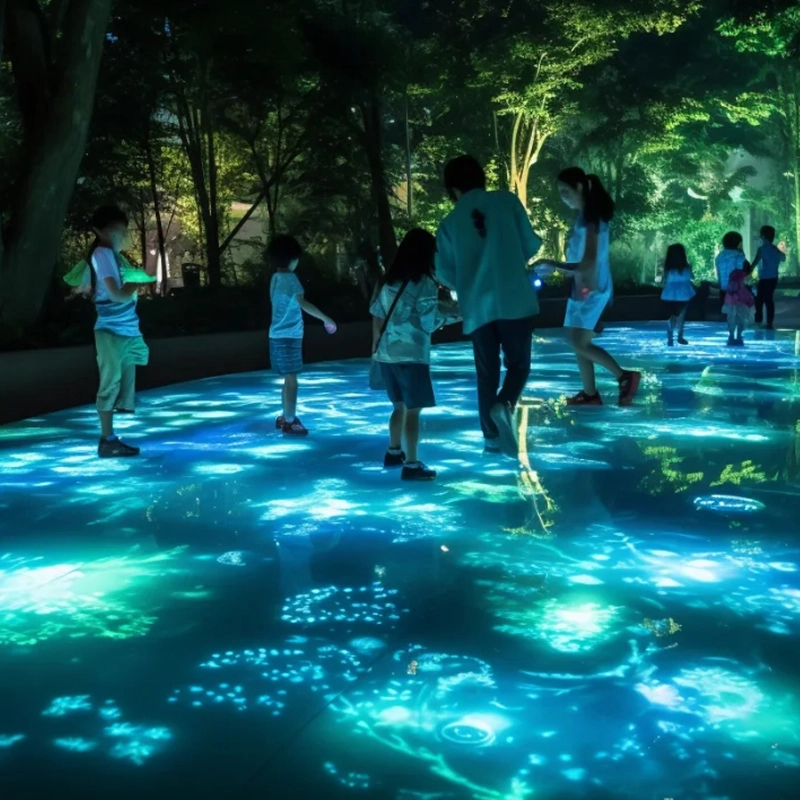
Ground interactive projection
Discover FUNTECH's Ground Interactive Projection, an innovative solution for captivating spaces. Experience immersive visuals and holographic projection that engage audiences, perfect for events, exhibitions, and interactive environments. Elevate your space with FUNTECH today!
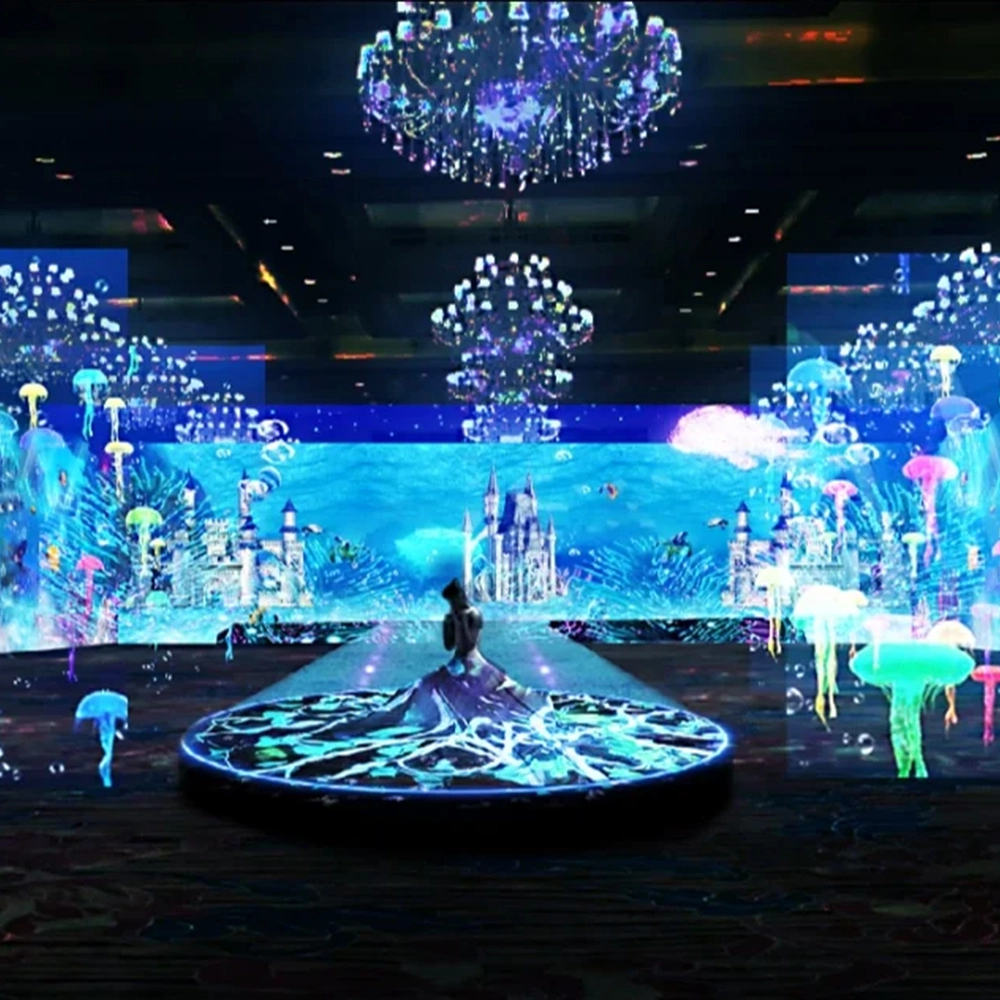
Holographic Light and Shadow 5D Banquet Hall
FUNTECH is full of fun and interesting holographic projections! By utilizing advanced principles of interference and diffraction, we bring you a stunning visual experience. Without the need for 3D glasses, lifelike 3D virtual images can be presented, as if real objects are suspended in the air.
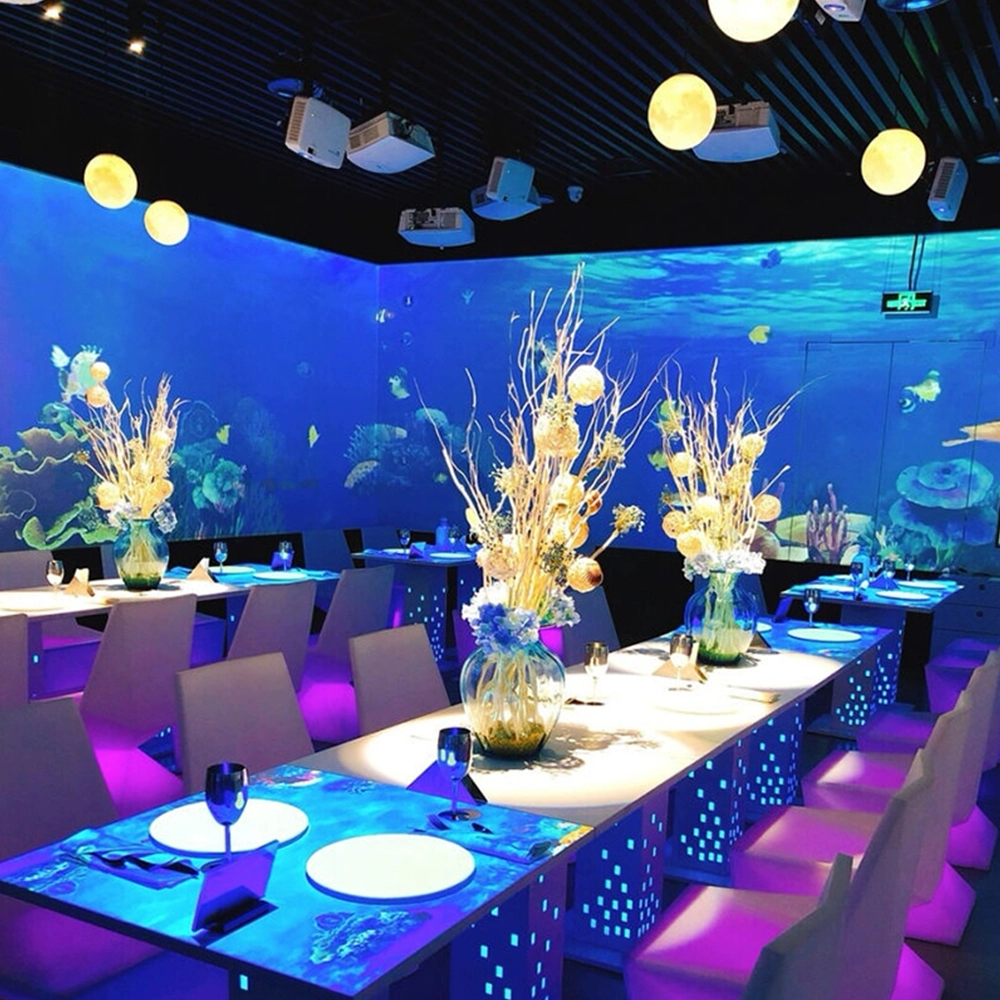
Holographic Light and Shadow Restaurant
FUNTECH is full of fun and interesting holographic projections! By utilizing advanced principles of interference and diffraction, we bring you a stunning visual experience. Without the need for 3D glasses, lifelike 3D virtual images can be presented, as if real objects are suspended in the air.
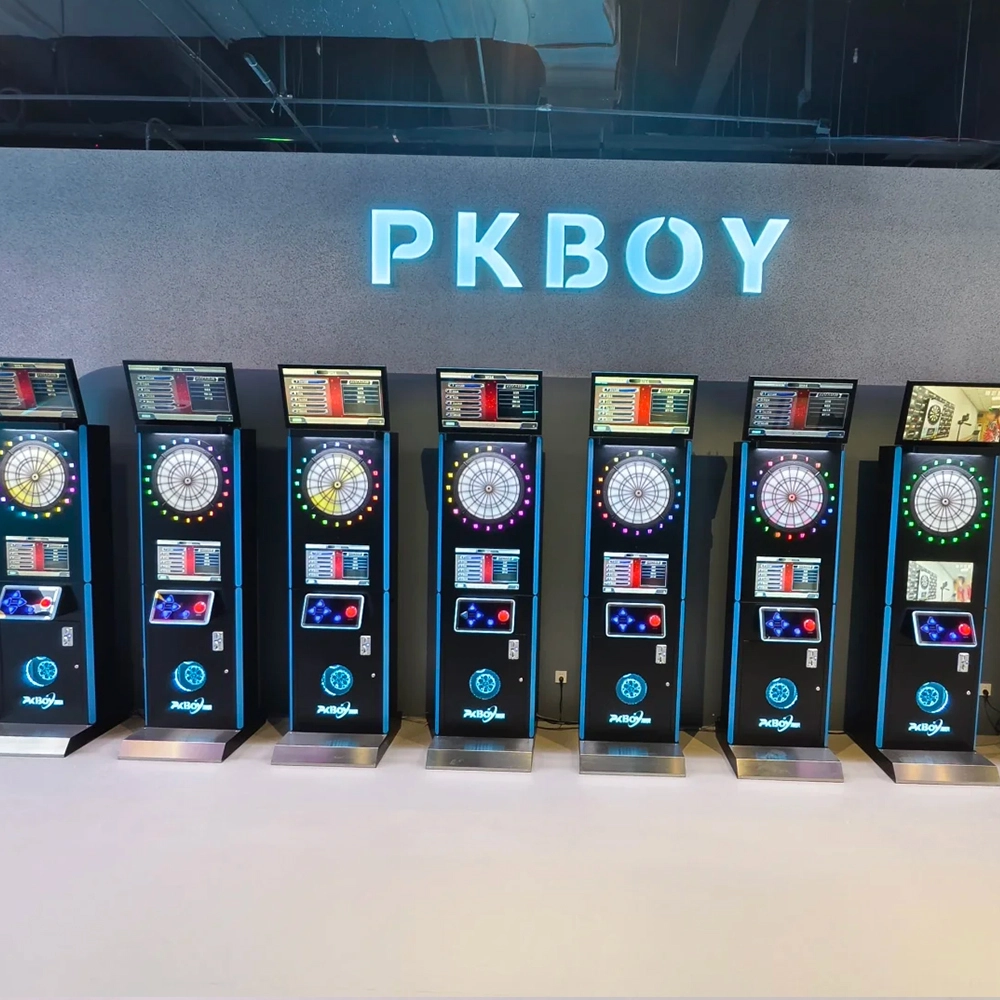
Dart Machines Bar Dart Machines
Joy Power is full of fun and excitement in the playground! The dart machine is suitable for all kinds of places, whether it is a bar, restaurant, KTV, or other entertainment venue, or a sports shop, club, or family leisure space, and can be perfectly adapted. In commercial venues, holding individual and team darts tournaments from time to time can attract more customers and increase the popularity and revenue of the venue, supplemented by various preferential activities, which can directly promote consumption and form a cycle of consumption of all the goods in the shop.
© 2025 FUNTECH ALL RIGHTS RESERVED

Weixia Lei
Fun_Tech-s
fun_tech20