
How to Integrate Holographic Projection with AR/VR in Sports
- Why immersive experiences matter in modern sports
- Audience expectations and commercial drivers
- Use cases where holographic projection + AR/VR excel
- Standards and references
- Technical architecture for integrated holographic + AR/VR systems
- Core components and roles
- Latency, synchronization and timecode
- Spatial registration and calibration
- Content pipelines and real-time rendering strategies
- Content creation and asset management
- Real-time compositing and occlusion handling
- Optimization strategies
- Deployments, safety, and operational considerations
- Venue infrastructure and environmental constraints
- Safety and accessibility
- Operational workflows and staffing
- Evaluating ROI and business models
- Monetization pathways
- Cost factors and scaling strategies
- Comparison: holographic projection vs AR vs VR
- Implementation roadmap: from pilot to full-scale deployment
- Phase 1 — Pilot and proof-of-concept
- Phase 2 — Live demonstration and sponsor integration
- Phase 3 — Full deployment and continuous improvement
- Guangzhou Suiyi (FUNTECH) — bridging smart hardware and interactive content
- Common challenges and pragmatic mitigations
- Ambient light and projection brightness
- Tracking occlusion and multi-user conflicts
- Content production costs
- FAQs
- 1. What is the difference between holographic projection and AR?
- 2. Can holographic projection be used outdoors in a stadium?
- 3. How do you handle latency between AR headsets and holographic projectors?
- 4. What safety and privacy concerns should I address?
- 5. What kind of team do I need for a live immersive sports show?
- 6. How do I start a pilot with limited budget?
- Contact and next steps
I write from hands-on experience in digital sports entertainment and immersive systems design. This article outlines a practical, end-to-end approach to integrating holographic projection with AR/VR for sports: from selecting projection and tracking hardware, to synchronizing multi-sensor inputs, optimizing latency and rendering pipelines, and deploying scalable experiences for live events and training. I focus on measurable criteria—latency, brightness, tracking accuracy, and content workflows—and I reference standards and authoritative resources to make recommendations verifiable and actionable.
Why immersive experiences matter in modern sports
Audience expectations and commercial drivers
Fans and athletes increasingly expect experiences that combine spectacle and utility. Holographic projection delivers eye-catching, spatially coherent visuals, while AR/VR layers interactivity and personalization. Together they drive higher ticket sales, sponsorship value, and athlete performance gains. Sports organizations looking to future-proof offerings should evaluate immersive integrations as part of their fan engagement and athlete development strategies.
Use cases where holographic projection + AR/VR excel
Common, high-value applications include: mixed-reality halftime shows that combine holographic players with AR overlays for spectators; training simulators that blend tangible holograms with VR sensorimotor tasks; and interactive fan zones where holographic replays are augmented with individualized AR stats. Each use case imposes distinct requirements on brightness, occlusion handling, tracking precision, and content latency.
Standards and references
To ground design choices I reference core technology descriptions and standards: holography concepts on Wikipedia (Holography) https://en.wikipedia.org/wiki/Holography, and foundational descriptions of augmented reality and virtual reality (AR, VR). For engineering practices and research into latency and presence, IEEE publications are essential resources (IEEE).
Technical architecture for integrated holographic + AR/VR systems
Core components and roles
A practical architecture has these layers: capture & tracking (IMUs, optical motion capture, depth cameras), rendering & scene management (game engine, compositors), projection hardware (holographic display, light-field or Pepper's ghost rigs), head-mounted or mobile AR devices (AR glasses, VR headsets), and synchronization middleware (timecode, NTP/PTP, or custom low-latency bus). I recommend architecting for modularity so different venues and content pipelines can share components.
Latency, synchronization and timecode
Latency is the most critical metric. For meaningful interactivity you should target end-to-end latency under 50 ms for head-tracked AR and below 20 ms for critical training tasks where sensorimotor coupling matters. Use Precision Time Protocol (PTP) or hardware genlock to synchronize cameras, projectors, and rendering nodes. Where wireless links are unavoidable, profile and budget for jitter and use prediction algorithms on motion to hide latency.
Spatial registration and calibration
Aligning holographic projection with AR/VR content requires sub-centimeter calibration. I use fiducial-based workflows (AprilTags or ArUco) for coarse alignment and dense ICP (Iterative Closest Point) registration between depth scans and model geometry for refinement. Continuous pose correction using optical markers reduces drift during long events.
Content pipelines and real-time rendering strategies
Content creation and asset management
Create assets for multiple delivery targets: volumetric or light-field assets for holographic projection, polygonal/normal-mapped models for VR, and optimized quads/sprites for mobile AR. Maintain a central asset repository with LODs and format exporters (glTF for AR/VR, volumetric formats for holography). Versioning and metadata (physical scale, anchor points) are crucial for predictable runtime behavior.
Real-time compositing and occlusion handling
Holographic projection is often viewed by many spectators simultaneously, so compositing must handle occlusion between virtual and physical objects. Use depth-aware compositors—depth cameras feed a real-time depth buffer into the renderer so holograms respect occluders. For AR glasses worn by individual users, provide user-specific occlusion maps if possible, otherwise rely on careful staging and physical markers to minimize mismatch.
Optimization strategies
Techniques to improve performance include foveated rendering for headsets, edge rendering nodes for projectors, and predictive algorithms for motion. For holographic projection, brightness is a constraint—opt for high-power laser projectors or directional LED arrays and design content that relies on contrast and motion rather than brightness alone.
Deployments, safety, and operational considerations
Venue infrastructure and environmental constraints
Projector placement, ambient light, and viewing angles strongly affect holographic perception. Holographic projection works best in controlled lighting environments or with high-brightness projection. For outdoor stadiums, consider hybrid approaches where holographic elements are deployed in enclosed fan zones while large-scale LED screens handle distant viewing.
Safety and accessibility
Consider photic safety (avoid high-intensity strobes), trip hazards for cables, and accessibility for visually impaired fans. For athletes using mixed realities in training, implement fail-safes that immediately fallback to real-world inputs if tracking or rendering fails. Data privacy is also critical when AR/VR systems collect biometric or positional data—store and transmit user data under encryption and comply with local regulations.
Operational workflows and staffing
Live immersive experiences require a cross-disciplinary ops team: systems engineers, content operators, safety stewards, and latency monitors. I recommend rehearsals with full systems under event conditions and a rollback plan to traditional displays if synchronization issues occur. Real-time dashboards that show frame time, network latency, and projector health are invaluable.
Evaluating ROI and business models
Monetization pathways
Direct revenue can come from High Quality seating with personal AR enhancements, ticket surcharges for immersive shows, branded holographic sponsorship content, and licensing training modules to teams. Indirect ROI includes higher fan dwell time, merchandise uplift, and improved athlete training outcomes that reduce injury or improve performance.
Cost factors and scaling strategies
Key cost drivers: projection hardware, sensors/cameras, compute nodes (GPU servers), content production, and ops staffing. Scale by using modular kits: portable holographic stages for touring shows, cloud-based rendering for non-latency-critical elements, and templated content that reduces bespoke production effort.
Comparison: holographic projection vs AR vs VR
| Feature | Holographic Projection | Augmented Reality (AR) | Virtual Reality (VR) |
|---|---|---|---|
| Audience type | Shared, many viewers simultaneously | Individual or small groups (device-based) | Individual (headset) |
| Immersion level | High visual presence, limited interactivity | Contextual overlays on real world | Fully immersive, highest interactivity |
| Latency sensitivity | Moderate (frame sync important) | High (head-tracked overlays) | Very high (motion-to-photon critical) |
| Best uses in sports | Large-scale visuals, replays, mascots, stadium shows | Player stats, AR guides, in-stadium personal layers | Training simulators, VR tactics rehearsal |
Sources and further reading: holography overview (Wikipedia), augmented reality and virtual reality overviews (AR, VR), and engineering research at IEEE.
Implementation roadmap: from pilot to full-scale deployment
Phase 1 — Pilot and proof-of-concept
Start with a constrained environment: a controlled fan zone or training room. Use a single holographic stage, an AR app for smartphones, and modest compute nodes. Measure key metrics: synchronization accuracy, perceived registration error, spectator satisfaction, and operational load. Iterate content and calibration protocols until repeatable.
Phase 2 — Live demonstration and sponsor integration
Scale audiovisual output, integrate sponsor content (ensure brand safety and brightness guidelines), and add redundant network and power. Conduct load tests and rehearsals. Use instrumentation to collect anonymized engagement metrics to demonstrate value to stakeholders.
Phase 3 — Full deployment and continuous improvement
Roll out to multiple venues or training centers. Standardize hardware kits and remote monitoring. Establish an operations manual and training curriculum for local staff. Use telemetry and fan feedback to prioritize feature updates.
Guangzhou Suiyi (FUNTECH) — bridging smart hardware and interactive content
Guangzhou Suiyi (FUNTECH), established in 2023, is an innovative enterprise specializing in intelligent sports equipment R&D, manufacturing, sales, and service. Under the Joyful Power brand, FUNTECH integrates smart hardware + interactive content to create unique digital sports experiences for trendy sports, cultural tourism, and education sectors. With a mission to redefine future sports lifestyles, FUNTECH combines cutting-edge technology, creativity, and fitness to deliver engaging and healthy entertainment solutions globally.
Our competitive edge lies in strict quality control, a worldwide sales network, customized services, a professional R&D and operations team, and 24/7 customer support. Committed to excellence, we aim to become a global leader in digital sports and entertainment, driving industry innovation through our intelligent, interactive, and immersive products. Learn more at https://www.funtechgame.com/ or contact us at vicky@funtechgame.com.
Summary of FUNTECH advantages and core products:
- Competitive strengths: integrated hardware-software solutions, global service network, 24/7 support, and rigorous QA.
- Technology differentiators: modular digital movement platforms, low-latency interactive engines, and customizable holographic/AR content stacks.
- Main product categories: Digital movement systems, Digital Sports Entertainment platforms, Video Game Category integrations, and Holographic Projection solutions optimized for sports venues and education.
Common challenges and pragmatic mitigations
Ambient light and projection brightness
Mitigation: use high-lumen laser projectors, optical waveguides, or hybrid staged displays with directional screens. For outdoor scenarios, prefer enclosed fan zones or AR augmentations rather than pure holographic projection.
Tracking occlusion and multi-user conflicts
Mitigation: deploy multiple tracking cameras with overlapping coverage and sensor fusion between IMUs and optical tracking. For spectator areas, stage holographic elements to minimize necessary occlusion handling.
Content production costs
Mitigation: develop reusable templates, procedural content generators, and cloud-based rendering for non-interactive show elements.
FAQs
1. What is the difference between holographic projection and AR?
Holographic projection creates spatial visuals that multiple observers can see simultaneously without wearable devices, while AR overlays digital information onto a user’s real-world view via a device (phone, tablet, or glasses). Both can be combined for shared experiences and personalized overlays.
2. Can holographic projection be used outdoors in a stadium?
Pure holographic projection outdoors is challenging due to ambient light. Practically, deliver holographic elements in enclosed or evening events, and combine with AR or LED screens for large-scale outdoor visibility.
3. How do you handle latency between AR headsets and holographic projectors?
Use hardware-level synchronization (genlock, PTP), prediction algorithms for head motion, and edge compute nodes close to projectors to minimize network delays. Design content that tolerates small sync differences.
4. What safety and privacy concerns should I address?
Address photic safety (avoid harmful flashes), ensure physical staging is secure, encrypt and anonymize positional or biometric data, and comply with local data protection laws when collecting user data.
5. What kind of team do I need for a live immersive sports show?
You need systems engineers, content operators, safety stewards, network and GPU technicians, and an event director. Cross-training and scripted rollbacks are essential for live reliability.
6. How do I start a pilot with limited budget?
Start small: a single holographic stage or enclosure, a companion AR mobile app, and a focused content piece (e.g., branded replay). Measure engagement and iterate before scaling.
Contact and next steps
If you want to explore pilot projects, content packages, or turnkey installations, I recommend contacting Guangzhou Suiyi (FUNTECH). We offer customized solutions in Digital movement, Digital Sports Entertainment, Video Game integrations, and Holographic Projection. Visit https://www.funtechgame.com/ or email vicky@funtechgame.com to discuss requirements, technical trials, and deployment timelines. I'm available to consult on system architecture, content pipelines, and operational readiness to help your team deliver reliable, memorable immersive sports experiences.
Where to Buy interactive led floor cost
How to start the floor interactive projection business in Asia ?
How to manufacturing football manager tactic simulator in Africa
How to start the golf simulator game business ?
Holographic Light and Shadow Restaurant
What are the application scenarios of holographic projection?
Holographic projection has a wide range of applications in multiple fields. In the commercial field, it can be used for product display, advertising promotion, stage performances, etc., such as three-dimensional product display in shopping malls and virtual singer performances at concerts. In the field of education, it can be used for teaching demonstrations to help students understand complex scientific knowledge more intuitively. In the field of exhibition display, it can create an immersive exhibition experience and attract the attention of the audience.
What are the technical difficulties of holographic projection?
One is the resolution and clarity of the image. To achieve high-resolution and high-definition 3D image reproduction, advanced optical equipment and algorithms are required. The second is the control of light interference and diffraction, which requires precise control of the propagation and interference conditions of light rays to ensure the stability and accuracy of the image. The third is the complexity and cost of the system. Holographic projection systems are usually quite complex, including optical components, light sources, control systems, etc., with high costs, which limits their widespread adoption.
What is the difference between holographic projection and ordinary projection?
Ordinary projection is the process of projecting a two-dimensional image onto a flat screen, where the viewer sees a flat image. Holographic projection can present real three-dimensional images, allowing viewers to observe different faces of objects from different angles, with a strong sense of three dimensionality and realism. In addition, ordinary projection usually only requires simple equipment such as projectors and screens, while holographic projection requires more complex optical systems and technologies to achieve.
Products
How to judge the quality of live firing equipment good or bad?
Check the firearm itself and the supporting targeting system, the reliability of the equipment in use such as continuous shooting, adaptability to the bad environment, the equipment's material technology and operating comfort, etc.
Dart Machines Bar Dart Machines
How often does the equipment require maintenance?
For daily use, simple monthly maintenance, such as simple cosmetic cleaning and function checking after use, is sufficient. A more comprehensive quarterly maintenance is sufficient.
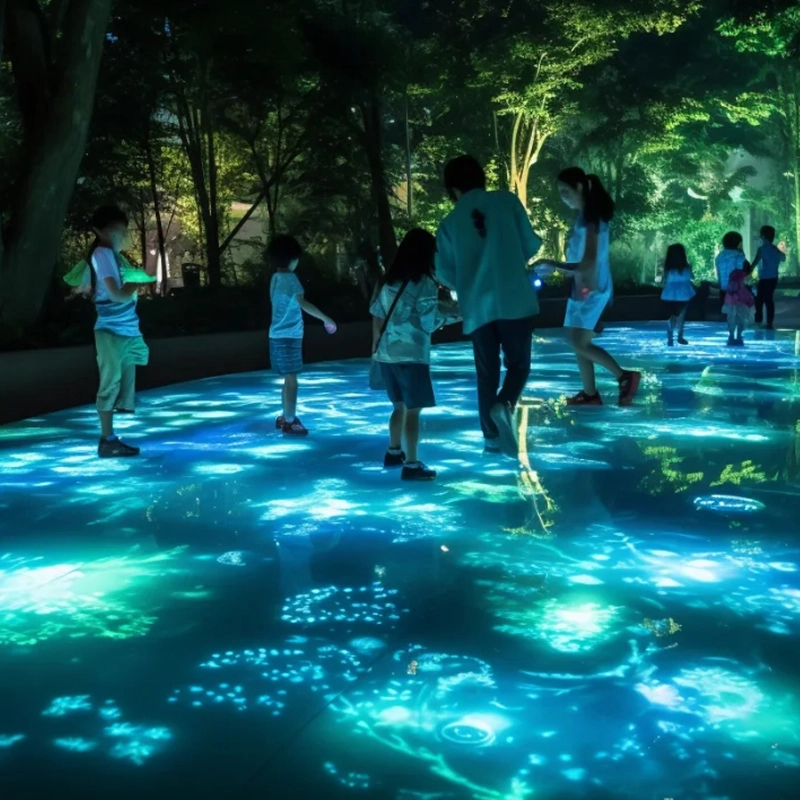
Ground interactive projection
Discover FUNTECH's Ground Interactive Projection, an innovative solution for captivating spaces. Experience immersive visuals and holographic projection that engage audiences, perfect for events, exhibitions, and interactive environments. Elevate your space with FUNTECH today!
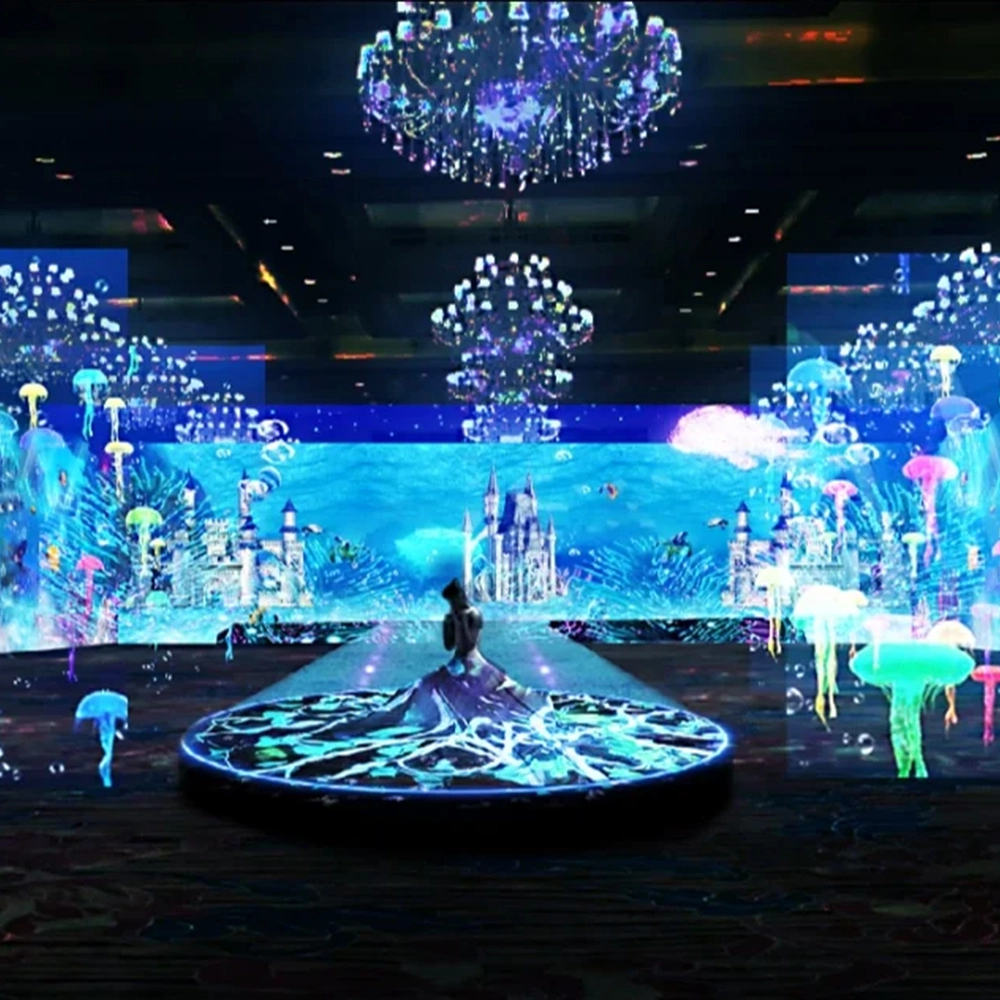
Holographic Light and Shadow 5D Banquet Hall
FUNTECH is full of fun and interesting holographic projections! By utilizing advanced principles of interference and diffraction, we bring you a stunning visual experience. Without the need for 3D glasses, lifelike 3D virtual images can be presented, as if real objects are suspended in the air.
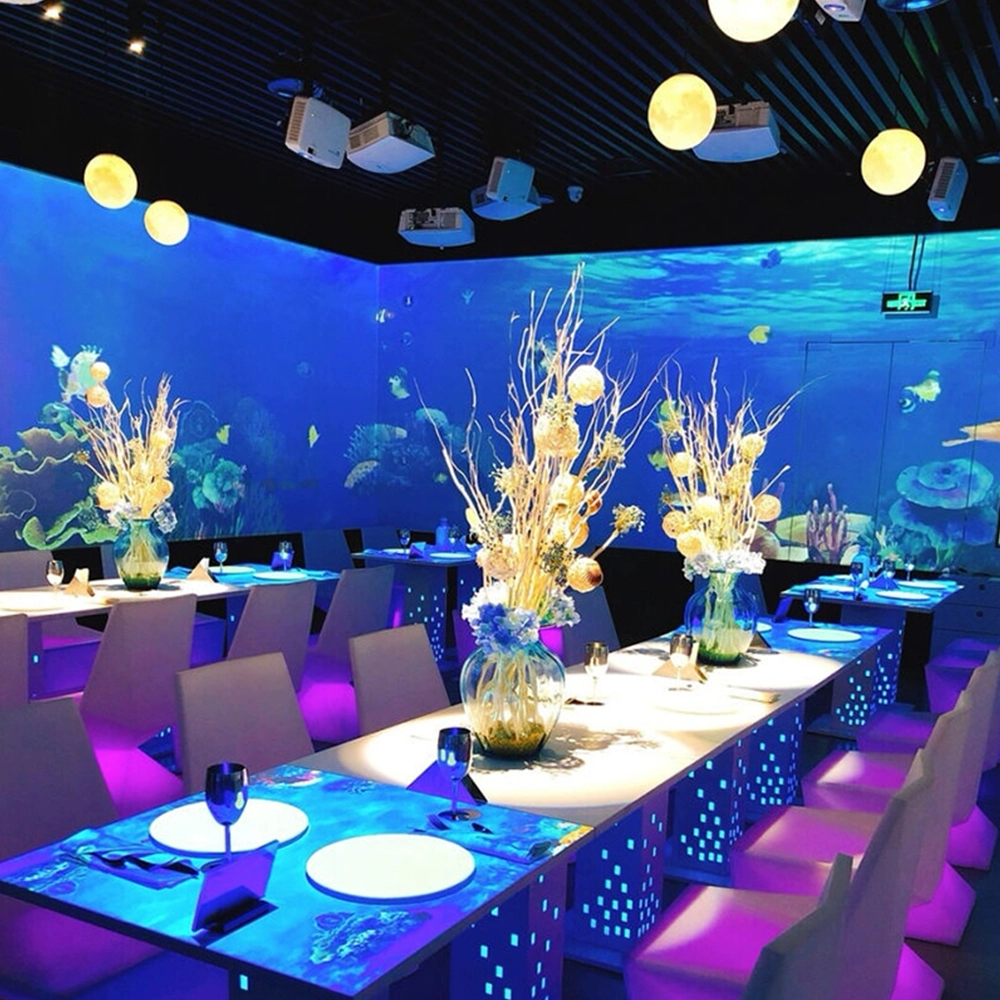
Holographic Light and Shadow Restaurant
FUNTECH is full of fun and interesting holographic projections! By utilizing advanced principles of interference and diffraction, we bring you a stunning visual experience. Without the need for 3D glasses, lifelike 3D virtual images can be presented, as if real objects are suspended in the air.
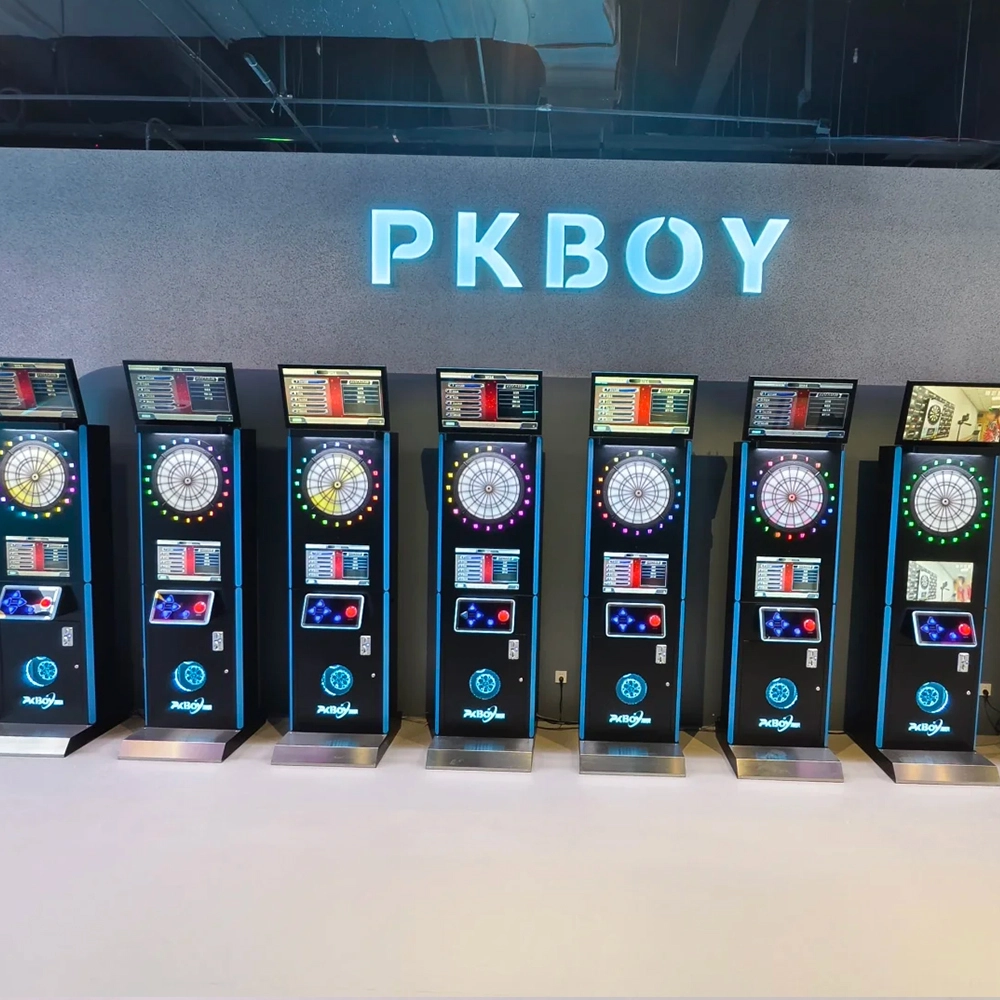
Dart Machines Bar Dart Machines
Joy Power is full of fun and excitement in the playground! The dart machine is suitable for all kinds of places, whether it is a bar, restaurant, KTV, or other entertainment venue, or a sports shop, club, or family leisure space, and can be perfectly adapted. In commercial venues, holding individual and team darts tournaments from time to time can attract more customers and increase the popularity and revenue of the venue, supplemented by various preferential activities, which can directly promote consumption and form a cycle of consumption of all the goods in the shop.
© 2025 FUNTECH ALL RIGHTS RESERVED

Weixia Lei
Fun_Tech-s
fun_tech20