
Maximizing Revenue with Shooting Arcade Machines: Operators' Tips
- Why Multi-Player Interactive Shooting Machines Deliver Strong ROI
- High Dwell Time and Social Play
- Versatility Across Venues
- Scalability & Networked Features
- Operational Best Practices for Maximizing Plays
- Smart Placement and Footprint Optimization
- Pricing Models & Ticketing Integration
- Gameplay Tuning for Repeat Plays
- Maintenance, Uptime, and Data-Driven Decisions
- Preventive Maintenance Routines
- Remote Monitoring & Telemetry
- Data Collection for Continuous Improvement
- Monetization, Marketing & Community Engagement
- Event-Based Revenue: Tournaments & Leagues
- Loyalty, Cross-Promotions & Redemption Strategies
- Local SEO & Geo-Targeted Marketing
- Practical Financial Example and Metrics
- Choosing the Right Multi-Player Interactive Shooting Machine
- Hardware & Sensor Quality
- Software & Content Flexibility
- Compliance & Safety Standards
- Implementation Checklist for Operators
- Pre-Deployment
- Launch & Testing
- Ongoing Optimization
- Frequently Asked Questions (FAQ)
- Q: How much space does a Multi-Player Interactive Shooting Machine need?
- Q: What is the typical lifespan and maintenance cost?
- Q: Are these machines suitable for all ages?
- Q: How do I measure return on investment?
- Q: What are the best promotional tactics to increase repeat plays?

Multi-Player Interactive Shooting Machine operators who want to maximize revenue need a strategy that combines location intelligence, engaging game design, reliable hardware, and targeted marketing. This article explains how venue type (family entertainment centers, malls, arcades, FECs, theme parks, and entertainment districts), machine placement, pricing models, multiplayer features, maintenance best practices, and data capture work together to increase plays per day, average ticket value, and machine lifetime value. Practical operator tips are provided that are grounded in industry guidance from IAAPA and safety/regulatory references to help you optimize revenue while maintaining guest satisfaction and operational efficiency.
Why Multi-Player Interactive Shooting Machines Deliver Strong ROI
High Dwell Time and Social Play
Shooting arcade machines—especially multi-player interactive shooting machines—drive dwell time because they combine competitive play, social interaction, and easy-to-understand scoring. Multiplayer formats encourage group plays and repeat rounds, which increases transactions per session. Operators see higher throughput when a game supports head-to-head contests, tournaments, and achievement-based incentives (e.g., progressive goals, streak scoring).
Versatility Across Venues
These units work in multiple environments: arcades, malls, bowling centers, FECs, cinemas, and even barcades. Placing machines near high-footfall zones and complementary attractions (redemption counters, VR pods, or food & beverage) produces strong cross-spend. According to the International Association of Amusement Parks and Attractions (IAAPA), designing experiences that fit location context significantly improves spend-per-guest.
Scalability & Networked Features
Modern shooting arcade machines support leaderboard networking, cashless payment integration, and remote telemetry—allowing centralized pricing experiments, remote diagnostics, and campaign pushes. This reduces on-site labor and speeds up revenue optimization cycles. Operators should evaluate machines for cloud telemetry and API access to enable analytics-driven decision making.
Operational Best Practices for Maximizing Plays
Smart Placement and Footprint Optimization
Placement is critical. Best locations include entrances to family zones, near prize redemption counters, and adjacent to seating areas where companions watch. Avoid placing behind obstacles or in poor sightlines. Use a simple A/B approach: trial two placements for 2–4 weeks and compare plays/day and conversion rate (people passing vs. people playing).
Pricing Models & Ticketing Integration
Test pricing: single-play, multi-play bundles (3-for-2), timed sessions, and loyalty discounts. For group play, offer team bundles and tournament entry fees. Integrate with venue cashless wallets or QR-pay to remove friction—data shows cashless integration increases conversion by reducing friction at point-of-sale. Use short promotions during peak hours (happy-hour rates) to boost slower periods.
Gameplay Tuning for Repeat Plays
Balance difficulty so that players experience regular wins (skill-based scoring) while still being challenged. Use dynamic difficulty scaling for younger players to keep sessions fun. Visual and audio feedback (LEDs, crowd-sounds) are inexpensive upgrades that increase perceived excitement and encourage second plays.
Maintenance, Uptime, and Data-Driven Decisions
Preventive Maintenance Routines
Downtime kills revenue. Implement a daily quick-check checklist (sensors, displays, coin/card acceptors, net/target integrity) and a weekly deeper inspection (frame, wiring, electronics). Keep commonly replaced consumables in stock (sensors, bulbs, fasteners). Use manufacturer-recommended firmware updates to keep scoring and connectivity reliable.
Remote Monitoring & Telemetry
Choose machines with remote telemetry to monitor plays, transaction counts, error codes, and environmental alarms. Telemetry helps schedule maintenance proactively and enables remote troubleshooting. A reduction in mean time to repair (MTTR) by even one hour per month per machine scales to significant annual revenue retention.
Data Collection for Continuous Improvement
Capture session-level data (plays, duration, win rates, peak hours) and tie it to promotions and pricing experiments. Use a simple dashboard to track KPI trends. Align data with POS and footfall counters to measure conversion and refine placement and promotions. The Nielsen Norman Group and other UX authorities highlight the importance of quantitative user behavior for improving engagement (Gamification and Engagement insights).
Monetization, Marketing & Community Engagement
Event-Based Revenue: Tournaments & Leagues
Run weekly or monthly tournaments with entry fees, leaderboard prizes, and social sharing incentives. Tournaments increase repeat visits and can be monetized via sponsorships or bundled F&B offers. Promote events on social channels and in-venue signage to build a regular player base.
Loyalty, Cross-Promotions & Redemption Strategies
Offer loyalty credits or points for repeat plays and cross-promote with nearby attractions (e.g., free play after a movie ticket purchase). Use prize redemption as a pull: calibrate ticket-to-prize ratios to maintain excitement while controlling cost of goods. Redemption counters strategically placed near the machine increase perceived value and spur cross-sell.
Local SEO & Geo-Targeted Marketing
Optimize your venue’s local listings, schema markup, and Google Business Profile to capture players searching for nearby arcade attractions. Use geo-targeted ads and social media promotions tied to events and peak times. For broader industry context and operational best practices, IAAPA provides guidance and trends for attraction operators (IAAPA resources).
Practical Financial Example and Metrics
Below is a simple comparison table to estimate monthly revenue and ROI for a typical shooting arcade machine. Assumptions: average price per play = $2.00, plays per day vary by placement and multiplayer effect, operating days = 30, machine cost (capex) = $12,000, monthly maintenance & utilities = $150.
| Scenario | Avg Plays/Day | Price/Play | Monthly Revenue | Monthly Net (Revenue - Opex) | Months to Payback |
|---|---|---|---|---|---|
| Standard Single-Player | 80 | $2.00 | $4,800 | $4,650 | ~2.6 |
| Multi-Player (Optimized Placement & Events) | 150 | $2.00 | $9,000 | $8,850 | ~1.4 |
| Peak Venue w/ Cashless + Loyalty | 220 | $2.25 | $14,850 | $14,700 | <1 |
Notes: These examples are illustrative. Your actual figures will vary by venue, pricing, promotions, and machine features. Use telemetry to measure your real metrics and adjust strategy accordingly.
Choosing the Right Multi-Player Interactive Shooting Machine
Hardware & Sensor Quality
Reliable sensors and rugged frames reduce false negatives and service calls. Look for machines with redundancy in scoring sensors (multiple triggers), modular electronics for fast swaps, and durable materials for high-traffic environments.
Software & Content Flexibility
Choose units that allow content patches, leaderboard modes, and custom tournament scripts. The ability to quickly update game modes (holiday themes, seasonal events) keeps experiences fresh and drives repeat traffic.
Compliance & Safety Standards
Follow local and international safety guidelines for amusement equipment. Check manufacturer certifications and ensure electrical and mechanical safety checks meet local code. For guidance on safety and product compliance, consult authoritative sources such as the U.S. Consumer Product Safety Commission (CPSC) and relevant standards organizations.
Product highlight:
Joy Power is full of fun and exciting playgrounds! The basketball shooting machine is a classic amusement device integrating competition, entertainment, and interactivity. Based on the traditional basketball shooting sport, it integrates electronic scoring, sound and light effects, and challenge mechanisms to bring players an immersive game experience. The main body of the equipment is usually built with a metal frame, equipped with a standard-sized basket and a sturdy rim, with multiple sets of sensors to accurately capture the trajectory of the shot; when the player shoots the ball, the machine's built-in sensors count the score in real time and present the score, remaining time, and challenge goals through the LED display or LCD screen, with exciting sound effects and colorful lights to create a tense and exciting gaming atmosphere.
Implementation Checklist for Operators
Pre-Deployment
- Perform site survey: traffic flow, sightlines, power and network access.
- Decide pricing strategy and payment integrations (cashless vs. coin).
- Plan placement near complementary attractions and redemption.
Launch & Testing
- Run a soft-launch week to test difficulty, pricing, and placement.
- Collect telemetry and customer feedback; iterate quickly.
- Train staff on quick troubleshooting and basic maintenance.
Ongoing Optimization
- Schedule routine maintenance and firmware updates.
- Run monthly promotions, tournaments, and loyalty campaigns.
- Review KPI dashboard and adjust pricing/placement quarterly.
Frequently Asked Questions (FAQ)
Q: How much space does a Multi-Player Interactive Shooting Machine need?
A: Typical footprint ranges from 4–8 ft wide by 6–10 ft deep depending on the model and staging area for spectators. Always allow clearance for queuing and prize redemption access.
Q: What is the typical lifespan and maintenance cost?
A: With regular preventive maintenance, mechanical and electronic components can last 5–8 years or more. Plan for routine monthly Opex (cleaning, minor parts) of $100–$300 depending on usage and regional labor costs. Keep a small stock of wearable parts (sensors, fasteners, display LEDs).
Q: Are these machines suitable for all ages?
A: Yes—game modes and difficulty can be adjusted to appeal to kids, teens, and adults. Ensure you set safety parameters for young children and consider placing family-friendly modes during daytime hours.
Q: How do I measure return on investment?
A: Track revenue per day, plays per day, average transaction value, and uptime. ROI = (Total net revenue over period) / (Initial capex + operating costs). Use telemetry and POS integration to get accurate measures.
Q: What are the best promotional tactics to increase repeat plays?
A: Weekly tournaments, loyalty credits, cross-promotions with F&B or movies, limited-time game modes, and social-sharing incentives are all effective. Track incremental revenue from promotions to identify the highest ROI tactics.
If you have more detailed questions about the Multi-Player Interactive Shooting Machine or want tailored revenue projections for your venue, contact our sales team or view the product page for specs, configuration options, and demo scheduling.
Contact Sales | View Product Details
References and further reading: Arcade game — Wikipedia, IAAPA, U.S. Consumer Product Safety Commission (CPSC), Nielsen Norman Group — Gamification & Engagement.
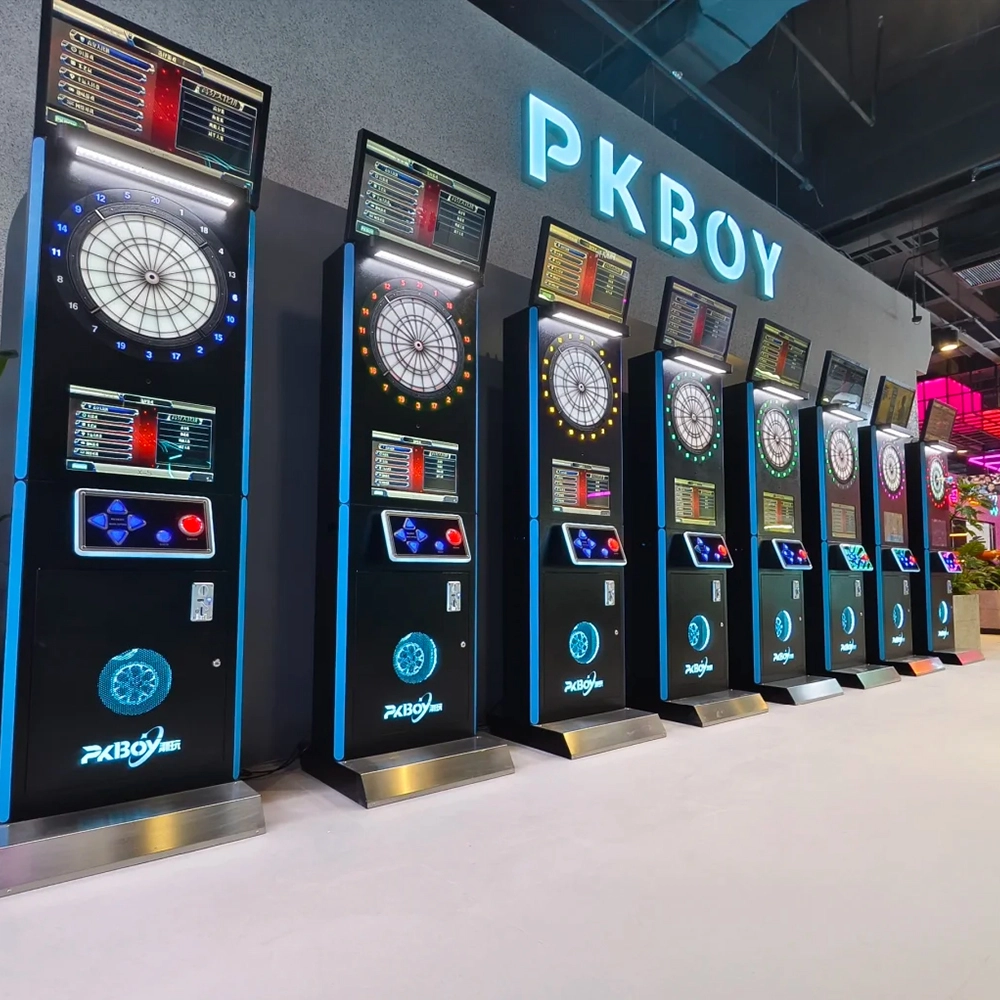
Best Lighting and Placement for Electronic Dart Machines
How to Choose the residential golf simulator manufacturer and supplier in Germany?
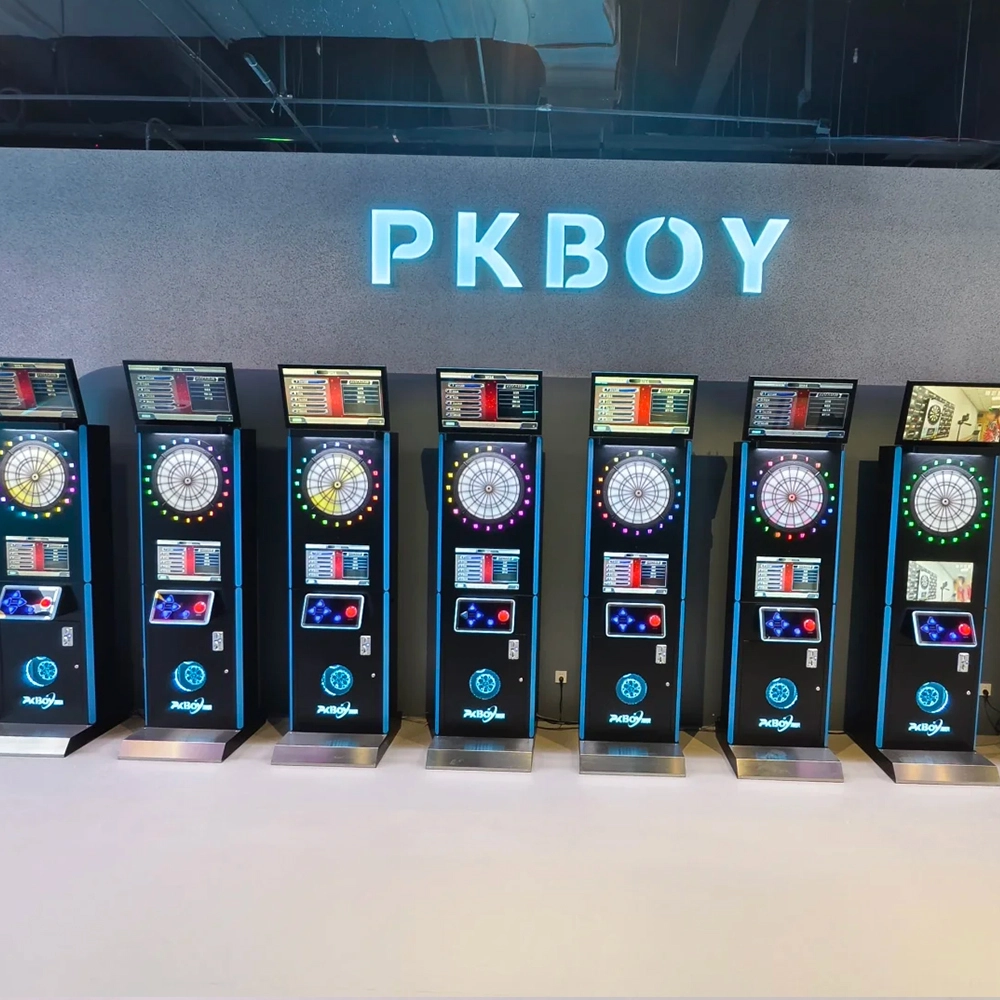
Top Bar Dart Machine Models for High-Traffic Venues
OEM/ODM dart machine electronic Manufacturers and Suppliers
Holographic Light and Shadow Restaurant
What is the difference between holographic projection and ordinary projection?
Ordinary projection is the process of projecting a two-dimensional image onto a flat screen, where the viewer sees a flat image. Holographic projection can present real three-dimensional images, allowing viewers to observe different faces of objects from different angles, with a strong sense of three dimensionality and realism. In addition, ordinary projection usually only requires simple equipment such as projectors and screens, while holographic projection requires more complex optical systems and technologies to achieve.
What are the application scenarios of holographic projection?
Holographic projection has a wide range of applications in multiple fields. In the commercial field, it can be used for product display, advertising promotion, stage performances, etc., such as three-dimensional product display in shopping malls and virtual singer performances at concerts. In the field of education, it can be used for teaching demonstrations to help students understand complex scientific knowledge more intuitively. In the field of exhibition display, it can create an immersive exhibition experience and attract the attention of the audience.
Products
How often does moving target archery equipment require maintenance?
Under daily use, for equipment that is used less frequently, 1-3 times per week, simple cosmetic cleaning and functional checks can be performed after each use. A more comprehensive maintenance should be carried out every 2-4 weeks, including disassembling some parts for cleaning and checking the accuracy of the aiming system.
Dart Machines Bar Dart Machines
What are the after-sales services after purchasing the equipment?
Generally, a 1-year warranty is provided. During the warranty period, parts damaged due to quality problems, such as motor failure, display problems, etc., will be repaired or replaced free of charge. There will also be technical support, including equipment installation and debugging guidance, operation training, to ensure the smooth use of the user, after-sales response time is usually within 24 - 48 hours.
How often does the equipment require maintenance?
For daily use, simple monthly maintenance, such as simple cosmetic cleaning and function checking after use, is sufficient. A more comprehensive quarterly maintenance is sufficient.
Dart Machines Bar Dart Machines
Joy Power is full of fun and excitement in the playground! The dart machine is suitable for all kinds of places, whether it is a bar, restaurant, KTV, or other entertainment venue, or a sports shop, club, or family leisure space, and can be perfectly adapted. In commercial venues, holding individual and team darts tournaments from time to time can attract more customers and increase the popularity and revenue of the venue, supplemented by various preferential activities, which can directly promote consumption and form a cycle of consumption of all the goods in the shop.
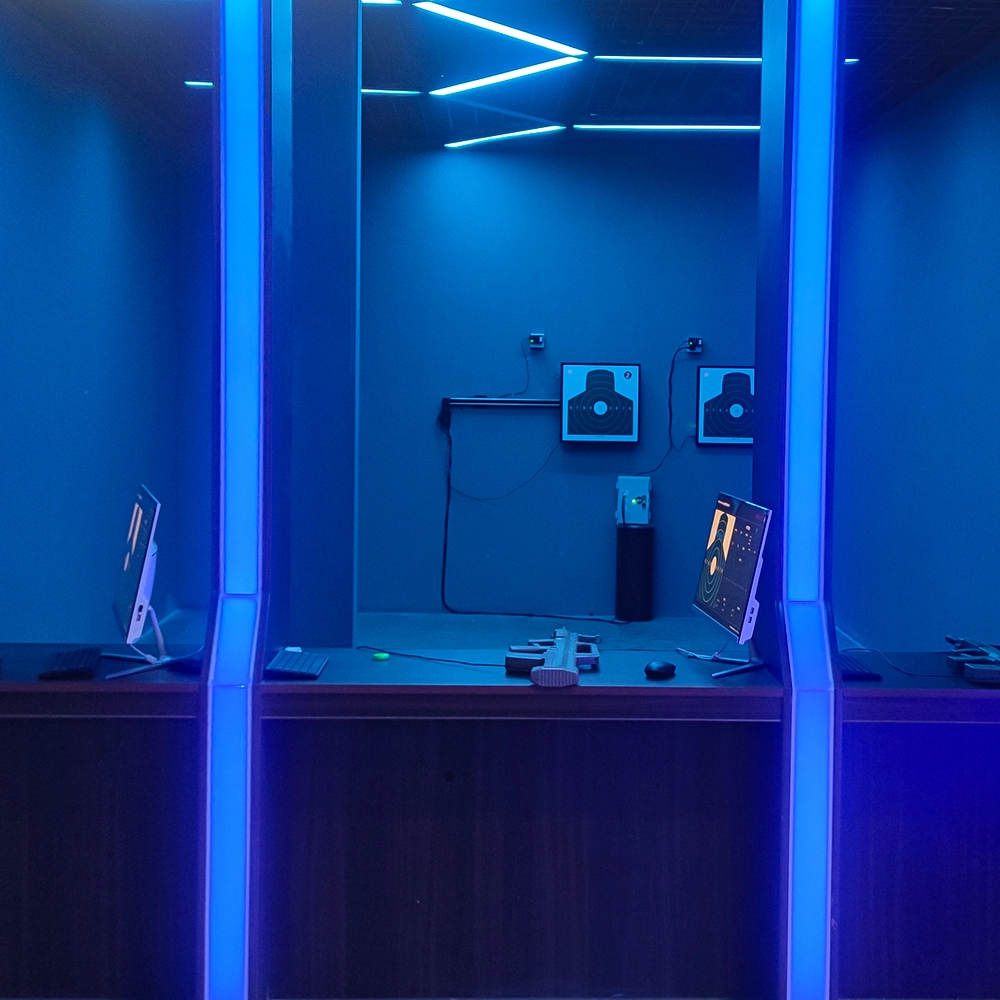
Infrared Shooting
Highly simulated simulation training analysis equipment, with advanced design concepts, fast system development, ease of operation and use, stable technical performance, less consumption of training, site dependence on a small group training is highly interesting, safe, and reliable, and other outstanding features. Product design to solve the basic skills of light weapons precision shooting as a starting point, to improve the safety of shooting training and training efficiency as the fundamental purpose, highlighting the simulation, information technology, and combat training requirements, can be in small indoor and outdoor venues and does not use live ammunition to complete the basic shooting training.
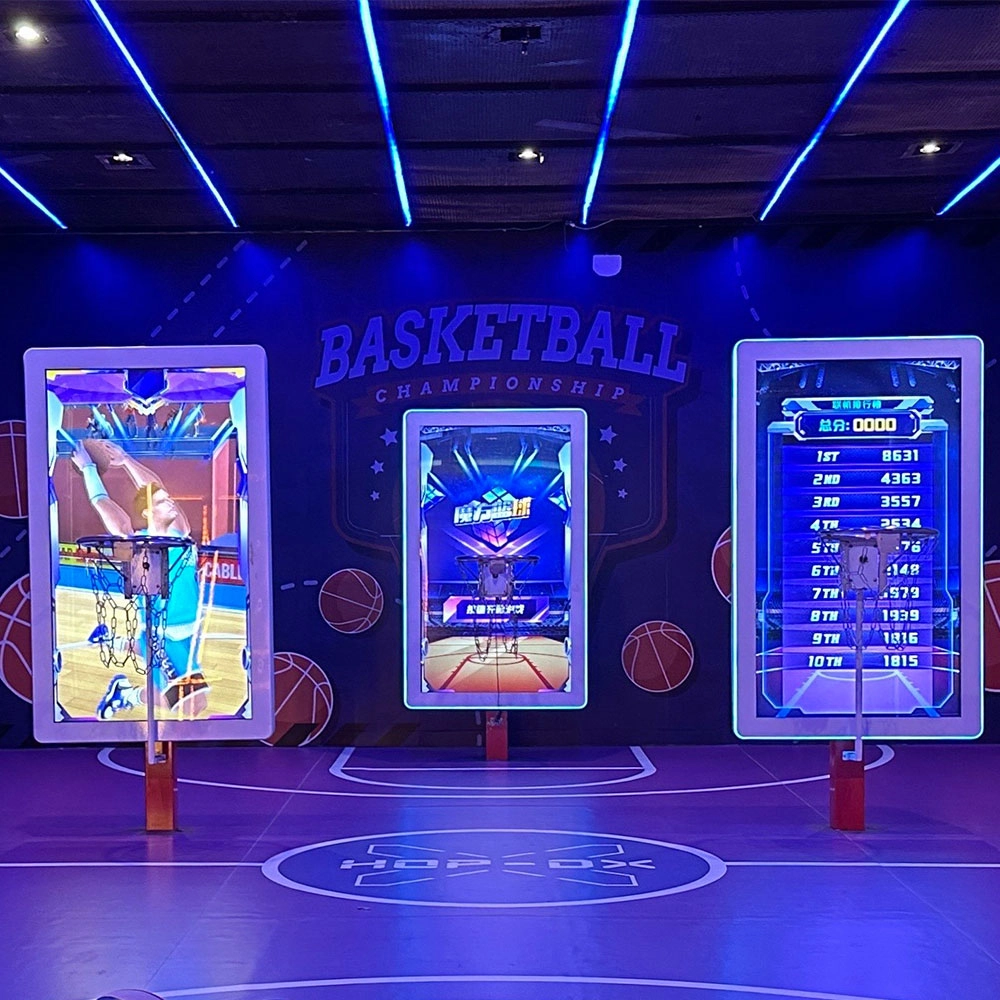
Multi-Player Interactive Shooting Machine
Joy Power is full of fun and exciting playgrounds! The basketball shooting machine is a classic amusement device integrating competition, entertainment, and interactivity. Based on the traditional basketball shooting sport, it integrates electronic scoring, sound and light effects, and challenge mechanisms to bring players an immersive game experience. The main body of the equipment is usually built with a metal frame, equipped with a standard-sized basket and a sturdy rim, with multiple sets of sensors to accurately capture the trajectory of the shot; when the player shoots the ball, the machine's built-in sensors count the score in real time and present the score, remaining time, and challenge goals through the LED display or LCD screen, with exciting sound effects and colorful lights to create a tense and exciting gaming atmosphere.
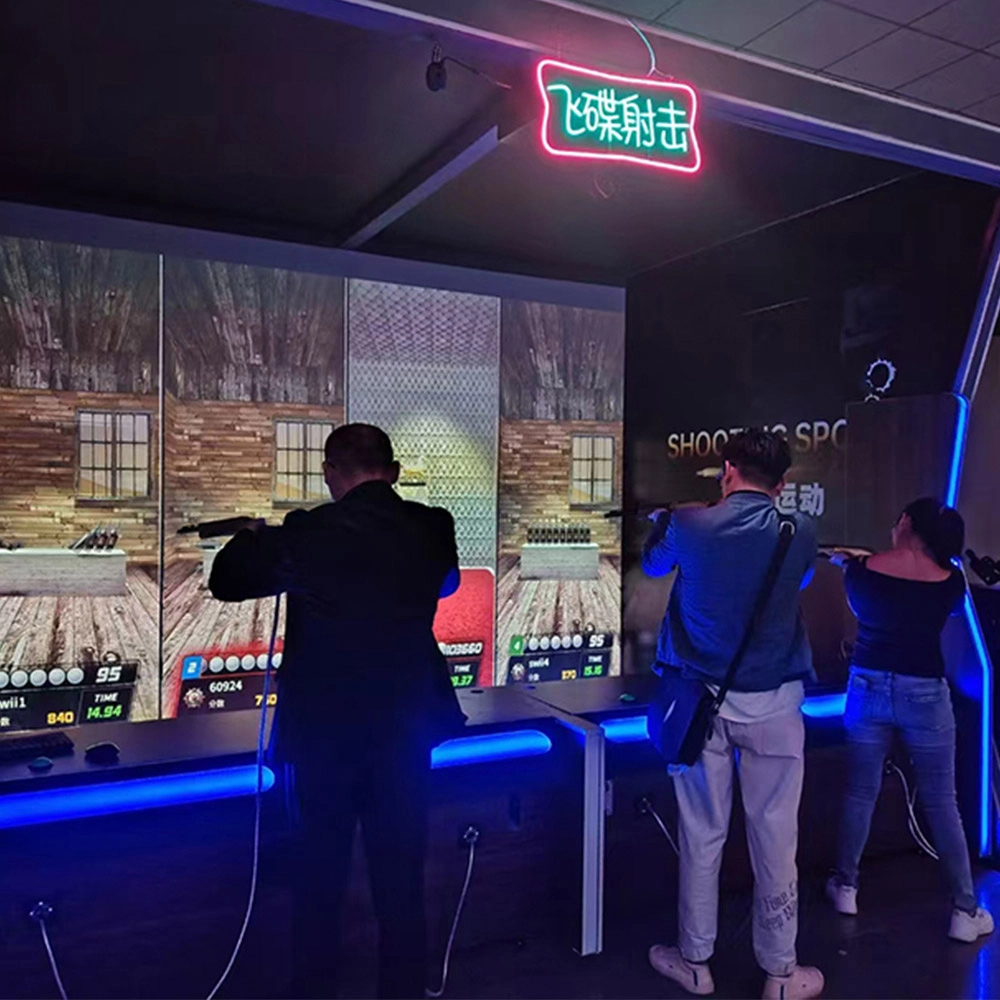
Indoor Wave Play Disc Shooting Equipment
Joy Power is full of fun and exciting playgrounds! The saucer shooting equipment in the indoor hip play hall is an immersive entertainment device integrating high-definition projection scenes, simulated air rifles, and multi-mode interactive gameplay, which allows players to experience the excitement of virtual shooting and the fun of social competition through laser-sensing scoring and multi-sensory feedback.
© 2025 FUNTECH ALL RIGHTS RESERVED

Weixia Lei
Fun_Tech-s
fun_tech20