
Technology Trends in Shooting Arcade Machines and Interactive Play
- Emerging Hardware Innovations for Shooting Arcade Machines
- Precision sensing: camera, IR and ultrasonic approaches
- Durability, materials and mechanical design
- Displays, lighting and sound for immersion
- Software, Connectivity and Player Experience
- Real-time scoring, anti-cheat and analytics
- Multiplayer synchronization and cloud integration
- User interfaces, accessibility and UX considerations
- Commercial Deployment, Safety and Operational Best Practices
- Placement strategies and revenue optimization
- Safety standards, compliance and maintenance
- Cybersecurity, privacy and cashless systems
- Comparing Core Technologies: What to Choose for Your Location
- Case example: Joy Power Multi-Player Interactive Shooting Machine
- Implementation Checklist and Best Practices
- Pre-deployment checklist
- Operational checklist
- Upgrades and future-proofing
- FAQs & Contact
- FAQ

As location-based entertainment evolves, modern shooting arcade machines combine advanced sensors, real-time networking, immersive lighting and sound, and data-driven management to deliver engaging, repeatable experiences. This overview helps operators, developers, and buyers of Multi-Player Interactive Shooting Machine attractions understand the technical choices that impact reliability, revenue, accessibility and player retention. It also summarizes interoperability, safety and privacy considerations that matter for durable, high-performing installations.
Emerging Hardware Innovations for Shooting Arcade Machines
Precision sensing: camera, IR and ultrasonic approaches
Accurate shot detection is the core of any shooting arcade machine. Modern systems typically use a combination of technologies (sensor fusion) rather than a single sensor type to increase reliability across lighting conditions and playing styles. Options include:
- Optical camera systems (monocular/stereo): provide high-resolution trajectory and player position data and enable advanced features like replay and anti-cheat. They work well in well-lit environments but need careful calibration and processing power.
- Infrared (IR) break-beam and active IR tracking: affordable and low-latency for detecting ball passage in fixed zones (e.g., basket rim). Less sensitive to ambient visible light but limited in directionality.
- Ultrasonic/RF range sensors: useful for proximity detection and redundancy; they perform well where line-of-sight is not guaranteed.
Combining camera-based tracking with IR or ultrasonic backups (sensor fusion) reduces false positives and improves uptime. For a technical introduction to sensor fusion approaches, see this IEEE overview of sensor fusion techniques (IEEE Xplore).
Durability, materials and mechanical design
Shooting arcade machine cabinets and targets must survive continuous impacts and heavy foot traffic. Best practices include powder-coated steel frames, reinforced rims and netting, impact-absorbing backboards, and modular panels for rapid replacement. Weatherproofing and sealed electronics are essential for outdoor or semi-outdoor placements. Operators should evaluate mean time between failures (MTBF) metrics from manufacturers and prefer designs with hot-swappable modules for displays, sensors and payment hardware to minimize downtime.
Displays, lighting and sound for immersion
Immersive feedback increases engagement and dwell time. Bright LED matrix displays or full-color LCD screens show scores, timers and player avatars, while programmable addressable RGB lighting provides per-player cues and event-driven effects. High-quality directional speakers with DSP processing keep audio crisp in noisy arcades. Attention to latency between sensor detection and audiovisual feedback is crucial; target end-to-end latency under 50–100 ms to preserve a responsive feel.
Software, Connectivity and Player Experience
Real-time scoring, anti-cheat and analytics
The software stack in a state-of-the-art shooting arcade machine includes real-time scoring logic, anti-cheat heuristics, and analytics. Anti-cheat can be implemented via multiple signals—trajectory consistency checks from cameras, timing constraints, and cross-verification between sensor types. Analytics capture session length, score distributions, peak hours, and player flow—data that directly informs merchandising, promotions and route optimization for location-based entertainment managers.
Multiplayer synchronization and cloud integration
Multi-Player Interactive Shooting Machine systems must synchronize state across multiple stations and central leaderboards. Architectures range from on-premises local servers for low-latency synchronization to hybrid cloud setups that send anonymized session summaries to cloud services for cross-site leaderboards and remote monitoring. For large chains, cloud-enabled content management allows remote updates of game logic, difficulty curves and seasonal content without field visits.
User interfaces, accessibility and UX considerations
Designing for a broad audience includes clear visual cues, multi-language support, adjustable difficulty, and accessible mounting heights and controls for players with limited mobility. Consider including an accessible mode (larger targets, extended time) and clear instructions on both display and audio. Implementing contactless start and cashless payment options simplifies onboarding and speeds gameplay cycles.
Commercial Deployment, Safety and Operational Best Practices
Placement strategies and revenue optimization
Operators should optimize placement for sightlines, flow, and dwell. Placing Multi-Player Interactive Shooting Machine units near food & beverage or redemption centers increases cross-spend. Common monetization strategies include pay-per-play, time-based sessions, bundled group packages, and ticket/redemption linking. Use analytics to run A/B tests on pricing and game modes to maximize revenue per square foot.
Safety standards, compliance and maintenance
Safety and compliance reduce liability and protect revenue. Follow local electrical codes and accessible design guidelines. Industry associations like the International Association of Amusement Parks and Attractions (IAAPA) publish best practices for attractions and arcade equipment; see IAAPA for resources. Regular preventive maintenance schedules—daily visual checks, weekly sensor recalibration, and quarterly software health checks—are recommended. Keep firmware and operating systems current to patch safety or security issues.
Cybersecurity, privacy and cashless systems
Modern machines increasingly accept cashless payments, integrate with CRM systems, and connect to cloud dashboards. Adopt the NIST Cybersecurity Framework principles (Identify, Protect, Detect, Respond, Recover) for networked devices; see NIST Cybersecurity Framework. Protect player privacy: anonymize analytics, obtain consent for any personally identifiable data, and follow applicable data-protection laws. Isolate game networks from business-critical systems using VLANs, firewalls and secure authentication.
Comparing Core Technologies: What to Choose for Your Location
Choosing the right combination of sensors, displays and connectivity impacts cost, reliability and player experience. The table below compares common options:
| Technology | Strengths | Limitations | Best Use |
|---|---|---|---|
| Optical camera (single/stereo) | High accuracy, enables replays and anti-cheat | Higher cost, sensitive to lighting, needs processing | Indoor arcades with controlled lighting, advanced features |
| Infrared (IR) sensors | Low cost, low latency, robust in visible light variations | Limited spatial info, can be blocked by dirt | Basic scoring zones and redundancy |
| Ultrasonic / RF | Works in obscured environments, complementary data | Lower spatial resolution, potential interference | Outdoor/semi-outdoor setups or backup sensing |
| LED matrix / LCD displays | High visibility, dynamic content, sponsor options | Power and heat management, cost varies by size | Scoreboards, game UI, advertisements |
| Local server vs Cloud | Local: low-latency; Cloud: centralized analytics & updates | Local: limited remote management; Cloud: dependency on connectivity | Local for latency-critical; Cloud for multisite chains |
Case example: Joy Power Multi-Player Interactive Shooting Machine
Operators considering a proven model can evaluate the Multi-Player Interactive Shooting Machine by Joy Power. The product blends competition, entertainment and interactivity. Product description:
Joy Power is full of fun and exciting playgrounds! The basketball shooting machine is a classic amusement device integrating competition, entertainment, and interactivity. Based on the traditional basketball shooting sport, it integrates electronic scoring, sound and light effects, and challenge mechanisms to bring players an immersive game experience. The main body of the equipment is usually built with a metal frame, equipped with a standard-sized basket and a sturdy rim, with multiple sets of sensors to accurately capture the trajectory of the shot; when the player shoots the ball, the machine's built-in sensors count the score in real time and present the score, remaining time, and challenge goals through the LED display or LCD screen, with exciting sound effects and colorful lights to create a tense and exciting gaming atmosphere.
This type of Multi-Player Interactive Shooting Machine is suitable for family entertainment centers, malls, theme parks and arcades where operator control over difficulty, reward configurations and multiplayer modes increases return on investment. Remote monitoring and OTA updates facilitate content refreshes and seasonal promotions without field technicians.
Implementation Checklist and Best Practices
Pre-deployment checklist
- Site survey for electrical, network, and foot traffic patterns.
- Confirm mounting, clearance and sightlines; provide protective barriers where needed.
- Decide on sensor mix and redundancy levels based on expected throughput and ambient conditions.
Operational checklist
- Daily visual inspection and cleaning of sensors and rims.
- Weekly calibration checks and logs of firmware versions.
- Monitor analytics for anomalies (sudden drop in sessions can indicate hardware failure).
Upgrades and future-proofing
Design systems with modularity: replaceable sensor modules, swappable displays, and an updatable software stack. Plan for camera upgrades and additional DLC game modes to keep content fresh. Consider integrating loyalty systems and cross-attraction leaderboards to deepen customer engagement.
FAQs & Contact
FAQ
- Q: What is the most reliable sensing setup for high-traffic arcades?
- A: A fused approach—camera-based tracking complemented by IR break-beams or ultrasonic sensors—offers the best balance of accuracy and redundancy for high-throughput environments.
- Q: How do I reduce downtime and maintenance costs?
- A: Choose modular hardware with hot-swappable parts, maintain a preventive maintenance schedule, and use remote monitoring to detect issues early. Keep spare critical modules on-site for rapid replacement.
- Q: Can Multi-Player Interactive Shooting Machine systems be integrated into existing cashless or loyalty systems?
- A: Yes. Modern machines offer APIs or integrations for payment providers and CRM systems. Ensure data privacy agreements are in place and follow secure authentication practices.
- Q: How do we ensure safety and ADA compliance?
- A: Follow local accessibility codes, provide adjustable mounting or accessible modes, and adhere to industry best practices from organizations like IAAPA. Regular safety inspections and documented procedures reduce liability.
- Q: What are typical ROI timelines for these attractions?
- A: ROI varies by location and pricing strategy. Benchmarks from established FECs show payback periods from 6–24 months depending on foot traffic, pricing and cross-selling. Use analytics to optimize pricing and session design.
Want to evaluate the Multi-Player Interactive Shooting Machine for your venue or request a demo? Contact our sales team or view the full product details:
For more background on arcade history and the evolution of interactive attractions, see the Arcade game overview on Wikipedia: Arcade game.
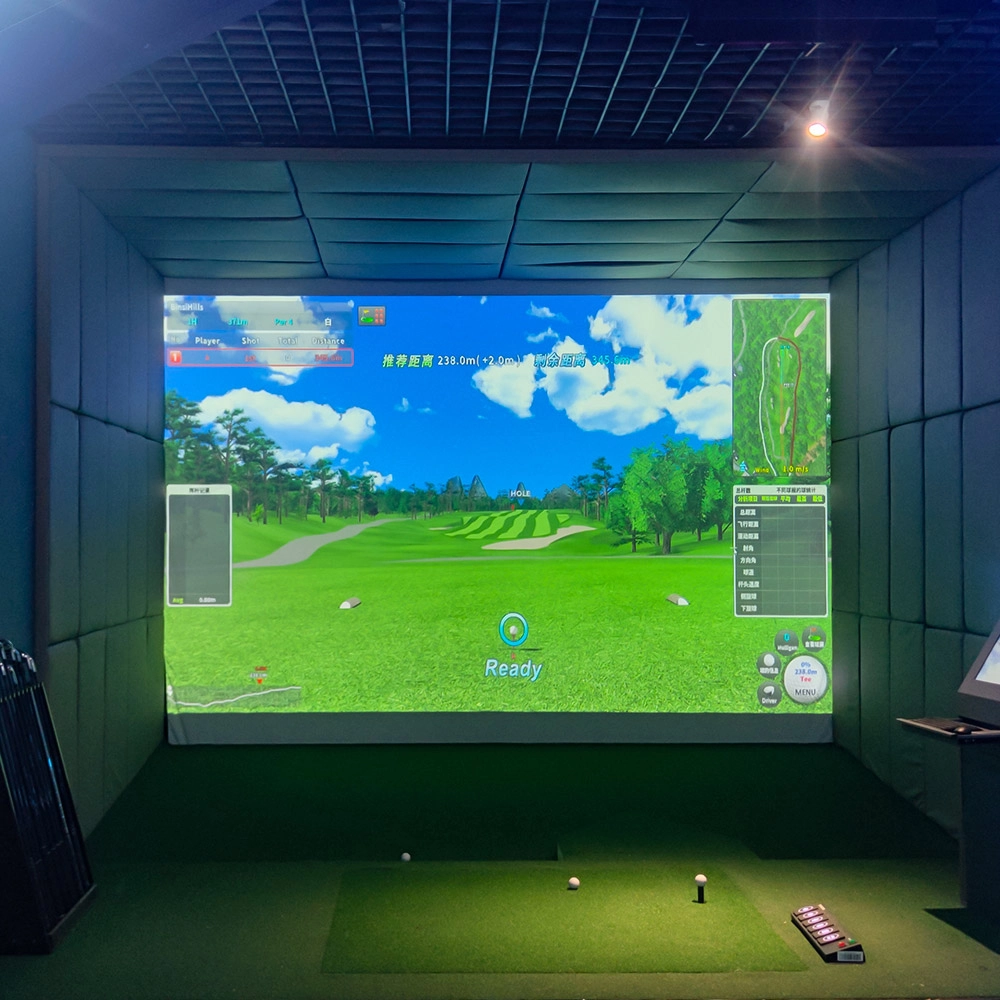
Tech Comparison: Best Indoor Golf Simulator Features for ROI
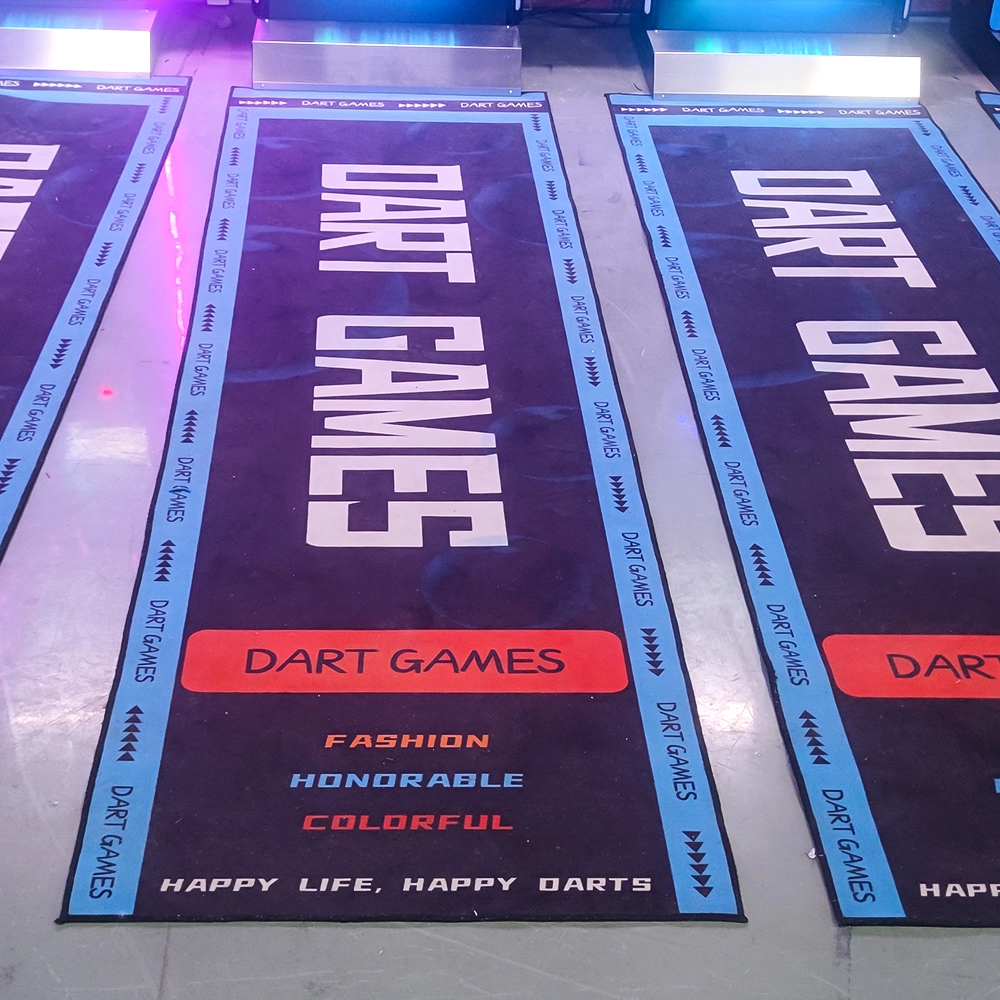
Top Compact Bar Dart Machines for Small Entertainment Areas
What are the different types of buy dance dance revolution arcade machine?
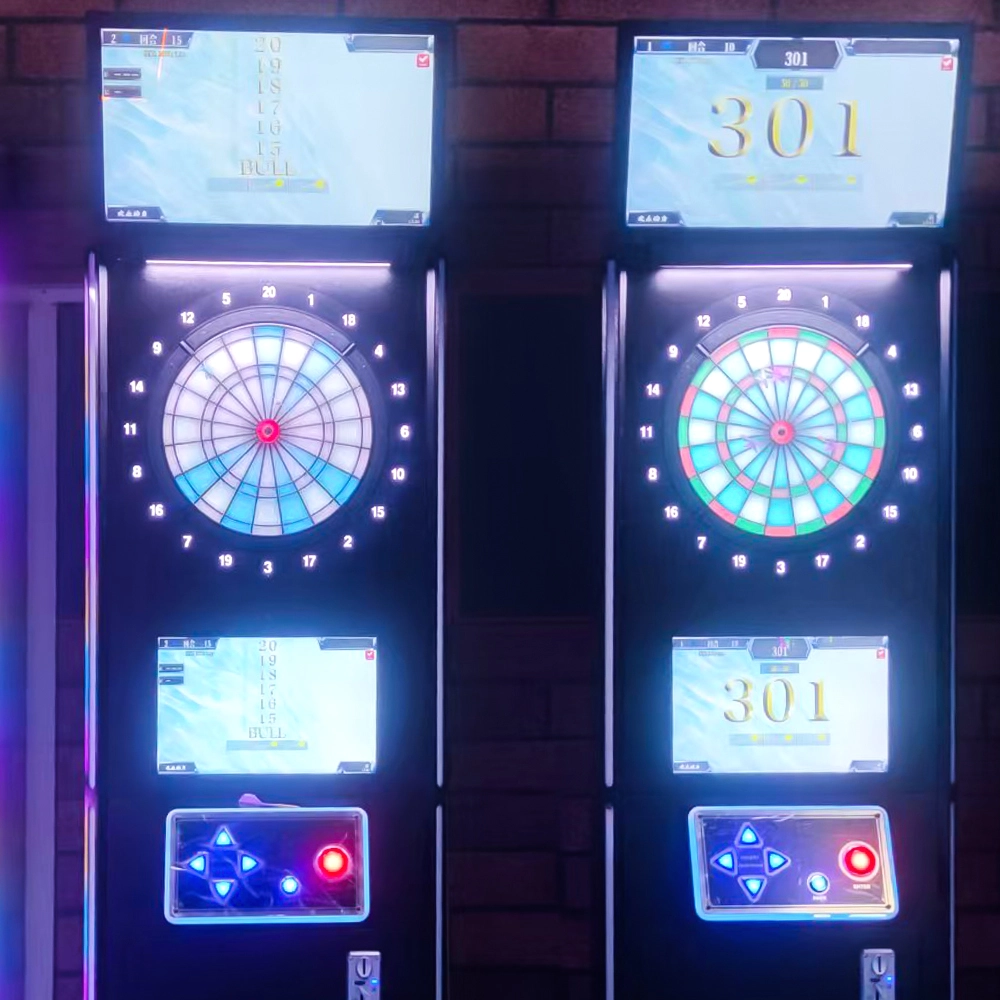
How Electronic Dart Machines Boost Social Engagement
Holographic Light and Shadow Restaurant
What are the technical difficulties of holographic projection?
One is the resolution and clarity of the image. To achieve high-resolution and high-definition 3D image reproduction, advanced optical equipment and algorithms are required. The second is the control of light interference and diffraction, which requires precise control of the propagation and interference conditions of light rays to ensure the stability and accuracy of the image. The third is the complexity and cost of the system. Holographic projection systems are usually quite complex, including optical components, light sources, control systems, etc., with high costs, which limits their widespread adoption.
What are the application scenarios of holographic projection?
Holographic projection has a wide range of applications in multiple fields. In the commercial field, it can be used for product display, advertising promotion, stage performances, etc., such as three-dimensional product display in shopping malls and virtual singer performances at concerts. In the field of education, it can be used for teaching demonstrations to help students understand complex scientific knowledge more intuitively. In the field of exhibition display, it can create an immersive exhibition experience and attract the attention of the audience.
What is the principle of holographic projection?
Firstly, during the recording process, a reference light and an object light are simultaneously irradiated onto the object, causing interference between the two beams. The intensity and phase information of the object are recorded on the photosensitive material, forming a hologram. Then, during the reproduction process, the hologram is illuminated with the same beam of light as the reference light, and the hologram acts like a complex diffraction grating, causing the light to diffract and thus reproducing the three-dimensional image of the object.
FAQ
What is the of process of design, construction and operation of digital sports entertainment hall?
The general steps for the design, construction and operation process of a digital sports entertainment center. Each step needs to be carefully planned and executed to ensure the smooth opening and long-term development of the digital sports entertainment center.
Golf Simulator
How to attract customers when operating the program in shopping malls?
Create a cool venue decoration style, incorporating trendy elements, such as fluorescent light strips and anime-themed murals. o Launch diversified marketing models such as parent-child packages and couple packages, combined with time-limited promotional activities, such as half-price experience in the first three days of opening, to attract families, couples and other groups to stop and participate in the program. o How to reduce operating costs?
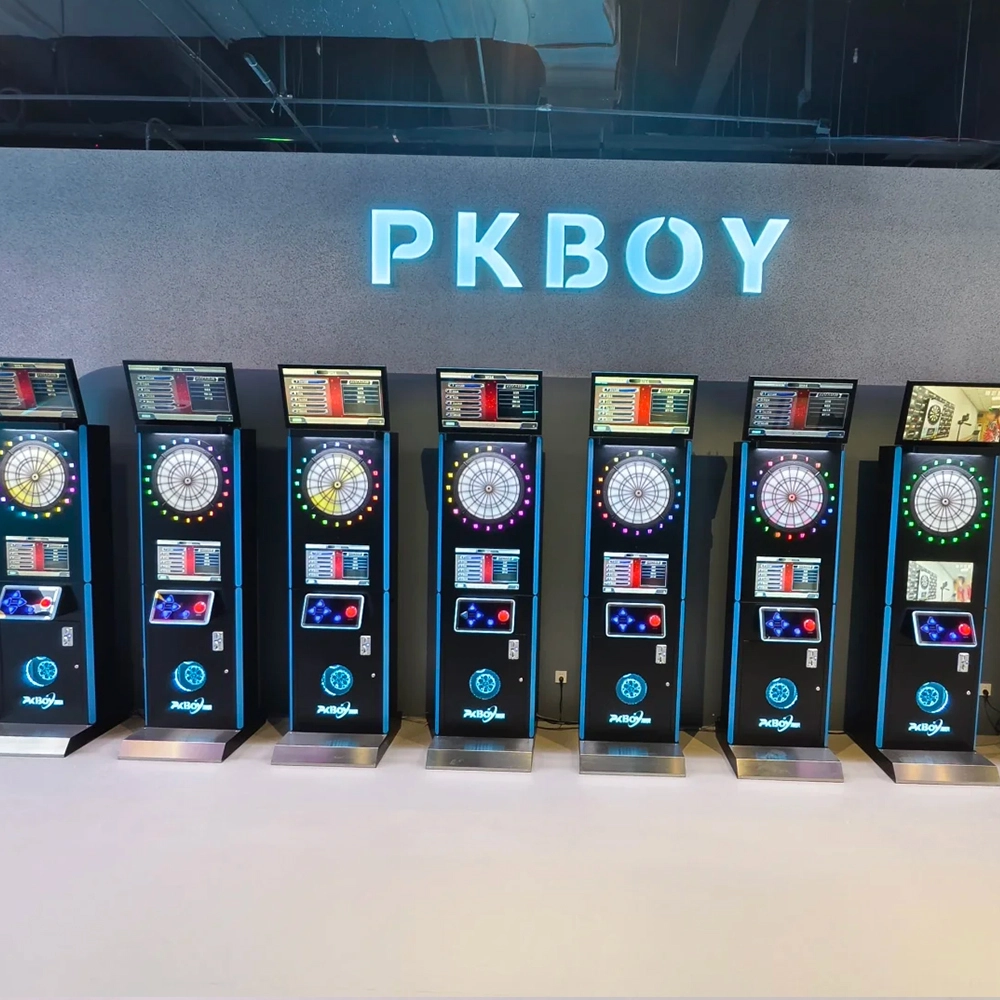
Dart Machines Bar Dart Machines
Joy Power is full of fun and excitement in the playground! The dart machine is suitable for all kinds of places, whether it is a bar, restaurant, KTV, or other entertainment venue, or a sports shop, club, or family leisure space, and can be perfectly adapted. In commercial venues, holding individual and team darts tournaments from time to time can attract more customers and increase the popularity and revenue of the venue, supplemented by various preferential activities, which can directly promote consumption and form a cycle of consumption of all the goods in the shop.
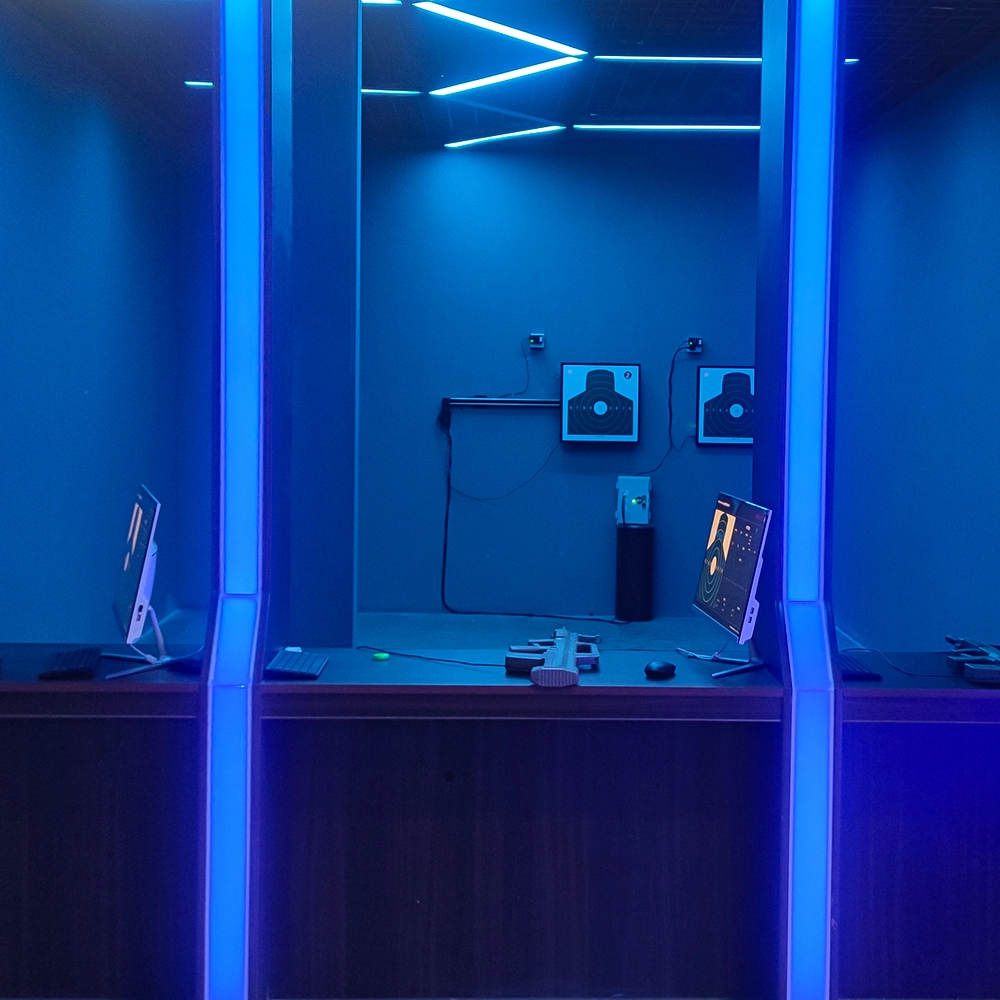
Infrared Shooting
Highly simulated simulation training analysis equipment, with advanced design concepts, fast system development, ease of operation and use, stable technical performance, less consumption of training, site dependence on a small group training is highly interesting, safe, and reliable, and other outstanding features. Product design to solve the basic skills of light weapons precision shooting as a starting point, to improve the safety of shooting training and training efficiency as the fundamental purpose, highlighting the simulation, information technology, and combat training requirements, can be in small indoor and outdoor venues and does not use live ammunition to complete the basic shooting training.
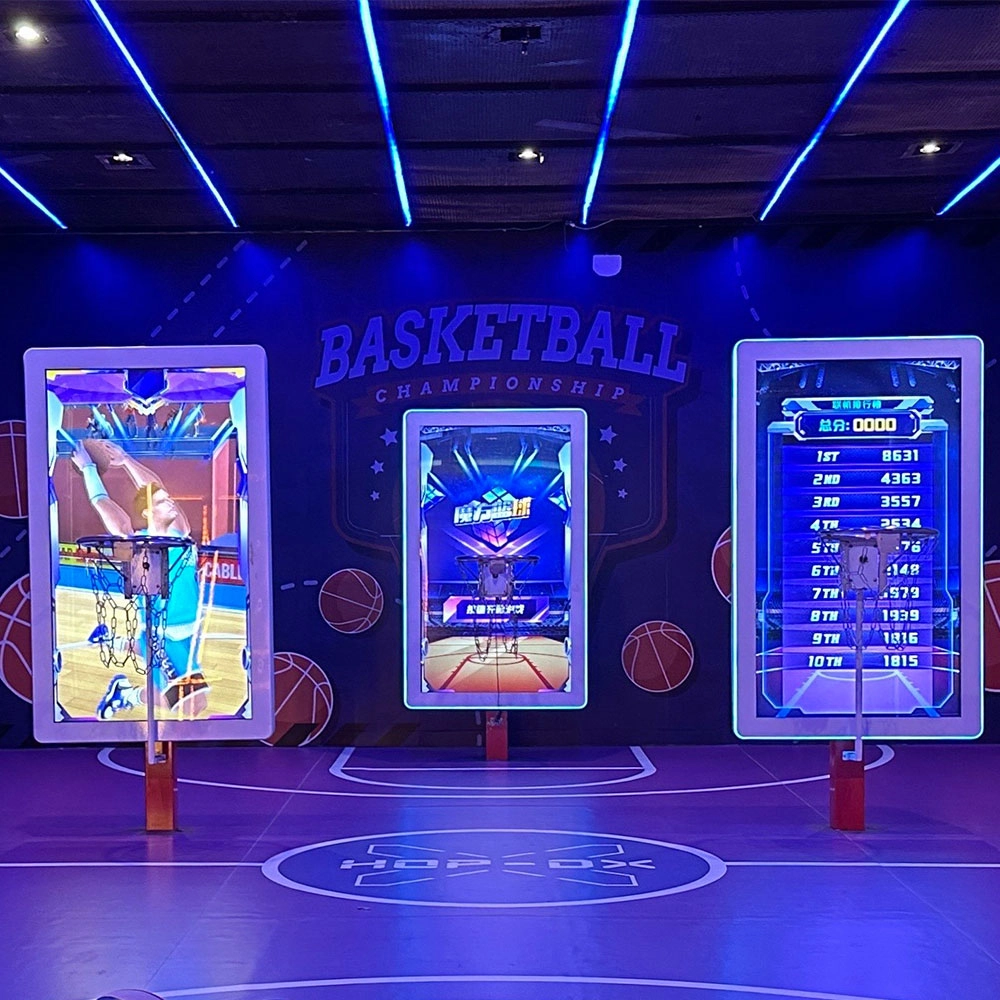
Multi-Player Interactive Shooting Machine
Joy Power is full of fun and exciting playgrounds! The basketball shooting machine is a classic amusement device integrating competition, entertainment, and interactivity. Based on the traditional basketball shooting sport, it integrates electronic scoring, sound and light effects, and challenge mechanisms to bring players an immersive game experience. The main body of the equipment is usually built with a metal frame, equipped with a standard-sized basket and a sturdy rim, with multiple sets of sensors to accurately capture the trajectory of the shot; when the player shoots the ball, the machine's built-in sensors count the score in real time and present the score, remaining time, and challenge goals through the LED display or LCD screen, with exciting sound effects and colorful lights to create a tense and exciting gaming atmosphere.
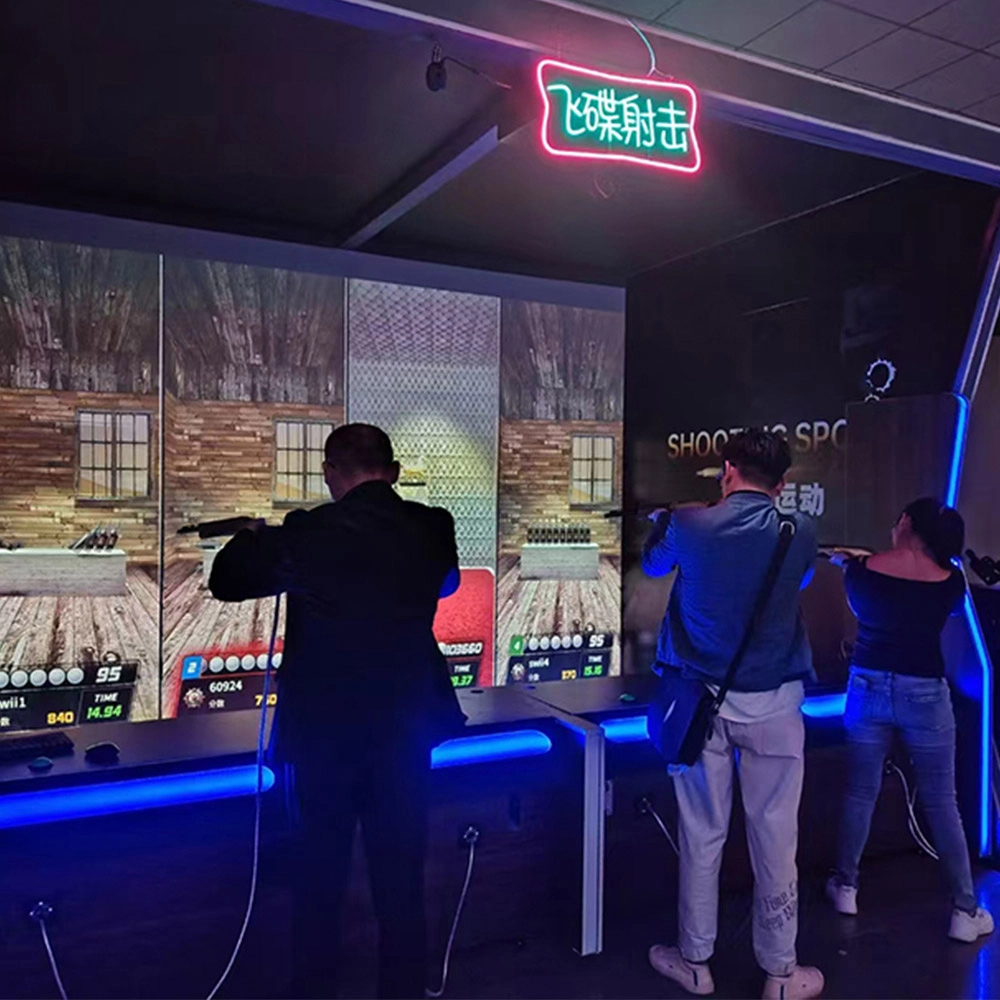
Indoor Wave Play Disc Shooting Equipment
Joy Power is full of fun and exciting playgrounds! The saucer shooting equipment in the indoor hip play hall is an immersive entertainment device integrating high-definition projection scenes, simulated air rifles, and multi-mode interactive gameplay, which allows players to experience the excitement of virtual shooting and the fun of social competition through laser-sensing scoring and multi-sensory feedback.
© 2025 FUNTECH ALL RIGHTS RESERVED

Weixia Lei
Fun_Tech-s
fun_tech20