
Everything You Need to Know About golf simulator franchise
- Everything You Need to Know About Golf Simulator Franchise
- Introduction: Why a golf simulator franchise matters in digital sports entertainment
- What is a golf simulator franchise and keywords
- Market context: Demand drivers for golf simulator franchise opportunities
- Typical business model and key commercial keywords
- Start-up costs and investment comparison table
- Revenue streams and profitability drivers
- Site selection, space needs, and commercial keywords
- Equipment choices and technology considerations
- Operations, staffing and training for franchise success
- Marketing strategies for customer acquisition and retention
- Typical timeline to open and break-even considerations
- How to evaluate a franchisor and franchise agreement
- Risk factors and mitigation strategies for investors
- Exit strategies and resale value
- Case example: What Guangzhou Suiyi (FUNTECH) offers for franchise partners
- Checklist: Steps to open your golf simulator franchise
- Key performance indicators (KPIs) to track for a golf simulator franchise
- Comparison of franchise vs independent ownership for a golf simulator business
- Conclusion: Is a golf simulator franchise right for you?
- Sources and references used in this golf simulator franchise guide
- Contact and next steps for prospective franchisees
Everything You Need to Know About Golf Simulator Franchise
Introduction: Why a golf simulator franchise matters in digital sports entertainment
Interest in indoor digital sports and the golf simulator franchise model has surged as consumers look for year-round, weather-independent golf experiences. If you are exploring a golf simulator franchise as an investor or operator, this guide explains what a golf simulator franchise is, how the business model works, typical costs and revenue streams, what to look for in a franchisor, and practical steps to open, run, and scale a profitable location.
What is a golf simulator franchise and keywords
A golf simulator franchise is a branded, replicated business model where franchisees open locations equipped with golf simulator bays—high-tech systems that track ball and club data and deliver immersive play. Franchisees gain access to proven marketing, training, and operational support while capitalizing on multiple revenue streams including hourly simulator rentals, memberships, events, food & beverage, and retail sales.
Market context: Demand drivers for golf simulator franchise opportunities
Indoor golf simulators fit several current trends: year-round participation, social and experiential entertainment, corporate team events, and sports-tech adoption. They are attractive in urban centers, malls, resorts, and mixed-use developments where outdoor golf access is limited. This commercial-intent content helps investors evaluate location viability and customer segments for a golf simulator franchise.
Typical business model and key commercial keywords
Most golf simulator franchises operate on a multi-revenue model: hourly bay rental, membership fees, lessons with PGA professionals, corporate events, leagues/tournaments, F&B, and equipment retail. Franchisees often pair simulator bays with casual dining and bar services to increase dwell time and average spend, improving unit economics for the franchise location.
Start-up costs and investment comparison table
Understanding upfront investment and ongoing fees is crucial when evaluating a golf simulator franchise opportunity. The following table summarizes typical cost ranges and fee structures used in the industry (estimates based on franchise reports and industry benchmarks):
| Cost Item | Typical Range (USD) | Notes |
|---|---|---|
| Initial franchise fee | $20,000 - $75,000 | Varies by brand and territory size |
| Equipment & installation (per bay) | $10,000 - $75,000 | Depends on simulator tech (basic launch monitors to full-motion systems) |
| Fit-out & construction | $30,000 - $300,000 | Depends on space, F&B facilities, and finish level |
| Working capital | $10,000 - $100,000 | Initial payroll, marketing, and operating buffer |
| Royalty fees | 4% - 10% of gross revenue | Some franchisors use flat fees or tiered royalty structures |
| Marketing fund | 1% - 3% of gross revenue | Contributes to national/regional advertising |
Revenue streams and profitability drivers
For a successful golf simulator franchise, prioritize diversified revenue streams. Typical revenue mix for many profitable locations includes bay rentals (40-60%), food & beverage (15-35%), memberships and lesson packages (10-20%), events and corporate bookings (5-15%), and retail/merchandise (2-10%). Maximizing membership sell-through and off-peak utilization improves margins and stabilizes cash flow.
Site selection, space needs, and commercial keywords
Location is critical. Ideal sites for a golf simulator franchise include high-footfall urban areas, shopping centers, mixed-use developments, airports, hotels, and sports complexes. Typical space requirement ranges from 2,000 sq ft for a small multi-bay facility to 8,000+ sq ft for locations with full-service F&B and multiple entertainment offerings. Ceiling height, parking availability, accessibility, and zoning for entertainment/F&B are key selection factors.
Equipment choices and technology considerations
Choosing the right simulator technology affects customer experience and long-term costs. Options range from affordable launch monitor integrations to High Quality full-immersion systems with motion platforms and multi-screen visuals. Consider accuracy, updateability, content licensing for courses and games, warranty and service, and the franchisor’s preferred vendors when evaluating equipment for your golf simulator franchise.
Operations, staffing and training for franchise success
Operational excellence distinguishes top franchise locations. Standard staffing includes a general manager, customer service/hosts, certified instructors (part-time or contractor), and kitchen/bar staff for locations offering F&B. Franchisors typically provide initial training programs, operations manuals, and ongoing support to ensure consistent guest experience across franchise locations.
Marketing strategies for customer acquisition and retention
Effective local marketing combines digital channels (SEO, local search, paid ads, social media), community partnerships (corporate event packages, golf clubs, local schools), and experience-driven promotions (leagues, tournaments, demo days). Franchised marketing benefits from brand-level campaigns and shared content; franchisees should still allocate budget for localized advertising to drive immediate foot traffic and memberships.
Typical timeline to open and break-even considerations
From signing a franchise agreement to opening a golf simulator franchise typically takes 3 to 9 months, depending on construction, permitting, and equipment lead times. Break-even timelines vary widely—many well-located, properly marketed facilities reach break-even in 12–24 months, though smaller operations in prime markets can achieve payback sooner. Conservative planning and a robust opening marketing campaign are essential to shorten the path to profitability.
How to evaluate a franchisor and franchise agreement
When evaluating opportunities, scrutinize the franchisor’s track record, financial stability, unit-level economics, training and support, territory protections, renewal and transfer terms, and upfront vs ongoing fees. Request Item 19 (if available) or comparable performance data, speak with existing franchisees, and consult a franchise attorney and accountant to review the franchise disclosure document and projected financials.
Risk factors and mitigation strategies for investors
Key risks include market saturation, technology obsolescence, poor location, and inconsistent guest experience. Mitigate these risks by choosing a reputable franchisor with a solid support system, negotiating territory exclusivity, investing in reliable equipment with service agreements, and implementing data-driven marketing and membership retention programs.
Exit strategies and resale value
Successful franchise locations typically have better resale value due to brand recognition and operational systems. Exit options include selling to a new franchisee, converting to a corporate model (if franchisor permits), or selling assets. Maintain clean financial records and strong customer metrics (membership counts, average ticket size, occupancy rates) to maximize resale value.
Case example: What Guangzhou Suiyi (FUNTECH) offers for franchise partners
Guangzhou Suiyi (FUNTECH) established in 2023 specializes in intelligent sports equipment and offers the Joyful Power brand combining smart hardware + interactive content. For prospective franchise partners, FUNTECH emphasizes strict quality control, worldwide sales and after-sales support, customizable solutions, a professional R&D and operations team, and 24/7 customer support—advantages that can reduce technology risk and speed up implementation for a golf simulator franchise.
Checklist: Steps to open your golf simulator franchise
Follow this checklist to evaluate and launch a golf simulator franchise: finalize budget and financing; review franchise disclosure and agreement; select and secure a site; work with franchisor on equipment and fit-out; hire and train staff; execute a pre-opening marketing plan; launch with local and brand-supported campaigns; track KPIs and optimize operations.
Key performance indicators (KPIs) to track for a golf simulator franchise
Track occupancy rate per bay, average revenue per booking, membership conversion rate, repeat visit rate, average ticket (including F&B), CAC (customer acquisition cost), and LTV (customer lifetime value). Regularly reviewing these KPIs helps franchisees optimize pricing, promotions, and scheduling to boost profitability.
Comparison of franchise vs independent ownership for a golf simulator business
Buying a recognized golf simulator franchise provides brand recognition, proven operations, vendor discounts, and ongoing support—reducing start-up risk. Independent ownership offers greater operational freedom and potentially lower fees but requires building brand, marketing, and operational systems from scratch. Choose based on your experience, appetite for risk, and desire for support.
| Factor | Franchise | Independent |
|---|---|---|
| Brand & Marketing | Established, shared fund | Build from zero, higher initial spend |
| Support & Training | Comprehensive systems | Self-developed |
| Fees | Initial + royalties | No royalties; higher marketing cost |
| Flexibility | Limited (brand standards) | High (menu, pricing, offers) |
Conclusion: Is a golf simulator franchise right for you?
A golf simulator franchise can be a compelling investment for entrepreneurs who want a repeatable, tech-enabled, experience-driven business with multiple revenue streams. Success depends on a strong location, disciplined operations, smart marketing, and choosing a franchisor with reliable technology and proven support. Evaluate financials carefully, validate assumptions with existing franchisees, and plan for a 12–24 month ramp to profitability.
Sources and references used in this golf simulator franchise guide
- National Golf Foundation (NGF) industry reports and participation data
- Grand View Research: Market analysis of virtual sports and simulator equipment
- MarketsandMarkets: Sports simulator market forecasts
- Franchise industry reports (Franchise Direct, Entrepreneur Franchise resources)
- Company materials and product specifications from leading simulator suppliers (e.g., TrackMan, Golfzon)
- Commercial real estate and retail leasing benchmarks (industry publications)
Contact and next steps for prospective franchisees
If you are evaluating opportunities, prepare a business plan, gather financial statements or proof of funds, request the franchisor's disclosure documents, and schedule discovery days with shortlisted franchisors. For technology-led franchise options, review the supplier warranties, maintenance SLA, and software update roadmap to protect your investment.
Frequently Asked Questions
What exactly is a golf simulator franchise and how does it differ from traditional golf businesses?A golf simulator franchise offers indoor bays with digital simulation systems for play, lessons, and events. Unlike traditional golf courses, simulators work year-round, require smaller footprints, and combine entertainment and F&B options, making them suitable for urban and mixed-use locations.
How much does it cost to open a typical golf simulator franchise?Initial investment varies widely based on scale and technology. Typical ranges are: initial franchise fee $20k–$75k; per-bay equipment $10k–$75k; fit-out $30k–$300k; working capital $10k–$100k. These are industry estimates—request itemized cost breakdowns from the franchisor.
What are the main revenue streams for a golf simulator franchise?Main revenue streams: hourly bay rentals, memberships, lessons, corporate events, leagues/tournaments, F&B, and retail sales. Diversifying across these streams improves resilience and cash flow.
How long does it take to break even on a golf simulator franchise?Break-even typically occurs in 12–24 months for well-located and well-managed units. Results depend on local demand, pricing, occupancy, and operating discipline.
What should I look for in a franchisor for a golf simulator business?Look for proven unit economics, transparent fee structure, strong training and support, territory protection, reliable equipment partners, software/content licensing, and positive references from current franchisees.
Can I operate a golf simulator franchise with a part-time manager?Smaller operations in low-complexity venues may use part-time management, but most profitable locations benefit from full-time management to drive marketing, partnerships, and consistent guest experience.
Are simulator technologies easy to upgrade or are they at risk of becoming obsolete?Top-tier simulator systems offer modular upgrades, software patches, and content subscriptions. Check warranty, upgrade policies, and vendor roadmap to reduce obsolescence risk.
Is food & beverage necessary for profitability?F&B is not mandatory but significantly increases average spend and guest dwell time. Many successful locations integrate casual dining and beverage services to boost margins.
How can I finance a golf simulator franchise?Financing options include SBA loans (where available), equipment leasing, bank loans, private investors, or franchisor financing programs. Prepare financial projections and a strong business plan to improve lender approval odds.
What legal or regulatory considerations apply to a golf simulator franchise?Consider zoning and entertainment permits, F&B and alcohol licensing (if applicable), ADA compliance, and franchise disclosure regulations. Engage legal counsel experienced in franchising and local compliance.
Top 10 Dart Machine Picks for Home Use 2026
Top 5 the real tennis simulator Company List and Products Compared
What are the different types of golf simulator forums?
Tips for buy 4d archery simulator
Dart Machines Bar Dart Machines
What is the difference between purchasing equipment for commercial operations and personal training?
Commercial operations should consider the durability, ease of operation, and attractiveness of the equipment, and it is preferable to choose cool-looking equipment that can withstand high-frequency use.
How often does the equipment require maintenance?
For daily use, simple monthly maintenance, such as simple cosmetic cleaning and function checking after use, is sufficient. A more comprehensive quarterly maintenance is sufficient.
FAQ
What problems does the Digital Sports Center solve?
The Digital Sports Trendy Pavilion provides people with an innovative experience place that combines technology and sports, solving some problems existing in traditional sports activities and amusement facilities, while also meeting modern people's needs for digital technology and dynamic experience.
Golf Simulator
How to reduce operating costs?
Starting with equipment procurement, choose cost-effective, durable and easy-to-maintain products, which can save money for subsequent maintenance. Reasonable arrangement of staff, reduce the number of staff on duty during off-peak hours, train staff to have multi-skills, such as being able to operate the equipment and guide customers part-time, to improve the efficiency of manpower and reduce manpower costs.
How to attract customers when operating the program in shopping malls?
Create a cool venue decoration style, incorporating trendy elements, such as fluorescent light strips and anime-themed murals. o Launch diversified marketing models such as parent-child packages and couple packages, combined with time-limited promotional activities, such as half-price experience in the first three days of opening, to attract families, couples and other groups to stop and participate in the program. o How to reduce operating costs?
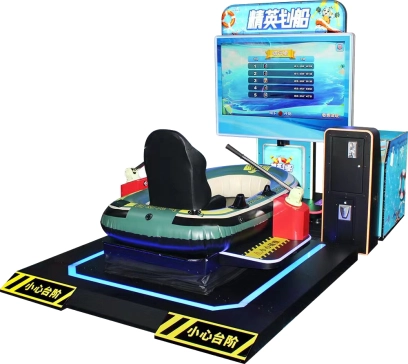
FUNTECH Interactive Indoor Rowing Simulator - Commercial Digital Sports Machine with AI Competition
A brand-new rowing simulation competitive game, operating on a single machine station, supports player interaction and competition with 3 AI opponents. The station is equipped with the latest rowing equipment, enabling players to experience realistic rowing operation. The competition process is relaxed and fun, while also providing fitness exercise benefits.
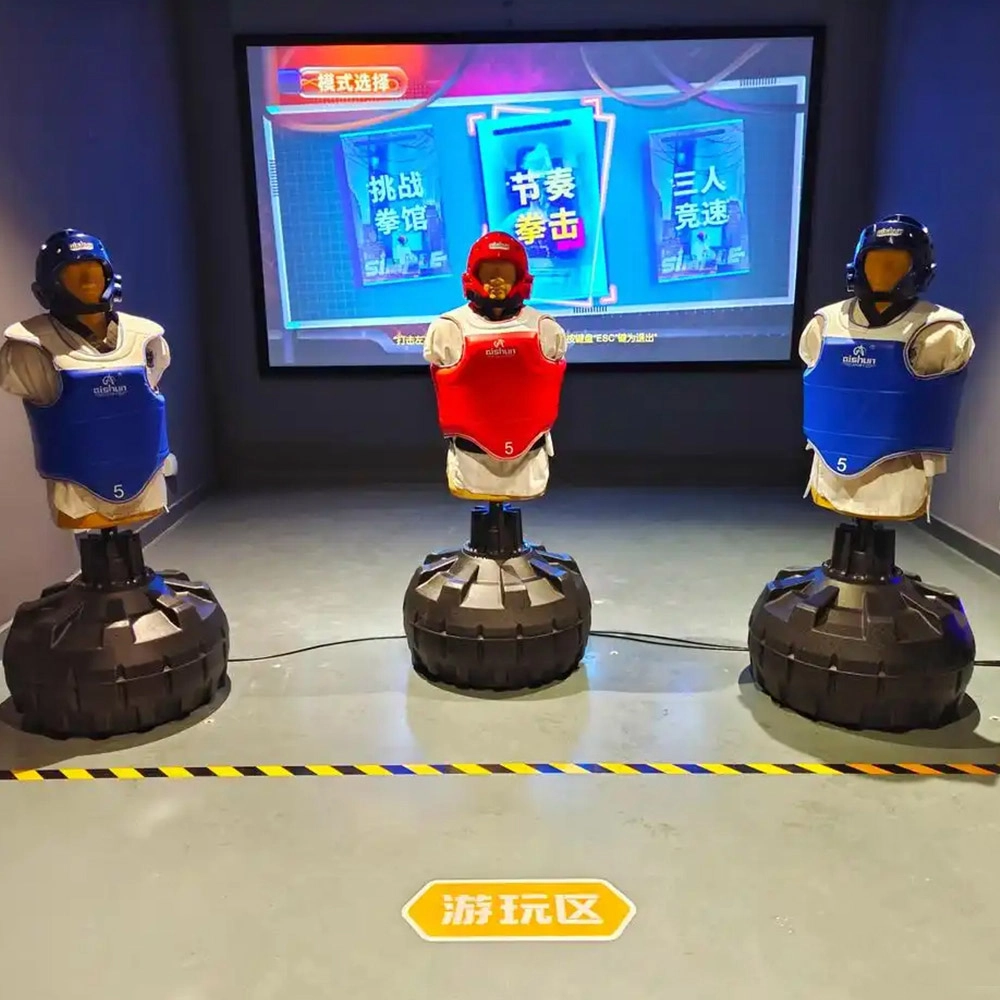
Indoor Boxing Equipment
FUNTECH is full of fun and exciting playgrounds! The indoor boxing simulation equipment combines pressure-sensitive boxing gloves with dynamic projection scenes, combining sports and fitness with entertainment and competitive attributes, supporting single-player training and two-player sparring modes, and accurately recording hitting data and generating sports reports, making it suitable for all-age experiences and safe and low-loss.
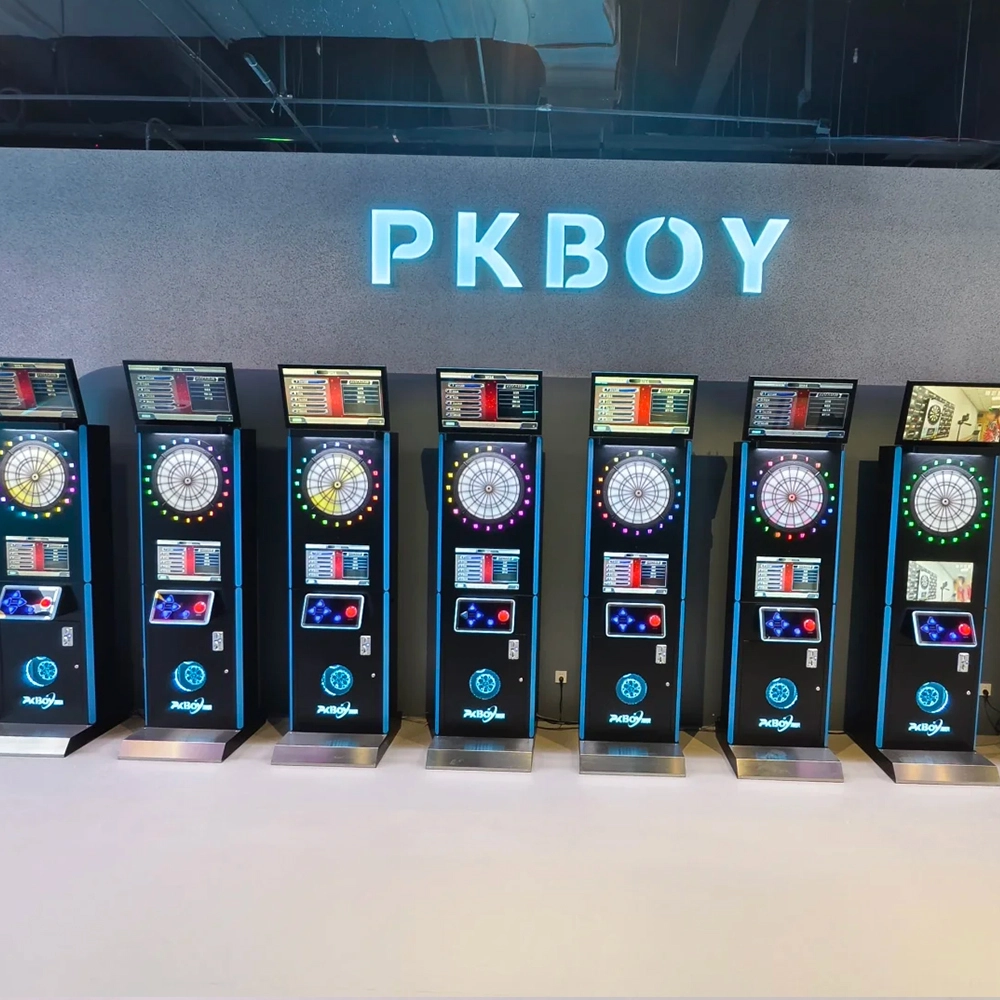
Dart Machines Bar Dart Machines
Joy Power is full of fun and excitement in the playground! The dart machine is suitable for all kinds of places, whether it is a bar, restaurant, KTV, or other entertainment venue, or a sports shop, club, or family leisure space, and can be perfectly adapted. In commercial venues, holding individual and team darts tournaments from time to time can attract more customers and increase the popularity and revenue of the venue, supplemented by various preferential activities, which can directly promote consumption and form a cycle of consumption of all the goods in the shop.
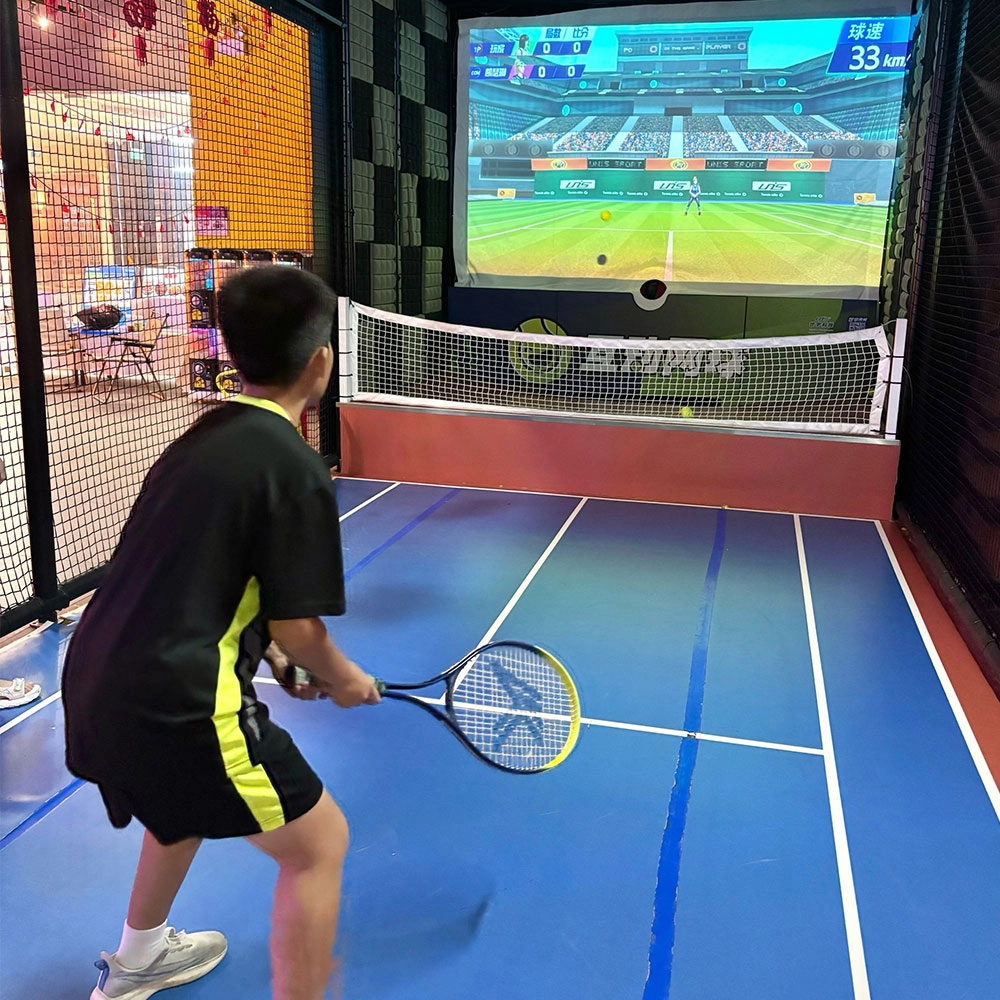
Indoor Tide Play Simulation Tennis Equipment
FUNTECH is full of fun and exciting playgrounds! With high-definition scene projection, force feedback racket, and intelligent scoring system, the simulated tennis equipment in the indoor arcade realizes immersive sports experiences and diversified interactive play, combining the advantages of safety and ease of use with high operational efficiency.
© 2025 FUNTECH ALL RIGHTS RESERVED

Weixia Lei
Fun_Tech-s
fun_tech20