
Arcade Hockey vs Other Games: ROI for Operators
- Arcade Hockey vs Other Games: ROI for Operators
- What is Arcade Hockey and why it matters to operators
- How operators measure ROI for arcade equipment
- Direct comparison: Arcade Hockey vs other popular games
- Why the ice hockey arcade machine often delivers strong ROI
- Costs and maintenance: realistic operator perspectives
- Sample ROI scenarios and payback calculations
- Placement, pricing and marketing strategies to maximize ROI
- KPIs and metrics operators should track
- Risk factors and mitigation
- Comparing total cost of ownership: an operator checklist
- Why choose FUNTECH Arcade Hockey: brand and product advantages
- Implementation best practices for FUNTECH Arcade Hockey
- Conclusion: is Arcade Hockey the right choice for your floor?
- Frequently Asked Questions (FAQ)
- How much space does an ice hockey arcade machine require?
- What is the average lifespan of an Arcade Hockey machine?
- How fast can I expect to recover my investment?
- Are parts and support available for FUNTECH machines?
- Can I host tournaments on an ice hockey arcade machine?
- What pricing strategy works best?
- Is Arcade Hockey suitable for all ages?
- Contact / View Product
- References and authoritative sources
Arcade Hockey vs Other Games: ROI for Operators
What is Arcade Hockey and why it matters to operators
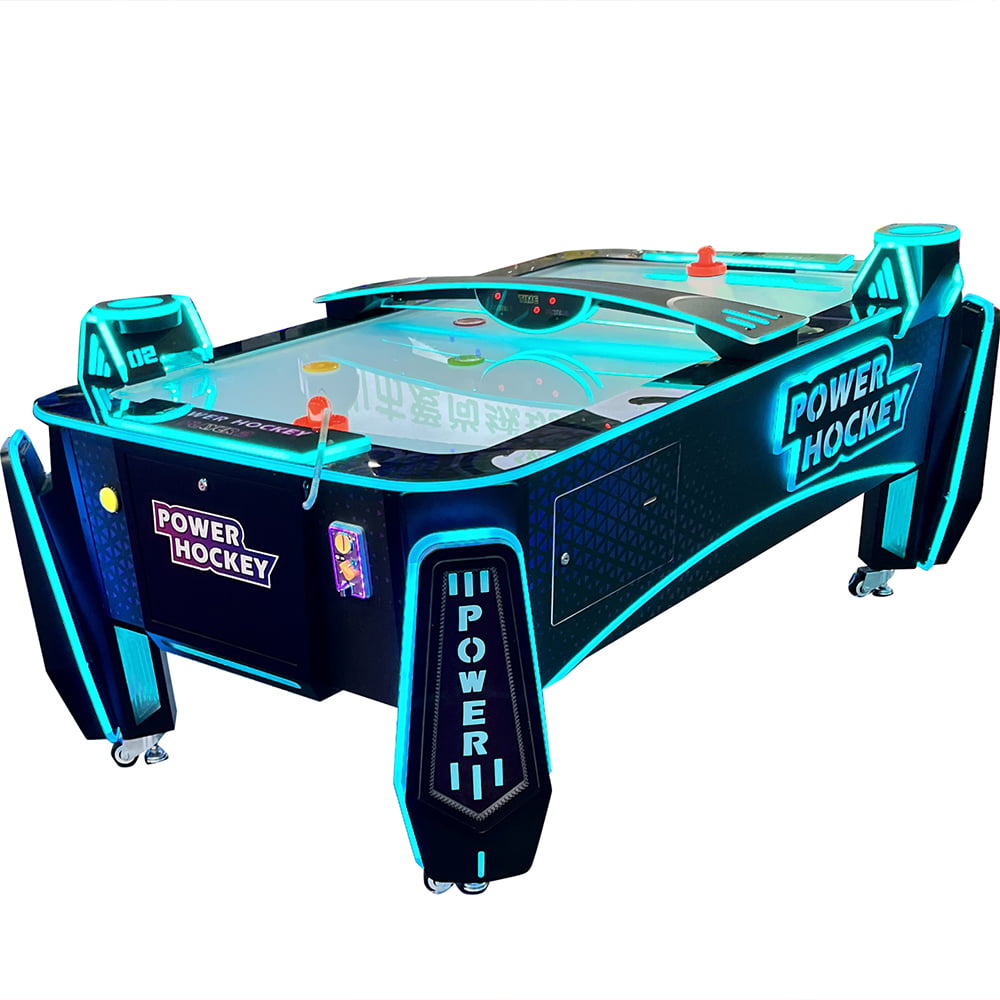
FUNTECH is full of fun and exciting playgrounds! Air hockey, also known as air hockey, is a two-player competitive arcade game comprising a smooth, perforated playing surface, lightweight hockey sticks, a plastic puck, and an electronic scoreboard.
An ice hockey arcade machine or Arcade Hockey cabinet is typically coin- or credit-operated, built for head-to-head play, and designed to encourage repeat matches. For operators considering where to allocate floor space and capital, understanding how Arcade Hockey performs against other titles is essential to maximizing ROI. After understanding return on investment, buyers can make informed decisions by selecting an ice hockey arcade machine based on key specs buyers should evaluate.
How operators measure ROI for arcade equipment
Operators do not evaluate games by novelty alone. Key performance indicators used to measure return on investment include:
- Revenue per week or month per machine
- Revenue per square foot (important when floor space is constrained)
- Utilization rate and average session length
- Ticket yield or secondary spend associated with the game
- Initial cost (CAPEX), operating costs (OPEX), and expected useful life
- Downtime and maintenance labor
- Ancillary benefits such as dwell time increases and cross-promotion
Any assessment of the ice hockey arcade machine should compare these metrics against alternatives such as redemption games, racing simulators, basketball shootouts, claw machines, and VR experiences.
Direct comparison: Arcade Hockey vs other popular games
The table below provides a side-by-side look at typical operator-relevant attributes. Values are generalized ranges and will vary by geography, venue type, and management strategy.
| Attribute | Arcade Hockey (ice hockey arcade machine) | Racing Simulator | Redemption Game | Basketball Shootout | Claw Machine |
|---|---|---|---|---|---|
| Average CAPEX | Moderate (US$1,500 - 6,000) | High (US$5,000 - 30,000+) | Low to Moderate (US$1,000 - 5,000) | Low to Moderate (US$1,000 - 8,000) | Low (US$500 - 3,000) |
| Typical Revenue per Week | Moderate to High | High | Moderate to High | Moderate | Variable, often Low |
| Space Efficiency (revenue/sq ft) | High | Medium (large footprint) | High | High | High |
| Maintenance Complexity | Low to Moderate | High | Low | Low | Low |
| Player Throughput | High (quick matches, rapid turnover) | Moderate (longer session) | High | High | High (but session length short) |
| Appeal / Dwell Time | Strong social appeal and repeat matches | Strong solo appeal | Broad family appeal | Competitive groups, events | Impulse play |
Why the ice hockey arcade machine often delivers strong ROI
Arcade Hockey combines a competitive social format with fast sessions and low downtime. This mix drives high utilization and encourages repeat rounds — both essential to steady revenue. Specific advantages include:
- Head-to-head gameplay encourages multiple matches per visit and friendly wagers, increasing per-customer spend.
- Quick matches create higher throughput, which raises revenue per square foot compared to games with long single-player sessions.
- Durable mechanical design with relatively simple electronics reduces repair complexity and part costs.
- Appeals across demographics: kids, teens, adults and families often enjoy air hockey, expanding the addressable audience.
Costs and maintenance: realistic operator perspectives
When evaluating an ice hockey arcade machine, operators must account for both upfront and recurring costs. A typical cost breakdown:
- Initial purchase price (CAPEX): mid-range based on features and brand.
- Installation and shipping: depends on size and destination.
- Electrical consumption: low to moderate; most units run on standard outlets.
- Parts and consumables: puck replacements, air filters, scoreboards, rubbers.
- Labor: routine cleaning and occasional technical service.
Lifecycle: a well-built ice hockey arcade machine often lasts 7–15 years with proper maintenance. Compared with high-tech VR rigs or motion-heavy racing units, the lower complexity typically means fewer service calls and lower lifetime service costs.
Sample ROI scenarios and payback calculations
Below are two simplified scenarios showing how payback periods vary with revenue assumptions. Numbers are illustrative; local pricing, coin/credit pricing, and play frequency will change actual results.
| Scenario | CAPEX (USD) | Avg Revenue per Week (USD) | Weekly OPEX (maintenance, electricity) (USD) | Estimated Payback (weeks) |
|---|---|---|---|---|
| Conservative | 3000 | 150 | 15 | (3000)/(150-15) = 23 weeks (~6 months) |
| Optimistic (high-traffic family entertainment center) | 3000 | 500 | 15 | (3000)/(500-15) = 6.4 weeks (~1.5 months) |
These scenarios show why placement and pricing strategies matter a great deal. In a mall arcade or family entertainment center, the ice hockey arcade machine can pay back extremely fast. In low-traffic venues, operators should favor low-CAPEX games or combine games to increase footfall.
Placement, pricing and marketing strategies to maximize ROI
To get the most from an ice hockey arcade machine, operators should align placement and promotion with visitor behavior:
- High-visibility placement near food courts, waiting areas, or along main foot-traffic corridors.
- Bundle pricing or tournaments: offer timed tournaments with small entry fees to increase sessions and create repeat visits.
- Cross-promotions: offer free plays or discounts with food purchases, event tickets, or birthday packages.
- Social engagement: promote on-site leaderboards and encourage photo/video sharing of winners to boost organic marketing.
- Flexible pricing: run peak/off-peak pricing for busy weekends vs evenings to maximize total revenue.
KPIs and metrics operators should track
Trackable metrics help guide decisions that improve ROI:
- Plays per day / week and average session duration
- Revenue per play and revenue per week
- Uptime percentage and mean time to repair (MTTR)
- Conversion rate: what percent of visitors play the game
- Secondary spend impact: do players buy more food, drinks, or prizes after playing?
Risk factors and mitigation
Buying and placing arcade games carries risks. For Arcade Hockey, common issues and mitigations include:
- Vandalism or rough use: choose commercial-grade tables and protective finishes; schedule regular inspections.
- Seasonal demand swings: rotate games or run promotions to smooth revenue over slow months.
- Parts obsolescence: source machines from established manufacturers with available spare parts, or keep spare pucks and rubbers on hand.
- Staff training: simple onsite training reduces downtime and improves guest experience.
Comparing total cost of ownership: an operator checklist
When comparing Arcade Hockey to other options, use this checklist:
- Upfront cost vs expected lifetime revenue
- Space required and expected revenue per sq ft
- Maintenance frequency and parts availability
- Appeal to target demographic and effect on dwell time
- Flexibility for events and tournaments
Why choose FUNTECH Arcade Hockey: brand and product advantages
When selecting a supplier, reliable performance and post-sale support are essential. FUNTECH Arcade Hockey offers operators concrete advantages:
- Proven commercial design built for heavy use and high throughput.
- Standardized parts and available replacement components, reducing long-term service costs.
- Attractive, family-friendly aesthetics that fit a variety of venues including FECs, malls, arcades, and bowling centers.
- Competitive pricing and configurable options to match venue needs and budget.
- Low electrical footprint and simple installation.
Combined, these strengths make the FUNTECH ice hockey arcade machine a solid floor investment that balances initial cost with dependable revenue generation.
Implementation best practices for FUNTECH Arcade Hockey
To maximize ROI with a FUNTECH unit:
- Place the machine where visibility and social interaction are highest.
- Run introductory tournaments to create buzz and show machine value quickly.
- Train staff for quick resets and minor repairs; maintain an inventory of key consumables.
- Monitor play patterns and adjust pricing or placement based on actual usage data.
Conclusion: is Arcade Hockey the right choice for your floor?
Arcade Hockey and the ice hockey arcade machine category strike a practical balance between cost, durability and social appeal. Compared with high-CAPEX simulators or low-margin claw machines, Arcade Hockey often provides predictable, steady revenue with lower maintenance overhead. The exact ROI depends on venue, placement, and management, but in most family entertainment centers, malls and arcades, Arcade Hockey is a strong candidate for high utilization and fast payback.
Frequently Asked Questions (FAQ)
How much space does an ice hockey arcade machine require?
Most units need roughly 6 to 10 square feet of footprint plus clearance for player movement. Check specific model dimensions from the manufacturer before installation.
What is the average lifespan of an Arcade Hockey machine?
With regular maintenance, a commercial-grade ice hockey arcade machine can last 7–15 years. Lifespan is influenced by usage intensity and maintenance practices.
How fast can I expect to recover my investment?
Payback varies by traffic and pricing. Conservatively, payback can be a few months; in high-traffic venues, payback may occur in a few weeks. Use the earlier sample ROI table to model your local expectations.
Are parts and support available for FUNTECH machines?
Yes. FUNTECH provides replacement parts and support for commercial units. Keeping spare pucks and rubbers onsite and scheduling routine maintenance reduces downtime.
Can I host tournaments on an ice hockey arcade machine?
Yes. Tournaments are an effective strategy to increase engagement and revenue. Simple formats with small entry fees or prize tickets work well and encourage repeat play.
What pricing strategy works best?
Common approaches include single-play pricing, timed sessions, and event entry fees. Bundles with food or party packages boost perceived value. A/B test pricing for your venue to find the optimal rate.
Is Arcade Hockey suitable for all ages?
Yes. The game appeals to kids, teens and adults, making it a versatile choice for family-focused locations.
Contact / View Product
To evaluate how FUNTECH Arcade Hockey fits your venue and to request pricing, parts availability, or installation guidance, contact our sales team or view the product catalog. For commercial inquiries, we recommend discussing floor plans, power availability, and expected traffic so we can recommend the best configuration to maximize ROI.
References and authoritative sources
For additional reading and industry context:
- Air hockey - Wikipedia: https://en.wikipedia.org/wiki/Air_hockey
- International Association of Amusement Parks and Attractions (IAAPA): https://www.iaapa.org/
- Play Meter Magazine (industry insights): https://www.playmeter.com/
- Industry reports and market trends (example research platforms such as Statista): https://www.statista.com/
Best coin op dart machine manufacturers and supplier brands
Top 5 indoor golf simulator nyc Company List and Products Compared
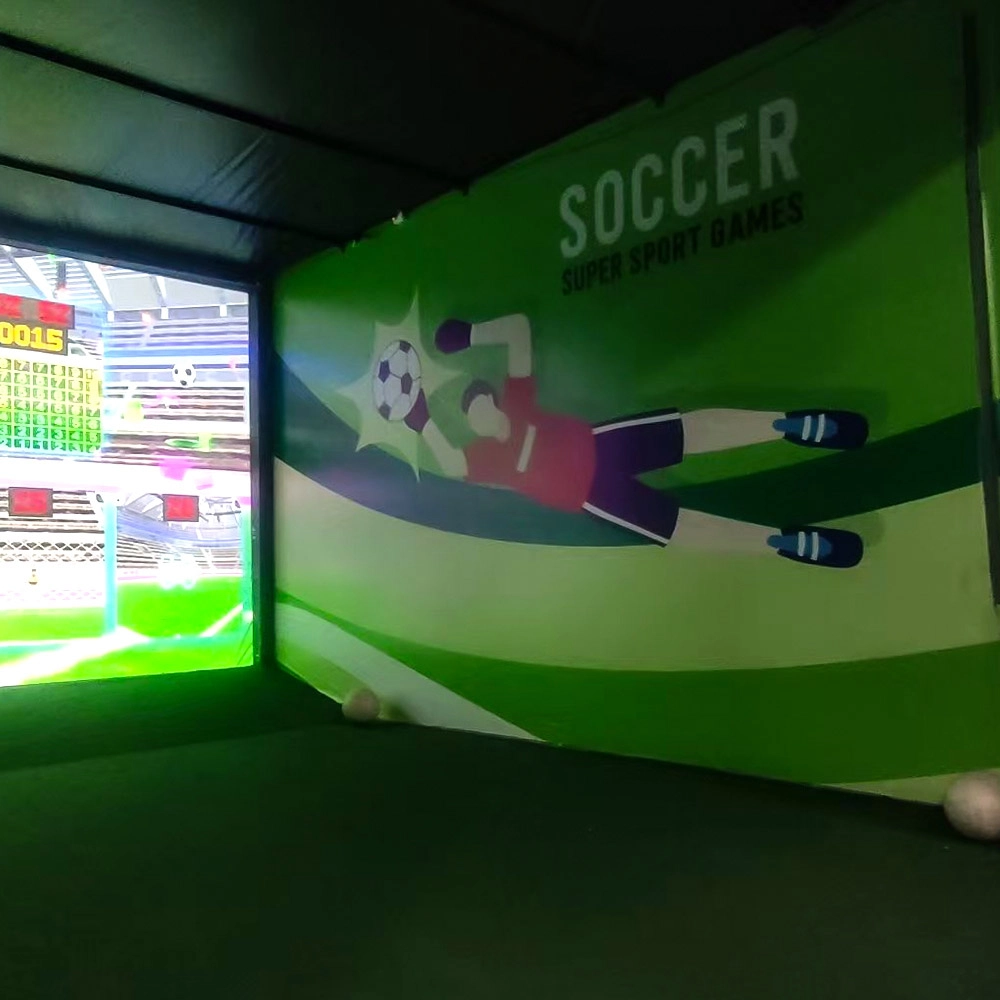
Calculating ROI for Indoor Soccer Simulation Entertainment
Everything You Need to Know About golf simulator philadelphia
Holographic Light and Shadow Restaurant
What is the principle of holographic projection?
Firstly, during the recording process, a reference light and an object light are simultaneously irradiated onto the object, causing interference between the two beams. The intensity and phase information of the object are recorded on the photosensitive material, forming a hologram. Then, during the reproduction process, the hologram is illuminated with the same beam of light as the reference light, and the hologram acts like a complex diffraction grating, causing the light to diffract and thus reproducing the three-dimensional image of the object.
Dart Machines Bar Dart Machines
How often does the equipment require maintenance?
For daily use, simple monthly maintenance, such as simple cosmetic cleaning and function checking after use, is sufficient. A more comprehensive quarterly maintenance is sufficient.
FAQ
What problems does the Digital Sports Center solve?
The Digital Sports Trendy Pavilion provides people with an innovative experience place that combines technology and sports, solving some problems existing in traditional sports activities and amusement facilities, while also meeting modern people's needs for digital technology and dynamic experience.
Golf Simulator
How is pricing more reasonable for commercial venues operating indoor simulated golf programs?
It is recommended to use a combination of “basic time slot attraction + member lock-in + corporate high-priced package” model, the monthly revenue of a single device in a first-tier city can be more than 20,000 yuan. Focus on continuous optimization of pricing through data monitoring (e.g., customer unit price, repurchase rate) to avoid falling into low-price competition and to maintain the high-end experience tone. o The project should be operated in a shopping mall.
Infrared Shooting
How to attract customers when operating the program in shopping malls?
Create a cool venue decoration style and incorporate trendy elements, such as fluorescent light strips and anime-themed murals. o Launch diversified marketing models such as parent-child packages and couple packages, combined with time-limited promotional activities, such as half-price experience in the first three days of opening, to attract different groups of people such as families and couples to stop by and participate.
Indoor Tide Play Simulation Tennis Equipment
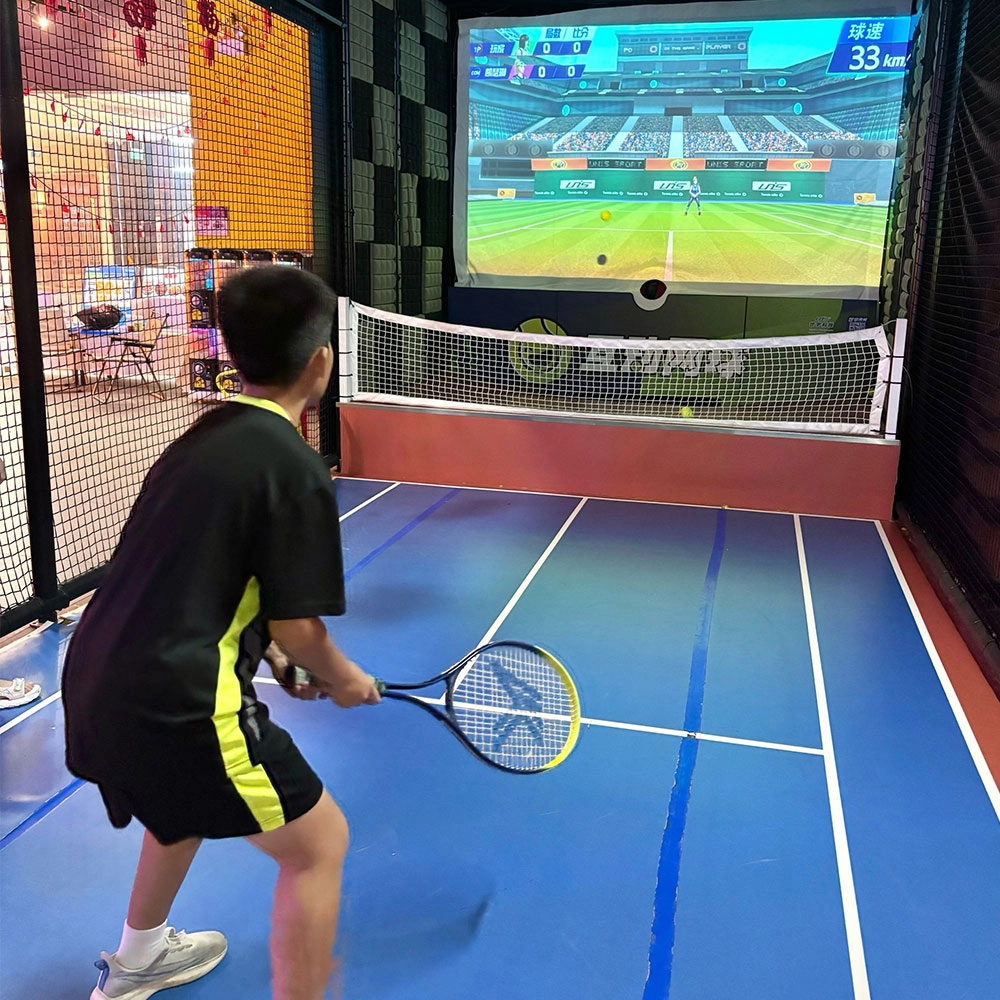
FUNTECH is full of fun and exciting playgrounds! With high-definition scene projection, force feedback racket, and intelligent scoring system, the simulated tennis equipment in the indoor arcade realizes immersive sports experiences and diversified interactive play, combining the advantages of safety and ease of use with high operational efficiency.
Dart Machines Bar Dart Machines
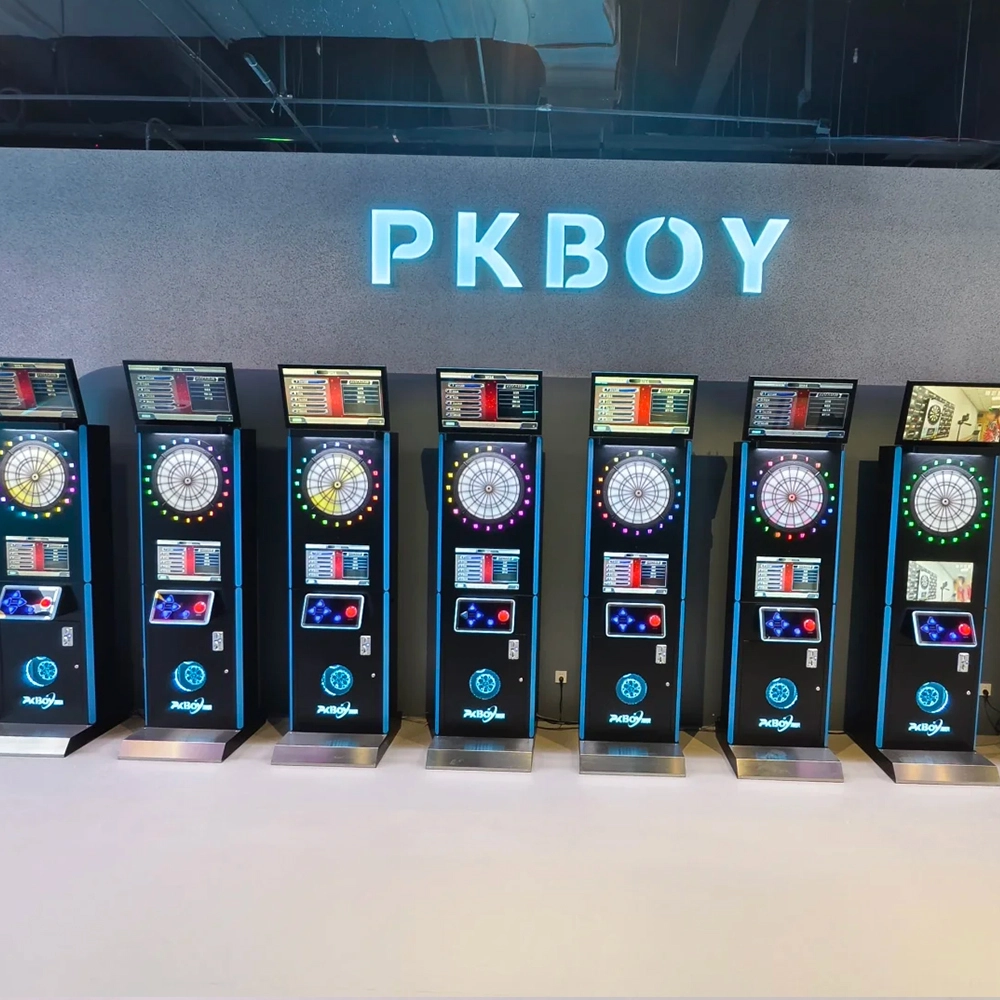
Joy Power is full of fun and excitement in the playground! The dart machine is suitable for all kinds of places, whether it is a bar, restaurant, KTV, or other entertainment venue, or a sports shop, club, or family leisure space, and can be perfectly adapted. In commercial venues, holding individual and team darts tournaments from time to time can attract more customers and increase the popularity and revenue of the venue, supplemented by various preferential activities, which can directly promote consumption and form a cycle of consumption of all the goods in the shop.
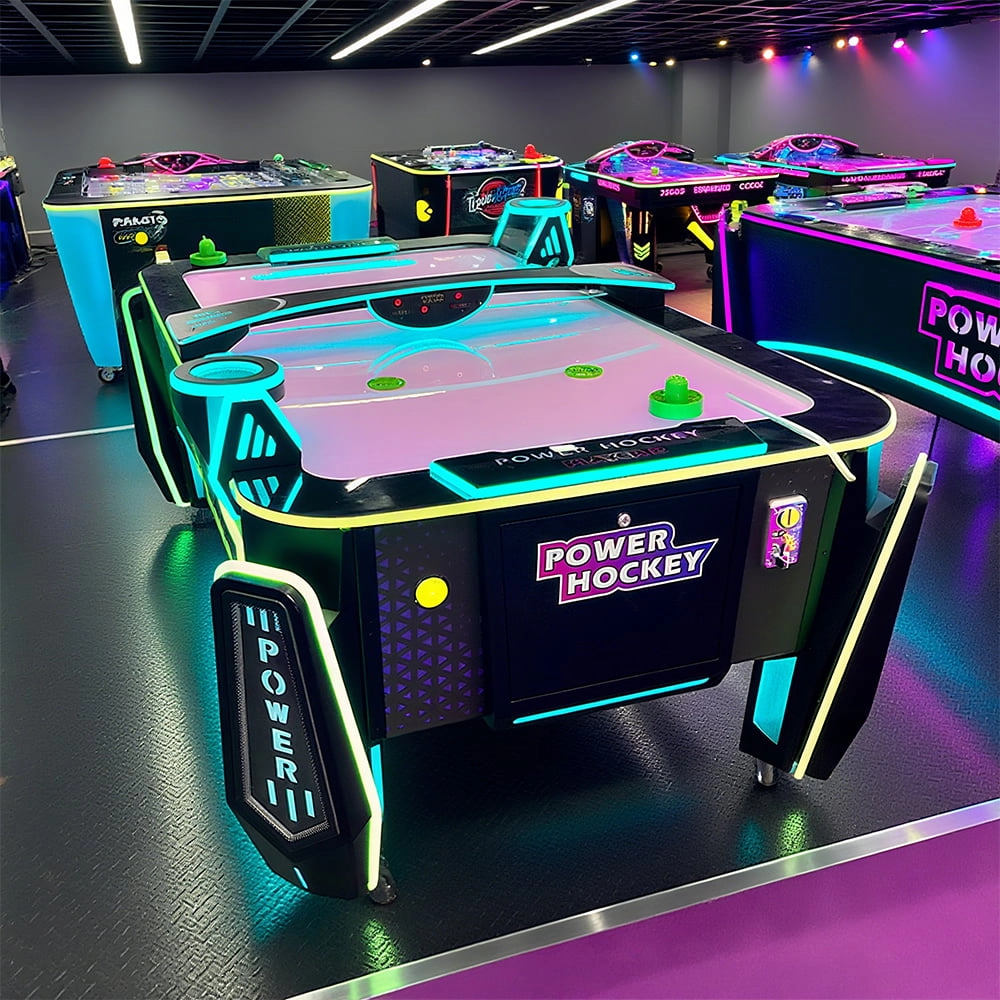
Arcade Hockey
FUNTECH is full of fun and exciting playgrounds! Air hockey, also known as air hockey, is a two-player competitive arcade game comprising a smooth, perforated playing surface, lightweight hockey sticks, a plastic puck, and an electronic scoreboard.
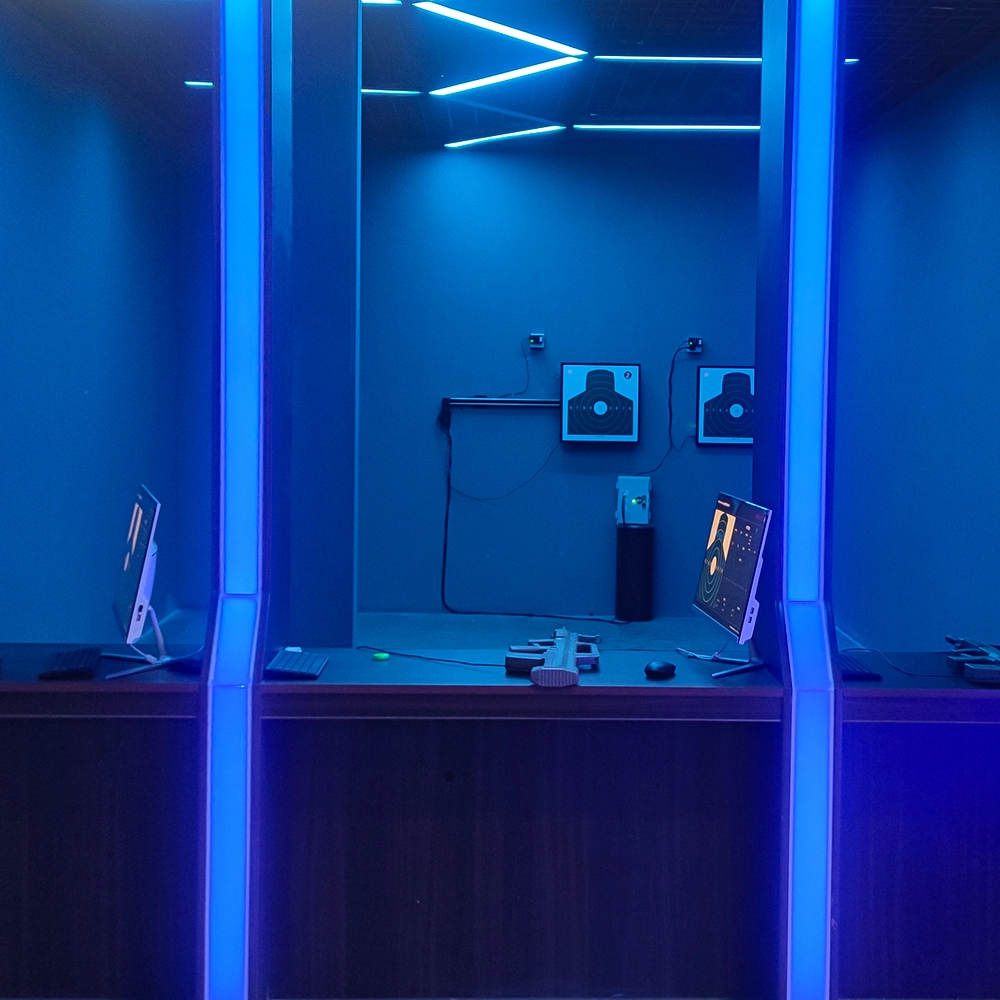
Infrared Shooting
Highly simulated simulation training analysis equipment, with advanced design concepts, fast system development, ease of operation and use, stable technical performance, less consumption of training, site dependence on a small group training is highly interesting, safe, and reliable, and other outstanding features. Product design to solve the basic skills of light weapons precision shooting as a starting point, to improve the safety of shooting training and training efficiency as the fundamental purpose, highlighting the simulation, information technology, and combat training requirements, can be in small indoor and outdoor venues and does not use live ammunition to complete the basic shooting training.
© 2025 FUNTECH ALL RIGHTS RESERVED

Weixia Lei
Fun_Tech-s
fun_tech20