
How Electronic Dart Machines Track Player Stats
- How Electronic Dart Machines Track Player Stats
- What is an electronic dart machine and why it matters for venues
- Core components: sensors, microcontrollers, and scoring boards
- How sensors detect dart hits (and why method matters)
- How the scoring algorithms translate hits into player stats
- Player profiles, storage, and privacy considerations
- Networking and cloud analytics: turning data into insights
- Calibration, maintenance, and accuracy: what venues should know
- Tournament features and commercial opportunities with bar dart machines
- Integration with mobile apps and third-party services
- How accuracy and validation are handled in practice
- Case study: using Dart Machines Bar Dart Machines in a mixed-use venue
- Brand advantages: why choose Dart Machines Bar Dart Machines for your venue
- Real-world deployment tips for operators
- FAQ — Common questions about electronic dart machine stats
- Contact / View product
- References
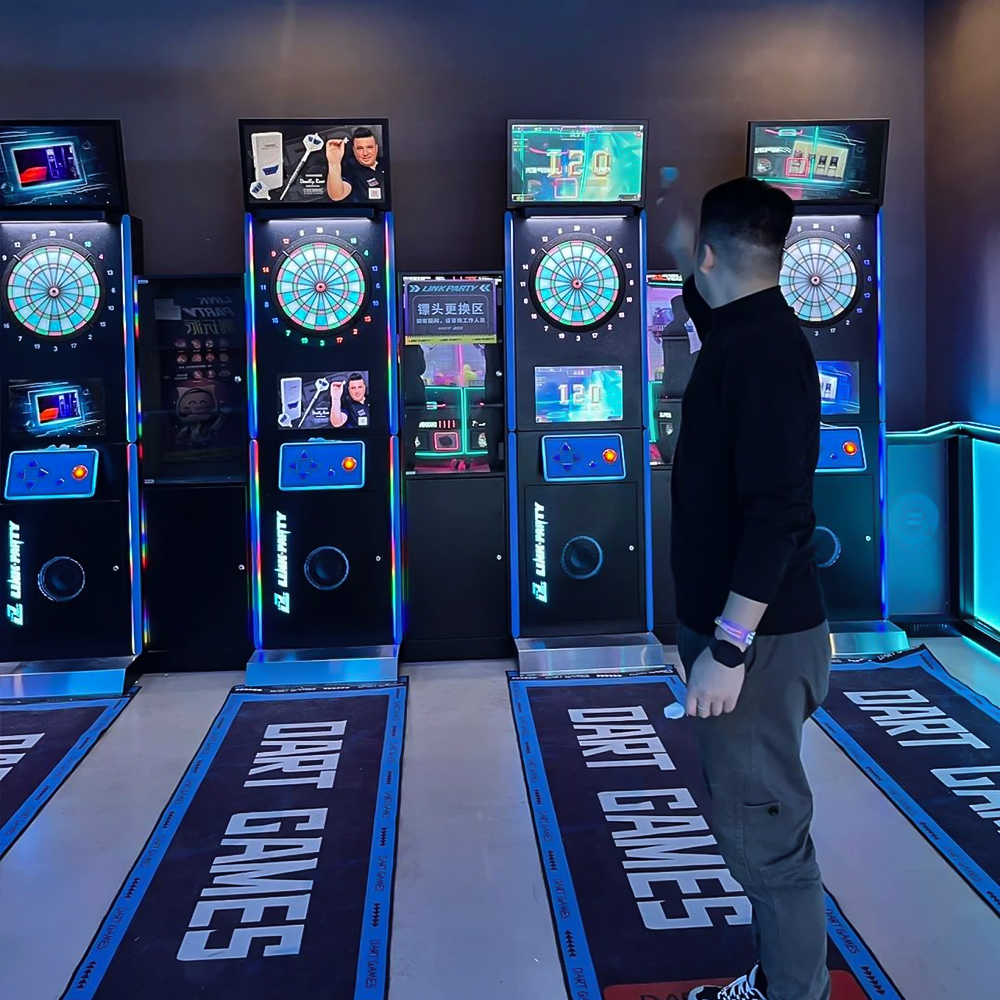
How Electronic Dart Machines Track Player Stats
What is an electronic dart machine and why it matters for venues
An electronic dart machine is a modern, sensor-equipped scoring system that automatically detects dart hits, calculates scores, logs player performance, and provides match statistics. For venues that host social gameplay—pubs, restaurants, KTVs, sports clubs, or family leisure spaces—the ability to track player stats is more than a novelty: it enables tournaments, loyalty programs, player ranking, and repeat business. keywords such as electronic dart machine and bar dart machines naturally appear when venues evaluate equipment that can generate foot traffic, keep customers engaged, and increase per-customer spend.
Core components: sensors, microcontrollers, and scoring boards
At the heart of every electronic dart machine are three main components: the hit-detection sensors embedded behind the board surface, a microcontroller or embedded computer that interprets sensor signals, and the scoring software that applies game rules and logs results. Different designs use different sensor types — pressure, piezoelectric, optical/infrared, or camera-based vision systems. Each method has trade-offs in cost, durability, and precision, which directly affect how reliably the electronic dart machine captures player stats in busy commercial environments.
How sensors detect dart hits (and why method matters)
Sensors translate the physical event of a dart striking the board into an electronic signal. Common sensor approaches include:
- Piezoelectric or pressure sensors: Capture mechanical impact as voltage spikes. They are robust and have fast response times, commonly used in many modern electronic boards.
- Optical/infrared matrices: Detect interruptions in light paths to identify which segment was hit. These systems are less affected by vibrations but can be more expensive.
- Physical switch matrices: Small mechanical switches behind each segment trigger when pressed. They are cost-effective but wear out over time in high-use venues.
- Camera-based vision systems: Use image processing to recognize dart position, allowing high accuracy and flexibility (for example, throw style recognition), but they require more compute and careful calibration.
Choosing a sensor technology for a commercial electronic dart machine or bar dart machines often balances durability, total cost of ownership, and detection accuracy. For venues expecting heavy use, systems that minimize moving parts and offer easy replacement modules are preferred.
How the scoring algorithms translate hits into player stats
Once the machine knows where a dart landed, scoring software assigns points according to the chosen game mode (e.g., 501, Cricket). Beyond single-game scoring, the algorithms aggregate data across throws and matches to compute player-level statistics such as:
- Average per dart and per leg
- Checkout percentages and common finishing routes
- Hit distribution across board segments
- Consistency metrics and streaks
These calculations are typically deterministic (straight arithmetic) but often include logic to filter noise (debounce rapid signals) and reconcile ambiguous hits (when two adjacent sensors register simultaneously). Robust systems also log timestamped events so administrators can replay matches for verification.
Player profiles, storage, and privacy considerations
Electronic dart machines linked to a central system or cloud service can maintain persistent player profiles. A profile contains identity (user name or card ID), historical match data, achievements, and ranking. For bar dart machines used in commercial venues, profiles enable leaderboards, loyalty rewards, and tailored promotions.
Privacy and data protection are important: venues must inform players what data are stored and for how long. If a system transmits player data to the cloud, ensure it uses encryption (HTTPS/TLS) and complies with applicable privacy laws. Many modern systems provide guest play modes that collect minimal data while still demonstrating the capability of advanced stats tracking.
Networking and cloud analytics: turning data into insights
Connecting multiple electronic dart machines across a venue or chain enables centralized tournament management and aggregated analytics. Cloud platforms collect match logs, compute advanced metrics, and deliver dashboards showing peak play times, average session duration, and top players—valuable commercial intelligence for venue managers.
Benefits of cloud-enabled electronic dart machine setups:
- Centralized leaderboards and cross-location tournaments
- Automated marketing triggers—e.g., push notifications to reward top players
- Operational insights—maintenance alerts when error rates increase
Calibration, maintenance, and accuracy: what venues should know
Accuracy of player stats depends on both hardware and proactive maintenance. Dust, wear, and mechanical shocks are common in busy bars and can degrade sensor performance. Good systems provide self-check diagnostics, calibration wizards, and replaceable sensor modules.
Below is a concise comparison of common detection methods and their practical suitability for commercial use:
| Detection Method | Accuracy | Durability | Cost | Best for |
|---|---|---|---|---|
| Piezoelectric / Pressure | High for impact detection | High (few moving parts) | Moderate | Busy commercial venues |
| Optical / Infrared | High (if shielded from dust) | Moderate | Higher | High-precision installations |
| Mechanical Switches | Moderate | Lower (wear over time) | Low | Low-budget or casual play |
| Camera / Vision | Very high (with good lighting) | Moderate | High | Analytics-heavy setups / coaching |
Sources for the technologies summarized above include manufacturer technical pages and general sensor references (see citations at the end).
Tournament features and commercial opportunities with bar dart machines
One of the most direct commercial uses of electronic dart machine stats is to host regular individual and team tournaments. Dart Machines Bar Dart Machines can be configured to run league play, knockout tournaments, and timed events. Advantages for venues include:
- Attracting repeat customers through weekly leagues or leaderboards
- Increasing dwell time and average spend during events
- Creating sponsorship and upsell opportunities (drinks, food specials tied to events)
Offering prizes, matchmaking for balanced games, and promotion of top players via in-venue displays or social pages creates a cycle of engagement that helps drive revenue and popularity.
Integration with mobile apps and third-party services
Many electronic dart machine platforms offer companion apps to view live stats, receive match invites, and follow leaderboards remotely. Integration with third-party services (e.g., DartConnect) expands functionality—allowing advanced stat visualizations, player social features, and broader tournament ecosystems. For venues, app integrations mean players can track their progress over time and return to the venue to improve their rankings.
How accuracy and validation are handled in practice
Reliable commercial systems combine hardware accuracy with software validation. Examples of validation steps include:
- Debounce algorithms that require a signal to be stable for a small time window before accepting
- Cross-sensor checks for ambiguous hits
- Match replay and audit logs for referee review
These practices reduce false positives and ensure that player stats are trustworthy—crucial when prizes or reputation are on the line.
Case study: using Dart Machines Bar Dart Machines in a mixed-use venue
The Dart Machines Bar Dart Machines platform adapts well to bars, restaurants, KTVs, entertainment venues, and club spaces. The product is designed for commercial use where it can:
- Host scheduled individual and team darts tournaments
- Integrate promotional activities to increase in-venue consumption
- Provide a low-maintenance experience supported by diagnostics and modular parts
Here is the official product description for quick reference:
Joy Power is full of fun and excitement in the playground! The dart machine is suitable for all kinds of places, whether it is a bar, restaurant, KTV, or other entertainment venue, or a sports shop, club, or family leisure space, and can be perfectly adapted. In commercial venues, holding individual and team darts tournaments from time to time can attract more customers and increase the popularity and revenue of the venue, supplemented by various preferential activities, which can directly promote consumption and form a cycle of consumption of all the goods in the shop.
Brand advantages: why choose Dart Machines Bar Dart Machines for your venue
Dart Machines Bar Dart Machines focuses on delivering a turnkey solution for venue owners that blends hardware reliability, rich software features, and revenue-driving commercial tools. Key advantages include:
- Commercial-grade durability: components selected for high-usage scenarios
- Flexible game modes and tournament templates to match your customer base
- Cloud-enabled leaderboards and analytics to support promotions and loyalty
- Dedicated support for installation, calibration, and ongoing maintenance
For venue operators, these strengths mean lower downtime, predictable costs, and better ROI compared with DIY or consumer-grade dart boards.
Real-world deployment tips for operators
To get the most out of an electronic dart machine and its player stats in a commercial setting:
- Place devices in stable, moderate-light locations away from direct drafts and physical collisions.
- Schedule regular maintenance checks and firmware updates to keep detection accurate.
- Promote tournaments with pricing or drink specials to drive attendance.
- Encourage player registration (opt-in) to build a loyalty database while respecting privacy.
FAQ — Common questions about electronic dart machine stats
Q: How accurate are electronic dart machines at recording hits?
A: Modern systems using piezoelectric or camera-based detection are highly accurate for commercial play, typically matching human-scored accuracy. Accuracy depends on calibration and maintenance.
Q: Can the machine handle tournaments and leagues?
A: Yes. Most commercial electronic dart machines support league play, scheduled tournaments, and team formats. Dart Machines Bar Dart Machines includes templates for common tournament formats.
Q: Will recorded stats help my venue make money?
A: Absolutely. Stats enable leaderboards, recurring events, and promotions that increase repeat visits and boost on-site spending.
Q: Is player data stored locally or in the cloud?
A: Both options exist. Many systems store essential match data locally and optionally sync with cloud services for backup, cross-location leaderboards, and analytics. Check privacy settings before enabling cloud sync.
Contact / View product
Ready to bring electronic dart machine excitement to your venue? Contact our sales team to learn more about Dart Machines Bar Dart Machines, request a demo, or get a quote. For immediate details and purchase options, view the product page or reach customer service to schedule installation and support.
References
- Piezoelectricity — Wikipedia: https://en.wikipedia.org/wiki/Piezoelectricity
- DartConnect — Match tracking and analytics platform: https://www.dartconnect.com/
- Arachnid Electronics — Manufacturer of electronic dart machines: https://www.arachnidelectronics.com/
- Nodor — Dartboard and scoring solutions: https://www.nodor.co.uk/
- General sensor types and trade-offs — electronics and sensor manufacturer application notes (examples available from major sensor vendors)
For further assistance, please contact sales to discuss deployment, pricing, and support options for Dart Machines Bar Dart Machines.
Everything You Need to Know About arcade machine racing game
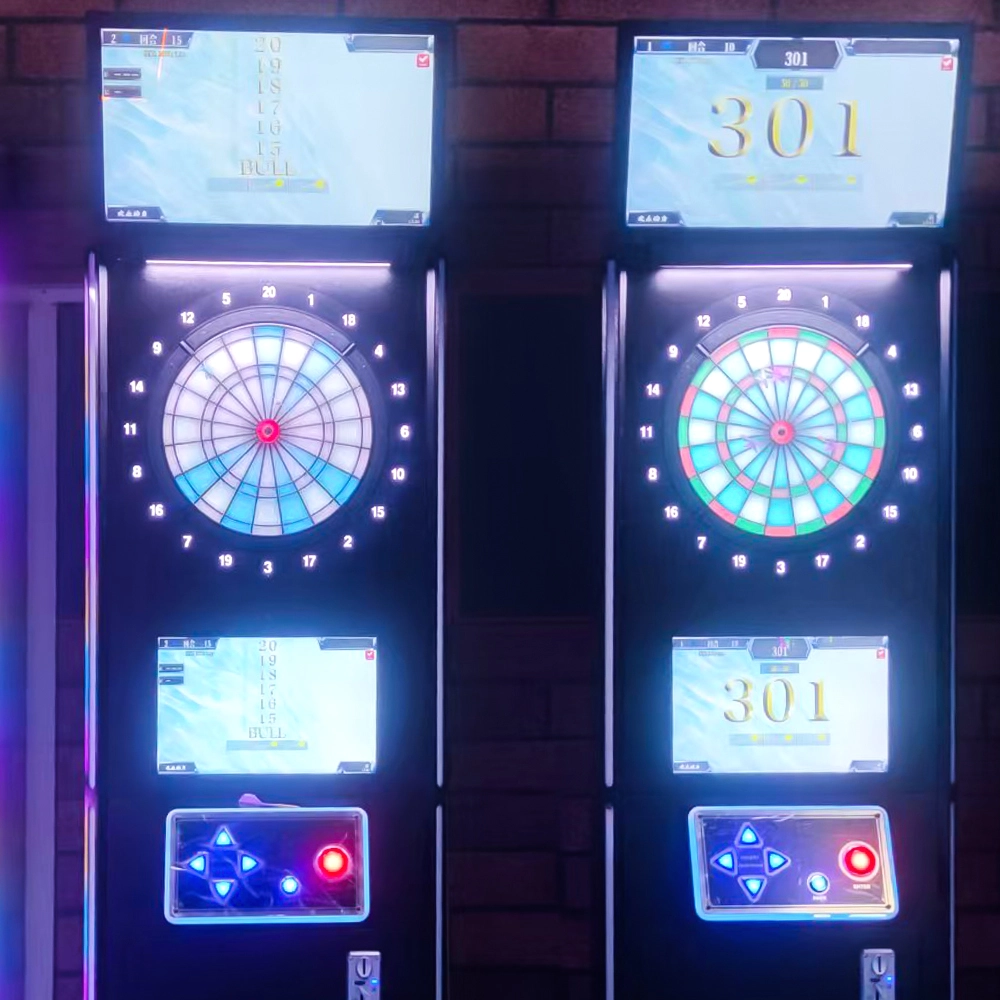
Why Choose Dart Machines Bar Dart Machines for Your Venue
What are the application scenarios of indoor curling simulator?
Tips for Wholesale electronic dart game machine in UK
Golf Simulator
How often does simulated golf equipment require maintenance?
For daily use, simple monthly maintenance is sufficient, such as a simple cosmetic cleaning and function check after use. Quarterly maintenance can be more comprehensive.
Infrared Shooting
How to attract customers when operating the program in shopping malls?
Create a cool venue decoration style and incorporate trendy elements, such as fluorescent light strips and anime-themed murals. o Launch diversified marketing models such as parent-child packages and couple packages, combined with time-limited promotional activities, such as half-price experience in the first three days of opening, to attract different groups of people such as families and couples to stop by and participate.
Dart Machines Bar Dart Machines
Why are sports arcades a hot spot for investment?
The traditional entertainment market (e.g., arcade, KTV) has become less attractive to generations, while digital hip playgrounds integrating technology, sports, and socialization are more in line with young people's needs, and the market size has exceeded 50 billion in 2023, with an annual growth rate of more than 30%.
Products
How to attract customers when operating the program in shopping malls?
Create a cool venue decoration style, incorporating trendy elements, such as fluorescent light strips, animation-themed murals, etc. o Create a new venue for the program. o Launch diversified marketing models such as parent-child packages and couple packages, combined with time-limited promotional activities, such as half-price experience in the first three days of opening, to attract different groups such as families and couples to stop by and participate in the program. o Create cool venue decoration styles and incorporate trendy elements, such as fluorescent light strips.
Interactive Rollerball
What are the after-sales services after purchasing the equipment?
Generally, a 1-year warranty is provided. During the warranty period, parts damaged due to quality problems, such as motor failure, display problems, etc., will be repaired or replaced free of charge. There will also be technical support, including equipment installation and debugging guidance, operation training, to ensure the smooth use of the user, after-sales response time is usually within 24 - 48 hours.
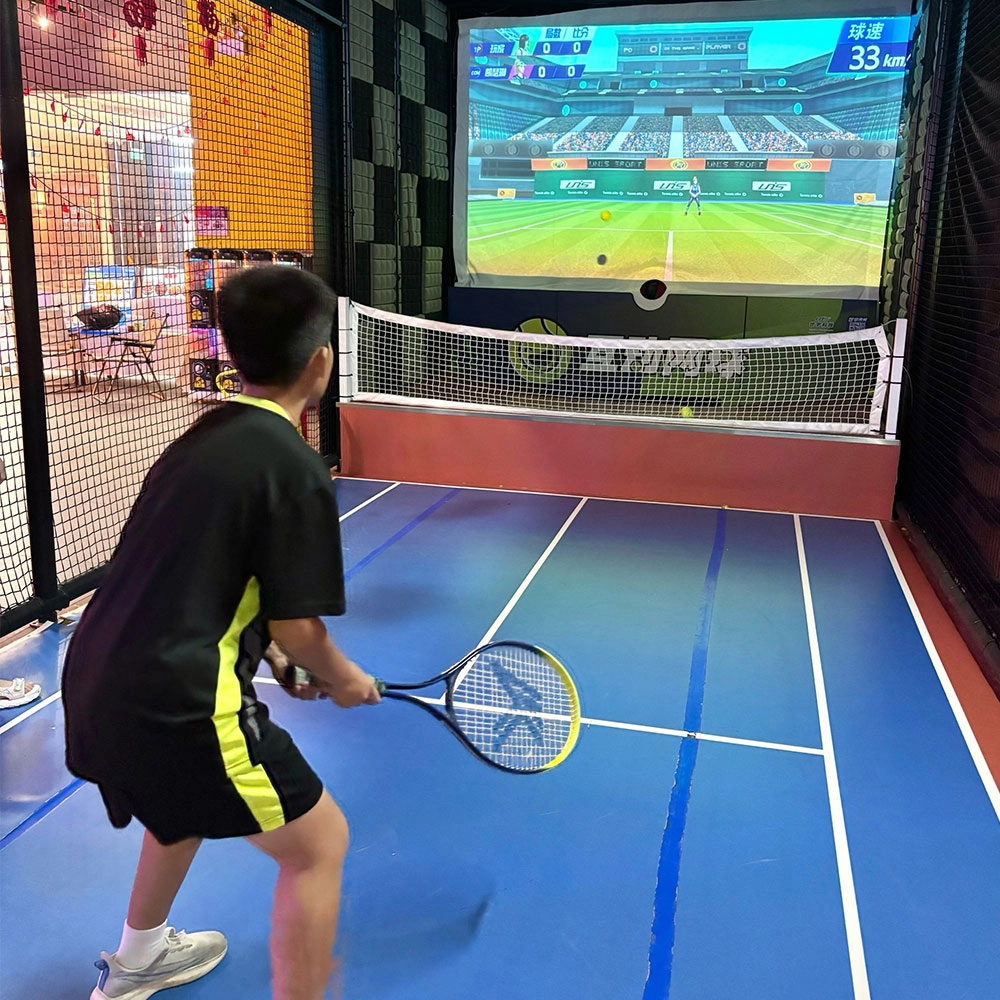
Indoor Tide Play Simulation Tennis Equipment
FUNTECH is full of fun and exciting playgrounds! With high-definition scene projection, force feedback racket, and intelligent scoring system, the simulated tennis equipment in the indoor arcade realizes immersive sports experiences and diversified interactive play, combining the advantages of safety and ease of use with high operational efficiency.
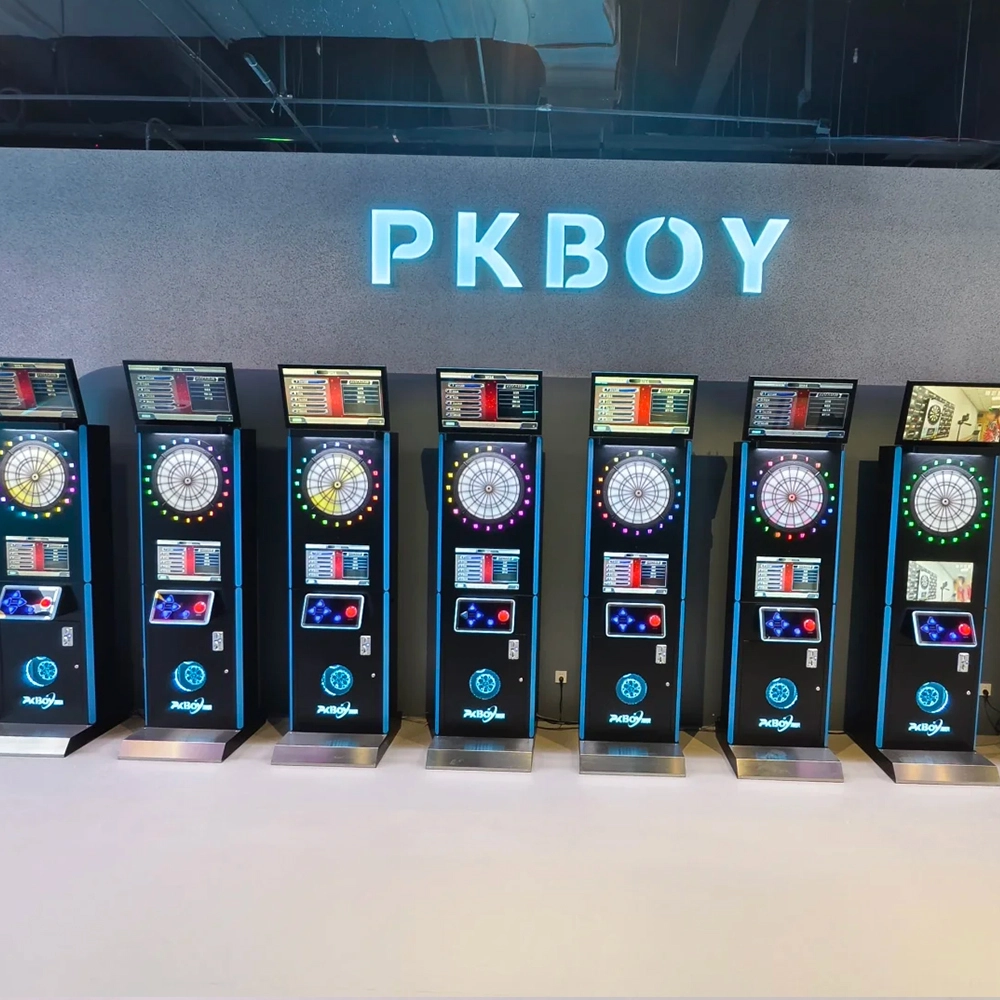
Dart Machines Bar Dart Machines
Joy Power is full of fun and excitement in the playground! The dart machine is suitable for all kinds of places, whether it is a bar, restaurant, KTV, or other entertainment venue, or a sports shop, club, or family leisure space, and can be perfectly adapted. In commercial venues, holding individual and team darts tournaments from time to time can attract more customers and increase the popularity and revenue of the venue, supplemented by various preferential activities, which can directly promote consumption and form a cycle of consumption of all the goods in the shop.
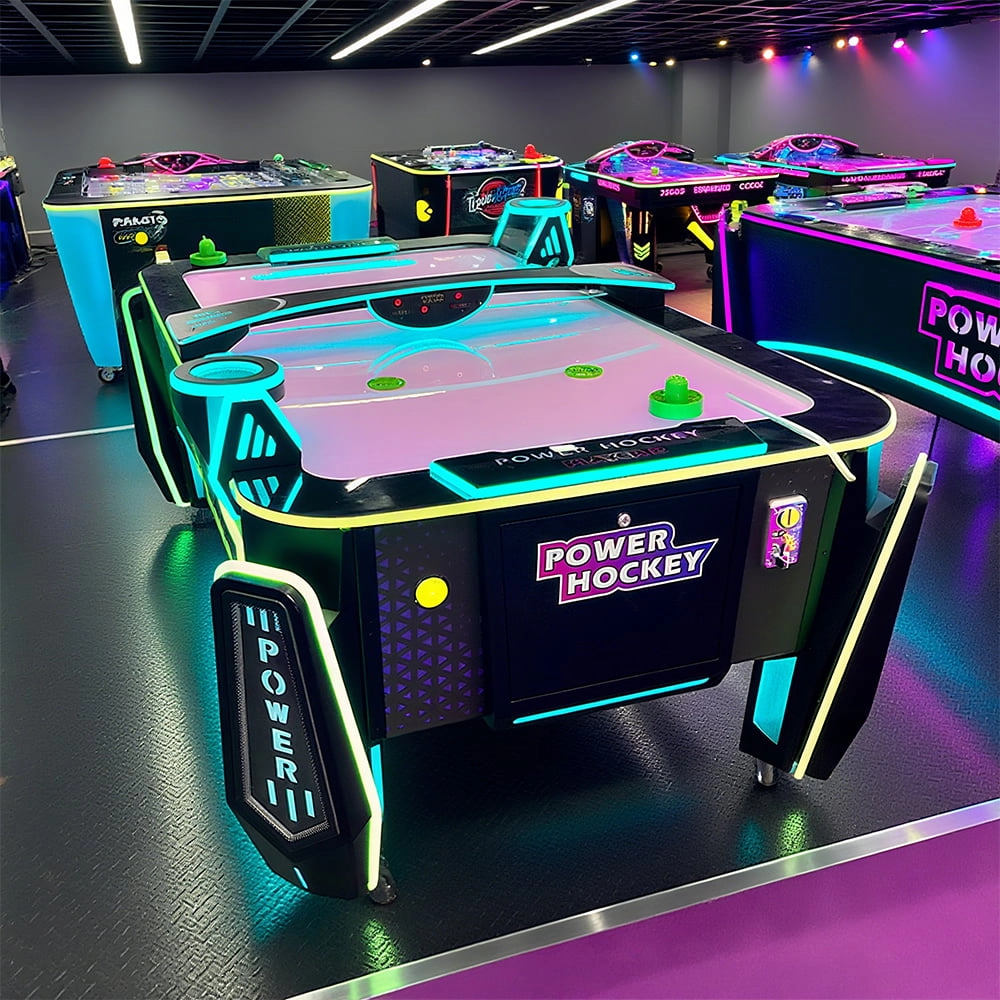
Arcade Hockey
FUNTECH is full of fun and exciting playgrounds! Air hockey, also known as air hockey, is a two-player competitive arcade game comprising a smooth, perforated playing surface, lightweight hockey sticks, a plastic puck, and an electronic scoreboard.
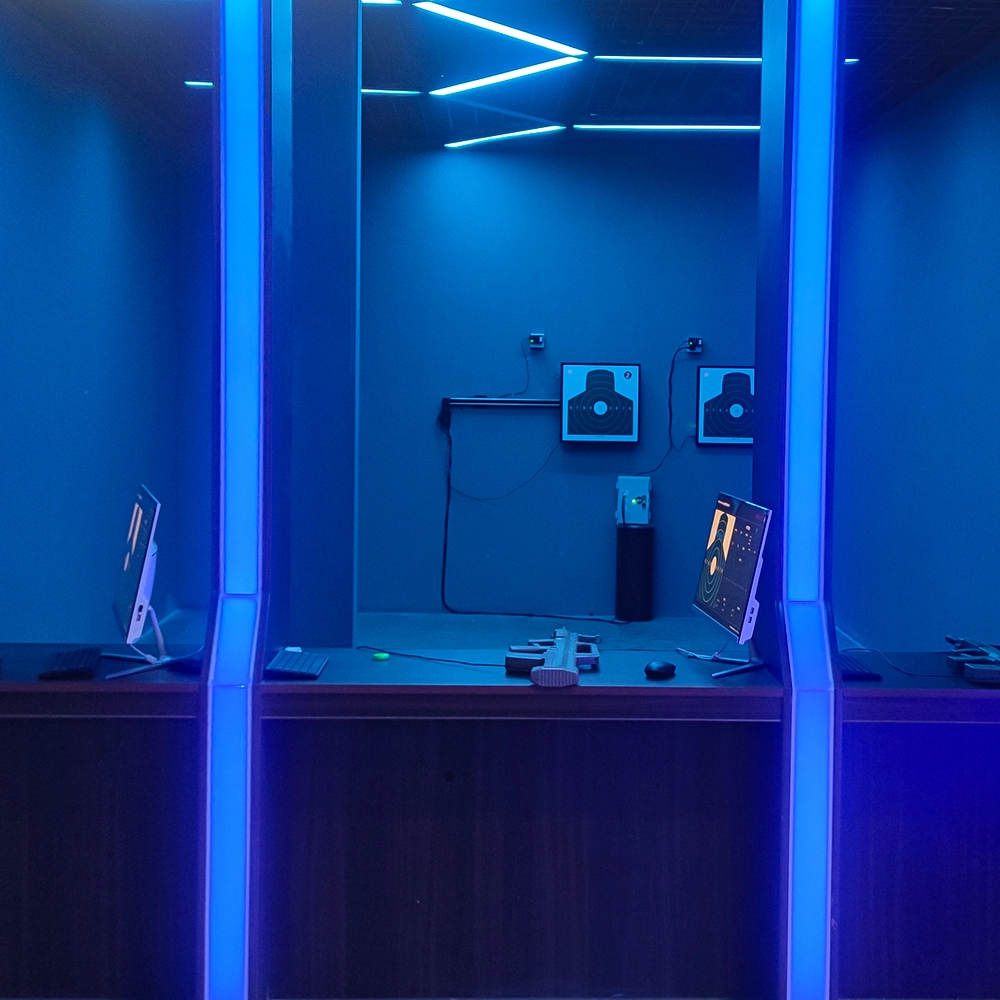
Infrared Shooting
Highly simulated simulation training analysis equipment, with advanced design concepts, fast system development, ease of operation and use, stable technical performance, less consumption of training, site dependence on a small group training is highly interesting, safe, and reliable, and other outstanding features. Product design to solve the basic skills of light weapons precision shooting as a starting point, to improve the safety of shooting training and training efficiency as the fundamental purpose, highlighting the simulation, information technology, and combat training requirements, can be in small indoor and outdoor venues and does not use live ammunition to complete the basic shooting training.
© 2025 FUNTECH ALL RIGHTS RESERVED

Weixia Lei
Fun_Tech-s
fun_tech20