
Designing Spaces for Indoor Soccer Simulation Equipment
- Space Planning and Functional Layout for Soccer Simulation
- Define use cases and player flow
- Required clearances and module spacing
- Zoning: control, spectator, and staff areas
- Technical and Environmental Design Considerations
- Flooring, turf aesthetics and safety
- Lighting design for immersion and camera tracking
- Acoustics, speakers and noise control
- Hardware Integration, Network and Maintenance
- Power, network and server needs
- Cooling, ventilation and equipment room design
- Maintenance schedules and lifecycle planning
- User Experience, Safety and Accessibility
- Ergonomics and control interfaces
- Safety features and crowd management
- Accessible design and inclusive gameplay options
- Business Case, ROI and Programming
- Revenue streams and pricing models
- Programming schedules and community engagement
- Comparative table: Small, Medium, Large venue design considerations
- Brand and Product Integration: Why FUNTECH's Solution Works
- Product overview and unique value
- Operational advantages and support
- Case for investment
- FAQ — Frequently Asked Questions
- What space do I need to install an Indoor soccer simulation unit?
- Can the system support tournaments and online leagues?
- What are typical power and network requirements?
- How do we handle accessibility and inclusive play?
- What maintenance is required?

Indoor soccer simulation transforms traditional family entertainment centers, arcades and sports training venues by digitally reproducing the look, feel, and tactics of real soccer on an interactive screen-driven field. When designing spaces for soccer simulation, planners must integrate technology, player circulation, safety, ADA access, and operational workflows to deliver immersive gameplay and reliable uptime. This article covers practical design principles, equipment siting, technical requirements, and business considerations for operators deploying Indoor soccer simulation Interactive entertainment equipment like FUNTECH's soccer simulation solution. Authoritative sources on sports simulation and attraction operations inform recommendations, including the principles of association football and the use of simulation in entertainment. Well-designed spaces must also meet regulatory expectations, so addressing safety and compliance for indoor soccer simulation systems is a critical next step.
Space Planning and Functional Layout for Soccer Simulation
Define use cases and player flow
Start by identifying primary use cases: competitive leagues, casual family play, event rental, or training sessions. Each use case drives different requirements for throughput, seating, and access. For example, a competitive league needs spectator space and networked consoles, while family play prioritizes quick turnover and safety. Map a clear player flow from entry to queue area, to gameplay zone (console), and then to exit/merchandise or concession areas. Provide separate circulation for staff, maintenance access, and emergency egress.
Required clearances and module spacing
Indoor soccer simulation units require space for the cabinet/screen footprint plus clearance for players, controllers, and spectators. Typical layouts reserve a minimum of 1.5–2.5 meters (5–8 feet) around the playable area for joystick or somatosensory interaction and a separate spectator strip of 1–1.5 meters. Where motion-based input or mobile-phone control is offered, adjust clearances for uninhibited movement. Plan for ADA-compliant access (ramps, 36 clear paths) so players of varying abilities can participate.
Zoning: control, spectator, and staff areas
Design distinct zones to optimize operations: a customer zone (reception, queue), the experience zone (the simulation units grouped into banks or islands), spectator seating, and a technical zone (server racks, cabling, maintenance access). Grouping multiple units into a cohesive island allows shared lighting and audio systems while streamlining staffing. Keep the technical and server equipment in a ventilated, secured room with 24/7 access for technicians.
Technical and Environmental Design Considerations
Flooring, turf aesthetics and safety
Even though the soccer pitch is digital, the floor you choose affects perception and safety. Use impact-absorbing, low-friction flooring (commercial vinyl, rubber tiles) to reduce slip risk during dynamic interactions. If you want a turf-like look near the unit, low-pile artificial turf can enhance visual continuity. Ensure flooring meets local building codes and slip-resistance ratings. For operator guidance on public safety standards, consult resources like the IAAPA (International Association of Amusement Parks and Attractions).
Lighting design for immersion and camera tracking
Balanced lighting is crucial: avoid strong glare on screens while retaining vibrant colors for realism. Use layered lighting — ambient house lights, focused downlights on peripheral areas, and controlled backlighting for screens. If the simulation uses camera-based somatosensory tracking, maintain uniform, flicker-free illumination with CRI 80+ LED fixtures and avoid direct light behind the camera. Install dimming controls and preset scenes for different game modes (tournament vs family).
Acoustics, speakers and noise control
Immersive audio significantly enhances realism. Equip each simulation island with directional speaker arrays or ceiling-distributed audio that minimize bleed between adjacent units. Use acoustic panels, baffles, and soft finishes to reduce reverberation and protect hearing levels in high-traffic venues. Plan for separate PA and staff intercom channels for announcements and emergency messages.
Hardware Integration, Network and Maintenance
Power, network and server needs
Indoor soccer simulation systems require stable power and robust networking for multiplayer leagues and cloud features. Provide dedicated circuits with surge protection and UPS backup for consoles and servers. For networked play (global leagues, ranking tables), use wired Gigabit Ethernet to each unit and segregate guest Wi-Fi from operational networks. If using cloud-based leaderboards, ensure 10–50 Mbps aggregated throughput per cluster depending on concurrent players.
Cooling, ventilation and equipment room design
Keep servers and AV racks in a cooled room with 18–24°C operating temperatures and 40–60% relative humidity. Install rack-mounted environmental monitoring and simple alarm thresholds to avoid overheating. Ensure easy access for replacement of components such as projectors, GPUs, or motion sensors. Modular cabinet design simplifies in-situ repairs without large downtime.
Maintenance schedules and lifecycle planning
Create preventative maintenance checklists covering: firmware and software updates, calibration of motion sensors and joysticks, screen health checks, audio tuning, and cleanliness protocols for high-touch surfaces. Track Mean Time Between Failures (MTBF) for key components and budget for a refresh cycle every 5–7 years to maintain visual fidelity and player expectations.
User Experience, Safety and Accessibility
Ergonomics and control interfaces
Provide multiple control options: joystick, somatosensory input, and smartphone-based control. Different demographics prefer different interfaces — younger players may enjoy motion controls while veterans might favor precision joysticks. Ensure controller mounts are adjustable, and offer height-adjustable screens or seating for children and wheelchair users.
Safety features and crowd management
Implement physical and digital safety measures: soft edge protectors on cabinets, clear signage, emergency stop buttons, and staff-supervised play during peak times. Use floor markings and stanchions to manage queues and avoid crowding near the units. Security cameras and an incident reporting process help maintain compliance and customer trust.
Accessible design and inclusive gameplay options
Design for inclusivity: provide closed-captioning for audio, stat overlays for visually impaired players, and control remapping for users with limited mobility. ADA guidelines require accessible entries and sufficient turning space; adhere to local codes for seating and restroom access. Inclusive design increases market reach and aligns with modern expectations for entertainment venues.
Business Case, ROI and Programming
Revenue streams and pricing models
Soccer simulation opens diverse revenue streams: pay-per-play, hourly bookings, league entry fees, private events, corporate team-building packages, and merchandise. Offer bundled pricing for families, season passes for local leagues, and special event packages. Track KPIs like revenue per square foot and average session length to evaluate pricing strategies.
Programming schedules and community engagement
Successful venues run scheduled tournaments, youth leagues, and themed nights to build repeat visitation. Partner with local clubs, schools or influencers to promote league play. Digital features like global leaderboards and daily challenges increase retention and encourage social sharing.
Comparative table: Small, Medium, Large venue design considerations
| Factor | Small (10–50 sqm) | Medium (50–200 sqm) | Large (>200 sqm) |
|---|---|---|---|
| Units supported | 1–2 | 3–8 | 8+ |
| Primary use | Family play, demo | Arcade cluster, parties | Competitive leagues, attractions |
| Network needs | Single Ethernet | Managed switches, VLANs | Dedicated servers, enterprise network |
| Staffing | 1 on-site | 2–4 | Multiple techs, hosts |
Brand and Product Integration: Why FUNTECH's Solution Works
Product overview and unique value
FUNTECH's Indoor soccer simulation Interactive entertainment equipment recreates a lifelike soccer pitch on-screen with realistic player movements and delicate turf textures. The system supports joystick, somatosensory, and mobile controls, offering multiplayer leagues and casual modes suitable for family play. This versatility makes it ideal for venues looking to host both competitive events and casual sessions without the constraints of weather or large physical fields.
Operational advantages and support
FUNTECH provides installation support, training materials, and a recommended maintenance plan that reduces downtime. The modular architecture allows operators to cluster units for tournaments or scatter them for casual play, helping match the local business model. When combined with marketing support and integration of online leaderboards, venues can quickly build engaged communities around the simulation experience.
Case for investment
Investing in high-quality soccer simulation equipment leads to fast customer adoption because the experience replicates real soccer tactics and excitement without the high spatial costs of a full pitch. Operators often see strong ancillary sales (food, drink, merchandising) and steady repeat play when leagues and events are implemented. For industry context on experiential attractions and guest engagement, refer to IAAPA resources at IAAPA.
Product introduction
FUNTECH is a playground full of fun and excitement! Soccer simulation is an innovative entertainment project that digitally presents the real soccer game. With the help of advanced technology, the green field is accurately reproduced on the screen, from the delicate turf texture to realistic player movements, all lifelike. Players can direct the team's offense and defense by controlling a joystick, somatosensory device, or cell phone. The game features a variety of modes, including an intense and exciting league where you can compete with players from all over the world, as well as a casual and fun game, which is suitable for parents and children to share the fun. No need to be restricted by the venue and weather; you can enjoy the charm of soccer and feel the passion of the game anytime and anywhere.
FAQ — Frequently Asked Questions
What space do I need to install an Indoor soccer simulation unit?
Minimum recommended footprint per unit is approximately 4–6 sqm for the cabinet/screen plus 1.5–2.5 meters clearance for player movement and spectators. Exact dimensions depend on the model and whether you include seating or additional interactive zones.
Can the system support tournaments and online leagues?
Yes. FUNTECH’s Indoor soccer simulation supports local and global competitive modes with cloud leaderboards. A reliable wired network and sufficient bandwidth are required for seamless multiplayer experiences.
What are typical power and network requirements?
Each unit typically needs a dedicated 110–240V circuit with surge protection. For networked play, provide Gigabit Ethernet per cluster and segregated networks for guest Wi-Fi. UPS for critical components is recommended to protect against outages.
How do we handle accessibility and inclusive play?
Provide alternative control options (touch, mobile, joystick remapping), accessible routes and seating, and additional assistive features like subtitles and simplified UI modes. Ensure compliance with local accessibility regulations.
What maintenance is required?
Regular tasks include software updates, sensor and controller calibration, screen cleaning, audio checks, and environmental monitoring for server rooms. FUNTECH recommends a preventive maintenance schedule with quarterly on-site checks and annual hardware inspections.
If you have additional questions or want to see a demo, please contact our sales team or view the product page to arrange a site consultation and live demo.
How to start the baseball pitching simulator game business ?
The latest trends for soccer coach simulator
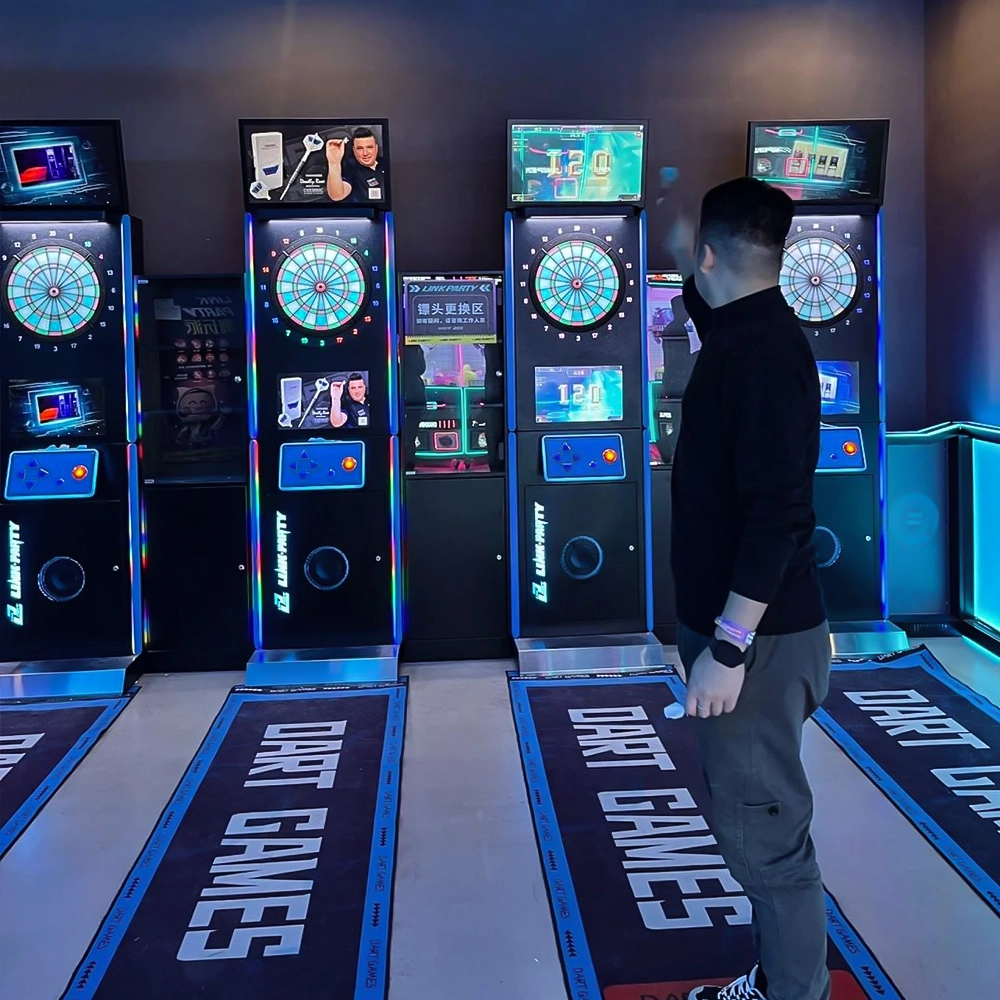
How to Train Staff to Use Electronic Dart Machines
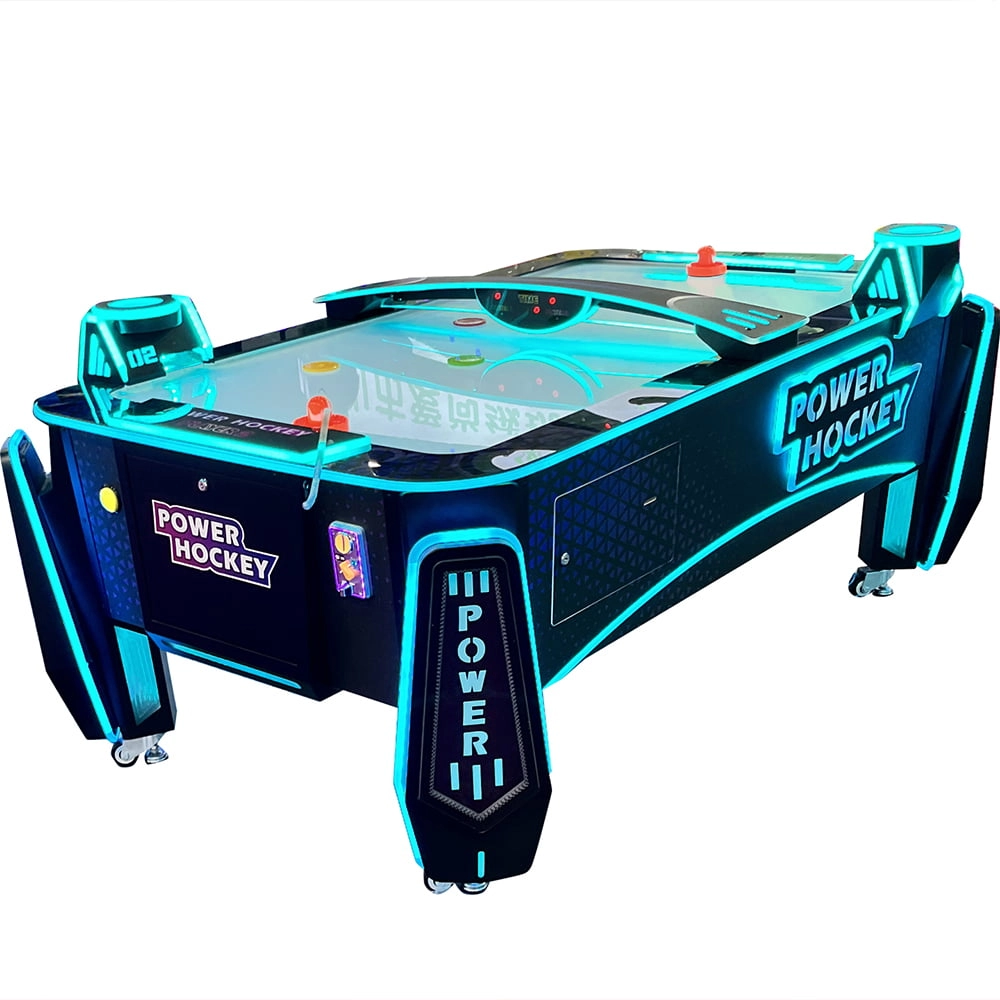
Maintenance and Service Plans for Ice Hockey Arcade Machines
Football Simulator
What is the biggest difference between simulation soccer and traditional soccer?
Simulation soccer through digital technology on the screen to present soccer, not subject to site, weather restrictions, players can participate at any time and anywhere, but also with the handle, somatosensory equipment and other controls, experience a variety of modes. Traditional soccer requires real venues and multiple participants, and is greatly affected by environmental factors.
Interactive Rollerball
How often does the equipment require maintenance?
For daily use, simple monthly maintenance, such as simple cosmetic cleaning and function checking after use, is sufficient. A more comprehensive quarterly maintenance is sufficient.
Holographic Light and Shadow Restaurant
What is the difference between holographic projection and ordinary projection?
Ordinary projection is the process of projecting a two-dimensional image onto a flat screen, where the viewer sees a flat image. Holographic projection can present real three-dimensional images, allowing viewers to observe different faces of objects from different angles, with a strong sense of three dimensionality and realism. In addition, ordinary projection usually only requires simple equipment such as projectors and screens, while holographic projection requires more complex optical systems and technologies to achieve.
FAQ
What is the minimum area required to build a comprehensive digital sports and entertainment hall, and what is the recommended area?
To build a comprehensive type of digital sports and entertainment hall, the minimum required area will be affected by the number and type of equipment, activity area requirements, parking spaces, rest areas and other factors.
Products
What is the most reasonable pricing for a mobile target archery program in a commercial setting?
If it is in shopping malls, scenic spots, and other places with high traffic flow, you can refer to the prices of similar entertainment programs in the surrounding area and combine them with your own costs, charging from $30 - $80 for a single session for a single person. If it is in a professional sports arena, for members or long-term training customers, packages can be introduced, such as monthly card 300 - 500 yuan, seasonal card 800 - 1200 yuan, according to different length and service content reasonable pricing.
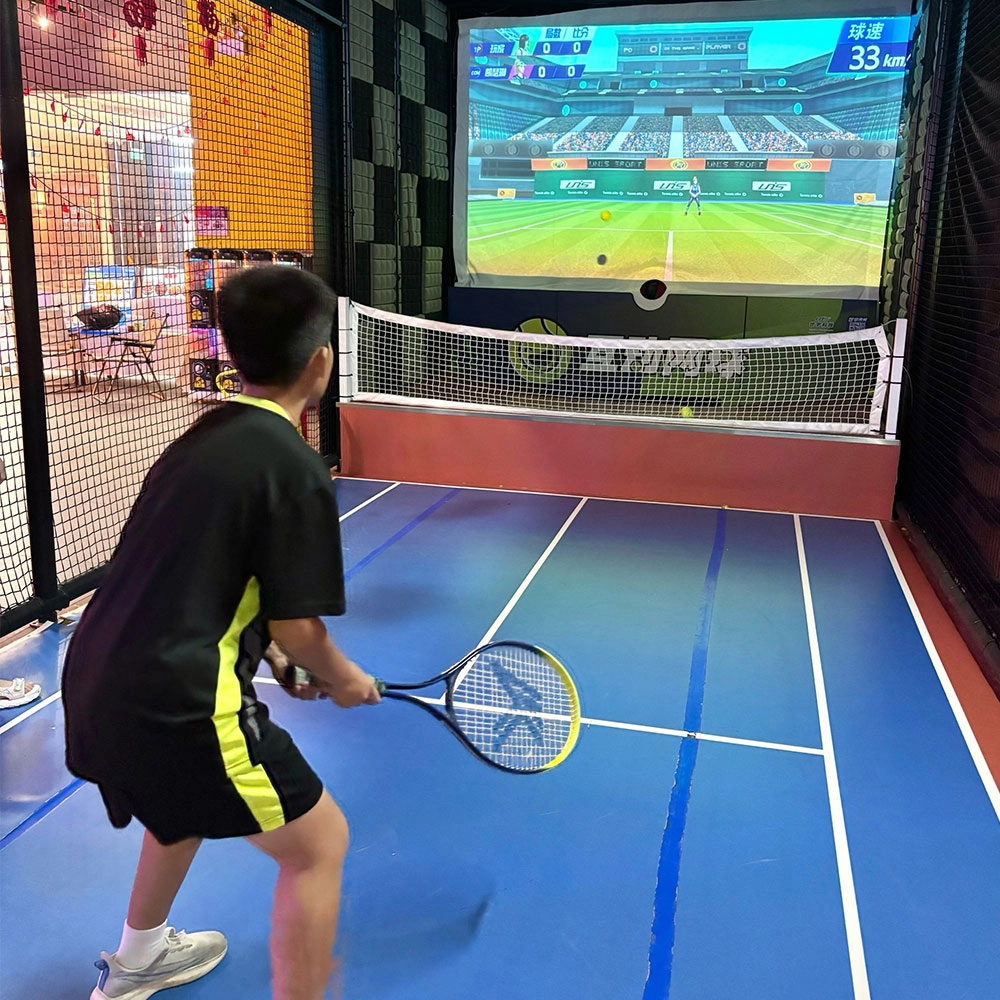
Indoor Tide Play Simulation Tennis Equipment
FUNTECH is full of fun and exciting playgrounds! With high-definition scene projection, force feedback racket, and intelligent scoring system, the simulated tennis equipment in the indoor arcade realizes immersive sports experiences and diversified interactive play, combining the advantages of safety and ease of use with high operational efficiency.
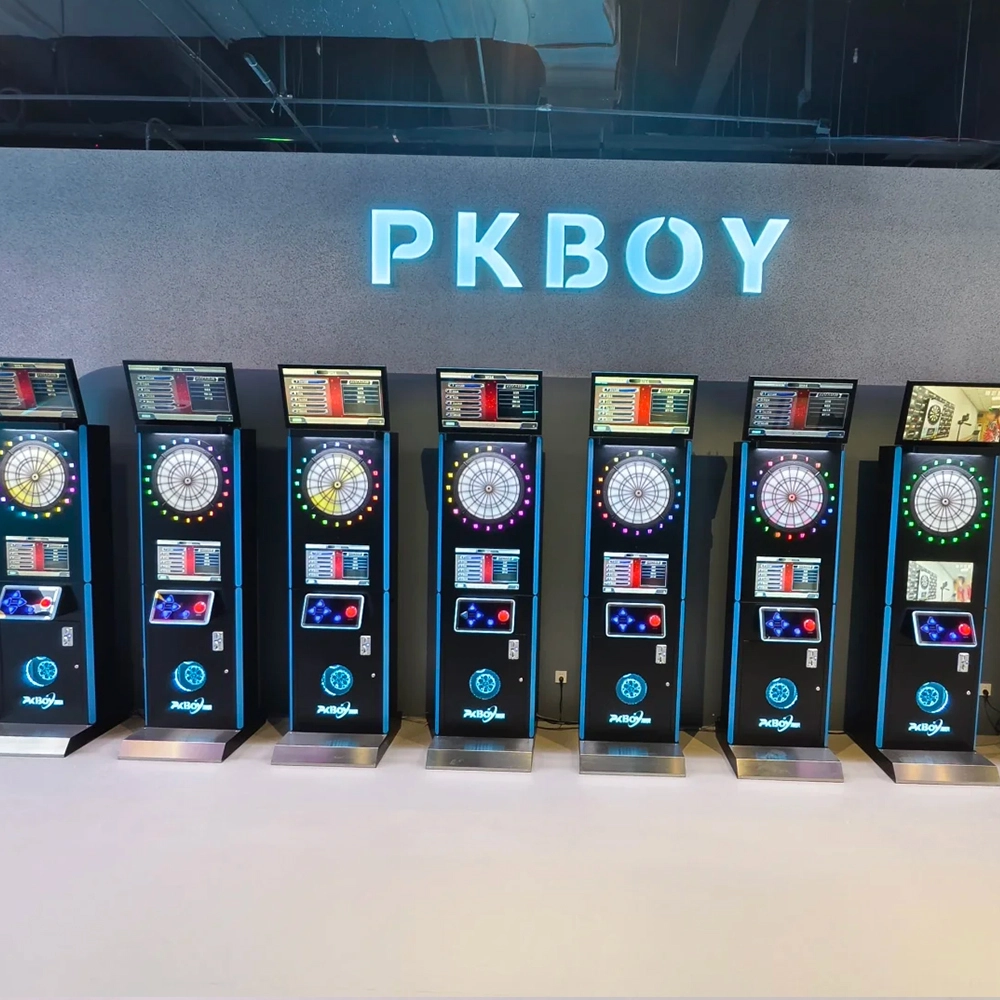
Dart Machines Bar Dart Machines
Joy Power is full of fun and excitement in the playground! The dart machine is suitable for all kinds of places, whether it is a bar, restaurant, KTV, or other entertainment venue, or a sports shop, club, or family leisure space, and can be perfectly adapted. In commercial venues, holding individual and team darts tournaments from time to time can attract more customers and increase the popularity and revenue of the venue, supplemented by various preferential activities, which can directly promote consumption and form a cycle of consumption of all the goods in the shop.
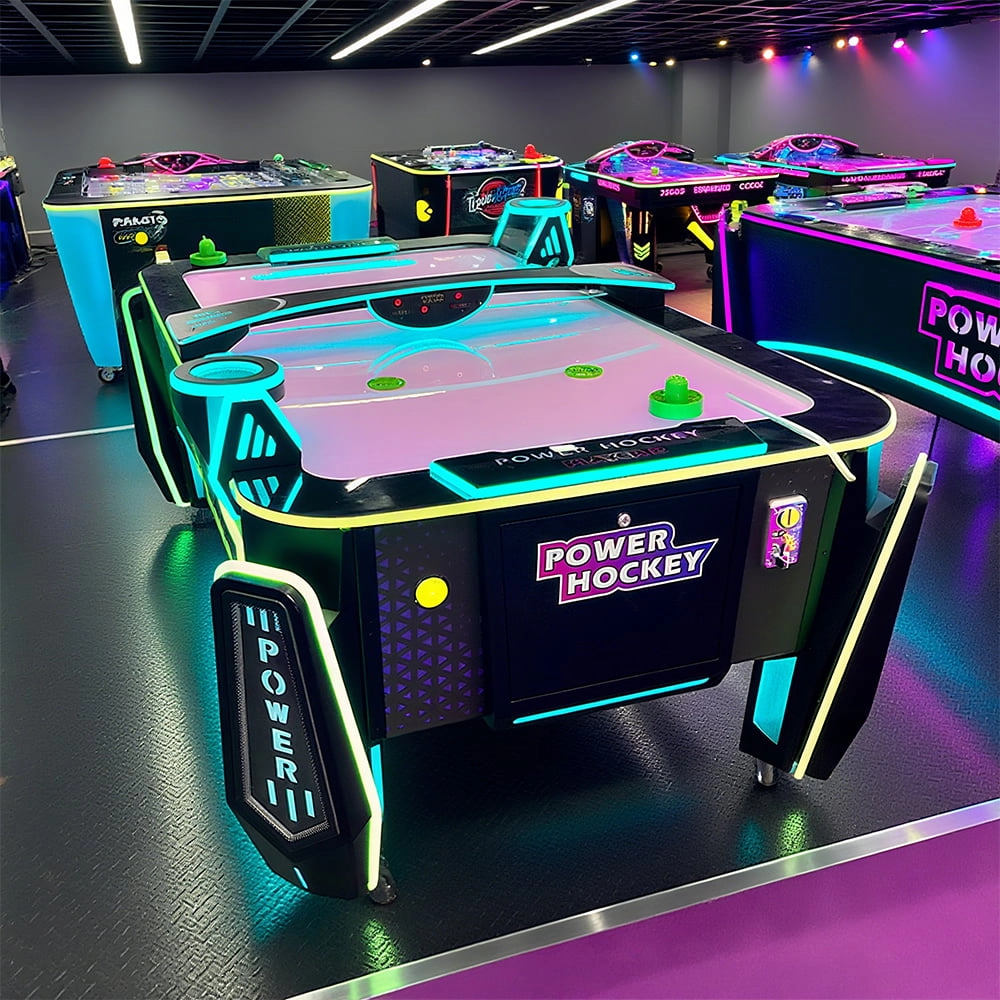
Arcade Hockey
FUNTECH is full of fun and exciting playgrounds! Air hockey, also known as air hockey, is a two-player competitive arcade game comprising a smooth, perforated playing surface, lightweight hockey sticks, a plastic puck, and an electronic scoreboard.
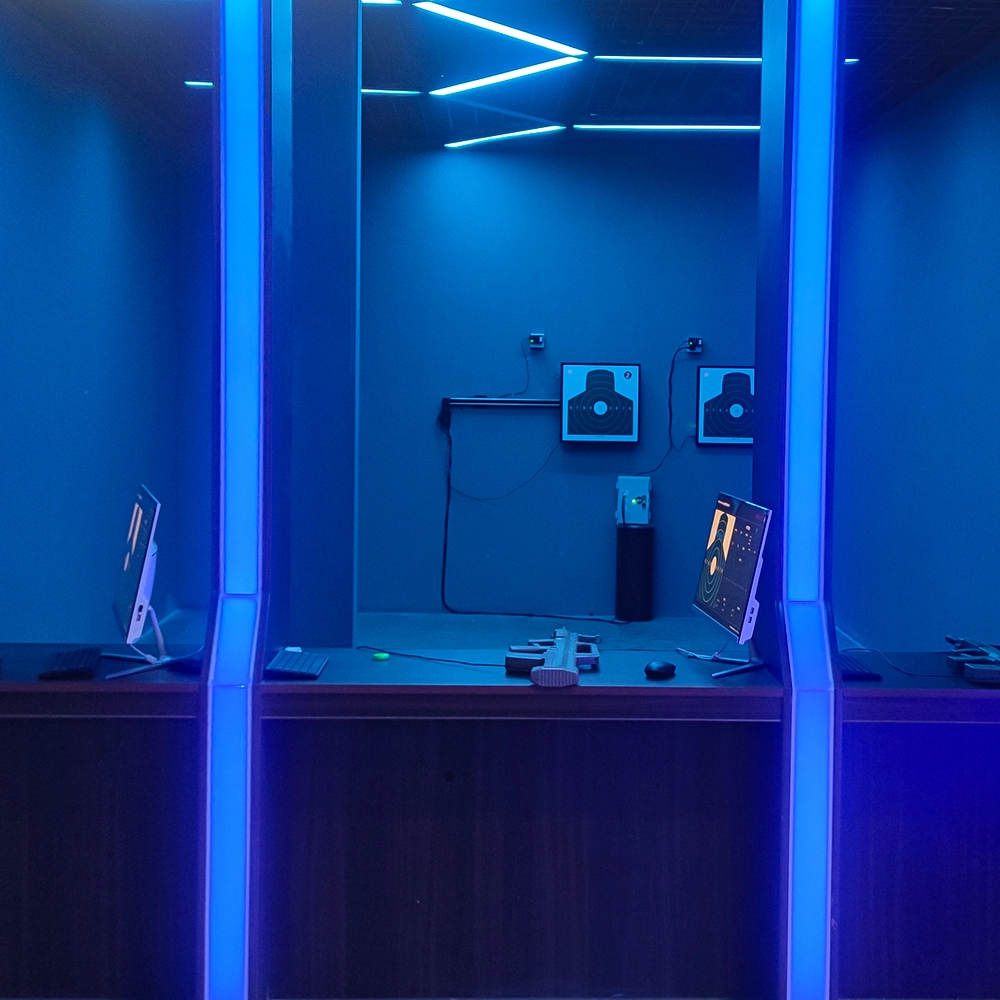
Infrared Shooting
Highly simulated simulation training analysis equipment, with advanced design concepts, fast system development, ease of operation and use, stable technical performance, less consumption of training, site dependence on a small group training is highly interesting, safe, and reliable, and other outstanding features. Product design to solve the basic skills of light weapons precision shooting as a starting point, to improve the safety of shooting training and training efficiency as the fundamental purpose, highlighting the simulation, information technology, and combat training requirements, can be in small indoor and outdoor venues and does not use live ammunition to complete the basic shooting training.
© 2025 FUNTECH ALL RIGHTS RESERVED

Weixia Lei
Fun_Tech-s
fun_tech20