
Integrating Soccer Simulation into Family Entertainment Centers
- Why soccer simulation elevates family entertainment centers
- Aligning with modern guest expectations
- Cross-generational and demographic appeal
- Competitive differentiation and year-round availability
- Designing and installing Indoor soccer simulation Interactive entertainment equipment
- Site selection and spatial requirements
- Hardware, software and accessibility considerations
- Safety, compliance and guest flow
- Operations, revenue models, and marketing strategies
- Pricing strategies and monetization
- Cross-promotion, events and community engagement
- Staff training, maintenance and uptime optimization
- Measuring ROI, KPIs, and best practices for success
- Key performance indicators to monitor
- Comparative table: soccer simulation vs. traditional FEC attractions
- Operational playbook and proven best practices
- Brand positioning: why choose FUNTECH Indoor soccer simulation
- Product overview and user experience
- Operational advantages and vendor support
- Why FUNTECH fits your FEC strategy
- Implementation checklist and timeline
- Pre-installation planning (Weeks 0–4)
- Installation and go-live (Weeks 4–8)
- Scale and optimization (Months 2–12)
- Frequently Asked Questions (FAQ)
- Q: What is soccer simulation and how realistic is it?
- Q: What space and power requirements are typical?
- Q: Can children and non-players easily participate?
- Q: How does soccer simulation drive revenue?
- Q: What maintenance and support should I expect?
- Contact and next steps
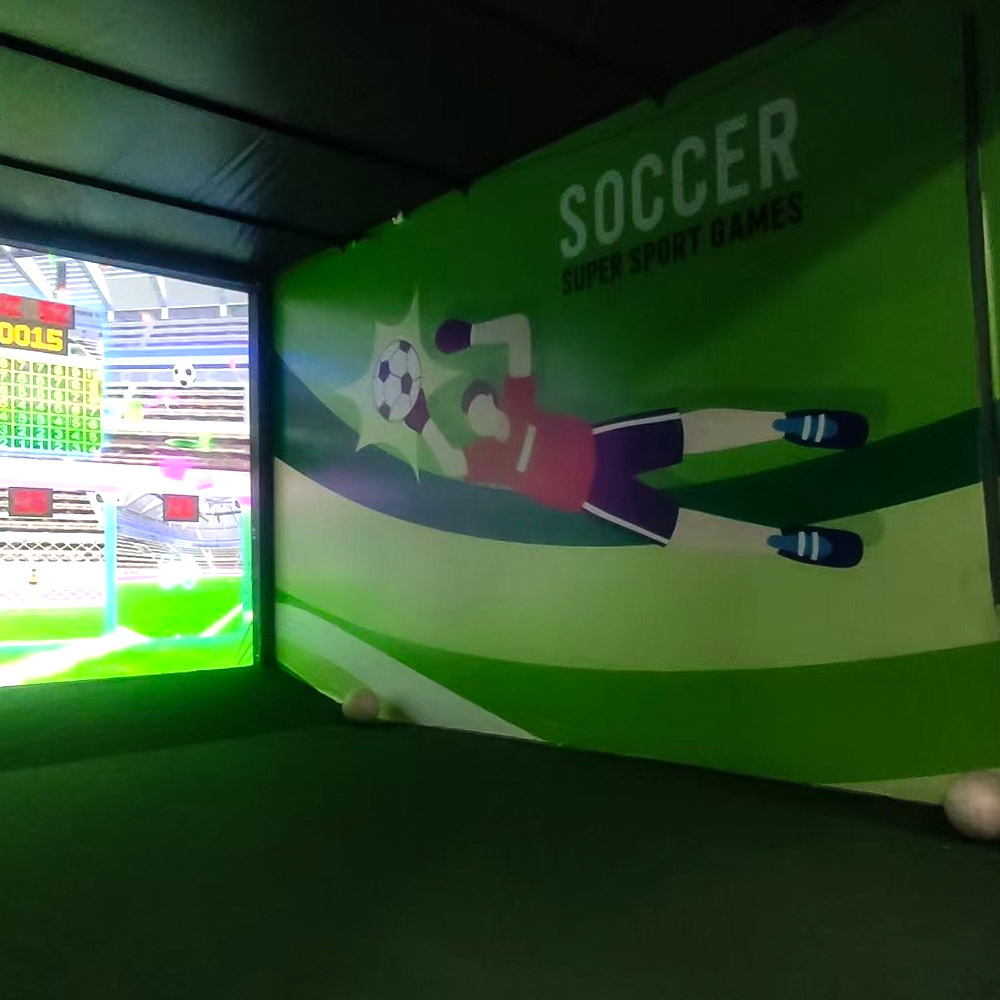
Soccer simulation has emerged as a powerful draw for Family Entertainment Centers (FECs), enabling operators to deliver immersive, weather-independent, and scalable football experiences. Optimized for local search and discoverability, this article explains how to successfully integrate an Indoor soccer simulation Interactive entertainment equipment into your venue — covering layout, hardware, guest experience design, revenue models, safety, operations, and measurable KPIs to ensure long-term success. After integration, driving traffic becomes the focus, and effective marketing strategies for venues with soccer simulation experiences help convert visibility into revenue.
Why soccer simulation elevates family entertainment centers
Aligning with modern guest expectations
Audiences today expect interactive, shareable experiences. Soccer simulation answers that need by blending competitive gameplay with social participation. The attraction creates moments people are eager to record and post to social media, increasing organic promotion for your FEC. The technology reproduces realistic pitch textures, ball physics and player movement, so even casual players feel the authenticity of a true digital soccer experience.
Cross-generational and demographic appeal
Unlike single-demographic attractions, soccer simulation appeals to a wide range of guests — children, teens, parents, corporate teams and senior groups interested in light competition. With adjustable difficulty and multiple game modes (competitive leagues, freestyle challenges, parent-child modes), the experience can be tailored to both serious football fans and families looking for a casual, shared activity.
Competitive differentiation and year-round availability
Bringing an Indoor soccer simulation Interactive entertainment equipment into your facility differentiates your FEC from traditional arcades and laser tag arenas. Because it’s an indoor, controlled experience, it delivers consistent performance regardless of weather or season, improving revenue stability and enabling predictable scheduling for events and leagues.
Designing and installing Indoor soccer simulation Interactive entertainment equipment
Site selection and spatial requirements
Careful placement determines usability and safety. Typical installations require a footprint that varies by system configuration — single-player kiosks can fit in 3–5 m², while full 4-player competitive setups may need 12–20 m² including circulation space. Consider sightlines for spectators, queueing space, and adjacency to high-traffic areas (concessions, party rooms). For guidance on venue planning and capacity, consult industry resources such as the International Association of Amusement Parks and Attractions (IAAPA).
Hardware, software and accessibility considerations
Hardware typically includes high-resolution display screens or projection, robust controllers (joysticks, ball-tracking sensors, or somatosensory devices), and a dedicated PC or console running the simulation software. For broader accessibility, ensure control options include smartphone-based input or touchless sensors so guests with different abilities can participate. Select equipment with easy-to-replace wear parts and accessible service panels to minimize downtime.
Safety, compliance and guest flow
Prioritize safety by providing clear instructions, soft flooring where required, and barriers to separate active play from spectator areas. Compliance with local safety codes and regular risk assessments is essential. For legal and best-practice frameworks related to sports and recreational facilities, the global relevance and history of football can be referenced via authoritative sources such as the FIFA site (FIFA) and the general overview at Wikipedia.
Operations, revenue models, and marketing strategies
Pricing strategies and monetization
Successful operators use a mix of pricing tactics: pay-per-play, timed sessions, memberships, party packages, and corporate bookings. Suggested models include:
- Pay-per-match (single session) for casual walk-ins
- Bundle packs (e.g., 5 matches for a discounted rate) to encourage repeat visits
- Monthly memberships with priority booking for local leagues
- Private bookings for birthday parties, team-building, or brand events
Seasonal promotions tied to major tournaments (e.g., FIFA World Cup) and local leagues can spike demand and increase ancillary spending on F&B and merchandise.
Cross-promotion, events and community engagement
Host in-house leagues and tournaments to create habitual visitation; partner with local youth clubs and schools for after-school programs; and collaborate with sports bars or local sponsors for co-marketing. Create themed nights (parent-child nights, corporate competitions) to attract diverse markets.
Staff training, maintenance and uptime optimization
Train staff to quickly onboard players, manage matchmaking, and perform basic troubleshooting. Implement a preventive maintenance schedule and remote support capability from the vendor. Track uptime and mean time to repair (MTTR) to protect revenue streams—consider Service Level Agreements (SLAs) with suppliers for critical components.
Measuring ROI, KPIs, and best practices for success
Key performance indicators to monitor
Track metrics that quantify both financial and experience outcomes:
- Footfall near the attraction and conversion rate to play
- Average revenue per play and per guest
- Repeat visitation rate and membership uptake
- Uptime percentage and average session length
- Social media mentions and content shares (UGC)
Comparative table: soccer simulation vs. traditional FEC attractions
| Metric | Soccer Simulation | Traditional Attraction (e.g., Arcade Racing) |
|---|---|---|
| Footprint | Moderate (3–20 m² depending on setup) | Small to Moderate (kiosks to cabinets) |
| Appeal | Broad cross-generational appeal | Often teenage or niche-focused |
| Revenue per session | Medium–High (bundles, leagues, events) | Low–Medium (single plays) |
| Seasonal dependency | Low (indoor, weather-independent) | Low–Medium |
| Maintenance complexity | Medium (sensors, software updates) | Low–Medium |
| Shareability | High (competitive matches, social clips) | Medium |
Operational playbook and proven best practices
Best-in-class FECs optimize throughput by staggering session starts, using digital queuing, and offering warm-up or demo modes that reduce initial onboarding time. Measure guest satisfaction through quick post-play surveys and incentivize feedback with loyalty points. Use data from the simulation software to refine difficulty levels, promotional offers, and staff allocation.
Brand positioning: why choose FUNTECH Indoor soccer simulation
Product overview and user experience
Indoor soccer simulation Interactive entertainment equipment by FUNTECH delivers an authentic, immersive digital soccer experience. FUNTECH's system recreates the green field on-screen with accurate turf texture and realistic player movement. Players can control offense and defense using joysticks, somatosensory devices, or their smartphones. Multiple modes — competitive leagues for global matchups and casual modes for family fun — make FUNTECH suitable for both serious players and parents with children. The system removes venue and weather constraints, bringing soccer excitement indoors anytime.
Operational advantages and vendor support
FUNTECH offers modular installations, remote software updates, and training packages to get staff up to speed quickly. The equipment is designed for ease of maintenance with replaceable wear components and diagnostic tools. For FEC operators seeking a partner with proven experience in Digital Sports Entertainment, FUNTECH provides SLAs and localized support to maintain uptime and guest satisfaction.
Why FUNTECH fits your FEC strategy
Adopting the FUNTECH Indoor soccer simulation solution helps operators diversify attractions, increase dwell time, and create recurring revenue through leagues and memberships. The attraction’s social nature drives UGC and word-of-mouth, and its adaptability supports birthday parties, corporate events, and community engagement programs.
Implementation checklist and timeline
Pre-installation planning (Weeks 0–4)
- Perform site survey and measure intended footprint.
- Define business model (pricing, events, memberships).
- Secure vendor contract, SLAs, and installation schedule.
Installation and go-live (Weeks 4–8)
- Install hardware, configure software, and test networks.
- Train staff on onboarding, safety, and simple maintenance.
- Run soft-launch promotions and gather early feedback.
Scale and optimization (Months 2–12)
- Introduce leagues, corporate packages, and seasonal promotions.
- Monitor KPIs and adapt pricing and marketing accordingly.
- Schedule preventive maintenance and review SLAs quarterly.
Frequently Asked Questions (FAQ)
Q: What is soccer simulation and how realistic is it?
A: Soccer simulation digitally recreates the football experience — including pitch texture, ball physics, and player movement — using high-fidelity graphics and responsive controls. Modern systems are designed to feel authentic for both casual players and enthusiasts.
Q: What space and power requirements are typical?
A: Space requirements vary by configuration: single-player kiosks can fit in 3–5 m², while multi-player competitive setups need 12–20 m². Power needs are similar to consumer gaming PCs or small arcade cabinets; your vendor will provide exact electrical and network specs during planning.
Q: Can children and non-players easily participate?
A: Yes. Many systems include casual and parent-child modes, simplified controls, and smartphone-based input to make the experience accessible for younger guests and those with limited gaming experience.
Q: How does soccer simulation drive revenue?
A: Revenue stems from pay-per-play, bundle packages, memberships, party bookings, corporate events, sponsorships, and increased spending on F&B and merchandise tied to events and tournaments.
Q: What maintenance and support should I expect?
A: Expect routine software updates, sensor calibration, and occasional hardware replacement of consumables. A reliable vendor will offer SLAs, remote diagnostics, and training for on-site staff to minimize downtime.
Contact and next steps
If you’re ready to add an Indoor soccer simulation Interactive entertainment equipment to your Family Entertainment Center, contact our sales team to schedule a site survey, demo, and ROI consultation. Discover how FUNTECH can increase engagement, diversify offerings, and generate new revenue streams for your venue.
Product Introduction:
FUNTECH is a playground full of fun and excitement! Soccer simulation is an innovative entertainment project that digitally presents the real soccer game. With the help of advanced technology, the green field is accurately reproduced on the screen, from the delicate turf texture to realistic player movements, all lifelike. Players can direct the team's offense and defense by controlling a joystick, somatosensory device, or cell phone. The game features a variety of modes, including an intense and exciting league where you can compete with players from all over the world, as well as a casual and fun game, which is suitable for parents and children to share the fun. No need to be restricted by the venue and weather; you can enjoy the charm of soccer and feel the passion of the game anytime and anywhere.
Contact Sales | View Product Details
References: FIFA (https://www.fifa.com), Association football — Wikipedia (https://en.wikipedia.org/wiki/Association_football), IAAPA (https://www.iaapa.org).
Where to Buy baseball pitch simulator
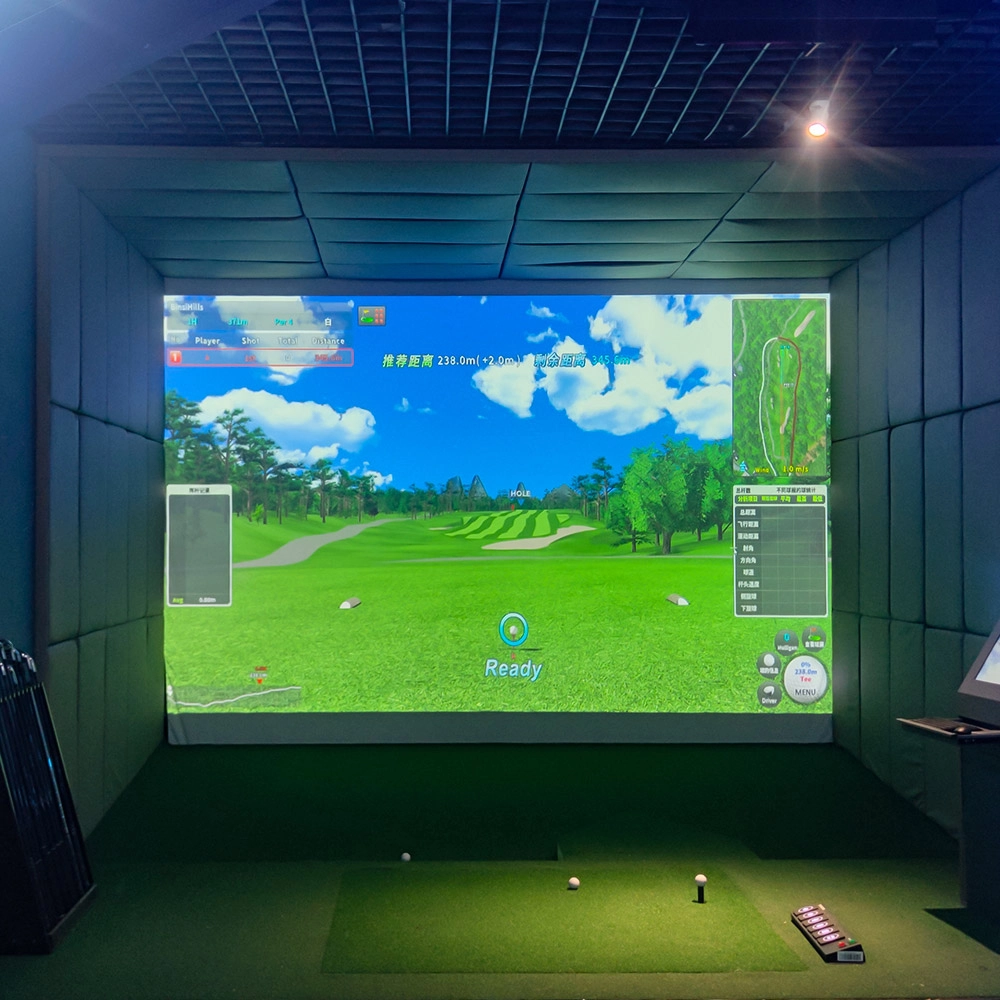
Designing Multiuse Spaces Around Indoor Simulated Golf
What is interactive holographic projection ?
Tips for buy interactive floor projection price
FAQ
What is to be considered for setting up a digital sports & amusement hall?
The design requirements of digital sports & amusement hall are different from other entertainment venues, and they need to focus on innovation, interactivity and experience.
What requirements should a store manager of a digital sports hall have?
The store manager of a digital sports and entertainment center needs to have good management and communication skills, be familiar with the application of digital technology, and have an innovative spirit and a sense of teamwork
Products
How often does moving target archery equipment require maintenance?
Under daily use, for equipment that is used less frequently, 1-3 times per week, simple cosmetic cleaning and functional checks can be performed after each use. A more comprehensive maintenance should be carried out every 2-4 weeks, including disassembling some parts for cleaning and checking the accuracy of the aiming system.
Infrared Shooting
Why are sports arcades a hot spot for investment?
The traditional entertainment market (e.g., arcade, KTV) has become less attractive to generations, while digital hip playgrounds integrating technology, sports, and socialization are more in line with young people's needs, and the market size has exceeded 50 billion in 2023, with an annual growth rate of more than 30%.
Holographic Light and Shadow Restaurant
What is the difference between holographic projection and ordinary projection?
Ordinary projection is the process of projecting a two-dimensional image onto a flat screen, where the viewer sees a flat image. Holographic projection can present real three-dimensional images, allowing viewers to observe different faces of objects from different angles, with a strong sense of three dimensionality and realism. In addition, ordinary projection usually only requires simple equipment such as projectors and screens, while holographic projection requires more complex optical systems and technologies to achieve.
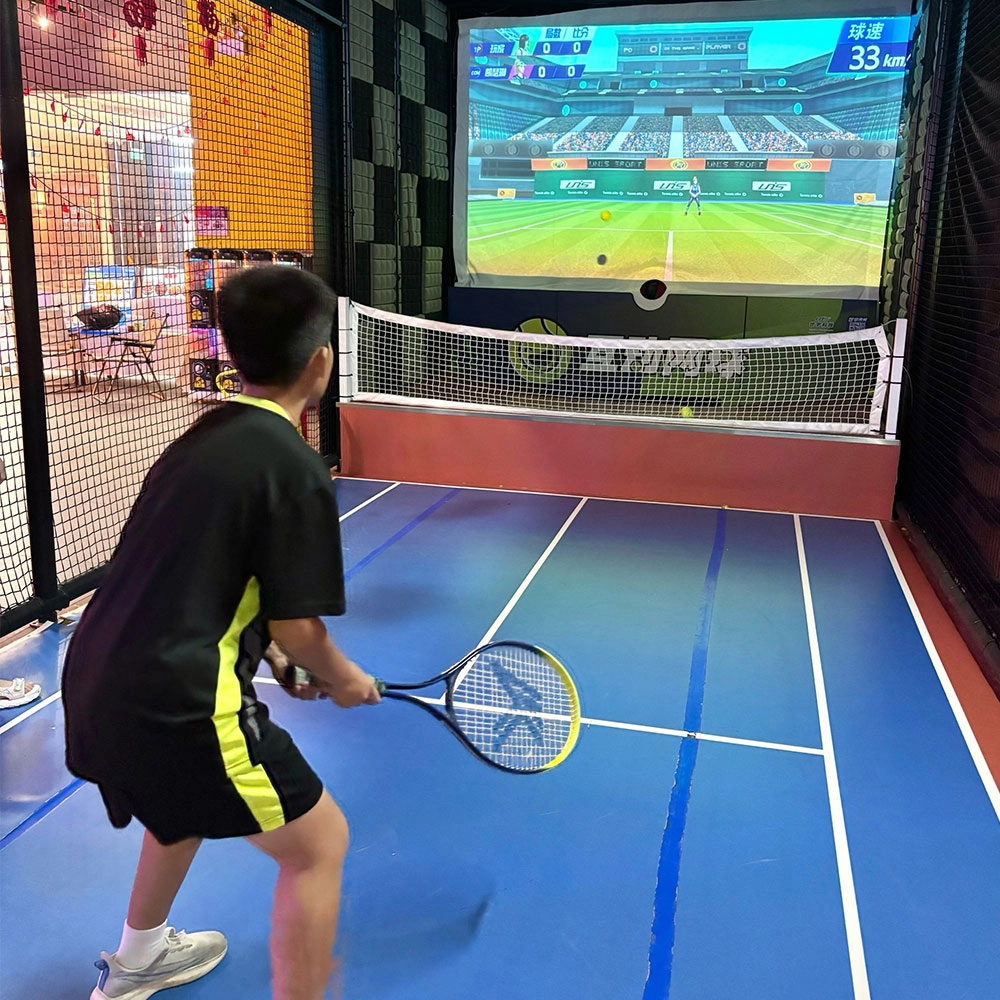
Indoor Tide Play Simulation Tennis Equipment
FUNTECH is full of fun and exciting playgrounds! With high-definition scene projection, force feedback racket, and intelligent scoring system, the simulated tennis equipment in the indoor arcade realizes immersive sports experiences and diversified interactive play, combining the advantages of safety and ease of use with high operational efficiency.
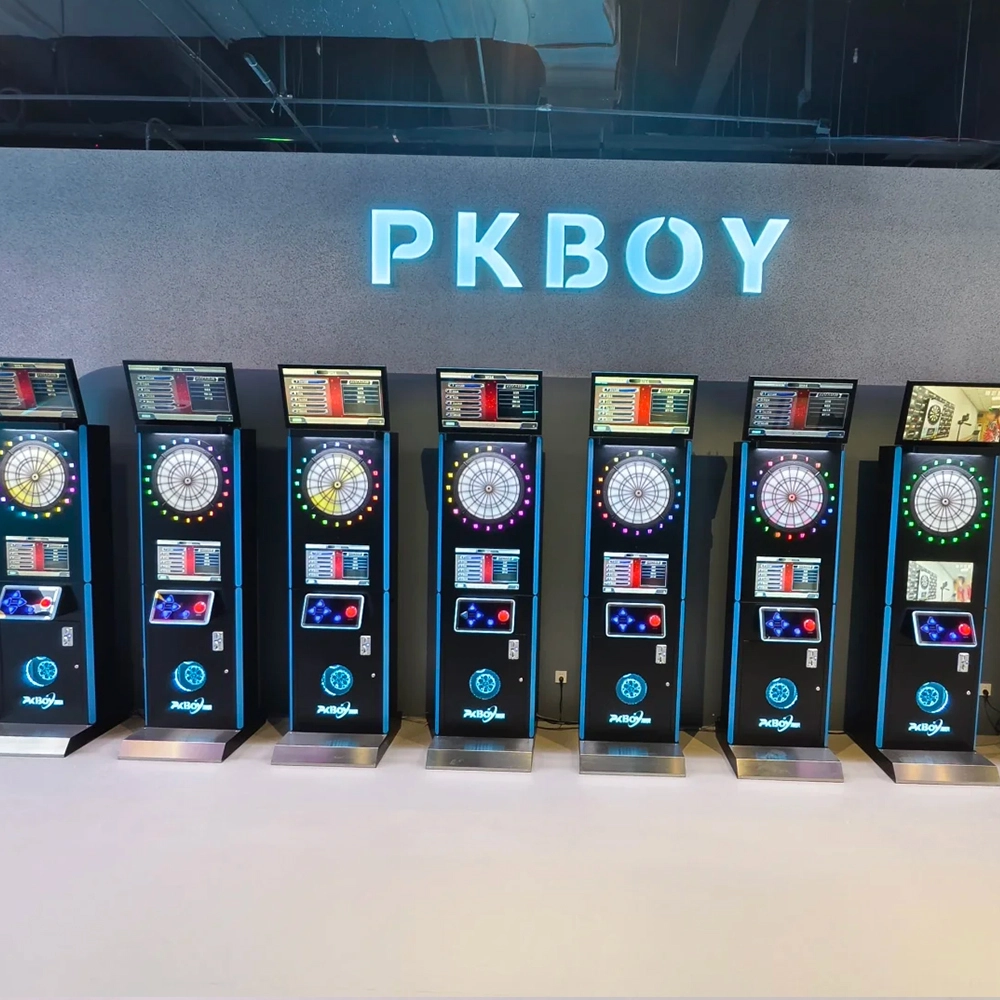
Dart Machines Bar Dart Machines
Joy Power is full of fun and excitement in the playground! The dart machine is suitable for all kinds of places, whether it is a bar, restaurant, KTV, or other entertainment venue, or a sports shop, club, or family leisure space, and can be perfectly adapted. In commercial venues, holding individual and team darts tournaments from time to time can attract more customers and increase the popularity and revenue of the venue, supplemented by various preferential activities, which can directly promote consumption and form a cycle of consumption of all the goods in the shop.
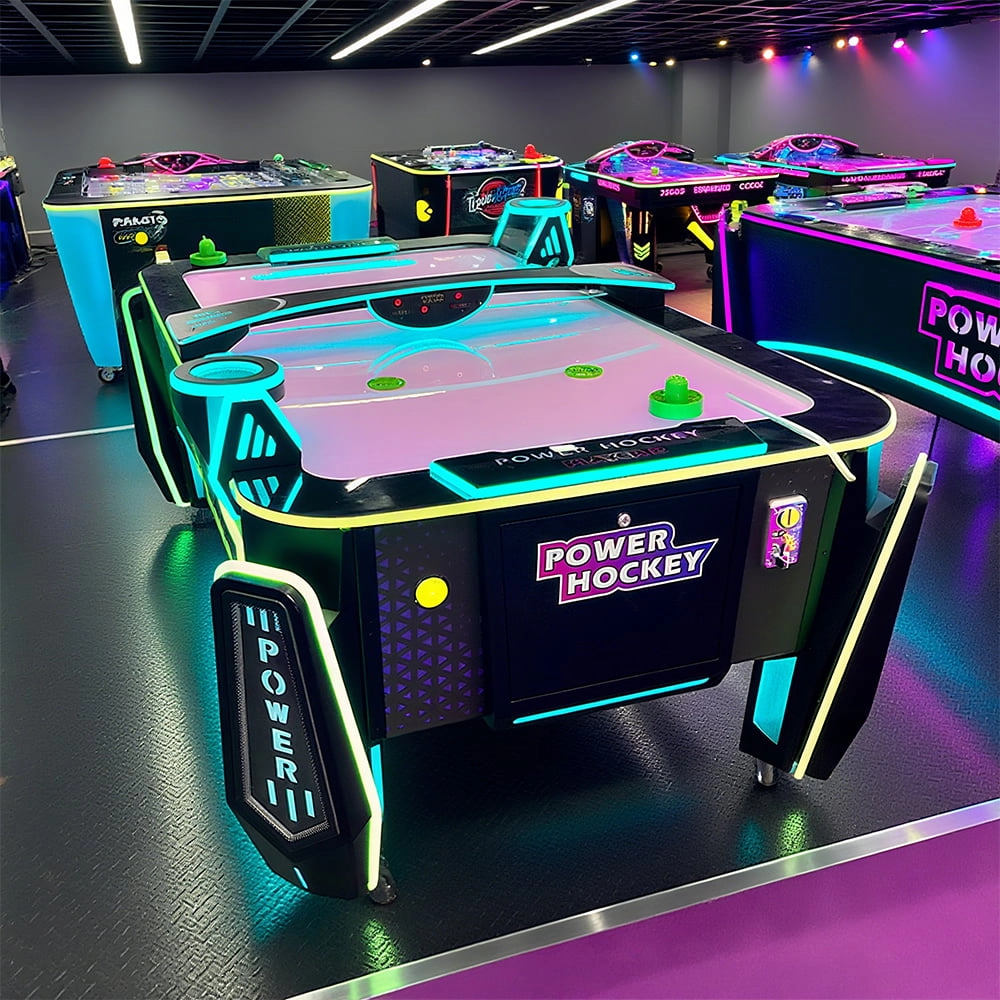
Arcade Hockey
FUNTECH is full of fun and exciting playgrounds! Air hockey, also known as air hockey, is a two-player competitive arcade game comprising a smooth, perforated playing surface, lightweight hockey sticks, a plastic puck, and an electronic scoreboard.
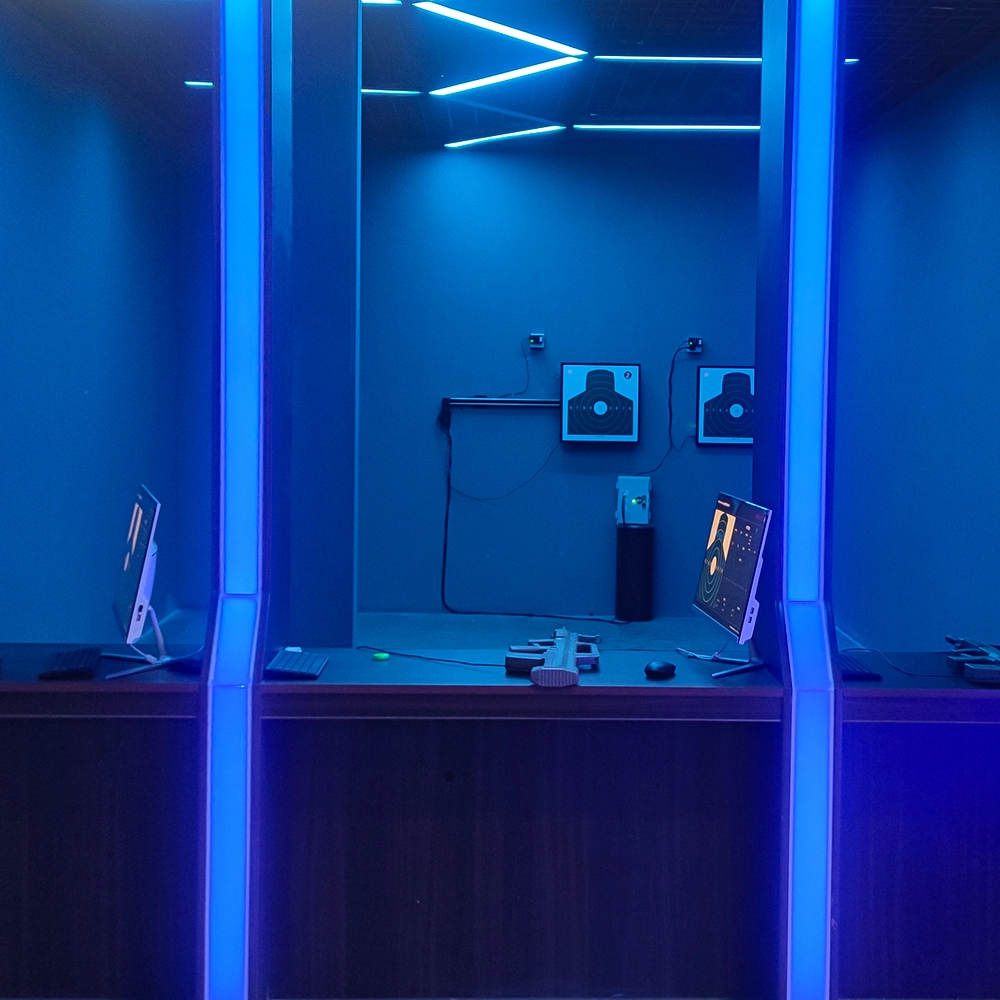
Infrared Shooting
Highly simulated simulation training analysis equipment, with advanced design concepts, fast system development, ease of operation and use, stable technical performance, less consumption of training, site dependence on a small group training is highly interesting, safe, and reliable, and other outstanding features. Product design to solve the basic skills of light weapons precision shooting as a starting point, to improve the safety of shooting training and training efficiency as the fundamental purpose, highlighting the simulation, information technology, and combat training requirements, can be in small indoor and outdoor venues and does not use live ammunition to complete the basic shooting training.
© 2025 FUNTECH ALL RIGHTS RESERVED

Weixia Lei
Fun_Tech-s
fun_tech20