
Marketing Strategies for Venues with Soccer Simulation Experiences
- Understanding Your Audience and Positioning the Soccer Simulation Offer
- Segmenting target customers
- Mapping customer journeys
- Positioning and messaging
- On-site Experience Design and Operations
- Footprint, flow and hardware placement
- Staffing, training and safety
- Dwell time and cross-sell opportunities
- Marketing Channels and Promotion Tactics
- Digital channels and local SEO
- Social media, video, and user-generated content
- Partnerships, events and leagues
- Pricing, Offers, and Revenue Models
- Pricing strategies and packaging
- Monetization beyond sessions
- Comparing marketing channels and expected ROI
- Measuring ROI and Scaling the Soccer Simulation Business
- Key metrics and analytics
- A/B testing and optimization
- Scaling, multi-site rollouts and franchising
- Why choose FUNTECH for your venue?
- Brand advantages and reliability
- Implementation Checklist for Venue Managers
- Pre-launch
- Launch
- Post-launch
- Frequently Asked Questions (FAQ)
- What is soccer simulation and how realistic is it?
- How much space does an indoor soccer simulator require?
- What revenue uplift can venues expect?
- Can I host leagues and tournaments?
- What technical support and maintenance are required?
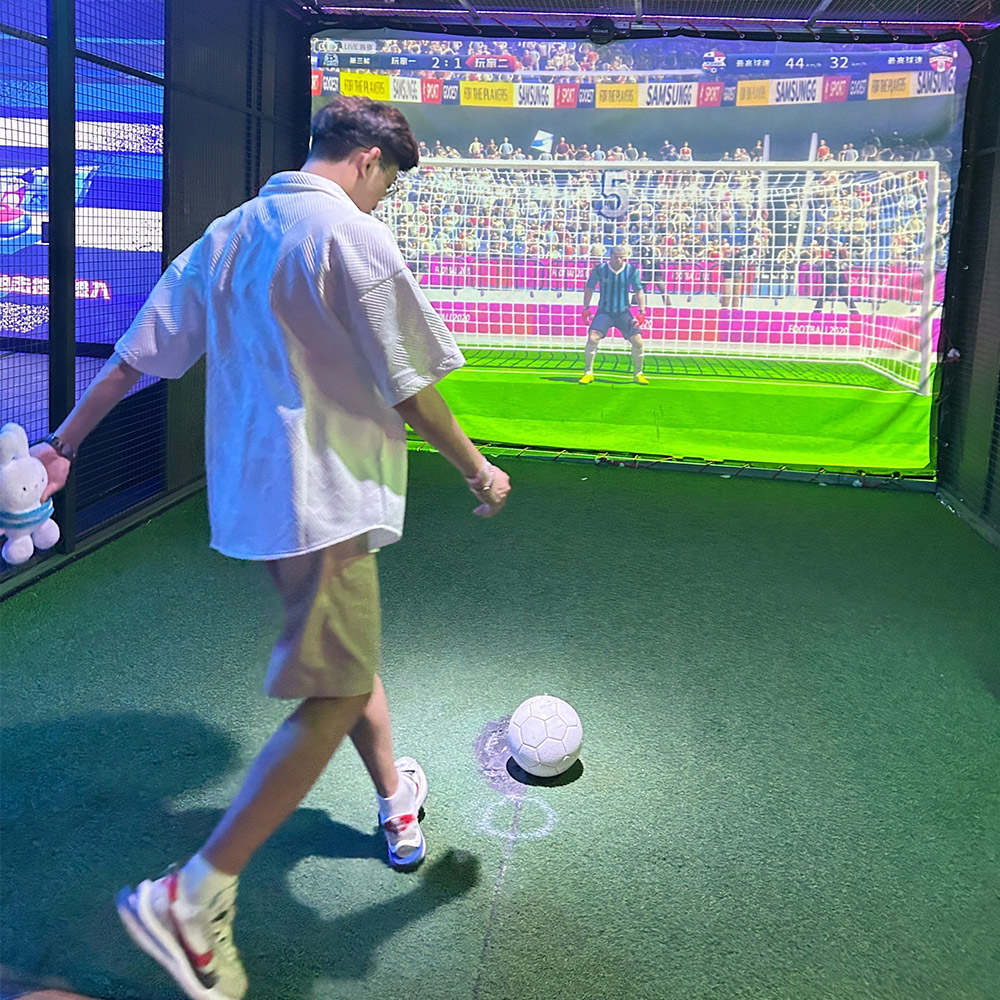
Venues that offer soccer simulation experiences — from family entertainment centers and shopping malls to sports bars and stadium concourses — can capture broad local demand by combining immersive gameplay, targeted local marketing, and partnerships. This guide explains how to position and promote indoor soccer simulation interactive entertainment equipment (such as FUNTECH), optimize on-site operations, run leagues and events, use data-driven pricing and promotions, and measure return on investment so venues convert visits into repeat revenue.
Understanding Your Audience and Positioning the Soccer Simulation Offer
Segmenting target customers
Start by defining customer segments that will use your soccer simulation: families with children seeking casual play, teenagers and young adults looking for competitive esports-style experiences, corporate groups seeking team-building activities, and sports fans attending pre/post-game events. Each segment has different motivations—fun and social time for families, competition and status for teens and young adults, and experiential team-building for corporate buyers.
Mapping customer journeys
Map typical customer journeys for each segment: discovery (social media, mall signage), consideration (demo videos, live kiosks), purchase (walk-up, online booking), play (briefing, match, photo/video capture), and post-play (sharing, loyalty sign-up). Optimizing each touchpoint increases conversion and repeat visits. For example, a two-minute demo video on your site or social channels that shows the green field, realistic player movements, and joystick/phone controls reduces uncertainty and raises desire to try the simulation.
Positioning and messaging
Frame your soccer simulation as either: (a) Competitive esports-like play (emphasize leagues, leaderboards, and tournaments), (b) Family-friendly interactive entertainment (highlight casual modes and parent-child play), or (c) Hybrid — a versatile attraction for all audiences. Use clear messages like “Real-field feel, instant multiplayer competition” or “Family-friendly soccer fun anytime, rain or shine.” Referencing the realism of the experience — turf texture, player movements, and multimodal controls — builds credibility and taps into soccer fans’ expectations. For underlying context on the global popularity of association football, see FIFA's overview (FIFA), and for background on indoor soccer and simulation gaming see Wikipedia’s pages on Indoor soccer and Sports simulation video games.
On-site Experience Design and Operations
Footprint, flow and hardware placement
Design the physical layout to maximize visibility and ease of use. Place the soccer simulation near high-traffic corridors, F&B outlets, or seating areas where spectators can watch. The ideal footprint balances player space with spectator zones and circulation. For indoor implementations such as FUNTECH, allocate space for the simulator unit(s), a brief staging area for instructions, and a small photo/merch display. Use clear signage that communicates session length, price, and available modes (league, casual family mode, skill challenges).
Staffing, training and safety
Train attendants to be both technical operators and guest experience hosts. Staff should be able to: set up and troubleshoot joystick/kinesthetic controls, explain game modes clearly in under a minute, manage queues, and encourage social sharing (photos, video). Safety and hygiene protocols (sanitizing controls between uses, managing crowding) are especially important in family and corporate settings.
Dwell time and cross-sell opportunities
Soccer simulation sessions typically range from 5 to 20 minutes. Use session duration strategically: offer combo packages (game + beverage, game + photo/print), or run back-to-back mini-tournaments to increase dwell time per customer. Position concessions, party rooms, or retail near the attraction to capture post-play spend. An effective approach includes timed reservations with optional add-ons at checkout and a loyalty card that rewards repeat play.
Marketing Channels and Promotion Tactics
Digital channels and local SEO
Optimize local digital presence. Claim and optimize Google Business Profile with keywords like “soccer simulation,” “interactive soccer simulator,” and “indoor soccer simulation” in your description. Use schema markup for events and attractions on your website so search engines understand offerings. Publish pages and blog posts that answer local search queries (e.g., “soccer simulator near me,” “family activities in ”) and include geo signals like neighborhood names to help indexing.
Social media, video, and user-generated content
Short video content (15–60 seconds) showing gameplay highlights, celebrations after goals, and reactions can be powerful on TikTok, Instagram Reels and YouTube Shorts. Encourage user-generated content by running hashtags, offering photo ops, and hosting weekly leaderboards where top performers receive discounts or merch. Feature short tutorial or highlight clips on your site to increase conversions — demos reduce friction for first-time players.
Partnerships, events and leagues
Form partnerships with local soccer clubs, universities, schools, and retailers to drive repeat visitation. Running regular leagues or tournaments — weekend amateur leagues, corporate challenge cups, or weekly youth competitions — creates habitual usage. Events tied to major soccer tournaments (e.g., FIFA World Cup viewing parties with on-site competitions) can drive spikes in footfall. Use a calendar of events and online booking to manage demand.
Pricing, Offers, and Revenue Models
Pricing strategies and packaging
Mix pricing models to appeal to different segments: pay-per-play (single match), time-based (15/30 minutes), subscription/passes (monthly unlimited or X plays), and private bookings (birthday parties, corporate events). Bundle sessions with F&B or merchandise to increase average transaction value. Consider dynamic pricing for peak hours and off-peak promotions to smooth demand.
Monetization beyond sessions
Revenue streams beyond gameplay include: branded merchandise (jerseys, posters), photo/video prints, sponsorships (local brands sponsoring leaderboards), and event rentals. For venues with multiple units, sell naming rights for a league or a tournament. Integrate in-app microtransactions for cosmetic upgrades or unlockable modes if your platform supports it.
Comparing marketing channels and expected ROI
Below is a simple comparison table to help prioritize spend depending on venue size and goals:
| Channel | Effort | Cost | Typical ROI | Best Use |
|---|---|---|---|---|
| Local SEO & Google Business | Medium | Low | High (sustained) | Drive steady walk-ins and bookings |
| Social video (TikTok, Reels) | Medium | Low-Medium | High (viral potential) | Brand awareness & UGC |
| Paid ads (local) | Low | Medium-High | Medium | Immediate footfall (promotions) |
| Partnerships & events | High | Low-Medium | High (long-term) | Repeat visitation & leagues |
Measuring ROI and Scaling the Soccer Simulation Business
Key metrics and analytics
Track core metrics: sessions per day, revenue per session, conversion rate (walk-ins to sessions), return visits (30/60/90-day retention), average transaction value, and occupancy rate (percentage of available play times filled). Use POS and booking system data to create dashboards. If available, use integrated analytics from the interactive equipment to track in-game metrics (session length, mode usage, leaderboard engagement) which inform programming and promotions.
A/B testing and optimization
Continuously test variables: session length, pricing tiers, promotional messaging, and placement of the unit. For example, A/B test a 15-minute vs. 20-minute session during peak hours to see which maximizes revenue without reducing throughput. Test creative variations for social ads to identify which messages (competitive league vs. family fun) attract which segments.
Scaling, multi-site rollouts and franchising
Once you validate a model, scale carefully: standardize operational manuals, staff training, pricing templates, and event playbooks. Use a franchising or licensing approach for multi-site expansion to keep brand experience consistent. For industry best practices on venue operations and trade standards, consult resources from the International Association of Amusement Parks and Attractions (IAAPA).
Product Spotlight — Indoor soccer simulation Interactive entertainment equipment
FUNTECH is a playground full of fun and excitement! Soccer simulation is an innovative entertainment project that digitally presents the real soccer game. With the help of advanced technology, the green field is accurately reproduced on the screen, from the delicate turf texture to realistic player movements, all lifelike. Players can direct the team's offense and defense by controlling a joystick, somatosensory device, or cell phone. The game features a variety of modes, including an intense and exciting league where you can compete with players from all over the world, as well as a casual and fun game, which is suitable for parents and children to share the fun. No need to be restricted by the venue and weather; you can enjoy the charm of soccer and feel the passion of the game anytime and anywhere.
Why choose FUNTECH for your venue?
FUNTECH’s indoor soccer simulation interactive entertainment equipment is designed for easy on-site operation, flexible session configuration, and a range of game modes that serve multiple customer types. Key advantages include realistic visual and motion fidelity, support for joystick/kinesthetic/phone controls, online leaderboards for community engagement, and modular installation that fits FECs, malls, and sports venues.
Brand advantages and reliability
FUNTECH emphasizes durability and serviceability for commercial use. Unlike consumer-grade gaming machines, commercial indoor soccer simulation units are engineered for high throughput and simple maintenance workflows. Additionally, integrated analytics help venue operators tune offerings and run revenue-generating events such as leagues and tournaments.
Implementation Checklist for Venue Managers
Pre-launch
- Conduct local market research and competitor analysis.
- Plan footprint and signage; ensure electrical and network connectivity.
- Create key messaging and visual assets (demo videos, photos).
Launch
- Run a soft opening: invite local influencers, school teams, and media.
- Seed social channels with demo clips and encourage UGC via incentives.
- Introduce opening promotions: first-visit discounts, family packs, and membership passes.
Post-launch
- Monitor metrics, collect customer feedback, and iterate offers.
- Schedule regular events (weekday youth leagues, weekend tournaments).
- Explore sponsorships and local partnerships for ongoing exposure.
Frequently Asked Questions (FAQ)
What is soccer simulation and how realistic is it?
Soccer simulation is an interactive digital experience that reproduces the look and dynamics of real soccer on a screen. High-quality systems like FUNTECH model turf texture, player animations, and physics to deliver realistic gameplay. Controls can be joystick-based, motion-based, or via mobile devices depending on the equipment.
How much space does an indoor soccer simulator require?
Space needs vary by model. Compact installations suitable for malls or FECs typically require a footprint similar to an arcade cabinet plus spectator space (roughly 3–6 meters squared), while larger immersive arenas may need more. Consult the product specifications for exact dimensions.
What revenue uplift can venues expect?
Revenue depends on pricing, utilization, and ancillary sales. Typical revenue streams include pay-per-play, packages, parties, and merchandise. Venues that combine promotions, events, and cross-sell strategies often see higher average transaction values and repeat visits. Use the KPIs outlined above to forecast based on local footfall.
Can I host leagues and tournaments?
Yes. Many venues run weekly leagues, weekend tournaments, and corporate cups. Leagues encourage repeat visits, build community, and create sponsorship opportunities. Use online booking and leaderboard features to manage and promote competitions.
What technical support and maintenance are required?
Commercial systems require periodic maintenance (software updates, control sanitization, and occasional hardware checks). Choose suppliers who provide training, spare parts, and remote diagnostics. FUNTECH and similar providers typically offer commercial support packages tailored to venue needs.
As marketing data and customer feedback accumulate, many operators revisit selecting indoor soccer simulation interactive entertainment equipment to scale or upgrade their offerings.If you’re ready to bring soccer simulation to your venue or want a demo tailored to your space, contact our sales team or view the FUNTECH product page for specifications, pricing, and case studies. Contact Sales • View Product
Top Features to Look for in a Shooting Machine
What are the application scenarios of basketball arcade game for adults?
Top indoor baseball simulator bar Manufacturers and Suppliers
What is baseball simulator game ?
Products
How to attract customers when operating the program in shopping malls?
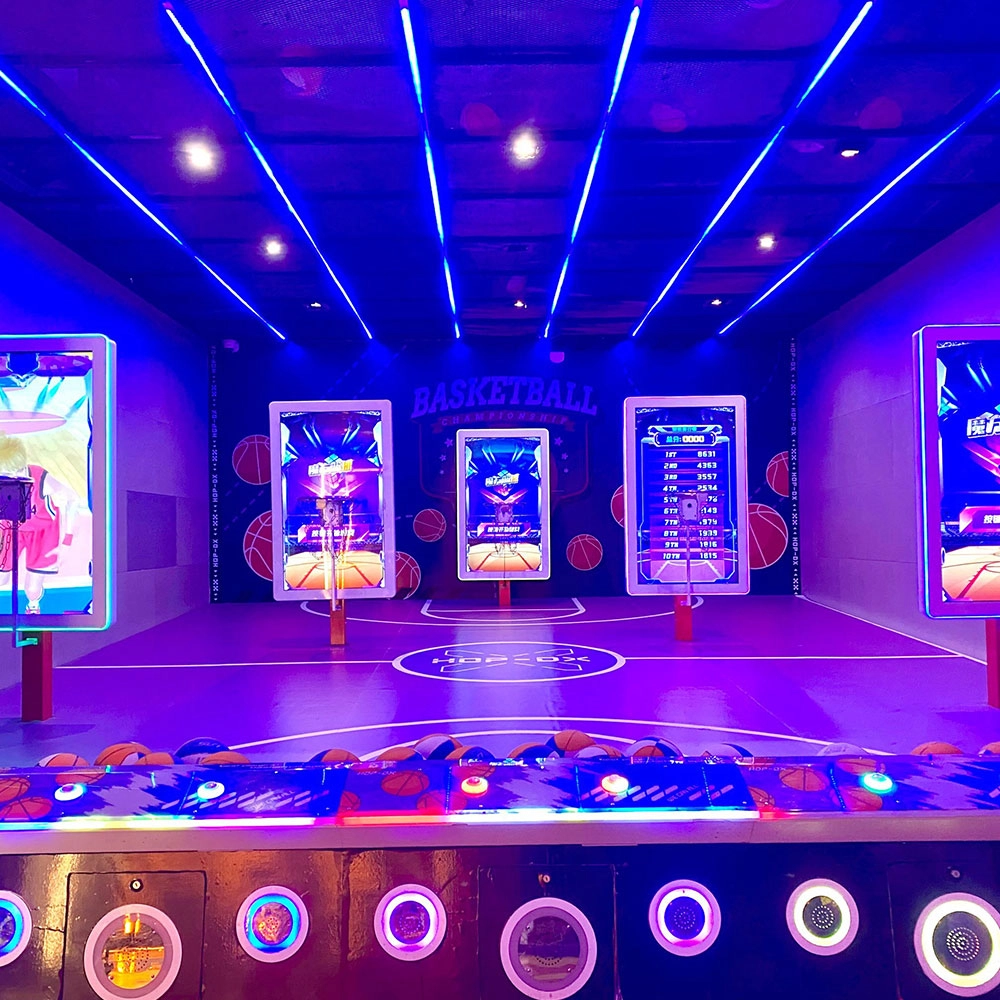
Create a cool venue decoration style, incorporating trendy elements, such as fluorescent light strips, animation-themed murals, etc. o Create a new venue for the program. o Launch diversified marketing models such as parent-child packages and couple packages, combined with time-limited promotional activities, such as half-price experience in the first three days of opening, to attract different groups such as families and couples to stop by and participate in the program. o Create cool venue decoration styles and incorporate trendy elements, such as fluorescent light strips.
How to judge the quality of live firing equipment good or bad?
Check the firearm itself and the supporting targeting system, the reliability of the equipment in use such as continuous shooting, adaptability to the bad environment, the equipment's material technology and operating comfort, etc.
What is the difference between purchasing equipment for commercial operations and personal training?
Commercial operations should consider the durability, ease of operation and attractiveness of the equipment, it is appropriate to choose cool appearance, can withstand high-frequency use, such as the target car running hundreds of times a day, high-intensity models, and easy to operate, easy for customers to get started. Personal training is more focused on cost-effective, according to their own training needs to choose the right tension of the bow, the right speed of movement of the target car.
Infrared Shooting
How often does the equipment require maintenance?
For daily use, simple monthly maintenance, such as simple cosmetic cleaning and function checking after use, is sufficient. A more comprehensive quarterly maintenance is sufficient.
Interactive Rollerball
What are the after-sales services after purchasing the equipment?
Generally, a 1-year warranty is provided. During the warranty period, parts damaged due to quality problems, such as motor failure, display problems, etc., will be repaired or replaced free of charge. There will also be technical support, including equipment installation and debugging guidance, operation training, to ensure the smooth use of the user, after-sales response time is usually within 24 - 48 hours.
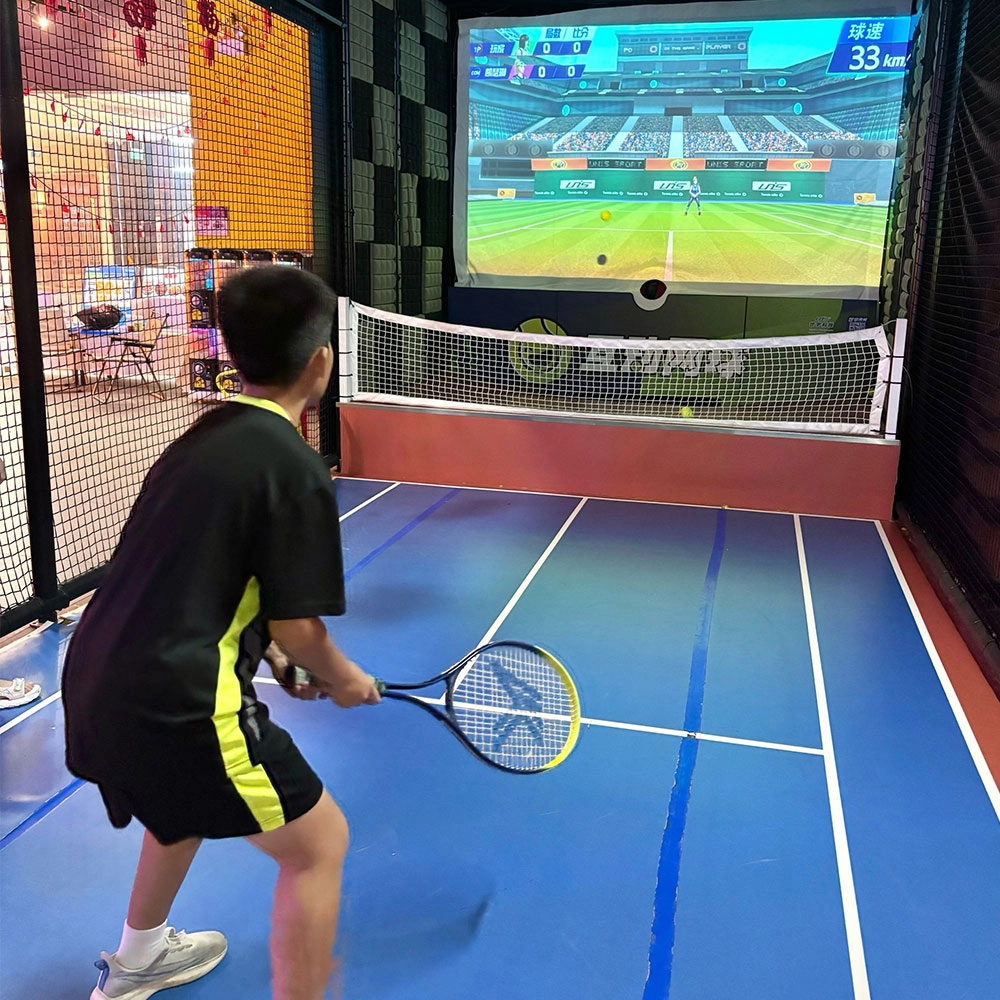
Indoor Tide Play Simulation Tennis Equipment
FUNTECH is full of fun and exciting playgrounds! With high-definition scene projection, force feedback racket, and intelligent scoring system, the simulated tennis equipment in the indoor arcade realizes immersive sports experiences and diversified interactive play, combining the advantages of safety and ease of use with high operational efficiency.
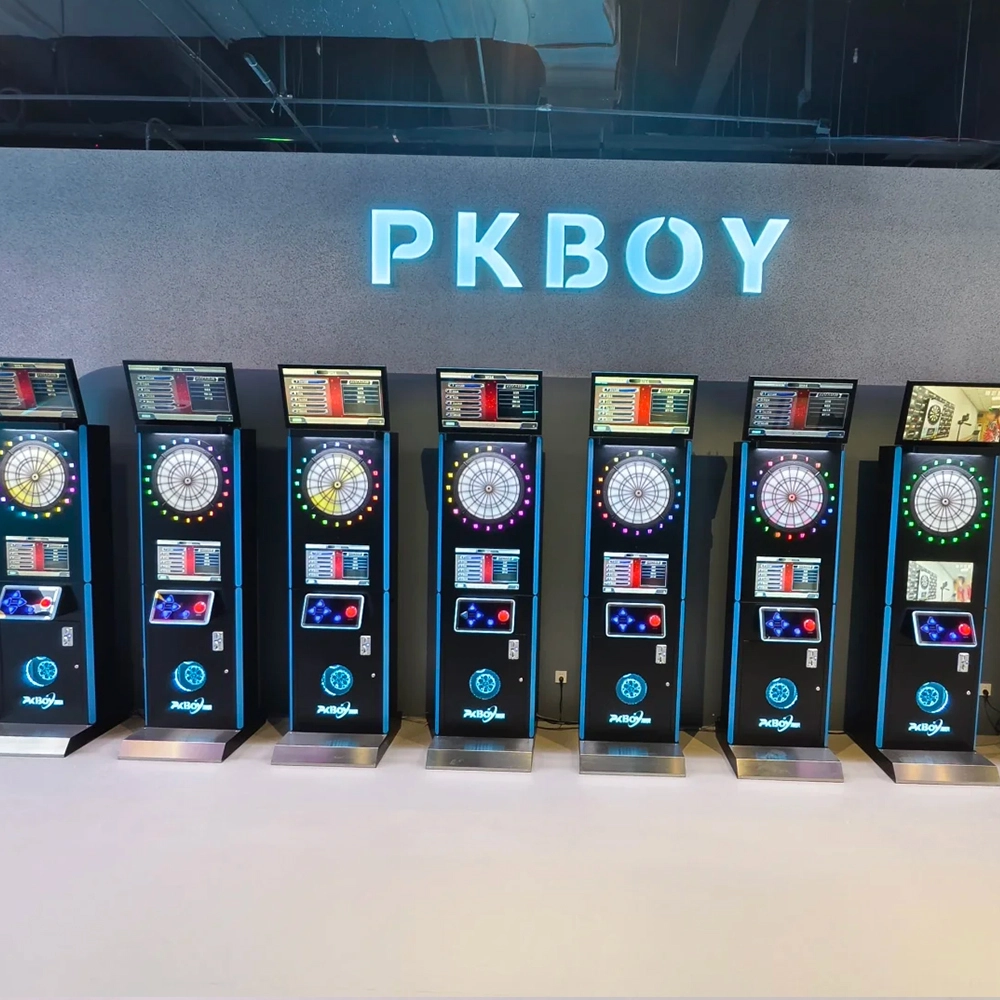
Dart Machines Bar Dart Machines
Joy Power is full of fun and excitement in the playground! The dart machine is suitable for all kinds of places, whether it is a bar, restaurant, KTV, or other entertainment venue, or a sports shop, club, or family leisure space, and can be perfectly adapted. In commercial venues, holding individual and team darts tournaments from time to time can attract more customers and increase the popularity and revenue of the venue, supplemented by various preferential activities, which can directly promote consumption and form a cycle of consumption of all the goods in the shop.
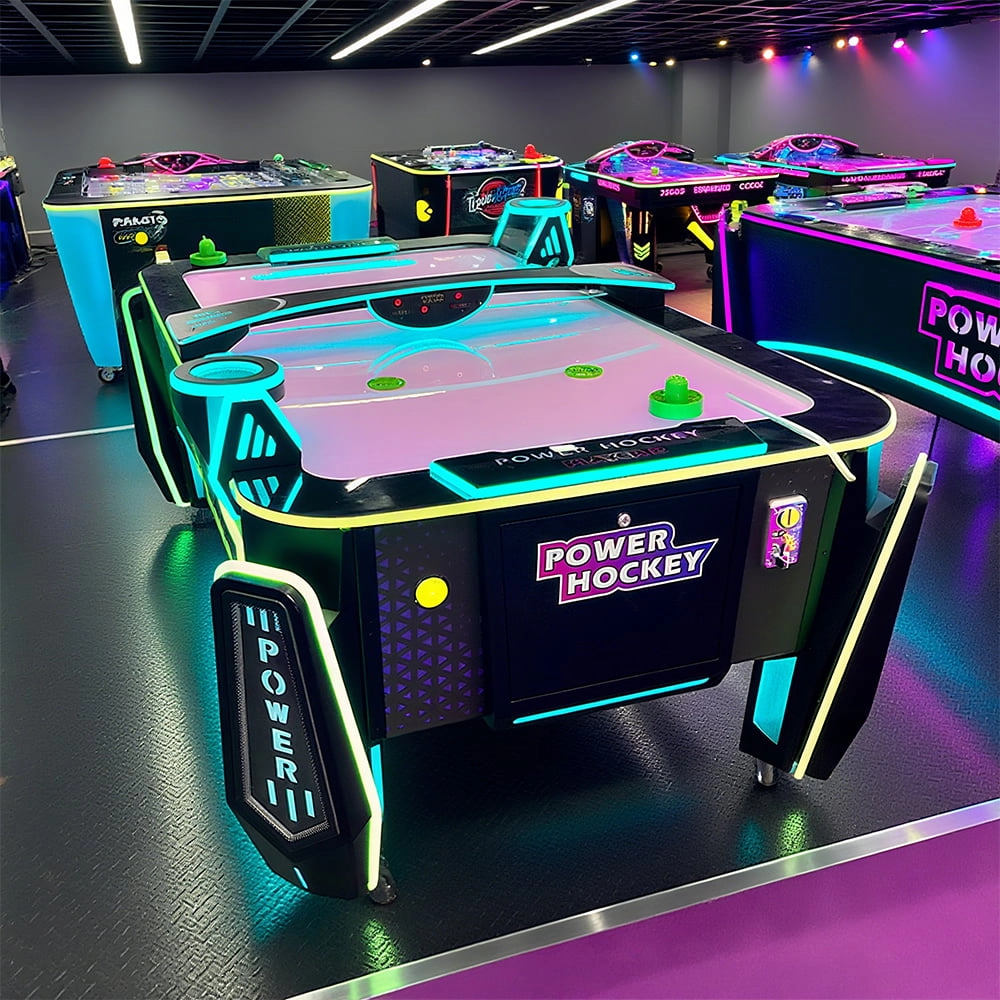
Arcade Hockey
FUNTECH is full of fun and exciting playgrounds! Air hockey, also known as air hockey, is a two-player competitive arcade game comprising a smooth, perforated playing surface, lightweight hockey sticks, a plastic puck, and an electronic scoreboard.
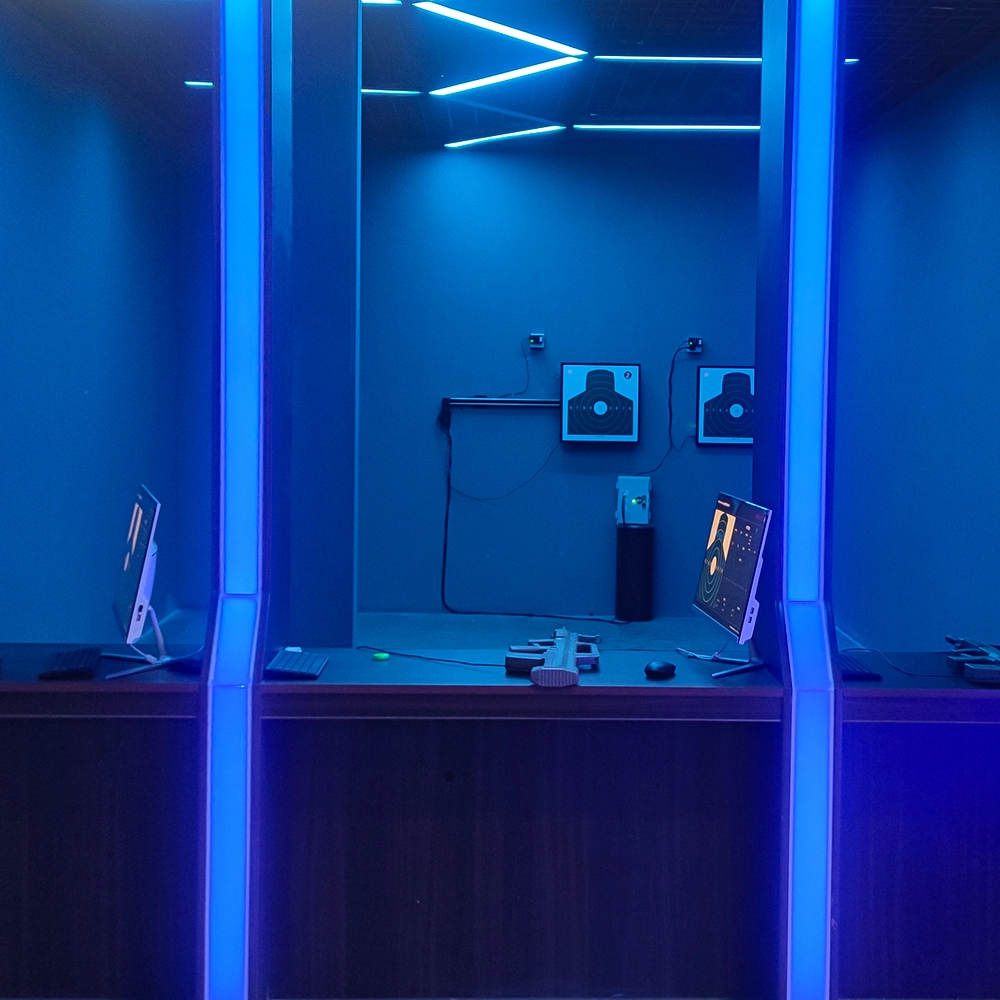
Infrared Shooting
Highly simulated simulation training analysis equipment, with advanced design concepts, fast system development, ease of operation and use, stable technical performance, less consumption of training, site dependence on a small group training is highly interesting, safe, and reliable, and other outstanding features. Product design to solve the basic skills of light weapons precision shooting as a starting point, to improve the safety of shooting training and training efficiency as the fundamental purpose, highlighting the simulation, information technology, and combat training requirements, can be in small indoor and outdoor venues and does not use live ammunition to complete the basic shooting training.
© 2025 FUNTECH ALL RIGHTS RESERVED

Weixia Lei
Fun_Tech-s
fun_tech20