
Calculating ROI for Indoor Soccer Simulation Entertainment
- Understanding the Investment: Costs, Components and Setup
- Capital expenditure: hardware and installation
- Recurring costs: software, maintenance and staffing
- Location and fit-out: venue-dependent variables
- Revenue Streams and Business Models for Soccer Simulation
- Per-session fees, memberships and time-based pricing
- Events, leagues and sponsorship revenues
- Cross-sales and ancillary revenue
- How to Calculate ROI: Metrics, Formulas and Scenario Examples
- Key metrics and definitions
- Scenario table: small, medium and large venue projections
- Detailed example: step-by-step ROI calculation
- Strategies to Improve ROI and Maximize Utilization
- Optimize pricing and run targeted promotions
- Leverage leagues, tournaments and community partnerships
- Increase ancillary spend and cross-sell
- Operational Best Practices and Risk Management
- Training, maintenance and quality assurance
- Compliance, safety and accessibility
- Monitoring performance with KPIs
- Why Indoor Soccer Simulation Works: Market and Experience Insights
- Appeal across demographics
- Year-round availability and space efficiency
- Evidence from adjacent industries
- FUNTECH and Brand Advantage: Aligning Product Strengths with ROI Goals
- Product fit: Indoor soccer simulation Interactive entertainment equipment
- Operational support and software ecosystem
- Data-driven optimizations
- FAQ — Calculating ROI for Indoor Soccer Simulation Entertainment
- Q: How long until I recoup my initial investment?
- Q: What are realistic utilization targets for a new installation?
- Q: Can soccer simulation replace a physical soccer offering?
- Q: What ongoing fees should I plan for?
- Q: How do I price sessions to maximize revenue without reducing demand?
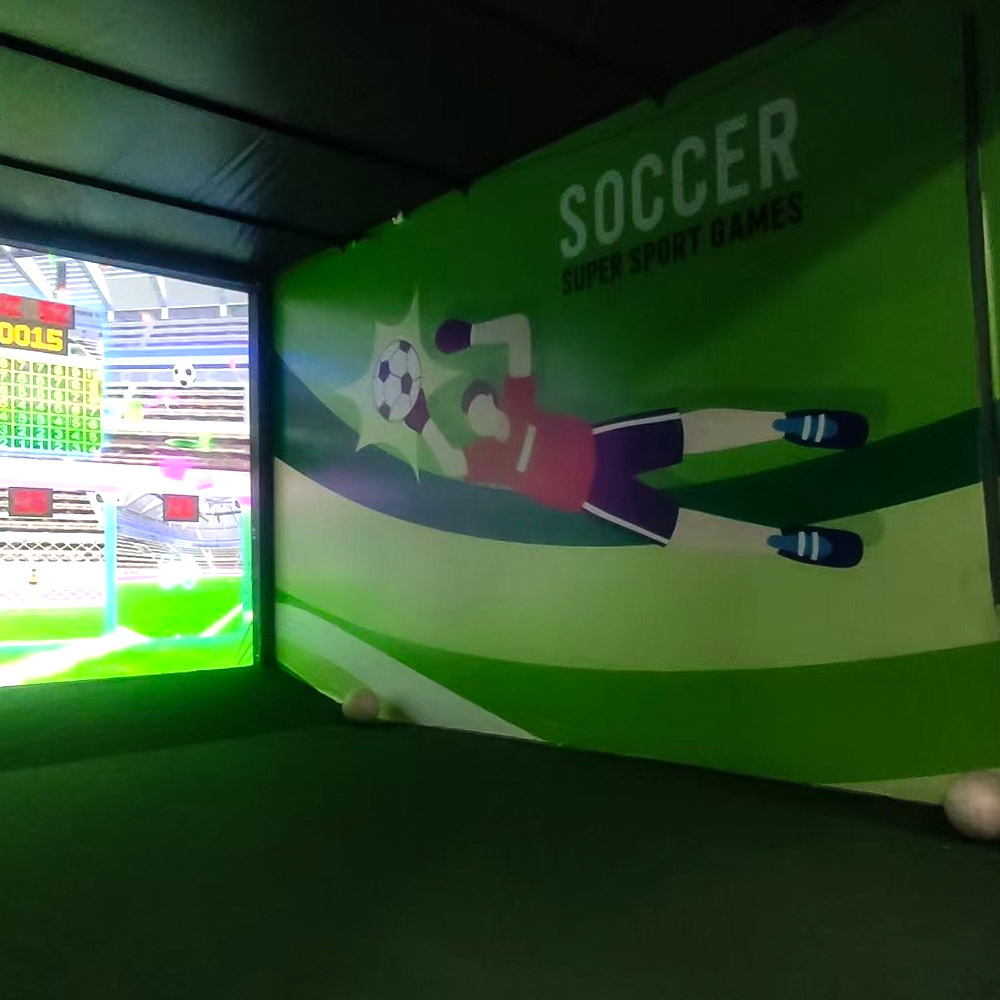
Indoor soccer simulation entertainment combines realistic virtual soccer, motion controls and interactive gameplay to recreate the excitement of the pitch in a compact, weather-independent format. This article explains how to measure and improve ROI for soccer simulation installations by outlining cost components, revenue streams, utilization benchmarks, break-even timelines and actionable optimization tactics. It is intended for venue operators, entertainment center managers, and investors evaluating the Indoor soccer simulation Interactive entertainment equipment and related digital sports entertainment solutions.
Understanding the Investment: Costs, Components and Setup
Capital expenditure: hardware and installation
Initial costs for a soccer simulation system include the base unit (display system, sensors, game engine), peripherals (joystick, motion sensors, touch or mobile control), enclosure or kiosk construction, and optional extras like tactile feedback platforms or High Quality seating. For brand clarity we reference a typical product configuration: Indoor soccer simulation Interactive entertainment equipment, represented by the FUNTECH system, which recreates the green field, player motion and multiple game modes using advanced simulation technology.
Recurring costs: software, maintenance and staffing
Recurring expenses include software licenses and updates, cloud services for league matchmaking, routine maintenance, spare parts, and staffing for operations. Software-as-a-Service subscriptions may cover online leaderboards, league mode support, and anti-cheat measures. Staffing time includes setup, on-floor assistance, and cleaning between sessions—factor these into per-session costs.
Location and fit-out: venue-dependent variables
Venue expenses vary: integration into an existing arcade or family entertainment center is cheaper than custom buildouts. Consider flooring, power and network upgrades, and accessibility. High-traffic placements (mall, family entertainment centers, FECs) command higher per-session prices but demand higher initial fit-out costs. Citing industry context from the International Association of Amusement Parks and Attractions (IAAPA) can help benchmark typical fit-out and operational practices: IAAPA.
Revenue Streams and Business Models for Soccer Simulation
Per-session fees, memberships and time-based pricing
Common pricing models are per-play (e.g., 10–20 minutes per session), multi-play bundles, and monthly memberships that offer discounted access. Time-based pricing works well for high-turnover venues; memberships and bundles increase lifetime value and repeat visits. Use dynamic pricing for peak hours (weekends, after-school hours) and family-friendly blocks for casual play.
Events, leagues and sponsorship revenues
League mode and tournaments replicate esports-style competition: charge entry fees, sell concessions, and secure local sponsorships. Running regular leagues increases off-peak utilization and community engagement. Esports and simulated-sports tournaments have a growing audience—see general esports industry insights: Esports — Wikipedia.
Cross-sales and ancillary revenue
Ancillary income includes merchandise (branded items), F&B sales, birthday party and corporate team-building packages, and digital purchases (skins, cosmetic upgrades) if supported by the game platform. Bundling a simulation session with a food voucher or party package increases average transaction value (ATV).
How to Calculate ROI: Metrics, Formulas and Scenario Examples
Key metrics and definitions
Define the following metrics before calculating ROI:
- Initial Investment (CapEx): total cost to acquire and install the equipment and fit-out.
- Operating Expenses (OpEx): annual recurring costs (software, maintenance, staffing, utilities).
- Annual Revenue: sum of all income streams attributable to the unit (sessions, events, merch).
- Net Profit: Annual Revenue − OpEx.
- ROI (annual): (Net Profit / Initial Investment) × 100%.
- Payback Period: Initial Investment / Net Profit (years).
Scenario table: small, medium and large venue projections
The table below illustrates example scenarios. These numbers are hypothetical and intended for illustrative planning; adapt them to local market rates and your operating model.
| Metric | Small Venue | Medium Venue | Large Venue |
|---|---|---|---|
| Initial Investment (CapEx) | $18,000 | $30,000 | $55,000 |
| Annual OpEx | $7,000 | $14,000 | $30,000 |
| Sessions per day | 20 | 40 | 80 |
| Price per session (avg) | $6 | $8 | $10 |
| Annual Revenue | $43,800 | $116,800 | $292,000 |
| Net Profit | $36,800 | $102,800 | $262,000 |
| ROI (annual) | 204% (36,800/18,000) | 343% (102,800/30,000) | 476% (262,000/55,000) |
| Payback Period | 0.49 years | 0.29 years | 0.21 years |
Notes: These projections assume high utilization and efficient operations. For a conservative view, reduce projected sessions by 30–50% or increase OpEx to include marketing and more frequent maintenance to calculate worst-case ROI.
Detailed example: step-by-step ROI calculation
Take the medium venue example to illustrate the math:
- Initial Investment = $30,000
- Annual Revenue = Sessions per day (40) × Price ($8) × 365 = $116,800
- Annual OpEx = $14,000
- Net Profit = $116,800 − $14,000 = $102,800
- ROI (annual) = ($102,800 / $30,000) × 100% = 342.67%
- Payback Period = $30,000 / $102,800 ≈ 0.29 years (≈3.5 months)
Strategies to Improve ROI and Maximize Utilization
Optimize pricing and run targeted promotions
Use data to identify peak hours and low-utilization slots. Offer discounted sessions during off-peak times and High Quality pricing for peak hours, weekend tournaments, or private bookings. Implement loyalty programs or digital vouchers to encourage repeat play and higher lifetime customer value.
Leverage leagues, tournaments and community partnerships
Regular leagues and scheduled tournaments increase frequency of visits, community engagement, and social media visibility. Partner with local youth clubs, schools, and corporate groups for team-building events. Leagues create recurring revenue and convert casual players into regular customers.
Increase ancillary spend and cross-sell
Maximize ATV by bundling sessions with F&B, merchandise, or photo packages. If the simulation platform supports digital content (cosmetics, avatars, highlight replays), monetize digital goods to add a low-cost revenue stream.
Operational Best Practices and Risk Management
Training, maintenance and quality assurance
Ensure staff are trained on gameplay assistance, troubleshooting and sanitization protocols. A preventive maintenance schedule reduces downtime and extends equipment lifespan. Keep spare parts in stock for high-failure components such as sensors or controllers.
Compliance, safety and accessibility
Comply with local safety regulations for public entertainment devices. Provide clear age and usage guidelines, and ensure accessibility for players with disabilities when possible. Reference the general sport and safety guidelines from recognized sources like the FIFA site for soccer-related guidelines and engagement context: FIFA.
Monitoring performance with KPIs
Key Performance Indicators to track: sessions per day, revenue per session, utilization rate (available hours vs booked hours), repeat rate, customer acquisition cost (CAC), and Net Promoter Score (NPS). Use these KPIs to iteratively optimize pricing, marketing and operations.
Why Indoor Soccer Simulation Works: Market and Experience Insights
Appeal across demographics
Soccer simulation attracts a wide audience: competitive players, casual families, corporate groups, and esports fans. The combination of physical input (joystick, somatosensory device, or mobile control) and digital output (realistic field, player animations) creates a shareable, engaging experience that drives foot traffic and social media exposure.
Year-round availability and space efficiency
Unlike traditional fields, simulation units use limited floor space and operate irrespective of weather, making them ideal for urban entertainment centers. This efficiency improves revenue per square foot compared to traditional sports facilities.
Evidence from adjacent industries
Simulation entertainment (racing sims, golf simulators) has proven successful in increasing dwell time and spend in FECs and bars. See the broader simulation game genre overview for background: Simulation video game — Wikipedia.
FUNTECH and Brand Advantage: Aligning Product Strengths with ROI Goals
Product fit: Indoor soccer simulation Interactive entertainment equipment
The FUNTECH soccer simulation system digitally reproduces a realistic green field and player motion, offering multiple game modes from intense global league play to casual family-friendly games. Control options include joystick, somatosensory devices and mobile phone control, providing versatile engagement for different audiences. The system's modular design simplifies installation and scaling across multiple venues.
Operational support and software ecosystem
A strong vendor support package—regular software updates, cloud-based league functionality, and training—reduces OpEx surprises and keeps players returning. The ability to run online leagues and integrate leaderboards increases stickiness and monetization potential.
Data-driven optimizations
FUNTECH systems typically include analytics hooks to track utilization and player behavior. Use these insights to refine pricing, schedule events, and design promotions that lift low-utilization periods and maximize ROI.
FAQ — Calculating ROI for Indoor Soccer Simulation Entertainment
Q: How long until I recoup my initial investment?
A: Payback periods vary by location and utilization. Under moderate to high usage scenarios, many venues can expect payback within 3–12 months. Use the ROI formula in this article with your local revenue and cost estimates for an accurate projection.
Q: What are realistic utilization targets for a new installation?
A: Aim for 20–40 sessions per day initially in a well-located family entertainment center; optimized marketing and events can push this higher. Track and improve utilization with targeted promotions and league scheduling.
Q: Can soccer simulation replace a physical soccer offering?
A: It complements rather than replaces outdoor soccer. Simulation offers accessible, weather-independent play, improved revenue per square foot, and esports-style engagement for a different customer segment.
Q: What ongoing fees should I plan for?
A: Plan for software licensing/updates, cloud services for league features, maintenance, and occasional hardware replacements. Factor marketing and staffing into recurring costs.
Q: How do I price sessions to maximize revenue without reducing demand?
A: Test tiered pricing—standard off-peak pricing for casual players, High Quality for peak times and events. Offer bundles and memberships to increase customer lifetime value and smooth demand spikes.
With ROI benchmarks in place, many venues look to differentiation, which is where customization options for indoor soccer simulation units add strategic value.If you want a customized ROI model based on your venue’s foot traffic, local pricing and operating costs, contact our sales team or view the product page for Indoor soccer simulation Interactive entertainment equipment:
Contact Sales / Customer Service | View Indoor Soccer Simulation Product
References: IAAPA (industry benchmarks) — https://www.iaapa.org/; Esports market context — https://en.wikipedia.org/wiki/Esports; Simulation game genre — https://en.wikipedia.org/wiki/Simulation_video_game; Soccer context — https://www.fifa.com/.
Product description:
FUNTECH is a playground full of fun and excitement! Soccer simulation is an innovative entertainment project that digitally presents the real soccer game. With the help of advanced technology, the green field is accurately reproduced on the screen, from the delicate turf texture to realistic player movements, all lifelike. Players can direct the team's offense and defense by controlling a joystick, somatosensory device, or cell phone. The game features a variety of modes, including an intense and exciting league where you can compete with players from all over the world, as well as a casual and fun game, which is suitable for parents and children to share the fun. No need to be restricted by the venue and weather; you can enjoy the charm of soccer and feel the passion of the game anytime and anywhere.
For a tailored ROI analysis and to request a demo, please contact our team or view product details.
Custom floor interactive projection Manufacturers and Suppliers
How to Choose the interactive floor projection station manufacturer and supplier in Europe?
Custom professional dart board machine Manufacturers and Suppliers in UK
Top Features to Look for in an Arcade Dart Machine
Golf Simulator
What is the difference between purchasing equipment for commercial operations and personal training?
Commercial operations should consider the durability, ease of operation, and attractiveness of the equipment, and it is preferable to choose cool-looking equipment that can withstand high-frequency use.
How to attract customers when operating the program in shopping malls?
Create a cool venue decoration style, incorporating trendy elements, such as fluorescent light strips and anime-themed murals. o Launch diversified marketing models such as parent-child packages and couple packages, combined with time-limited promotional activities, such as half-price experience in the first three days of opening, to attract families, couples and other groups to stop and participate in the program. o How to reduce operating costs?
Holographic Light and Shadow Restaurant
What are the application scenarios of holographic projection?
Holographic projection has a wide range of applications in multiple fields. In the commercial field, it can be used for product display, advertising promotion, stage performances, etc., such as three-dimensional product display in shopping malls and virtual singer performances at concerts. In the field of education, it can be used for teaching demonstrations to help students understand complex scientific knowledge more intuitively. In the field of exhibition display, it can create an immersive exhibition experience and attract the attention of the audience.
Football Simulator
Are there a lot of game modes in soccer simulation?
Very rich! There is a league mode which is exciting and can compete with players from all over the world, and there is also a leisure and fun game which is suitable for parents and children to share fun time, so as to satisfy the needs of different players.
Products
How to attract customers when operating the program in shopping malls?
Create a cool venue decoration style, incorporating trendy elements, such as fluorescent light strips, animation-themed murals, etc. o Create a new venue for the program. o Launch diversified marketing models such as parent-child packages and couple packages, combined with time-limited promotional activities, such as half-price experience in the first three days of opening, to attract different groups such as families and couples to stop by and participate in the program. o Create cool venue decoration styles and incorporate trendy elements, such as fluorescent light strips.
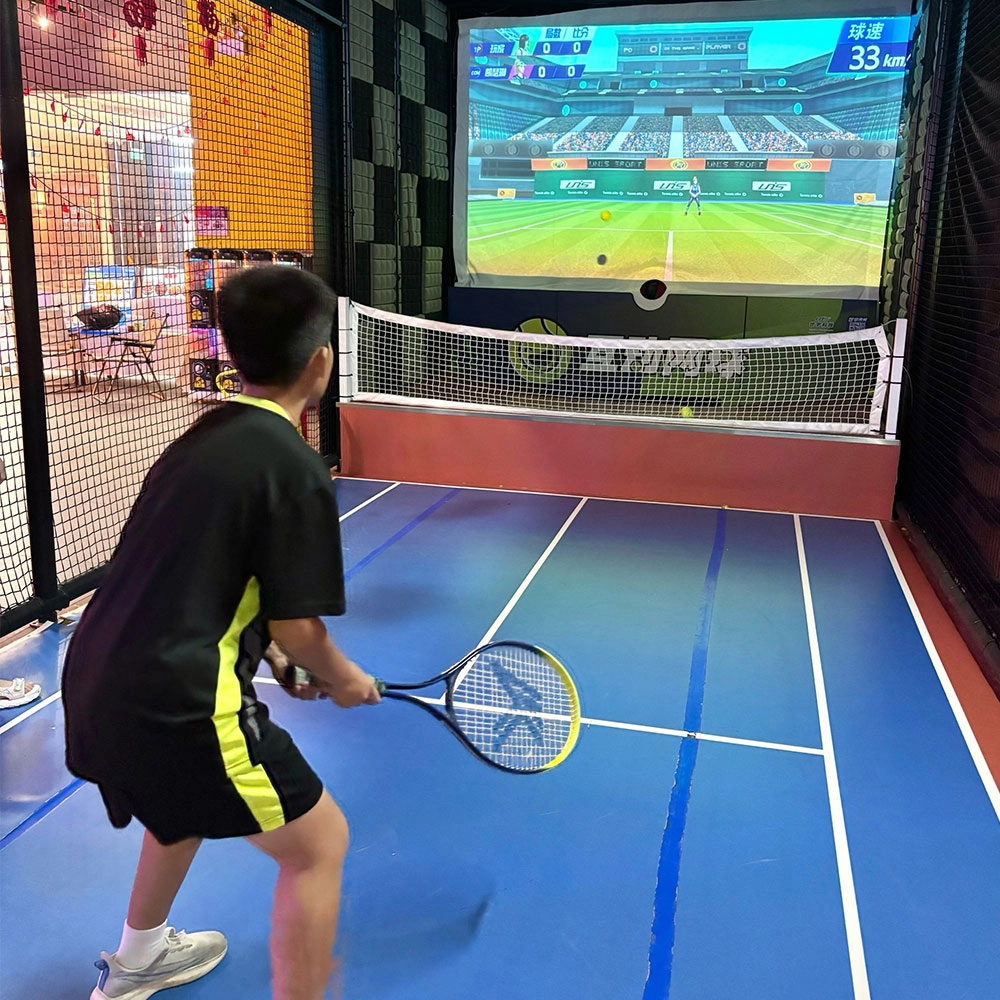
Indoor Tide Play Simulation Tennis Equipment
FUNTECH is full of fun and exciting playgrounds! With high-definition scene projection, force feedback racket, and intelligent scoring system, the simulated tennis equipment in the indoor arcade realizes immersive sports experiences and diversified interactive play, combining the advantages of safety and ease of use with high operational efficiency.
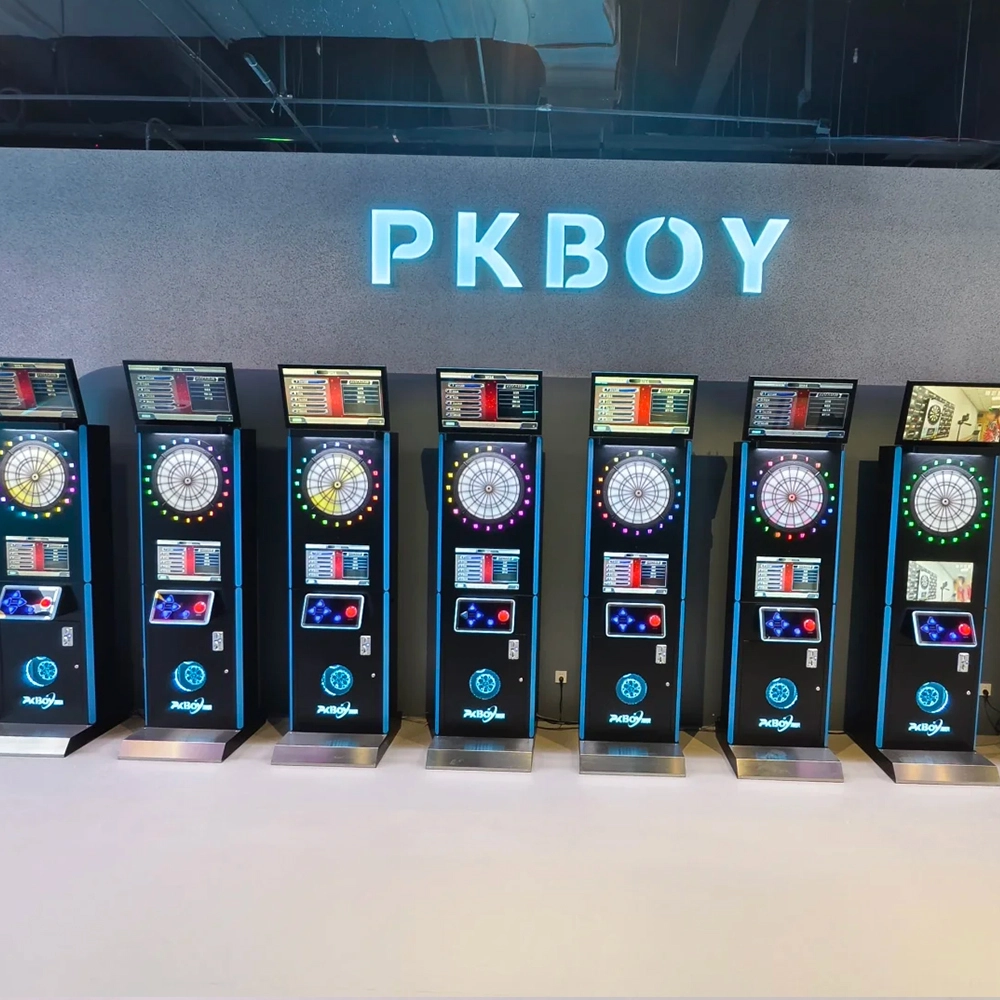
Dart Machines Bar Dart Machines
Joy Power is full of fun and excitement in the playground! The dart machine is suitable for all kinds of places, whether it is a bar, restaurant, KTV, or other entertainment venue, or a sports shop, club, or family leisure space, and can be perfectly adapted. In commercial venues, holding individual and team darts tournaments from time to time can attract more customers and increase the popularity and revenue of the venue, supplemented by various preferential activities, which can directly promote consumption and form a cycle of consumption of all the goods in the shop.
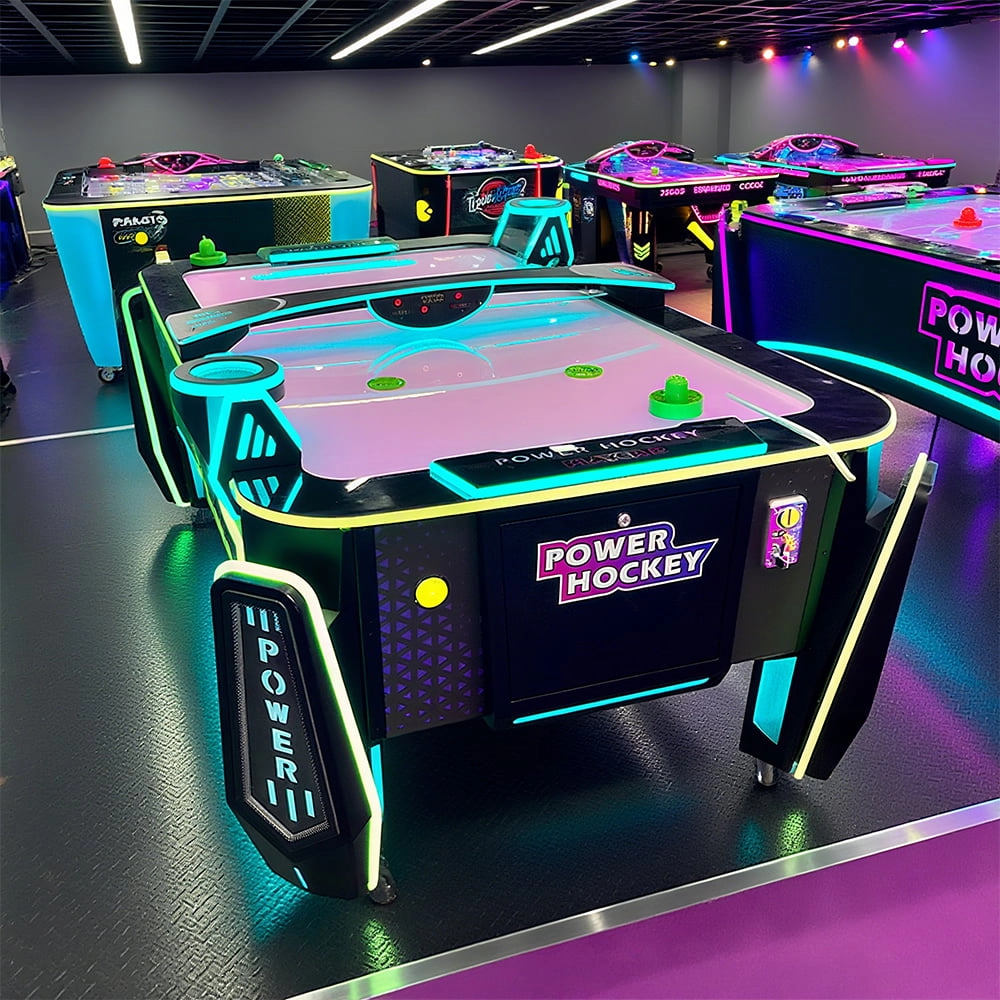
Arcade Hockey
FUNTECH is full of fun and exciting playgrounds! Air hockey, also known as air hockey, is a two-player competitive arcade game comprising a smooth, perforated playing surface, lightweight hockey sticks, a plastic puck, and an electronic scoreboard.
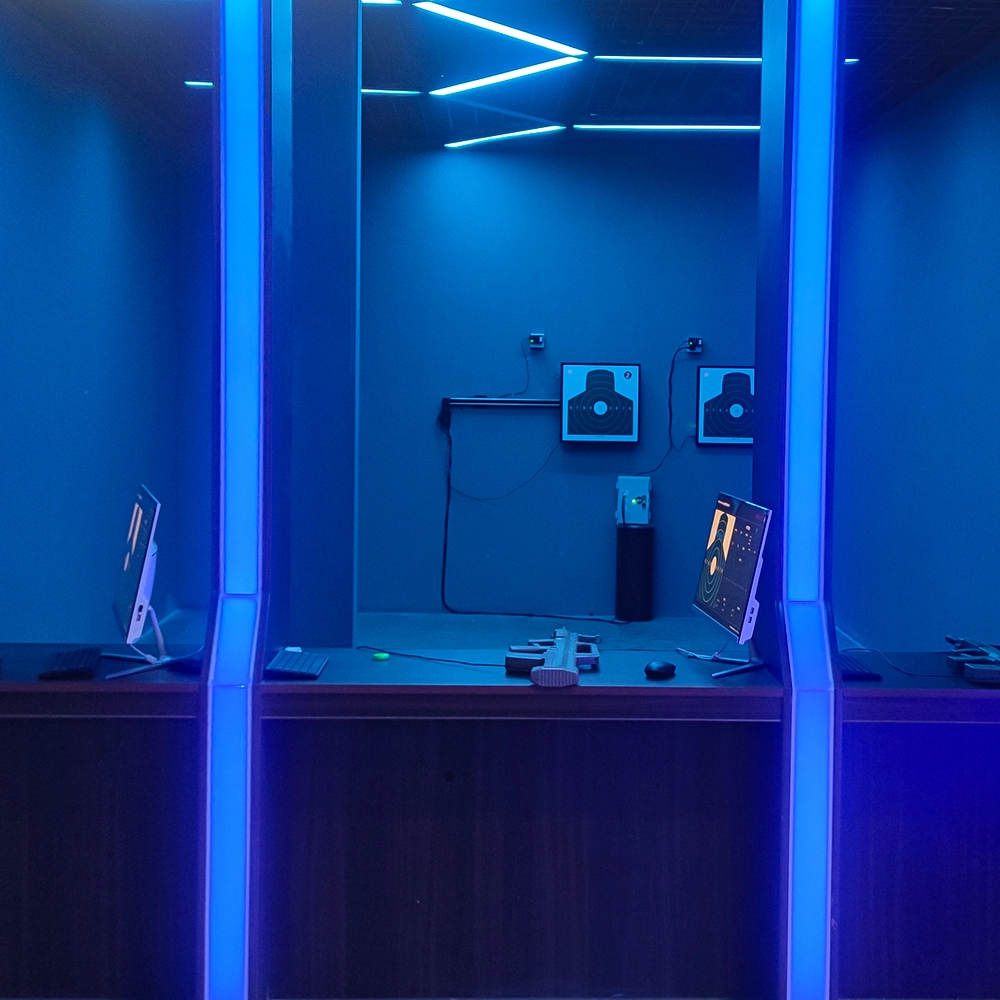
Infrared Shooting
Highly simulated simulation training analysis equipment, with advanced design concepts, fast system development, ease of operation and use, stable technical performance, less consumption of training, site dependence on a small group training is highly interesting, safe, and reliable, and other outstanding features. Product design to solve the basic skills of light weapons precision shooting as a starting point, to improve the safety of shooting training and training efficiency as the fundamental purpose, highlighting the simulation, information technology, and combat training requirements, can be in small indoor and outdoor venues and does not use live ammunition to complete the basic shooting training.
© 2025 FUNTECH ALL RIGHTS RESERVED

Weixia Lei
Fun_Tech-s
fun_tech20