
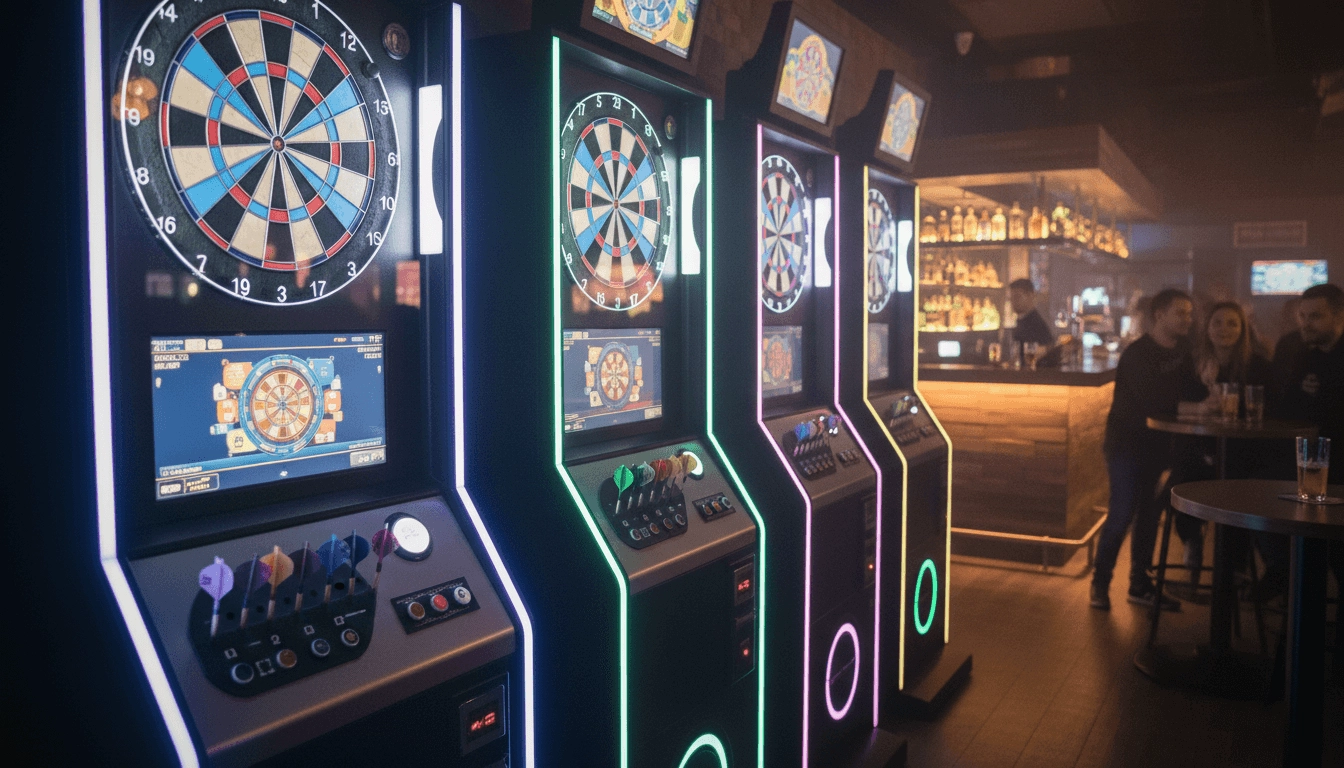
What are common upgrade paths for arcade dart machines for sale?
- 1) What is the realistic total landed cost (machine + shipping + taxes + installation) when importing a commercial arcade dart machine to the US or EU?
- 2) How do I evaluate sensor accuracy and calibration on soft-tip electronic dart boards before buying?
- 3) Which cashless/payment upgrade (NFC tap, QR/app wallet, or EMV card reader) gives the best ROI for a small bar doing ~200 plays/month?
- 4) What are common upgrade paths for arcade dart machines for sale and which should I prioritize?
- 5) How do I configure networked leaderboards and remote analytics for multiple dart cabinets across locations with minimal downtime?
- 6) What warranty and spare-parts stocking strategy should a small operator adopt to minimize downtime and protect revenue?
Arcade Dart Machine for Sale: Upgrade Paths & Buyer FAQ
This resource answers six detailed, beginner-focused pain-point questions about buying and upgrading commercial arcade dart machines. It embeds practical guidance on landed costs, sensor calibration, cashless payments, networking, parts stocking and the most common upgrade paths for digital dart cabinets used in bars, family entertainment centers, and arcades.
1) What is the realistic total landed cost (machine + shipping + taxes + installation) when importing a commercial arcade dart machine to the US or EU?
Short answer: expect a realistic total landed figure that is 15%–45% higher than the factory price, depending on shipping method, seasonal freight rates, duties/VAT and installation complexity.
Detailed checklist and ranges:
- Factory price (FOB): commercial electronic dart cabinets commonly list in a typical new-model range of roughly $3,000–$8,000 depending on features (networking, LED targets, built-in payment, ticket printer). Soft-tip vs steel-tip, cabinet finish and software bundles drive price.
- Freight & insurance: for one or two cabinets sea freight (LCL) or consolidated shipping commonly adds $300–$1,500; a small dedicated container or air freight can range higher ($1,500–$6,000). Prices vary by port pair and seasonal congestion.
- Customs duties & taxes: duty rates depend on HS code and destination. Many countries apply import VAT (EU 20–25% typically) plus any applicable duty (often 0–7% for arcade equipment but verify locally). Always confirm with a customs broker for the exact commodity code and duty rate.
- In-country handling & delivery: port handling, customs clearance, drayage, and last-mile delivery commonly add $200–$1,000.
- Installation & electrical work: a basic on-site installation typically costs $150–$800 depending on mounting, power work (dedicated circuit), and required wall or floor modifications. If network integration (Ethernet/4G) or a certified electrical inspection is required, budget more.
- Certification and testing: if the supplier lacks CE/UL/ETL/CCC documentation, you may need testing or local approval. Third-party testing or verification can cost several hundred to a few thousand dollars depending on scope.
How to reduce surprises: request detailed FOB and CIF quotes; ask the supplier for weight, cubic meters (CBM), packaging dimensions and documentation (packing list, commercial invoice, certificates). Use an experienced freight forwarder and request DDP (Delivered Duty Paid) quotes to see the all-in delivered cost. Add contingency (5%–10%) for seasonal surcharges.
2) How do I evaluate sensor accuracy and calibration on soft-tip electronic dart boards before buying?
Sensor performance is a core reliability and customer-satisfaction issue. Beginners often accept marketing claims but miss real testing methods. Here's how to vet sensor quality and calibration before purchase:
What to request from the vendor:
- Sensor technology details: ask whether the board uses segmented electronic PCB sensing, optical sensors or pressure-based systems. Understand replaceable sensor modules and their MTBF (mean time between failures).
- Raw hit data/sample logs: request CSV or JSON logs from a demo session showing hit coordinates and timestamps. This enables you to verify repeatability and latency.
- Calibration procedure and tools: ask for the step-by-step calibration method and whether the operator UI exposes calibration. A good commercial board should allow repeatable field calibration without factory tools.
- Latency and repeatability metrics: ask for sensor-to-score latency (acceptable commercial target: under ~50 ms for real-time feel) and repeatability (percentage of identical hits returning the same score—aim for >98% under normal play).
- Warranty coverage for sensor planes and replacement part lead times.
On-site testing checklist (or ask for video):
- Single-location repeatability: throw 20 consistent throws at the same location (e.g., treble 20) and verify scored location consistency.
- Edge-case testing: aim slightly off-segment edges to confirm correct segment determination and check for systematic bias.
- Latency test: press a stopwatch start on throw and compare audio/visual scoring timestamp. High latency undermines player experience on linked matches.
- Environmental test: run a short session after 1–2 hours of continuous play to see if sensor drift or thermal issues appear.
Operational tips: request spare sensor modules and board faces in your spare parts plan; ensure firmware update paths exist (local USB or remote OTA). Real-world operators often find that having one spare sensor module and one spare target face per 3–5 machines reduces downtime meaningfully.
3) Which cashless/payment upgrade (NFC tap, QR/app wallet, or EMV card reader) gives the best ROI for a small bar doing ~200 plays/month?
Choice depends on cost, transaction fees, customer convenience and analytics value. For a small bar with ~200 plays/month (low-to-moderate volume), prioritize low upfront hardware cost and easy deployment.
Comparison and recommendations:
- QR code / app wallet (lowest hardware cost): deploy a simple QR top-up or per-game QR checkout. Hardware cost is minimal (print QR placards); setup cost primarily software/integration. Transaction flow is cashierless and has low capital expense. Ideal first upgrade for a single-location operator. Analytics are limited unless tied to a cloud system.
- NFC/transit-style tap (mid hardware cost): adds convenience for players, integrates with stored-value cards or phone wallets. Typical hardware cost $300–$900 per cabinet plus integration. Transaction fees and vendor platform costs can apply. Good for customer experience improvement and modest analytics if cloud-connected.
- EMV card reader (highest cost): supports direct card payments and reduces cash handling. Hardware and PCI compliance add cost ($500–$1,500 per unit plus gateway fees). Best for high footfall venues or operators who want to accept direct card payments for per-play charges without a hosted app.
ROI example (framework, not a guarantee): if each play is $2 and you average 200 plays/month = $400 revenue/month. A $900 NFC upgrade amortized over 24 months costs ~$38/month. If the upgrade improves plays by 10% and reduces cash handling losses, the incremental revenue can justify the spend. For very low-volume sites you may be better with QR/app wallet first, then migrate to NFC/EMV as usage grows.
Other considerations: choose a cashless vendor that supports remote balance top-up, provides player-level analytics, supports integrations with operator back-office (sales, promotions), and offers reasonable transaction fees. For multi-site rollout, cloud-based cashless with APIs scales better.
4) What are common upgrade paths for arcade dart machines for sale and which should I prioritize?
Operators typically follow staged upgrade paths aligned to budget, venue type and revenue goals. Common upgrade paths (prioritized):
- Payment and access upgrades — coin acceptor → cashless QR/NFC → EMV. Prioritize where cash handling is an issue or payment friction reduces plays.
- Player experience upgrades — brighter LED target rings, full-color cabinet displays, high-fidelity audio and spectator screens to attract players. These have strong footfall impact in public venues.
- Software & game packs — add tournament modes, multiplayer leagues, skill challenges and branded events. New game software can extend machine life and increase repeat plays without hardware changes.
- Redemption / loyalty integration — ticket dispenser or loyalty account integration with cashless system for cross-promotion across venue activities.
- Network and analytics — add Ethernet/4G connectivity for remote leaderboards, cloud telemetry, remote firmware patches, and centralized promotions. This enables multi-cabinet tournaments and improved uptime monitoring.
- Ruggedization and accessibility — reinforced cabinet plating, vandal-resistant coin doors, weatherproofing (for semi-outdoor venues) and ADA-compliant mounting options.
Cost and complexity guidance (approximate):
- LED/audio/cosmetic upgrades: $200–$1,200 per machine (low complexity).
- Payment integration & cashless: $300–$1,500 plus platform fees (medium complexity—requires integration and PCI considerations for card readers).
- Network telemetry/analytics module: $150–$600 hardware plus recurring cloud fees (medium complexity—requires secure network configuration).
- Redemption systems (ticket dispenser): $400–$1,200 plus software tie-ins (medium complexity).
Prioritization rule of thumb: fix revenue friction first (payments), then visibility/attraction (LED, spectator screens), then analytics and scaling (networking, leaderboards). Match upgrades to real KPIs (plays per day, dwell time, ancillary spend) and run A/B tests when possible.
5) How do I configure networked leaderboards and remote analytics for multiple dart cabinets across locations with minimal downtime?
Remote management and leaderboards are powerful but require proper architecture to avoid security and reliability problems. Key steps:
- Choose connectivity: prefer wired Ethernet where available for stability; otherwise use Wi‑Fi or a managed 4G/5G gateway for remote sites without reliable local internet.
- Edge software & telemetry: install an agent on each cabinet that buffers events locally and batches uploads (resilient to intermittent connectivity). This reduces real-time reliance and avoids lost game data.
- Cloud backend: use a vendor/cloud platform that stores player sessions, leaderboards, and machine health metrics. Ensure the provider supports role-based access for operators and secure APIs for integration with POS or loyalty systems.
- Security & privacy: enable TLS encryption for all telemetry and use device certificates or API keys per cabinet. Restrict incoming ports and use VPNs for sensitive remote management tasks. Comply with local data privacy laws when storing player data.
- Monitoring & alerting: set up automated alerts for offline cabinets, frequent errors, or falling revenue patterns. Integrate ticketing/dispatch for on-site technicians.
- Firmware management: enable staged OTA firmware updates with rollback capability. Test updates on one or two cabinets before mass rollout to avoid cascading failures.
Operational tips to minimize downtime:
- Use cellular backup for critical cabinets so a lost Wi‑Fi link doesn’t disable leaderboards or payment verification.
- Maintain local cached play modes if the cloud is unavailable—players should still be able to play and score locally.
- Define SLA targets with your cloud/payments vendors and track MTTR (mean time to repair) for network incidents.
6) What warranty and spare-parts stocking strategy should a small operator adopt to minimize downtime and protect revenue?
Downtime costs money. A well-designed spare-parts and warranty approach keeps machines online and revenue flowing.
Recommended warranty and parts strategy:
- Warranty: aim for a 12–24 month manufacturer warranty on electronics and mechanical parts. Clarify uptime SLA for replacement parts and whether the vendor provides cross-shipping or local depot support.
- Core spare parts to stock (per 3–5 machines): one spare target face/board face, one sensor module/PCB assembly, one power supply, one coin acceptor/card reader module and spare LED strips. These are the parts that most often cause extended downtime.
- Consumables and small items: extra soft-tip flights/screws, protective screens, ticket printer paper (if used), and fuses.
- Inventory levels: for single-site small operators, keep a minimum kit that covers common failures (1–2 critical spares). For multi-site networks, centralize a small spare pool and rotate stock to avoid shelf-aging components.
- Supplier relationships: get an authorized parts list, OEM part numbers and predictable lead times. Negotiate expedited shipping terms for critical failures and consider local stocking agreements with regional distributors.
Cost guidance: budget roughly 5%–12% of the machine purchase price annually for spare parts and preventative maintenance. Track downtime cost per hour to justify spare investments: if a machine generates $15–$40/hour at peak times, having a $300 spare on-hand pays for itself quickly.
Conclusion — Advantages of modern arcade dart machines and thoughtful upgrades
Upgrading to modern electronic dart cabinets and selectively adding payment, LED/attraction, software and network modules increases revenue potential, reduces cash handling, improves customer retention and gives actionable play analytics. Prioritize ease-of-use upgrades first (payments, better lighting), then scale with cloud leaderboards and remote management to reduce maintenance costs. A modest spare parts plan plus a reliable warranty reduces downtime risk and protects ROI.
For a customized quote, shipment options, or to discuss inventory and upgrade bundles for your venue, contact us at www.funtechgame.com or email vicky@funtechgame.com — get a tailored quote today.
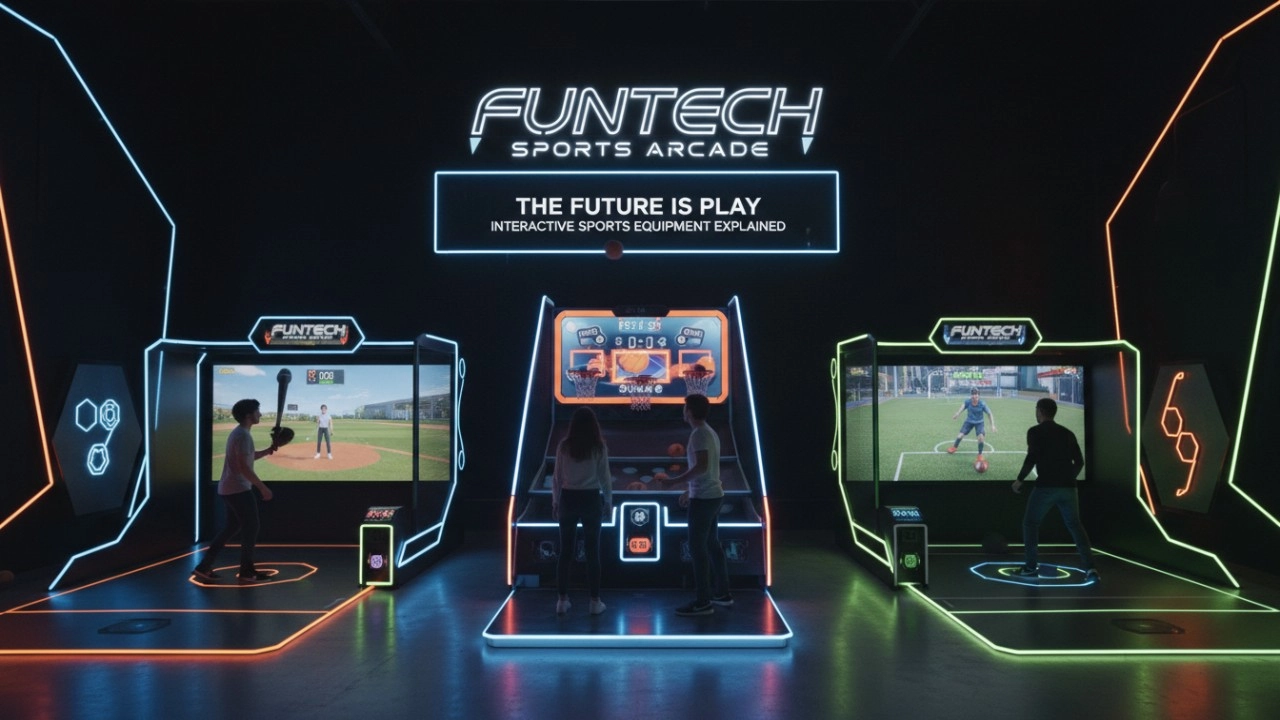
What Is Interactive Sports Arcade Equipment? Complete Beginner Guide (2026)
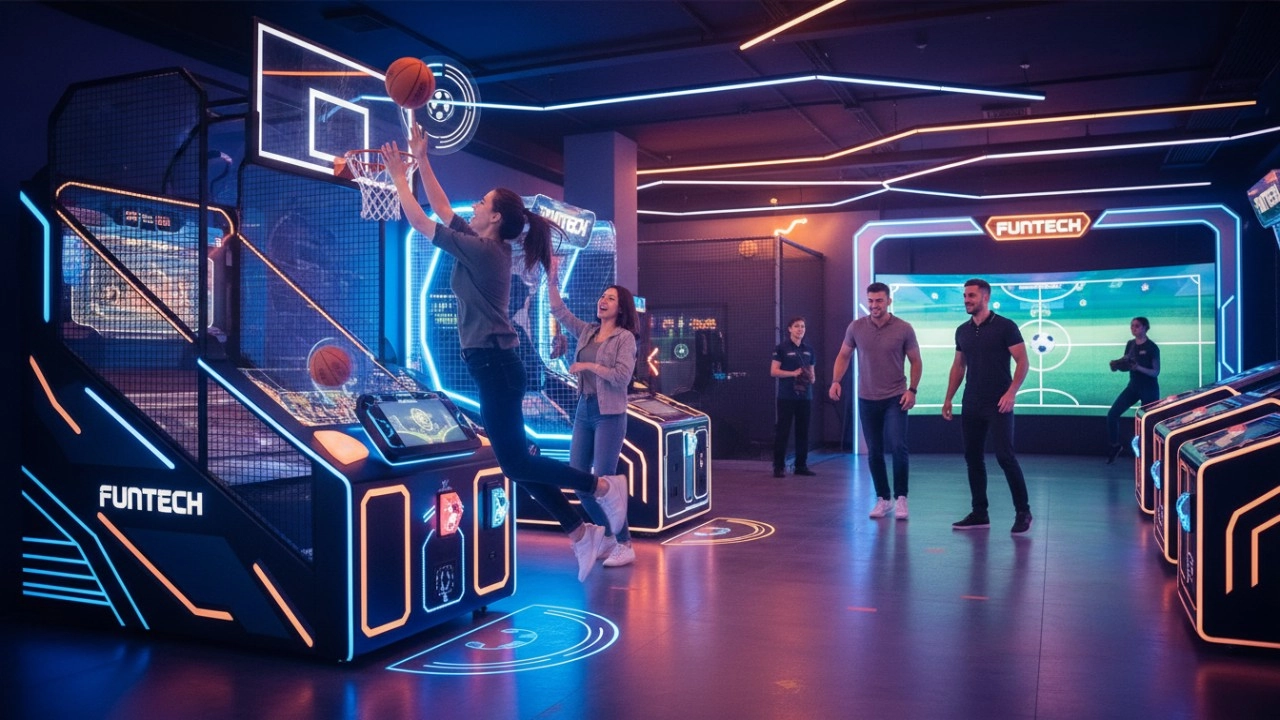
The Ultimate Guide to Interactive Sports Arcade Equipment for Commercial Entertainment (2026 Edition)
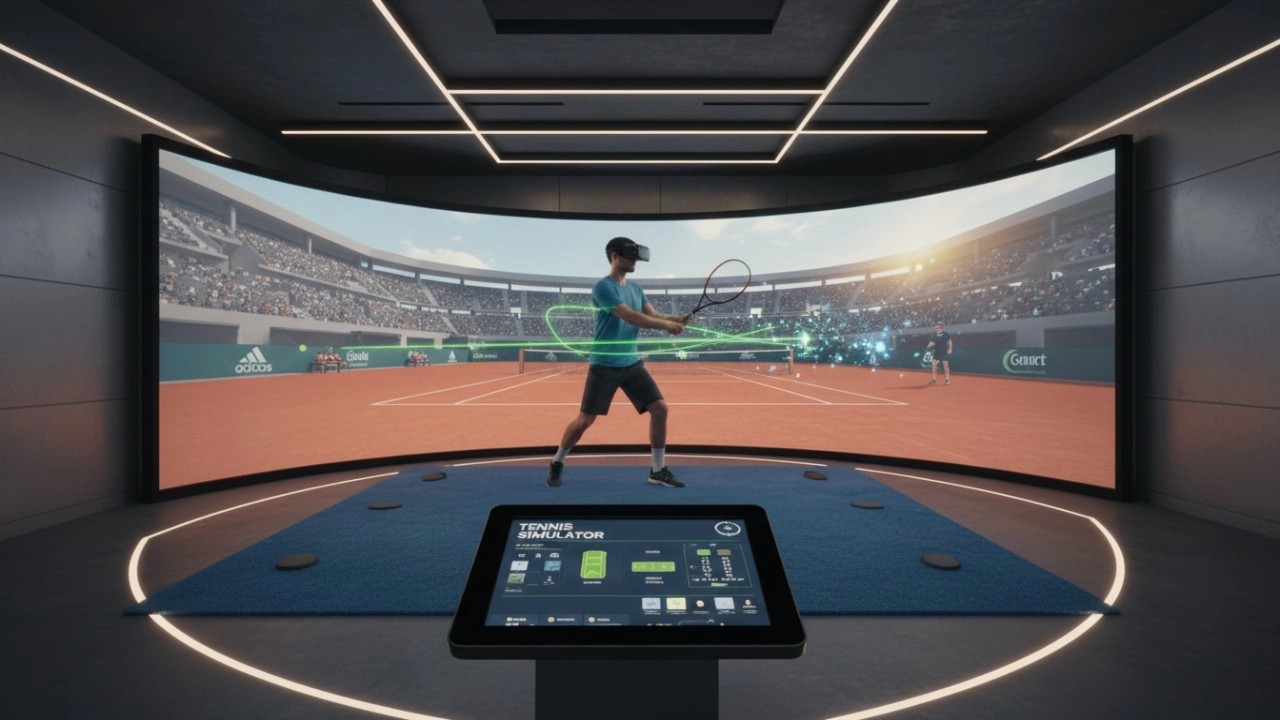
7 Reasons to Add a Tennis Simulator to Your Entertainment Venue Instead of Traditional Training Models (2026 Guide)
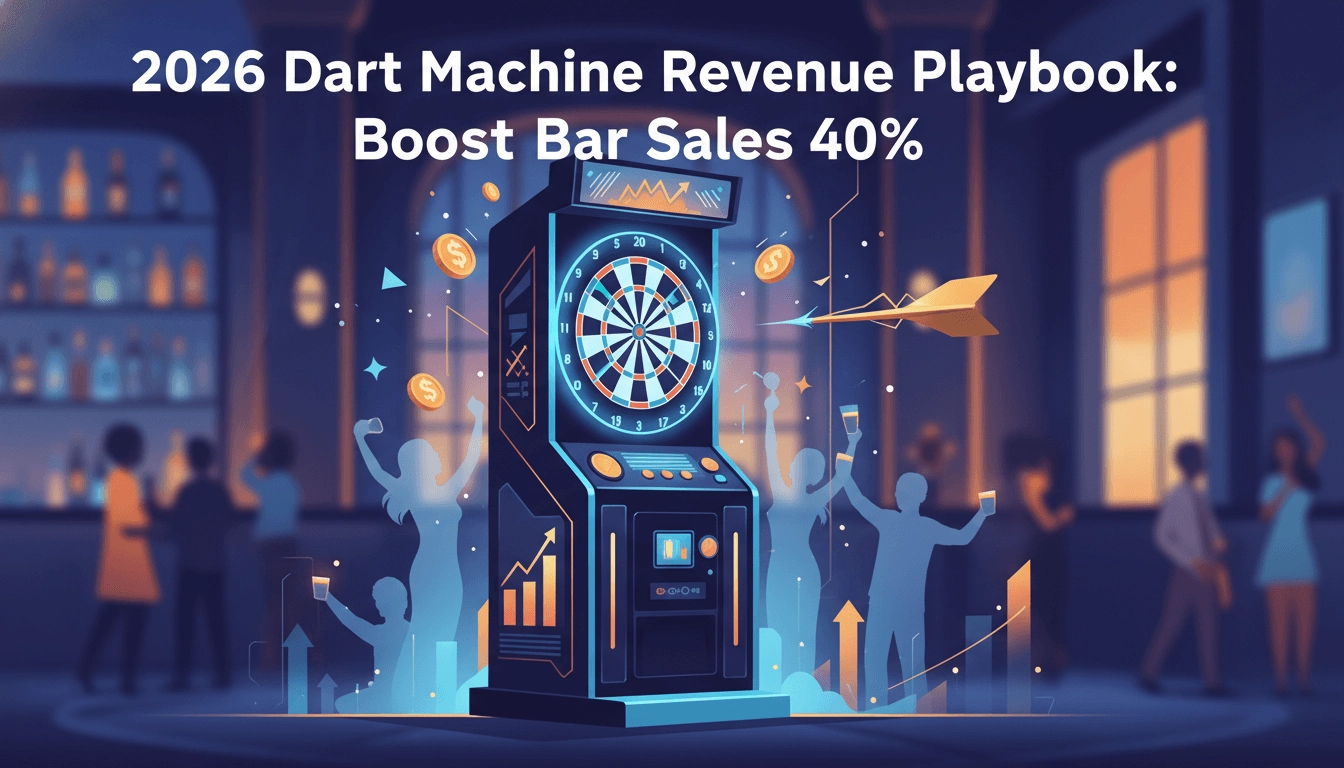
The 2026 Dart Machine Revenue Playbook: Boosting Mid-Week Sales by 30%-40% with Competitive Socializing
Redefining Competitive Socializing: Ultimate Guide to Selecting an Intelligent Dart Machine 2026
FAQ
What requirements should a store manager of a digital sports hall have?
The store manager of a digital sports and entertainment center needs to have good management and communication skills, be familiar with the application of digital technology, and have an innovative spirit and a sense of teamwork
Football Simulator
Are there a lot of game modes in soccer simulation?
Very rich! There is a league mode which is exciting and can compete with players from all over the world, and there is also a leisure and fun game which is suitable for parents and children to share fun time, so as to satisfy the needs of different players.
Infrared Shooting
How to attract customers when operating the program in shopping malls?
Create a cool venue decoration style and incorporate trendy elements, such as fluorescent light strips and anime-themed murals. o Launch diversified marketing models such as parent-child packages and couple packages, combined with time-limited promotional activities, such as half-price experience in the first three days of opening, to attract different groups of people such as families and couples to stop by and participate.
Interactive Rollerball
How often does the equipment require maintenance?
For daily use, simple monthly maintenance, such as simple cosmetic cleaning and function checking after use, is sufficient. A more comprehensive quarterly maintenance is sufficient.
Why are sports arcades a hot spot for investment?
The traditional entertainment market (e.g., arcade, KTV) has become less attractive to generations, while digital hip playgrounds integrating technology, sports, and socialization are more in line with young people's needs, and the market size has exceeded 50 billion in 2023, with an annual growth rate of more than 30%.
Dart Machines Bar Dart Machines
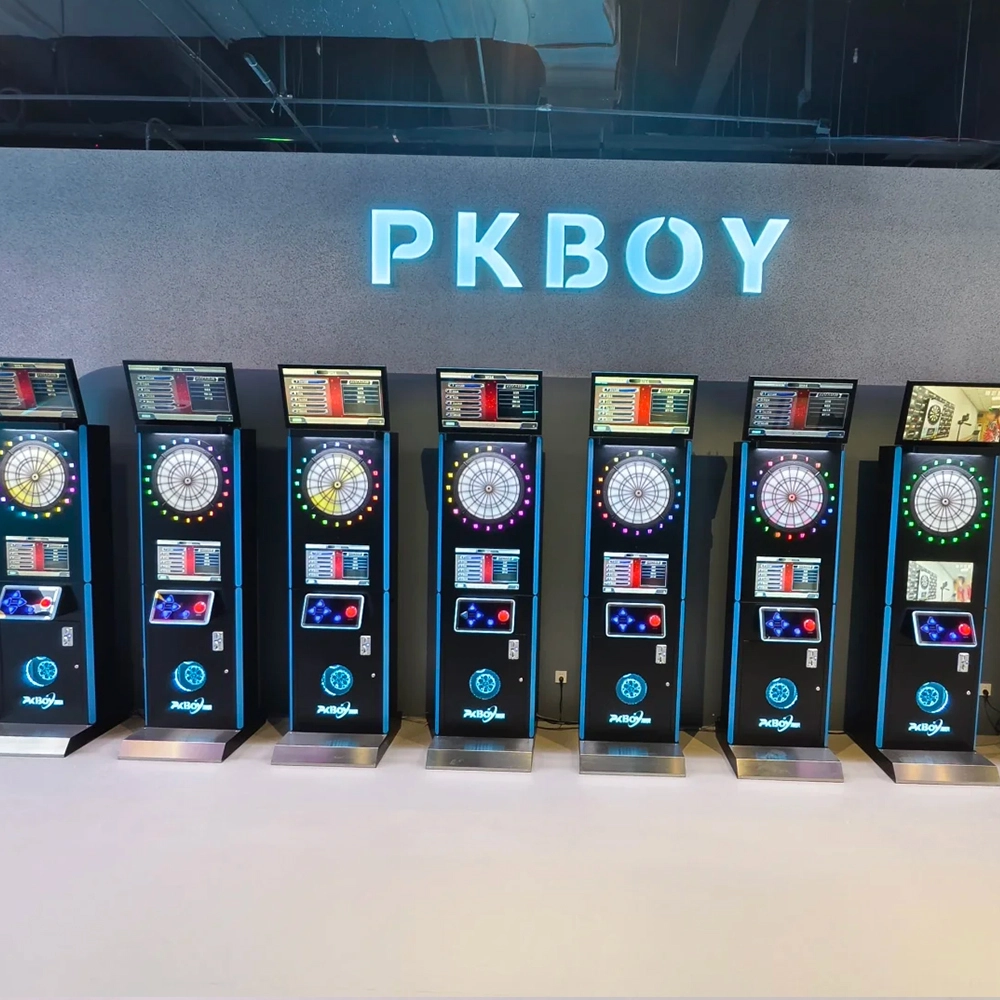
Joy Power is full of fun and excitement in the playground! The dart machine is suitable for all kinds of places, whether it is a bar, restaurant, KTV, or other entertainment venue, or a sports shop, club, or family leisure space, and can be perfectly adapted. In commercial venues, holding individual and team darts tournaments from time to time can attract more customers and increase the popularity and revenue of the venue, supplemented by various preferential activities, which can directly promote consumption and form a cycle of consumption of all the goods in the shop.
Infrared Shooting
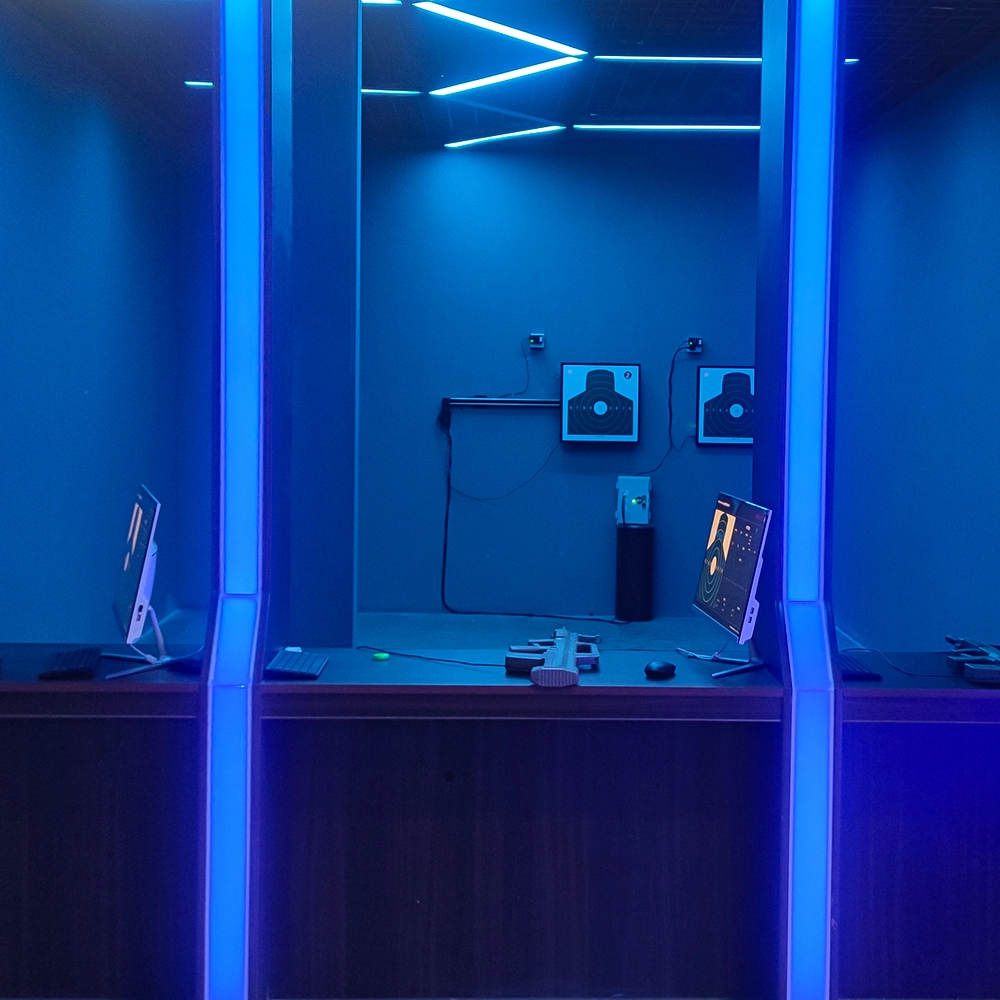
Highly simulated simulation training analysis equipment, with advanced design concepts, fast system development, ease of operation and use, stable technical performance, less consumption of training, site dependence on a small group training is highly interesting, safe, and reliable, and other outstanding features. Product design to solve the basic skills of light weapons precision shooting as a starting point, to improve the safety of shooting training and training efficiency as the fundamental purpose, highlighting the simulation, information technology, and combat training requirements, can be in small indoor and outdoor venues and does not use live ammunition to complete the basic shooting training.
Multi-Player Interactive Shooting Machine
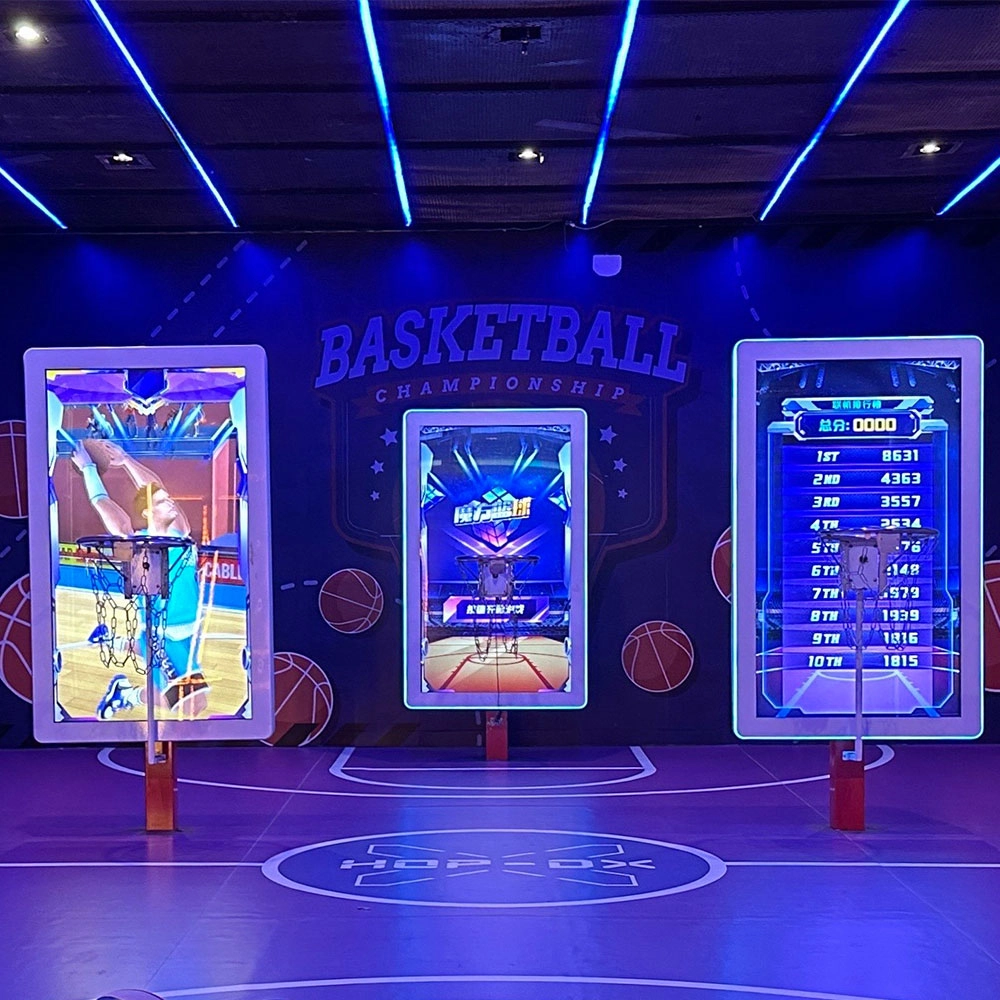
Joy Power is full of fun and exciting playgrounds! The basketball shooting machine is a classic amusement device integrating competition, entertainment, and interactivity. Based on the traditional basketball shooting sport, it integrates electronic scoring, sound and light effects, and challenge mechanisms to bring players an immersive game experience. The main body of the equipment is usually built with a metal frame, equipped with a standard-sized basket and a sturdy rim, with multiple sets of sensors to accurately capture the trajectory of the shot; when the player shoots the ball, the machine's built-in sensors count the score in real time and present the score, remaining time, and challenge goals through the LED display or LCD screen, with exciting sound effects and colorful lights to create a tense and exciting gaming atmosphere.
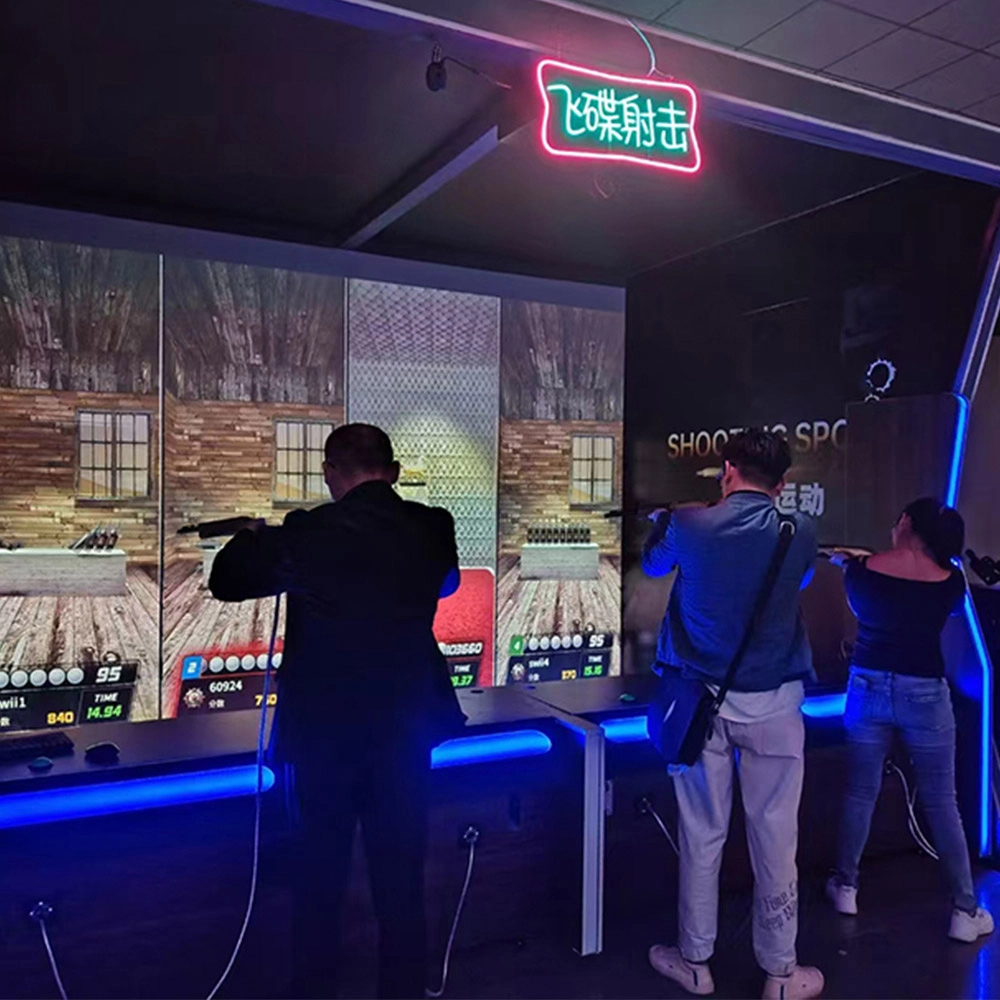
Indoor Wave Play Disc Shooting Equipment
Joy Power is full of fun and exciting playgrounds! The saucer shooting equipment in the indoor hip play hall is an immersive entertainment device integrating high-definition projection scenes, simulated air rifles, and multi-mode interactive gameplay, which allows players to experience the excitement of virtual shooting and the fun of social competition through laser-sensing scoring and multi-sensory feedback.
Ready to take your venue to the next level?
Leave us a message here, and our team will get back to you promptly.
Whether you're interested in custom orders, technical specifications, or partnership opportunities, we're here to assist you.
© 2025 FUNTECH ALL RIGHTS RESERVED

Weixia Lei
Fun_Tech-s
fun_tech20