
Comparing Multi-Player Interactive Shooting Machines: Key Metrics
- Key Performance Metrics to Compare
- Sensor Accuracy and Scoring Reliability
- Throughput: Players Per Hour and Play Cycle Time
- Accuracy and Analytics: Data for Improvement
- Design, Durability and Operational Costs
- Build Materials and Durability
- Maintenance, Replaceable Parts and Serviceability
- Energy Use and Footprint
- Software Features, Connectivity and Player Experience
- Game Modes, Customization and Challenge Design
- Connectivity: Networking, Leaderboards and Tournaments
- User Interface and Accessibility
- Cost, ROI and Choosing the Right Machine for Your Venue
- Capital Cost vs. Lifetime Value
- Case Scenarios: Where Each Machine Fits Best
- Comparison Table: Example Models and Key Metrics
- Standards, Safety and Industry References
- Regulations and Safety Standards
- Sport Context and Player Expectations
- Vendor Due Diligence
- Brand Fit: Why Choose Joy Power's Multi-Player Interactive Shooting Machine
- Joy Power's Operational Advantages
- Integrated Analytics and Player Retention Tools
- Service, Parts and Global Support
- Frequently Asked Questions (FAQ)
- Q: How do I measure throughput before purchase?
- Q: What maintenance should I plan for annually?
- Q: Can these machines support branded tournaments or multi-site leaderboards?
- Q: How important is sensor accuracy in player retention?
- Q: What ROI timeframe is realistic?

This concise expert summary is optimized for and search discovery: Multi-Player Interactive Shooting Machines are a core attraction in Digital Sports Entertainment venues. To evaluate and compare different shooting machines you must examine measurable metrics—sensor accuracy, player throughput, footprint, maintenance needs, durability, software features, and revenue potential. This guide breaks down those metrics, gives practical comparison data, and explains how to match a machine to your venue type and business goals to maximize visitor engagement and operator ROI.
Joy Power product introduction:
Joy Power is full of fun and exciting playgrounds! The basketball shooting machine is a classic amusement device integrating competition, entertainment, and interactivity. Based on the traditional basketball shooting sport, it integrates electronic scoring, sound and light effects, and challenge mechanisms to bring players an immersive game experience. The main body of the equipment is usually built with a metal frame, equipped with a standard-sized basket and a sturdy rim, with multiple sets of sensors to accurately capture the trajectory of the shot; when the player shoots the ball, the machine's built-in sensors count the score in real time and present the score, remaining time, and challenge goals through the LED display or LCD screen, with exciting sound effects and colorful lights to create a tense and exciting gaming atmosphere.
Key Performance Metrics to Compare
Sensor Accuracy and Scoring Reliability
Sensor accuracy is the foundation of any shooting machine. Look for systems using multiple redundant sensors (infrared arrays, optical sensors, or pressure sensors in the rim/net) to minimize false positives/negatives. A reliable shooting machine should register made/missed shots with at least 98% accuracy under normal operating conditions. Sensors affect player trust, competitive fairness, and repeat play. When possible, request raw sensor test logs or a demo to see scoring consistency across a variety of shot arcs.
Throughput: Players Per Hour and Play Cycle Time
Throughput determines revenue potential. Measure average play cycle time (setup, game duration, turnover) and calculate Players Per Hour (PPH). For multi-player interactive shooting machines, typical PPH per lane ranges from 20 to 60 depending on game length and operator flow. High-throughput systems often include automated ball feeders, quick-reset challenges, and multi-lane designs. Estimate throughput for your venue by considering queue management, staff supervision, and typical dwell time for your customer base.
Accuracy and Analytics: Data for Improvement
Advanced shooting machines provide analytics—shot distribution, player accuracy, peak hours, and retention metrics. These telemetry features support operator decisions (promotion timing, changing difficulty, pricing). Evaluate what data the machine captures, how it exports (CSV, API), and whether the manufacturer provides a cloud dashboard for fleet management. Data-driven machines increase lifetime value and can be integrated into loyalty programs or tournaments.
Design, Durability and Operational Costs
Build Materials and Durability
Machines built with welded steel frames and industrial-grade rims last longer in high-use venues. Check finish quality (powder coating to resist corrosion), play surface wear components (ball return lanes, sensors), and protective guards. For family entertainment centers and arcades, expect high mechanical stress; choose machines rated for commercial continuous use. Manufacturers will typically quote mean time between failures (MTBF) or expected operational life—ask for references from similar venues.
Maintenance, Replaceable Parts and Serviceability
Maintenance cost directly affects total cost of ownership (TCO). Evaluate how easy it is to replace wearable parts (nets, rims, feeder belts), availability of spare parts, and whether the machine supports remote diagnostics. Machines with modular electronics and hot-swappable components reduce downtime. Consider service contracts or on-site training the vendor provides.
Energy Use and Footprint
Compare power consumption and physical footprint. LED displays and sound systems add to power draw; an efficient machine should consume less than 200W per lane during game play (this varies by model). Footprint matters for placement—measure required clearance for ball return and audience. Compact multi-player setups maximize revenue per square meter but may trade off player comfort.
Software Features, Connectivity and Player Experience
Game Modes, Customization and Challenge Design
Game variety keeps players returning. Look for multiple game modes (timed shooting, target zone multipliers, head-to-head, team tournaments) and the ability to customize difficulty, scoring rules, and audio/visual themes. Custom challenge modes and branded overlays help operators create seasonal promotions and sponsor tie-ins.
Connectivity: Networking, Leaderboards and Tournaments
Network-enabled machines can sync leaderboards across sites, enable online tournaments, and feed live analytics to dashboards. Verify supported protocols (Ethernet, Wi-Fi) and whether the device supports remote firmware updates and cloud backups. Integration with venue management systems or mobile apps improves engagement and reduces manual scorekeeping.
User Interface and Accessibility
Clear HUDs (LED/LCD), intuitive start flows, and audible prompts reduce friction. Accessibility options (adjustable hoop heights, clear instructions in multiple languages, large-font displays) expand the playable demographic and comply with inclusive design best practices. A good interface reduces staff assistance time and increases self-service play.
Cost, ROI and Choosing the Right Machine for Your Venue
Capital Cost vs. Lifetime Value
Compare purchase price with expected revenue, maintenance, and lifespan. A higher upfront cost can be justified by lower downtime, higher throughput, and strong analytics leading to better monetization. Use a simple ROI model: (estimated daily revenue * operating days per year - annual maintenance) / purchase price to approximate payback months.
Case Scenarios: Where Each Machine Fits Best
Different venues need different machines:
- Family Entertainment Centers: prefer multi-lane machines with tournaments and sponsorship capabilities.
- Arcades and Bowling Centers: prioritize footprint efficiency and quick turnover.
- Malls and Pop-up Events: portable, easy-to-install units with lower power needs.
- Sports Training Centers: look for accuracy, ball-feeding options, and analytics for coaching.
Comparison Table: Example Models and Key Metrics
The table below provides a side-by-side comparison of three representative shooting machines to illustrate how to weigh metrics. Numbers are indicative and should be validated with vendor specs and demos.
| Metric | Basic Arcade Shooter | Competitive Multi-Lane | Multi-Player Interactive Shooting Machine (Joy Power) |
|---|---|---|---|
| Sensor Accuracy | ~92% (single sensor) | ~96% (dual sensors) | ~99% (multi-sensor array) |
| Players Per Hour (per lane) | 18-30 | 30-50 | 35-60 |
| Power Consumption (avg) | 120W | 180W | 150-220W |
| Footprint (approx) | 1.5m x 2m | 2.0m x 3.5m (multi-lane) | 1.8m x 3.0m (multi-lane config) |
| Maintenance (annual est.) | Low ($400) | Medium ($900) | Medium ($600) + remote support |
| Software & Connectivity | Basic | Cloud leaderboards | Cloud analytics, API, tournament mode |
| Estimated Price | $4,500 | $12,000 | $10,500 |
When comparing actual products, request measured throughput tests, maintenance logs, and references from current installations. Also ask for a live demonstration or trial deployment.
Standards, Safety and Industry References
Regulations and Safety Standards
Ensure machines comply with local safety codes and commercial electrical standards. While there is no single global standard for arcade basketball machines, general amusement device guidance from industry bodies is valuable. Refer to the International Association of Amusement Parks and Attractions (IAAPA) for safety best practices and industry updates: IAAPA.
Sport Context and Player Expectations
Understanding basketball fundamentals helps design believable challenge modes. The sport's rules and scoring conventions are documented extensively—see the general overview at Basketball - Wikipedia. Using realistic timing, arc behavior, and scoring helps transfer satisfaction from real sport to arcade play.
Vendor Due Diligence
Ask vendors for independent test reports, client case studies, and remote demo credentials. Verify warranty terms, parts availability, and whether the vendor offers operator training and marketing assets to promote the attraction in your venue.
Brand Fit: Why Choose Joy Power's Multi-Player Interactive Shooting Machine
Joy Power's Operational Advantages
Joy Power focuses on blending entertainment and competitive engagement. The Multi-Player Interactive Shooting Machine offers high sensor accuracy, integrated LED/LCD displays, and configurable challenge mechanisms. Built on a commercial-grade metal frame with robust rim assemblies, it targets venues that need a durable attraction with strong repeat-play mechanics.
Integrated Analytics and Player Retention Tools
Joy Power devices provide cloud-enabled leaderboards, in-built tournament modes, and exportable analytics. These features let operators run events, analyze peak times, and tailor promotions—delivering measurable improvements in dwell time and per-visitor spend.
Service, Parts and Global Support
Joy Power emphasizes quick parts availability and modular components to reduce downtime. Remote diagnostics reduce service visits and speed problem resolution. For operators, predictable maintenance reduces unexpected costs and keeps machines in play longer.
Frequently Asked Questions (FAQ)
Q: How do I measure throughput before purchase?
A: Ask the vendor for tests that report average play cycle time and real-world Players Per Hour (PPH). If possible, run a pilot at your venue during a peak day to measure true throughput including queue behavior.
Q: What maintenance should I plan for annually?
A: Typical maintenance includes replacing nets, inspecting rim assemblies, cleaning sensors, updating firmware, and verifying ball-feeder mechanisms. Budget maintenance hours and parts costs based on quoted MTBF and the estimated daily usage of the machine.
Q: Can these machines support branded tournaments or multi-site leaderboards?
A: Yes. Network-enabled machines with cloud features allow site-to-site leaderboards and centrally managed tournaments. Confirm the vendor's API and cloud terms to ensure compatibility with your loyalty or marketing platforms.
Q: How important is sensor accuracy in player retention?
A: Very important. False scoring reduces player trust and satisfaction. Machines with multi-sensor redundancy and good calibration retain players longer and encourage repeat visits.
Q: What ROI timeframe is realistic?
A: ROI varies by venue, pricing, and throughput. Typical payback ranges from 6 months to 2 years. Use conservative daily revenue estimates and include maintenance and downtime in your model.
These comparisons often lead operators back to the buyer’s guide for multi-player interactive shooting machines to confirm the final procurement strategy.If you have more questions or want to see a demo of the Multi-Player Interactive Shooting Machine, contact our sales team or view the full product page: Contact Sales | View Product.
References: Industry best practices from the International Association of Amusement Parks and Attractions (IAAPA) and foundational sport context from Wikipedia.
Top 10 soccer card simulator Manufacturers and Supplier Brands in America
Where to Buy interactive trampolin park
Top 10 Dart Machine Picks for Home Use 2026
Custom baseball batting simulator Manufacturers and Suppliers
Golf Simulator
How often does simulated golf equipment require maintenance?
For daily use, simple monthly maintenance is sufficient, such as a simple cosmetic cleaning and function check after use. Quarterly maintenance can be more comprehensive.
How is pricing more reasonable for commercial venues operating indoor simulated golf programs?
It is recommended to use a combination of “basic time slot attraction + member lock-in + corporate high-priced package” model, the monthly revenue of a single device in a first-tier city can be more than 20,000 yuan. Focus on continuous optimization of pricing through data monitoring (e.g., customer unit price, repurchase rate) to avoid falling into low-price competition and to maintain the high-end experience tone. o The project should be operated in a shopping mall.
FAQ
What is the minimum area required to build a comprehensive digital sports and entertainment hall, and what is the recommended area?
To build a comprehensive type of digital sports and entertainment hall, the minimum required area will be affected by the number and type of equipment, activity area requirements, parking spaces, rest areas and other factors.
Interactive Rollerball
How to reduce operating costs?
Starting with equipment procurement, choose cost-effective, durable and easy-to-maintain products, which can save money for subsequent maintenance. Reasonable arrangement of staff, reduce the number of staff on duty during off-peak hours, train staff to have multi-skills, such as being able to operate the equipment and guide customers part-time, so as to improve the efficiency of manpower and reduce the cost of manpower.
Dart Machines Bar Dart Machines
What is the difference between purchasing equipment for commercial operations and personal training?
Commercial operations should consider the durability, ease of operation, and attractiveness of the equipment, and it is preferable to choose cool-looking equipment that can withstand high-frequency use.
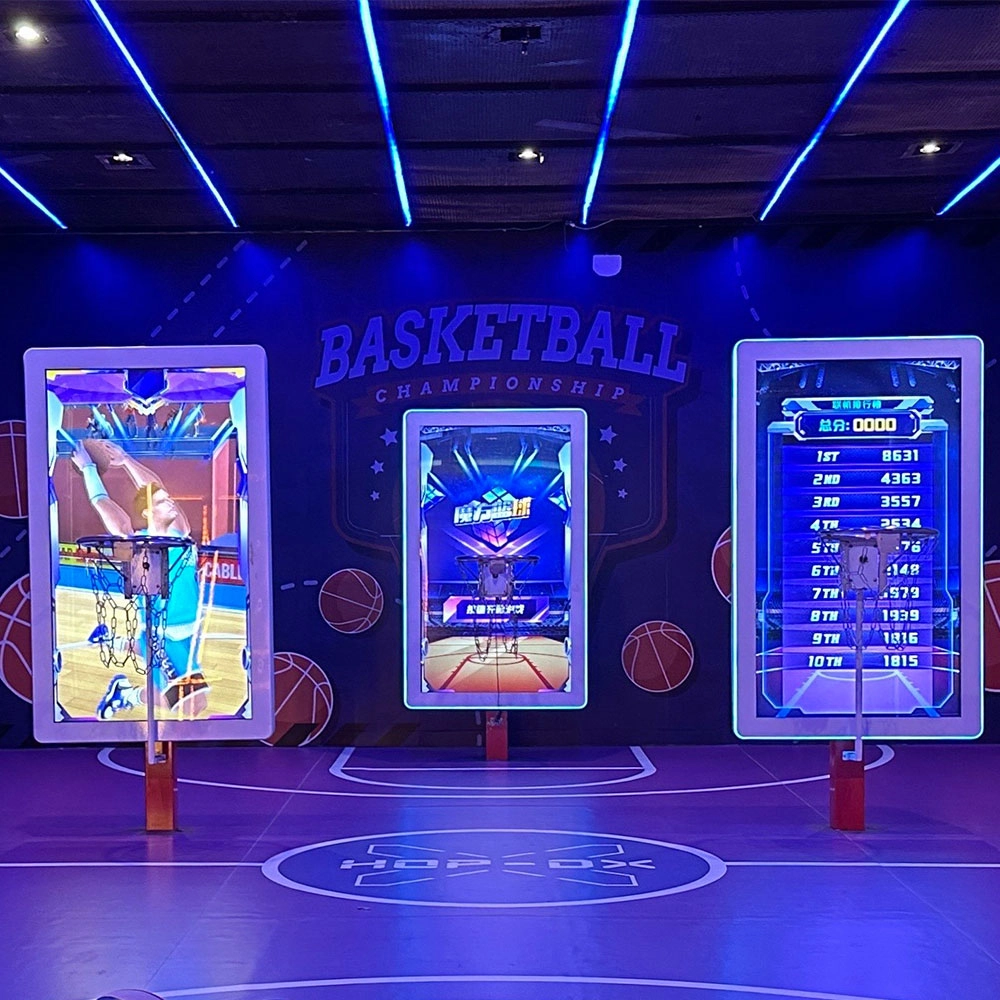
Multi-Player Interactive Shooting Machine
Joy Power is full of fun and exciting playgrounds! The basketball shooting machine is a classic amusement device integrating competition, entertainment, and interactivity. Based on the traditional basketball shooting sport, it integrates electronic scoring, sound and light effects, and challenge mechanisms to bring players an immersive game experience. The main body of the equipment is usually built with a metal frame, equipped with a standard-sized basket and a sturdy rim, with multiple sets of sensors to accurately capture the trajectory of the shot; when the player shoots the ball, the machine's built-in sensors count the score in real time and present the score, remaining time, and challenge goals through the LED display or LCD screen, with exciting sound effects and colorful lights to create a tense and exciting gaming atmosphere.
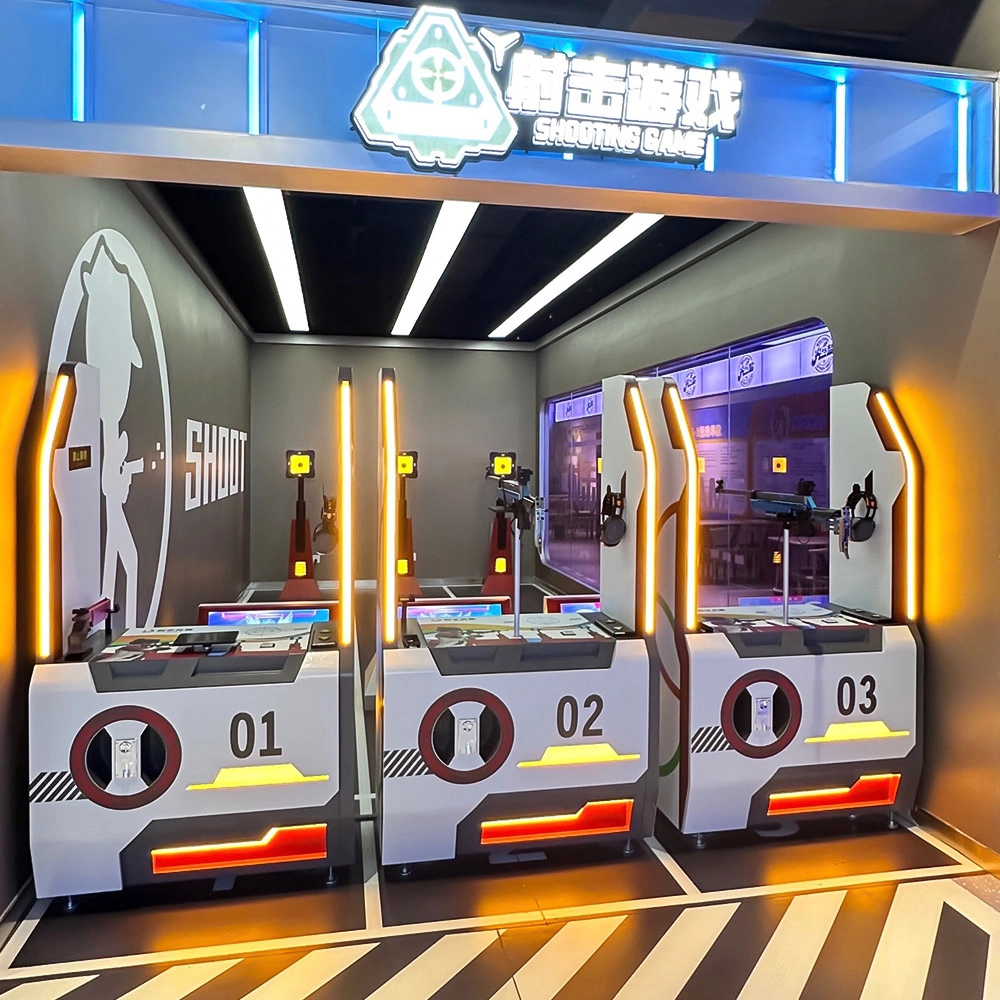
Olympic Shooting Professional Amusement Equipment
Joy Power is full of fun and exciting playgrounds! Olympic shooting products rely on advanced photoelectric technology to build a complete set of hardware and software systems. The hardware includes laser guns (long and short guns are available to meet different players' holding preferences), precision-sensitive electronic targets, stable tripods, signal pairing devices, and a touch screen for easy operation. The software intelligently controls the entire shooting process to ensure smoothness and accuracy.
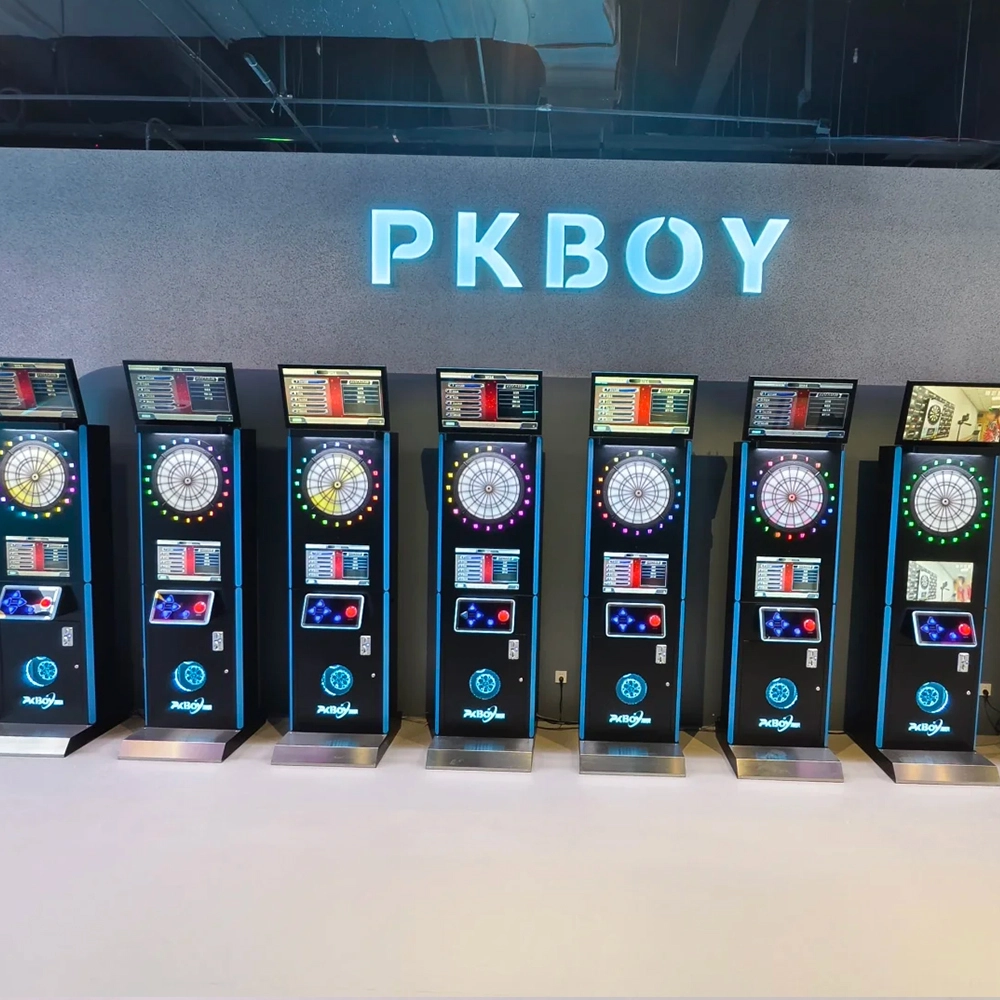
Dart Machines Bar Dart Machines
Joy Power is full of fun and excitement in the playground! The dart machine is suitable for all kinds of places, whether it is a bar, restaurant, KTV, or other entertainment venue, or a sports shop, club, or family leisure space, and can be perfectly adapted. In commercial venues, holding individual and team darts tournaments from time to time can attract more customers and increase the popularity and revenue of the venue, supplemented by various preferential activities, which can directly promote consumption and form a cycle of consumption of all the goods in the shop.
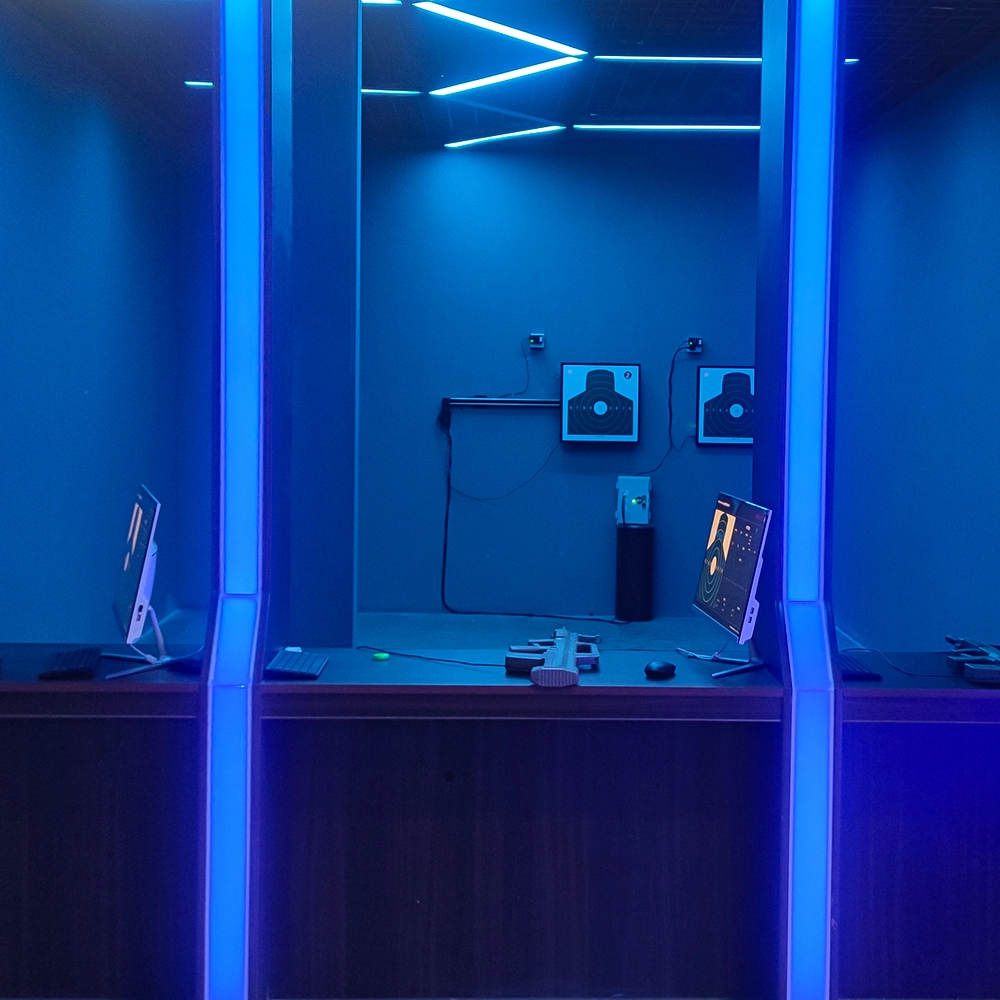
Infrared Shooting
Highly simulated simulation training analysis equipment, with advanced design concepts, fast system development, ease of operation and use, stable technical performance, less consumption of training, site dependence on a small group training is highly interesting, safe, and reliable, and other outstanding features. Product design to solve the basic skills of light weapons precision shooting as a starting point, to improve the safety of shooting training and training efficiency as the fundamental purpose, highlighting the simulation, information technology, and combat training requirements, can be in small indoor and outdoor venues and does not use live ammunition to complete the basic shooting training.
© 2025 FUNTECH ALL RIGHTS RESERVED

Weixia Lei
Fun_Tech-s
fun_tech20