
Vendor Evaluation Criteria for Commercial Indoor Golf Simulators
- Vendor Evaluation Criteria for Commercial Indoor Golf Simulators — Choosing the Best Indoor Golf Simulator Vendor
- Understand Your Business Goal and the Commercial Need for the Best Indoor Golf Simulator
- Tracking Technology and Simulation Accuracy — Core Criteria for the Best Indoor Golf Simulator
- Software Platform, Course Library and Gameplay Experience
- Screen, Projector & Enclosure Hardware — What to Inspect
- Space Requirements, Installation and Site-Readiness
- Operational Reliability, Service Level Agreements (SLAs) and Support
- Cost Structure, Pricing Models and Return on Investment (ROI)
- Safety, Compliance and Insurance Considerations
- Vendor Reputation, Experience and Commercial References
- Pilot Programs, Demonstrations and Acceptance Criteria
- Business Tools: Monetization, Reporting and Integrations
- Warranty, Spare Parts and Upgradability
- Product Spotlight: Recreational Sports Products Indoor Simulated Golf
- Comparing Vendor Options — A Practical Table to Rate Proposals
- Checklist: Questions to Ask Every Vendor
- Brand Advantages — Why Consider Recreational Sports Products Indoor Simulated Golf
- FAQ — Common Questions When Choosing a Commercial Indoor Golf Simulator
- Q: How much space do I need for a commercial simulator?
- Q: What tracking technology is best for commercial use?
- Q: How do I estimate ROI?
- Q: Are software updates included?
- Q: Can I integrate the simulator with my POS or booking software?
- Next Steps — Contact Sales or View the Product
- References and Authoritative Sources
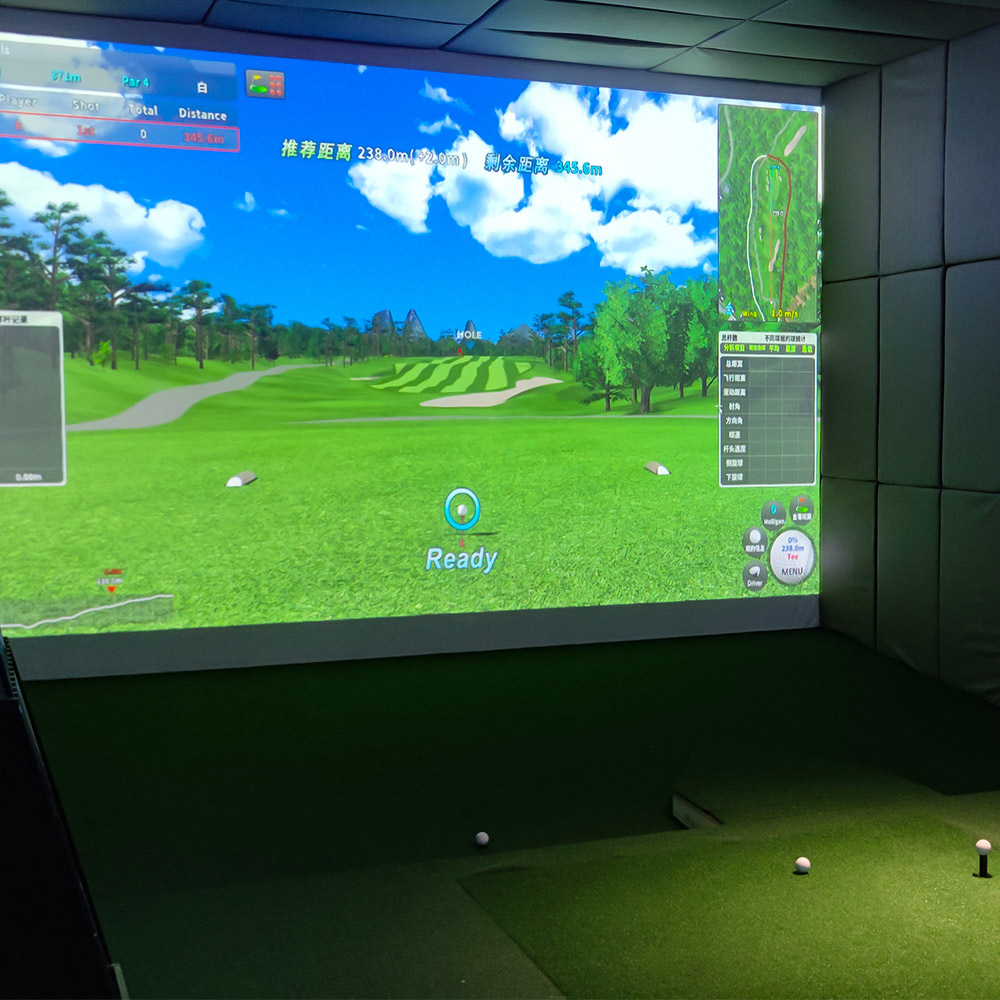
Vendor Evaluation Criteria for Commercial Indoor Golf Simulators — Choosing the Best Indoor Golf Simulator Vendor
Understand Your Business Goal and the Commercial Need for the Best Indoor Golf Simulator
Before evaluating vendors, define the : Are you installing simulators to drive revenue (pay-per-play, memberships), increase dwell time in a hospitality venue, create entertainment for families, or support coaching and player development? Different commercial goals prioritize different features — for example, revenue-focused operations need reliable uptime, efficient session turnover, and detailed analytics; training-focused venues emphasize ball-tracking accuracy and club/ball data. Clearly articulating your objective will help you shortlist vendors offering the best indoor golf simulator solutions aligned with measurable KPIs such as sessions/day, average spend per session, or lesson uptake. After choosing a reliable supplier, operators focus on monetization by integrating recreational sports golf simulators with POS systems.
Tracking Technology and Simulation Accuracy — Core Criteria for the Best Indoor Golf Simulator
Accuracy is the technical backbone of any simulator. Ask vendors which tracking technology they use (radar, high-speed camera/optical, photometric, or hybrid systems), the measurable margins of error for ball speed, launch angle, spin rate, and carry distance, and whether those figures are verified by third-party tests. For commercial use, look for repeatability and consistency across different lighting and ball conditions. Accurate data matters not only to golfers who expect realistic shots, but also to coaches and competitive leagues that rely on objective metrics.
Software Platform, Course Library and Gameplay Experience
Software determines the user experience. A vendor offering the best indoor golf simulator should provide an extensive, licensed course library, multiplayer and league modes, robust practice/shot analysis tools, and the ability to run branded experiences or promotions. Request demo access to evaluate course fidelity, shot feedback timing, and the intuitiveness of the interface for staff and customers. Also check how frequently the vendor updates software, whether updates are free or paid, and whether the platform supports integrations (POS, membership systems, or booking engines).
Screen, Projector & Enclosure Hardware — What to Inspect
Hardware components—impact screens, projectors, enclosures, mats, and hitting nets—affect durability and presentation. Commercial venues must invest in screens with high tensile strength and abrasion resistance, projectors rated for commercial brightness (lumens) and contrast ratios appropriate for ambient lighting, and modular enclosures for easy maintenance. The product Recreational Sports Products Indoor Simulated Golf includes a screen with a smooth texture and superior image clarity compatible with any HD projector; this is important because a crisp visual display improves perceived realism and customer satisfaction. Verify hardware warranties and the availability of replacement parts locally.
Space Requirements, Installation and Site-Readiness
Every vendor should provide clear space requirements (length, width, ceiling height), power specifications, and installation timelines. Commercial installations often face constraints such as low ceilings, shared spaces, or multi-use floors. Choose vendors that offer site surveys, 3D planning, and flexible installation options (ceiling-mounted vs. floor-mounted projectors, retractable enclosures, portable systems). Ask how long a typical install takes and whether the vendor provides training for on-site staff on day-to-day operations and basic troubleshooting.
Operational Reliability, Service Level Agreements (SLAs) and Support
Downtime directly impacts revenue. For commercial deployments, prefer vendors who can commit to SLAs for response and repair times, offer remote diagnostics, and maintain a network of certified technicians. Evaluate support tiers — phone, chat, remote access, on-site visits — and whether software updates, bug fixes, and content additions are included in ongoing fees. The best indoor golf simulator vendors provide proactive monitoring tools and clear escalation paths to minimize revenue loss from technical issues.
Cost Structure, Pricing Models and Return on Investment (ROI)
Commercial buyers should examine total cost of ownership (TCO) including hardware, software licenses, installation, ongoing subscription fees, consumables (mats, balls), and service. Compare capital purchase vs. lease options, revenue-share models, and per-station operating costs. Build a simple ROI model estimating sessions per day, average spend per session, and operating expenses. Use realistic utilization rates based on venue hours and local demand. Vendors that provide transparent pricing and case-study ROI examples are easier to benchmark.
Safety, Compliance and Insurance Considerations
Commercial simulators must meet safety standards for public environments. Verify vendor guidance on impact attenuation for screens and nets, non-slip mats, and safe projector mounting. Check local building codes for electrical installation and ensure that the vendor’s installation team or recommended contractors carry liability insurance and comply with local regulations. Ask whether the vendor can provide necessary documentation for your insurer to qualify your installation under your existing policy.
Vendor Reputation, Experience and Commercial References
Vendor track record is critical. Request case studies and contact references from similar commercial operations (bars, clubs, training centers, hotels). Look for evidence that the vendor’s systems perform under load and over time. Indicators of a reliable vendor include years in business, breadth of commercial installations, third-party certifications, and positive reviews from industry publications or trade shows. A vendor experienced in commercial projects will help avoid common pitfalls and deliver scalable solutions.
Pilot Programs, Demonstrations and Acceptance Criteria
Before full deployment, insist on a pilot or demonstration period with acceptance criteria tied to your KPIs (accuracy, uptime, customer satisfaction). A formal acceptance test helps you measure whether the system meets performance commitments before the final payment. Pilots can also reveal operational considerations such as throughput, queue management, and staff training needs. The best indoor golf simulator vendors are open to short-term trials or lease-to-own programs tailored for commercial operators.
Business Tools: Monetization, Reporting and Integrations
Evaluate monetization features: integrated booking, POS, membership management, and analytics dashboards that report sessions, revenue, player demographics, and usage patterns. Integration capabilities with third-party booking systems, loyalty platforms, and marketing tools are valuable for commercial operations aiming to drive repeat business. Data-driven vendors that provide clear reporting help managers optimize pricing, hours of operation, and promotions.
Warranty, Spare Parts and Upgradability
Commercial use accelerates wear. Confirm warranty terms for hardware and software, how spare parts are supplied, and the vendor’s policy for component replacements (screens, sensors, projectors). Also ask about the system’s upgradability — can tracking modules or software features be upgraded without complete replacement? Modular systems lower long-term cost and enable you to keep pace with technological advances without heavy capital outlay.
Product Spotlight: Recreational Sports Products Indoor Simulated Golf
FUNTECH in a playground full of fun and excitement! The screen’s smooth texture offers superior image clarity, compatible with any HD projector for a lifelike golf simulation. Enjoy crystal-clear visuals that bring the fairway right into your home.
Recreational Sports Products Indoor Simulated Golf emphasizes visual clarity and compatibility with HD projectors, which is an important factor when your commercial venue requires strong visual appeal to attract and retain customers. When paired with the right tracking system and software, this product can deliver a competitive, immersive experience.
Comparing Vendor Options — A Practical Table to Rate Proposals
| Evaluation Criterion | Why It Matters | How to Score Vendors (1–5) |
|---|---|---|
| Tracking Accuracy | Determines realism and usefulness for training | Verify test reports; score on error margins |
| Uptime & Support SLA | Impacts revenue continuity | Check response times and local tech coverage |
| Software Features | User engagement, repeat visits, leagues | Evaluate course library, updates, integrations |
| Total Cost of Ownership | Influences ROI and pricing strategy | Include installation, subscriptions, spares |
| Installation & Space Fit | Ensures a smooth deployment | Score based on site survey accuracy |
Checklist: Questions to Ask Every Vendor
- Can you provide verified accuracy metrics and independent test reports?
- What is included in the purchase price and what costs recur annually?
- Do you offer commercial references and case studies from similar venues?
- What SLAs apply to hardware failures and software outages?
- Are software updates and new course content included in subscriptions?
- What safety and insurance documentation do you provide for installations?
Brand Advantages — Why Consider Recreational Sports Products Indoor Simulated Golf
When you evaluate vendors, look for product strengths that match commercial priorities. Recreational Sports Products Indoor Simulated Golf offers:
- High visual clarity with a smooth impact screen designed for realistic graphics and spectator appeal — important for entertainment-focused venues seeking the best indoor golf simulator visuals.
- Compatibility with a wide range of HD projectors, simplifying procurement and replacement and lowering long-term maintenance complexity.
- Flexible deployment possibilities for both permanent installations and modular setups, helping venues with varying space constraints.
Combine these product strengths with a vendor that provides strong tracking technology, solid SLAs, and commercial integrations to create a complete offering that meets business goals.
FAQ — Common Questions When Choosing a Commercial Indoor Golf Simulator
Q: How much space do I need for a commercial simulator?
A: Typical commercial simulators need at least 12–15 feet in length, 10–12 feet in width, and 9–10 feet of ceiling height for a comfortable playing area. Precise requirements vary by vendor, hitting mat type, and whether you need room for spectators or furniture.
Q: What tracking technology is best for commercial use?
A: There is no one-size-fits-all. Optical/high-speed camera systems and hybrid systems tend to offer high accuracy, while radar systems can excel at clubhead and ball-speed measurements. For commercial operations, prioritize consistent repeatability and vendor-provided verification under real-world conditions.
Q: How do I estimate ROI?
A: Build a model with realistic assumptions: estimated sessions/day, average duration, price per session, membership sales, and costs (subscriptions, maintenance, staffing). Compare scenarios (conservative, expected, optimistic) to determine payback period.
Q: Are software updates included?
A: This varies. Some vendors include updates in an annual subscription; others charge for major upgrades. Confirm update policy and whether course content additions are included.
Q: Can I integrate the simulator with my POS or booking software?
A: Many commercial-grade simulators support integrations or provide APIs. Ask for documentation and references demonstrating live integrations.
Next Steps — Contact Sales or View the Product
If you are evaluating commercial options and want a demo or site survey, contact our sales team or view the product details for Recreational Sports Products Indoor Simulated Golf. Our specialists can provide a tailored ROI model, arrange a trial, and schedule an on-site assessment.
References and Authoritative Sources
- Golf simulator — Wikipedia
- PGA of America — Official Site
- Sports & Fitness Industry Association (SFIA)
- U.S. Small Business Administration — Planning & ROI guidance
Note: For vendor-specific claims (accuracy, SLA terms, and warranty details) always request written documentation and independent test results during the proposal stage.
Best professional best shooting simulator game manufacturers and supplier brands in Africa
Where to Buy interactive led floor tiles
Best Golf Simulator Denver Guide: Locations, Costs & Tips
What is chip caddie golf simulator ? | Ultimate Insight
Products
What is the most reasonable pricing for a mobile target archery program in a commercial setting?
If it is in shopping malls, scenic spots, and other places with high traffic flow, you can refer to the prices of similar entertainment programs in the surrounding area and combine them with your own costs, charging from $30 - $80 for a single session for a single person. If it is in a professional sports arena, for members or long-term training customers, packages can be introduced, such as monthly card 300 - 500 yuan, seasonal card 800 - 1200 yuan, according to different length and service content reasonable pricing.
Dart Machines Bar Dart Machines
How to attract customers when operating the program in shopping malls?
Create a cool venue decoration style and incorporate trendy elements, such as fluorescent light strips and anime-themed murals. o Launch diversified marketing models such as parent-child packages and couple packages, combined with time-limited promotional activities, such as half-price experience in the first three days of opening, to attract different groups of people such as families and couples to stop by and participate.
Golf Simulator
How often does simulated golf equipment require maintenance?
For daily use, simple monthly maintenance is sufficient, such as a simple cosmetic cleaning and function check after use. Quarterly maintenance can be more comprehensive.
Holographic Light and Shadow Restaurant
What are the technical difficulties of holographic projection?
One is the resolution and clarity of the image. To achieve high-resolution and high-definition 3D image reproduction, advanced optical equipment and algorithms are required. The second is the control of light interference and diffraction, which requires precise control of the propagation and interference conditions of light rays to ensure the stability and accuracy of the image. The third is the complexity and cost of the system. Holographic projection systems are usually quite complex, including optical components, light sources, control systems, etc., with high costs, which limits their widespread adoption.
Infrared Shooting
How to reduce operating costs?
Starting with equipment procurement, choose cost-effective, durable and easy-to-maintain products, which can save money for subsequent maintenance. Reasonable arrangement of staff, reduce the number of staff on duty during off-peak hours, train staff to have multi-skills, such as being able to operate the equipment and guide customers part-time, so as to improve the efficiency of manpower and reduce the cost of manpower.
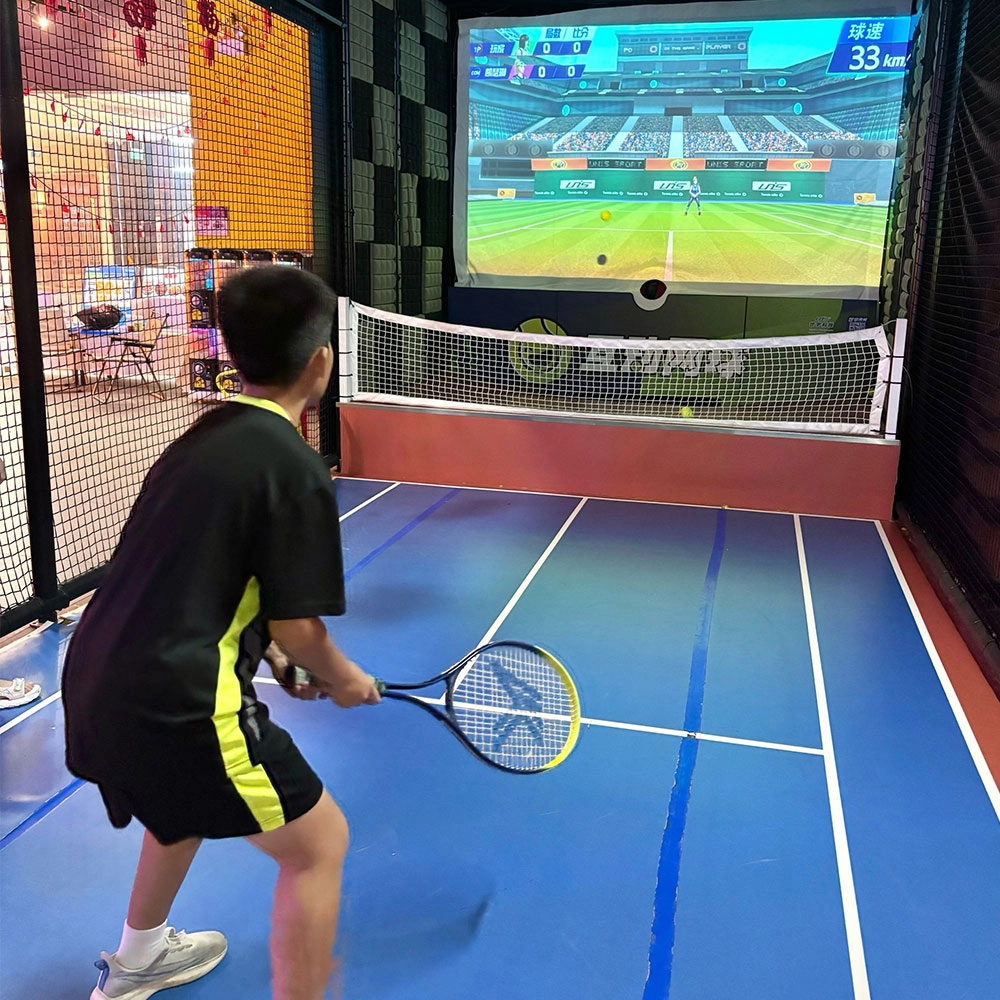
Indoor Tide Play Simulation Tennis Equipment
FUNTECH is full of fun and exciting playgrounds! With high-definition scene projection, force feedback racket, and intelligent scoring system, the simulated tennis equipment in the indoor arcade realizes immersive sports experiences and diversified interactive play, combining the advantages of safety and ease of use with high operational efficiency.
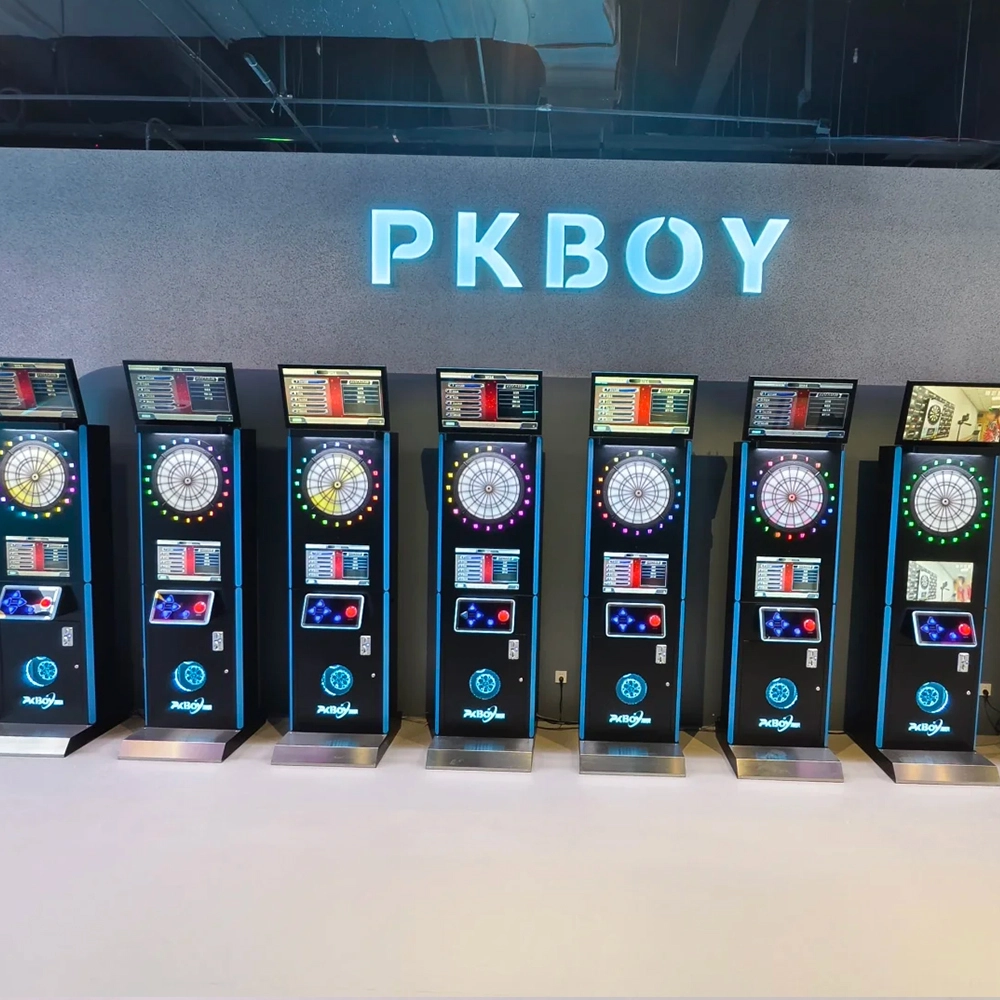
Dart Machines Bar Dart Machines
Joy Power is full of fun and excitement in the playground! The dart machine is suitable for all kinds of places, whether it is a bar, restaurant, KTV, or other entertainment venue, or a sports shop, club, or family leisure space, and can be perfectly adapted. In commercial venues, holding individual and team darts tournaments from time to time can attract more customers and increase the popularity and revenue of the venue, supplemented by various preferential activities, which can directly promote consumption and form a cycle of consumption of all the goods in the shop.
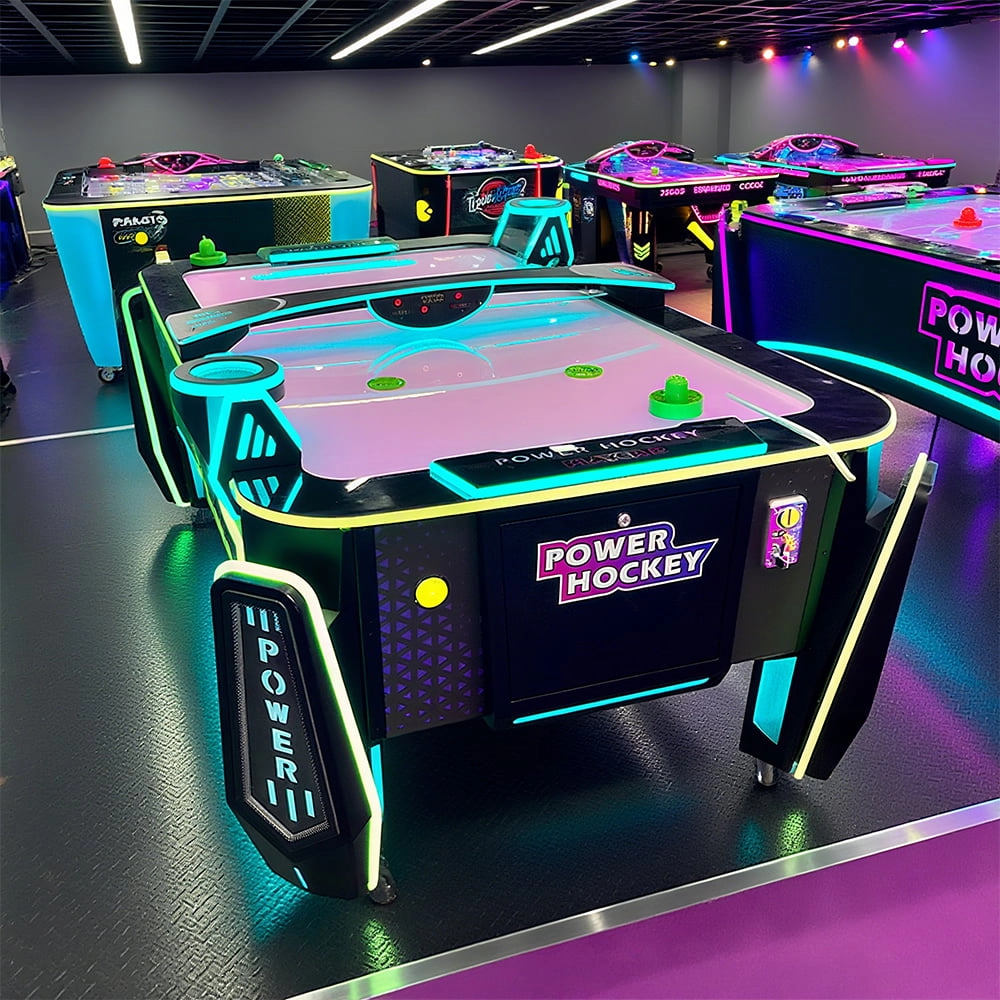
Arcade Hockey
FUNTECH is full of fun and exciting playgrounds! Air hockey, also known as air hockey, is a two-player competitive arcade game comprising a smooth, perforated playing surface, lightweight hockey sticks, a plastic puck, and an electronic scoreboard.
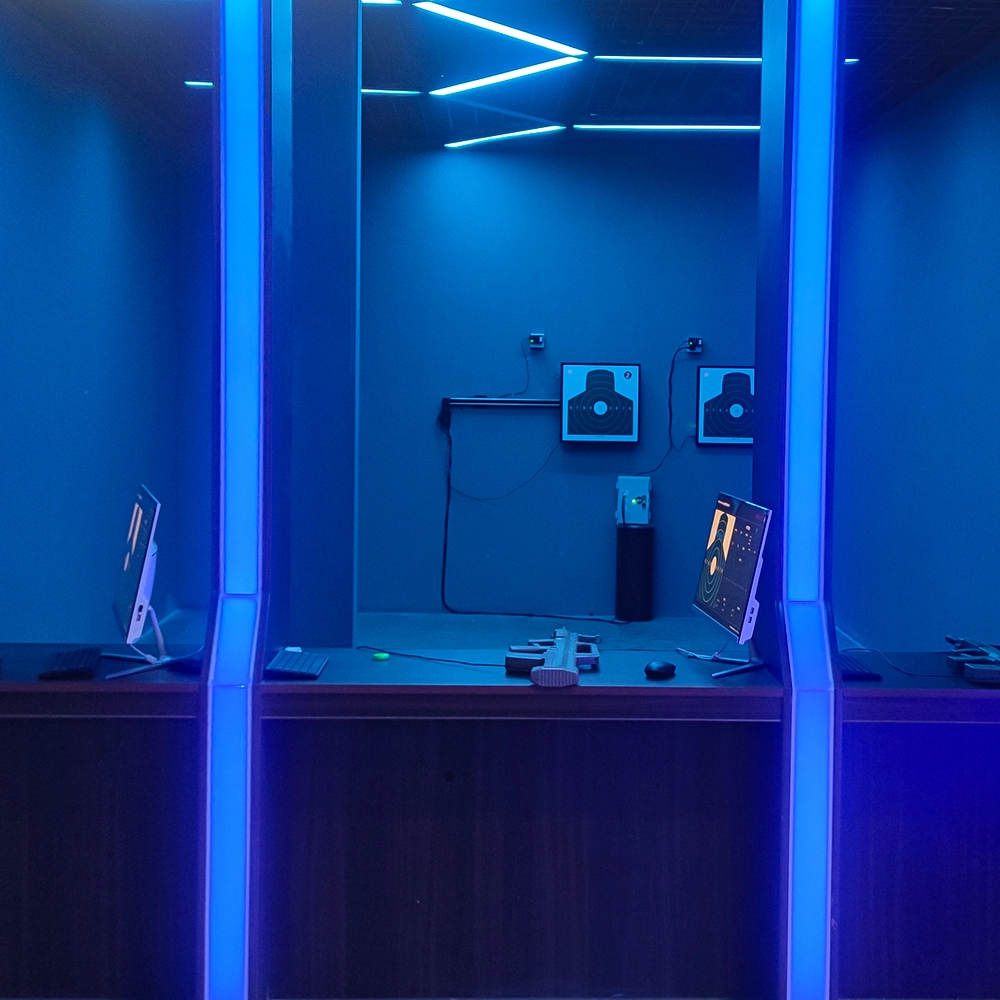
Infrared Shooting
Highly simulated simulation training analysis equipment, with advanced design concepts, fast system development, ease of operation and use, stable technical performance, less consumption of training, site dependence on a small group training is highly interesting, safe, and reliable, and other outstanding features. Product design to solve the basic skills of light weapons precision shooting as a starting point, to improve the safety of shooting training and training efficiency as the fundamental purpose, highlighting the simulation, information technology, and combat training requirements, can be in small indoor and outdoor venues and does not use live ammunition to complete the basic shooting training.
© 2025 FUNTECH ALL RIGHTS RESERVED

Weixia Lei
Fun_Tech-s
fun_tech20