
How to estimate ROI for an arcade dart machine for sale?
- 1. What is the realistic payback period for a commercial electronic dart machine in a small bar with 20–50 patrons per day?
- 2. How to model revenue for a soft-tip electronic dartboard using dynamic pricing (happy hour discounts and tournament pricing)?
- 3. What are typical monthly maintenance, parts, and software subscription costs after year one for a coin-operated dart machine?
- 4. How to estimate site 'capture rate' and required foot traffic to reach a target ROI for a pay-per-play dart arcade?
- 5. Which performance metrics from the operator dashboard best predict revenue decline before it happens?
- 6. How to calculate ROI when offering free-play in exchange for increased food & beverage spend?
- Concluding summary: Advantages of adding an arcade dart machine for sale to your venue
Arcade Dart Machine for Sale: In-Depth Answers to ROI and Operational Questions
As operators of location-based entertainment and digital sports venues increasingly add electronic dart machines to their lineups, accurate ROI modeling and operational planning become essential. This guide (built on industry operator benchmarks, manufacturer pricing trends and operator survey patterns) answers six highly specific beginner questions about buying an arcade dart machine for sale and estimating returns. For quotes or machine specs, contact www.funtechgame.com or email vicky@funtechgame.com.
1. What is the realistic payback period for a commercial electronic dart machine in a small bar with 20–50 patrons per day?
Why this matters: Many small-venue buyers assume their machine will pay for itself in a few months. Payback depends on capture rate, price-per-play, uptime and cost structure. Here's a step-by-step model with realistic ranges.
Key variables (typical ranges):
- Machine purchase price (commercial soft-tip/electronic): $3,000–$8,000 (one-time).
- Price per game / per play: $0.75–$2.00 (or bundled credits).
- Average patrons/day: 20–50.
- Conversion (capture) rate of patrons to pays: 3%–15% (varies with placement and promotion).
- Days open/year: 300–365.
- Annual operating costs (maintenance, parts, payment fees, electricity, software): $300–$1,800.
Model (conservative example):
- Assumptions: Purchase $5,000; price/play $1.00; patrons/day 35; capture rate 7%; open 330 days/year; operating costs $900/yr.
- Daily plays = 35 patrons * 7% = 2.45 plays/day → annual plays = 2.45 * 330 ≈ 808 plays.
- Annual gross revenue = 808 plays * $1.00 = $808.
- Annual net revenue = $808 − $900 (ops) = −$92 → negative in year 1 (loss).
- To break even within 3 years, either increase capture to ~20% (unrealistic without heavy promotion) or price/play to $2 and/or reduce machine CAPEX.
Key takeaways:
- Small bars with light foot traffic need either higher capture rates (promotions, leagues) or a lower-cost machine to reach a payback under 24 months.
- Typical payback ranges: 12–36 months in busy bars (high capture & league play), 36+ months in low-traffic venues unless cross-sell boosts F&B revenue tied to play.
2. How to model revenue for a soft-tip electronic dartboard using dynamic pricing (happy hour discounts and tournament pricing)?
Why this matters: Dynamic pricing can lift average revenue per session but adds complexity. Use segmented modeling and elasticity assumptions.
Framework (segment by time block):
- Define time blocks: Peak (evenings/fridays), Off-peak (weekday afternoons), Promo (happy hour).
- Set base price per play for each block and expected capture rate multiplier for promotions.
- Estimate plays per block = foot traffic * capture rate for that block.
Example (nightly average across blocks):
- Assumptions per day: Peak plays 30 at $1.50; Off-peak plays 10 at $1.00; Happy hour plays 20 at $0.50 (promo attracts more players).
- Daily revenue = 30*$1.50 + 10*$1.00 + 20*$0.50 = $45 + $10 + $10 = $65/day.
- Annual revenue (330 days) ≈ $21,450.
Sensitivity notes:
- Happy-hour pricing can increase plays but may lower average price per play; track incremental spend on food/drink attributable to dart players — often the real profit driver.
- For tournaments/night events, offer higher fixed entry fees ($5–$15) and estimate participant frequency; tournaments can significantly shorten payback.
3. What are typical monthly maintenance, parts, and software subscription costs after year one for a coin-operated dart machine?
Why this matters: Many buyers only budget CAPEX and overlook ongoing costs. Accurate OPEX forecasts affect ROI materially.
Costs to include (industry realistic ranges):
- Preventive maintenance (cleaning, calibration): $0–$50/month if done in-house, $40–$120/month if under service contract.
- Parts wear (soft tips, sensors, payment reader replacements): average reserve $100–$400/year per machine (set aside monthly $8–$34).
- Software/service subscription (cloud leaderboards, remote telemetry): $0–$30/month depending on vendor and features.
- Payment processing / cashless fees: 2%–5% of cashless revenues or $0.02–$0.10 per transaction for pay-per-play devices.
- Electricity: typically $5–$25/month depending on LED lighting, screens and local rates.
Practical budgeting rule: reserve 6%–12% of gross annual revenue for maintenance & software in typical commercial setups. For high-use sites, budget the higher end of that band.
4. How to estimate site 'capture rate' and required foot traffic to reach a target ROI for a pay-per-play dart arcade?
Why this matters: Capture rate is the hardest variable to estimate but most important to revenue forecasting.
Capture rate = (Number of paying players during a period) / (Total foot traffic during the same period).
Methods to estimate your capture rate:
- Benchmark method: Typical capture rates by venue type: high-energy sports bars 8%–20%; family entertainment centers 10%–30% (with promotions); quiet neighborhood bars 2%–8%.
- Observation method: Count foot traffic for representative hours/days and count unique plays. Use several samples to smooth variability.
- Promotion-adjusted capture: Estimate lift from leagues (x2–x5), promotions (x1.5–x3), or tournaments (temporary spikes).
Reverse-engineer required foot traffic:
- Set target annual net revenue needed to hit your ROI (e.g., cover $6,000 investment in 24 months => need $3,000/yr net).
- Choose price/play (P) and projected capture rate (C). Required daily foot traffic (T) = (Target annual gross revenue / (P * days open)) / C.
Example: target gross revenue $4,000/yr, price $1, capture 8%, days 330 → daily plays required = 4000/(1*330)=12.12 plays/day. Required traffic T = 12.12 / 0.08 ≈ 152 patrons/day.
Conclusion: If your venue averages fewer than 150 patrons/day, you either need to raise capture via leagues/promotions, raise P, or accept longer payback.
5. Which performance metrics from the operator dashboard best predict revenue decline before it happens?
Why this matters: Early detection of declining interest lets you react (promos, maintenance, repositioning) before revenue drops materially.
Top predictive KPIs to monitor in your machine telemetry:
- Plays per day trend (7-day and 30-day moving averages) — declining moving averages are early warning signs.
- Session length and repeat-play ratio — falling repeat plays per user may indicate diminished engagement or hardware issues.
- Payment conversion rate (card/tap attempts vs completed plays) — declines often indicate payment reader faults or network issues.
- Error/fault logs frequency — increased sensor errors or calibration flags often precede lower uptime and negative customer experiences.
- Peak-hour occupancy — if peak occupancy compresses or shifts, it may indicate competitor activity or decreased dwell time.
Actionable thresholds (operator rules of thumb):
- If 7-day plays drop >15% vs previous period, run a promotion and check hardware within 72 hours.
- If payment conversion drops >5 percentage points, audit payment hardware and network immediately.
- If error logs increase >50% month-over-month, schedule preventive maintenance and parts replacement.
6. How to calculate ROI when offering free-play in exchange for increased food & beverage spend?
Why this matters: Free-play can be a strategic incentive to increase dwell time and F&B revenue, but you must model the net incremental contribution correctly.
Modeling steps:
- Estimate the incremental F&B revenue per free-play user (ΔF&B). Measure average F&B spend from players before and after free-play promotions.
- Estimate cannibalization: portion of free-play customers who would have bought F&B anyway (C%).
- Calculate incremental contribution = (ΔF&B * (1 − C)) − incremental cost of providing free play (lost game revenue + marginal ops cost).
- Multiply incremental contribution by expected frequency to get annual net benefit and compare to the opportunity cost of charging pay-per-play.
Example:
- Assumptions: Free-play given to 200 customers/year. Observed average extra F&B per free-play customer = $8. Cannibalization estimate 30% (0.3). Lost pay-per-play revenue if charged would be $1 per play; assume one play per customer.
- Incremental F&B contribution = $8 * (1 − 0.3) = $5.6/customer. Subtract lost game revenue $1 → $4.6 net/customer. Multiply by 200 → $920/year net incremental.
Conclusion: If the machine would otherwise produce less than $920/year net from pay-per-play, the free-play-for-F&B tactic is justified. Always validate cannibalization with A/B tests and track repeat visits driven by the program (lifetime value uplift).
Concluding summary: Advantages of adding an arcade dart machine for sale to your venue
Electronic dart machines (soft-tip and coin-operated dartboards) provide compact, social, high-engagement attractions with low staffing needs. Properly sited — in sports bars, family entertainment centers, and arcades — they boost dwell time, generate direct pay-per-play revenue and drive ancillary F&B or ticket sales. Key advantages include modular footprint, tournament/league monetization, telemetry for performance optimization, and the ability to use dynamic pricing and promotions.
Final recommendations: use site-specific capture-rate testing, include realistic maintenance reserves (6%–12% of revenue), monitor dashboard KPIs for early warnings, and run short A/B tests to validate promotions (happy hour pricing, free-play-for-F&B). With careful modeling, an arcade dart machine for sale can be a profitable, repeatable unit of location-based entertainment revenue.
For detailed ROI modeling tailored to your venue and a quote on commercial machines and service plans, contact us at www.funtechgame.com or email vicky@funtechgame.com.
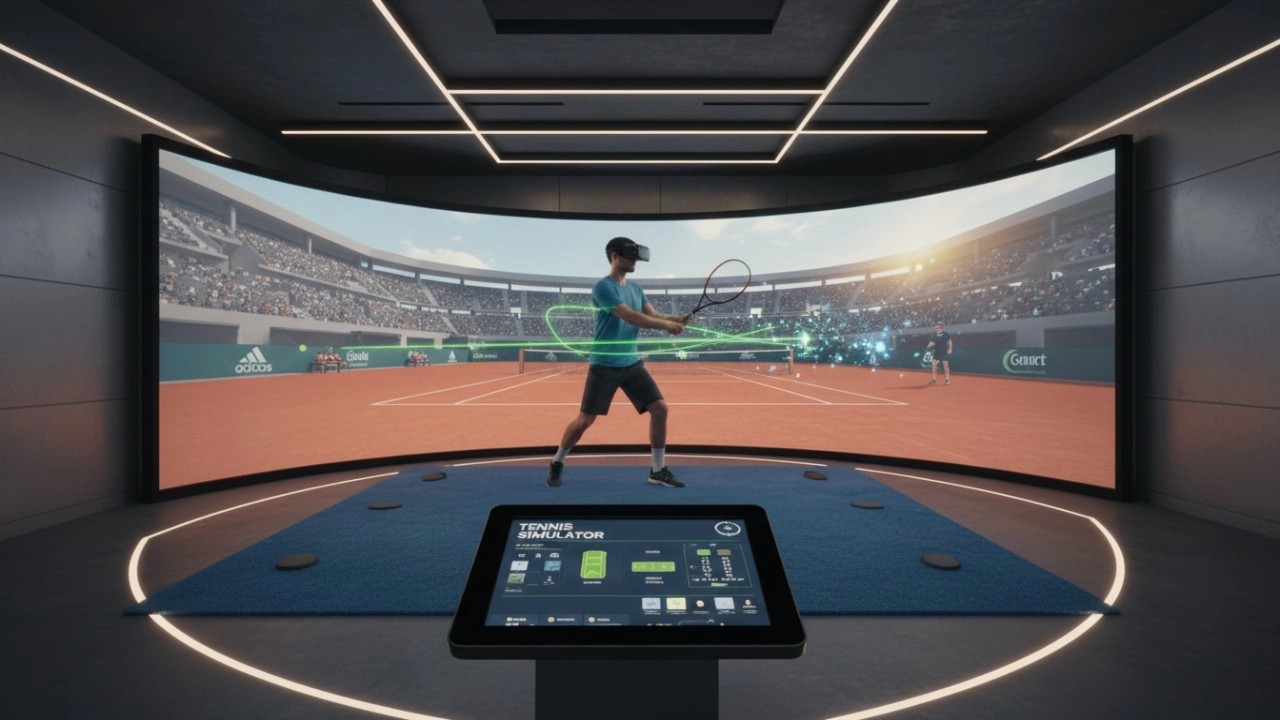
7 Reasons to Add a Tennis Simulator to Your Entertainment Venue Instead of Traditional Training Models (2026 Guide)
The 2026 Dart Machine Revenue Playbook: Boosting Mid-Week Sales by 30%-40% with Competitive Socializing
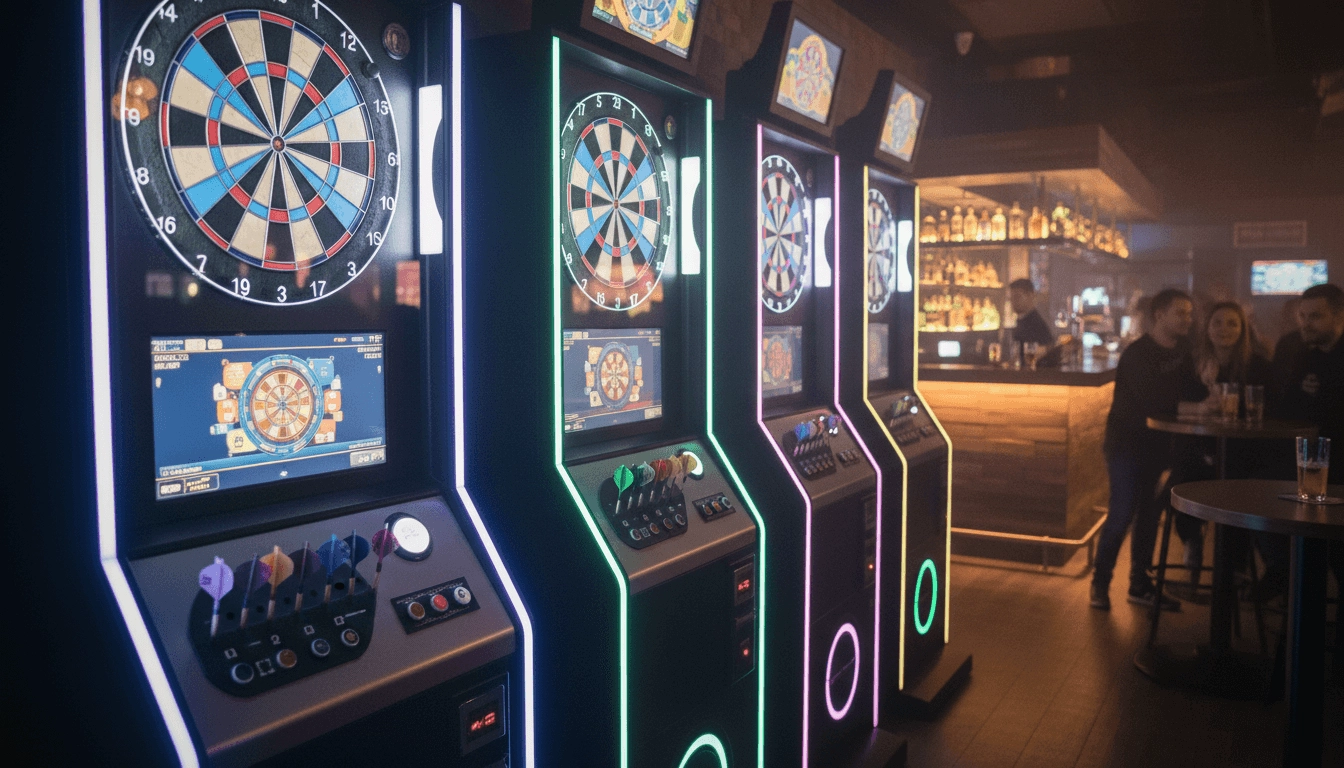
Redefining Competitive Socializing: Ultimate Guide to Selecting an Intelligent Dart Machine 2026
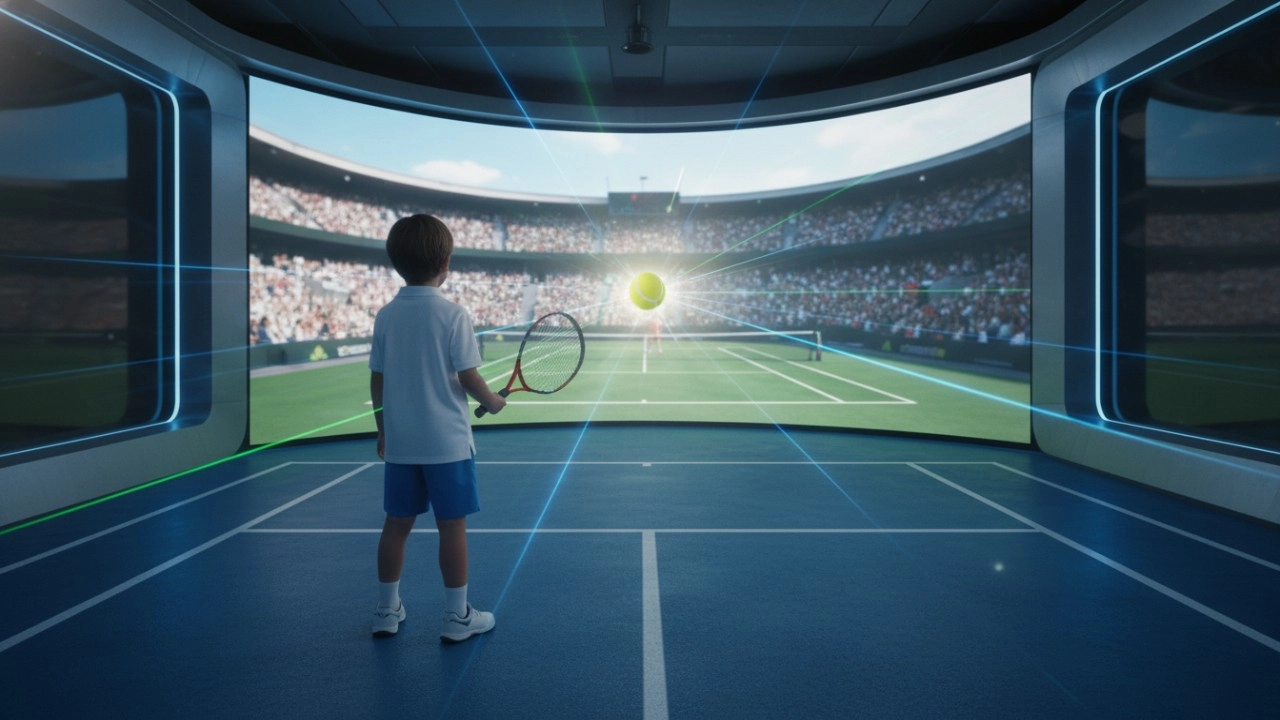
Tennis Simulators in 2026: The Ultimate Guide to Virtual Courts and Advanced Training

Top 15 Dart Machine Manufacturers in 2026
Golf Simulator
How to attract customers when operating the program in shopping malls?
Create a cool venue decoration style, incorporating trendy elements, such as fluorescent light strips and anime-themed murals. o Launch diversified marketing models such as parent-child packages and couple packages, combined with time-limited promotional activities, such as half-price experience in the first three days of opening, to attract families, couples and other groups to stop and participate in the program. o How to reduce operating costs?
Football Simulator
Are there a lot of game modes in soccer simulation?
Very rich! There is a league mode which is exciting and can compete with players from all over the world, and there is also a leisure and fun game which is suitable for parents and children to share fun time, so as to satisfy the needs of different players.
Products
What is the difference between purchasing equipment for commercial operations and personal training?
Commercial operations should consider the durability, ease of operation and attractiveness of the equipment, it is appropriate to choose cool appearance, can withstand high-frequency use, such as the target car running hundreds of times a day, high-intensity models, and easy to operate, easy for customers to get started. Personal training is more focused on cost-effective, according to their own training needs to choose the right tension of the bow, the right speed of movement of the target car.
Holographic Light and Shadow Restaurant
What is holographic projection?
Holographic projection is a technique that utilizes the principles of interference and diffraction to record and reproduce the true three-dimensional image of an object. It records the light information of an object on a hologram, and then uses a specific light source to illuminate the hologram, so that the three-dimensional image of the object can be presented in the air, and the audience can see the realistic stereoscopic image without wearing special glasses.
Dart Machines Bar Dart Machines
What is the difference between purchasing equipment for commercial operations and personal training?
Commercial operations should consider the durability, ease of operation, and attractiveness of the equipment, and it is preferable to choose cool-looking equipment that can withstand high-frequency use.
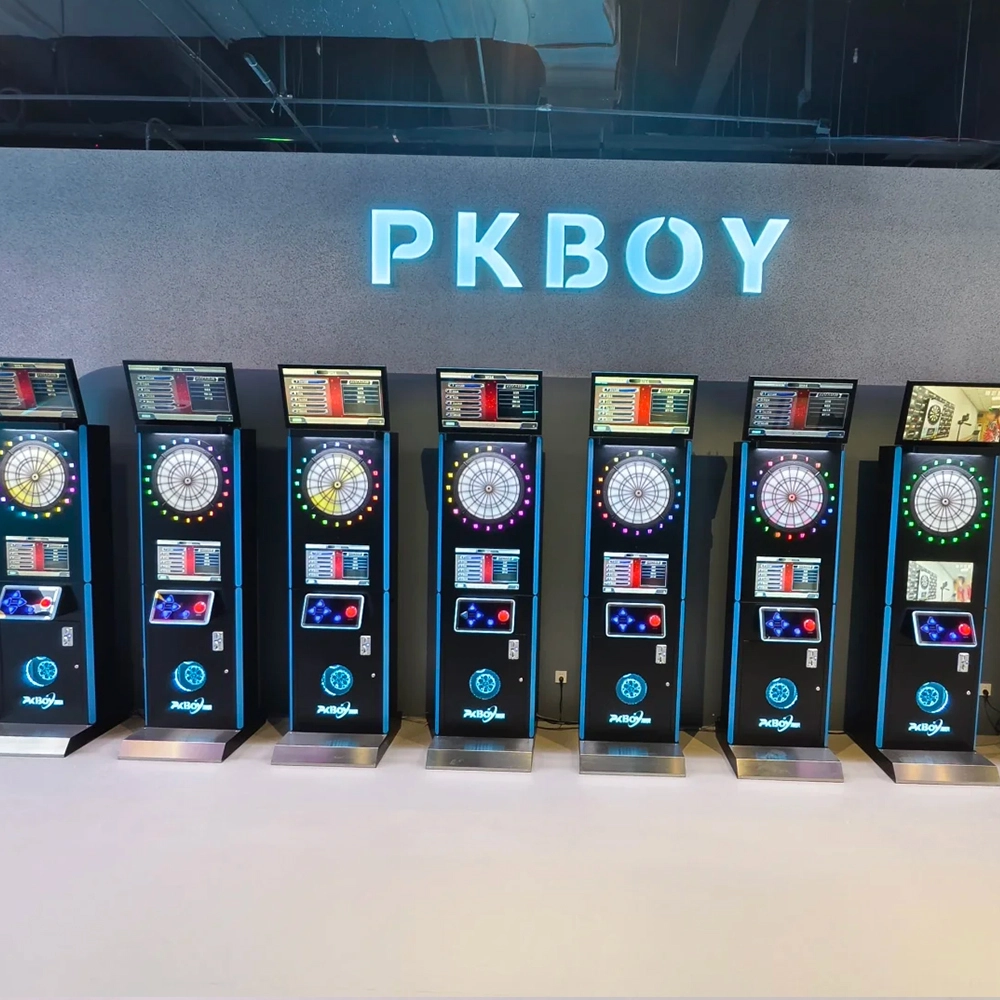
Dart Machines Bar Dart Machines
Joy Power is full of fun and excitement in the playground! The dart machine is suitable for all kinds of places, whether it is a bar, restaurant, KTV, or other entertainment venue, or a sports shop, club, or family leisure space, and can be perfectly adapted. In commercial venues, holding individual and team darts tournaments from time to time can attract more customers and increase the popularity and revenue of the venue, supplemented by various preferential activities, which can directly promote consumption and form a cycle of consumption of all the goods in the shop.
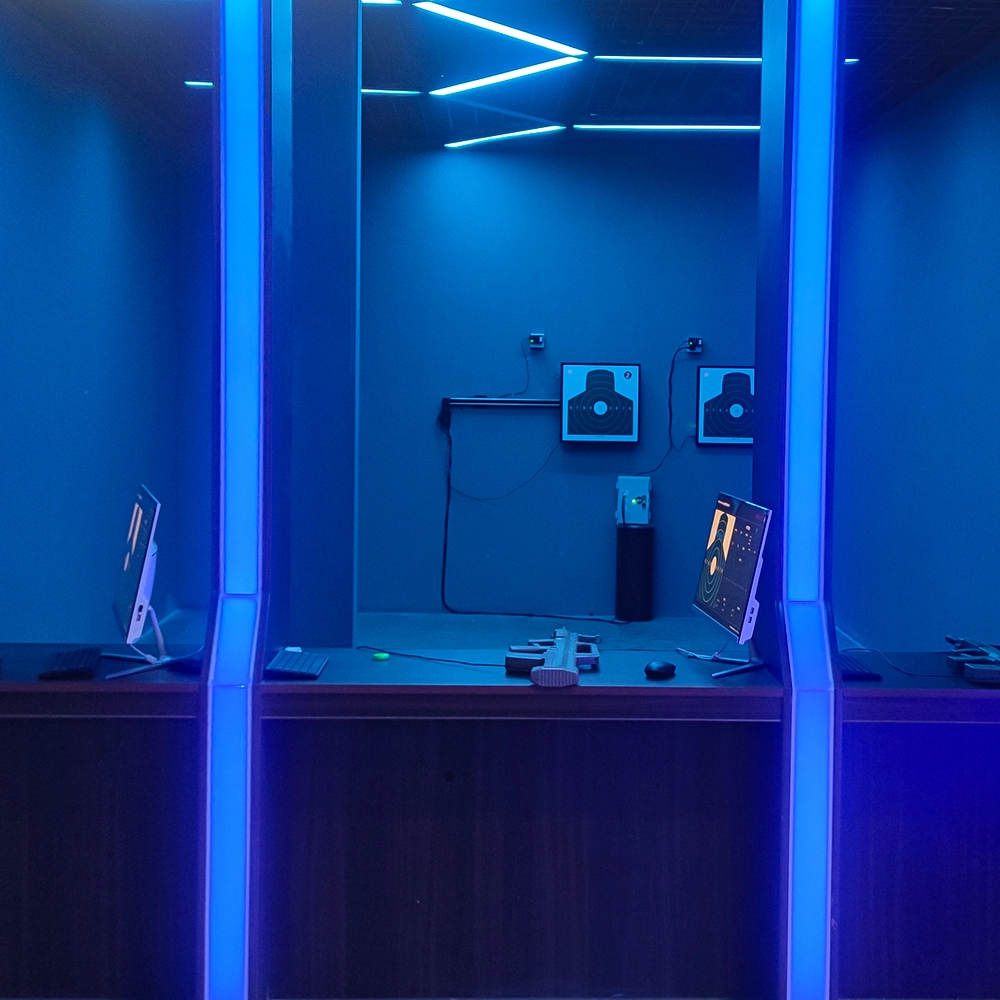
Infrared Shooting
Highly simulated simulation training analysis equipment, with advanced design concepts, fast system development, ease of operation and use, stable technical performance, less consumption of training, site dependence on a small group training is highly interesting, safe, and reliable, and other outstanding features. Product design to solve the basic skills of light weapons precision shooting as a starting point, to improve the safety of shooting training and training efficiency as the fundamental purpose, highlighting the simulation, information technology, and combat training requirements, can be in small indoor and outdoor venues and does not use live ammunition to complete the basic shooting training.
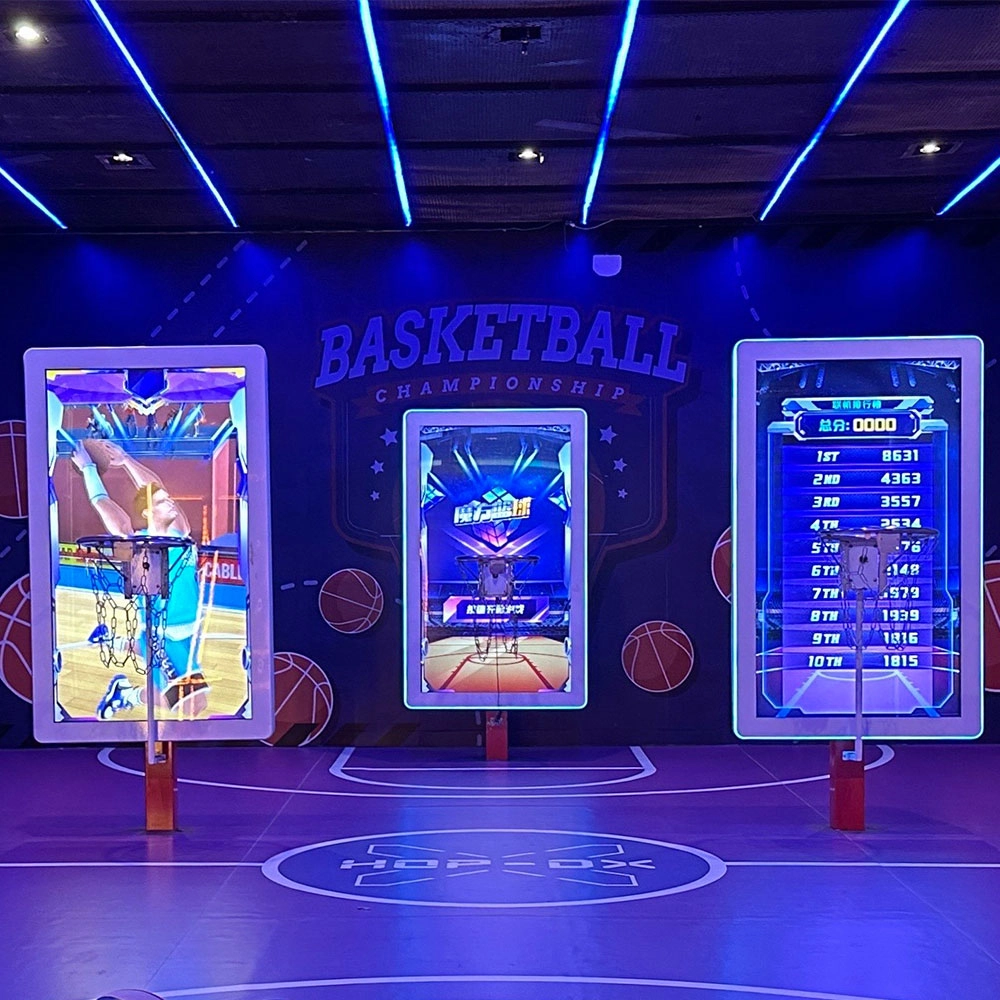
Multi-Player Interactive Shooting Machine
Joy Power is full of fun and exciting playgrounds! The basketball shooting machine is a classic amusement device integrating competition, entertainment, and interactivity. Based on the traditional basketball shooting sport, it integrates electronic scoring, sound and light effects, and challenge mechanisms to bring players an immersive game experience. The main body of the equipment is usually built with a metal frame, equipped with a standard-sized basket and a sturdy rim, with multiple sets of sensors to accurately capture the trajectory of the shot; when the player shoots the ball, the machine's built-in sensors count the score in real time and present the score, remaining time, and challenge goals through the LED display or LCD screen, with exciting sound effects and colorful lights to create a tense and exciting gaming atmosphere.
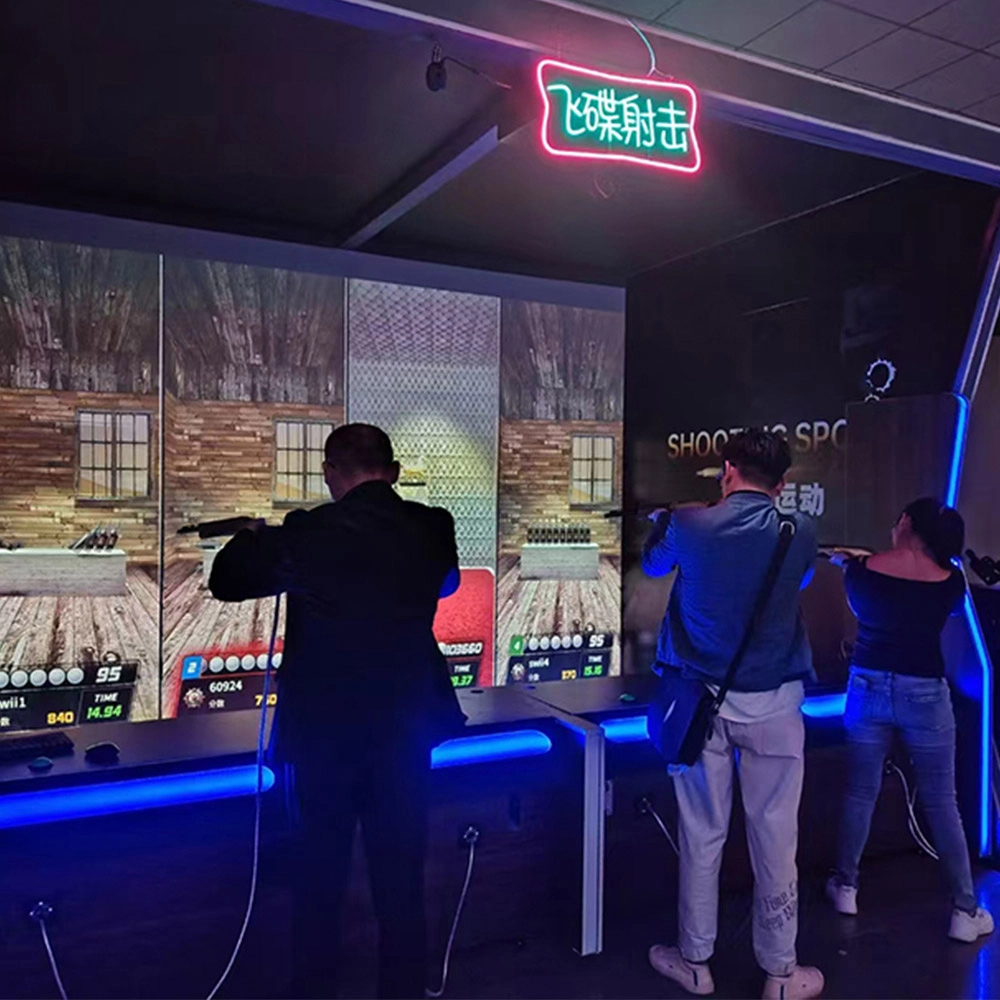
Indoor Wave Play Disc Shooting Equipment
Joy Power is full of fun and exciting playgrounds! The saucer shooting equipment in the indoor hip play hall is an immersive entertainment device integrating high-definition projection scenes, simulated air rifles, and multi-mode interactive gameplay, which allows players to experience the excitement of virtual shooting and the fun of social competition through laser-sensing scoring and multi-sensory feedback.
Ready to take your venue to the next level?
Leave us a message here, and our team will get back to you promptly.
Whether you're interested in custom orders, technical specifications, or partnership opportunities, we're here to assist you.
© 2025 FUNTECH ALL RIGHTS RESERVED

Weixia Lei
Fun_Tech-s
fun_tech20