
How scalable are arcade dart machines for sale for large venues?
- How many arcade dart machines do I need per 1,000 sq ft to avoid long queues during weekend peaks?
- Can arcade dart machines be integrated with my venue’s cashless system, POS and ticketing, and what technical interfaces are required?
- What are the real footprint, ceiling and electrical requirements for double-headed commercial dart cabinets in an FEC or bar?
- How scalable are arcade dart machines for sale for large venues and event-driven scaling (tournaments, leagues, multi-site rollouts)?
- What are realistic maintenance, spare-parts and downtime costs for a fleet of 10–50 electronic dart machines?
- How do I model realistic revenue and ROI for arcade dart machines in mixed bar/FEC environments?
How many arcade dart machines do I need per 1,000 sq ft to avoid long queues during weekend peaks?
Answer:Estimating required units is best done with a capacity-based approach rather than a pure area rule. Key inputs: average session length (game mode and player count), peak concurrent demand (guests actively wanting to play), and acceptable queue time.
Practical method:
- Measure session length: electronic soft-tip and steel-tip game cycles typically range from quick 5–8 minute skill challenges to 12–20 minute league or tournament matches. For mixed-use venues, plan with a conservative average session of 10–12 minutes.
- Calculate throughput per machine: throughput = 60 ÷ average_session_minutes. If average session = 12 min, a single machine serves ~5 players/hour (per active headboard). For double-headed cabinets, double that.
- Estimate peak demand: derive from peak customers per 1,000 sq ft. A busy bar/arcade might host 80–140 patrons per 1,000 sq ft during peak hours; estimate what percentage will want to play darts simultaneously (commonly 3–8%).
Example (conservative): 100 patrons per 1,000 sq ft × 6% want to play = 6 players competing simultaneously. With 12-minute sessions, one single-head machine yields 5 players/hour — not enough. Two single-head machines give ~10 players/hour capacity and keep average queue below 10–15 minutes. For family entertainment centers (FECs) expect higher active-play percentages and plan one machine per every 60–80 peak patrons or use more double-head cabinets.
Recommendations:
- Use the formula and plug in your venue’s actual peak patron count and preferred max wait time.
- Favor double-headed or multi-play cabinets where floor space and budget allow — they increase throughput without doubling operator overhead.
- Monitor real opening-week utilization and be prepared to add a unit (or reconfigure) if average wait exceeds your target.
Can arcade dart machines be integrated with my venue’s cashless system, POS and ticketing, and what technical interfaces are required?
Answer:Yes — modern commercial electronic dart machines support multiple integration pathways, but compatibility varies by vendor. Typical integration options:
- Network API / TCP-IP: Many newer dart cabinets include Ethernet/Wi‑Fi and provide REST or WebSocket APIs or cloud-based operator dashboards for remote management, usage logs, and leaderboard syncing.
- POS / Cashless middleware: Integration is generally done via an intermediate cashless provider (NFC cards, wristbands, mobile QR codes) or vendor-provided SDK. Look for SDL/MDB support or published cashless protocols.
- Ticket and redemption integration: For venues that use ticketing, cabinets can be configured to issue tickets, credits, or send play data to a central redemption server.
- MDB / Coin mech: Legacy cash systems still use MDB (Multi-Drop Bus) or RJ11 coin mech interfaces for direct coin/bill acceptor control.
What to request from suppliers:
- Published API docs, sample code, or an SDK.
- Network security details (TLS support, firewall ports to open).
- Support for your chosen cashless vendor (or a clear plan to integrate via middleware).
Operational tips:
- Use cloud-connected operator portals for fleet-level analytics and remote price adjustments.
- Test payment flows in-situ with your POS vendor well before public launch.
- Verify liability and PCI scope when handling payment data; consider outsourcing to certified cashless vendors.
What are the real footprint, ceiling and electrical requirements for double-headed commercial dart cabinets in an FEC or bar?
Answer:Manufacturers publish exact specs, but these practical ranges will help planners and electricians prepare and avoid surprises.
Typical physical considerations:
- Width and depth: Single-head wall-mounted cabinets often occupy ~2.5–3.5 ft width and 1.5–2.5 ft depth (including player clearance). Double-headed or free-standing cabinets commonly range 5–6.5 ft wide and 2–3 ft deep. Always allocate clear player lanes in front (4–6 ft recommended for player movement and spectator space).
- Ceiling height: Standard 8–9 ft ceilings are usually adequate, but check vendor recommendations for scoreboard or lighting extensions. Overhead clearances should account for player throws and any suspended decorative items.
- Electrical: Most commercial electronic dart units run on standard 110–240V AC circuits with low amperage (check spec sheet). Dedicated circuits are beneficial for clusters to avoid nuisance tripping if lights and music run off the same breaker.
- Wall mounting vs free-standing: Wall-mounted single-head units save floor area; free-standing double-head cabinets consolidate two playfaces but require more floor space and circulation planning.
Installation checklist:
- Confirm manufacturer dimensions and weight, plus reinforcement needs for wall-mounted units.
- Plan for network cabling (Ethernet) or verify robust Wi‑Fi coverage and cellular backup if using cloud features.
- Reserve a maintenance-access path and space for spare parts and tools nearby.
How scalable are arcade dart machines for sale for large venues and event-driven scaling (tournaments, leagues, multi-site rollouts)?
Answer:Arcade dart systems are highly scalable if you select the right platform and plan for operations, technology, and maintenance.
Scalability vectors:
- Modular hardware: Start small with single or double-head cabinets and add identical units; modular free‑standing racks or mobile cabinets facilitate temporary deployment for tournaments.
- Software ecosystem: Choose machines with a central operator dashboard, cloud leaderboards, remote updates and batch configuration to manage hundreds of units across sites.
- Networking and tournament modes: Vendors that support synchronized tournament play, round-robin scheduling, and central brackets dramatically simplify large-event operations.
- Payments and pricing: Centralized pricing control via networked APIs allows dynamic pricing (happy hour, event pricing) and simplifies revenue reporting.
- Logistics & spares: For multi-site operators, establish spare-part pools and regional technicians to keep downtime low.
Operational growth considerations:
- Licensing and per-unit fees: Confirm whether software features, cloud leaderboards or tournament modules carry per-unit or per-site licensing. This affects marginal cost as you scale.
- Performance monitoring: Implement remote monitoring to detect failing sensors, software exceptions, or network issues before they impact players.
- Training & SOPs: Scale operations by documenting onboarding and troubleshooting steps; remote training modules reduce site-by-site variability.
Conclusion on scalability:With industry-standard networking, cloud management and trained ops support, arcade dart systems scale from single-site bar use to multi-location tournament networks. The main limiting factors become maintenance bandwidth and per-unit licensing; plan these into your TCO model.
What are realistic maintenance, spare-parts and downtime costs for a fleet of 10–50 electronic dart machines?
Answer:Maintenance costs vary by geography, play intensity and whether you buy a manufacturer service contract. Use percentages and component life-expectancy to plan conservatively.
Cost drivers:
- Consumables: Soft tips, flights, and replacement board segments wear with use. Expect frequent small-part replacement for high-usage sites.
- Electronics: Scoreboards, sensors and LED arrays have lower failure rates but can fail unexpectedly; ensure firmware updateability.
- Labor: On‑site diagnostics, part swaps and calibration take operator time or a contracted technician visit.
Budgeting guidance:
- Annual maintenance reserve: Operators commonly budget 5–12% of purchase price per year for preventative maintenance and wear-parts for commercial entertainment hardware. High-use venues should budget toward the upper end.
- Spare-parts pool: For fleets, keep a pool of the most common consumables and 1–2 spare control boards or scoreboards per 20 units to reduce Mean Time To Repair (MTTR).
- Service contracts vs ad-hoc: Manufacturer or third-party service agreements often cost more up-front but reduce downtime and provide predictable costs. Evaluate SLA response times and parts coverage.
Reducing downtime:
- Use remote diagnostics and firmware rollouts.
- Train staff for first-line fixes: replacing tips, sensors calibration, basic resets.
- Stagger procurement of identical models to simplify spare parts and cross-site technician training.
How do I model realistic revenue and ROI for arcade dart machines in mixed bar/FEC environments?
Answer:Create a conservative multi-line revenue model and tie it to utilization scenarios. Revenue streams include per-play fees, cashless credit sales, event/tournament entry fees, sponsorship, and increased F&B spend from engaged players.
Steps to model ROI:1) Baseline assumptions: set price-per-play (or credits per game), average plays per hour per unit (use measured trial week or industry ranges), and operating hours per week.2) Calculate gross revenue per unit: price × plays/hour × hours open × peak vs off-peak modifiers.3) Subtract operating costs: payment fees, electricity (modest), routine maintenance reserve (5–12% of unit price), network subscription or licensing, and allocated floor rent opportunity cost.4) Include uplift effects: darts can increase average check size; even small F&B increases attributable to the game boost overall ROI.5) Compute payback: purchase cost ÷ annual net revenue; aim for a payback within 12–36 months depending on venue risk appetite.
Ways to improve ROI:
- Host weekly tournaments and leagues with small entry fees.
- Use dynamic pricing (happy hour credits) and promotional bundles with F&B.
- Offer private event packages and sponsorship branding on leaderboards.
- Track key metrics (plays per hour, revenue per machine, downtime) and iterate location or pricing.
Compliance and E‑E‑A‑T notes: all ROI modelling should use your venue’s local operating hours, labor rates, and proven utilization data rather than generic assumptions. Consult manufacturer spec sheets and local electrical/administrative codes before purchase.
Final summary
Arcade dart machines for sale are a flexible, scalable attraction for bars, barcades, and family entertainment centers. When you plan capacity based on session throughput, verify integration options for cashless and POS systems, confirm footprint and power needs, and budget for ongoing maintenance and licensing, you can scale from single cabinets to multi-site tournament networks while keeping downtime and operating costs predictable. The advantages include high player engagement, multiple monetization paths, and straightforward incremental expansion with modular hardware and cloud-enabled fleet management.
For a tailored site survey and a competitive quote, contact us at www.funtechgame.com or email vicky@funtechgame.com.
Author: Professional content writer with Digital Sports Entertainment experience. Data and recommendations are based on vendor specifications, operator best practices and industry-standard deployment patterns. For site-specific electrical and safety compliance, consult local codes (NEC/CE) and request technical documentation from the supplier.
7 Reasons to Add a Tennis Simulator to Your Entertainment Venue Instead of Traditional Training Models (2026 Guide)
The 2026 Dart Machine Revenue Playbook: Boosting Mid-Week Sales by 30%-40% with Competitive Socializing
Redefining Competitive Socializing: Ultimate Guide to Selecting an Intelligent Dart Machine 2026
Tennis Simulators in 2026: The Ultimate Guide to Virtual Courts and Advanced Training

Top 15 Dart Machine Manufacturers in 2026
Golf Simulator
How to reduce operating costs?
Starting with equipment procurement, choose cost-effective, durable and easy-to-maintain products, which can save money for subsequent maintenance. Reasonable arrangement of staff, reduce the number of staff on duty during off-peak hours, train staff to have multi-skills, such as being able to operate the equipment and guide customers part-time, to improve the efficiency of manpower and reduce manpower costs.
Holographic Light and Shadow Restaurant
What is the difference between holographic projection and ordinary projection?
Ordinary projection is the process of projecting a two-dimensional image onto a flat screen, where the viewer sees a flat image. Holographic projection can present real three-dimensional images, allowing viewers to observe different faces of objects from different angles, with a strong sense of three dimensionality and realism. In addition, ordinary projection usually only requires simple equipment such as projectors and screens, while holographic projection requires more complex optical systems and technologies to achieve.
What is holographic projection?
Holographic projection is a technique that utilizes the principles of interference and diffraction to record and reproduce the true three-dimensional image of an object. It records the light information of an object on a hologram, and then uses a specific light source to illuminate the hologram, so that the three-dimensional image of the object can be presented in the air, and the audience can see the realistic stereoscopic image without wearing special glasses.
What are the technical difficulties of holographic projection?
One is the resolution and clarity of the image. To achieve high-resolution and high-definition 3D image reproduction, advanced optical equipment and algorithms are required. The second is the control of light interference and diffraction, which requires precise control of the propagation and interference conditions of light rays to ensure the stability and accuracy of the image. The third is the complexity and cost of the system. Holographic projection systems are usually quite complex, including optical components, light sources, control systems, etc., with high costs, which limits their widespread adoption.
Products
What are the after-sales services after purchasing the equipment?
Generally, a 1-year warranty is provided. During the warranty period, parts damaged due to quality problems, such as motor failure, display problems, etc., will be repaired or replaced free of charge. There will also be technical support, including equipment installation and debugging guidance, operation training, to ensure the smooth use of the user, after-sales response time is usually within 24 - 48 hours.
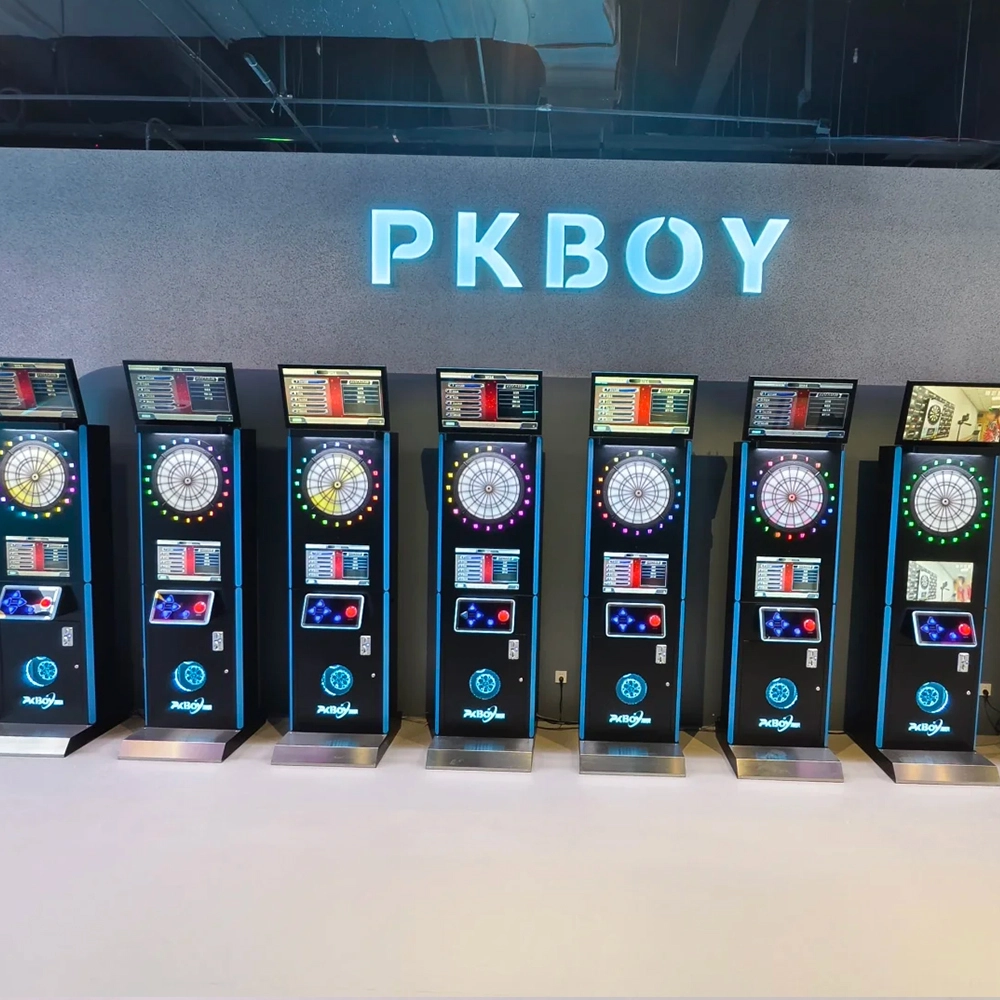
Dart Machines Bar Dart Machines
Joy Power is full of fun and excitement in the playground! The dart machine is suitable for all kinds of places, whether it is a bar, restaurant, KTV, or other entertainment venue, or a sports shop, club, or family leisure space, and can be perfectly adapted. In commercial venues, holding individual and team darts tournaments from time to time can attract more customers and increase the popularity and revenue of the venue, supplemented by various preferential activities, which can directly promote consumption and form a cycle of consumption of all the goods in the shop.
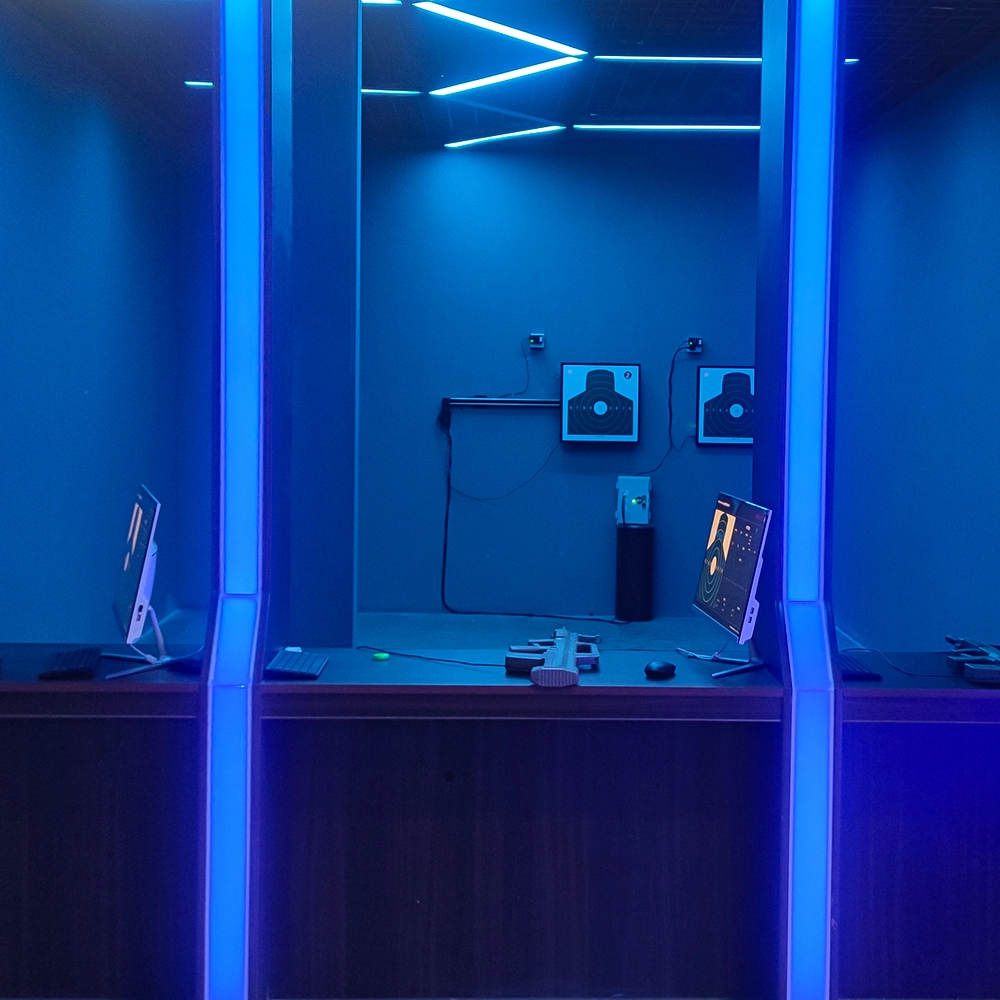
Infrared Shooting
Highly simulated simulation training analysis equipment, with advanced design concepts, fast system development, ease of operation and use, stable technical performance, less consumption of training, site dependence on a small group training is highly interesting, safe, and reliable, and other outstanding features. Product design to solve the basic skills of light weapons precision shooting as a starting point, to improve the safety of shooting training and training efficiency as the fundamental purpose, highlighting the simulation, information technology, and combat training requirements, can be in small indoor and outdoor venues and does not use live ammunition to complete the basic shooting training.
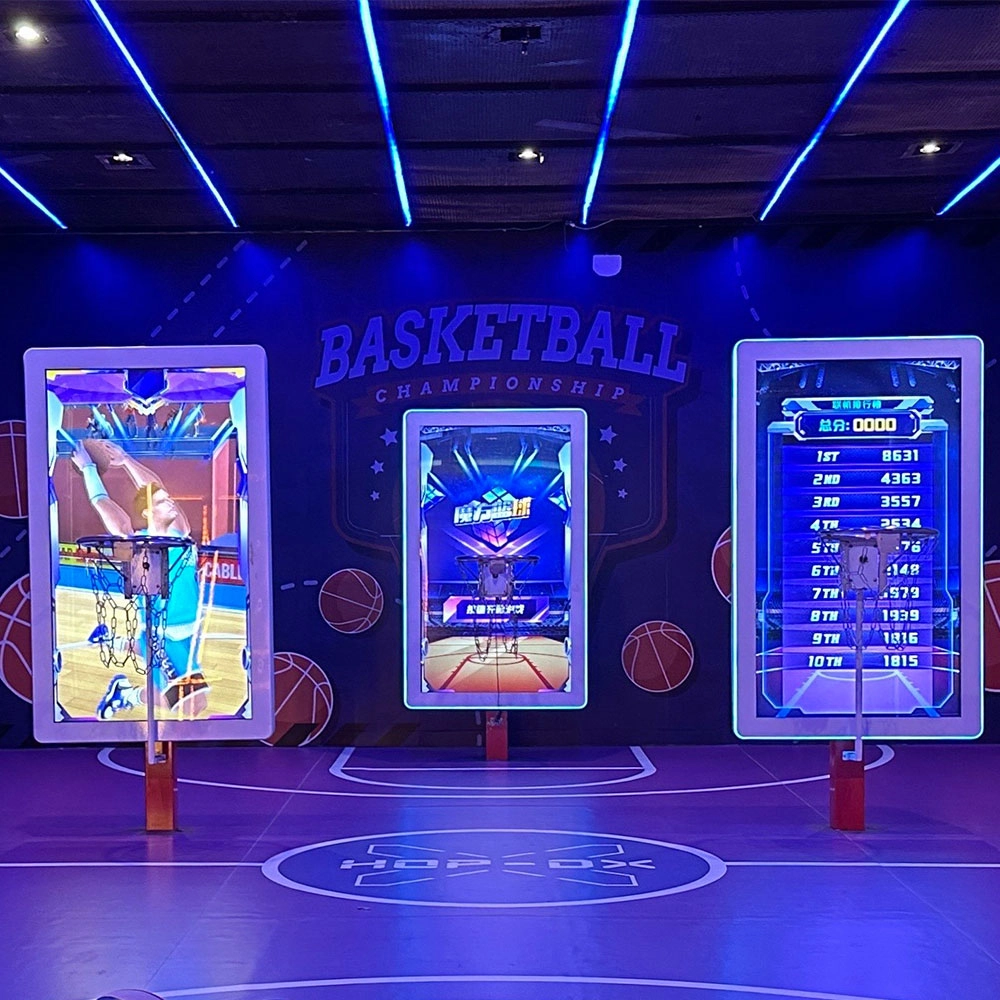
Multi-Player Interactive Shooting Machine
Joy Power is full of fun and exciting playgrounds! The basketball shooting machine is a classic amusement device integrating competition, entertainment, and interactivity. Based on the traditional basketball shooting sport, it integrates electronic scoring, sound and light effects, and challenge mechanisms to bring players an immersive game experience. The main body of the equipment is usually built with a metal frame, equipped with a standard-sized basket and a sturdy rim, with multiple sets of sensors to accurately capture the trajectory of the shot; when the player shoots the ball, the machine's built-in sensors count the score in real time and present the score, remaining time, and challenge goals through the LED display or LCD screen, with exciting sound effects and colorful lights to create a tense and exciting gaming atmosphere.
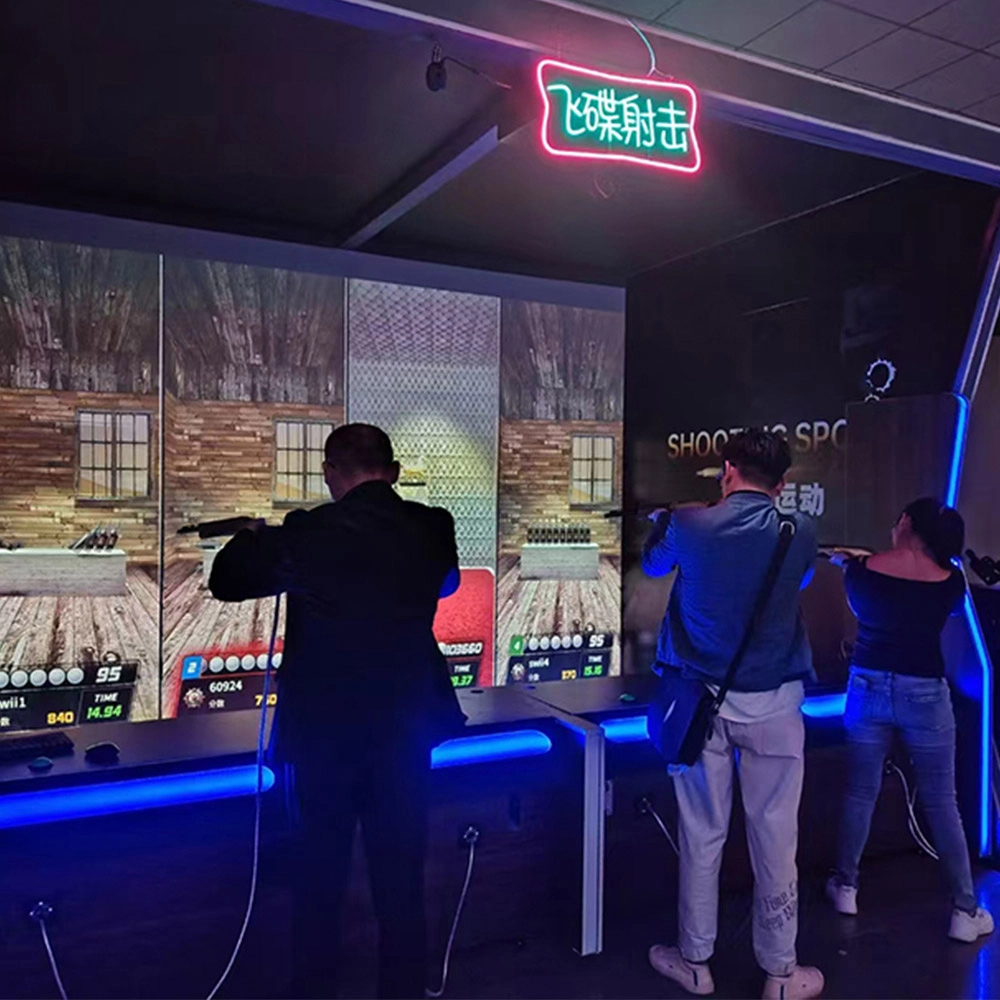
Indoor Wave Play Disc Shooting Equipment
Joy Power is full of fun and exciting playgrounds! The saucer shooting equipment in the indoor hip play hall is an immersive entertainment device integrating high-definition projection scenes, simulated air rifles, and multi-mode interactive gameplay, which allows players to experience the excitement of virtual shooting and the fun of social competition through laser-sensing scoring and multi-sensory feedback.
Ready to take your venue to the next level?
Leave us a message here, and our team will get back to you promptly.
Whether you're interested in custom orders, technical specifications, or partnership opportunities, we're here to assist you.
© 2025 FUNTECH ALL RIGHTS RESERVED

Weixia Lei
Fun_Tech-s
fun_tech20