
What is an archery simulator and how does it work? | FUNTECH Expert Guide
- What is an Archery Simulator and How Does It Work?
- 1. What Are the Key Technologies Behind Archery Simulators?
- 2. What Are the Benefits of Using an Archery Simulator for Digital Sports Entertainment?
- 3. How Accurate Are Archery Simulators Compared to Real-World Archery?
- 4. What Are Typical Use Cases and Industries for Archery Simulators?
- 5. What Should Buyers Consider When Procuring an Archery Simulator?
What is an Archery Simulator and How Does It Work?
An archery simulator is a digital system that replicates archery experiences through virtual reality (VR) or augmented reality (AR) technology combined with real physical tools like bows and arrows. It allows participants to practice and compete in archery without requiring outdoor ranges or physical targets. The core components include motion sensors, cameras, high-speed tracking systems, and simulation software.
When a user shoots an arrow equipped with sensors or uses a sensor-enabled bow, the system tracks the speed, trajectory, and angle of the shot. This data is transmitted in real-time to a screen or VR headset that digitally renders the flight path and target impact. Advanced simulators incorporate realistic physics simulation and environmental variables such as wind and distance to enhance the user experience.
1. What Are the Key Technologies Behind Archery Simulators?
Modern archery simulators rely on infrared sensors, high-frame-rate cameras, and accelerometers to precisely capture bow movement and arrow release. Software algorithms analyze this data and simulate arrow flight physics. Many systems use motion capture and AI to improve accuracy. Some simulators integrate VR headsets (e.g., Oculus Quest, HTC Vive) while others use large projection screens or LED displays, catering to both commercial venues and home users.
2. What Are the Benefits of Using an Archery Simulator for Digital Sports Entertainment?
Simulators provide convenient, year-round archery training without weather constraints. They reduce the need for large physical spaces and targets, saving operational costs. Additionally, they offer interactive features such as scoring, multiplayer competitions, and skill tracking analytics. According to a 2023 market report by Grand View Research, the global virtual sports market, including simulators, projected to grow at a CAGR of 15.4%, emphasizing rising consumer demand for immersive digital sports experiences.
3. How Accurate Are Archery Simulators Compared to Real-World Archery?
Top-tier simulators boast accuracy within millimeters, employing precise motion tracking and physics engines. While slight differences exist because of sensor limitations, simulator accuracy improves consistently with technological advancements. Devices from brands like PseudoArchery or ArcheryMax utilize LIDAR and optical tracking to ensure near-realistic shot behavior, reported with up to 95% accuracy in test environments.
4. What Are Typical Use Cases and Industries for Archery Simulators?
Archery simulators are used in various domains: professional athlete training, recreational sports centers, corporate team-building events, education programs, and rehabilitation therapy. The entertainment and fitness industry is a growing adopter, leveraging simulators for immersive sports gaming. Additionally, some clubs use simulators for talent scouting and performance enhancement, as it enables controllable and repeatable shooting conditions for analysis.
5. What Should Buyers Consider When Procuring an Archery Simulator?
Important factors include:
- Technology Compatibility: Ensure the system supports integration with existing VR or gaming hardware.
- Accuracy and Realism: Look for simulators with proven tracking precision and detailed physics.
- Space Requirements: Check installation dimensions and user movement space needs.
- Software Features: Multiplayer modes, training analytics, and customizable environments enhance value.
- Support and Updates: Opt for providers offering continuous software updates and technical support.
Leading providers such as E6 Archery, AxesSim, and iSimulate also provide customizable enterprise-grade solutions suited for digital sports entertainment venues.
In conclusion, archery simulators integrate cutting-edge sensor and VR technologies to deliver realistic and scalable sports experiences. For digital sports entertainment buyers, understanding the underlying technology, application scenarios, and procurement considerations is essential to maximize ROI and user engagement.

The Ultimate Business Guide to Interactive Sports Arcade Equipment: Cost, ROI & Business Plan

Designing Sports Arcade Zones for Theme Parks & Attractions: The Ultimate Guide to Immersive Play

Best Interactive Sports Equipment for Family Entertainment Centers: A Guide to Modern FEC Arcade Equipment

Ultimate Guide: How to Set Up an Interactive Sports Arcade in Shopping Malls

Transformative Spaces: Interactive Sports Entertainment Solutions for Different Business Scenarios
Products
How to reduce operating costs?
Starting with equipment procurement, choose cost-effective, durable and easy-to-maintain products, which can save money for subsequent maintenance. o Starting with equipment procurement, choose cost-effective, durable and easy-to-maintain products, which can save money for subsequent maintenance. Reasonable arrangement of staff, reduce the number of staff on duty during non-peak hours, train staff to have multi-skills, such as being able to operate the equipment as well as guiding customers on the side, to improve the efficiency of manpower and reduce manpower costs.
Football Simulator
Are there a lot of game modes in soccer simulation?
Very rich! There is a league mode which is exciting and can compete with players from all over the world, and there is also a leisure and fun game which is suitable for parents and children to share fun time, so as to satisfy the needs of different players.
Holographic Light and Shadow Restaurant
What is holographic projection?
Holographic projection is a technique that utilizes the principles of interference and diffraction to record and reproduce the true three-dimensional image of an object. It records the light information of an object on a hologram, and then uses a specific light source to illuminate the hologram, so that the three-dimensional image of the object can be presented in the air, and the audience can see the realistic stereoscopic image without wearing special glasses.
What are the application scenarios of holographic projection?
Holographic projection has a wide range of applications in multiple fields. In the commercial field, it can be used for product display, advertising promotion, stage performances, etc., such as three-dimensional product display in shopping malls and virtual singer performances at concerts. In the field of education, it can be used for teaching demonstrations to help students understand complex scientific knowledge more intuitively. In the field of exhibition display, it can create an immersive exhibition experience and attract the attention of the audience.
What is the difference between holographic projection and ordinary projection?
Ordinary projection is the process of projecting a two-dimensional image onto a flat screen, where the viewer sees a flat image. Holographic projection can present real three-dimensional images, allowing viewers to observe different faces of objects from different angles, with a strong sense of three dimensionality and realism. In addition, ordinary projection usually only requires simple equipment such as projectors and screens, while holographic projection requires more complex optical systems and technologies to achieve.
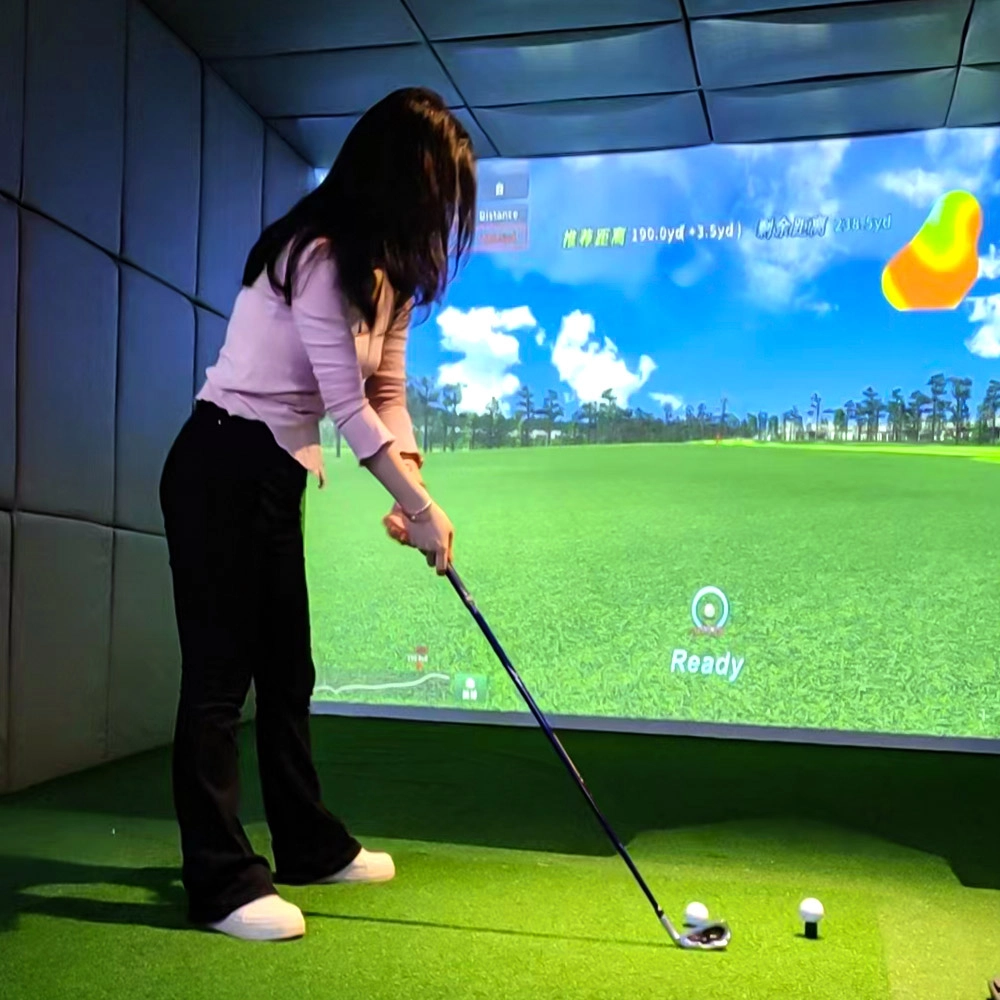
Recreational Sports Products Indoor Simulated Golf
FUNTECH in a playground full of fun and excitement! The screen’s smooth texture offers superior image clarity, compatible with any HD projector for a lifelike golf simulation. Enjoy crystal-clear visuals that bring the fairway right into your home.

Target Smash
FUNTECH is full of fun and exciting playgrounds! The Precision Ball-Throwing Game at the Tide Play Centre is a highly interactive amusement attraction utilizing ball pits as props, combined with motion capture and projection technology. Players hurl balls into the pit, with the system accurately detecting trajectories and landing points to enable real-time interaction with projected visuals—such as triggering explosive feedback when striking monsters.
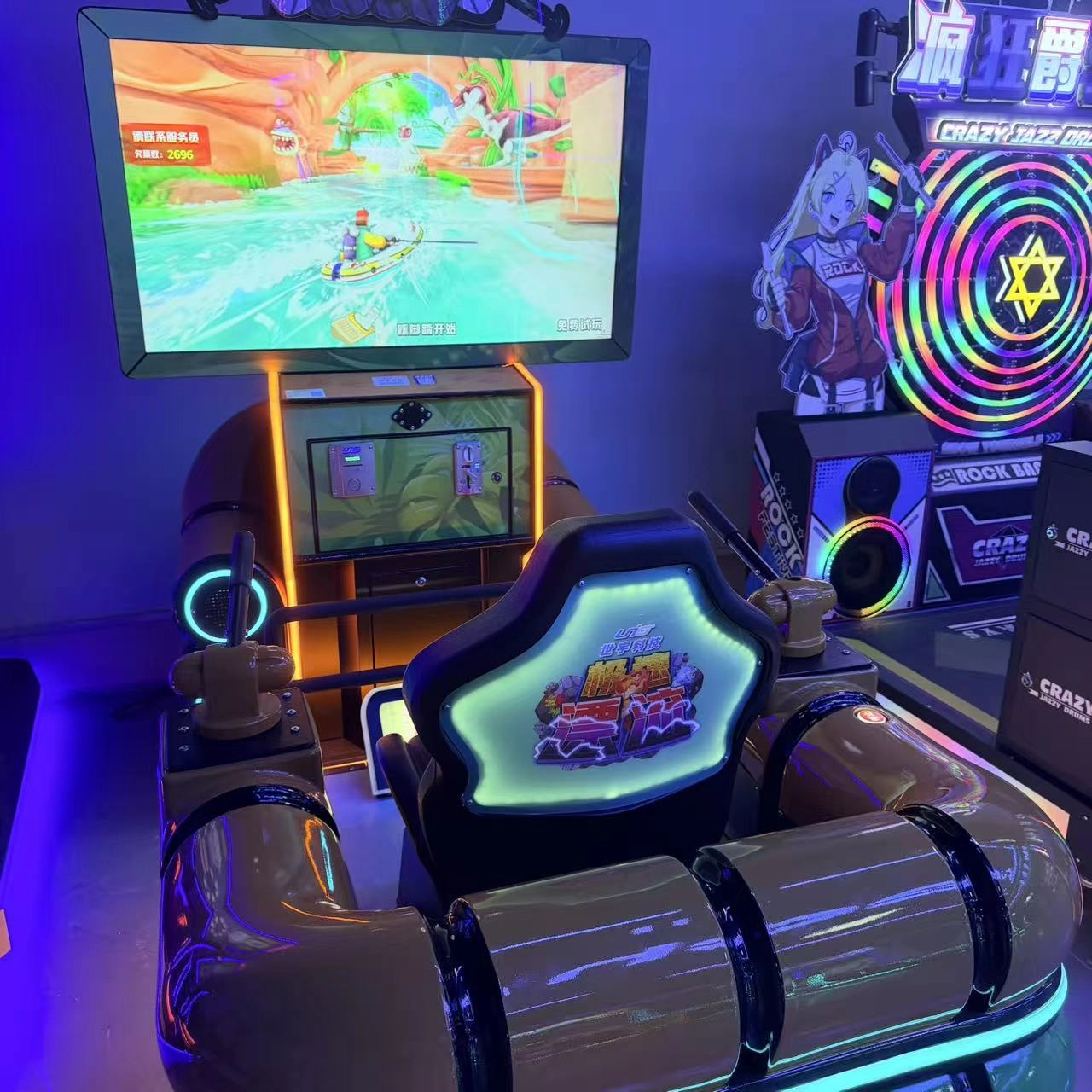
Elite Rowing
A brand-new rowing simulation competitive game, operating on a single machine station, supports player interaction and competition with 3 AI opponents. The station is equipped with the latest rowing equipment, enabling players to experience realistic rowing operation. The competition process is relaxed and fun, while also providing fitness exercise benefits.

Laser Matrix
Joy Power is full of fun and exciting playgrounds! The laser matrix equipment in the indoor arcade stands out by virtue of its unique entertainment and technical characteristics. It builds a dynamic network of obstacles through precision-arranged laser beams, combining sound and light effects to create a tense and exciting atmosphere where players need to flexibly weave in and out to avoid the obstacles, making it both fun and challenging.
Ready to take your venue to the next level?
Leave us a message here, and our team will get back to you promptly.
Whether you're interested in custom orders, technical specifications, or partnership opportunities, we're here to assist you.
© 2025 FUNTECH ALL RIGHTS RESERVED

Weixia Lei
Fun_Tech-s
suiyifun_factory