
Do arcade dart machines for sale include adjustable difficulty settings?
- Do arcade dart machines for sale include adjustable difficulty settings?
- How do I assess long-term maintenance costs and availability of replacement parts (tips, flights, sensors)?
- What are realistic ROI expectations and how should I model revenue for an arcade dart machine for sale?
- How do I verify software security, data privacy, and integration capabilities (SDK/APIs) for digital dart games?
- What are the installation, space, and electrical requirements for arcade dart machines — including ADA/accessibility considerations?
- How can I evaluate build quality and warranty to avoid counterfeit or substandard arcade dart machines for sale?
Do arcade dart machines for sale include adjustable difficulty settings?
Yes — modern electronic and digital dart machines typically include adjustable difficulty settings, but the scope and implementation vary by model. Most commercial soft-tip arcade dart machines provide configurable options such as target sensitivity, bull sensitivity, hit radius tolerance, scoring multipliers, and AI opponent strength. These settings are accessible through on-cabinet menus, remote management panels, or back-office web dashboards on models with network capability.
Practical details and pain points:
- What adjustable difficulty actually changes: In many machines the hardware (sensor boards, LED matrices) is fixed; difficulty is adjusted in software by changing how the firmware interprets sensor hits (for example increasing required dwell time or widening the hit tolerance). This means perceived “easy” vs “hard” can be a software tweak rather than a mechanical change.
- Calibration vs difficulty: Ensure the machine has an easy-to-follow calibration routine. If operators mistake calibration adjustments for difficulty settings, they can inadvertently degrade scoring accuracy. Look for explicit calibration utilities that guide you through sensor checks with test darts.
- Tournament and game modes: Advanced units include pre-set tournament modes (strict scoring, timed rounds) and casual/party modes (larger hit windows, auto-aim assists). If you plan to host leagues, verify the machine supports locked tournament firmware so settings can’t be changed mid-event.
- Remote management and profiles: For multi-site operators, networked machines that allow per-machine difficulty profiles and remote rollback save time. If the unit supports cloud profiles or an SDK, you can push consistent settings across machines.
Buyers should test difficulty modes during demo and request documentation showing exactly what each setting changes. For operators who need strict scoring (leagues, paid tournaments), insist on a written specification of scoring tolerances and a way to freeze settings remotely.
How do I assess long-term maintenance costs and availability of replacement parts (tips, flights, sensors)?
Maintenance cost is a frequent blind spot for beginners. Electronic dart cabinets require periodic replacement of soft-tip points, front-board skins or target modules, sensor strips, and occasional board re-calibration. To evaluate total cost of ownership, follow this checklist:
- Consumables: Soft-tip darts and EVA or rubberized tips are common. Consumable frequency depends on usage — heavy pub/arcade use can wear tips weekly; light use can last months. Ask the vendor for recommended tip part numbers and per-unit pricing.
- Replaceable modules: Many digital machines use modular target segments or LED/sensor boards rather than a single integrated board. Modular designs cut replacement costs because you can swap a single faulty segment. Verify whether the manufacturer offers local stock or regional warehouses.
- Serviceability: Confirm if the cabinet has user-replaceable parts and whether the vendor provides step-by-step guides and video tutorials. Ask for an exploded parts list and typical repair time estimates.
- Warranty & support SLA: A 12-month parts warranty is common in the industry; extended warranties or on-site service contracts are available from reputable suppliers. For high-uptime operations (casinos, family entertainment centers), negotiate priority replacement parts and a next-business-day SLA.
- Annual maintenance budget: For budgeting, many operators allocate 5–12% of purchase price annually for maintenance and consumables (this varies by traffic). Use this as a starting point and refine after first-year usage data.
Before purchase, request a bill of materials (BOM) with typical replacement intervals and local distributor availability for critical parts (sensor strips, power supplies, control boards). Vendors with a global parts network or regional warehouses reduce downtime and unexpected freight costs.
What are realistic ROI expectations and how should I model revenue for an arcade dart machine for sale?
Beginners often look for a single number for ROI; reality is location-dependent. Instead of a fixed figure, model ROI using a simple revenue-cost framework and realistic assumptions:
- Revenue drivers: game price (coins/plays), average plays per day, peak vs off-peak usage, prize redemption (if applicable), and cross-sell impact (food, drinks). Cashless payments and loyalty tie-ins often increase plays by 10–30%.
- Example modeling approach: Estimate conservative/expected/optimistic scenarios. Gather foot-traffic or adjacent-machine performance (e.g., redemption games) as a proxy.
- Sample assumptions (illustrative): if a machine charges $0.75 per play and averages 60 plays/day, gross revenue = $45/day (~$1,350/month). After coin collection fees, cashless provider fees (5–10%), and maintenance allocation (-$150–$300/month), net revenue will vary.
- Location effects: non-circulation locations (private game room) will perform differently than high-footfall pubs, arcades, or family entertainment centers. Peer benchmarking is invaluable—ask vendors for anonymized performance data from similar venues.
- Payback period: Calculate (purchase price + installation + first-year operating costs) / annual net revenue. Many operators see payback in 12–36 months depending on price and usage.
Rather than promise a number, ask potential suppliers for case studies and anonymized revenue samples from venues similar to yours. Always include conservative estimates for downtime and maintenance when modeling.
How do I verify software security, data privacy, and integration capabilities (SDK/APIs) for digital dart games?
With cloud-connected arcade dart machines, data privacy, security, and integration ability become buying criteria. Beginners should specifically verify:
- Software update policy: Ask how firmware and game software updates are delivered — over-the-air (OTA) or USB. Confirm a rollback plan if an update causes issues.
- Data collection & privacy: Clarify what telemetry is collected (usage counts, scores, payment data) and whether personally identifiable information (PII) is stored. Ensure vendors comply with regional privacy standards (e.g., GDPR in Europe). Ask for a data processing agreement if you will transmit customer data.
- Payment & cashless integration: If you plan to use card readers, token systems, or app-based wallets, confirm compatibility and supported payment gateways. Check if the machine supports EMV, NFC, or local cashless vendors.
- SDKs and APIs: For operators wanting loyalty tie-ins or back-office analytics, request API documentation and developer access. Verify token-based authentication, rate limits, and sample code. Confirm whether the vendor supports webhooks for event-driven integration (play events, coin-in/out, cabinet alerts).
- Security certifications: For networked devices, ask about secure boot, signed firmware, encrypted communications (TLS 1.2+), and whether the vendor performs periodic security audits.
Request a short proof-of-concept or developer access to test integration before bulk purchases. A clear software roadmap and a vendor committed to security updates reduce long-term operational risk.
What are the installation, space, and electrical requirements for arcade dart machines — including ADA/accessibility considerations?
Proper installation planning avoids costly rework. Typical considerations:
- Footprint and clearance: Most upright electronic dart cabinets require 2–3 ft width and 3–4 ft depth for cabinet plus player standing area. Additionally, allocate 7–9 ft of frontal clearance for player stance depending on whether players will use a throwing line (oche). Always confirm the specific cabinet dimensions from the vendor's spec sheet.
- Ceiling height and mounting: Some wall-mounted boards are slimmer; floor-standing cabinets may need floor anchors in high-traffic venues. For wall-mounted dedicated boards, ensure the mounting surface can support the weight and provide vibration isolation for stable scoring.
- Electrical: Many machines run on standard 110–120V or 220–240V AC depending on region. Verify power consumption on the spec sheet; typical electronic cabinets consume modest power (often less than 200W idle) but check the exact figure. Confirm the power outlet location and whether the unit requires an uninterrupted power supply (UPS) for protection against brownouts.
- Network connectivity: For cloud features and remote management, provide Ethernet or reliable Wi-Fi. For venues using captive networks, ensure ports and firewall rules are set to allow vendor update servers.
- ADA/accessibility: If your venue serves the public, consider accessible play options — adjustable oche distances, seated play modes, and clear visual displays for visually impaired players. Some machines include configurable oche distances and alternative controllers to comply with local accessibility guidelines.
Obtain the vendor’s installation checklist and an on-site assessment for high-value deployments. Pre-validate space and electrical requirements prior to shipping to avoid return fees.
How can I evaluate build quality and warranty to avoid counterfeit or substandard arcade dart machines for sale?
Low-quality copies or unverified sellers can present major risks. To evaluate build quality and vendor credibility, use these concrete checks:
- Certifications and standards: Ask for CE, FCC, RoHS, or equivalent certification documentation. While certification doesn’t guarantee performance, it indicates compliance with basic safety and emissions standards.
- Factory and supply-chain transparency: Reputable manufacturers provide factory photos, QC process descriptions, and third-party test reports. Ask whether production uses ISO 9001 processes or independent QC inspections.
- Materials and hardware: Inspect or request photos of cabinet framing (steel vs MDF), playfield surface (EVA, polymer composite), and internal harness routing. Heavy-gauge steel frames and modular electronics are signs of longevity.
- Local references and case studies: Request contact info for operators in your region who have used the product for 12+ months. Independent operator feedback on durability, parts availability, and post-sale service is invaluable.
- Warranty and spare-part policies: A strong vendor offers clear warranty terms (parts and labor), optional extended warranties, and stocked spare-part kits. Confirm turnaround times for critical parts and whether the vendor ships internationally.
- Firmware authenticity: For well-known cabinet designs, compare firmware menus and branding to official releases. Counterfeit units sometimes run older or altered firmware lacking safety or accountability features.
If possible, inspect a demo unit in person, or request a video-based walkaround and a live demo of coin-in, cashless, and network features. Document any discrepancies and secure a written acceptance test as part of the purchase agreement.
Conclusion: Advantages of choosing modern digital arcade dart machines
Modern arcade dart machines offer modular maintenance, networked management, flexible game modes (including adjustable difficulty and tournament-grade scoring), cashless and loyalty integration, and higher player engagement than passive alternatives. Selecting a reputable supplier that provides clear warranty terms, spare-part availability, secure software, and integration APIs will reduce downtime and accelerate ROI. For a quote, demo, or to discuss site-specific needs, contact Funtech Game at www.funtechgame.com or email vicky@funtechgame.com.
7 Reasons to Add a Tennis Simulator to Your Entertainment Venue Instead of Traditional Training Models (2026 Guide)
The 2026 Dart Machine Revenue Playbook: Boosting Mid-Week Sales by 30%-40% with Competitive Socializing
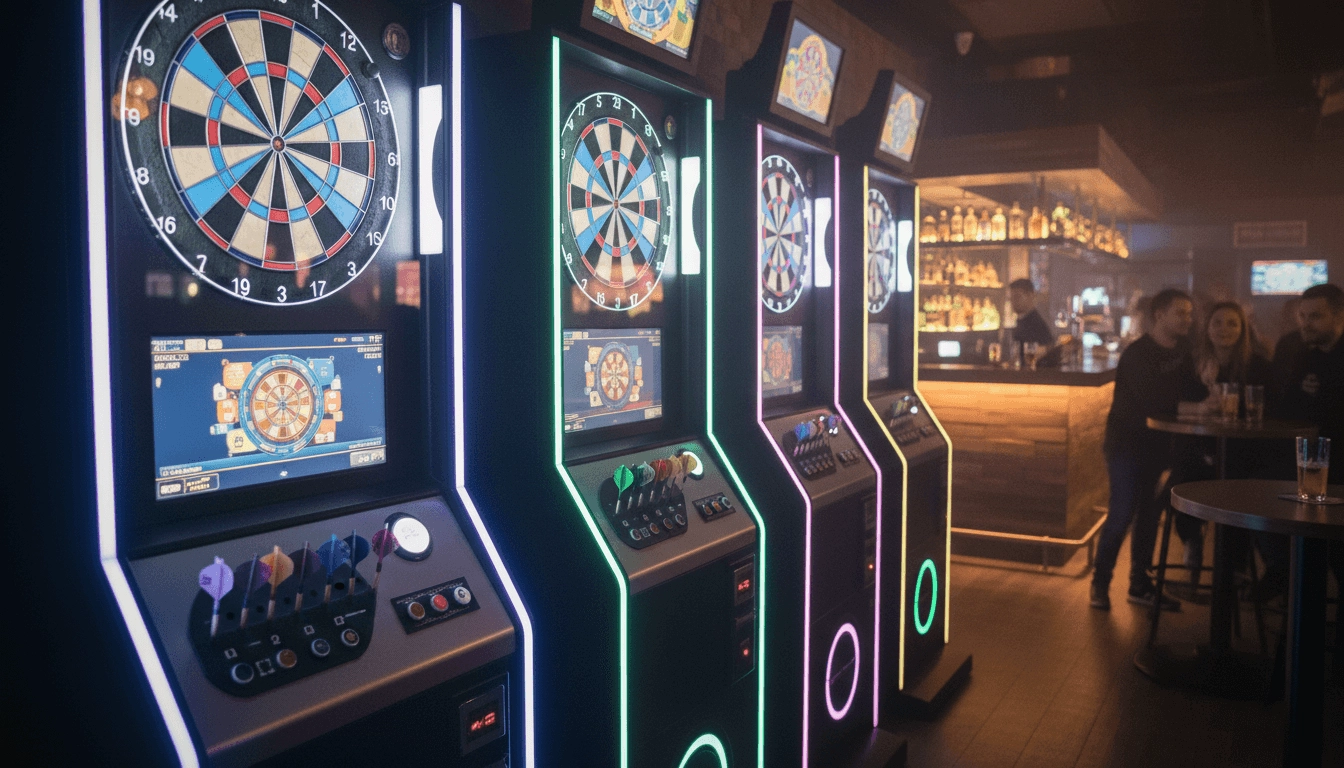
Redefining Competitive Socializing: Ultimate Guide to Selecting an Intelligent Dart Machine 2026
Tennis Simulators in 2026: The Ultimate Guide to Virtual Courts and Advanced Training

Top 15 Dart Machine Manufacturers in 2026
Holographic Light and Shadow Restaurant
What is holographic projection?
Holographic projection is a technique that utilizes the principles of interference and diffraction to record and reproduce the true three-dimensional image of an object. It records the light information of an object on a hologram, and then uses a specific light source to illuminate the hologram, so that the three-dimensional image of the object can be presented in the air, and the audience can see the realistic stereoscopic image without wearing special glasses.
Infrared Shooting
What are the after-sales services after purchasing the equipment?
Generally, a 1-year warranty is provided. During the warranty period, parts damaged due to quality problems, such as motor failure, display problems, etc., will be repaired or replaced free of charge. There will also be technical support, including equipment installation and debugging guidance, operation training, to ensure the smooth use of the user, after-sales response time is usually within 24 - 48 hours.
How often does the equipment require maintenance?
For daily use, simple monthly maintenance, such as simple cosmetic cleaning and function checking after use, is sufficient. A more comprehensive quarterly maintenance is sufficient.
Dart Machines Bar Dart Machines
How to attract customers when operating the program in shopping malls?
Create a cool venue decoration style and incorporate trendy elements, such as fluorescent light strips and anime-themed murals. o Launch diversified marketing models such as parent-child packages and couple packages, combined with time-limited promotional activities, such as half-price experience in the first three days of opening, to attract different groups of people such as families and couples to stop by and participate.
Products
How to reduce operating costs?
Starting with equipment procurement, choose cost-effective, durable and easy-to-maintain products, which can save money for subsequent maintenance. o Starting with equipment procurement, choose cost-effective, durable and easy-to-maintain products, which can save money for subsequent maintenance. Reasonable arrangement of staff, reduce the number of staff on duty during non-peak hours, train staff to have multi-skills, such as being able to operate the equipment as well as guiding customers on the side, to improve the efficiency of manpower and reduce manpower costs.
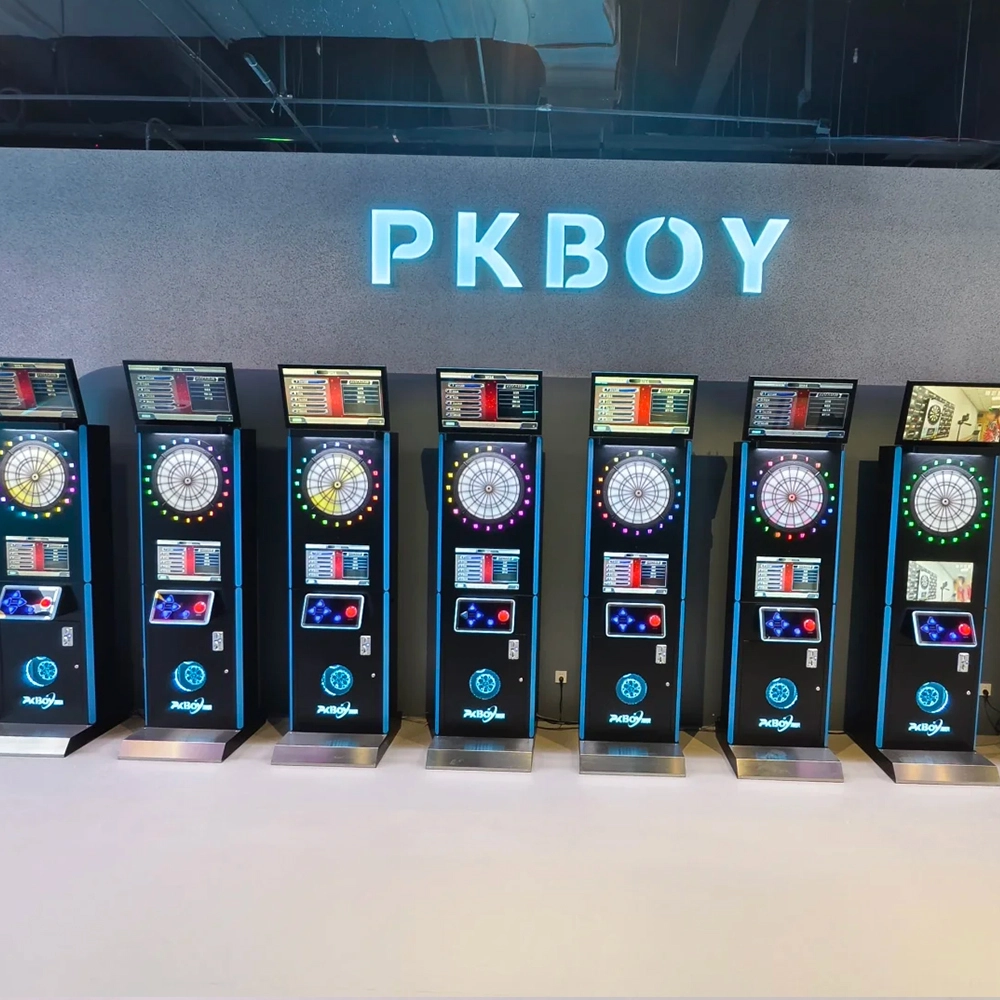
Dart Machines Bar Dart Machines
Joy Power is full of fun and excitement in the playground! The dart machine is suitable for all kinds of places, whether it is a bar, restaurant, KTV, or other entertainment venue, or a sports shop, club, or family leisure space, and can be perfectly adapted. In commercial venues, holding individual and team darts tournaments from time to time can attract more customers and increase the popularity and revenue of the venue, supplemented by various preferential activities, which can directly promote consumption and form a cycle of consumption of all the goods in the shop.
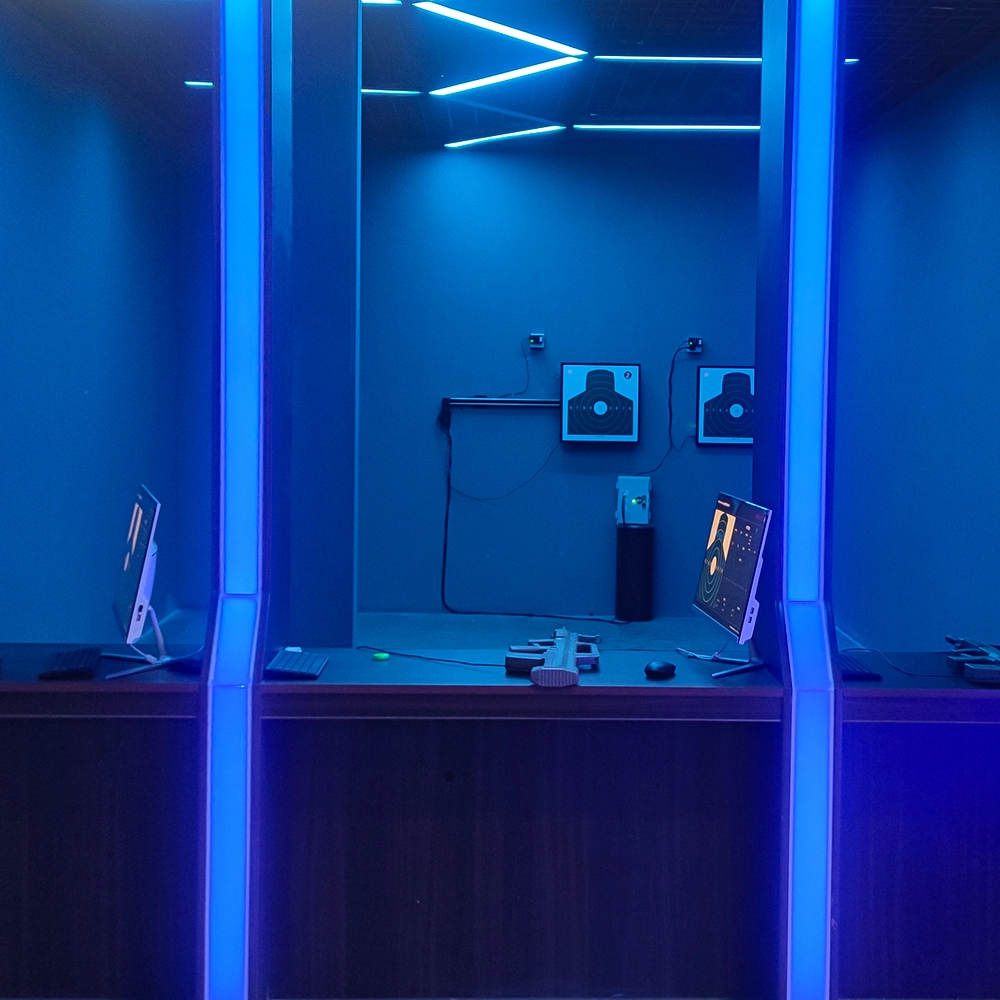
Infrared Shooting
Highly simulated simulation training analysis equipment, with advanced design concepts, fast system development, ease of operation and use, stable technical performance, less consumption of training, site dependence on a small group training is highly interesting, safe, and reliable, and other outstanding features. Product design to solve the basic skills of light weapons precision shooting as a starting point, to improve the safety of shooting training and training efficiency as the fundamental purpose, highlighting the simulation, information technology, and combat training requirements, can be in small indoor and outdoor venues and does not use live ammunition to complete the basic shooting training.
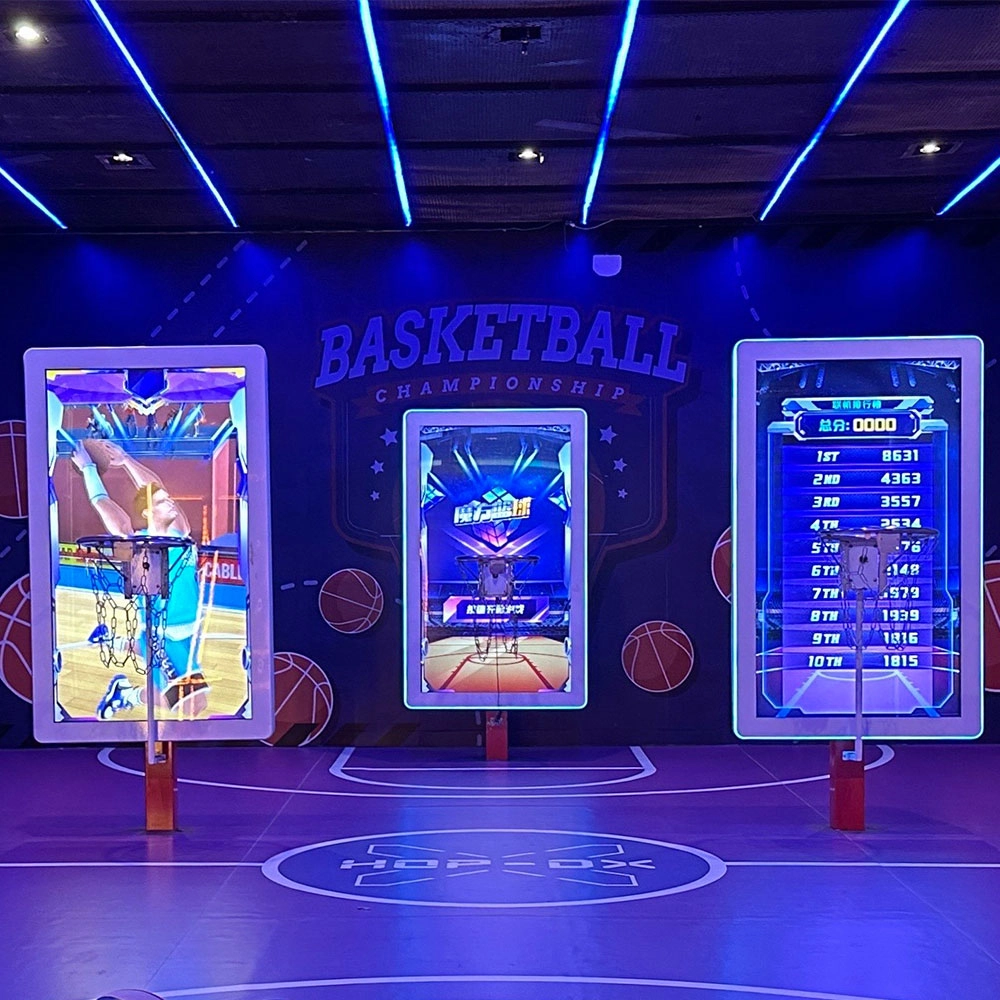
Multi-Player Interactive Shooting Machine
Joy Power is full of fun and exciting playgrounds! The basketball shooting machine is a classic amusement device integrating competition, entertainment, and interactivity. Based on the traditional basketball shooting sport, it integrates electronic scoring, sound and light effects, and challenge mechanisms to bring players an immersive game experience. The main body of the equipment is usually built with a metal frame, equipped with a standard-sized basket and a sturdy rim, with multiple sets of sensors to accurately capture the trajectory of the shot; when the player shoots the ball, the machine's built-in sensors count the score in real time and present the score, remaining time, and challenge goals through the LED display or LCD screen, with exciting sound effects and colorful lights to create a tense and exciting gaming atmosphere.
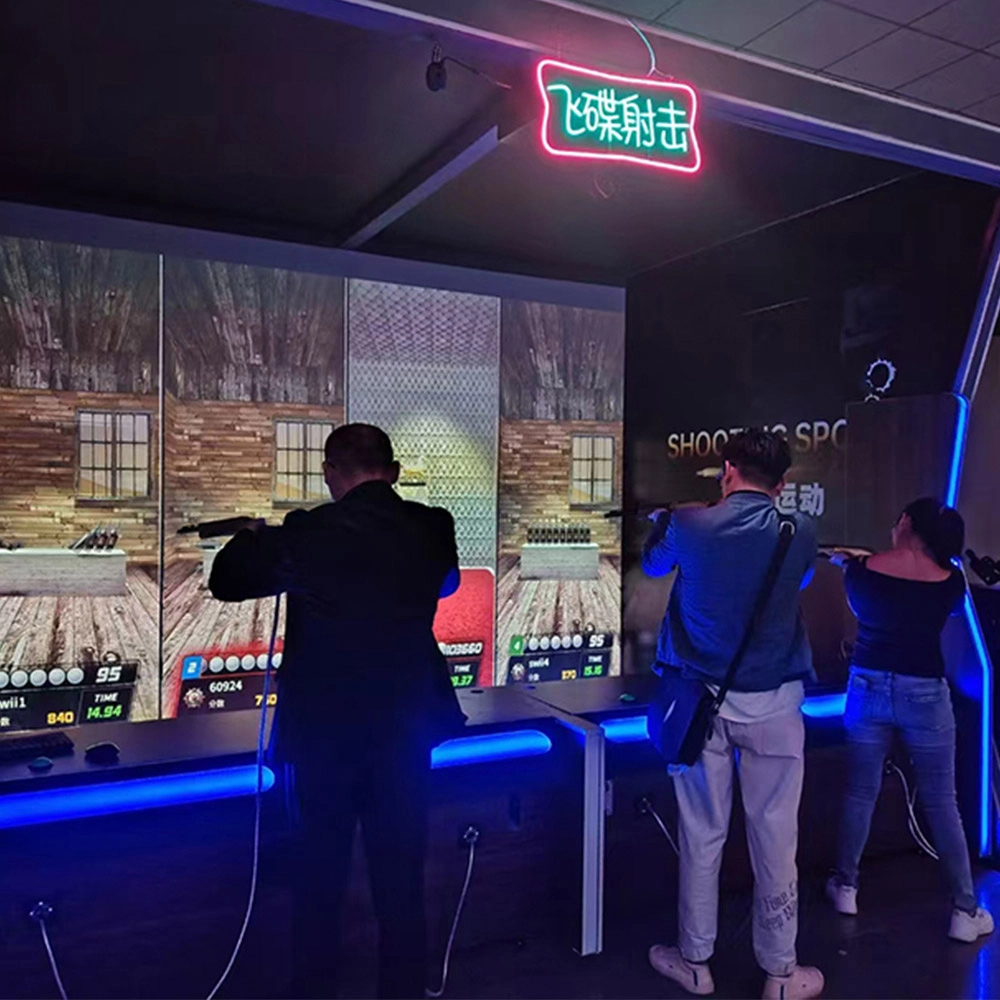
Indoor Wave Play Disc Shooting Equipment
Joy Power is full of fun and exciting playgrounds! The saucer shooting equipment in the indoor hip play hall is an immersive entertainment device integrating high-definition projection scenes, simulated air rifles, and multi-mode interactive gameplay, which allows players to experience the excitement of virtual shooting and the fun of social competition through laser-sensing scoring and multi-sensory feedback.
Ready to take your venue to the next level?
Leave us a message here, and our team will get back to you promptly.
Whether you're interested in custom orders, technical specifications, or partnership opportunities, we're here to assist you.
© 2025 FUNTECH ALL RIGHTS RESERVED

Weixia Lei
Fun_Tech-s
fun_tech20