
How to choose an arcade dart machine for sale for family venues?
- 1. How do I choose an arcade dart machine for sale that safely accommodates young children and mixed-age groups?
- 2. Which arcade dart machine for sale minimizes maintenance costs and has replaceable electronic target segments?
- 3. What are realistic warranty, support, and uptime expectations for an arcade dart machine for sale in high-traffic family venues?
- 4. How can I model ROI for an arcade dart machine for sale — what revenue per month is realistic for family entertainment centers?
- 5. Which arcade dart machine for sale provides cashless payments, player tracking, and IoT telemetry for remote monitoring?
- 6. How to decide between buying a soft-tip electronic arcade dart machine for sale and a traditional bristle/steel-tip setup for family venues?
- Concluding summary: Why a purpose-built arcade dart machine for family venues wins
How to Choose an Arcade Dart Machine for Sale for Family Venues
Buying an arcade dart machine for a family-oriented venue requires balancing safety, durability, serviceability, revenue potential and guest experience. Below are six frequently asked, pain-point-oriented questions beginners search for but often find shallow answers to. Each answer is detailed, practical and aligned with industry best practices for Digital Sports Entertainment operators.
1. How do I choose an arcade dart machine for sale that safely accommodates young children and mixed-age groups?
Safety is the top concern for family venues. To minimize risk while keeping authentic gameplay, prioritize soft-tip electronic dart machines rather than steel-tip/bristle systems. Soft-tip machines use plastic-tipped darts and an electronic target that absorbs impact and reduces injury risk. Key checks:
- Verify the machine is explicitly rated for mixed-age use by the manufacturer. Many commercial soft-tip units are designed for family entertainment centers (FECs) and list recommended age ranges.
- Look for tamper-resistant dart storage and magnetic or locked cabinets to prevent unsupervised access to darts. Integrated dart holders and lockable doors cut down on dropped or misplaced darts.
- Check compliance and certification: CE or equivalent electrical and mechanical safety standards are typical for imported arcade equipment and provide baseline reassurance. If you operate in North America, ask about UL/FCC compliant power supplies.
- Choose machines with adjustable gameplay settings that allow simplified modes for kids (larger scoring targets, automatic-assisted scoring, fewer darts per turn) and competitive modes for adults. This delivers better guest satisfaction without compromising safety.
- Consider barrier options and layout: place the machine in a supervised zone, use clear floor markings for throwing distance, and ensure adequate overhead clearance to avoid accidental hits.
Implementing these measures lets you offer authentic dart experiences while keeping younger guests safe.
2. Which arcade dart machine for sale minimizes maintenance costs and has replaceable electronic target segments?
For FECs, minimizing downtime and service costs hinges on modular design. Modern commercial electronic dartboards are built with replaceable segment modules (LED or sensor rings) so you don’t have to replace the whole target when wear occurs. When evaluating models:
- Ask the manufacturer for the modularity spec—can individual scoring segments or sensor rings be swapped out onsite? Modular PCB/LED panels are far cheaper and faster to replace than full targets.
- Request a list of spares included or available: frequently replaced parts include soft-tip darts, segment modules, power supplies, coin acceptors or cashless readers, and control boards. Ensure parts availability within 6–12 months.
- Confirm mean time between failures (MTBF) for electronics if provided, and ask for typical maintenance intervals for mechanical components (coin acceptor, doors, hinges, caster wheels).
- Prioritize machines with easy-access service panels and clear service manuals. A machine designed for front- or side-access to electronics reduces technician time, directly lowering maintenance cost.
- Consider extendable support contracts or spare-part kits at purchase. Many vendors offer 12–24 month warranties and optional service plans. For high-traffic venues, a basic spare-module kit can avoid costly downtime.
Buying with modular replacement capability and a robust spare-parts plan minimizes lifecycle costs and protects revenue.
3. What are realistic warranty, support, and uptime expectations for an arcade dart machine for sale in high-traffic family venues?
Buyers often see optimistic uptime figures in marketing materials. Realistic expectations depend on usage intensity, environment, and vendor support. Typical industry practice:
- Warranty length: Commercial-grade units commonly come with 12 to 24 month limited warranties covering manufacturing defects in electronics and cabinet structure. Extended warranties or on-site service contracts are available for purchase.
- Response and repair: For high-traffic FECs, prioritize vendors offering local or regional service partners or guaranteed parts-shipping lead times (48–72 hours for critical modules) to minimize downtime. Remote diagnostics via IoT telemetry can shorten time-to-diagnosis.
- Uptime planning: Aim for an operational uptime target of 95%+ during open hours. Achieve this by stocking critical spares (power supplies, a segment module, coin acceptor) and negotiating SLA clauses if uptime is business-critical.
- Preventive maintenance: Monthly visual checks and quarterly functional checks (score accuracy, coin acceptor calibration, cabinet integrity) reduce unexpected failures. Log incidents to identify recurring faults and address root causes.
When assessing vendors, ask for references from other family venues and documented average repair turnarounds. Realistic vendor commitments and a spare-part strategy are what deliver consistent uptime.
4. How can I model ROI for an arcade dart machine for sale — what revenue per month is realistic for family entertainment centers?
Many guides give single-point revenue claims. Better is a replicable model you adapt to your venue. Use this stepwise approach:
- Estimate foot traffic likely to try the attraction per day (T). Segmented guests: families with kids, teens, adults. For a small FEC, assume conservative 10–30 plays/day; medium venues 40–100; high-traffic centers 100+ — adjust to your location.
- Set price-per-play (P). Typical coin-operated play pricing ranges from $1 to $3 per short game; multi-game modes can be priced higher or offering 1-2 hour timed sessions at a bundled price.
- Calculate gross daily revenue: Rdaily = T × P. Monthly gross = Rdaily × operating days/month.
- Subtract operating costs: electricity (arcade dart machines are low-power, typically under 100W idle; estimate 2–5 USD/month depending on local rates and usage), maintenance/spare parts reserve (allocate 5–15% of gross revenue), and payment processing fees if using cashless (2–4%).
- Estimate net revenue and payback period: Divide total purchase cost by net monthly profit to gauge months-to-payback.
Example conservative scenario: T = 30 plays/day; P = $2; Rdaily = $60; monthly gross ≈ $1,800. If operating costs (power, maintenance reserve, fees) total 25% ≈ $450, net ≈ $1,350/month. If the machine cost (installed) is $8,000, payback ≈ 6 months. Note: these values vary by market; always run the model with your local foot-traffic and pricing assumptions.
Key levers to improve ROI: increase price-per-play for timed sessions, offer league nights/tournaments to boost repeat play, integrate the machine into party packages, and use cashless loyalty cards to encourage repeat plays.
5. Which arcade dart machine for sale provides cashless payments, player tracking, and IoT telemetry for remote monitoring?
Cashless systems and telemetry are increasingly standard in commercial arcade equipment. For a family venue, these features improve revenue capture, reduce cash handling, and enable analytics. When evaluating models:
- Cashless support: Confirm compatibility with popular cashless providers (NFC/contactless card readers, RFID loyalty cards, mobile wallet gateways). Some machines accept proprietary cards while others integrate with venue-wide systems allowing cross-attraction credit.
- Player tracking and analytics: Look for machines that can record session counts, average plays per user, peak usage times, and revenue per hour. This data helps schedule staff and optimize pricing or promotions.
- IoT telemetry: Machines with remote health reporting (error logs, door open alerts, coin acceptor jams, temperature) shorten service cycles. Ensure the vendor provides secure data protocols and clear privacy policies for player data.
- Integration APIs: If you operate a multi-attraction FEC, ask about open APIs to feed data into your POS or CRM for unified reporting and loyalty programs.
- Payment fees and uptime: Confirm transaction fees, offline operation modes (can players play if network is down?), and data retention policies.
Choosing a machine with reliable cashless and telemetry features transforms an arcade dartboard from a single paypoint into a managed revenue-generating asset with measurable KPIs.
6. How to decide between buying a soft-tip electronic arcade dart machine for sale and a traditional bristle/steel-tip setup for family venues?
This is a fundamental decision. Consider the following trade-offs:
- Safety and age suitability: Soft-tip electronic machines are better for family venues due to lower injury risk and the ability to limit gameplay rules. Steel-tip bristle boards require supervised play and are better suited to adult-only bars or dedicated leagues.
- Game variety and scoring: Electronic soft-tip machines offer multiple game modes (X01, cricket variants, team play, kids modes), automatic scoring, and multi-player configurations. Traditional bristle boards require manual scoring or external electronic scoring add-ons.
- Maintenance profile: Bristle boards are inexpensive to replace but require regular rotation and inspection; steel-tip darts can damage mats and surroundings. Electronic soft-tip systems require electronics servicing but often have modular boards to replace worn segments.
- Revenue strategy: Soft-tip electronic machines can be coin-operated or networked for cashless play and are typically easier to monetize in FECs due to automated scoring and quick turnover. Bristle boards may be better for league-driven revenue but need staff oversight to manage games.
- Experience authenticity: Some adult players prefer steel-tip/bristle for the traditional feel. If your primary audience is families and mixed-ages, soft-tip delivers safer, family-friendly gameplay while still satisfying more experienced casual players.
For a family entertainment center, the practical recommendation is a commercial-grade soft-tip electronic machine with modular targets and adjustable game modes. It balances safety, low supervision overhead, and monetization flexibility.
Concluding summary: Why a purpose-built arcade dart machine for family venues wins
Purpose-built, commercial soft-tip arcade dart machines offer the best mix of safety, durability, serviceability and revenue potential for family venues. Choose units with modular electronic target segments, optional cashless and IoT telemetry, clear warranty and spare-part support, and flexible game modes tailored to kids and adults. Proper placement, preventive maintenance and integrated promotions (parties, leagues, and loyalty) maximize uptime and ROI.
For equipment options, certifications, spare-part kits, or to request a tailored quote for an arcade dart machine for sale that fits your venue footprint and traffic profile, contact us at www.funtechgame.com or email vicky@funtechgame.com. Reach out for a personalized quote today.
7 Reasons to Add a Tennis Simulator to Your Entertainment Venue Instead of Traditional Training Models (2026 Guide)
The 2026 Dart Machine Revenue Playbook: Boosting Mid-Week Sales by 30%-40% with Competitive Socializing
Redefining Competitive Socializing: Ultimate Guide to Selecting an Intelligent Dart Machine 2026
Tennis Simulators in 2026: The Ultimate Guide to Virtual Courts and Advanced Training

Top 15 Dart Machine Manufacturers in 2026
FAQ
What is the of process of design, construction and operation of digital sports entertainment hall?
The general steps for the design, construction and operation process of a digital sports entertainment center. Each step needs to be carefully planned and executed to ensure the smooth opening and long-term development of the digital sports entertainment center.
What problems does the Digital Sports Center solve?
The Digital Sports Trendy Pavilion provides people with an innovative experience place that combines technology and sports, solving some problems existing in traditional sports activities and amusement facilities, while also meeting modern people's needs for digital technology and dynamic experience.
Holographic Light and Shadow Restaurant
What is holographic projection?
Holographic projection is a technique that utilizes the principles of interference and diffraction to record and reproduce the true three-dimensional image of an object. It records the light information of an object on a hologram, and then uses a specific light source to illuminate the hologram, so that the three-dimensional image of the object can be presented in the air, and the audience can see the realistic stereoscopic image without wearing special glasses.
Products
What is the difference between purchasing equipment for commercial operations and personal training?
Commercial operations should consider the durability, ease of operation and attractiveness of the equipment, it is appropriate to choose cool appearance, can withstand high-frequency use, such as the target car running hundreds of times a day, high-intensity models, and easy to operate, easy for customers to get started. Personal training is more focused on cost-effective, according to their own training needs to choose the right tension of the bow, the right speed of movement of the target car.
Infrared Shooting
Why are sports arcades a hot spot for investment?
The traditional entertainment market (e.g., arcade, KTV) has become less attractive to generations, while digital hip playgrounds integrating technology, sports, and socialization are more in line with young people's needs, and the market size has exceeded 50 billion in 2023, with an annual growth rate of more than 30%.
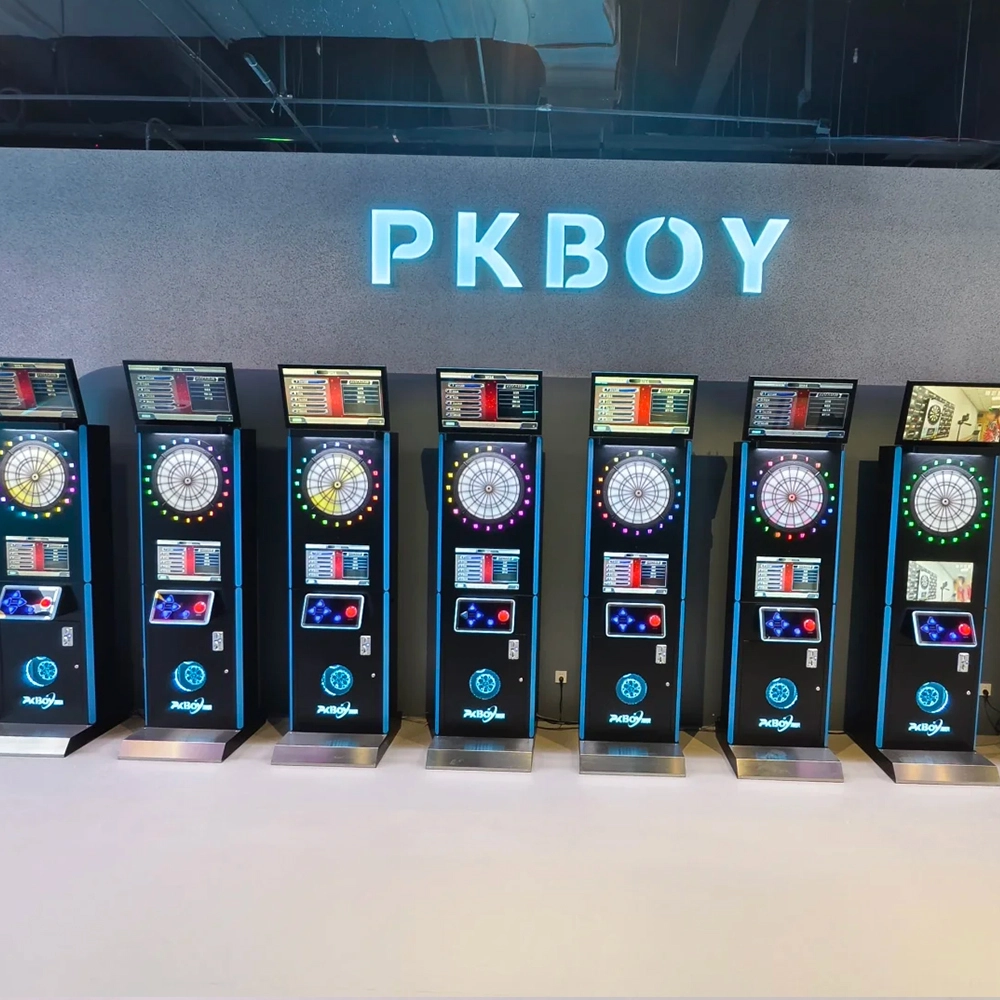
Dart Machines Bar Dart Machines
Joy Power is full of fun and excitement in the playground! The dart machine is suitable for all kinds of places, whether it is a bar, restaurant, KTV, or other entertainment venue, or a sports shop, club, or family leisure space, and can be perfectly adapted. In commercial venues, holding individual and team darts tournaments from time to time can attract more customers and increase the popularity and revenue of the venue, supplemented by various preferential activities, which can directly promote consumption and form a cycle of consumption of all the goods in the shop.
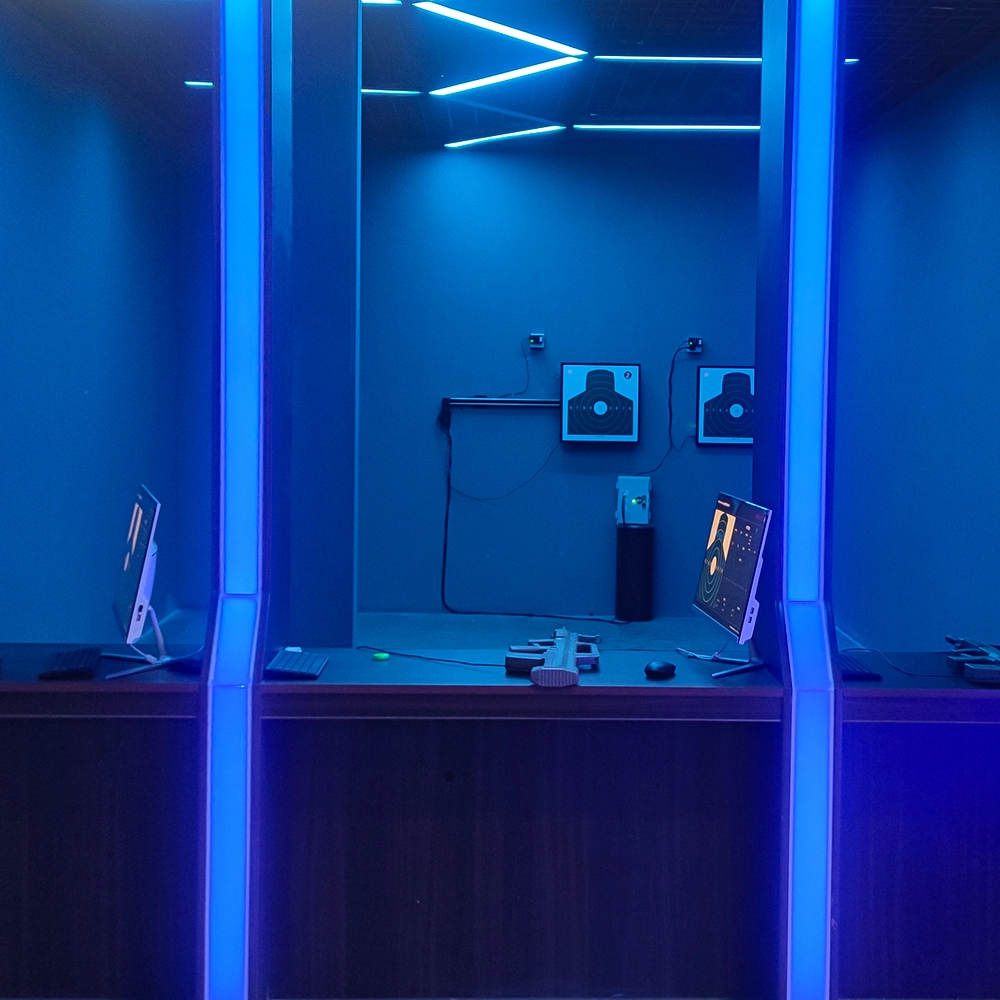
Infrared Shooting
Highly simulated simulation training analysis equipment, with advanced design concepts, fast system development, ease of operation and use, stable technical performance, less consumption of training, site dependence on a small group training is highly interesting, safe, and reliable, and other outstanding features. Product design to solve the basic skills of light weapons precision shooting as a starting point, to improve the safety of shooting training and training efficiency as the fundamental purpose, highlighting the simulation, information technology, and combat training requirements, can be in small indoor and outdoor venues and does not use live ammunition to complete the basic shooting training.
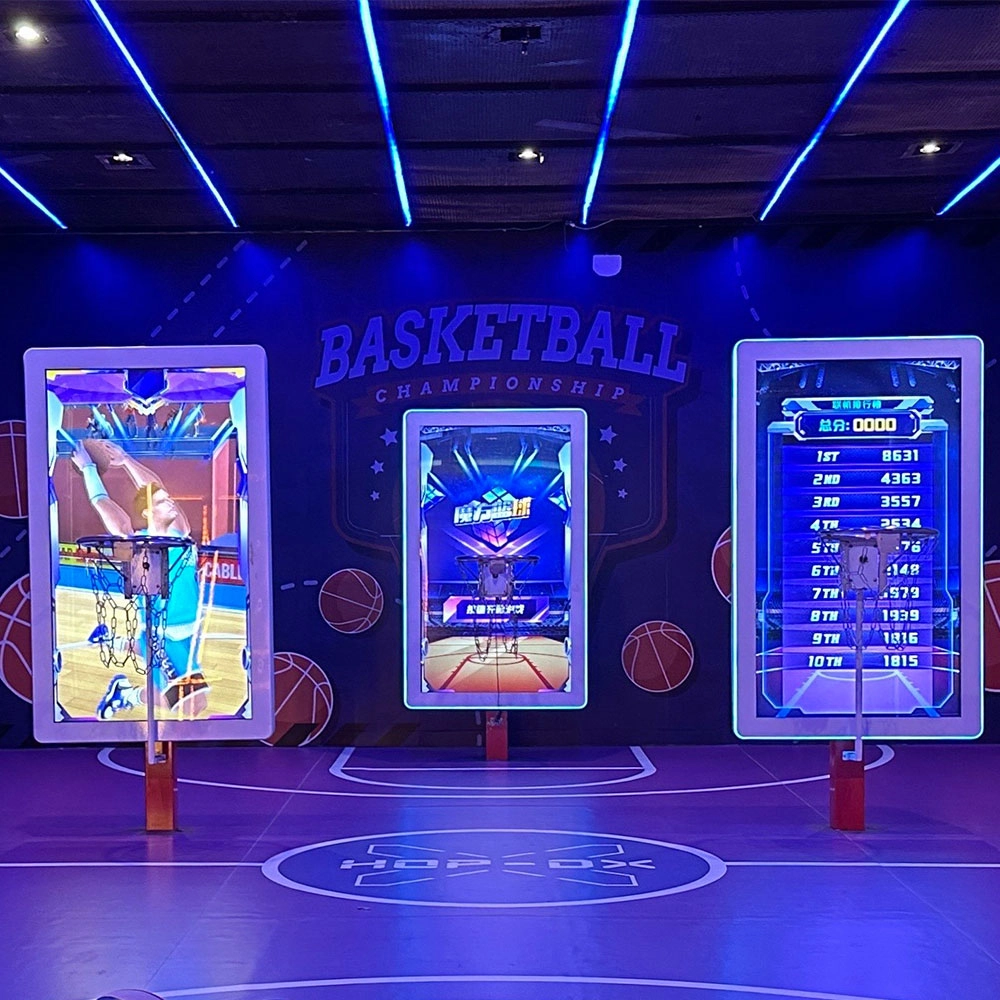
Multi-Player Interactive Shooting Machine
Joy Power is full of fun and exciting playgrounds! The basketball shooting machine is a classic amusement device integrating competition, entertainment, and interactivity. Based on the traditional basketball shooting sport, it integrates electronic scoring, sound and light effects, and challenge mechanisms to bring players an immersive game experience. The main body of the equipment is usually built with a metal frame, equipped with a standard-sized basket and a sturdy rim, with multiple sets of sensors to accurately capture the trajectory of the shot; when the player shoots the ball, the machine's built-in sensors count the score in real time and present the score, remaining time, and challenge goals through the LED display or LCD screen, with exciting sound effects and colorful lights to create a tense and exciting gaming atmosphere.
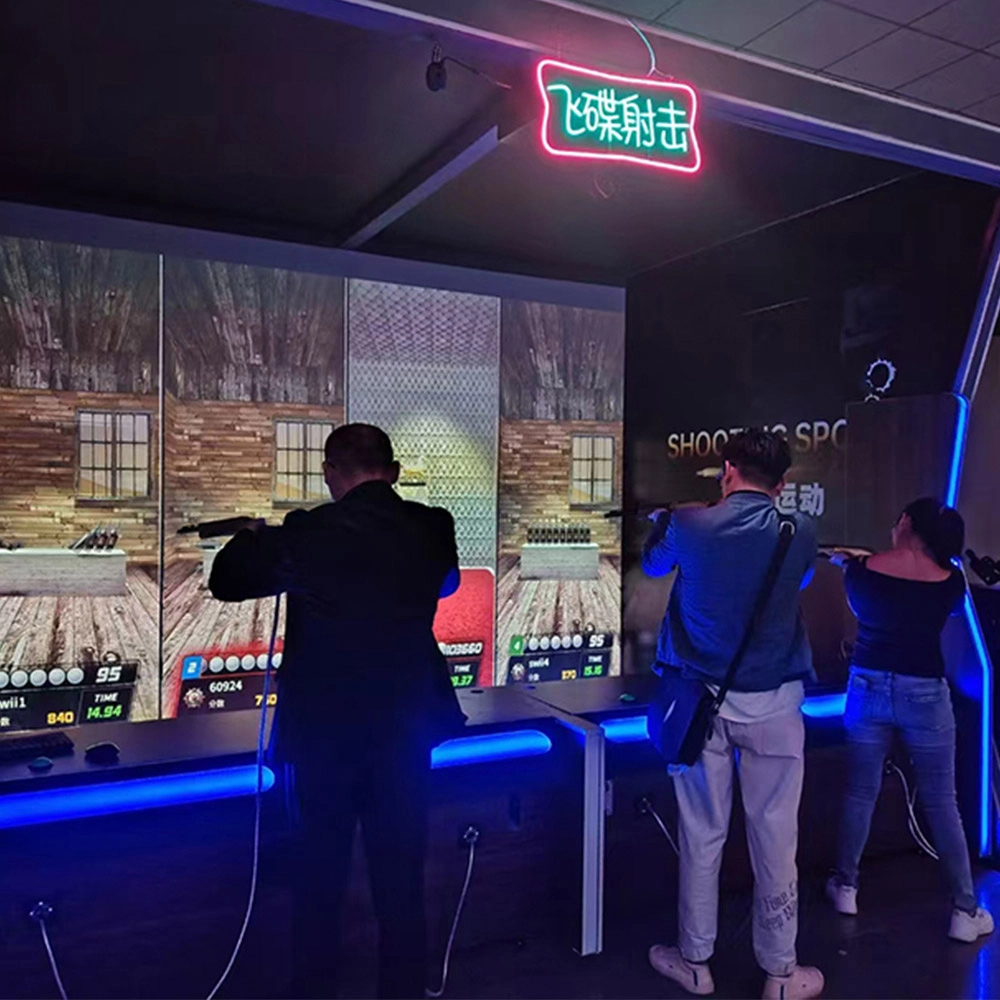
Indoor Wave Play Disc Shooting Equipment
Joy Power is full of fun and exciting playgrounds! The saucer shooting equipment in the indoor hip play hall is an immersive entertainment device integrating high-definition projection scenes, simulated air rifles, and multi-mode interactive gameplay, which allows players to experience the excitement of virtual shooting and the fun of social competition through laser-sensing scoring and multi-sensory feedback.
Ready to take your venue to the next level?
Leave us a message here, and our team will get back to you promptly.
Whether you're interested in custom orders, technical specifications, or partnership opportunities, we're here to assist you.
© 2025 FUNTECH ALL RIGHTS RESERVED

Weixia Lei
Fun_Tech-s
fun_tech20