
Do arcade dart machines for sale support mobile app integration?
- 1. How do I verify that an arcade dart machine for sale truly supports mobile app integration (not just a marketing claim)?
- 2. Do arcade dart machines for sale support third‑party platforms (DartConnect, Dartslive) and what are the typical licensing or subscription costs?
- 3. What are the real operational limitations of mobile app integration in a busy pub environment (connectivity, latency, and multi‑player handling)?
- 4. How do I evaluate security, privacy, and regulatory compliance for mobile‑connected dart cabinets (data retention, GDPR, FCC/CE)?
- 5. What service, spare parts, and software update commitments should be in the contract for a commercial electronic dartboard?
- 6. How do I calculate realistic ROI for an arcade dart machine for sale that advertises mobile app features and cloud tournaments?
- Concluding summary: Advantages of buying an arcade dart machine with robust mobile app integration
Arcade Dart Machine for Sale: Mobile App Integration & Buying Guide
Buying a commercial arcade dart machine requires more than comparing prices. Operators increasingly want mobile app integration, cloud leaderboards, and reliable service. Below are six specific, pain‑oriented questions beginners ask—each with detailed, actionable answers to help with procurement, integration, and operations.
1. How do I verify that an arcade dart machine for sale truly supports mobile app integration (not just a marketing claim)?
Why this matters: Vendors often advertise “app support” but that can mean anything from a simple score display to a full two‑way SDK integration with cloud leaderboards. To verify real mobile integration, request three concrete artifacts before purchase:
- Technical integration spec: Ask for the machine’s API/SDK documentation, Bluetooth Low Energy (BLE) or Wi‑Fi protocol details, and supported mobile platforms (iOS/Android/web). A real integration will include message payload examples, authentication flow, and error states.
- Live demo or test unit: Request a live demo where you pair a device, launch a match, and simulate network loss. Insist on testing matchmaking, score sync, and reconnection behavior. If the vendor can’t demo reconnection and data integrity, treat the claim cautiously.
- References & case studies: Ask for operator references who use the app integration in production (preferably in the same region). Contact them and ask about uptime, latency, and how often vendor firmware updates broke the mobile connection.
Common red flags: “App coming soon,” white‑label screenshots without API docs, or a claim that functionality requires a paid third‑party subscription with no details. Real integrations name the technology (e.g., DartConnect, Dartslive, Bluetooth LE, WebSocket over Wi‑Fi) and provide pairing/user flows and developer docs.
2. Do arcade dart machines for sale support third‑party platforms (DartConnect, Dartslive) and what are the typical licensing or subscription costs?
Why this matters: Third‑party platforms provide proven cloud scoring, online matchmaking, and player accounts. Using them avoids reinventing the wheel but introduces recurring costs and potential vendor lock‑in.
What to check:
- Platform compatibility: Confirm the exact platform names the cabinet supports (e.g., DartConnect, Dartslive, Phoenix Network). Many commercial electronic dart cabinets support one or more of these services; others offer proprietary cloud services.
- Licensing model: Ask whether the third‑party service requires a per‑machine subscription, per‑location fee, or per‑player charge. Some platforms charge annual service fees per cabinet; others offer revenue‑share models for tournament hosting.
- Inclusions and limits: Determine what the subscription covers—leaderboards, match history, remote firmware updates, anti‑cheat features, or tournament management. Verify monthly active user limits or API call quotas if exposed.
- Data ownership & portability: Verify who owns match data and player profiles. If you change vendors later, will player histories and leaderboards port out via an export API?
Practical tip: If a vendor cannot provide clear subscription pricing or names of supported platforms, get that in writing in your purchase contract to avoid surprise operating costs.
3. What are the real operational limitations of mobile app integration in a busy pub environment (connectivity, latency, and multi‑player handling)?
Why this matters: Mobile integration that works in a quiet showroom can fail in a noisy, high‑density venue where many players try to connect at once.
Key operational considerations:
- Wireless environment: Bluetooth LE is common for pairing single devices. It’s robust for local control but limited for multi‑device tournaments. Wi‑Fi or Ethernet with WebSocket connections scale better for simultaneous players and cloud play.
- Latency and UX: Real‑time scoring requires sub‑second latency to remain usable. Ask the vendor for measured latency figures (round‑trip time from dart hit to mobile display) and test under load—10–30 concurrent mobile clients per location is reasonable for busy venues.
- Session persistence: Ensure the system handles dropped connections gracefully—score syncing, auto‑reconnect, and conflict resolution. A good system will queue local events and reconcile with the cloud once reconnected.
- Multi‑user flows: Tournament and league modes need robust session management—joining by QR code, PIN or NFC is far superior to manual entry. Confirm how players switch devices mid‑match and whether the board supports simultaneous multi‑board tournaments.
Operational testing checklist: perform peak‑load tests, simulate spotty Wi‑Fi, and verify how the system reports errors to staff. If possible, insist on an acceptance test clause in your contract covering connectivity and load handling.
4. How do I evaluate security, privacy, and regulatory compliance for mobile‑connected dart cabinets (data retention, GDPR, FCC/CE)?
Why this matters: Mobile integration introduces user data concerns (accounts, emails, player stats) and regulatory obligations varying by region.
Verification steps:
- Certifications: For electronics sold in your market, request proof of CE (EU) and FCC (US) compliance certificates as applicable. This ensures electromagnetic compatibility and safety standards are met.
- Data protection: Ask for the vendor’s privacy policy and data processing addendum. For EU customers, confirm GDPR compliance and location of data hosting. For California, check CCPA considerations. A responsible vendor will provide details on retention, deletion, and export of player data.
- Authentication & encryption: Confirm transport encryption (TLS for cloud connections) and whether device pairing uses secure token exchange rather than unencrypted Bluetooth pairing. Also ask about firmware signing to prevent unauthorized firmware installs.
- Payment & cashless: If the machine supports cashless payments (EMV or QR payment), verify PCI‑DSS compliance requirements and ask who is the payment processor and who stores card data.
Don’t accept vague assurances—require documentation and include compliance checkpoints in your purchase order.
5. What service, spare parts, and software update commitments should be in the contract for a commercial electronic dartboard?
Why this matters: Arcade machines are long‑lived assets. Lack of spare parts or firmware updates can kill uptime and revenue.
p>Contract items to demand:
- Warranty & SLA: Define a clear warranty period (parts and labor), response times for on‑site service, and service level agreements (SLA) for downtime. For coin‑operated cabinets, uptime matters—specify credits or penalties for missed SLA targets.
- Spare parts availability: Ask for guaranteed availability windows for consumables (LED modules, sensors, power supplies) and non‑consumables (PCBs, network modules). Request parts pricing tiers for 1, 3, and 5 years post‑purchase.
- Software maintenance: Clarify how firmware and app updates are handled: frequency, testing, whether updates are automatic, and rollback procedures if an update breaks functionality.
- Local support partners: Find out whether the vendor has certified local technicians or authorized service partners in your region to minimize shipping delays and customs headaches.
Negotiation tip: Include spare parts kits with the initial shipment and consider an optional extended warranty or support plan to guarantee timely replacements and software patches.
6. How do I calculate realistic ROI for an arcade dart machine for sale that advertises mobile app features and cloud tournaments?
Why this matters: Mobile features can drive engagement but also increase subscription and maintenance costs. A realistic ROI model helps decide if the High Quality is justified.
Steps to build your ROI model:
- Baseline costs: Include purchase price, shipping, import duties, installation, and any immediate spare parts kit. Add recurring costs such as platform subscription fees (if using services like DartConnect), internet connectivity, and support contracts.
- Revenue streams: Account for pay‑per‑play fees, admission/tournament entry fees, sponsor/advertising revenue (digital displays), food & beverage lift, and increased dwell time that can lead to ancillary spending. Mobile app features can command higher entry fees for tournaments or league play.
- Utilization assumptions: Estimate daily plays by time of day and day of week. For example, use conservative and optimistic scenarios (e.g., 20 plays/day vs. 60 plays/day) and consider seasonal variations.
- Downtime and operating costs: Factor in average downtime (from vendor SLA and historical operator feedback), replacement part costs, and staff time for management. Subtract subscription fees for cloud services and transaction fees for cashless payments.
- Payback calculation: Use a 3–5 year horizon for physical cabinets. The break‑even point is when cumulative net revenue equals total cost of ownership. Present scenarios (pessimistic, likely, optimistic) to stakeholders rather than a single number.
Example approach (without fabricated numbers): Gather local benchmarks—ask other venue owners for average plays/day for similar attractions or request vendor‑provided usage stats from reference sites. Use those real inputs to run your sensitivity analysis.
Concluding summary: Advantages of buying an arcade dart machine with robust mobile app integration
Well‑implemented mobile integration (Bluetooth, Wi‑Fi, or cloud APIs) adds measurable value: improved guest engagement via mobile leaderboards, easier tournament management and league play, longer dwell times that increase ancillary spend, and new revenue from entry fees and digital sponsorship. However, the benefits depend on picking a cabinet with documented SDK/API support, clear third‑party platform compatibility (DartConnect, Dartslive, Phoenix Network or vendor cloud), transparent subscription pricing, strong service commitments, and regional compliance (CE/FCC and data protection). Operators should require demos, API docs, and references before purchase and include SLAs for uptime and spare parts in the contract.
For an informed quote and to review available commercial electronic dartboard models, integration options, and service plans, contact us at www.funtechgame.com or email vicky@funtechgame.com for a tailored proposal.
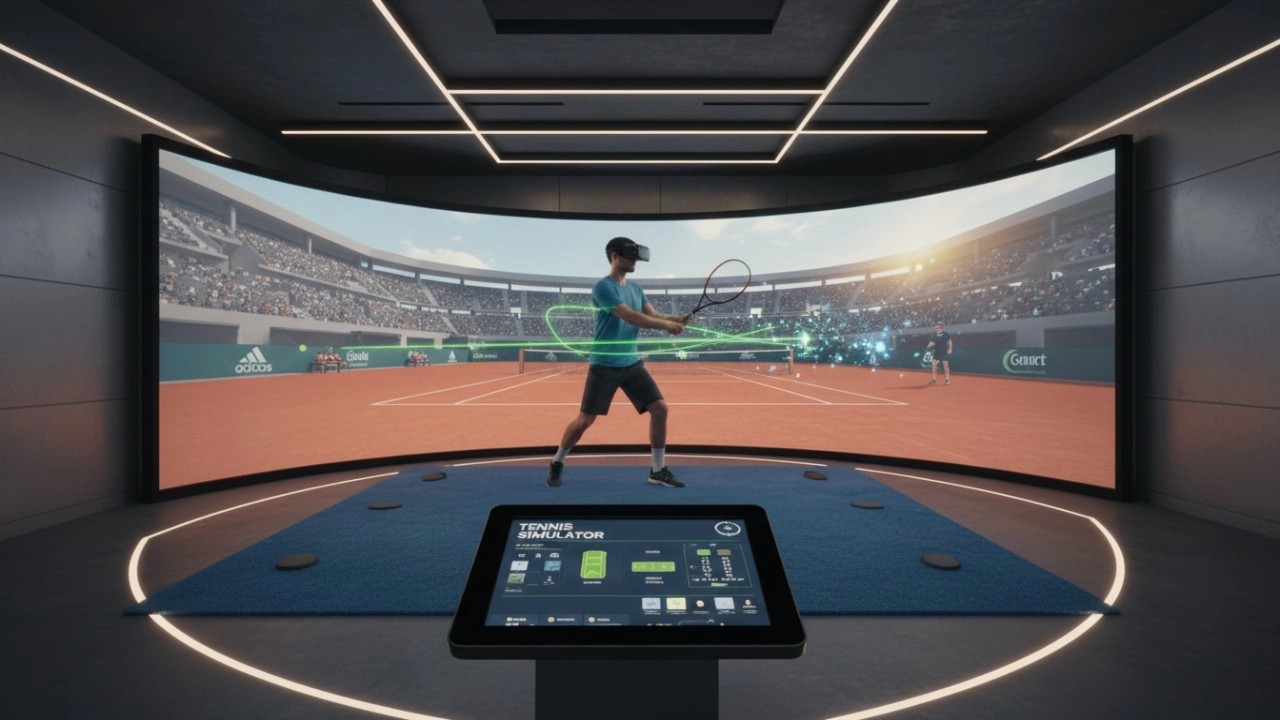
7 Reasons to Add a Tennis Simulator to Your Entertainment Venue Instead of Traditional Training Models (2026 Guide)
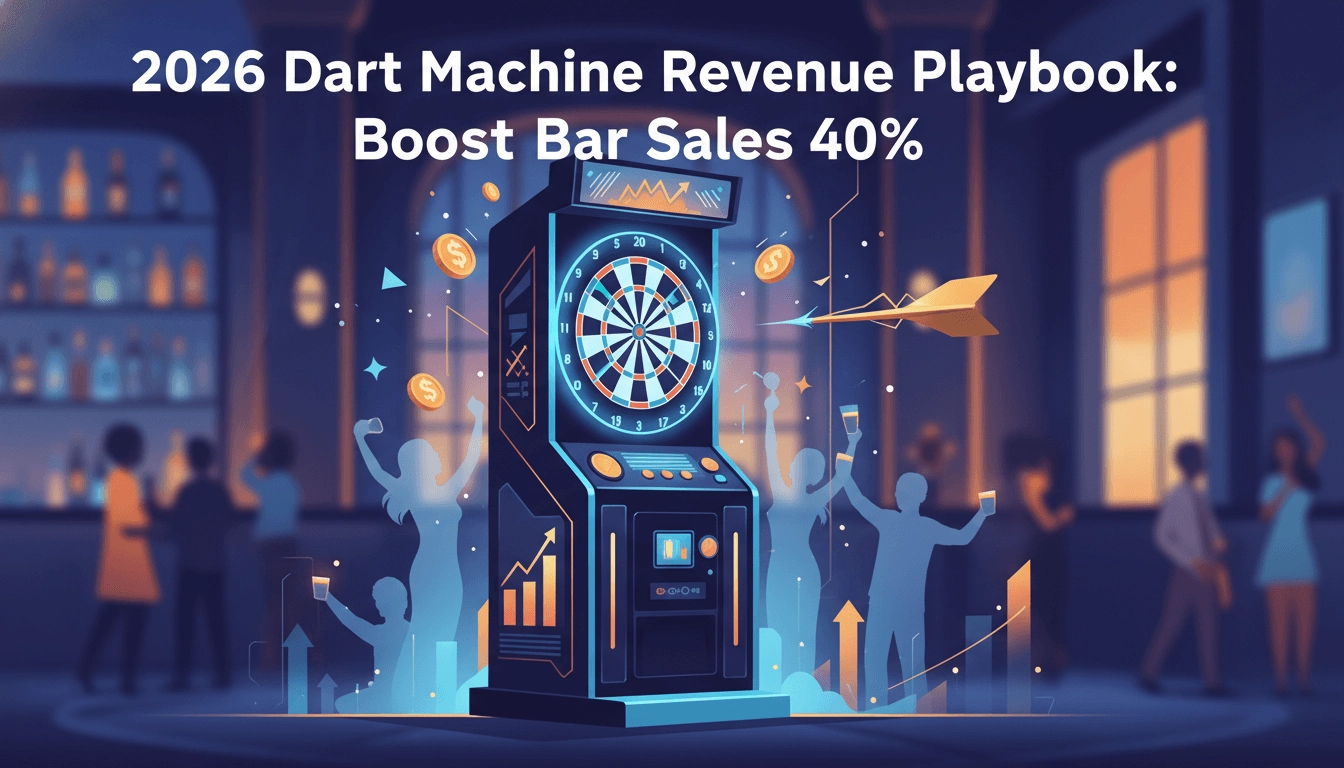
The 2026 Dart Machine Revenue Playbook: Boosting Mid-Week Sales by 30%-40% with Competitive Socializing
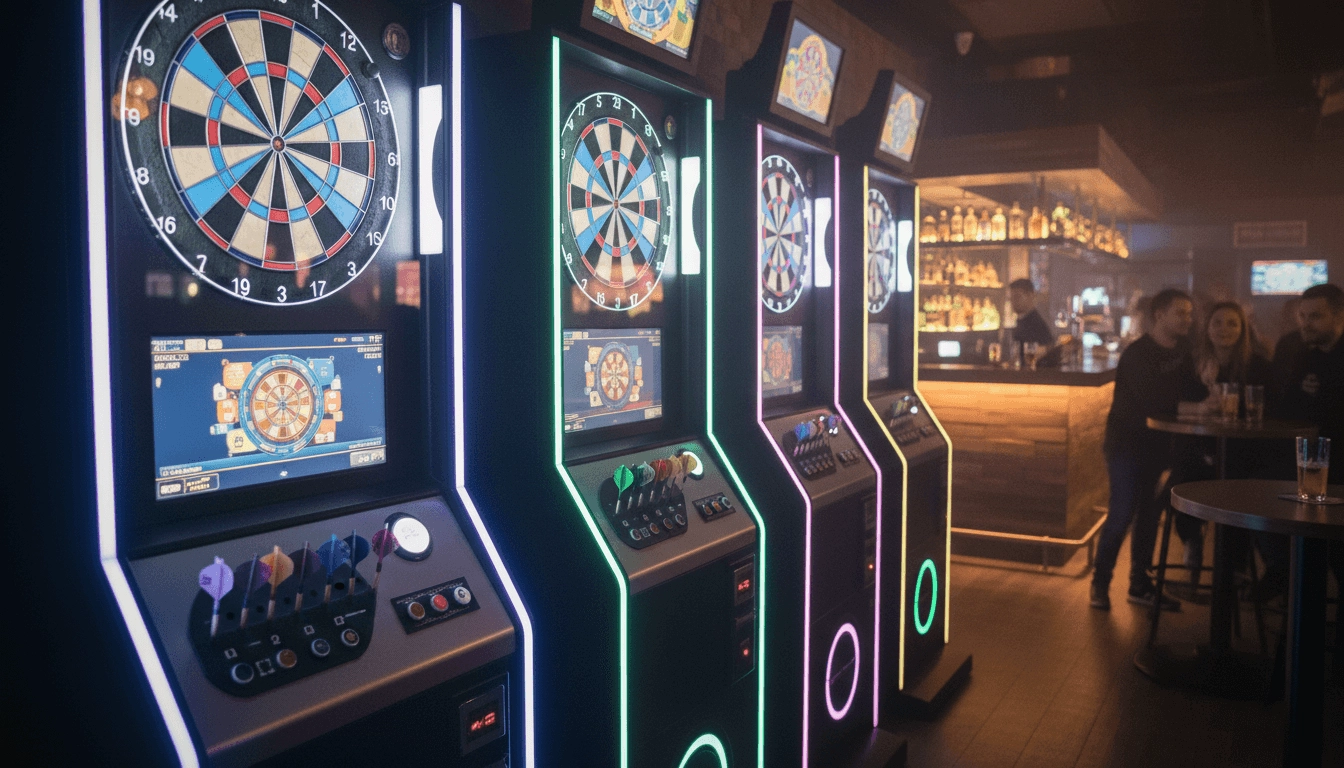
Redefining Competitive Socializing: Ultimate Guide to Selecting an Intelligent Dart Machine 2026
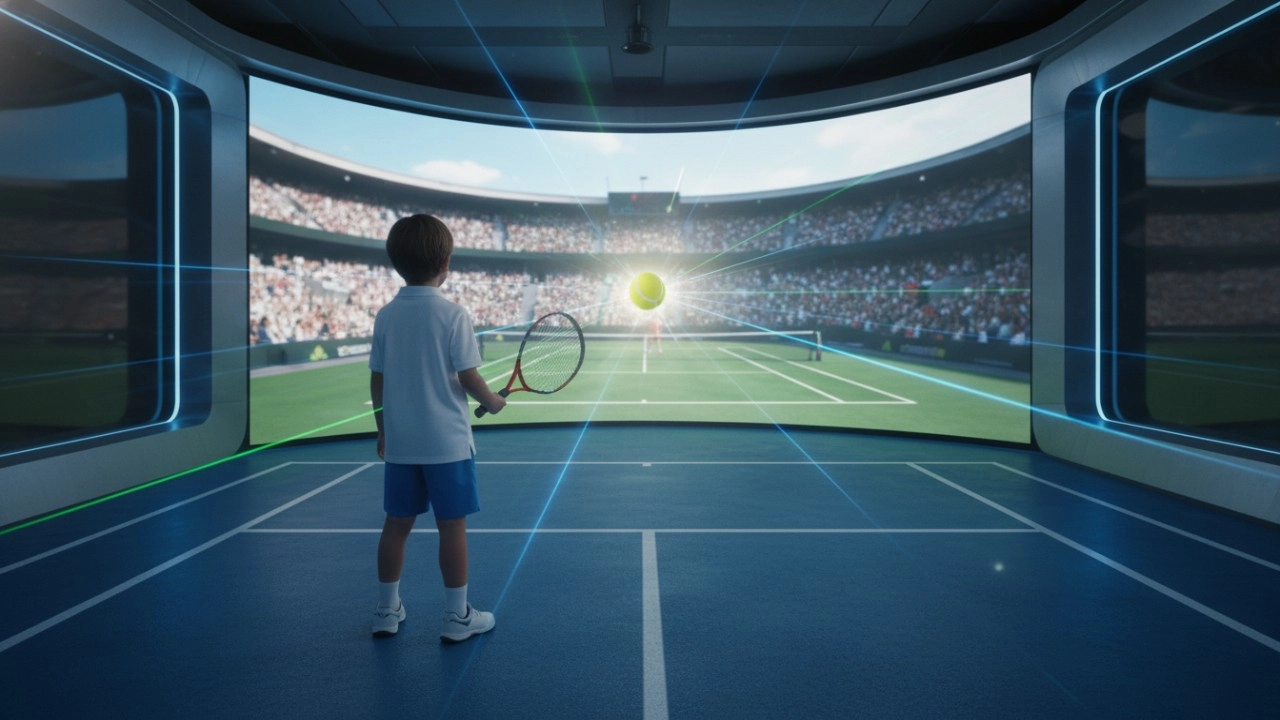
Tennis Simulators in 2026: The Ultimate Guide to Virtual Courts and Advanced Training

Top 15 Dart Machine Manufacturers in 2026
Products
What is the difference between purchasing equipment for commercial operations and personal training?
Commercial operations should consider the durability, ease of operation and attractiveness of the equipment, it is appropriate to choose cool appearance, can withstand high-frequency use, such as the target car running hundreds of times a day, high-intensity models, and easy to operate, easy for customers to get started. Personal training is more focused on cost-effective, according to their own training needs to choose the right tension of the bow, the right speed of movement of the target car.
What are the after-sales services after purchasing the equipment?
Generally, a 1-year warranty is provided. During the warranty period, parts damaged due to quality problems, such as motor failure, display problems, etc., will be repaired or replaced free of charge. There will also be technical support, including equipment installation and debugging guidance, operation training, to ensure the smooth use of the user, after-sales response time is usually within 24 - 48 hours.
Holographic Light and Shadow Restaurant
What is holographic projection?
Holographic projection is a technique that utilizes the principles of interference and diffraction to record and reproduce the true three-dimensional image of an object. It records the light information of an object on a hologram, and then uses a specific light source to illuminate the hologram, so that the three-dimensional image of the object can be presented in the air, and the audience can see the realistic stereoscopic image without wearing special glasses.
Infrared Shooting
How to reduce operating costs?
Starting with equipment procurement, choose cost-effective, durable and easy-to-maintain products, which can save money for subsequent maintenance. Reasonable arrangement of staff, reduce the number of staff on duty during off-peak hours, train staff to have multi-skills, such as being able to operate the equipment and guide customers part-time, so as to improve the efficiency of manpower and reduce the cost of manpower.
Interactive Rollerball
How to reduce operating costs?
Starting with equipment procurement, choose cost-effective, durable and easy-to-maintain products, which can save money for subsequent maintenance. Reasonable arrangement of staff, reduce the number of staff on duty during off-peak hours, train staff to have multi-skills, such as being able to operate the equipment and guide customers part-time, so as to improve the efficiency of manpower and reduce the cost of manpower.
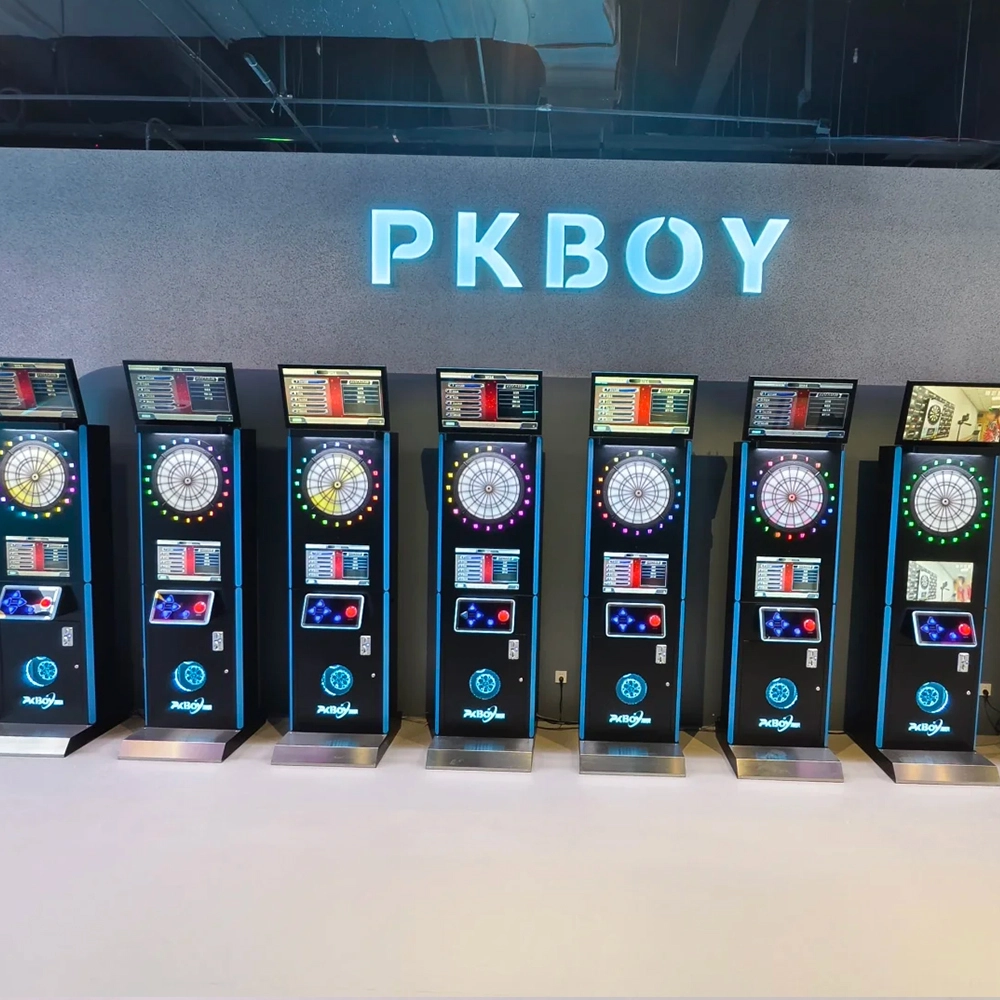
Dart Machines Bar Dart Machines
Joy Power is full of fun and excitement in the playground! The dart machine is suitable for all kinds of places, whether it is a bar, restaurant, KTV, or other entertainment venue, or a sports shop, club, or family leisure space, and can be perfectly adapted. In commercial venues, holding individual and team darts tournaments from time to time can attract more customers and increase the popularity and revenue of the venue, supplemented by various preferential activities, which can directly promote consumption and form a cycle of consumption of all the goods in the shop.
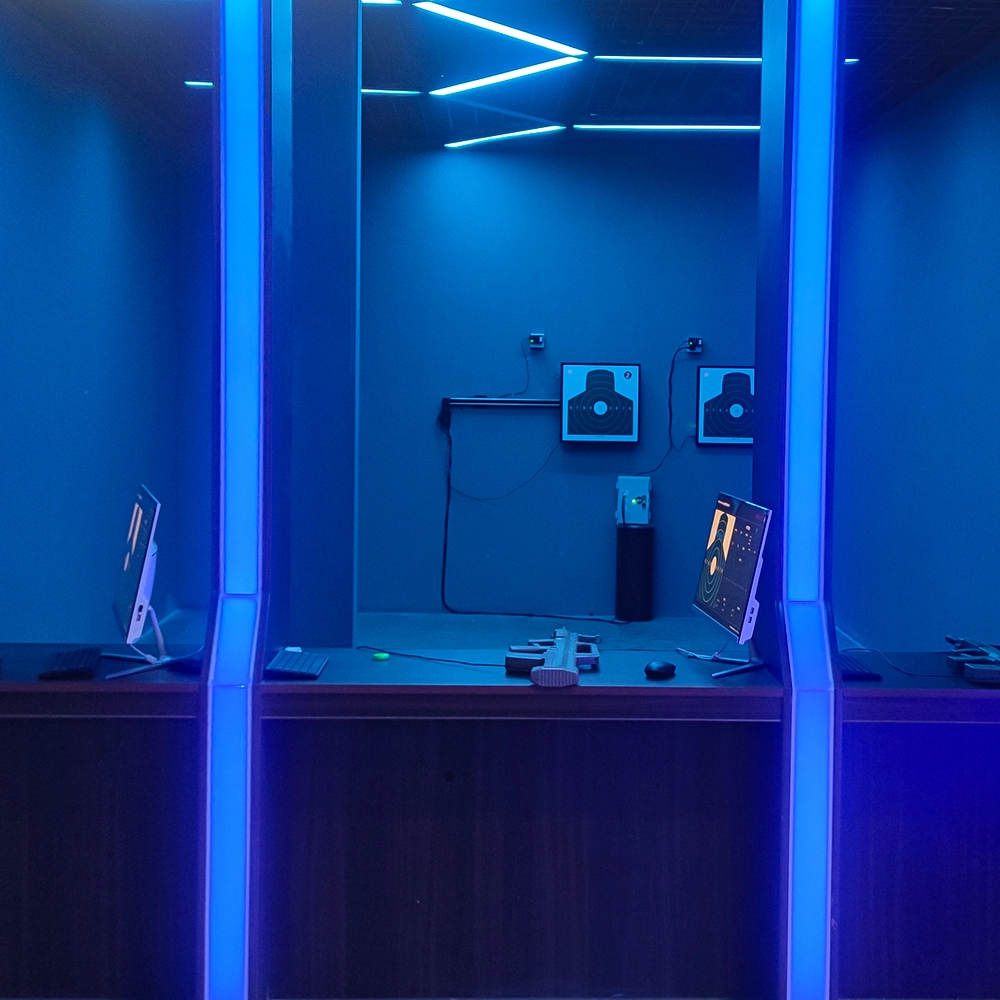
Infrared Shooting
Highly simulated simulation training analysis equipment, with advanced design concepts, fast system development, ease of operation and use, stable technical performance, less consumption of training, site dependence on a small group training is highly interesting, safe, and reliable, and other outstanding features. Product design to solve the basic skills of light weapons precision shooting as a starting point, to improve the safety of shooting training and training efficiency as the fundamental purpose, highlighting the simulation, information technology, and combat training requirements, can be in small indoor and outdoor venues and does not use live ammunition to complete the basic shooting training.
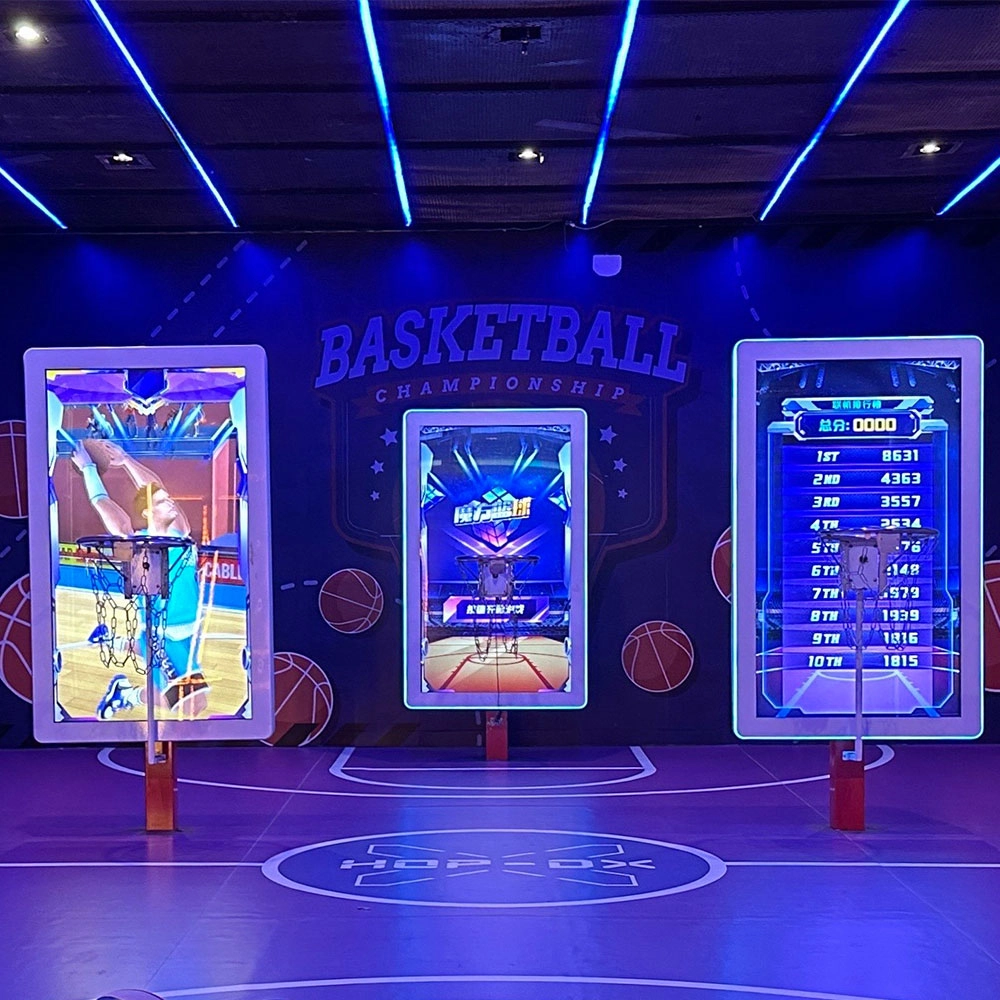
Multi-Player Interactive Shooting Machine
Joy Power is full of fun and exciting playgrounds! The basketball shooting machine is a classic amusement device integrating competition, entertainment, and interactivity. Based on the traditional basketball shooting sport, it integrates electronic scoring, sound and light effects, and challenge mechanisms to bring players an immersive game experience. The main body of the equipment is usually built with a metal frame, equipped with a standard-sized basket and a sturdy rim, with multiple sets of sensors to accurately capture the trajectory of the shot; when the player shoots the ball, the machine's built-in sensors count the score in real time and present the score, remaining time, and challenge goals through the LED display or LCD screen, with exciting sound effects and colorful lights to create a tense and exciting gaming atmosphere.
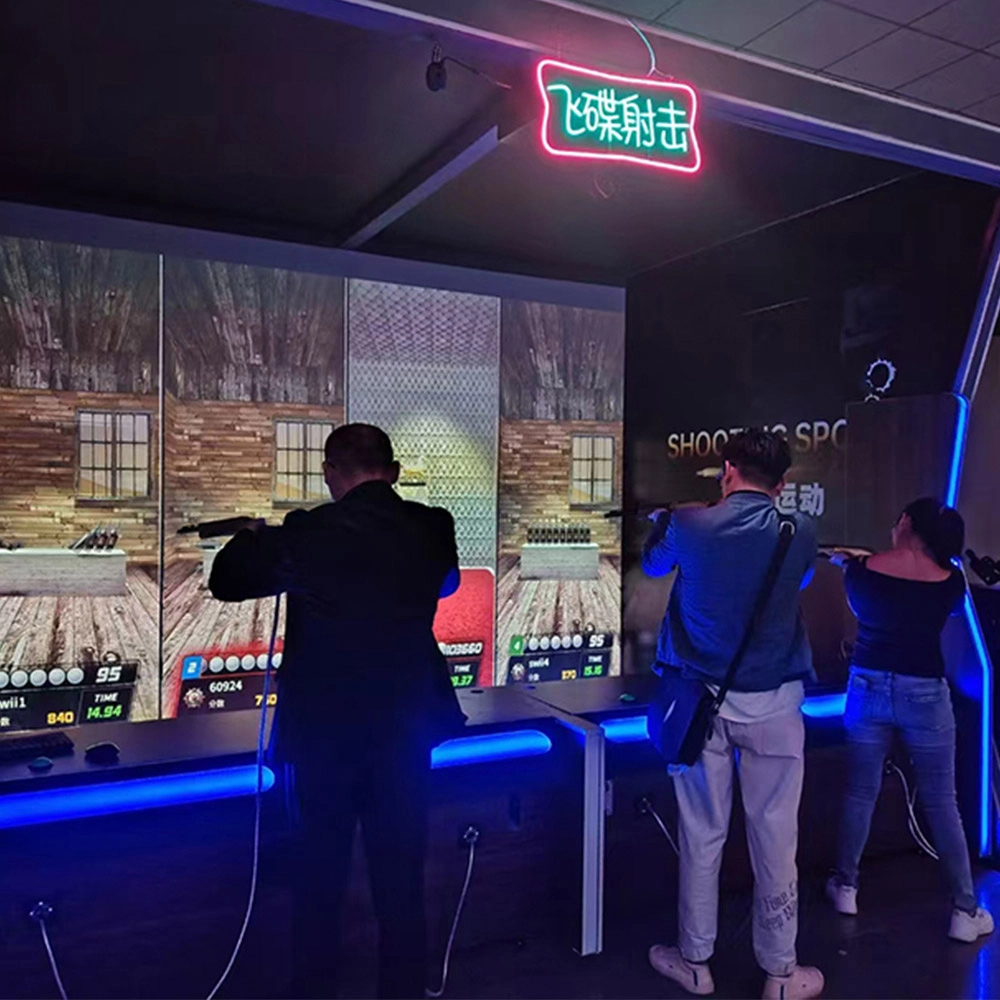
Indoor Wave Play Disc Shooting Equipment
Joy Power is full of fun and exciting playgrounds! The saucer shooting equipment in the indoor hip play hall is an immersive entertainment device integrating high-definition projection scenes, simulated air rifles, and multi-mode interactive gameplay, which allows players to experience the excitement of virtual shooting and the fun of social competition through laser-sensing scoring and multi-sensory feedback.
Ready to take your venue to the next level?
Leave us a message here, and our team will get back to you promptly.
Whether you're interested in custom orders, technical specifications, or partnership opportunities, we're here to assist you.
© 2025 FUNTECH ALL RIGHTS RESERVED

Weixia Lei
Fun_Tech-s
fun_tech20