
How to verify software update policies for arcade dart machines for sale?
- 1. How to verify software update policies for arcade dart machines for sale?
- 2. How can I confirm the machine’s payment system and POS integration meet PCI-DSS and protect cashless payments?
- 3. How to validate remote diagnostics, OTA firmware capabilities and rollback procedures before buying?
- 4. How do I audit fairness and anti-cheat integrity of scoring and randomized game modes?
- 5. How to calculate total cost of ownership (TCO) for an arcade dart machine for sale, including software subscriptions, cloud fees, leaderboards and maintenance?
- 6. How to ensure GDPR/CCPA compliance for online leaderboards, player accounts and cross-border vendor relationships?
1. How to verify software update policies for arcade dart machines for sale?
Buyers frequently get vague answers like “we push updates remotely.” A robust policy must be documented and testable. Ask the vendor for a written Software Update Policy that includes: signed firmware and code signing (public-key signatures), semantic versioning and changelogs, staged rollouts/canary releases, rollback procedures, and an SLA for critical fixes. Practical checks you can perform before purchase:
- Request the policy document and a recent changelog for the last 12 months. Verify updates are signed (vendor should show code-signing certificates) and identify the signing authority.
- Confirm staged rollout capability and ask for an example: can the vendor target 5% of deployed units and monitor crash/error telemetry before full rollout?
- Ask for an SBOM (Software Bill of Materials). An SBOM is increasingly required by digital procurement frameworks and helps you assess third-party components and vulnerabilities.
- Check whether updates are pushed over secure channels (TLS 1.2/1.3) and whether the device validates certificate chains and revocation.
- Verify rollback and recovery: request a written rollback plan and test procedure (for new buyers you can request a proof-of-concept on a demo unit).
Why this matters: unsigned or unversioned updates create operational and security risk. Industry best practice (NIST IoT guidance and NTIA SBOM recommendations) expects signed updates, verifiable SBOMs and staged rollouts. For an arcade dart machine for sale, insist on these items before purchase.
2. How can I confirm the machine’s payment system and POS integration meet PCI-DSS and protect cashless payments?
Arcade venues increasingly use cashless wallets, NFC, and mobile payments. Payment integrations must comply with PCI-DSS and protect cardholder data. Ask the vendor for documentation and proof:
- Ask for Attestation of Compliance (AoC) or a PCI Report on Compliance if the machine stores, processes or transmits card data. If the vendor uses a third-party payments provider (recommended), ask which provider and that the integration follows tokenization or point-to-point encryption (P2PE).
- Confirm whether the machine only passes tokens and non-sensitive IDs to your backend or whether raw PAN/CVV data touches the device.
- Request network segmentation details: does the game network separate payment traffic from game telemetry and guest Wi‑Fi (if applicable)? Vendors should recommend or provide a hardened POS VLAN and firewall rules.
- Ask for periodic pen-test reports and the last date of a vulnerability assessment on the POS stack. If payments are enabled, require quarterly scans or an attested external pen-test.
Practical acceptance tests: before final acceptance, perform a test purchase; verify no PANs are logged in device logs or cloud telemetry. Demand a written remediation timeline if the vendor’s documentation is incomplete. For a reliable coin-op dart machine or digital dart cabinet, payment security is a non-negotiable procurement point.
3. How to validate remote diagnostics, OTA firmware capabilities and rollback procedures before buying?
Remote diagnostics and OTA are major uptime enablers — but only if implemented correctly. To validate:
- Require a demo of the vendor’s remote management console. You should see device health (uptime, error logs), installed firmware version, available updates, and the ability to trigger diagnostics.
- Confirm telemetry scope and privacy: what logs are transmitted (stack traces, memory dumps, player data)? Make sure telemetry follows data minimization and that identifiable player data is not sent without consent.
- Test rollback on a demo unit. A credible vendor will schedule a staged OTA and show rollback tests. Ask for the mean time to recover (MTTR) SLA for software-induced failures.
- Ask about local recovery media: can the machine boot from a USB/SD with a safe image for local recovery if remote access fails?
Acceptance checklist to include in the contract: remote access authentication (MFA, certificate-based), audit logs for remote sessions, documented rollback steps, and a clear escalation path with RMA/onsite support SLAs.
4. How do I audit fairness and anti-cheat integrity of scoring and randomized game modes?
Operators need confidence that leaderboards and prize modes are fair. Modern machines use deterministic scoring for darts; randomness applies to mini-games or bonus features. To audit:
- Request an algorithm disclosure for any randomized game modes or at least an independent attestation. Vendors should either publish the RNG method (e.g., cryptographically secure PRNG) or provide a third-party lab test (e.g., Intertek, UL) validating randomness and lack of bias.
- Insist on reproducible audit logs tied to session IDs and timestamps. Logs should include raw inputs (sensor hits/time), scoring decisions, and versioned software identifiers. The presence of immutable, exportable logs helps resolve disputes.
- For soft-tip electronic dartboard sensors and score detection, request QA data: hit-detection accuracy rates, calibration procedure, and RMA statistics for mis-score incidents.
- For competitive / tournament play, vendors should support an “audit mode” that exports raw frames or raw hit data for independent referees.
If vendor disclosure is limited, require a test period clause in the purchase agreement to validate scoring integrity under real-world operation.
5. How to calculate total cost of ownership (TCO) for an arcade dart machine for sale, including software subscriptions, cloud fees, leaderboards and maintenance?
Initial purchase price is only part of the cost. Build a 3–5 year TCO model including:
- Hardware CAPEX (crate, cabinet, board, sensors). Include expected life (typical commercial cabinets last 5–7 years with normal use).
- Software/License OPEX: license model (perpetual + annual support vs SaaS subscription), leaderboard/cloud fees, payment gateway fees, recurring content/feature subscriptions.
- Connectivity costs: cellular or fixed broadband plans for OTA updates and leaderboard sync.
- Maintenance & warranty: warranty length (12/24/36 months), onsite support costs, RMA fees, spare parts pricing (target common wear parts like board surfaces, sensors, coin mechanism).
- Downtime cost: lost revenue per hour and expected MTTR from SLA.
- Integration costs: POS, token/gift card system, and any third-party arcade management system fees.
Ask vendors for historical service data: average RMA rate, mean time between failures (MTBF) for key components, and typical yearly maintenance spend as a percent of hardware cost. Use those figures to justify extended warranties or support contracts.
6. How to ensure GDPR/CCPA compliance for online leaderboards, player accounts and cross-border vendor relationships?
When arcade dart machines connect online and maintain leaderboards or player profiles, privacy law applies. To ensure compliance:
- Data mapping: ask the vendor for a data processing addendum (DPA) that lists what personal data is collected (IPs, nicknames, email addresses), retention periods, and purpose. Data minimization is key — do not accept vendors that collect PII unnecessarily.
- Consent & age checks: if you’ll allow minors, verify how the vendor obtains parental consent or applies age-gating. GDPR requires lawful basis for processing; CCPA requires opt-out/Do‑Not‑Sell mechanisms.
- Data residency & transfers: if the vendor hosts leaderboards in a country outside the EU, ask about Standard Contractual Clauses (SCCs) or equivalent safeguards. For US buyers operating in the EU, verify the vendor’s compliance mechanisms.
- Right-of-access/removal: confirm the vendor supports subject access requests and data deletion in a documented timeline (e.g., respond within 30 days).
- Security measures: encryption at rest/in transit, role-based access controls for admin consoles, and periodic data-security audits.
Contract language to include: DPA, breach-notification timeline (e.g., notify within 72 hours), and liability caps aligned with expected data risk.
Concluding paragraph
For a secure, reliable arcade dart machine for sale — whether a coin-op dart machine, soft-tip electronic dartboard cabinet, or a networked digital dart cabinet with multiplayer online leaderboard — insist on documented software update policies, signed firmware, SBOMs, PCI-DSS-aligned payments, audited fairness, and a clear TCO. These checks reduce operational risk and protect revenue. For a customized quote, contact us at www.funtechgame.com or email vicky@funtechgame.com. Our team at FUNTECH Game provides full spec sheets, SBOMs, compliance documents and on-site commissioning for digital sports entertainment deployments.
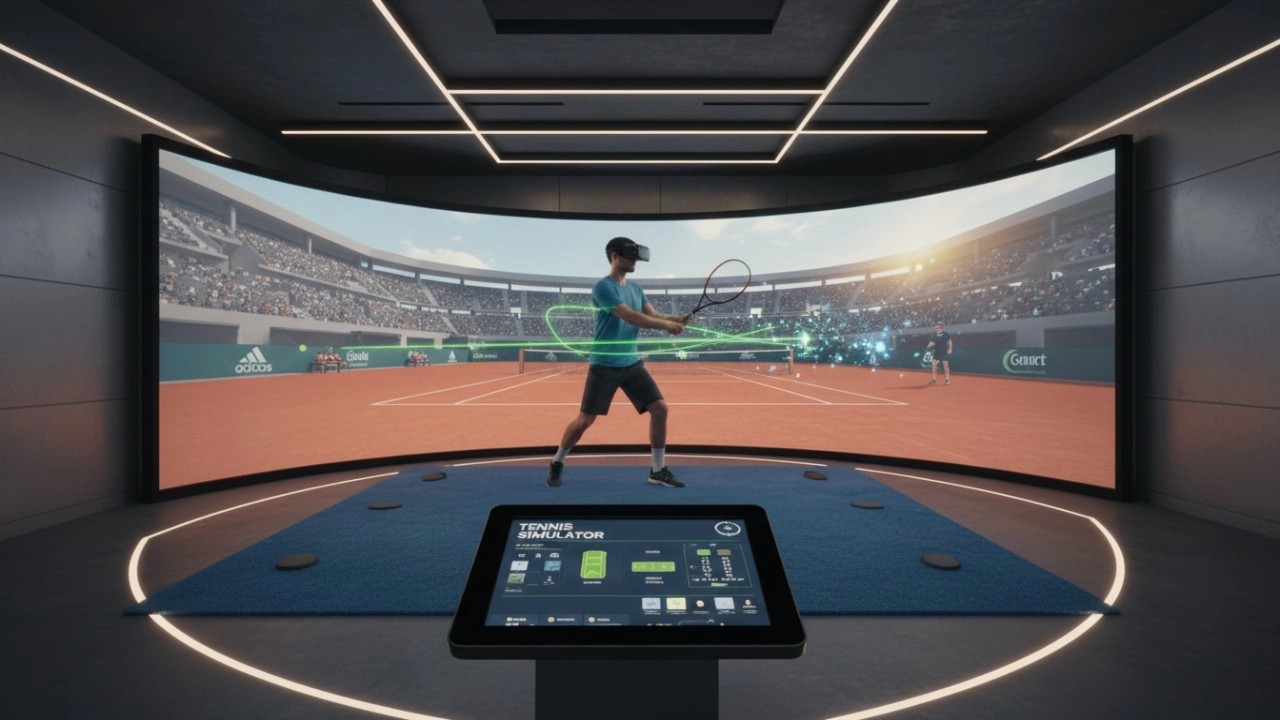
7 Reasons to Add a Tennis Simulator to Your Entertainment Venue Instead of Traditional Training Models (2026 Guide)
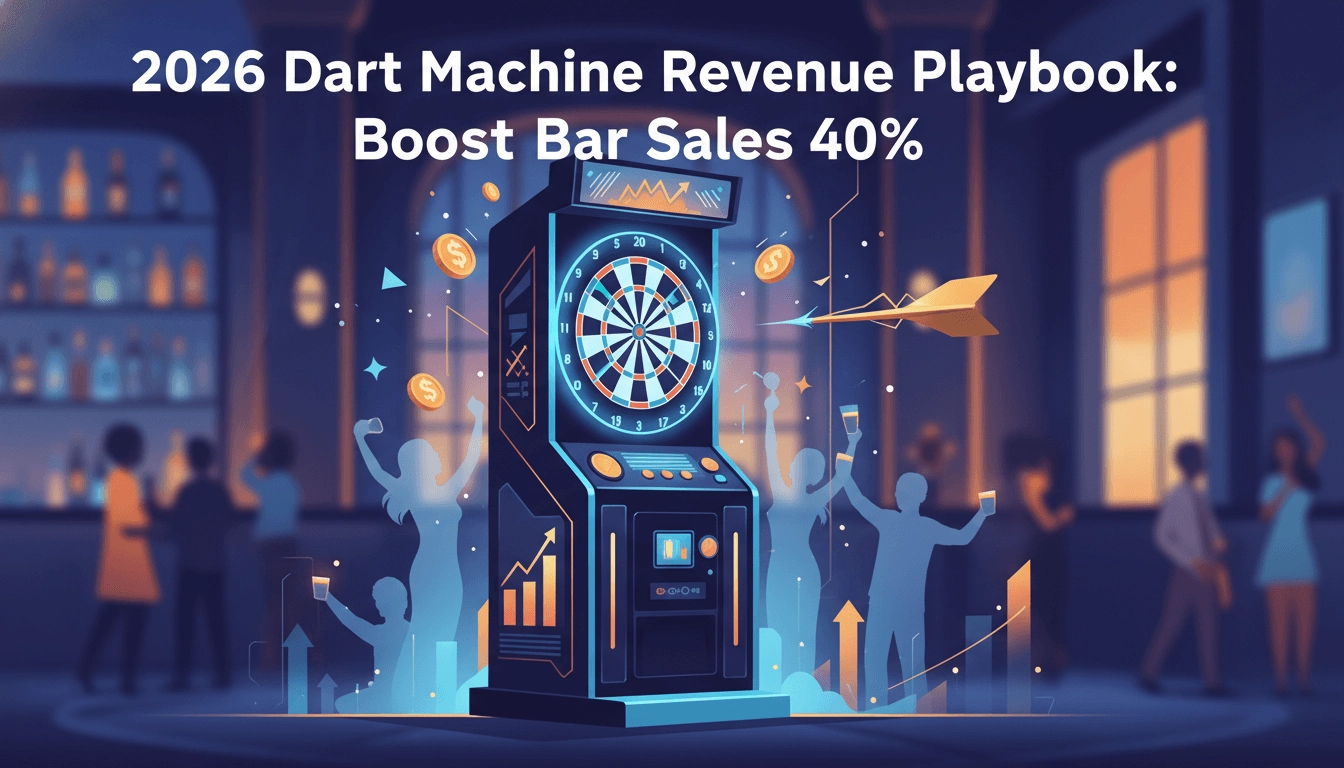
The 2026 Dart Machine Revenue Playbook: Boosting Mid-Week Sales by 30%-40% with Competitive Socializing
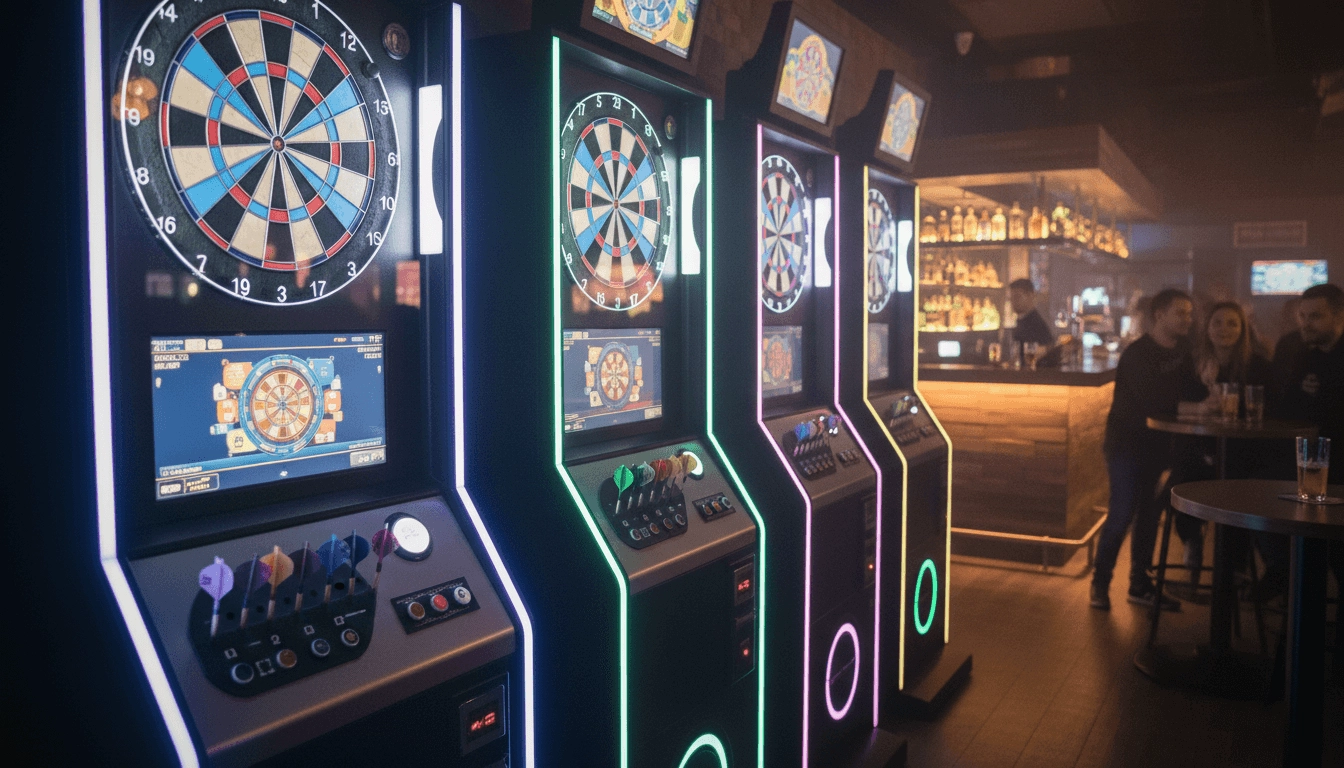
Redefining Competitive Socializing: Ultimate Guide to Selecting an Intelligent Dart Machine 2026
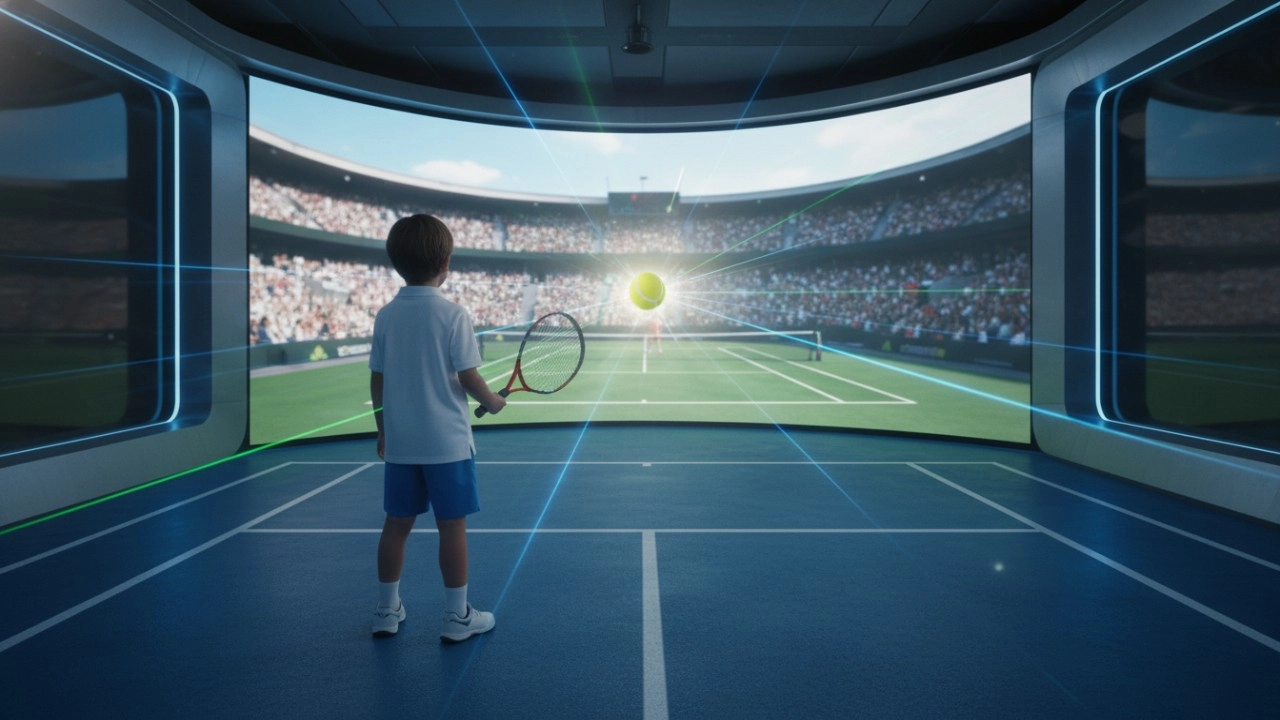
Tennis Simulators in 2026: The Ultimate Guide to Virtual Courts and Advanced Training

Top 15 Dart Machine Manufacturers in 2026
FAQ
What problems does the Digital Sports Center solve?
The Digital Sports Trendy Pavilion provides people with an innovative experience place that combines technology and sports, solving some problems existing in traditional sports activities and amusement facilities, while also meeting modern people's needs for digital technology and dynamic experience.
Dart Machines Bar Dart Machines
What is the difference between purchasing equipment for commercial operations and personal training?
Commercial operations should consider the durability, ease of operation, and attractiveness of the equipment, and it is preferable to choose cool-looking equipment that can withstand high-frequency use.
Interactive Rollerball
What is the difference between purchasing equipment for commercial operations and personal training?
Commercial operations should consider the durability, ease of operation, and attractiveness of the equipment, and it is preferable to choose cool-looking equipment that can withstand high-frequency use.
Infrared Shooting
How to reduce operating costs?
Starting with equipment procurement, choose cost-effective, durable and easy-to-maintain products, which can save money for subsequent maintenance. Reasonable arrangement of staff, reduce the number of staff on duty during off-peak hours, train staff to have multi-skills, such as being able to operate the equipment and guide customers part-time, so as to improve the efficiency of manpower and reduce the cost of manpower.
Products
How to judge the quality of live firing equipment good or bad?
Check the firearm itself and the supporting targeting system, the reliability of the equipment in use such as continuous shooting, adaptability to the bad environment, the equipment's material technology and operating comfort, etc.
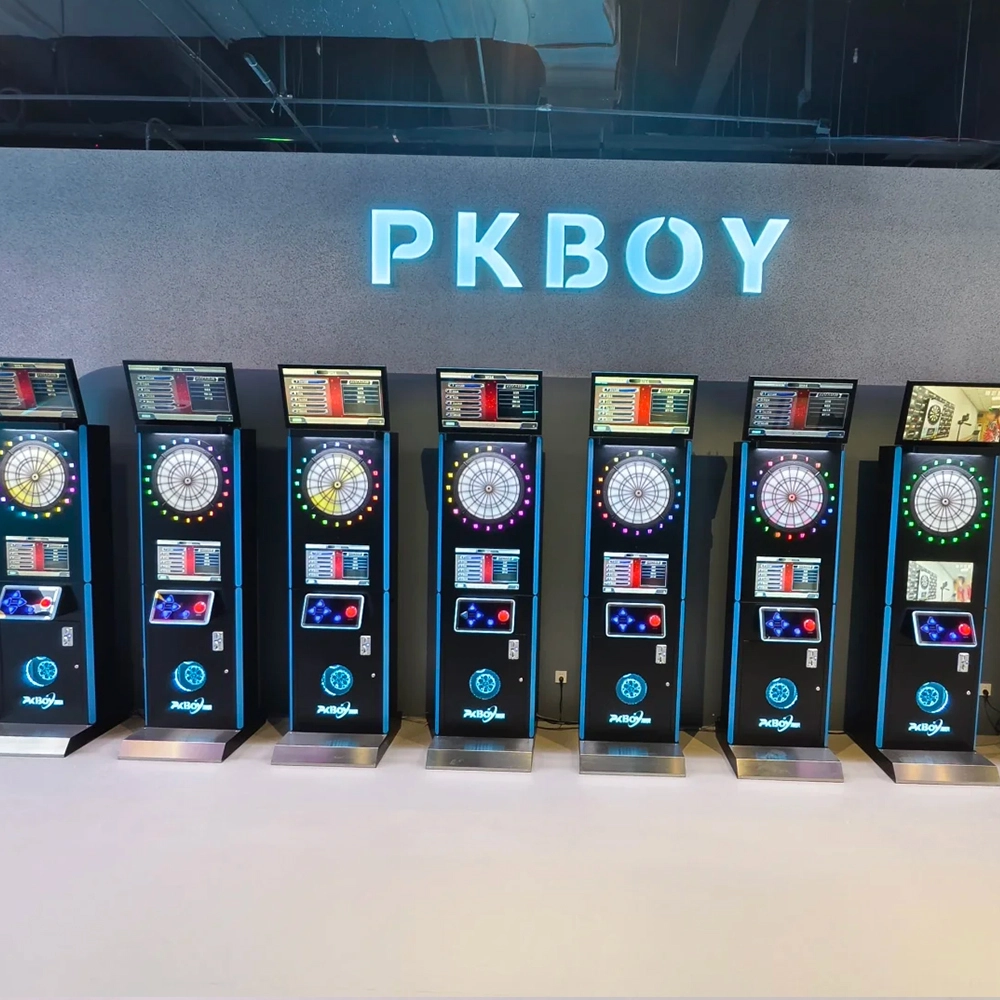
Dart Machines Bar Dart Machines
Joy Power is full of fun and excitement in the playground! The dart machine is suitable for all kinds of places, whether it is a bar, restaurant, KTV, or other entertainment venue, or a sports shop, club, or family leisure space, and can be perfectly adapted. In commercial venues, holding individual and team darts tournaments from time to time can attract more customers and increase the popularity and revenue of the venue, supplemented by various preferential activities, which can directly promote consumption and form a cycle of consumption of all the goods in the shop.
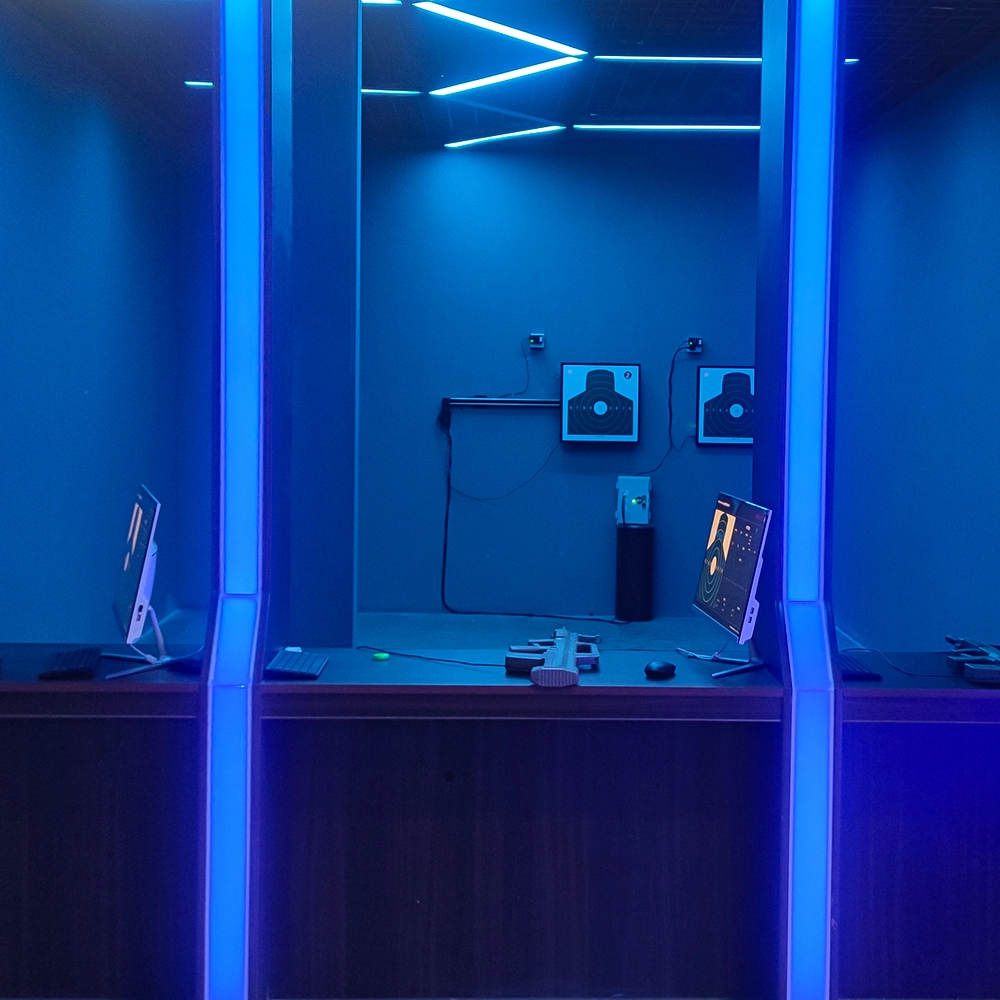
Infrared Shooting
Highly simulated simulation training analysis equipment, with advanced design concepts, fast system development, ease of operation and use, stable technical performance, less consumption of training, site dependence on a small group training is highly interesting, safe, and reliable, and other outstanding features. Product design to solve the basic skills of light weapons precision shooting as a starting point, to improve the safety of shooting training and training efficiency as the fundamental purpose, highlighting the simulation, information technology, and combat training requirements, can be in small indoor and outdoor venues and does not use live ammunition to complete the basic shooting training.
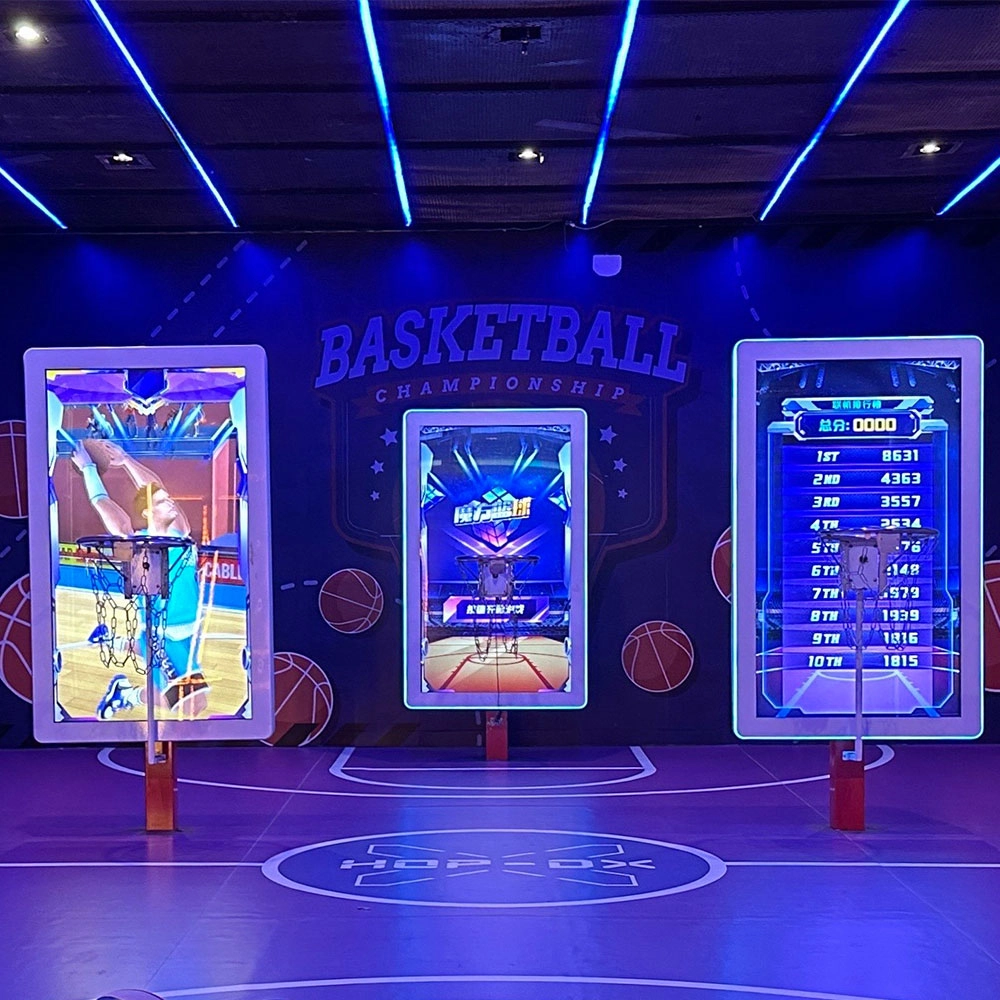
Multi-Player Interactive Shooting Machine
Joy Power is full of fun and exciting playgrounds! The basketball shooting machine is a classic amusement device integrating competition, entertainment, and interactivity. Based on the traditional basketball shooting sport, it integrates electronic scoring, sound and light effects, and challenge mechanisms to bring players an immersive game experience. The main body of the equipment is usually built with a metal frame, equipped with a standard-sized basket and a sturdy rim, with multiple sets of sensors to accurately capture the trajectory of the shot; when the player shoots the ball, the machine's built-in sensors count the score in real time and present the score, remaining time, and challenge goals through the LED display or LCD screen, with exciting sound effects and colorful lights to create a tense and exciting gaming atmosphere.
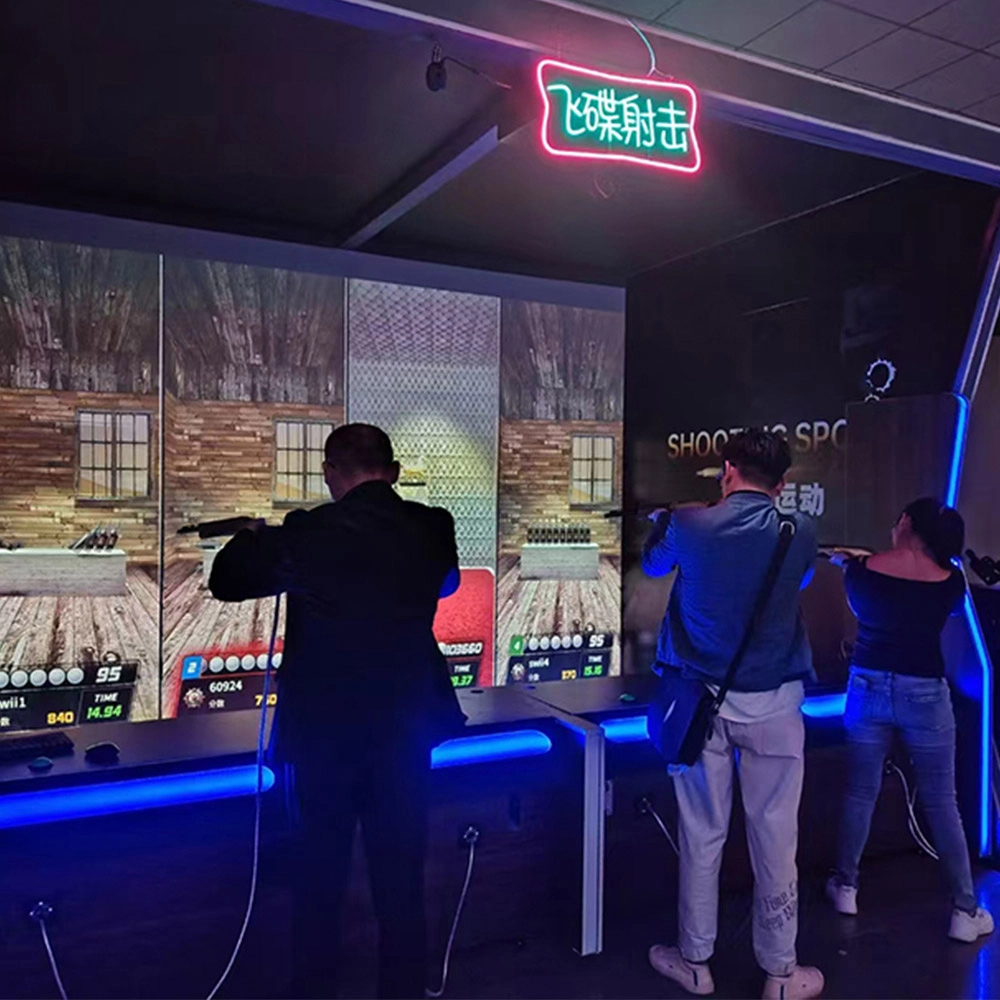
Indoor Wave Play Disc Shooting Equipment
Joy Power is full of fun and exciting playgrounds! The saucer shooting equipment in the indoor hip play hall is an immersive entertainment device integrating high-definition projection scenes, simulated air rifles, and multi-mode interactive gameplay, which allows players to experience the excitement of virtual shooting and the fun of social competition through laser-sensing scoring and multi-sensory feedback.
Ready to take your venue to the next level?
Leave us a message here, and our team will get back to you promptly.
Whether you're interested in custom orders, technical specifications, or partnership opportunities, we're here to assist you.
© 2025 FUNTECH ALL RIGHTS RESERVED

Weixia Lei
Fun_Tech-s
fun_tech20