
What controls and input options exist on arcade dart machines for sale?
- 1. What control-panel and payment-input configuration should I specify on an arcade dart machine for sale to maximize location earnings?
- 2. How do mobile app, NFC and QR-code input options integrate with arcade dart machines for sale, and what latency, security or verification issues should I expect?
- 3. Which I/O ports, networking standards and firmware-update methods should a modern arcade dart machine for sale support to ensure secure remote management?
- 4. How do hit‑detection systems (optical vs. contact vs. acoustic) affect maintenance frequency, replacement cost and scoring accuracy on arcade dart machines for sale?
- 5. What operator controls and data telemetry should I expect from an arcade dart machine for sale, and in which export formats (CSV/JSON/API) do operators typically receive reports?
- 6. What physical control and accessibility options (button layouts, touchscreen sizes, adjustable height) should I request when buying an arcade dart machine for sale for a bar vs a family entertainment center?
- Concluding summary: Advantages of a properly specified arcade dart machine for sale
Controls & Input Options on an Arcade Dart Machine for Sale: 6 Pro Questions Answered
Buying an electronic dartboard arcade or soft-tip dart machine? This buyer-focused guide answers six specific, often-missed questions about control panels, payment inputs, sensor tech, networking and operator controls. The answers use industry-standard interfaces and real-world operator practices to help you choose a durable, revenue-optimised multiplayer dart cabinet or coin-operated dart game.
1. What control-panel and payment-input configuration should I specify on an arcade dart machine for sale to maximize location earnings?
Why this matters: Location operators want fast player onboarding, low downtime, and flexible revenue options. A wrong mix of payment inputs lowers conversions and increases service calls.
Minimum recommended configuration:
- Coin acceptor (MDB-compatible): still required in many bars/arcades. Choose a proven acceptor that supports the MDB protocol so it ties into vending/AMS hardware easily.
- Bill validator: increasing expectation in busy locations. Select a validator from a reputable vendor with anti-fraud checks and high capacity for fast transactions.
- Cashless option (NFC/contactless + mobile wallet + QR): integrate a vendor that supports EMV or proven cashless kiosks (e.g., Nayax-style partners) and can report sales to your AMS. Cashless increases average spend and reduces coin jams.
- Card or RFID player cards: useful for family entertainment centers (FECs) and pools credits across machines. Ensure card readers are ISO/IEC compliant or use proprietary RFID systems with robust encryption.
- Local free-play toggle and bill-accept disable: operator-accessible switches in the admin menu or physical DIP toggles allow promotions, tournaments, or service testing without removing hardware.
Layout and ergonomics: put the most-used inputs (cashless tap area, coin slot) clearly illuminated on the front bezel. Use a small touchscreen or labelled buttons for quick credit purchase flows. Consider adding a ticket-printer or coupon feeder if running redemption promos.
Why this configuration works: MDB compatibility keeps options open for coin/bill hardware swaps; cashless increases conversion and decreases maintenance; RFID/card systems support loyalty and tournament play—driving repeat visits.
2. How do mobile app, NFC and QR-code input options integrate with arcade dart machines for sale, and what latency, security or verification issues should I expect?
Why this matters: Mobile-enabled play and contactless payments are major revenue drivers, but poorly implemented integrations create player confusion, slow turnarounds and fraud risk.
Integration models:
- Local pairing via Bluetooth/Wi‑Fi (direct-to-machine): mobile app discovers the machine and sends play commands. Works offline but needs robust pairing and session management to avoid accidental multi-user control.
- Cloud-mediated session (preferred for leaderboards and payments): player launches an app, scans a QR shown on the machine or taps via NFC. The machine displays a short one-time session code; the cloud matches session and authorises play. This allows mobile wallets, leaderboards and analytics to all share one source of truth.
- Simple cashless tap: NFC payment enables direct credit purchase without a full app—convenient for bar locations. Often provided by third-party cashless vendors that integrate via MDB, USB, or API.
Latency & verification considerations:
- Network latency: cloud-mediated flows require reliable LAN/internet. Choose machines that support both wired Ethernet and 5GHz Wi‑Fi to reduce dropped sessions.
- Session timeouts: standard is 30–90 seconds for session confirmation. Too short creates friction, too long risks session hijack in busy locations.
- Security: prefer systems that use TLS for cloud APIs, short-lived session tokens and server-side transaction confirmation. Avoid solutions that accept raw unverified commands over open Bluetooth without authentication.
- Fraud prevention: require two-step confirmation for high-value credits (e.g., app payment + displayed QR confirmation), and log transaction IDs for reconciliation.
Operator tips: test the cashless flow under peak Wi‑Fi congestion and ensure fallbacks (coin/bill) remain available. If you accept phone-based tournaments or cloud leaderboards, ensure daily sync windows and local caches so play can continue during brief outages.
3. Which I/O ports, networking standards and firmware-update methods should a modern arcade dart machine for sale support to ensure secure remote management?
Why this matters: Remote management reduces service visits, improves uptime and allows centralised earnings and error monitoring. But unsupported or insecure update channels are a liability.
Essential physical I/O:
- RJ45 Ethernet (preferred): reliable, low-latency and secure for OTA updates and telemetry.
- Dual-band Wi‑Fi (2.4 + 5 GHz): for locations where Ethernet is not available.
- USB-A ports (front and service side): for local firmware updates, logs extraction and replacement of peripherals (keyboard, flash drive).
- Serial ports (RS‑232) or TTL header: for legacy peripherals and troubleshooting; many operators still use RS‑232 for peripheral comms.
- GPIO headers or relay outputs: to drive ticket hoppers, lights or integrated peripherals for redemption walls.
Networking & protocols:
- HTTPS/TLS for cloud APIs and firmware downloads.
- Support for secure VPN or private APN for operators who require isolated connectivity.
- MDB and pulse outputs for coin/ticket integrations where applicable.
Firmware update methods:
- Signed firmware delivered via HTTPS (OTA): preferred for volume fleets. Ensure the vendor provides cryptographically signed images and rollback protection.
- USB stick update (local): necessary as a fallback. The service UI should validate signature and display version history.
- Staged rollouts and health checks: the machine should verify update integrity and report success/failure to the cloud so operators can pause rollouts if issues appear.
Operational recommendations: require a machine that exposes machine health diagnostics (uptime, free storage, network quality) over the AMS API and supports log export in a standard format (JSON or CSV). This streamlines remote troubleshooting and reduces truck rolls.
4. How do hit‑detection systems (optical vs. contact vs. acoustic) affect maintenance frequency, replacement cost and scoring accuracy on arcade dart machines for sale?
Why this matters: Sensor choice determines TCO—some boards trade lower upfront cost for frequent parts and service calls.
Common detection types & their trade-offs:
- Contact (physical switches or piezo sensors): historically common, low-latency and low-cost to implement. Downside: moving parts or thin contact surfaces wear with heavy use; segments and microswitches can fail after months in high-traffic bars, leading to misreads and mechanical maintenance.
- Optical / photodiode arrays (non-contact): use LEDs/photodiodes behind each segment hole or infra-red matrices. Pros: no moving parts, more resistant to wear, and easier segment-by-segment diagnostics. Cons: can be more sensitive to dirt/ambient light on lower-quality implementations and cost more initially.
- Acoustic/impact sensing: microphones or vibration sensors analyze the impact signature. Rare as a sole system in arcade cabinets because accuracy for soft-tip darts is harder to guarantee; often used as secondary verification.
Scoring accuracy and calibration:
- Accuracy is a function of sensor quality and firmware algorithm. Optical systems with per-segment diagnostics tend to give the highest uptime and simplest part replacement (swap a segment PCB).
- Look for boards that expose per-segment error counters in diagnostics so you can proactively swap failing segments before players complain.
Maintenance cost guidance:
- Contact-based cabinets: expect mechanical servicing (cleaning, switch replacement) more often in high-traffic environments—plan parts and technician time accordingly.
- Optical-based cabinets: higher upfront but lower annual maintenance and fewer surprise service calls; choose high-quality seals to keep dust out.
Buyer checklist: request sensor diagnostic screenshots, mean time between failures (MTBF) claims from the manufacturer, and spare parts pricing. If possible, secure a service-level agreement (SLA) for units in high-volume locations.
5. What operator controls and data telemetry should I expect from an arcade dart machine for sale, and in which export formats (CSV/JSON/API) do operators typically receive reports?
Why this matters: Operators need reliable revenue reconciliation, downtime alerts and usage metrics. Incomplete telemetry forces manual counts and errors.
Essential operator controls & telemetry:
- Local admin menu (password protected): coin counters, cashless transaction logs, ticket counts, game counts, error logs, firmware version and network status.
- Remote telemetry: daily aggregates (games played, revenue by payment type, time online), per-session detail (start/end, player ID if carded, transaction ID), and error/fault reports.
- Alerting: configurable alerts for coin jam, validator failure, offline status, and sensor errors sent by email/SMS/AMS dashboard.
- Remote controls: enable/disable payments, force firmware rollbacks, or toggle free-play for events.
Export formats & integration:
- CSV and JSON: common for end-of-day exports. CSV is universal for spreadsheets; JSON is preferred for AMS integration.
- RESTful APIs: modern providers offer authenticated endpoints to pull machine data, reconcile transactions and push remote commands (e.g., currency rates, promotions).
- Standard protocols: support for FTP/SFTP or secure API webhooks is valuable for operators who ingest data into third-party POS/AMS platforms.
Recommended KPIs to track: average revenue per day, games per coin, average game duration, cashless conversion rate, downtime percentage, and per-segment sensor failure counts. Make sure the vendor provides sample reports and an API spec up front.
6. What physical control and accessibility options (button layouts, touchscreen sizes, adjustable height) should I request when buying an arcade dart machine for sale for a bar vs a family entertainment center?
Why this matters: Cabinet ergonomics affect player throughput and inclusivity. Bar patrons and FEC visitors have different expectations for controls and accessibility.
Bar / adult locations:
- Compact front bezel with illuminated coin/bill slots and one-tap NFC area. Sturdy mechanical buttons or a 10–12 industrial-grade touchscreen for menu navigation—touchscreen works well for rotating game modes and leaderboards.
- Sturdy, low-profile cabinet top to accommodate crowded spaces; higher cabinet heights are acceptable if step-back is available.
- Durable button hardware (IP-rated) because bars see spills and rough use.
Family entertainment centers (FECs):
- Larger touchscreen (12–17) for multiplayer lobby, clear ticket redemption prompts and family-friendly animations.
- Adjustable launch/board angles and optional platform to match children’s reach. Provide clear ADA-compliant access routes and offer at least one machine mounted at a lower height for accessibility.
- Card/RFID readers to hold player credits across multiple machines and simple “tap-to-play” flows for kids.
Accessibility & compliance tips: always ask the vendor whether their cabinet can be sited to meet local accessibility standards and request adjustable mounting options or lower-profile models. Provide clear on-screen instructions, large-font text and contrast for visibility.
Concluding summary: Advantages of a properly specified arcade dart machine for sale
Choosing an arcade dart machine for sale with modern control and input options—MDB coin/bill compatibility, robust cashless/NFC/QR flows, Ethernet+Wi‑Fi connectivity, signed OTA firmware, and optical sensor architectures—reduces maintenance, improves player throughput and increases location revenue. Machines that export standard telemetry (CSV/JSON/APIs), provide secure remote management and include ergonomic control panels deliver lower TCO and better player retention, whether placed in a bar, arcade or family entertainment center.
Contact us for a quote and configuration options tailored to your venue: www.funtechgame.com or email vicky@funtechgame.com
7 Reasons to Add a Tennis Simulator to Your Entertainment Venue Instead of Traditional Training Models (2026 Guide)
The 2026 Dart Machine Revenue Playbook: Boosting Mid-Week Sales by 30%-40% with Competitive Socializing
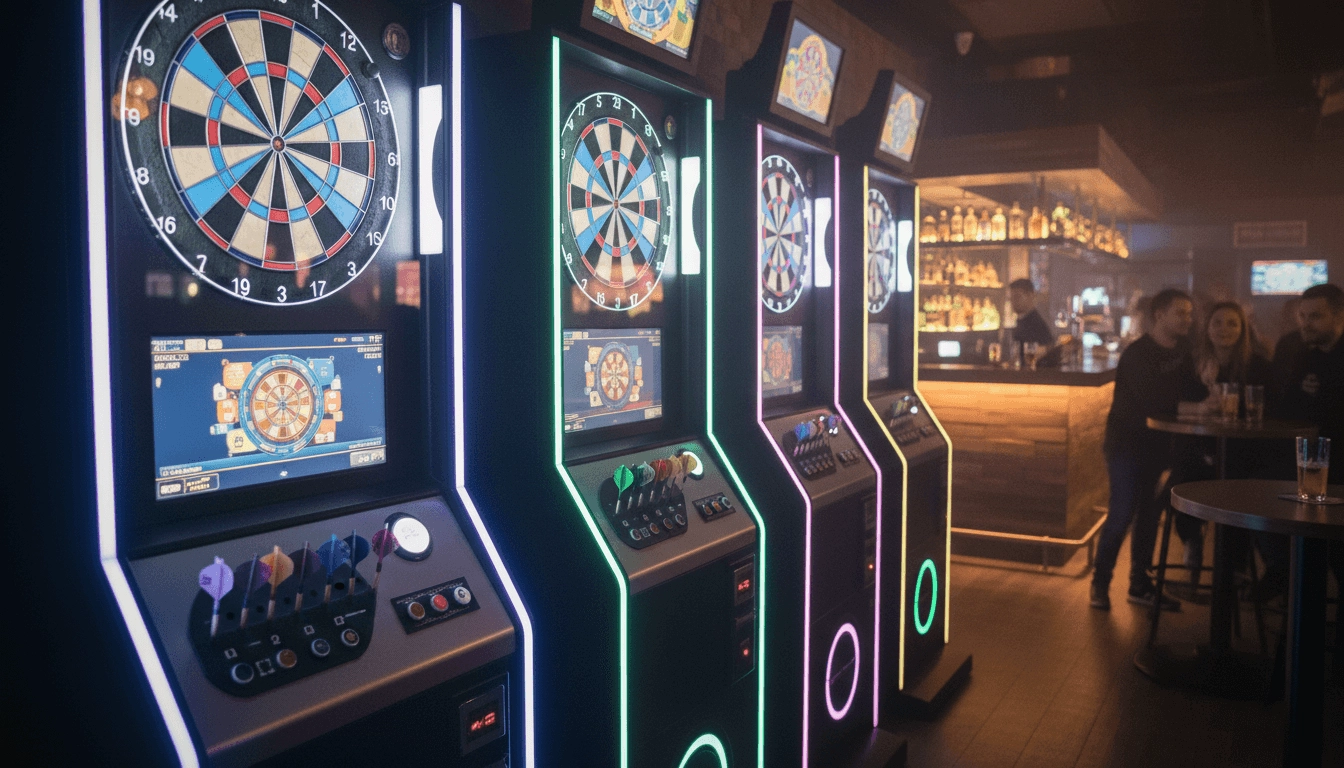
Redefining Competitive Socializing: Ultimate Guide to Selecting an Intelligent Dart Machine 2026
Tennis Simulators in 2026: The Ultimate Guide to Virtual Courts and Advanced Training

Top 15 Dart Machine Manufacturers in 2026
Holographic Light and Shadow Restaurant
What is the difference between holographic projection and ordinary projection?
Ordinary projection is the process of projecting a two-dimensional image onto a flat screen, where the viewer sees a flat image. Holographic projection can present real three-dimensional images, allowing viewers to observe different faces of objects from different angles, with a strong sense of three dimensionality and realism. In addition, ordinary projection usually only requires simple equipment such as projectors and screens, while holographic projection requires more complex optical systems and technologies to achieve.
Football Simulator
Are there a lot of game modes in soccer simulation?
Very rich! There is a league mode which is exciting and can compete with players from all over the world, and there is also a leisure and fun game which is suitable for parents and children to share fun time, so as to satisfy the needs of different players.
How does the picture effect of simulation soccer achieve realism?
With the help of advanced technology, the green field is accurately reproduced with fine turf texture and realistic player movements. From the players running, passing to shooting, are lifelike, to give players a sense of immersion.
What is the biggest difference between simulation soccer and traditional soccer?
Simulation soccer through digital technology on the screen to present soccer, not subject to site, weather restrictions, players can participate at any time and anywhere, but also with the handle, somatosensory equipment and other controls, experience a variety of modes. Traditional soccer requires real venues and multiple participants, and is greatly affected by environmental factors.
Golf Simulator
How to attract customers when operating the program in shopping malls?
Create a cool venue decoration style, incorporating trendy elements, such as fluorescent light strips and anime-themed murals. o Launch diversified marketing models such as parent-child packages and couple packages, combined with time-limited promotional activities, such as half-price experience in the first three days of opening, to attract families, couples and other groups to stop and participate in the program. o How to reduce operating costs?
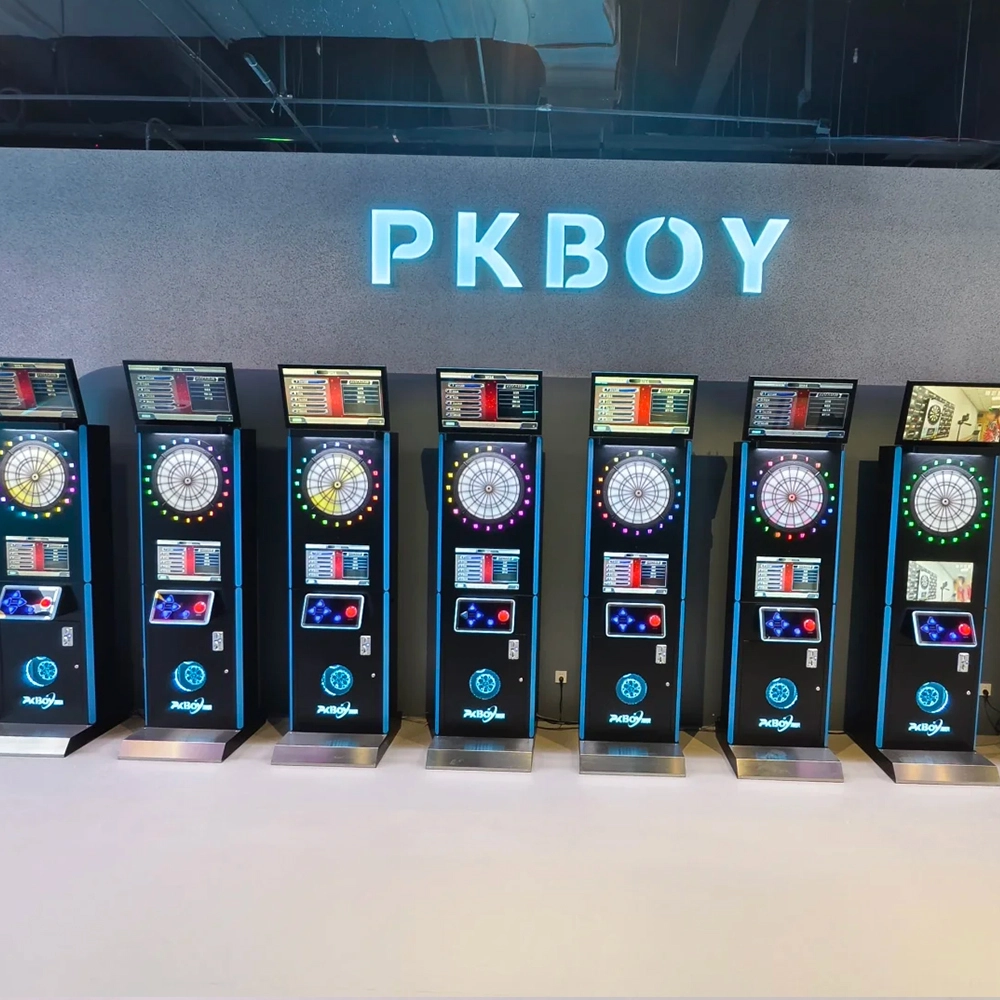
Dart Machines Bar Dart Machines
Joy Power is full of fun and excitement in the playground! The dart machine is suitable for all kinds of places, whether it is a bar, restaurant, KTV, or other entertainment venue, or a sports shop, club, or family leisure space, and can be perfectly adapted. In commercial venues, holding individual and team darts tournaments from time to time can attract more customers and increase the popularity and revenue of the venue, supplemented by various preferential activities, which can directly promote consumption and form a cycle of consumption of all the goods in the shop.
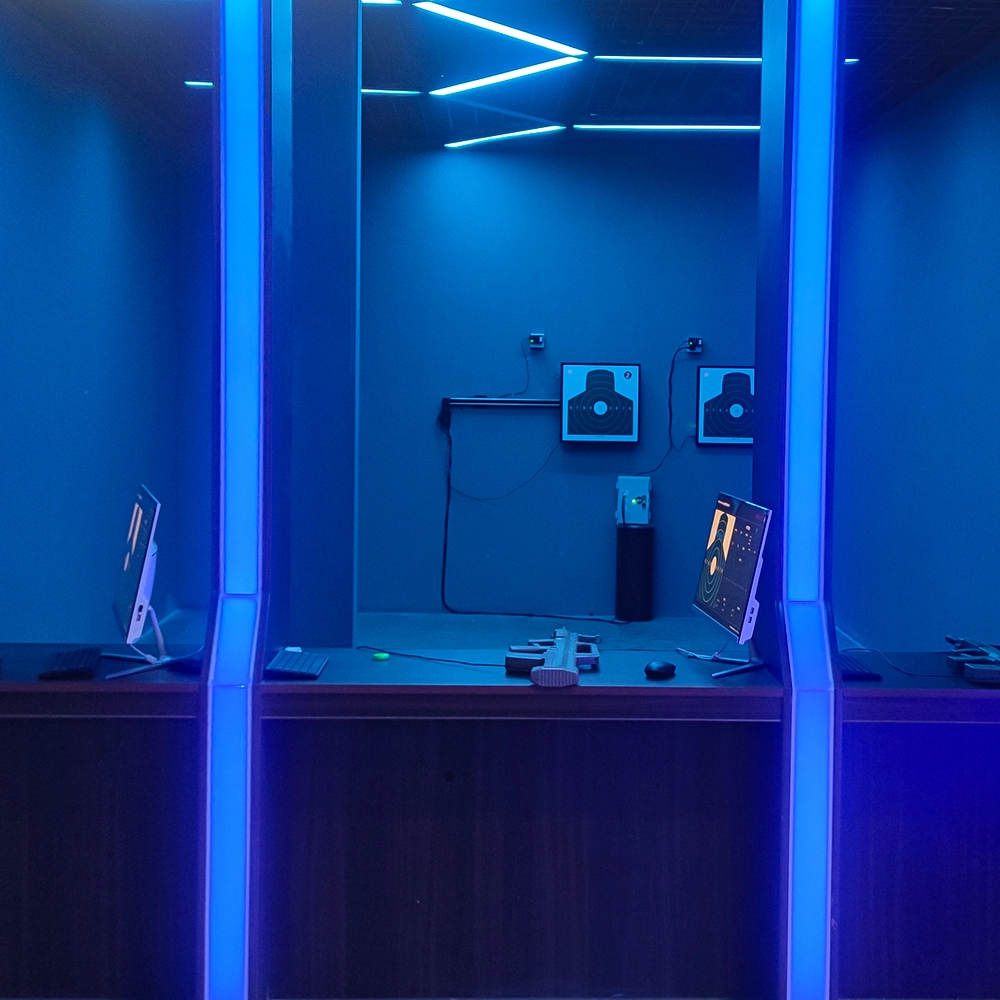
Infrared Shooting
Highly simulated simulation training analysis equipment, with advanced design concepts, fast system development, ease of operation and use, stable technical performance, less consumption of training, site dependence on a small group training is highly interesting, safe, and reliable, and other outstanding features. Product design to solve the basic skills of light weapons precision shooting as a starting point, to improve the safety of shooting training and training efficiency as the fundamental purpose, highlighting the simulation, information technology, and combat training requirements, can be in small indoor and outdoor venues and does not use live ammunition to complete the basic shooting training.
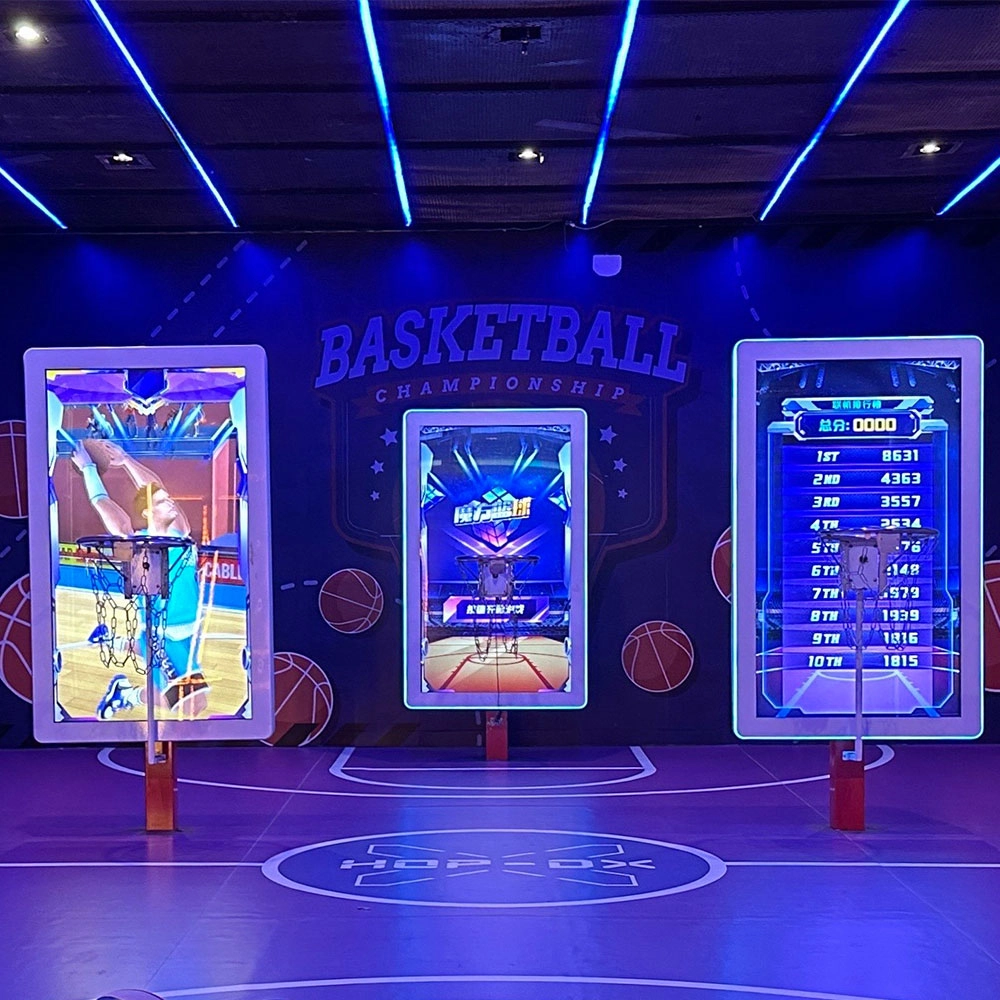
Multi-Player Interactive Shooting Machine
Joy Power is full of fun and exciting playgrounds! The basketball shooting machine is a classic amusement device integrating competition, entertainment, and interactivity. Based on the traditional basketball shooting sport, it integrates electronic scoring, sound and light effects, and challenge mechanisms to bring players an immersive game experience. The main body of the equipment is usually built with a metal frame, equipped with a standard-sized basket and a sturdy rim, with multiple sets of sensors to accurately capture the trajectory of the shot; when the player shoots the ball, the machine's built-in sensors count the score in real time and present the score, remaining time, and challenge goals through the LED display or LCD screen, with exciting sound effects and colorful lights to create a tense and exciting gaming atmosphere.
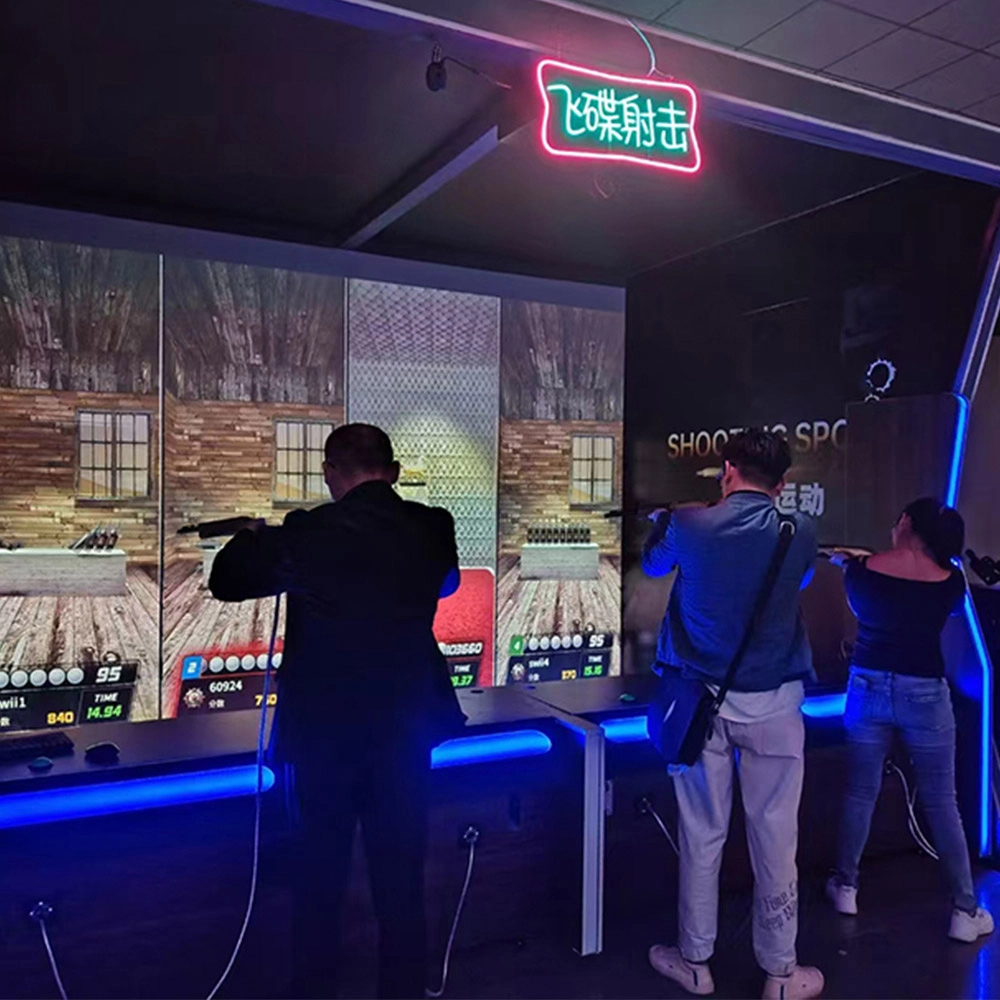
Indoor Wave Play Disc Shooting Equipment
Joy Power is full of fun and exciting playgrounds! The saucer shooting equipment in the indoor hip play hall is an immersive entertainment device integrating high-definition projection scenes, simulated air rifles, and multi-mode interactive gameplay, which allows players to experience the excitement of virtual shooting and the fun of social competition through laser-sensing scoring and multi-sensory feedback.
Ready to take your venue to the next level?
Leave us a message here, and our team will get back to you promptly.
Whether you're interested in custom orders, technical specifications, or partnership opportunities, we're here to assist you.
© 2025 FUNTECH ALL RIGHTS RESERVED

Weixia Lei
Fun_Tech-s
fun_tech20