
What uptime metrics should sellers provide for arcade dart machines for sale?
- 1. How can I verify a seller's claimed uptime and MTBF for an arcade dart machine for sale before purchase?
- 2. What uptime metrics should sellers provide for arcade dart machines for sale?
- 3. What remote-diagnostics and telemetry data should I demand from sellers of electronic dart machines to minimize on-site visits?
- 4. How to evaluate spare-parts lead times and local service networks for coin-operated / digital dart machines sold internationally?
- 5. Which warranty and SLA clauses should be non-negotiable when purchasing an arcade dart machine for sale for high-traffic venues?
- 6. How to benchmark the total cost of ownership (TCO) including downtime costs for a digital dart machine vs. a traditional analog dartboard?
- Concluding summary: Advantages of buying a well-specified arcade dart machine for sale with strong uptime guarantees
Arcade Dart Machine for Sale: What Uptime Metrics Sellers Must Provide
Summary: Practical buyer’s guide for arcade operators and venue managers evaluating an arcade dart machine for sale. Learn which uptime metrics (MTBF, MTTR, SLA, remote diagnostics, parts lead times) to require, how to verify claims, and how to calculate downtime costs.
1. How can I verify a seller's claimed uptime and MTBF for an arcade dart machine for sale before purchase?
Why this matters: Many sellers quote optimistic Mean Time Between Failures (MTBF) or uptime percentages without evidence. For high-traffic venues, unverifiable claims translate directly to lost revenue and frustrated customers.
Checklist to verify claims:
- Request telemetry logs or uptime reports for at least the prior 6–12 months from existing installed units (anonymized if needed). Real logs prove sustained performance.
- Ask for the seller’s Service Level Agreement (SLA) and any penalties or service credits if uptime targets are missed. A verbal assurance is not enough—insist on contract language.
- Verify MTBF methodology. MTBF is meaningful only when defined: is it based on field data, lab testing, or component MTBF aggregation? Field-derived MTBF is preferable.
- Contact references—operators running the same model in similar traffic profiles. Ask about frequency of failures, typical repair time, and total downtime experienced over months or years.
- Request a factory or third-party test report for critical subsystems (power supply, electronics board, sensors). Third-party lab tests or independent service reports add credibility.
- Negotiate trial deployment clauses (e.g., a 30–90 day on-site pilot with defined acceptance criteria) so you can measure real uptime before committing large orders.
What to avoid: Sellers that refuse telemetry access, provide only internal lab MTBF numbers without field data, or decline to sign measurable SLA terms.
2. What uptime metrics should sellers provide for arcade dart machines for sale?
Why this matters: Without standardized uptime metrics you can’t compare vendors or hold them accountable. Ask for a set of specific, measurable metrics in the purchase contract.
Minimum uptime metrics to require:
- SLA Uptime Percentage — expressed as annual uptime (e.g., 99.0%, 99.9%). Convert percentages to expected downtime: 1% downtime = 87.6 hours/year; 0.1% = 8.76 hours/year; 0.01% = 0.876 hours/year.
- Mean Time Between Failures (MTBF) — specify measurement method (field data preferred) and unit (hours). MTBF alone is insufficient without MTTR.
- Mean Time To Repair (MTTR) — average repair duration from fault detection to full operation. MTTR should include realistic travel times for on-site repairs or specify remote-repair capability.
- Response Time / On-site SLA — maximum vendor response time from trouble ticket to remote action or dispatch (e.g., remote support within 2 hours, on-site technician within 48 hours in region X).
- Parts Availability SLA — maximum lead time for critical spare parts and percentage of parts available from regional warehouses. Ideally specify days (e.g., next-business-day for common spares, 7–14 days for other parts).
- Remote Monitoring Uptime — percentage of time the machine reports telemetry and health data to the vendor’s platform. If remote diagnostics are advertised, ensure telemetry is included in the SLA.
- Software Update Cadence & Rollback Policy — how often firmware/software updates are provided, and the policy for emergency rollbacks if an update causes downtime.
How to use these metrics in contract negotiation: require concrete values and remedies (service credits or repair guarantees) when targets are missed. Example: a 99.5% annual uptime SLA with a tiered credit structure for every 0.1% below target.
3. What remote-diagnostics and telemetry data should I demand from sellers of electronic dart machines to minimize on-site visits?
Why this matters: Remote diagnostics reduce time-to-repair, help pre-position parts, and minimize revenue loss from technician travel.
Essential telemetry and diagnostics to request:
- Real-time error and event logs: crash reports, sensor faults, I/O errors, and historical event timestamps.
- Hardware health metrics: supply voltages, board temperatures, fan speeds (if applicable), sensor signal quality, and read/write errors for storage devices.
- Game session and transaction logs: match start/end times, score anomalies, payment/coin acceptance status, and software exceptions.
- Network connectivity status: heartbeat intervals, last-seen timestamp, and retry counts. For cloud-connected machines, require encrypted transport and authenticated access.
- Remote-control capability: soft-reboots, diagnostic mode activation, firmware push, and configuration changes (with audit trail).
- Alerting and escalation: configurable alerts to your operations team and vendor, with clear thresholds and multi-channel notifications (SMS/email/portal).
Security and compliance: insist on encrypted telemetry (TLS), role-based access to dashboards, and data retention policies. If you operate in the EU or handle personal data, verify GDPR-compliant data handling for any cloud leaderboards or player accounts.
4. How to evaluate spare-parts lead times and local service networks for coin-operated / digital dart machines sold internationally?
Why this matters: Long spare-part lead times or no local technicians can extend downtime from hours to weeks, especially across borders with customs delays.
Evaluation steps and considerations:
- Request a recommended spare-parts kit for your traffic profile: list common consumables (e.g., sensors, power supplies, connectors, cabinet lights) and critical PCB assemblies. Ask the vendor which parts you should stock on-site.
- Verify regional warehousing and average parts lead times by region. Ask for historical lead-time metrics (e.g., 1–3 business days in-region, 7–14 days cross-border) and for shipping options (air vs. sea).
- Confirm local certified service partners and their coverage map. If the vendor uses third-party technicians, request their SLA performance records and certifications.
- Understand customs & import aspects: which parts are restricted, whether the vendor supplies HS codes, and whether they provide drop-shipping to avoid duplicate import duties.
- Consider consignment spares or vendor-managed stock for high-volume sites. Some vendors will keep a set of spare boards or assemblies at a regional center allocated to your account.
Negotiation tips: include guaranteed maximum parts lead times and a clause for expedited shipments or local loaner units for long-lead items. For international purchases, verify who bears customs, duties, and return-shipping costs for RMA parts.
5. Which warranty and SLA clauses should be non-negotiable when purchasing an arcade dart machine for sale for high-traffic venues?
Why this matters: A robust warranty and enforceable SLA are the buyer’s primary protection against extended revenue loss caused by equipment issues.
Non-negotiable contract clauses:
- Uptime target and remedies: a clear uptime percentage and defined service credits or penalties when the vendor misses targets.
- Defined MTTR and response times: remote-response time, acknowledgement window for tickets, and maximum on-site dispatch time for each region.
- Coverage scope: what is covered (hardware, electronics, sensors, software bugs) and what is excluded (vandalism, misuse, environmental damage). Specify optional extended coverage including accidental damage if needed.
- Spare-part lead times and loaner policy: vendor obligation to provide temporary replacement units for extended repairs.
- Software & firmware updates: guaranteed updates to address security vulnerabilities and critical bugs for a defined period (e.g., minimum 24 months after purchase) and rollback policy for problematic updates.
- End-of-life (EOL) & obsolescence policy: notice period for discontinuation and availability of replacement parts after EOL (e.g., parts available for X years).
- Escalation matrix: named contacts and escalation timelines for unresolved issues.
Tip: Link SLA payment deductions to verifiable telemetry so credits are objectively calculated. Avoid vague language like “reasonable efforts” without quantifiable metrics.
6. How to benchmark the total cost of ownership (TCO) including downtime costs for a digital dart machine vs. a traditional analog dartboard?
Why this matters: Purchasing decisions shouldn’t be based on sticker price alone. Digital machines often command higher revenue but may have higher initial costs and different maintenance profiles.
How to calculate TCO and downtime impact (step-by-step):
- Estimate gross revenue per working hour for the machine (R). For coin-operated or cashless systems, use historical sales or conservative projections.
- Estimate annual operational hours (H). For an arcade open 12 hours/day, 365 days, H = 4,380 hours/year.
- Estimate expected annual downtime (D) from vendor SLA or historical data (in hours). If vendor promises 99% uptime: D = 0.01 * H.
- Calculate lost revenue from downtime = R * D.
- Add direct maintenance costs: parts, field service labor, software subscription, energy use, and consumables.
- Sum capital expenditure (purchase price), amortize over expected lifespan (years), and add annual operating costs to get annual TCO.
Illustrative example (numbers are illustrative; replace with your venue data):
- Projected revenue per hour (R): $12
- Annual hours (H): 4,380
- Vendor SLA uptime: 99% → annual downtime D = 0.01 * 4,380 = 43.8 hours
- Lost revenue = 43.8 * $12 = $526 per year
- If MTTR is long (e.g., 48 hours per incident) and failures frequent, downtime and losses multiply quickly. Compare this with a traditional board’s low-tech failure modes and different revenue profile.
Bottom line: use your actual revenue figures and vendor uptime/parts/MTTR guarantees to run a scenario analysis. A higher-priced digital dart machine can justify its cost if its uptime, analytics, and revenue per hour materially exceed a simple analog board and if the vendor backs claims with enforceable SLAs.
Concluding summary: Advantages of buying a well-specified arcade dart machine for sale with strong uptime guarantees
Choosing an arcade dart machine backed by measurable uptime metrics, remote diagnostics, transparent parts lead times, and enforceable SLAs reduces unplanned downtime, protects venue revenue, and simplifies operations. Machines with cloud telemetry enable proactive maintenance, faster MTTR through remote fixes, and better business intelligence (usage, peak times, and revenue per hour). When evaluating offers, insist on verifiable field data, clear MTBF/MTTR definitions, regional parts availability, and contractual remedies. These elements convert a technology purchase into a predictable, revenue-generating asset for your venue.
Contact us for a custom quote and to review machine specs and SLA templates: www.funtechgame.com or vicky@funtechgame.com
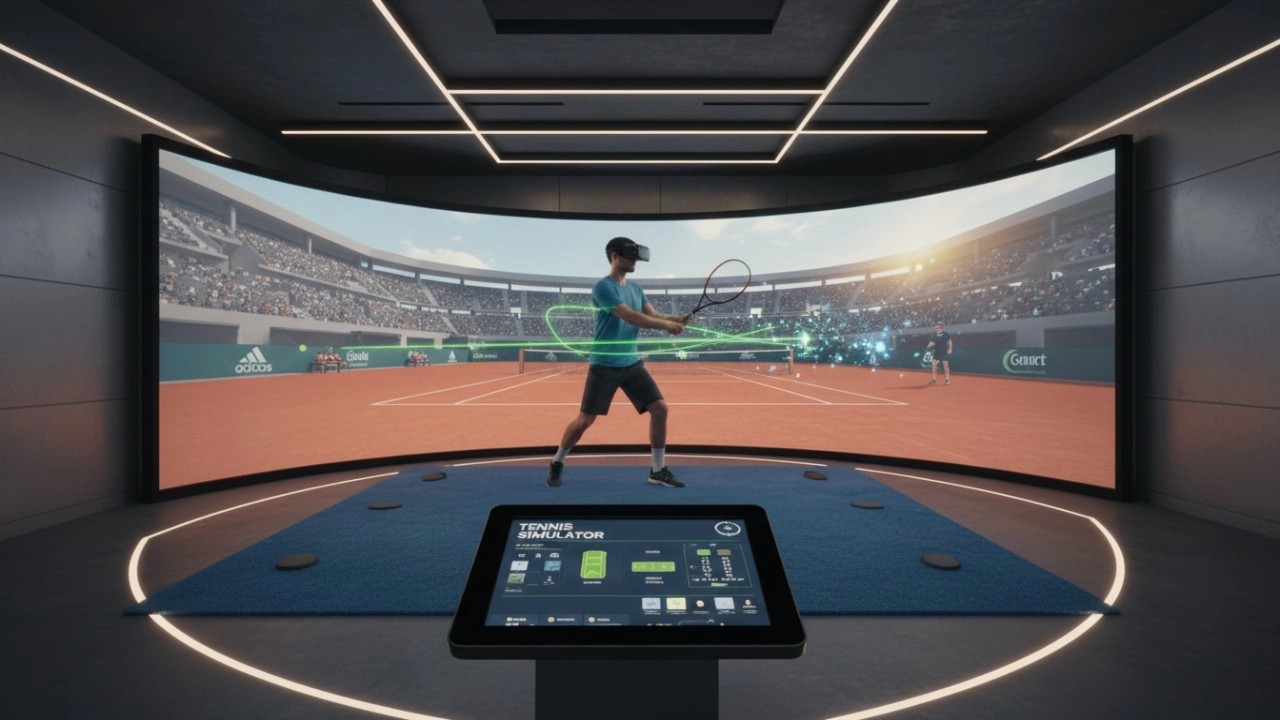
7 Reasons to Add a Tennis Simulator to Your Entertainment Venue Instead of Traditional Training Models (2026 Guide)
The 2026 Dart Machine Revenue Playbook: Boosting Mid-Week Sales by 30%-40% with Competitive Socializing
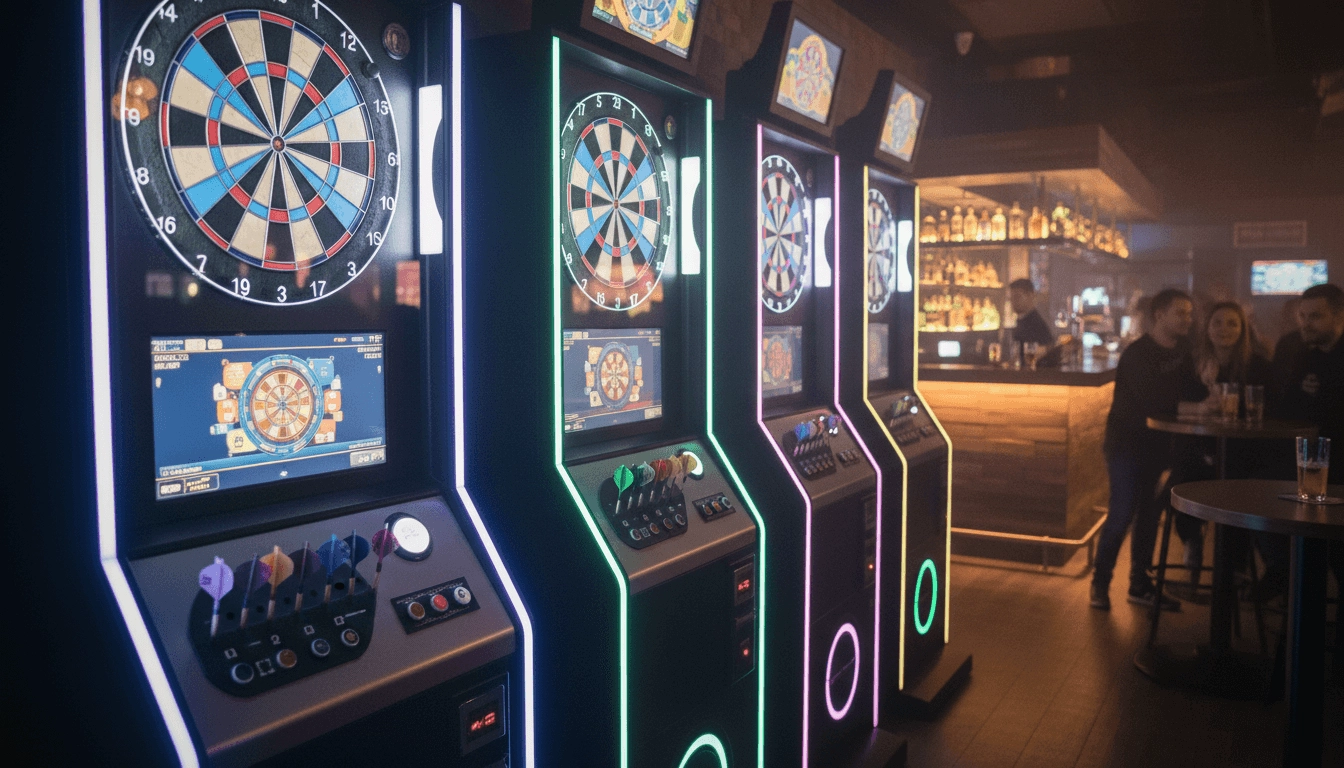
Redefining Competitive Socializing: Ultimate Guide to Selecting an Intelligent Dart Machine 2026
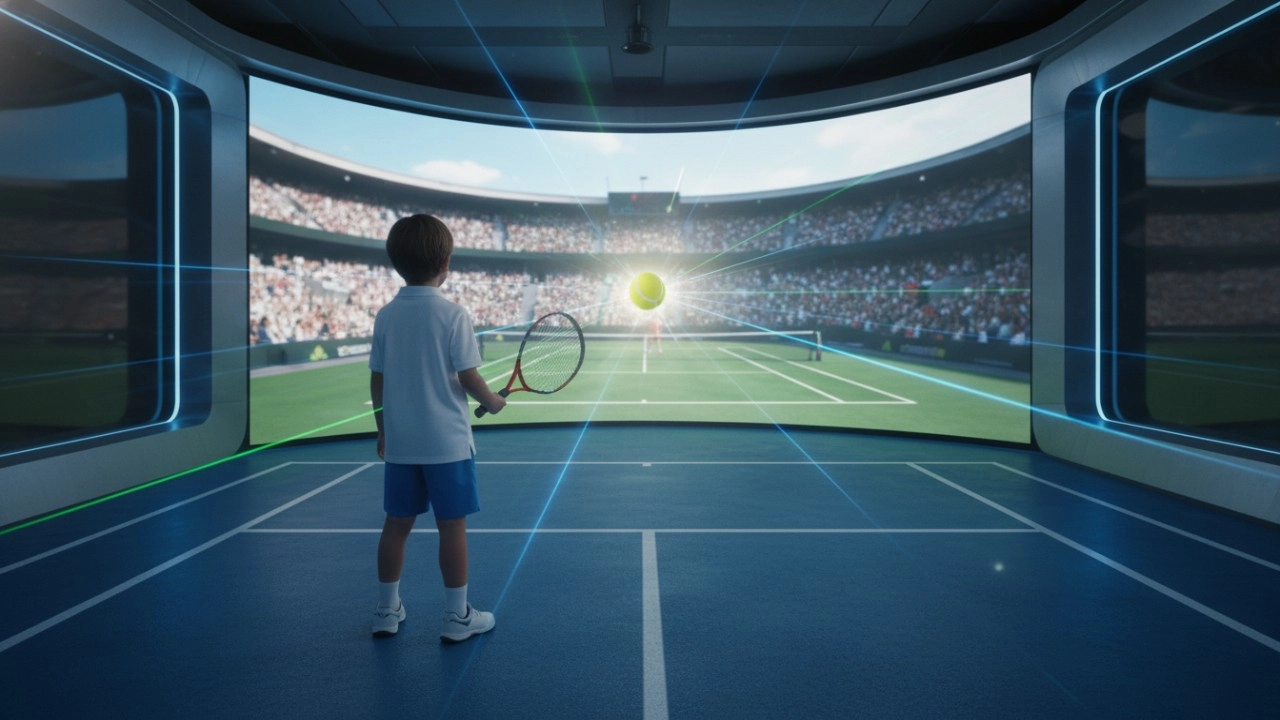
Tennis Simulators in 2026: The Ultimate Guide to Virtual Courts and Advanced Training

Top 15 Dart Machine Manufacturers in 2026
Holographic Light and Shadow Restaurant
What is the difference between holographic projection and ordinary projection?
Ordinary projection is the process of projecting a two-dimensional image onto a flat screen, where the viewer sees a flat image. Holographic projection can present real three-dimensional images, allowing viewers to observe different faces of objects from different angles, with a strong sense of three dimensionality and realism. In addition, ordinary projection usually only requires simple equipment such as projectors and screens, while holographic projection requires more complex optical systems and technologies to achieve.
What are the technical difficulties of holographic projection?
One is the resolution and clarity of the image. To achieve high-resolution and high-definition 3D image reproduction, advanced optical equipment and algorithms are required. The second is the control of light interference and diffraction, which requires precise control of the propagation and interference conditions of light rays to ensure the stability and accuracy of the image. The third is the complexity and cost of the system. Holographic projection systems are usually quite complex, including optical components, light sources, control systems, etc., with high costs, which limits their widespread adoption.
Football Simulator
Simulation soccer suitable for which people to experience?
Suitable for all soccer fans, whether they want to get addicted to soccer anytime, anywhere, or by the field restrictions can not play football youth, as well as want to share the joy of the children's parents and children's families, all can find fun from it.
Infrared Shooting
How to attract customers when operating the program in shopping malls?
Create a cool venue decoration style and incorporate trendy elements, such as fluorescent light strips and anime-themed murals. o Launch diversified marketing models such as parent-child packages and couple packages, combined with time-limited promotional activities, such as half-price experience in the first three days of opening, to attract different groups of people such as families and couples to stop by and participate.
What is the difference between purchasing equipment for commercial operations and personal training?
Commercial operations should consider the durability, ease of operation, and attractiveness of the equipment, and it is preferable to choose cool-looking equipment that can withstand high-frequency use.
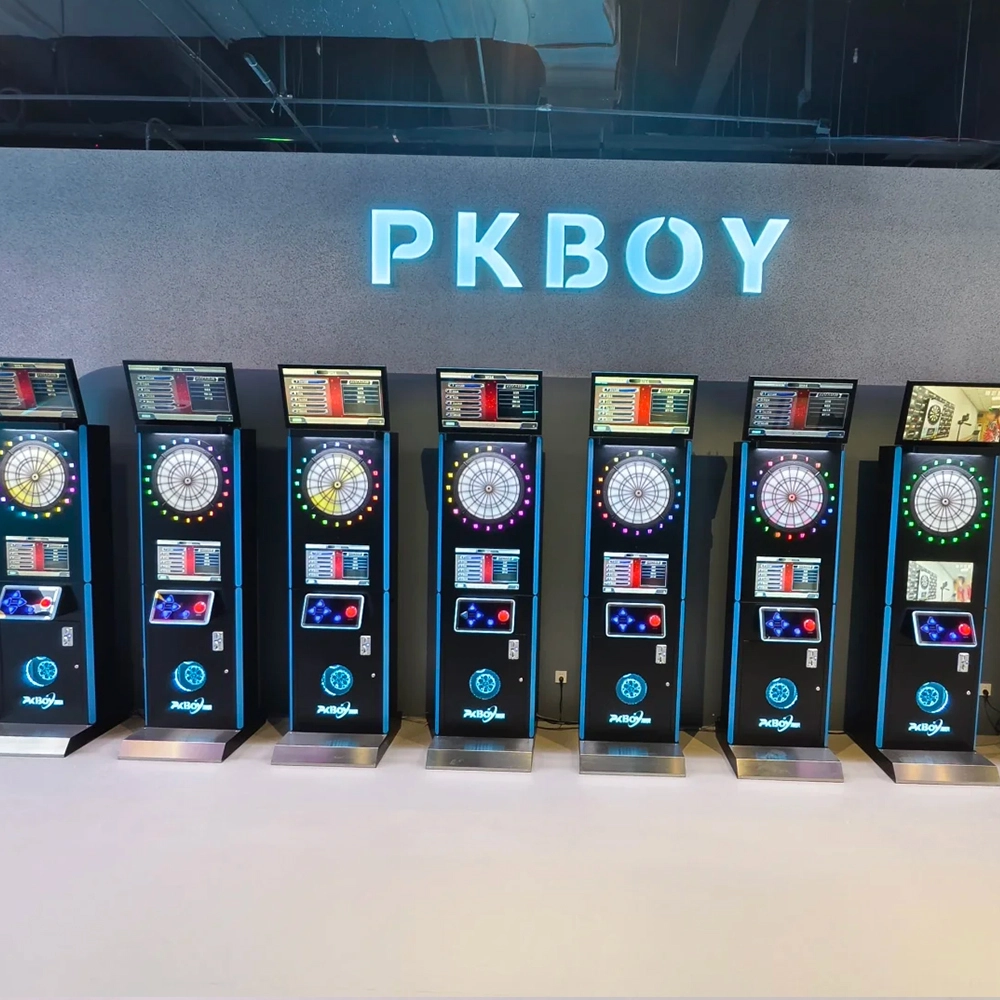
Dart Machines Bar Dart Machines
Joy Power is full of fun and excitement in the playground! The dart machine is suitable for all kinds of places, whether it is a bar, restaurant, KTV, or other entertainment venue, or a sports shop, club, or family leisure space, and can be perfectly adapted. In commercial venues, holding individual and team darts tournaments from time to time can attract more customers and increase the popularity and revenue of the venue, supplemented by various preferential activities, which can directly promote consumption and form a cycle of consumption of all the goods in the shop.
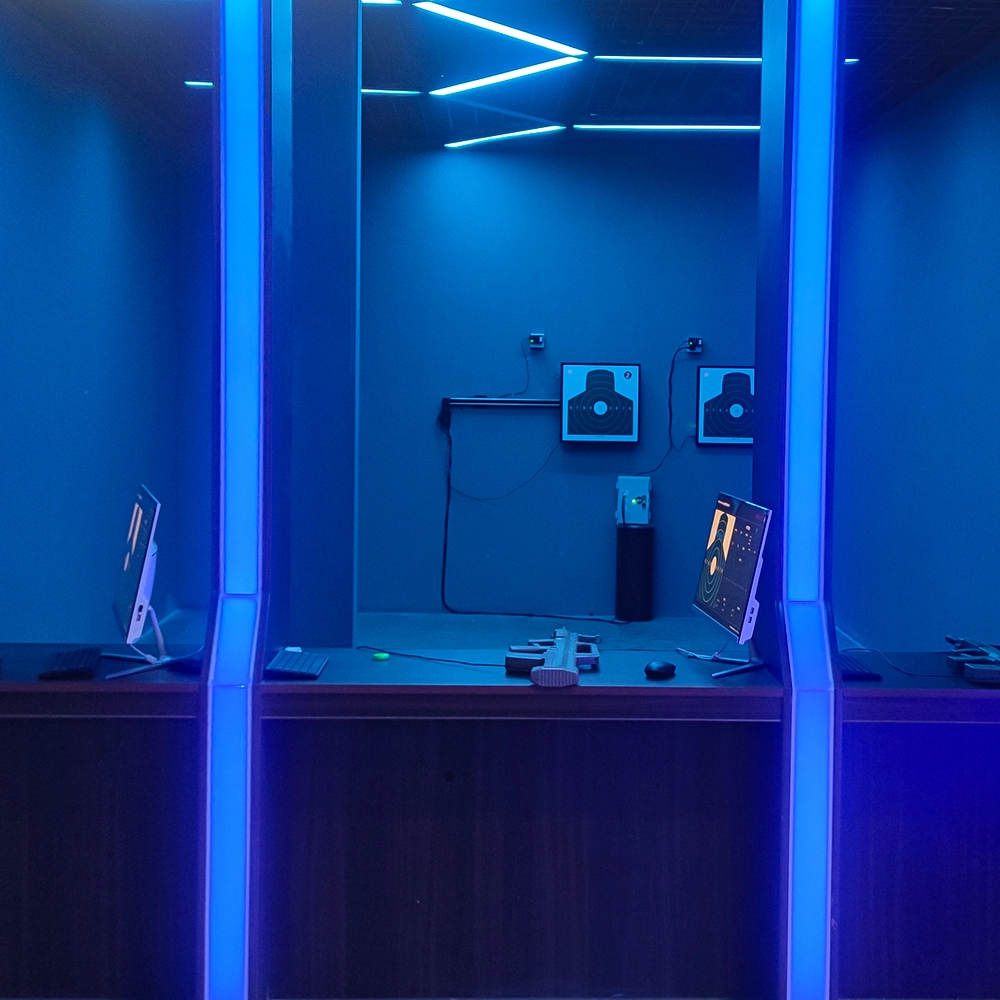
Infrared Shooting
Highly simulated simulation training analysis equipment, with advanced design concepts, fast system development, ease of operation and use, stable technical performance, less consumption of training, site dependence on a small group training is highly interesting, safe, and reliable, and other outstanding features. Product design to solve the basic skills of light weapons precision shooting as a starting point, to improve the safety of shooting training and training efficiency as the fundamental purpose, highlighting the simulation, information technology, and combat training requirements, can be in small indoor and outdoor venues and does not use live ammunition to complete the basic shooting training.
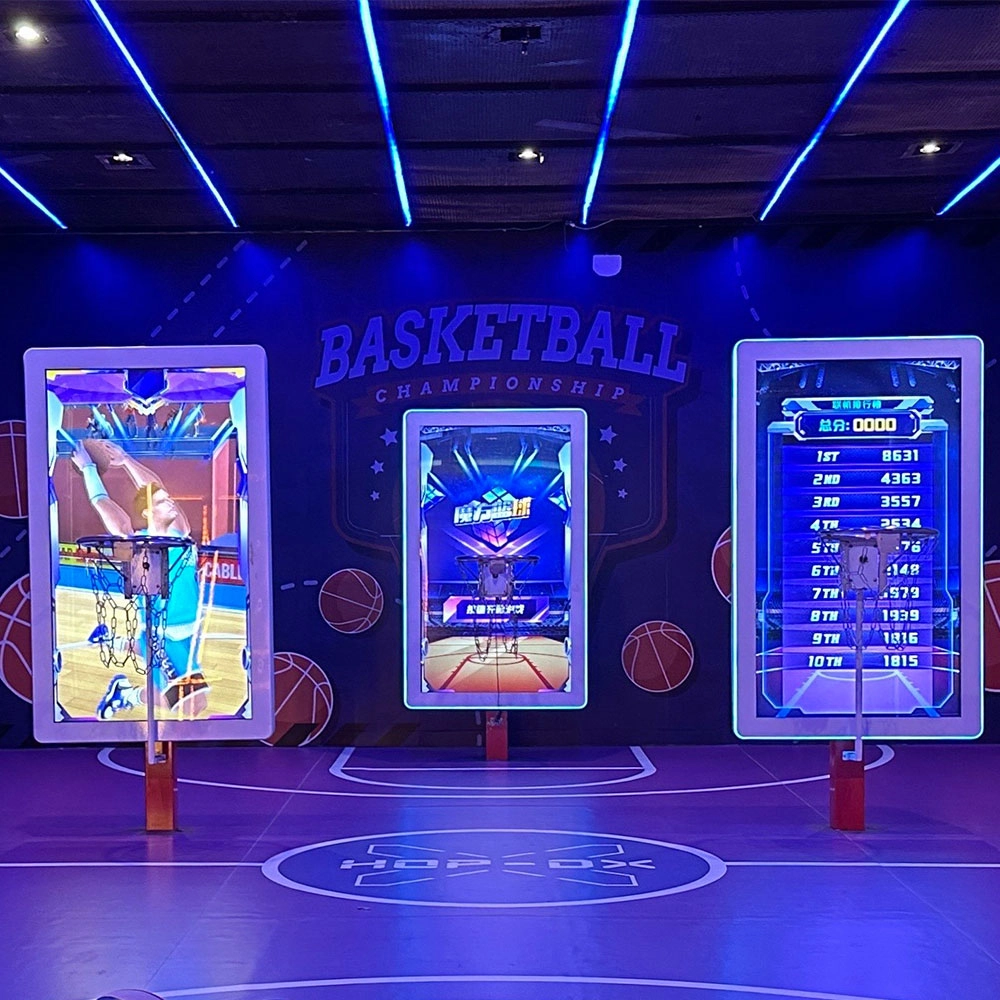
Multi-Player Interactive Shooting Machine
Joy Power is full of fun and exciting playgrounds! The basketball shooting machine is a classic amusement device integrating competition, entertainment, and interactivity. Based on the traditional basketball shooting sport, it integrates electronic scoring, sound and light effects, and challenge mechanisms to bring players an immersive game experience. The main body of the equipment is usually built with a metal frame, equipped with a standard-sized basket and a sturdy rim, with multiple sets of sensors to accurately capture the trajectory of the shot; when the player shoots the ball, the machine's built-in sensors count the score in real time and present the score, remaining time, and challenge goals through the LED display or LCD screen, with exciting sound effects and colorful lights to create a tense and exciting gaming atmosphere.
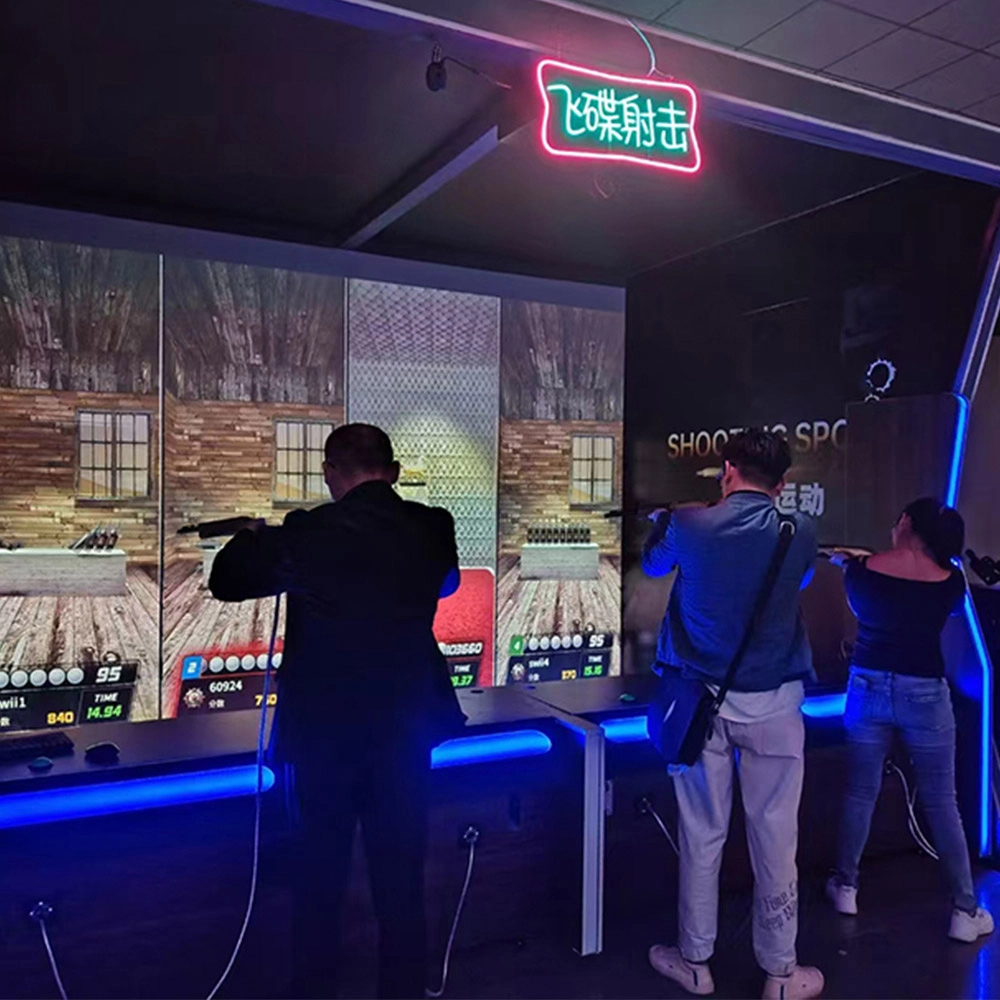
Indoor Wave Play Disc Shooting Equipment
Joy Power is full of fun and exciting playgrounds! The saucer shooting equipment in the indoor hip play hall is an immersive entertainment device integrating high-definition projection scenes, simulated air rifles, and multi-mode interactive gameplay, which allows players to experience the excitement of virtual shooting and the fun of social competition through laser-sensing scoring and multi-sensory feedback.
Ready to take your venue to the next level?
Leave us a message here, and our team will get back to you promptly.
Whether you're interested in custom orders, technical specifications, or partnership opportunities, we're here to assist you.
© 2025 FUNTECH ALL RIGHTS RESERVED

Weixia Lei
Fun_Tech-s
fun_tech20