
How to Choose Indoor Soccer Simulation Equipment for FECs?
- 1. How do I calculate required footprint and throughput per lane to hit revenue targets with an indoor soccer simulator?
- 2. What are realistic component lifespans and maintenance costs for interactive turf, projectors, and sensorized balls?
- 3. What tracking accuracy and network latency specs should I require for realistic ball/player interactions?
- 4. How do I ensure ADA accessibility and safety compliance for indoor soccer interactive attractions?
- 5. How should I compare software licensing (SaaS vs perpetual) and content-update strategies for long-term attraction freshness?
- 6. How can I integrate indoor soccer simulation systems with my POS, booking, and loyalty systems without painful API work?
As operators and buyers in location-based entertainment and digital sports entertainment, FEC owners need actionable, technical guidance when purchasing indoor soccer simulation interactive entertainment equipment. This article answers six long-tail, pain-point questions that often lack depth online. It embeds vendor-evaluation criteria, compliance checkpoints (CE/UL/ISO, FIFA turf guidance, GDPR/CCPA), and practical formulas to size attractions, estimate lifecycle costs, and evaluate tracking and networking performance for immersive AR/VR and projection-based soccer experiences. For quotes and technical specs, visit www.funtechgame.com or email vicky@funtechgame.com.
1. How do I calculate required footprint and throughput per lane to hit revenue targets with an indoor soccer simulator?
Why this matters: Operators frequently buy a simulator without modeling realistic throughput (sessions/hour) and end up with bottlenecks, poor ROI, or underutilized space. A precise calculation prevents costly mistakes.
Step-by-step approach:
- Define session formats and pricing: list all playable formats (free kick challenges, penalty shootouts, skill drills, leagues) and standard session lengths (e.g., 3–10 minutes per session). Interactive soccer simulators often offer configurable modes—short challenge modes have much higher throughput than league matches.
- Measure turnaround time: include loading/walk-up time, safety briefing/demo (often 30–90 seconds), shoe change if needed, and cleaning time between groups. Turnaround often adds 25–50% to pure gameplay time.
- Compute theoretical max throughput per lane: (60 min) / (session + turnaround). Example: a 5-minute session + 1.5-minute turnaround -> ~9.2 sessions/hour.
- Apply realistic utilization: for open-access attractions expect 60–80% of theoretical max during peak, lower off-peak. For reservation-based play, use booked-slot rates (80–95% during scheduled peak windows).
- Estimate daily revenue per lane: sessions/hour × operating hours × average spend per session (base fee + upsells like coaching, video downloads, branding packs). Include ancillary revenue from food, merch, and leagues.
- Allocate clear run-off around the interactive turf or net area to meet safety requirements (manufacturer specs + local codes).
- Plan sightlines for parents and spectators, queuing zones, and staging area for groups to minimize turnaround.
- Design for modular expansion—choose vendors offering scalable multiplayer modules to add lanes without redoing infrastructure.
- Interactive turf and surface: quality artificial turf with integrated sensors or conductive layers is durable but expect wear zones (goal areas) to need targeted replacement earlier. Choose turf systems certified under relevant third-party testing for durability. Inspect high-traffic seams quarterly; plan for targeted patching rather than full replacements.
- Projectors and displays: modern laser projectors commonly offer 20,000+ hours of maintenance-free life; lamp-based projectors need lamp replacements (2,000–6,000 hours). LED walls have long lifespans but higher initial CAPEX. For continuous operation, prefer laser projection to reduce interval maintenance.
- Sensorized balls and wearables: choose systems with easily replaceable IMU modules or replaceable battery packs. Ball shells wear, and mount points for sensors are stress points—expect higher turnover if used intensively by children. Prioritize supplier warranties and on-site spare-part kits.
- Tracking cameras and LIDAR units: typically reliable for years but require periodic cleaning, recalibration, and firmware updates. Environment (dust, humidity) affects service intervals.
- Consumables (balls, netting, turf patching) — keep spares on-site, negotiate spare-part bundles in purchase agreements.
- Service contracts — evaluate hourly rates and SLA response times. For high-throughput venues, prioritized SLAs (on-site next-business-day or same-day) are often worth the High Quality.
- Software updates — confirm whether updates are included (SaaS) or billed separately; plan for annual licensing fees.
- Positional accuracy: aim for sub-5 cm (≤50 mm) positional accuracy for ball tracking in play modes where ball contact determines scoring; better accuracy (≤10–20 mm) is preferable for fine-grain coaching analytics but increases cost.
- Update rate/sampling: 60–120 Hz for ball tracking gives smooth updates; 30–60 Hz may be acceptable for simpler challenge modes.
- End-to-end latency: target below 100 ms for interactive visual feedback; sub-50 ms is ideal for near-instant response in AR/VR. Total latency includes sensor capture, processing, network, and rendering.
- Ask for a site demo with your own balls and test profiles. Use high-speed smartphone cameras (240 fps) or a mobile app to verify synchronization and lag qualitatively, then request vendor log files for timestamps to calculate measured latency.
- Require accuracy benchmarks under typical lighting and crowd conditions—not just in ideal lab settings.
- Insist on configurable smoothing and prediction algorithms: these can reduce apparent latency but may introduce position overshoot—test both raw and smoothed outputs.
- Local processing (edge compute) is preferred to minimize WAN latency; check whether the system runs critical loops locally or depends on cloud round trips.
- Design a dedicated LAN (wired where possible) for interactive equipment and prioritize QoS for tracking data to keep jitter and packet loss low.
- Regulatory standards: ensure electrical hardware has CE marking for EU sales, UL/ETL listing for US electrical safety, and ISO 9001 for manufacturer quality processes where available. For turf surface properties, check third-party durability and shock-absorption testing; for football turf specifically, reference FIFA Quality Programme criteria if applicable for full-size installations.
- ADA accessibility: provide accessible access routes, transfer options, and alternative gameplay modes for players with mobility impairments or visual/hearing limitations. This includes clear sightlines for spectators and staff assisted entry where needed.
- Age-appropriate safeguards: configure configurable force thresholds and physical barriers. For youth programming, ensure lower launch speeds, smaller-area play, and staff-supervised sessions.
- Safety operational procedures: documented safety briefings, staff training plans, incident reporting workflow, and first-aid readiness. Include routine pre-opening checks (hardware anchorage, net integrity, sensor function).
- Data privacy & biometric data: if the system records video, facial information, or biometric analytics, comply with GDPR (EU) and CCPA (California) where applicable. Provide clear consent flows and data-retention policies—this is essential for location-based entertainment providers gathering player performance or image data.
- SaaS (subscription) benefits: regular content updates, remote analytics dashboards, centralized leaderboards, and push updates reduce in-house IT overhead. SaaS often includes cloud-hosted matchmaker and league services for multiplayer modes.
- Perpetual license benefits: one-time CAPEX and more offline autonomy. However, perpetual models often carry optional paid update/maintenance agreements.
- Hybrid models: many vendors use a base perpetual license for core gameplay and SaaS add-ons for cloud leaderboards, seasonal content, and analytics. Evaluate the upgrade cadence and cost breakdown.
- Content pipeline and localization: confirm how quickly the vendor can deliver seasonal skins, local-language interfaces, and regional marketing tie-ins. Ask for a roadmap and average lead times for bespoke content.
- What is included in base licensing vs. optional content packs? Are safety-critical firmware updates free?
- Are analytics and player-data exports available? Is raw telemetry accessible for third-party analysis?
- How are leaderboards and prize mechanics handled with multiple venues—are cross-site tournaments supported?
- What SLAs exist for critical security patches and content rollouts?
- Standard APIs and webhook support: require RESTful APIs, OAuth2-based auth, and webhook/event streams for real-time session start/end, payment confirmations, and leaderboard updates.
- Pre-built connectors: ask if the vendor has certified integrations with major POS/booking/CRM vendors commonly used in FECs. Pre-built connectors reduce development time and cost.
- Data schema and mapping: request sample payloads for key events (session booking, session start, revenue transactions, player profiles) and confirm field mappings for loyalty IDs and promo codes.
- Sandbox/test environment: insist on a staging environment so your IT team can validate flows without affecting production or customer data. Verify GDPR/CCPA compliance in test data handling.
- Offline fallbacks: define a reconciliation plan if network connectivity is lost—local queuing of events and automatic resync are essential to avoid lost revenue or double-billing.
Practical checklist for space planning:
Bottom line: model session types (short vs long play), realistic turnaround, and utilization. Use conservative utilization rates when forecasting to avoid overestimating revenue.
2. What are realistic component lifespans and maintenance costs for interactive turf, projectors, and sensorized balls?
Why this matters: Buyers often get low upfront prices but face high ongoing OPEX due to component replacement and service contracts.
Key components and expected lifecycles:
Maintenance cost drivers and mitigation:
Procurement tip: require an MTBF/MTTR commitment and a published parts-replacement schedule in the contract. Ask vendors for real-world reference sites and maintenance logs to validate claims.
3. What tracking accuracy and network latency specs should I require for realistic ball/player interactions?
Why this matters: Poor tracking or high latency makes the interactive experience feel “off” and breaks immersion; this is especially critical for augmented reality, projection mapping, and competitive modes where timing affects scoring.
Recommended performance targets (industry-practical guidelines):
How to test vendor claims:
Network and infrastructure considerations:
Note on metrics: vendors sometimes provide optimistic lab numbers. Require contract language that defines acceptable accuracy/latency ranges under stated conditions and remedies if not met.
4. How do I ensure ADA accessibility and safety compliance for indoor soccer interactive attractions?
Why this matters: Accessibility and safety aren’t optional—non-compliance risks legal exposure and harms guest experience. Many online sources give general advice but lack FEC-specific operational guidance.
Actionable compliance checklist:
Procurement requests should include a compliance pack from the vendor: certificates, testing reports, suggested operational SOPs, and a statement of compliance for primary markets.
5. How should I compare software licensing (SaaS vs perpetual) and content-update strategies for long-term attraction freshness?
Why this matters: Content freshness drives repeat visitation. However, confusing licensing models can hide costs and make updates disruptive.
Key considerations:
Procurement questions to ask vendors:
Operational tip: favor vendors that separate core safety/firmware updates from paid cosmetic/content updates. That ensures you receive security and performance patches even if you later change your content subscription model.
6. How can I integrate indoor soccer simulation systems with my POS, booking, and loyalty systems without painful API work?
Why this matters: Seamless integration maximizes utilization, improves customer experience, and enables data-driven operations; poor integration creates double-entry work and lost revenue.
Integration checklist:
Contract clause to include: require a technical integration plan and timeline, with specific deliverables (API documentation, sample code, support hours) and acceptance criteria before final payment milestones.
Closing summary: Selecting the right indoor soccer simulation interactive entertainment equipment balances guest experience (accuracy, latency, and content freshness), operator economics (footprint, throughput, maintenance), and compliance (safety, accessibility, data privacy). Prioritize systems with proven tracking accuracy, edge-processing architectures, clear maintenance SLAs, and robust API integrations to maximize uptime and revenue per square foot. For procurement, require vendor compliance packs, on-site demos under real conditions, and contractual performance thresholds.
Advantages of a well-chosen system include higher throughput and repeat visitation through engaging, low-latency interactive soccer experiences; lower OPEX via durable hardware and remote software updates; and scalable revenue via leagues, tournaments, and cross-site leaderboards. Proper integration with POS and booking systems improves conversion and reduces friction for guests.
Contact us for a detailed site assessment and quote: www.funtechgame.com — vicky@funtechgame.com
Interactive Sports Arcade vs Traditional Arcade Machines: Key Differences (2026 Guide)
How Interactive Sports Arcade Machines Work (Sensors, Projection & AI) - 2026 Guide
What Defines Interactive Sports Arcade Equipment in 2026?
What Is Interactive Sports Arcade Equipment? Complete Beginner Guide (2026)
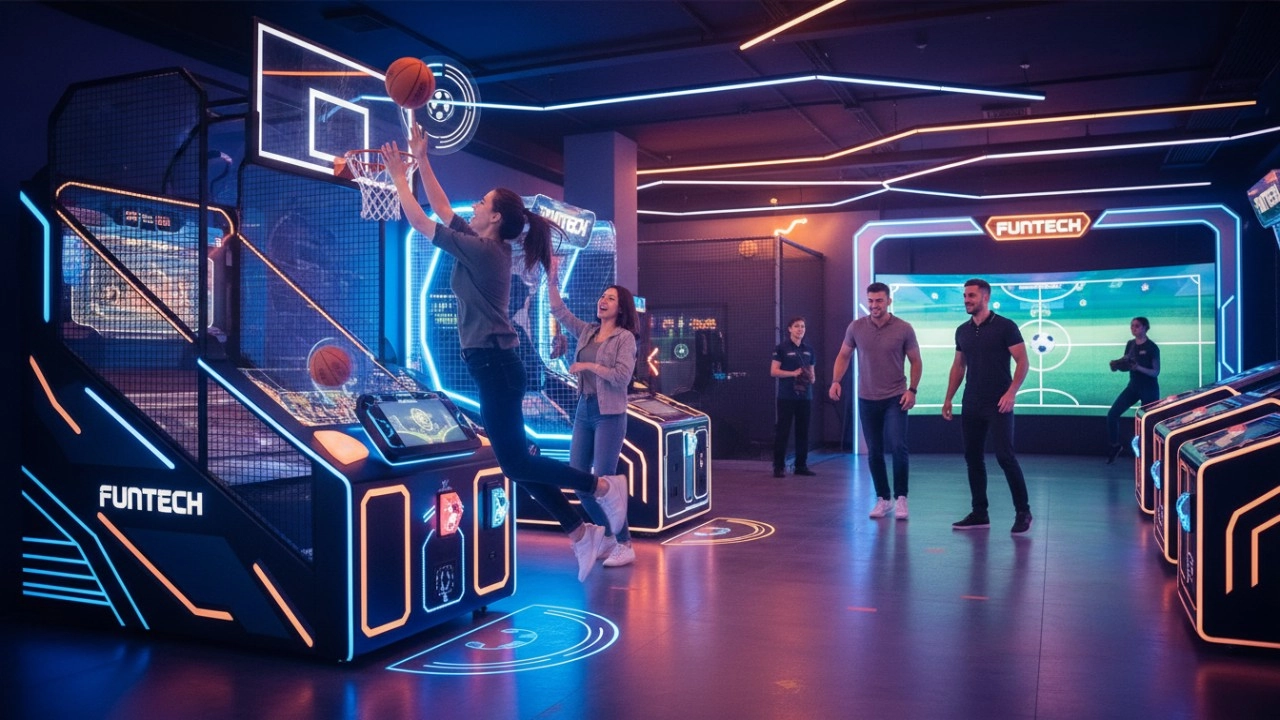
The Ultimate Guide to Interactive Sports Arcade Equipment for Commercial Entertainment (2026 Edition)
Products
How to judge the quality of live firing equipment good or bad?
Check the firearm itself and the supporting targeting system, the reliability of the equipment in use such as continuous shooting, adaptability to the bad environment, the equipment's material technology and operating comfort, etc.
Infrared Shooting
What is the difference between purchasing equipment for commercial operations and personal training?
Commercial operations should consider the durability, ease of operation, and attractiveness of the equipment, and it is preferable to choose cool-looking equipment that can withstand high-frequency use.
Football Simulator
How does the picture effect of simulation soccer achieve realism?
With the help of advanced technology, the green field is accurately reproduced with fine turf texture and realistic player movements. From the players running, passing to shooting, are lifelike, to give players a sense of immersion.
Golf Simulator
What are the after-sales services after purchasing the equipment?
Generally, a 1-year warranty is provided. During the warranty period, parts damaged due to quality problems, such as motor failure, display problems, etc., will be repaired or replaced free of charge. There will also be technical support, including equipment installation and debugging guidance, operation training, to ensure the smooth use of the user, after-sales response time is usually within 24 - 48 hours.
Interactive Rollerball
How to reduce operating costs?
Starting with equipment procurement, choose cost-effective, durable and easy-to-maintain products, which can save money for subsequent maintenance. Reasonable arrangement of staff, reduce the number of staff on duty during off-peak hours, train staff to have multi-skills, such as being able to operate the equipment and guide customers part-time, so as to improve the efficiency of manpower and reduce the cost of manpower.
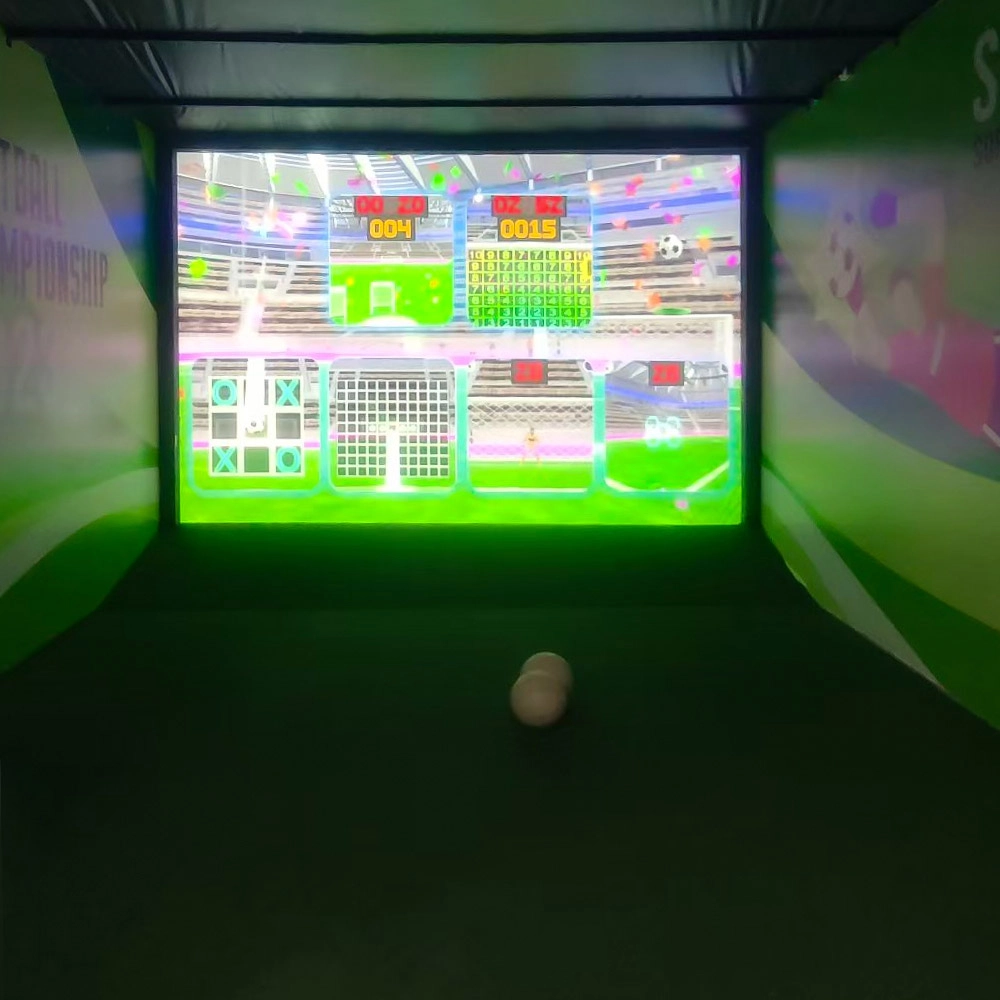
Indoor soccer simulation Interactive entertainment equipment
FUNTECH is a playground full of fun and excitement! Soccer simulation is an innovative entertainment project that digitally presents the real soccer game. With the help of advanced technology, the green field is accurately reproduced on the screen, from the delicate turf texture to realistic player movements, all lifelike. Players can direct the team's offense and defense by controlling a joystick, somatosensory device, or cell phone. The game features a variety of modes, including an intense and exciting league where you can compete with players from all over the world, as well as a casual and fun game, which is suitable for parents and children to share the fun. No need to be restricted by the venue and weather; you can enjoy the charm of soccer and feel the passion of the game anytime and anywhere.
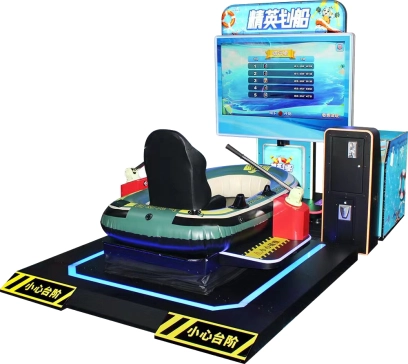
FUNTECH Interactive Indoor Rowing Simulator - Commercial Digital Sports Machine with AI Competition
A brand-new rowing simulation competitive game, operating on a single machine station, supports player interaction and competition with 3 AI opponents. The station is equipped with the latest rowing equipment, enabling players to experience realistic rowing operation. The competition process is relaxed and fun, while also providing fitness exercise benefits.
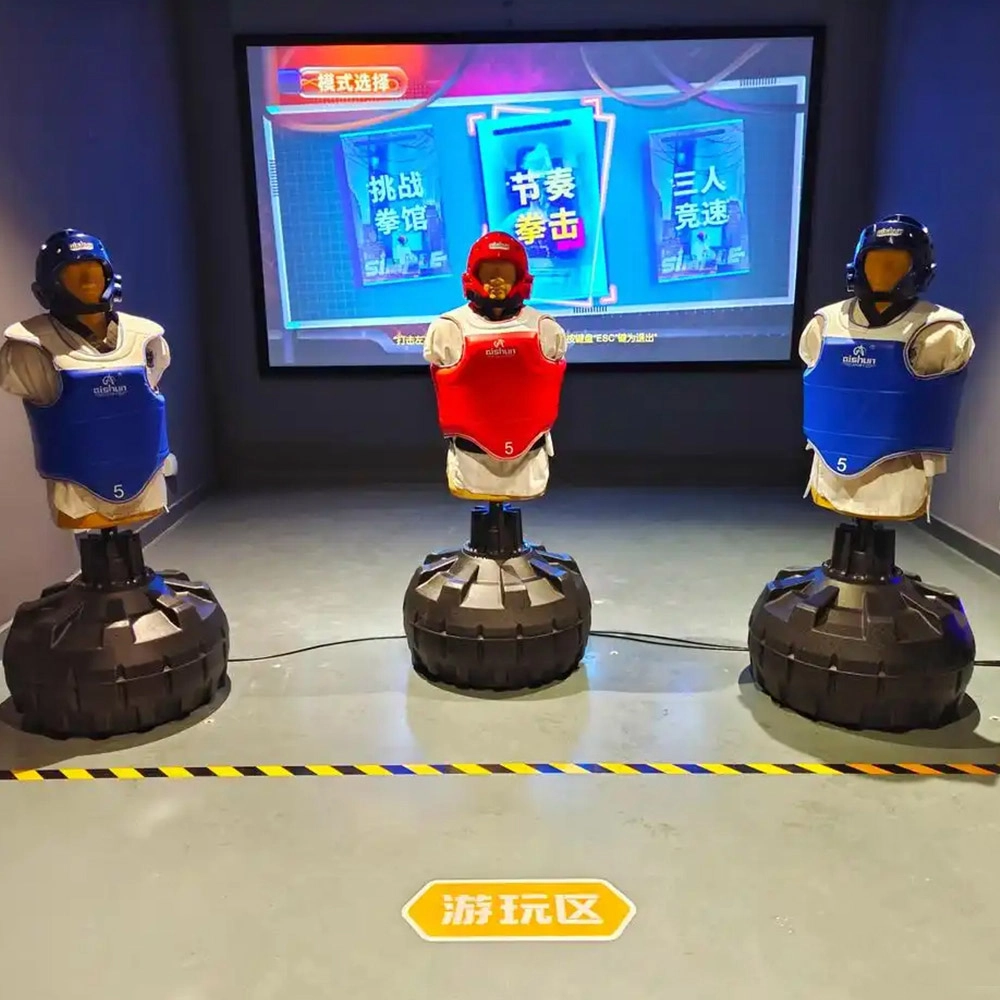
Indoor Boxing Equipment
FUNTECH is full of fun and exciting playgrounds! The indoor boxing simulation equipment combines pressure-sensitive boxing gloves with dynamic projection scenes, combining sports and fitness with entertainment and competitive attributes, supporting single-player training and two-player sparring modes, and accurately recording hitting data and generating sports reports, making it suitable for all-age experiences and safe and low-loss.
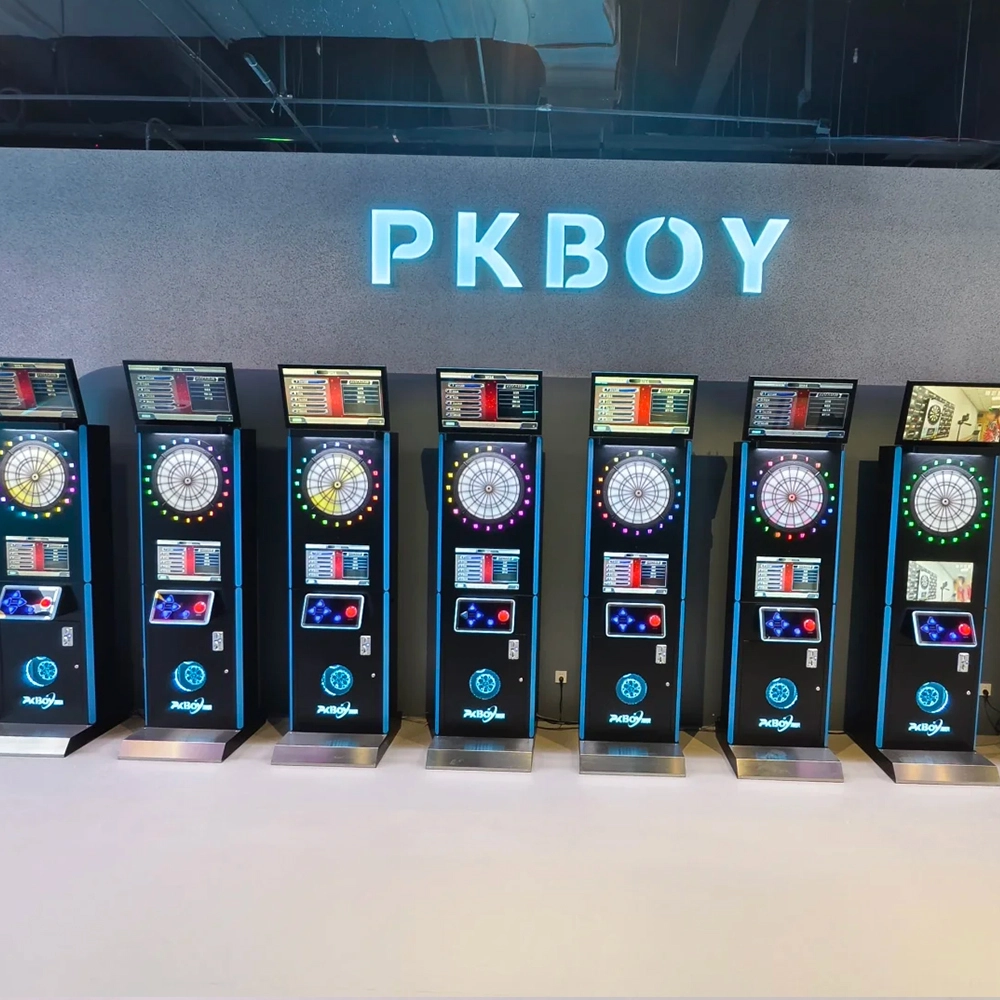
Dart Machines Bar Dart Machines
Joy Power is full of fun and excitement in the playground! The dart machine is suitable for all kinds of places, whether it is a bar, restaurant, KTV, or other entertainment venue, or a sports shop, club, or family leisure space, and can be perfectly adapted. In commercial venues, holding individual and team darts tournaments from time to time can attract more customers and increase the popularity and revenue of the venue, supplemented by various preferential activities, which can directly promote consumption and form a cycle of consumption of all the goods in the shop.
Ready to take your venue to the next level?
Leave us a message here, and our team will get back to you promptly.
Whether you're interested in custom orders, technical specifications, or partnership opportunities, we're here to assist you.
© 2025 FUNTECH ALL RIGHTS RESERVED

Weixia Lei
Fun_Tech-s
fun_tech20