
How to calculate space requirements for arcade dart machines for sale?
- 1) How do I calculate the exact floor depth required from wall to front aisle for a single arcade dart machine for sale (soft-tip vs steel-tip)?
- 2) What lateral spacing and adjacency rules should I use when installing multiple arcade dart machines for sale in a row or bank?
- 3) What ceiling height and overhead clearances are required when purchasing an arcade dart machine for sale?
- 4) What electrical and network infrastructure do I need for an arcade dart machine for sale (cashless, online leaderboards, and tournaments)?
- 5) How much room and what equipment do I need to safely ship, install and maintain an arcade dart machine for sale in a commercial venue?
- 6) How do I calculate space-driven revenue projections for an arcade dart machine for sale so I can compare cabinets and layout options?
- Concluding summary: Advantages of purchasing an arcade dart machine for sale
Arcade Dart Machine for Sale: Space Planning & Buying FAQ for Operators
Buying an arcade dart machine for sale is more than choosing a cabinet — it requires precise space planning, electrical and network prep, safety and ADA compliance, and realistic ROI modeling. Below are six specific long-tail questions beginners ask that often lack modern, seat-of-the-pants answers online. Each answer includes practical measurements, formulas and venue-ready recommendations backed by industry norms used by experienced operators and manufacturers.
1) How do I calculate the exact floor depth required from wall to front aisle for a single arcade dart machine for sale (soft-tip vs steel-tip)?
Why this matters: Venues commonly under- or over-allocate depth per lane, causing cramped play or wasted rentable space. Use a clear measurement formula that accounts for cabinet footprint, official oche (throwing line) distance, player movement, and spectator/aisle clearance.
Formula (recommended):
Total depth (floor) = cabinet depth (from wall) + oche distance (board face to throwing line) + player buffer behind oche + spectator/aisle clearance
Industry guideline values (use metric + imperial):
- Cabinet depth (typical electronic dartboard cabinet): 0.8–1.2 m (31–47 in). Verify exact model spec.
- Oche (throwing line) distance: soft-tip electronic darts — 2.438 m (8 ft) from board face; steel-tip (regulated league) — 2.37 m (7 ft 9.25 in). Specify which machine you purchase.
- Player buffer behind oche (for natural stance, step-back, and wheelchair space): 0.6–1.0 m (24–40 in). Use 1.0 m for tournaments or venues with mixed mobility users.
- Spectator/aisle clearance in front of thrower (walkway, seating, prize lane): 0.9–1.5 m (36–60 in). If players will gather in front, use 1.25–1.5 m.
Example (soft-tip cabinet against a wall):
If cabinet depth = 1.0 m, oche = 2.438 m, player buffer = 1.0 m, spectator clearance = 1.0 m → total depth = 1.0 + 2.438 + 1.0 + 1.0 = 5.438 m (~17.85 ft).
Practical note: Many entertainment centers reduce spectator clearance when space is tight and allow people to stand to the sides; in dense arcade clusters an operational minimum depth can be about 3.5–4.0 m (11.5–13 ft) per lane, but that compromises comfort and ADA compliance. For comfortable, accessible installations and tournament use, plan 4.5–5.5 m (15–18 ft) depth per lane as calculated above.
2) What lateral spacing and adjacency rules should I use when installing multiple arcade dart machines for sale in a row or bank?
Why this matters: Adjacent cabinets with insufficient lateral clearance create safety hazards (swinging arms, stray darts), reduce play comfort and limit throughput. Answers online often list only cabinet width, not human movement zones.
Recommended lateral spacing formula:
Required lateral width per machine = cabinet width + player swing zone (both sides) + minimum spectator buffer
Guideline values:
- Cabinet width: typical soft-tip cabinet 0.8–1.0 m (31–40 in).
- Player swing zone: allocate 0.6–0.9 m (24–36 in) on each side to allow stance shift and follow-through.
- Spectator buffer between adjacent play lines: 0.5–1.0 m (20–40 in). For tournaments or high-volume locations, increase to 1.0 m.
Example: cabinet width 0.9 m + 0.8 m (both-side swing combined) + 0.8 m spectator buffer = ~2.5 m (98 in) of lateral space per lane.
Additional layout tips:
- Staggered rows: If you place cabinets back-to-back, ensure back-to-back cabinets have sufficient clearance for maintenance access (0.8–1.0 m) and wiring.
- Walkways: Maintain an accessible aisle of at least 0.9 m (36 in); for main circulation aisles or egress routes use 1.2–1.8 m (48–72 in) depending on local code.
- Grouping: For tournament bays, allow extra lateral space for referee and camera setups (add 0.5–1.0 m per lane).
3) What ceiling height and overhead clearances are required when purchasing an arcade dart machine for sale?
Why this matters: Low ceilings create an oppressive play experience and can interfere with lighting, scoreboards and overhead tournament cameras. Online sources skip ergonomics and real-world equipment attachments.
Practical requirements:
- Bull center height (standard): approximately 1.73 m (5 ft 8 in) above finished floor for standard darts. The cabinet design sets the board height; confirm with supplier.
- Minimum recommended ceiling height for arcade cabinets: 2.7–3.0 m (9–10 ft) to accommodate cabinet height (typically up to 2.4 m), lighting, and player arm extension. For venues planning overhead displays/camera rigs, 3.5 m (11.5 ft) or more is preferable.
- Lighting and fixtures: avoid low-hanging lights directly over the oche to prevent glare. Use diffused overhead lighting and directional accents on the cabinet face.
Ergonomic tip: Ensure there is at least 0.5 m (20 in) of free air above the highest point of the cabinet to allow scoreboard screens, signage or speaker mounts without crowding.
4) What electrical and network infrastructure do I need for an arcade dart machine for sale (cashless, online leaderboards, and tournaments)?
Why this matters: Modern electronic dart cabinets are network-enabled (for global leaderboards, tournament modes and cashless payments). Insufficient power or poor network planning creates downtime and lost revenue, yet manufacturer power/network specs are often overlooked.
Power (electrical) guidance:
- Voltage: Most units are available in 110–120V (North America) or 220–240V (EMEA/APAC). Confirm the SKU for your region.
- Power draw: Typical active power draw ranges from 100–400 W depending on screens, lighting and peripherals. That equals roughly 1–4 A at 110–120V; specify exact amperage from the manufacturer.
- Recommendations: Give each cabinet a dedicated outlet on a standard circuit with surge protection and accessible switch. For banks of cabinets, balance loads across multiple circuits.
Network guidance:
- Connectivity: Prefer wired Ethernet for reliability (LAN port). If using Wi‑Fi, ensure robust 5 GHz coverage and test for consistent latency.
- IP & firewall: If cabinets push scores to cloud leaderboards, ensure the venue’s firewall allows outbound connections on required ports or set up NAT/port forwarding as per vendor instructions.
- Bandwidth: Each cabinet typically needs only a small, constant data stream (kB/s), but ensure the network can handle bursts during tournament updates and software patches. A small business-class internet link (10–50 Mbps) is generally sufficient for a venue with several cabinets.
- Security: Isolate arcade machines on a guest or DMZ VLAN to protect venue POS systems and comply with PCI scope for cashless payment integration.
Tip: Request the vendor’s network & electrical spec sheet before purchase. If you plan cashless payments or real‑time tournament play, coordinate with IT to reserve static IPs or ensure DHCP lease stability.
5) How much room and what equipment do I need to safely ship, install and maintain an arcade dart machine for sale in a commercial venue?
Why this matters: Shipping and install logistics are often underestimated—cabinet weight and crate size affect freight cost and door/access needs. Maintenance access and spare part planning impact uptime.
Shipping & install checklist:
- Dimensions & weight: Typical electronic dartboard cabinets ship crated. Expect cabinet unit weights in the range of ~50–150 kg (110–330 lb) depending on build, plus crate. Check manufacturer spec for pallet dimensions and weight.
- Handling: Require at least two trained staff for on-site uncrating; a pallet jack or forklift is recommended for heavy units. Ensure doorways and elevators exceed crate dimensions (measure width and height with margin).
- Space for service: Allow 0.8–1.0 m (31–40 in) clearance at the cabinet rear for service access and cable routing if the cabinet is not wall-mounted.
- Local approvals: Verify local electrical and fire-safety requirements. Some jurisdictions require fixed wiring or labeling for public amusement devices.
Maintenance & spare parts:
- Plan a spare parts kit: power supplies, fuse, replacement soft-tip darts and a spare scoring board or circuit board is a good start. For high-volume locations request the vendor’s recommended spares list.
- Uptime planning: Schedule proactive firmware updates and establish an SLA with the vendor or a local technician for next-business-day support if you host league nights or tournaments.
6) How do I calculate space-driven revenue projections for an arcade dart machine for sale so I can compare cabinets and layout options?
Why this matters: ROI depends on how many playable lanes you can fit into a given area while keeping play comfortable. Generic revenue numbers online are outdated; you need a venue-specific model that connects space allocation to throughput.
Step-by-step calculation method (operator-ready):
- Measure usable floor area reserved for darts (A_total in m2).
- Decide per-lane area using the earlier depth and lateral formulas (A_lane = depth × lateral width in m2). Use conservative figures for comfort or minimum figures if space-constrained.
- Calculate the number of lanes = floor(A_total / A_lane). Round down to ensure circulation space.
- Estimate average games per lane per operational hour (G/h). Use conservative figures initially—e.g., 6–12 games/h for casual play, 12–30+ for dedicated league/tournament sessions depending on game length and price point.
- Set price per game (P). Consider variable pricing: off-peak discount vs tournament pricing.
- Gross revenue per hour = lanes × G/h × P.
- Factor uptime (U, e.g., 0.9 for 90% uptime), operating days/month (D), and monthly operating costs per lane (maintenance, power, consumables, rent apportioned). Then compute monthly net revenue projection.
Example calculation framework (no fabricated numbers):Use your actual G/h and P to run scenarios. Many operators run sensitivity analyses (low/expected/high) to stress-test layout choices and decide whether to trade one wide lane for two narrower lanes or invest in seating and F&B to increase dwell time and conversion.
Optimization tips:
- Peak vs off-peak: Higher throughput windows (evenings/weekends) may justify tighter lane spacing if you maintain safety; keep at least the minimum recommended clearances in those cases.
- Mixed-use zones: Combining electronic dartboard cabinets with other interactive attractions (simulators, redemption games) can increase overall dwell time and cross-conversion, improving per-m2 revenue.
Concluding summary: Advantages of purchasing an arcade dart machine for sale
Arcade dart machines for sale offer a compact, high-engagement digital sports entertainment option that drives dwell time, repeat visits (leagues/tournaments) and social play. Benefits include networked leaderboards for player retention, flexible pricing (per game/tournament packages), relatively low maintenance for soft-tip electronic systems compared with full mechanical attractions, and modular layouts that can scale from single-cabinet placements to tournament bays. When you apply the measurement formulas and infrastructure checks in this guide, you reduce downtime, improve player comfort and maximize revenue per square metre.
For a precise site plan, spec sheet and quote tailored to your venue dimensions, electrical service and network, contact us for a custom proposal — we can provide recommended cabinet SKUs, CAD layout drawings and freight/install planning.
Website: www.funtechgame.com | Email: vicky@funtechgame.com
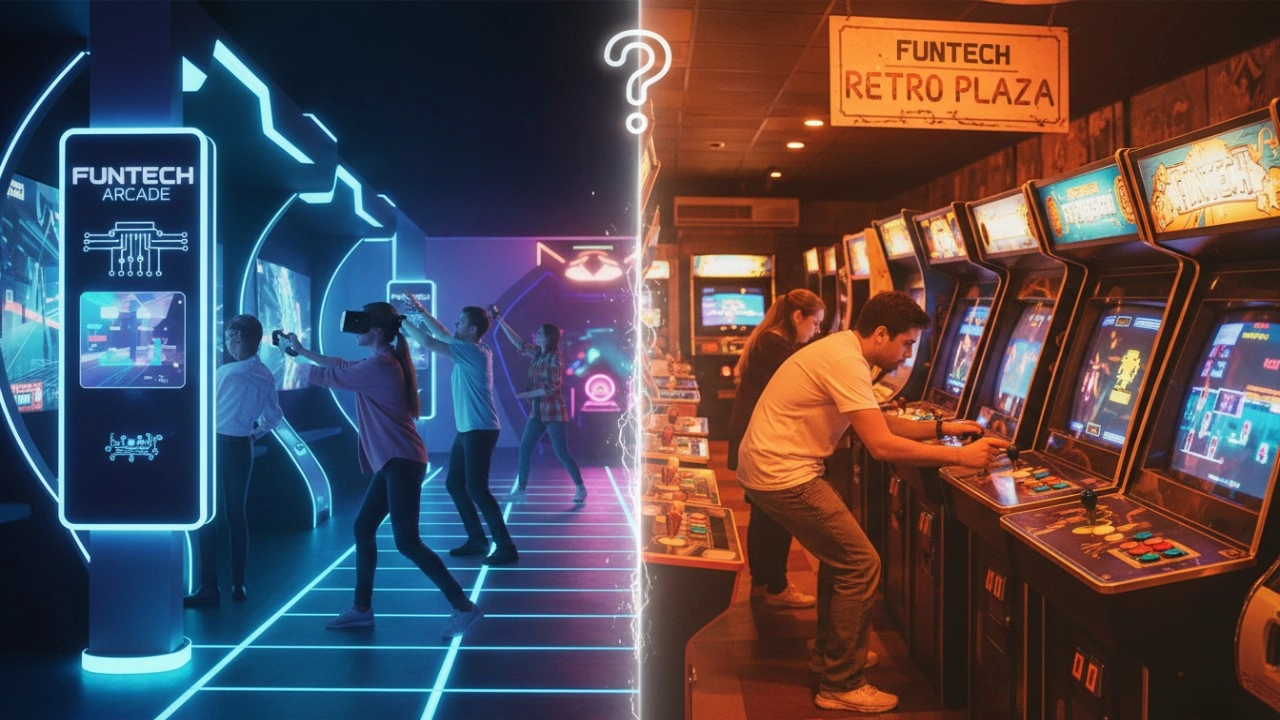
Interactive Sports Arcade vs Traditional Arcade Machines: Key Differences (2026 Guide)
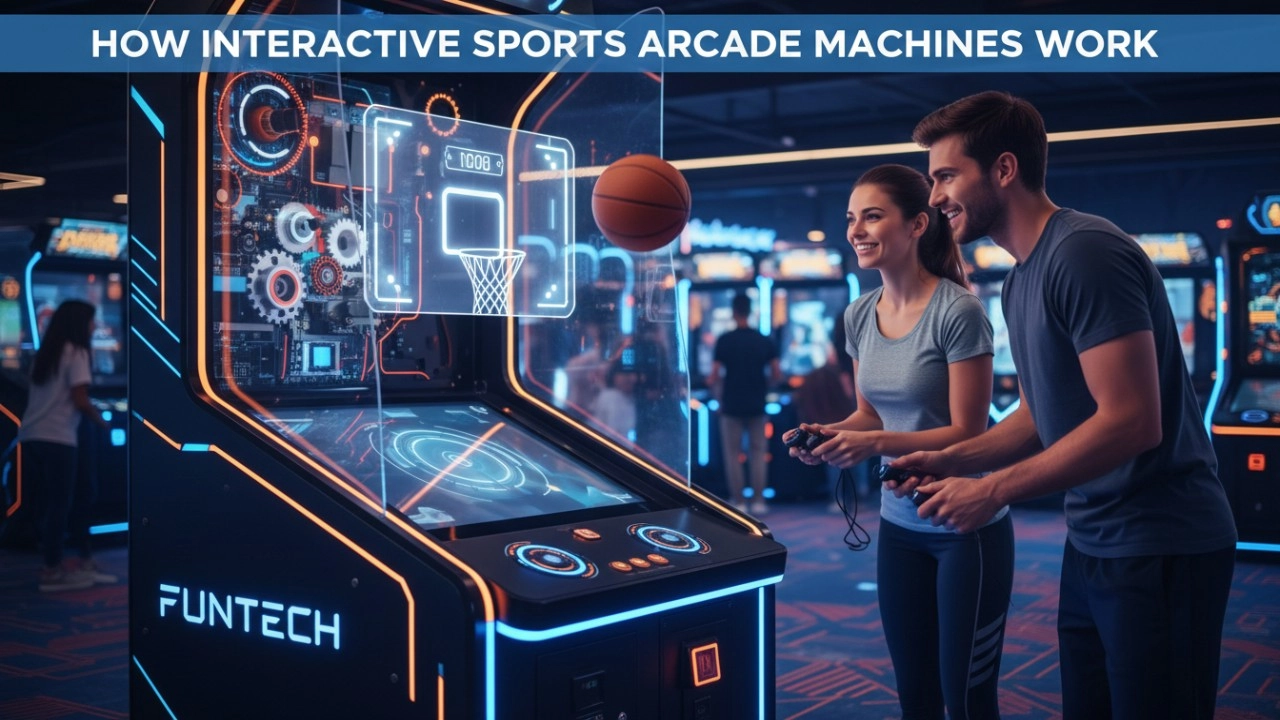
How Interactive Sports Arcade Machines Work (Sensors, Projection & AI) - 2026 Guide
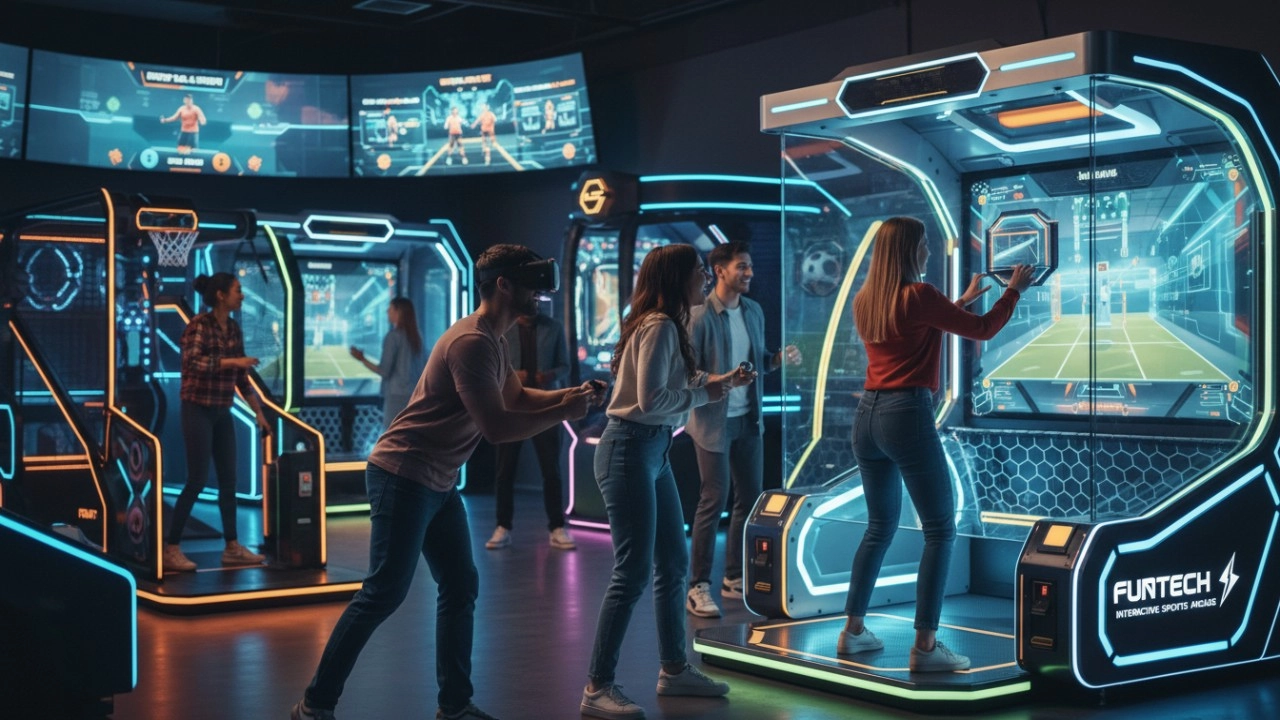
What Defines Interactive Sports Arcade Equipment in 2026?
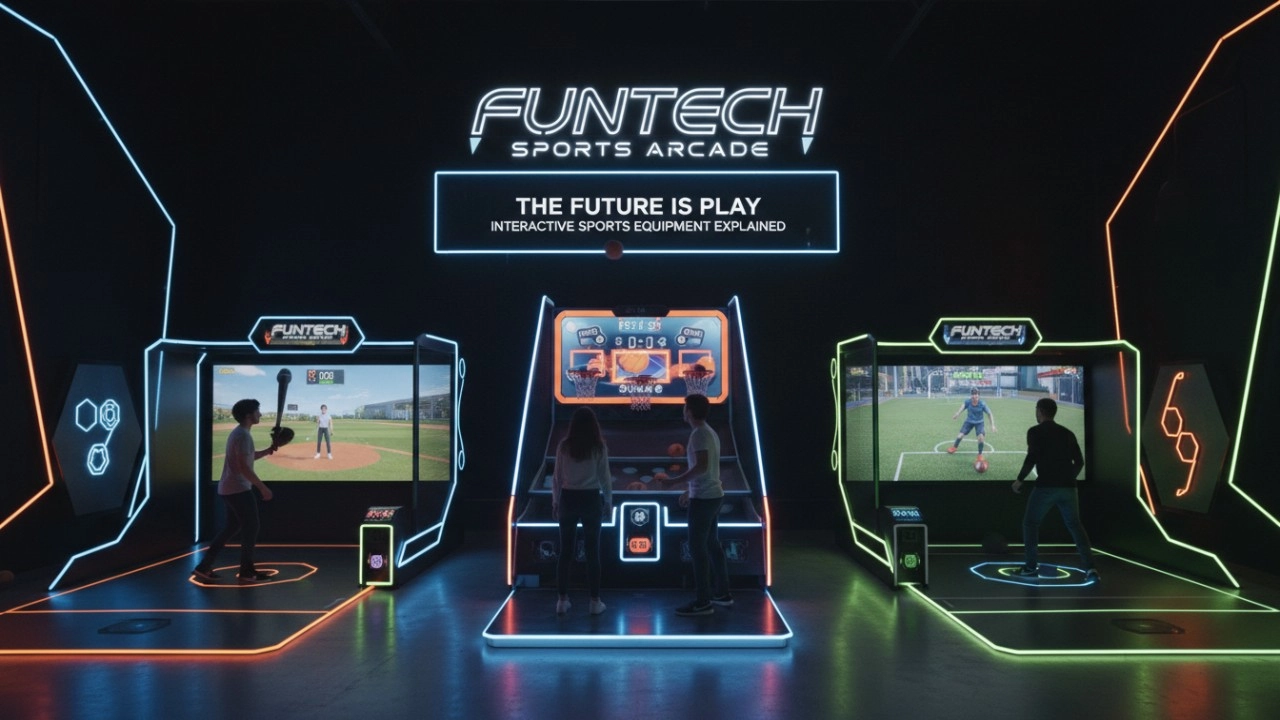
What Is Interactive Sports Arcade Equipment? Complete Beginner Guide (2026)
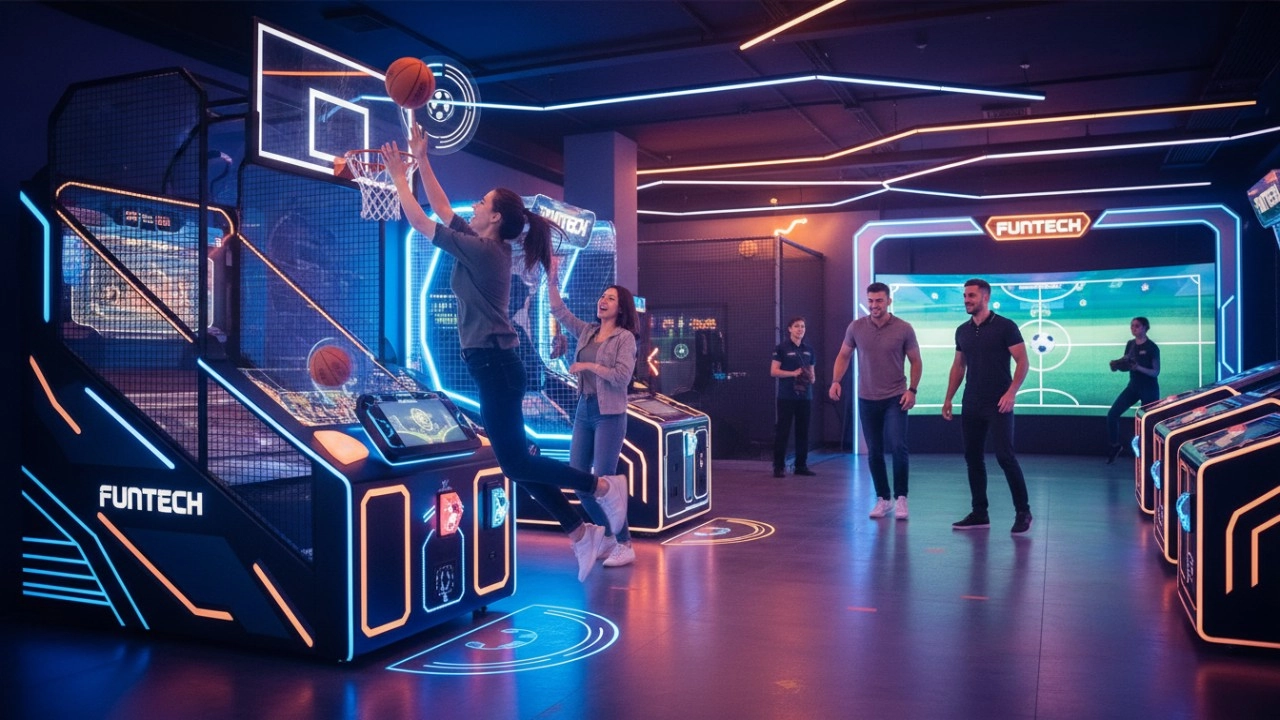
The Ultimate Guide to Interactive Sports Arcade Equipment for Commercial Entertainment (2026 Edition)
Golf Simulator
How to reduce operating costs?
Starting with equipment procurement, choose cost-effective, durable and easy-to-maintain products, which can save money for subsequent maintenance. Reasonable arrangement of staff, reduce the number of staff on duty during off-peak hours, train staff to have multi-skills, such as being able to operate the equipment and guide customers part-time, to improve the efficiency of manpower and reduce manpower costs.
How to attract customers when operating the program in shopping malls?
Create a cool venue decoration style, incorporating trendy elements, such as fluorescent light strips and anime-themed murals. o Launch diversified marketing models such as parent-child packages and couple packages, combined with time-limited promotional activities, such as half-price experience in the first three days of opening, to attract families, couples and other groups to stop and participate in the program. o How to reduce operating costs?
Interactive Rollerball
How to reduce operating costs?
Starting with equipment procurement, choose cost-effective, durable and easy-to-maintain products, which can save money for subsequent maintenance. Reasonable arrangement of staff, reduce the number of staff on duty during off-peak hours, train staff to have multi-skills, such as being able to operate the equipment and guide customers part-time, so as to improve the efficiency of manpower and reduce the cost of manpower.
Infrared Shooting
How to reduce operating costs?
Starting with equipment procurement, choose cost-effective, durable and easy-to-maintain products, which can save money for subsequent maintenance. Reasonable arrangement of staff, reduce the number of staff on duty during off-peak hours, train staff to have multi-skills, such as being able to operate the equipment and guide customers part-time, so as to improve the efficiency of manpower and reduce the cost of manpower.
FAQ
What is the of process of design, construction and operation of digital sports entertainment hall?
The general steps for the design, construction and operation process of a digital sports entertainment center. Each step needs to be carefully planned and executed to ensure the smooth opening and long-term development of the digital sports entertainment center.
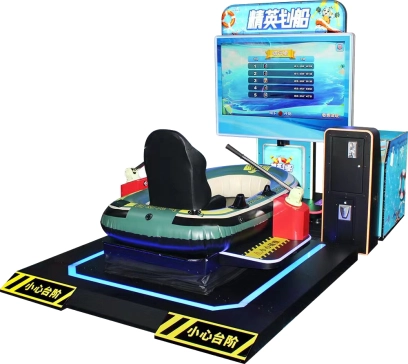
FUNTECH Interactive Indoor Rowing Simulator - Commercial Digital Sports Machine with AI Competition
A brand-new rowing simulation competitive game, operating on a single machine station, supports player interaction and competition with 3 AI opponents. The station is equipped with the latest rowing equipment, enabling players to experience realistic rowing operation. The competition process is relaxed and fun, while also providing fitness exercise benefits.
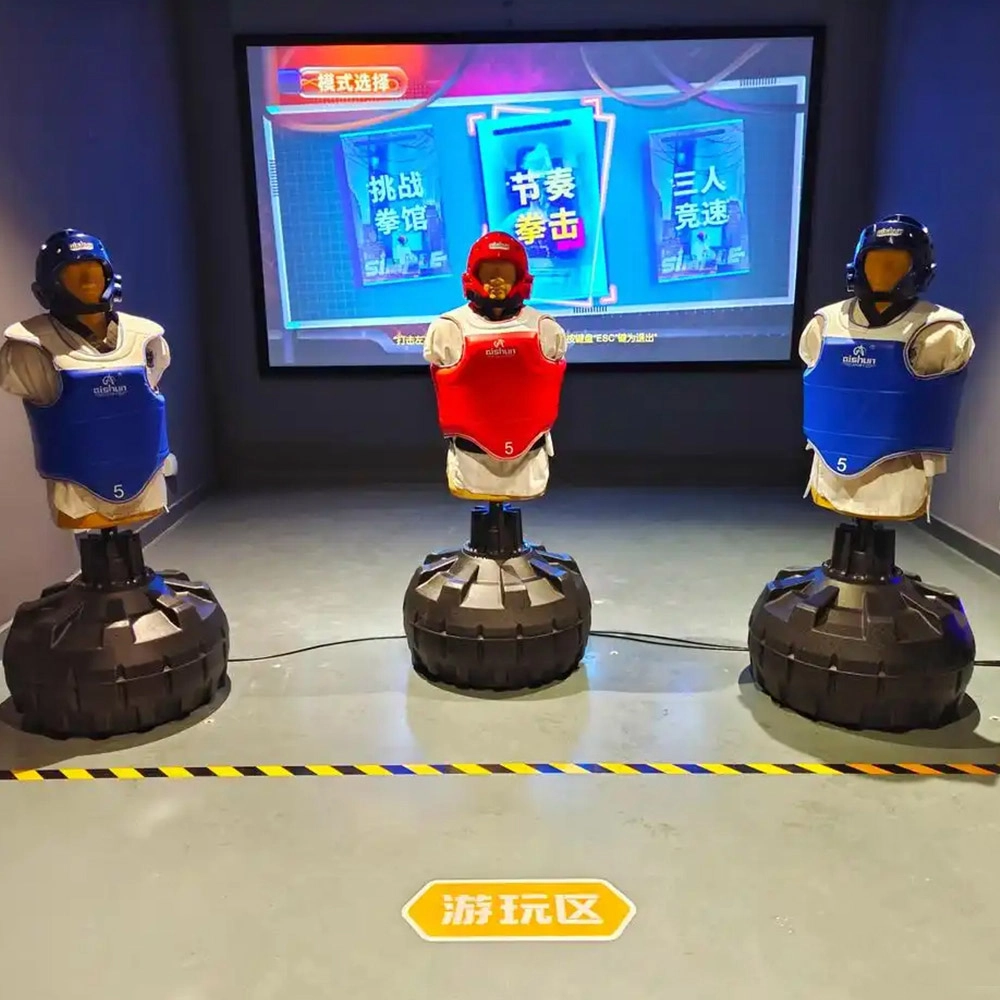
Indoor Boxing Equipment
FUNTECH is full of fun and exciting playgrounds! The indoor boxing simulation equipment combines pressure-sensitive boxing gloves with dynamic projection scenes, combining sports and fitness with entertainment and competitive attributes, supporting single-player training and two-player sparring modes, and accurately recording hitting data and generating sports reports, making it suitable for all-age experiences and safe and low-loss.
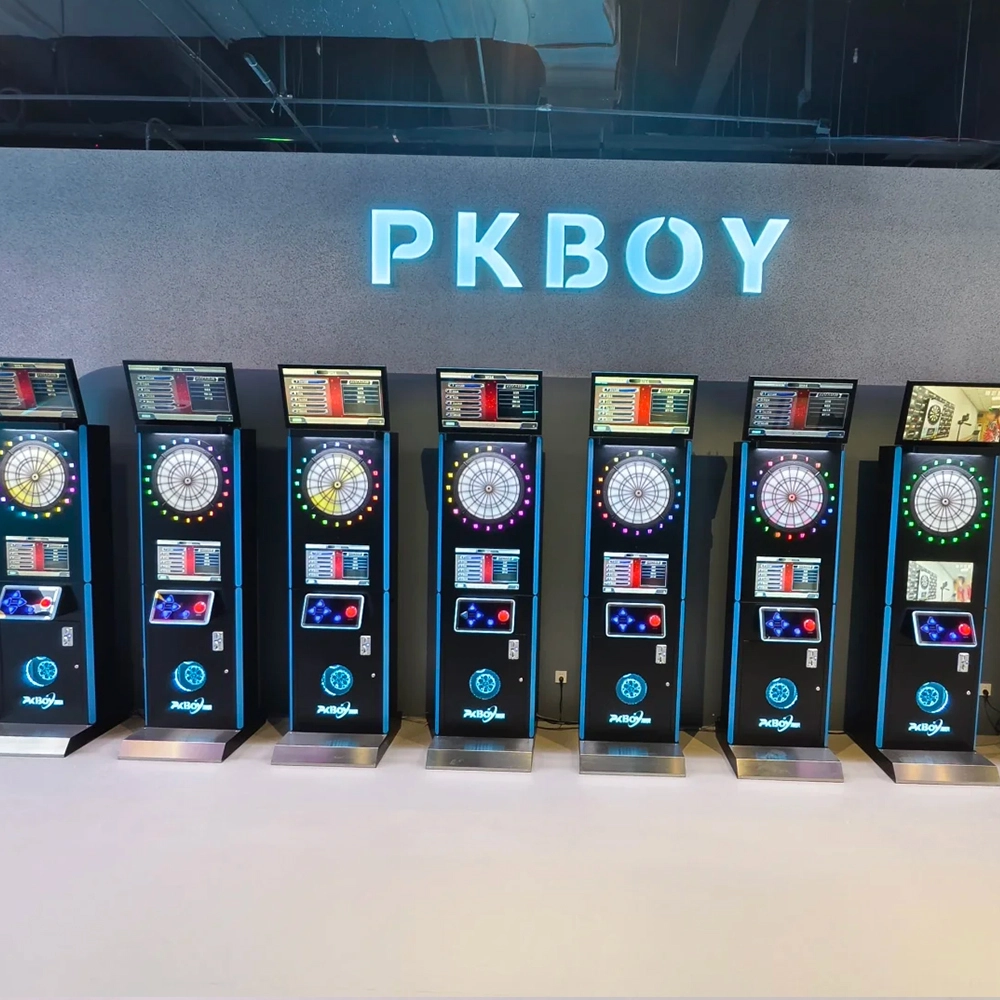
Dart Machines Bar Dart Machines
Joy Power is full of fun and excitement in the playground! The dart machine is suitable for all kinds of places, whether it is a bar, restaurant, KTV, or other entertainment venue, or a sports shop, club, or family leisure space, and can be perfectly adapted. In commercial venues, holding individual and team darts tournaments from time to time can attract more customers and increase the popularity and revenue of the venue, supplemented by various preferential activities, which can directly promote consumption and form a cycle of consumption of all the goods in the shop.
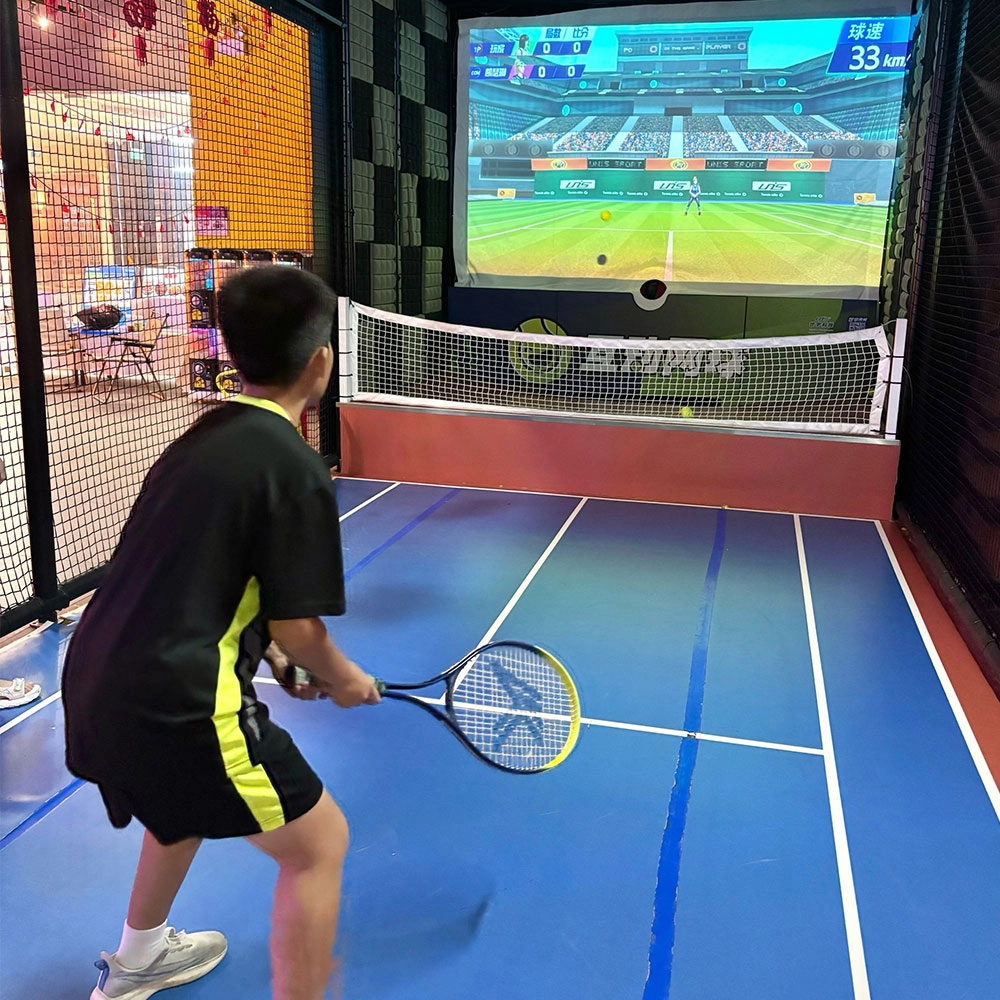
Indoor Tide Play Simulation Tennis Equipment
FUNTECH is full of fun and exciting playgrounds! With high-definition scene projection, force feedback racket, and intelligent scoring system, the simulated tennis equipment in the indoor arcade realizes immersive sports experiences and diversified interactive play, combining the advantages of safety and ease of use with high operational efficiency.
Ready to take your venue to the next level?
Leave us a message here, and our team will get back to you promptly.
Whether you're interested in custom orders, technical specifications, or partnership opportunities, we're here to assist you.
© 2025 FUNTECH ALL RIGHTS RESERVED

Weixia Lei
Fun_Tech-s
fun_tech20