
What Is the ROI of Indoor Soccer Simulation Interactive Equipment?
- 1. How much dedicated space, ceiling height and infrastructure upgrades will a single indoor soccer simulation station actually require?
- 2. What is the true total cost of ownership (TCO) for indoor soccer simulation interactive equipment in years 1–5?
- 3. How do I forecast utilization and revenue for a single-station soccer simulator in a suburban mall vs an urban family entertainment center?
- 4. Which KPIs and operator dashboard metrics actually predict ROI for interactive soccer simulators?
- 5. How do maintenance schedules, software licensing and spare-part availability erode ROI over time?
- 6. What Is the ROI of Indoor Soccer Simulation Interactive Equipment? How to calculate it with real-world scenarios
1. How much dedicated space, ceiling height and infrastructure upgrades will a single indoor soccer simulation station actually require?
Beginners frequently buy simulators without confirming the real site constraints. A single-station indoor soccer simulation (projected or AR-based, with motion-sensing and collision netting) typically requires the following minimums:
- Footprint: 35–80 sq ft of clear play area per station for compact kiosks; 120–250 sq ft for full free-kick/run-and-shoot immersive pitches (includes run area, spectator standing space and operator walkway).
- Ceiling height: 2.6–3.5 m (8.5–11.5 ft) for kiosk and projected systems; 4–6 m (13–20 ft) for full-height nets and ball trajectory safety in arena-style builds. Low-ceiling venues must choose compact motion-sensor systems or wall-mounted options.
- Power and data: 1 dedicated 15–20A circuit + Cat6/SD-WAN connection per station for mid/high-end systems. Higher-refresh AR/VR rigs may require isolated breakers and UPS for surge protection.
- Flooring & safety: non-slip sport tiles or rubber matting under high-traffic zones; ball containment nets and padding per local safety codes. Some installations need anchoring points in concrete slabs for multi-station mounts.
- HVAC and ventilation: add 10–20% more HVAC capacity where multiple active stations will increase occupant load and heat from hardware.
Actionable tip: Before purchase, get a site survey checklist from the vendor (ask for CAD or 3D placement files). A mismatch in ceiling height or lane width is the most common reason for costly retrofits.
2. What is the true total cost of ownership (TCO) for indoor soccer simulation interactive equipment in years 1–5?
TCO goes beyond sticker price. For informed procurement, calculate these line items:
- CapEx: hardware, software license (one-time vs subscription), installation & site prep, safety netting, and operator training. Typical ranges: entry single-station systems $15k–$40k; mid-range multi-mode stations $40k–$100k; multi-station arena builds $150k+ (varies by vendor and optional add-ons).
- Yearly OpEx: content/subscription fees (software-as-a-service), warranty & extended support, spare parts, insurance, additional power costs, staff time for operation, cleaning and consumables. Expect OpEx to be 8–18% of CapEx annually for well-supported systems.
- Lifecycle upgrades: major software/releases or sensor replacement commonly occur at year 3–5; budget 10–25% of CapEx as a refresh fund if vendor roadmap is hardware-dependent.
- Downtime risk & replacement: include potential lost revenue for each day of out-of-service (use average daily sessions × ticket price to estimate).
Sample 5-year rough TCO for a $60,000 mid-range station (illustrative):
- CapEx: $60,000
- Yearly OpEx (assume 12% CapEx): $7,200/year → $36,000 over 5 years
- Refresh reserve (year 4): $9,000 (15% of CapEx)
- Total 5-year TCO ≈ $105,000
Actionable tip: Negotiate bundled multi-year guarantees, clearly defined SLAs for software updates, and spare-part kits to reduce unexpected mid-life costs.
3. How do I forecast utilization and revenue for a single-station soccer simulator in a suburban mall vs an urban family entertainment center?
Forecasts depend on footfall, ticket pricing, session length, and ancillary revenue. Use a bottom-up model with conservative, realistic, and optimistic scenarios.
Key variables to model:
- Sessions per day per station: conservative 6, typical 10–14, peak 18+ (depending on session length; 20–30 minute session common).
- Average spend per session: $10–$25 for pay-to-play; High Quality packages, private coaching, or league fees can push ARPU to $30–$60.
- Utilization rate: ratio of active session hours to available hours. Suburban mall (lower evening/weekend peaks): 25–45% annually. Urban FEC (higher tourists, families): 40–70%.
- Ancillary uplift: parties, F&B, retail, and cross-promotions can drive 15–40% incremental revenue per customer.
Example annual revenue (single station):
- Conservative (mall): 8 sessions/day × $15 × 300 operating days = $36,000/year
- Typical (urban FEC): 12 sessions/day × $18 × 360 days = $77,760/year
Actionable tip: Run a 90-day pilot or pop-up to validate real local throughput before large rollouts. Use dynamic pricing (off-peak discounts) and bookings for predictable revenue.
4. Which KPIs and operator dashboard metrics actually predict ROI for interactive soccer simulators?
Beginner operators track revenue and call it a day; smart operators track conversion, retention and operational efficiency. Key KPIs to capture in an operator dashboard:
- Sessions per station per day/week/month (by time slot)
- Average Revenue per User (ARPU) and per session
- Utilization rate (active hours ÷ available hours)
- Repeat visit rate (30/90-day retention)
- Customer acquisition cost (CAC) vs lifetime value (LTV) for tournaments/leagues
- Downtime minutes vs uptime percentage (hardware/software incidents)
- Ancillary spend per visit (F&B, merch, parties)
- Conversion funnel: walk-ins → booked sessions → played → repeat
- Margins: gross margin per session after variable costs
Why these matter: Together they let you forecast break-even, test pricing changes, isolate underperforming time slots, and measure the real impact of cross-sell offers on ROI.
5. How do maintenance schedules, software licensing and spare-part availability erode ROI over time?
Maintenance and software terms are often under-priced in initial procurement. Common erosion mechanisms:
- Mandatory subscription renewals for game content or cloud services—if priced per station, these are recurring costs that reduce margin.
- Hardware wear: motion sensors, cameras and actuators have finite lifespans. Replacement costs can spike in years 3–6 if no repair program is in place.
- Downtime penalties: every day of out-of-service is lost revenue and erodes customer trust; longer outages cause repeat-booking cancellations.
- Compatibility churn: vendor platform changes can require paid upgrades or even hardware swaps if backwards compatibility isn’t guaranteed.
Mitigation best practices:
- Request a full Service Level Agreement (SLA) with guaranteed response times and clearly defined spare-part lead times.
- Ask for predictable subscription pricing and an itemized list of what’s included (content refresh, analytics, cloud hosting).
- Budget a 10–20% annual reserve for spare parts/refreshes and monitor mean time between failures (MTBF) data from the vendor.
6. What Is the ROI of Indoor Soccer Simulation Interactive Equipment? How to calculate it with real-world scenarios
ROI formula (simple): ROI% = (Cumulative Net Profit over period ÷ Total Investment) × 100
Net Profit = Total Revenue − (Operating Expenses + Maintenance + Licensing + Incremental Overheads)
Two illustrative, conservative scenarios for the first 3 years (rounded and illustrative; customize with your local numbers):
- Scenario A — Suburban mall single station
CapEx: $35,000; Annual OpEx: $5,000; Annual Revenue: $36,000 (from earlier example)
Yearly Net Profit ≈ $36,000 − $5,000 = $31,000
3-year Cumulative Net Profit ≈ $93,000 − assume no major refresh costs. ROI% over 3 years ≈ ($93,000 ÷ $35,000) × 100 ≈ 266% (This is optimistic; include potential downtime and seasonal dips.) - Scenario B — Urban FEC single station (more realistic for high-end pricing)
CapEx: $60,000; Annual OpEx: $9,000; Annual Revenue: $77,760
Yearly Net Profit ≈ $68,760
3-year Cumulative Net Profit ≈ $206,280 − assume a $9,000 refresh in year 4 not counted here. ROI% over 3 years ≈ ($206,280 ÷ $60,000) × 100 ≈ 344%
Important caveats: The samples assume steady demand and limited downtime. Real ROI will vary by market, pricing strategy, local competition and effectiveness of ancillary revenue streams. Use scenario modelling (conservative/typical/optimistic) and sensitivity analysis on utilization and ARPU.
Actionable ROI checklist for buyers:
- Obtain vendor-specific utilization case studies and anonymized operator P&Ls.
- Run a 90-day pilot to validate local ARPU and session throughput.
- Model three scenarios and include a maintenance reserve and subscription renewals.
- Track the KPIs listed above and iterate pricing, packaging and cross-sell offers monthly for the first year.
Concluding summary: Indoor soccer simulation interactive entertainment equipment delivers measurable advantages: weatherproof year-round play, high dwell time, diversified revenue channels (per-session sales, parties, leagues, sponsorship, F&B uplift), and rich player data for targeted marketing. When procured with a site survey, proper SLA, operator training and a realistic utilization model, payback periods commonly fall within 12–36 months depending on location and operational execution.
For a tailored ROI forecast, site survey and priced proposal for indoor soccer simulation or multisport interactive entertainment equipment, contact us for a quote at www.funtechgame.com or email vicky@funtechgame.com.
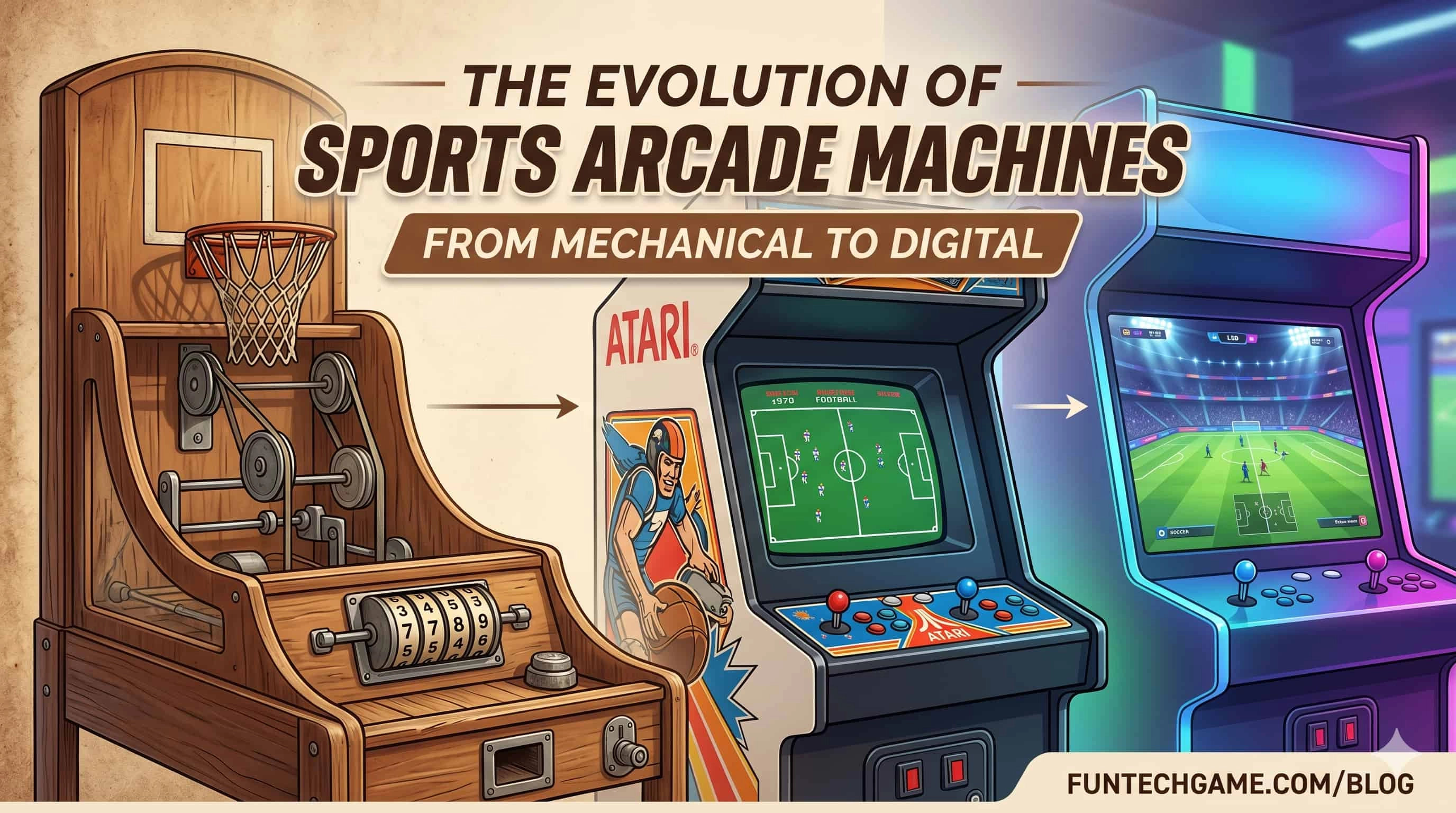
The Evolution of Sports Arcade Machines: From Mechanical to Digital
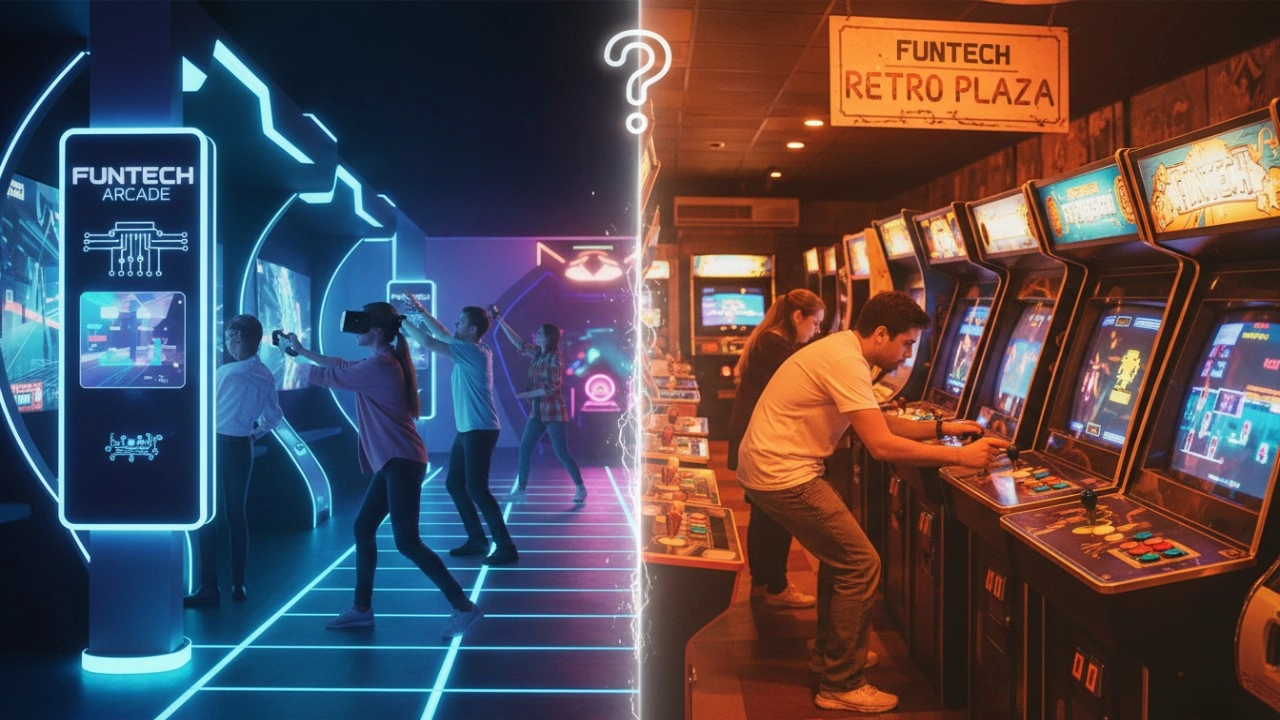
Interactive Sports Arcade vs Traditional Arcade Machines: Key Differences (2026 Guide)
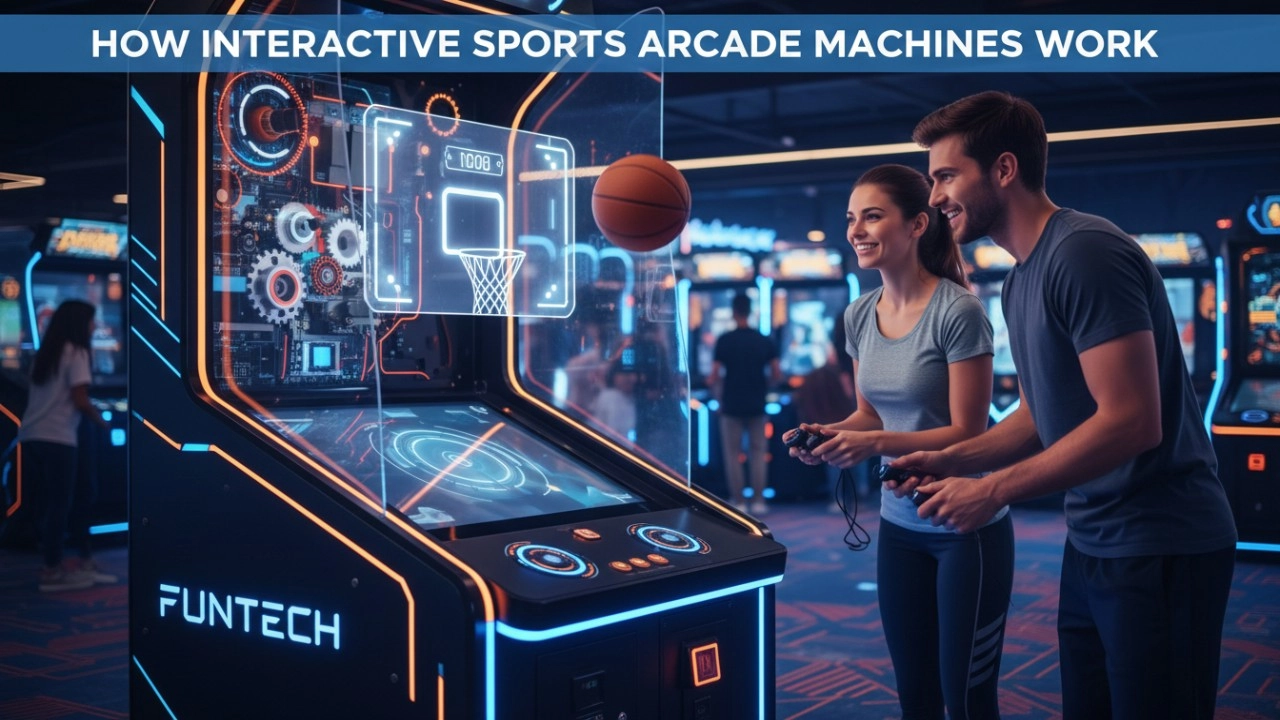
How Interactive Sports Arcade Machines Work (Sensors, Projection & AI) - 2026 Guide
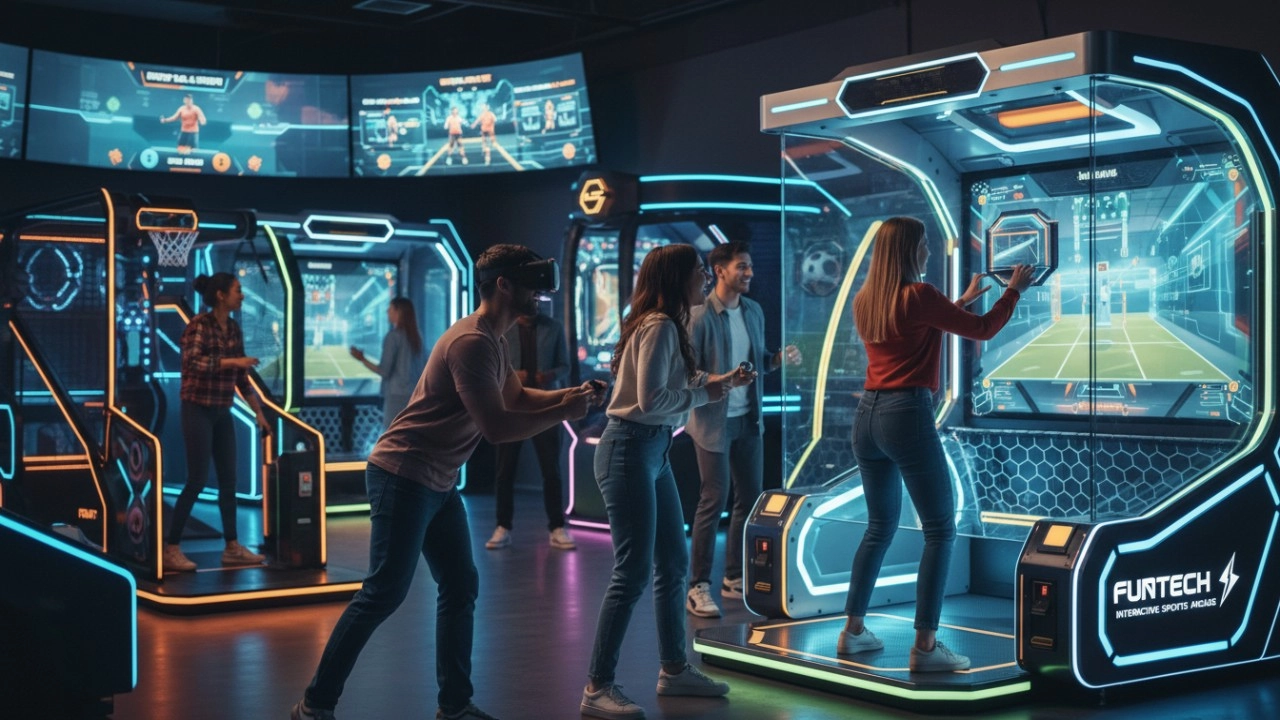
What Defines Interactive Sports Arcade Equipment in 2026?
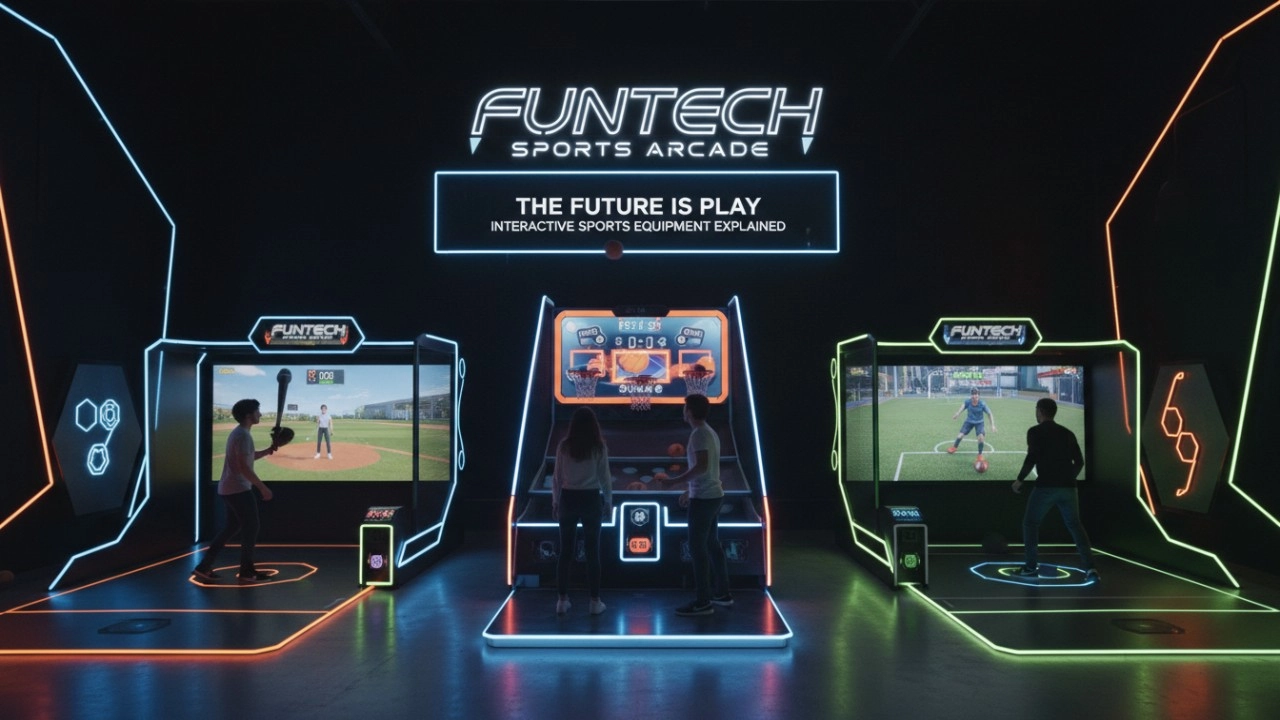
What Is Interactive Sports Arcade Equipment? Complete Beginner Guide (2026)
FAQ
What problems does the Digital Sports Center solve?
The Digital Sports Trendy Pavilion provides people with an innovative experience place that combines technology and sports, solving some problems existing in traditional sports activities and amusement facilities, while also meeting modern people's needs for digital technology and dynamic experience.
What is the minimum area required to build a comprehensive digital sports and entertainment hall, and what is the recommended area?
To build a comprehensive type of digital sports and entertainment hall, the minimum required area will be affected by the number and type of equipment, activity area requirements, parking spaces, rest areas and other factors.
Interactive Rollerball
Why are sports arcades a hot spot for investment?
The traditional entertainment market (e.g., arcade, KTV) has become less attractive to generations, while digital hip playgrounds integrating technology, sports, and socialization are more in line with young people's needs, and the market size has exceeded 50 billion in 2023, with an annual growth rate of more than 30%.
Products
How often does moving target archery equipment require maintenance?
Under daily use, for equipment that is used less frequently, 1-3 times per week, simple cosmetic cleaning and functional checks can be performed after each use. A more comprehensive maintenance should be carried out every 2-4 weeks, including disassembling some parts for cleaning and checking the accuracy of the aiming system.
Dart Machines Bar Dart Machines
What are the after-sales services after purchasing the equipment?
Generally, a 1-year warranty is provided. During the warranty period, parts damaged due to quality problems, such as motor failure, display problems, etc., will be repaired or replaced free of charge. There will also be technical support, including equipment installation and debugging guidance, operation training, to ensure the smooth use of the user, after-sales response time is usually within 24 - 48 hours.
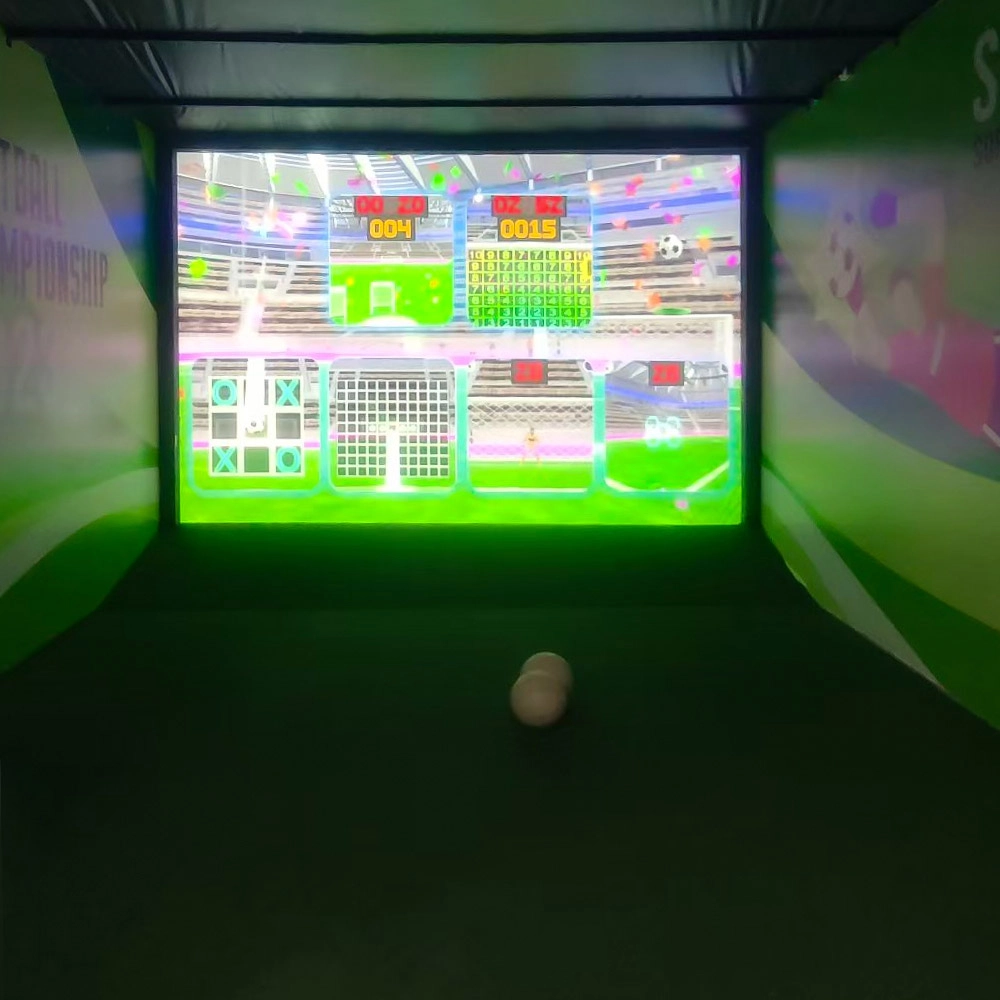
Indoor soccer simulation Interactive entertainment equipment
FUNTECH is a playground full of fun and excitement! Soccer simulation is an innovative entertainment project that digitally presents the real soccer game. With the help of advanced technology, the green field is accurately reproduced on the screen, from the delicate turf texture to realistic player movements, all lifelike. Players can direct the team's offense and defense by controlling a joystick, somatosensory device, or cell phone. The game features a variety of modes, including an intense and exciting league where you can compete with players from all over the world, as well as a casual and fun game, which is suitable for parents and children to share the fun. No need to be restricted by the venue and weather; you can enjoy the charm of soccer and feel the passion of the game anytime and anywhere.
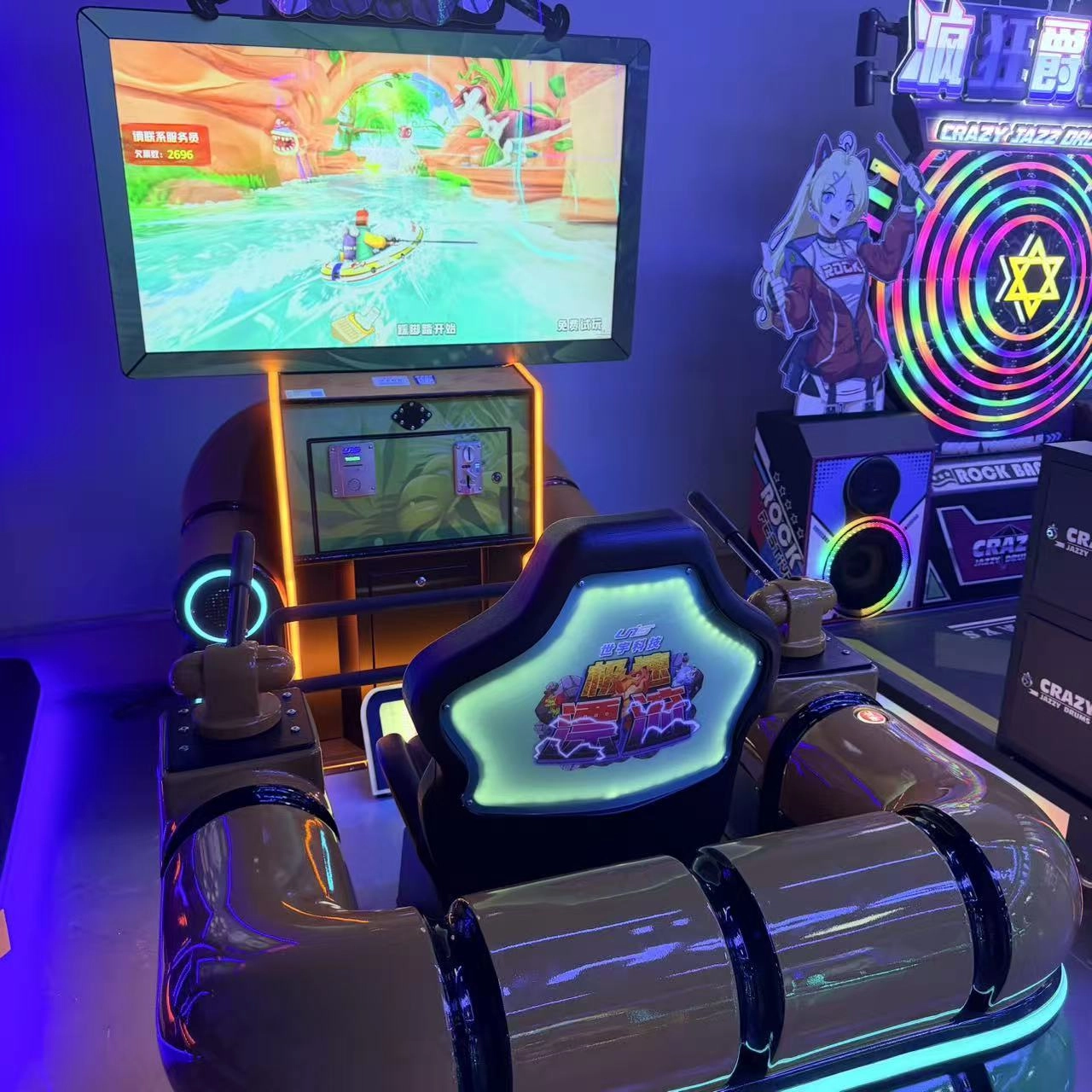
Interactive Rowing Simulator
A brand-new rowing simulation competitive game, operating on a single machine station, supports player interaction and competition with 3 AI opponents. The station is equipped with the latest rowing equipment, enabling players to experience realistic rowing operation. The competition process is relaxed and fun, while also providing fitness exercise benefits.
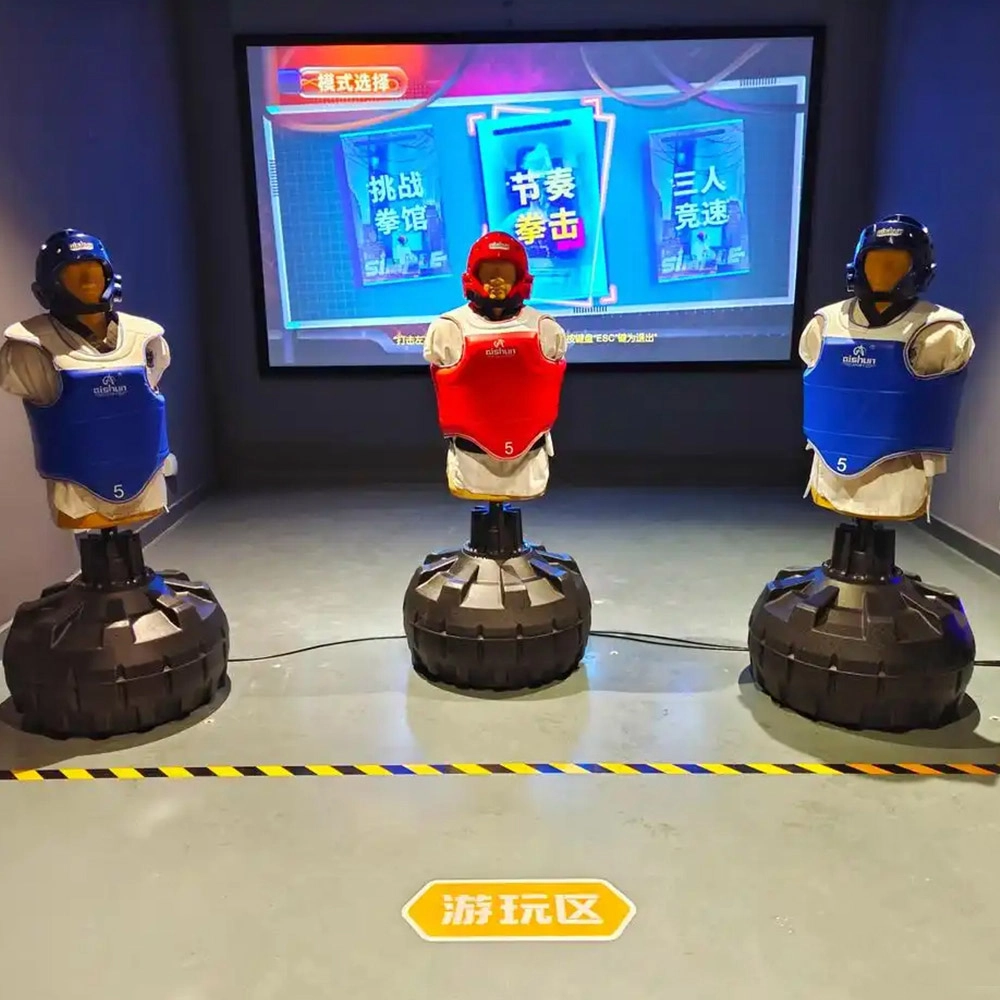
Indoor Boxing Equipment
FUNTECH is full of fun and exciting playgrounds! The indoor boxing simulation equipment combines pressure-sensitive boxing gloves with dynamic projection scenes, combining sports and fitness with entertainment and competitive attributes, supporting single-player training and two-player sparring modes, and accurately recording hitting data and generating sports reports, making it suitable for all-age experiences and safe and low-loss.
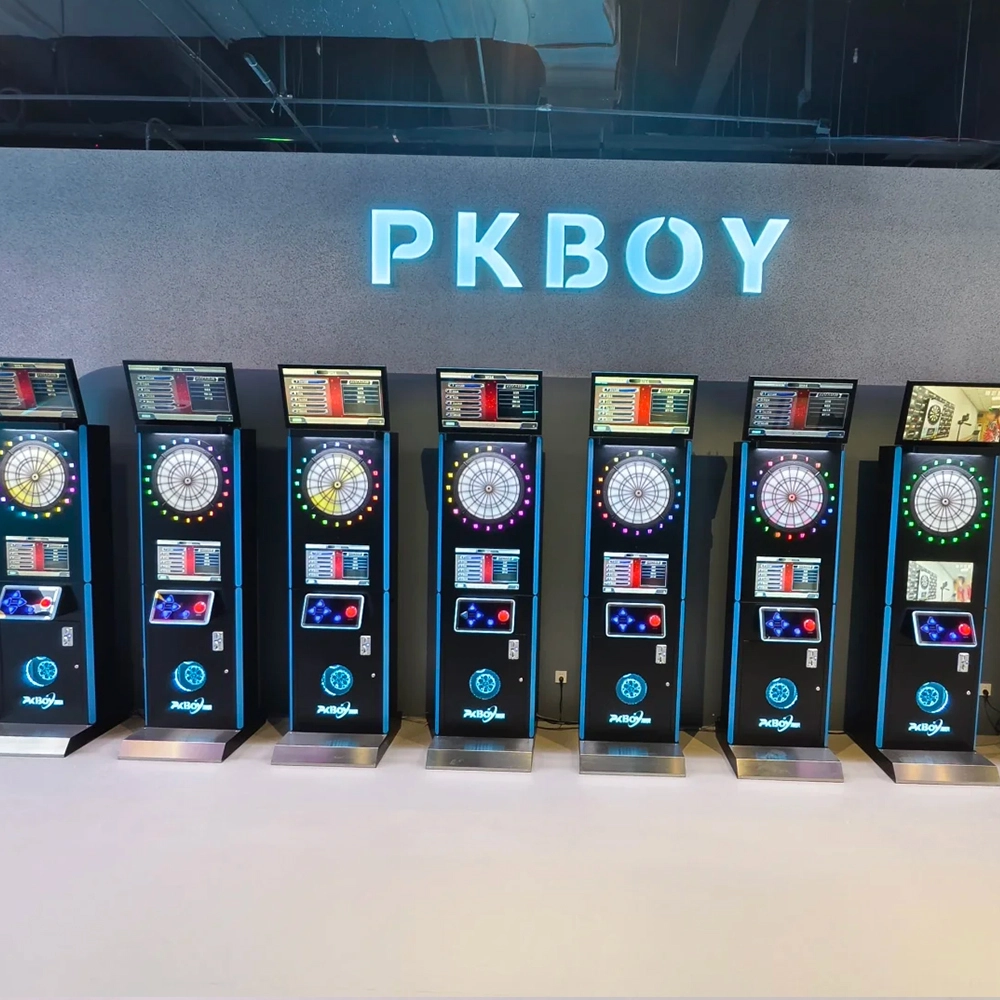
Dart Machines Bar Dart Machines
Joy Power is full of fun and excitement in the playground! The dart machine is suitable for all kinds of places, whether it is a bar, restaurant, KTV, or other entertainment venue, or a sports shop, club, or family leisure space, and can be perfectly adapted. In commercial venues, holding individual and team darts tournaments from time to time can attract more customers and increase the popularity and revenue of the venue, supplemented by various preferential activities, which can directly promote consumption and form a cycle of consumption of all the goods in the shop.
Ready to take your venue to the next level?
Leave us a message here, and our team will get back to you promptly.
Whether you're interested in custom orders, technical specifications, or partnership opportunities, we're here to assist you.
© 2025 FUNTECH ALL RIGHTS RESERVED

Weixia Lei
Fun_Tech-s
fun_tech20