
Where to Find Reliable Shooting Arcade Machines Suppliers?
- 1. How can I verify spare parts availability and firmware update support before ordering 10+ networked shooting arcade machines?
- 2. What factory audit checklist should I use to ensure a shooting arcade machine supplier meets safety and compliance (CE/UL/EMC) standards?
- 3. How do I accurately calculate landed cost (duties, freight, insurance and local taxes) for heavy coin-operated shooting machines shipped from China to the US?
- 4. How can I confirm intellectual property rights and avoid counterfeit or cloned branded shooting games when sourcing from overseas suppliers?
- 5. What realistic lead times and production bottlenecks should I expect for custom-themed immersive shooting attractions with IoT and cashless payment integration?
- 6. What SLA and warranty terms should I negotiate to protect a rollout of shooting arcade machines across multiple locations, and how do I ensure timely on-site repairs?
- Conclusion: Advantages of working with a thoroughly vetted shooting arcade machines supplier
Where to Find Reliable Shooting Arcade Machines Suppliers? 6 Critical Buyer Questions Answered
When procuring coin-operated shooting machines, VR shooting attractions or turnkey arcade shooting galleries, beginners often face gaps in supplier due diligence, cost forecasting and post-sale support. Below are six long-tail, pain-point-focused questions that lack detailed answers online, each followed by in-depth, actionable guidance you can use when sourcing machines from overseas or locally.
1. How can I verify spare parts availability and firmware update support before ordering 10+ networked shooting arcade machines?
Why this matters: For networked shooting attractions (cashless readers, LED target arrays, IoT telemetry), delayed spare parts or missing firmware updates can shut down multiple locations and erode ROI.
Checklist and steps to verify:
- Request a detailed Bill of Materials (BOM) and spare-parts list (part numbers, manufacturers, MOQ). Ensure key consumables (light bars, target modules, joysticks, PC/board, power supplies, coin doors, printers, network hubs) are listed with lead times.
- Ask for a spare-parts kit per X units (common practice: 1 full kit per 10–20 machines). Negotiate inclusion in contract or initial shipment.
- Confirm firmware upgrade mechanism: USB, SD card, Ethernet/OTA. Ask for a documented update process and changelog access to evaluate frequency and risk.
- Request a software maintenance SLA: who signs and timestamps firmware releases, who performs critical security patches, and response windows for hotfixes.
- Verify support channels: dedicated engineer contact, ticketing system, remote-access tools (VPN/client), and average remote-fix time based on past cases.
- Ask for references from at least two customers who deployed the same networked configuration—verify uptime and replacement-part fulfillment times.
- Include spare-parts inventory clauses in the purchase agreement: minimum stock levels, lead-time caps (e.g., < 30 days), and penalties if supplier fails to meet them.
Red flags: vague BOMs, “we’ll source on demand,” no firmware version history, or only phone-based support without remote diagnostics.
2. What factory audit checklist should I use to ensure a shooting arcade machine supplier meets safety and compliance (CE/UL/EMC) standards?
Why this matters: Safety and regulatory compliance prevents recalls, liability, and venue closures. Arcade cabinets contain mains wiring, PCBs, motors, lighting and often payment terminals, so a robust audit is essential.
Audit checklist (on-site or third-party):
- Quality systems: ISO 9001 certification and documented production control processes.
- Certifications & testing: ask for CE (EU), UL or ETL (North America) evidence, EMC test reports, RoHS compliance, and any country-specific approvals. Validate test lab accreditation (e.g., TUV, Intertek, SGS).
- Electrical safety: internal wiring standards, strain reliefs, grounding, fusing, and separation of mains and low-voltage circuits.
- Component traceability: PCB revision control, BOM trace, supplier certificates for critical components (PSUs, displays, payment terminals).
- Flammability & materials: plastics and foams used on cabinets should meet flame-retardancy specs for public spaces.
- EMC and grounding practices: cable routing; shielding for audio/video and RF components; cooling/ventilation design to avoid overheating.
- Final testing: functional test benches, burn-in procedures, calibration of target sensors, and QA pass rates.
- Packaging & transit protection: shock, moisture protection, and export-grade crating for heavy coin-operated units.
- Subcontractors & spare parts: visibility into outsourced PCBA houses, display vendors, and plastic molders, and their qualifications.
Use a third-party inspection provider (Bureau Veritas, SGS, Intertek) for pre-shipment inspections and random production checks. Include pre-shipment functional tests and a witnessed burn-in (48–72 hours) for networked or high-heat components.
3. How do I accurately calculate landed cost (duties, freight, insurance and local taxes) for heavy coin-operated shooting machines shipped from China to the US?
Why this matters: A miscalculated landed cost destroys margins. Heavy cabinets, packed with electronics and coin hardware, incur shipping, duty and inland transport costs that are often underestimated.
Actionable calculation steps:
- Identify the HS (Harmonized System) code for your machine. Accurate classification determines duty rate. If unsure, consult a customs broker or use HTS search portals (USITC HTS, local customs websites).
- Get FOB factory price from supplier. Decide Incoterm: EXW/FOB/CIF/DDP. FOB lets you control sea freight and insurance; DDP gives a landed cost quote but usually at higher vendor margin.
- Get freight quotes: FCL vs LCL vs air. For heavy arcade machines, full container (20'/40') is usually more cost-effective. Use Freightos or freight forwarders to estimate.
- Insurance: typically 0.3–0.5% for marine cargo, added to CIF value for customs where applicable.
- Customs duties & fees: apply the duty rate to the declared customs value (often CIF). Add Merchandise Processing Fee (MPF), Harbor Maintenance Fee (HMF) and any anti-dumping duties if applicable.
- Inland transportation and drayage from port to warehouse, plus lift-gate delivery or forklift requirements at destination venues, add per-unit handling costs.
- Local taxes & VAT/sales tax: US purchasers pay state sales tax at point-of-sale, not at import; consult your tax advisor to structure imports for distribution vs direct venue placement.
- Use formula: Landed Cost per Unit = (FOB price + freight + insurance + import duty + customs fees + inland freight + packaging/handling) / units per shipment.
Practical tips: obtain a provisional landed-cost worksheet before PO. Consider DDP for first small runs to avoid surprises; switch to FOB/CIF for volume where you can control logistics. Always engage a licensed customs broker to validate HS codes and duty estimates.
4. How can I confirm intellectual property rights and avoid counterfeit or cloned branded shooting games when sourcing from overseas suppliers?
Why this matters: Buying cloned IP risks DMCA/ trademark litigation, expensive takedowns, and court-ordered product recalls—especially if you plan branded themed attractions.
Steps to protect yourself:
- Clarify OEM vs ODM vs white-label: OEM supplies under FUNTECH with agreed IP. ODM develops a product that may be resold; insist on exclusive rights if you require unique branding or gameplay mechanics.
- Request proof of licensing: if a supplier claims a licensed theme or technology, ask for a copy of the sublicense agreement or brand authorization.
- Use contracts with explicit IP clauses: ownership of artwork, software source code escrow (held by a neutral third party), and non-compete clauses for specific territories.
- Perform a trademark & patent sweep: check USPTO, EUIPO and WIPO databases for similar patents or pending applications. Engage an IP attorney if in doubt.
- Source-code and firmware audits: for software-driven attractions, include code-review or third-party security audit in contract when IP is critical.
- Factory verification: confirm that claimed subcontractors (display, PCB, payment terminal vendors) are legitimate, and request purchase invoices for branded components to prove authenticity.
- Start with a limited pilot order and verify branding protections contractually before scaling to larger runs.
Red flags: supplier avoids signing IP ownership clauses, claims “we own everything” but won’t provide source-code escrow, or is reluctant to show authorization for licensed content.
5. What realistic lead times and production bottlenecks should I expect for custom-themed immersive shooting attractions with IoT and cashless payment integration?
Why this matters: Customization, cashless EMV/NFC integration, and IoT telemetry add development and certification steps that extend lead time and add risk to rollouts.
Typical timeline & bottlenecks:
- Concept & design approval: 1–3 weeks for initial mockups; additional 2–4 weeks for engineering drawings and control-system specs.
- Prototype build & testing: 4–8 weeks. Expect several iterative cycles for firmware tuning, sensor calibration, audio/lighting mapping and payment flow testing.
- EMV/NFC/payment certification: if integrating payment terminals, process and certifications (PCI compliance, EMV kernel testing) can add 4–8 weeks depending on terminal vendor.
- PCB/PCBA & component lead times: modern electronics shortages can extend to 8–16 weeks for specific chips or displays—confirm component availability before final PO.
- Mass production: once prototypes are approved, production runs typically 6–12 weeks depending on factory load, custom cabinet tooling and painting requirements.
- Testing & burn-in: 48–72 hours recommended for each unit; scale-testing on networked units to confirm load and telemetry stability.
- Shipping & customs: sea freight adds 2–6 weeks depending on routing; expedited airfreight is faster but costly.
Ways to accelerate:
- Use standard cabinet platforms with modular add-ons instead of fully bespoke molds.
- Lock components early in the BOM to avoid last-minute substitutions.
- Parallelize tasks: authorize artwork and packaging to proceed while prototypes finalize electronics.
- Pay for priority line time, expedited component sourcing, or partial airfreight for first-run units.
6. What SLA and warranty terms should I negotiate to protect a rollout of shooting arcade machines across multiple locations, and how do I ensure timely on-site repairs?
Why this matters: For multi-site deployments (FEC chains, malls, entertainment centers), quick service restores revenue and protects brand experience.
Key SLA & warranty elements to negotiate:
- Warranty length and scope: standard 12 months on electronics and mechanicals is common; negotiate longer for critical components or tiered extended warranties.
- Response & repair times: define remote-diagnosis windows (e.g., within 24 hours) and on-site repair targets (48–72 hours within the same country). Specify remedies for missed SLAs (credits, replacement units).
- Spare-parts provisioning: require supplier to keep X% parts inventory in the destination country or provide consignment stock at regional warehouses.
- Replacement units: for critical revenue-generating attractions, negotiate hot-swap units or rapid replacements for major failures.
- Training & documentation: include technician training sessions, service manuals, wiring diagrams and an online knowledge base as part of the contract.
- Remote support & tools: insist on remote-logging, VPN access, and telemetry dashboards to diagnose in minutes rather than days.
- Escalation path & local partners: require named contacts, escalation windows and introduction to licensed local service partners or authorized resellers.
- Fees for out-of-warranty service and parts: cap hourly rates and set clear shipping responsibilities for spare parts.
Include performance guarantees and acceptance tests at handover (uptime targets, transaction success rates, sensor accuracy) and tie final payment milestones to acceptance criteria.
Conclusion: Advantages of working with a thoroughly vetted shooting arcade machines supplier
Vetting suppliers with the above checks reduces downtime, controls landed cost, protects IP, and minimizes deployment risk. Reliable partners will provide clear BOMs, onshore or regional parts stock, certified safety documentation, transparent lead-times and robust SLAs. That combination translates to predictable operating margins, safer venues and scalable rollouts of arcade shooting games—whether coin-operated cabinets, immersive VR shooting attractions, or cashless networked galleries.
For a tailored quote, factory audit support, or to discuss a pilot order, contact us at www.funtechgame.com or email vicky@funtechgame.com.
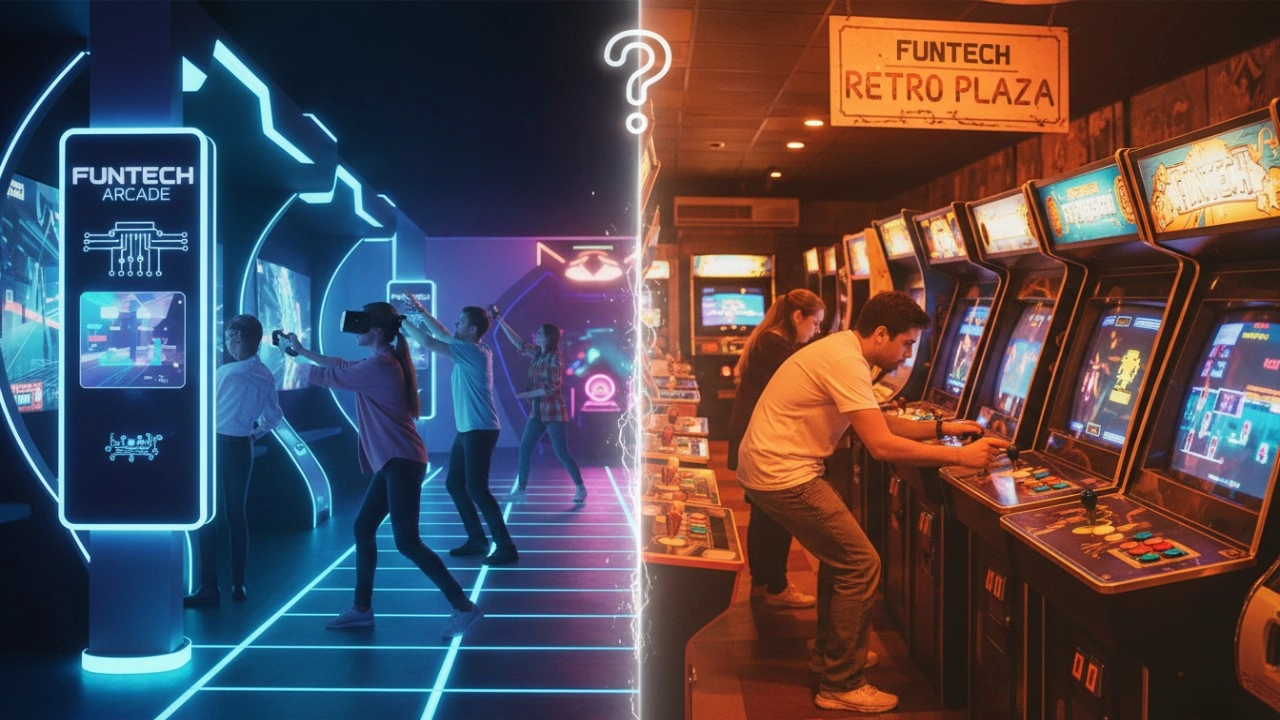
Interactive Sports Arcade vs Traditional Arcade Machines: Key Differences (2026 Guide)
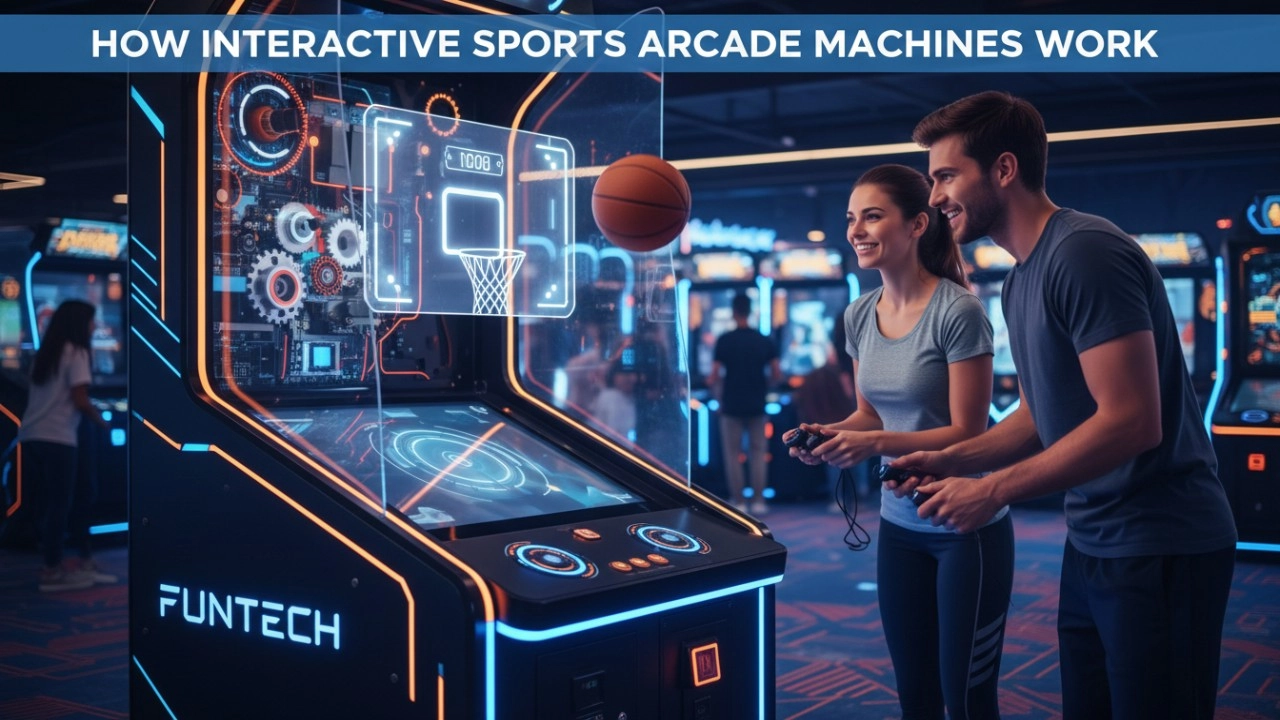
How Interactive Sports Arcade Machines Work (Sensors, Projection & AI) - 2026 Guide
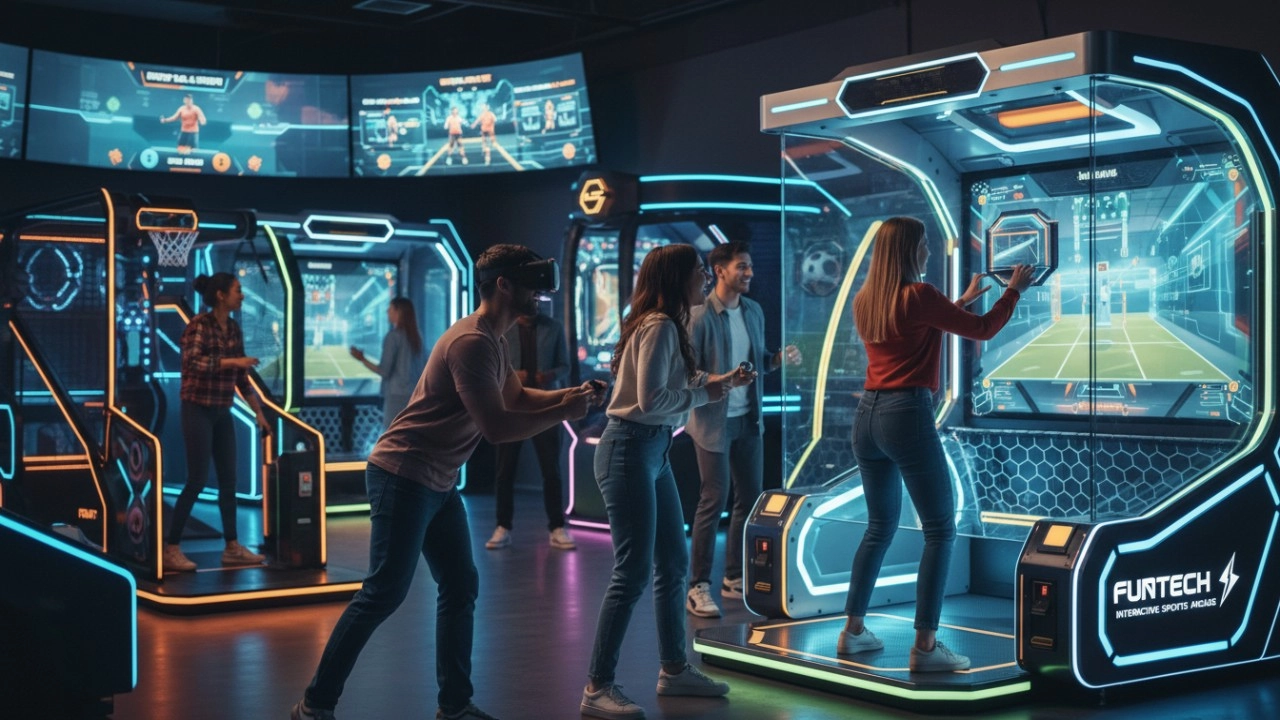
What Defines Interactive Sports Arcade Equipment in 2026?
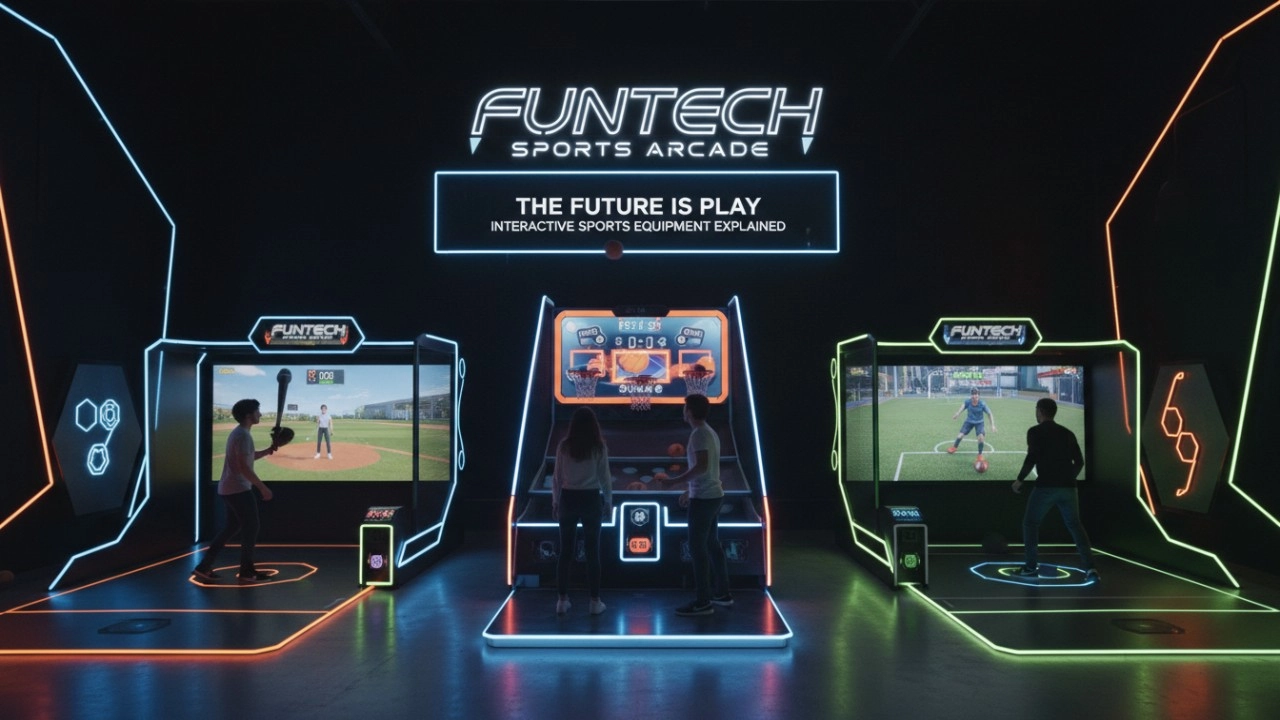
What Is Interactive Sports Arcade Equipment? Complete Beginner Guide (2026)
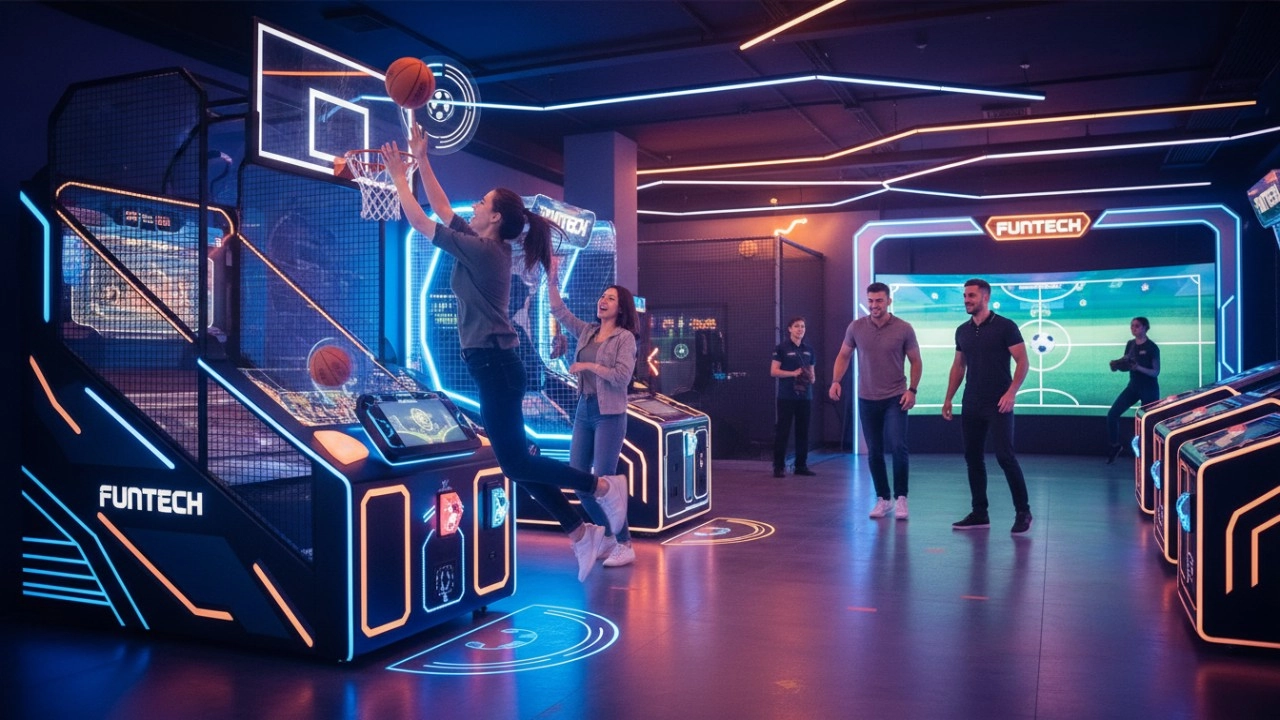
The Ultimate Guide to Interactive Sports Arcade Equipment for Commercial Entertainment (2026 Edition)
Holographic Light and Shadow Restaurant
What is holographic projection?
Holographic projection is a technique that utilizes the principles of interference and diffraction to record and reproduce the true three-dimensional image of an object. It records the light information of an object on a hologram, and then uses a specific light source to illuminate the hologram, so that the three-dimensional image of the object can be presented in the air, and the audience can see the realistic stereoscopic image without wearing special glasses.
Golf Simulator
How often does simulated golf equipment require maintenance?
For daily use, simple monthly maintenance is sufficient, such as a simple cosmetic cleaning and function check after use. Quarterly maintenance can be more comprehensive.
Products
What is the difference between purchasing equipment for commercial operations and personal training?
Commercial operations should consider the durability, ease of operation and attractiveness of the equipment, it is appropriate to choose cool appearance, can withstand high-frequency use, such as the target car running hundreds of times a day, high-intensity models, and easy to operate, easy for customers to get started. Personal training is more focused on cost-effective, according to their own training needs to choose the right tension of the bow, the right speed of movement of the target car.
How to reduce operating costs?
Starting with equipment procurement, choose cost-effective, durable and easy-to-maintain products, which can save money for subsequent maintenance. o Starting with equipment procurement, choose cost-effective, durable and easy-to-maintain products, which can save money for subsequent maintenance. Reasonable arrangement of staff, reduce the number of staff on duty during non-peak hours, train staff to have multi-skills, such as being able to operate the equipment as well as guiding customers on the side, to improve the efficiency of manpower and reduce manpower costs.
What is the most reasonable pricing for a mobile target archery program in a commercial setting?
If it is in shopping malls, scenic spots, and other places with high traffic flow, you can refer to the prices of similar entertainment programs in the surrounding area and combine them with your own costs, charging from $30 - $80 for a single session for a single person. If it is in a professional sports arena, for members or long-term training customers, packages can be introduced, such as monthly card 300 - 500 yuan, seasonal card 800 - 1200 yuan, according to different length and service content reasonable pricing.
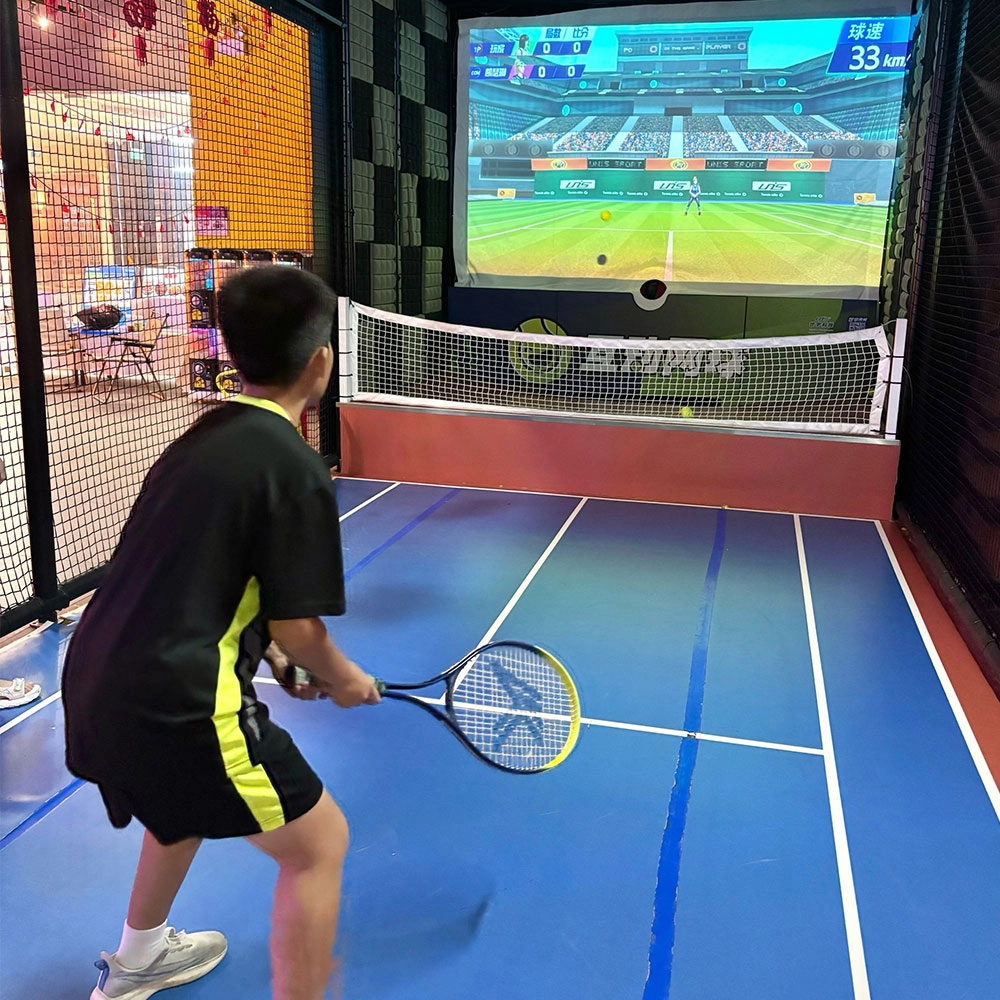
Indoor Tide Play Simulation Tennis Equipment
FUNTECH is full of fun and exciting playgrounds! With high-definition scene projection, force feedback racket, and intelligent scoring system, the simulated tennis equipment in the indoor arcade realizes immersive sports experiences and diversified interactive play, combining the advantages of safety and ease of use with high operational efficiency.
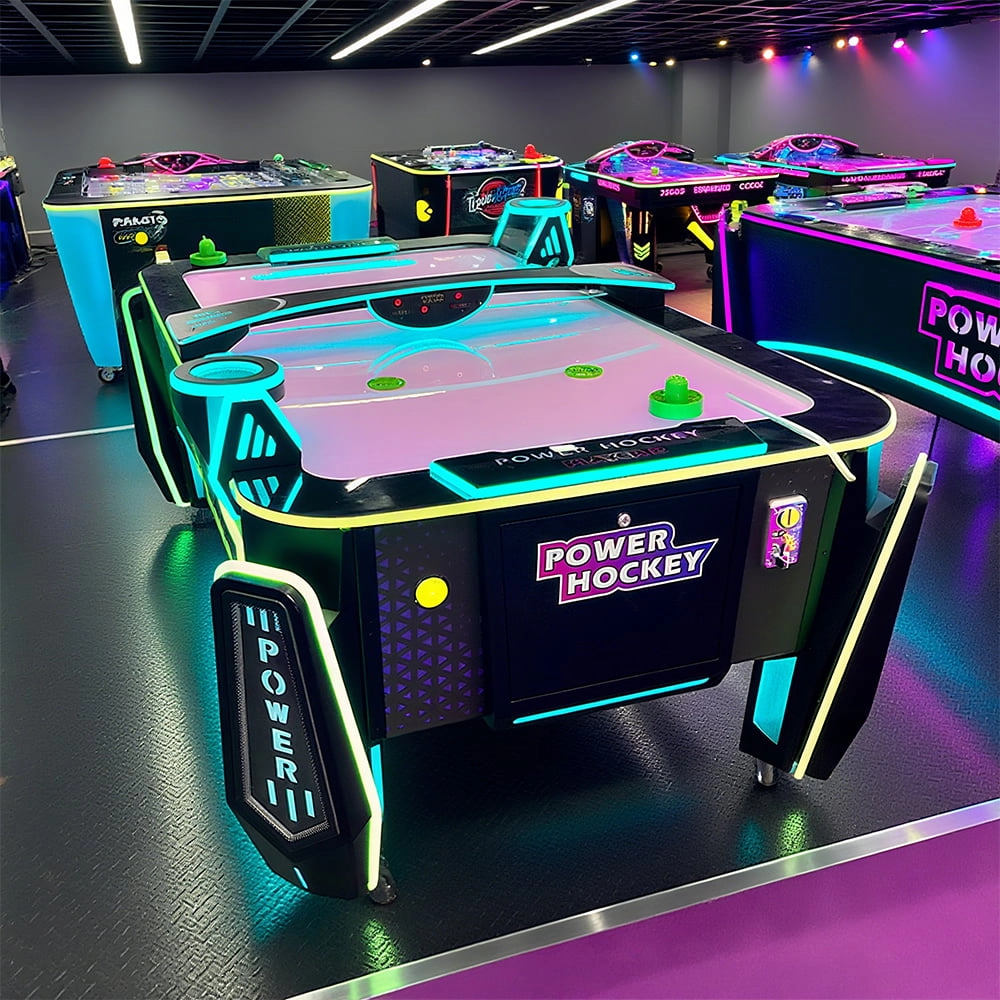
Arcade Hockey
FUNTECH is full of fun and exciting playgrounds! Air hockey, also known as air hockey, is a two-player competitive arcade game comprising a smooth, perforated playing surface, lightweight hockey sticks, a plastic puck, and an electronic scoreboard.
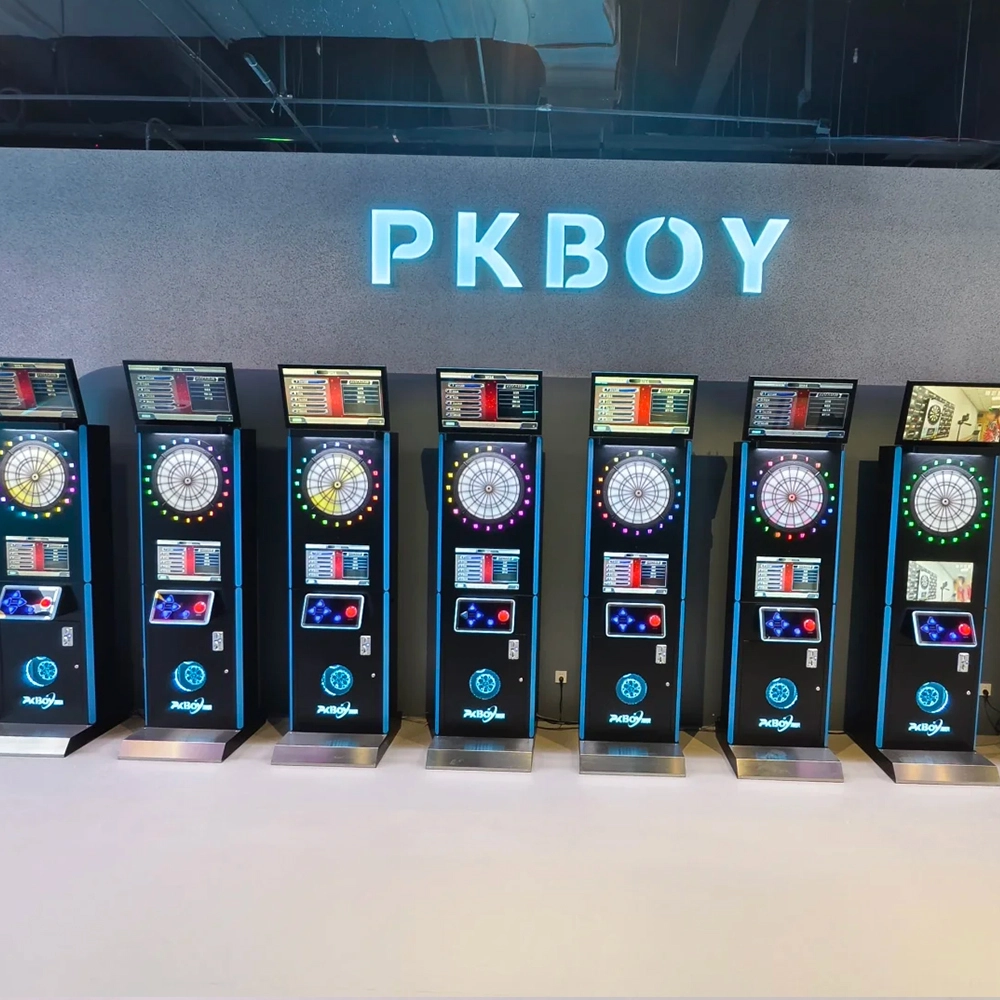
Dart Machines Bar Dart Machines
Joy Power is full of fun and excitement in the playground! The dart machine is suitable for all kinds of places, whether it is a bar, restaurant, KTV, or other entertainment venue, or a sports shop, club, or family leisure space, and can be perfectly adapted. In commercial venues, holding individual and team darts tournaments from time to time can attract more customers and increase the popularity and revenue of the venue, supplemented by various preferential activities, which can directly promote consumption and form a cycle of consumption of all the goods in the shop.
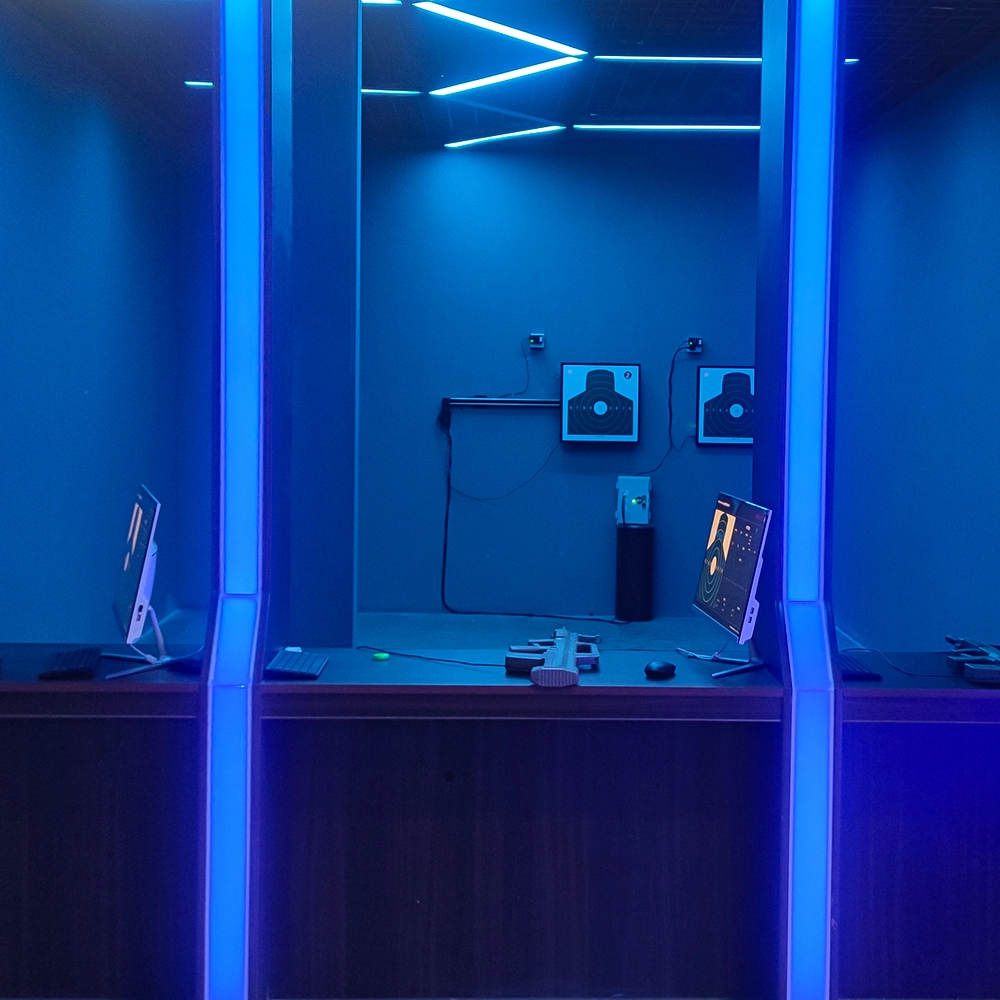
Infrared Shooting
Highly simulated simulation training analysis equipment, with advanced design concepts, fast system development, ease of operation and use, stable technical performance, less consumption of training, site dependence on a small group training is highly interesting, safe, and reliable, and other outstanding features. Product design to solve the basic skills of light weapons precision shooting as a starting point, to improve the safety of shooting training and training efficiency as the fundamental purpose, highlighting the simulation, information technology, and combat training requirements, can be in small indoor and outdoor venues and does not use live ammunition to complete the basic shooting training.
Ready to take your venue to the next level?
Leave us a message here, and our team will get back to you promptly.
Whether you're interested in custom orders, technical specifications, or partnership opportunities, we're here to assist you.
© 2025 FUNTECH ALL RIGHTS RESERVED

Weixia Lei
Fun_Tech-s
fun_tech20