
Are software licenses included with arcade dart machines for sale?
- 1) How do I accurately calculate the total cost of ownership for an arcade dart machine for sale beyond the sticker price?
- 2) Are software licenses included with arcade dart machines for sale?
- 3) How can I verify warranty coverage, spare-parts availability, and realistic repair turnaround times for imported arcade dart machines?
- 4) What are the network and connectivity requirements to run online leagues, cloud leaderboards, or remote tournaments from an arcade dart machine?
- 5) Can I integrate an arcade dart machine for sale with my venue’s cashless, loyalty, and POS systems?
- 6) What is the best inspection checklist when evaluating used or refurbished arcade dart machines for sale to avoid costly downtime?
1) How do I accurately calculate the total cost of ownership for an arcade dart machine for sale beyond the sticker price?
Buying price is only the starting line. Total cost of ownership (TCO) for a commercial electronic dart machine includes upfront hardware plus ongoing and one-time operational costs. To avoid surprises, build a TCO checklist with these validated line items:
- Upfront purchase price and customization: cabinet finish, branding, custom software skins or tournament modules. Many vendors quote a base price and itemize add-ons — confirm each as a separate line on the invoice.
- Shipping, duties and inland freight: domestic LTL/curbside vs. white-glove installation will differ significantly. For international purchases, plan for customs duties, import VAT/GST and customs clearance broker fees. Ask the vendor to quote FOB vs DAP/DDP terms so you know which party pays which costs.
- Installation and site prep: wall-mount vs free-standing cabinet, mounting hardware, electrician time (dedicated outlet, surge protection), or assembly labor if supplied disassembled.
- Software licensing and subscriptions: check whether scoring, cloud leaderboards, online leagues, or tournament modules are included. Some vendors bundle basic scoring while advanced multiplayer/online features require a license or subscription — factor recurring fees monthly or annually.
- Payment processing and cashless system fees: if you add cashless readers or voucher systems, include gateway setup, transaction fees and hardware costs.
- Maintenance & spare parts: plan to stock critical consumables and spare parts (see recommended parts list below). Commercial machines (coin-operated or venue installations) require faster access to spares and service contracts.
- Warranty, service contract and SLA: include expected out-of-warranty repair costs or annual service contract price. Confirm whether warranty covers labor, shipping, and consumables.
- Downtime and revenue impact: calculate how many game hours per week you expect and model lost revenue per hour if the machine is down. This helps justify service contracts or local tech partnerships.
Recommended minimal spare parts to budget for (industry practice): power supply, LED/display modules, control board/CPU module, coin acceptor or cashless reader module, wiring harnesses, and dart target segments/sensor panels for soft-tip or electronic boards. Ask the vendor for typical MTTR (mean time to repair) and average lead times for parts.
Actionable step: Request a complete TCO worksheet from your supplier that lists each line item with unit price and expected replacement interval. If the vendor won’t provide it, push for a written breakdown before purchase.
2) Are software licenses included with arcade dart machines for sale?
Short answer: sometimes — but not always, and terms vary by vendor and feature set.
What to expect and what to verify:
- Base scoring vs High Quality services: Many manufacturers include the fundamental scoring software and a set of built-in game modes in the purchase price. Advanced features — online matchmaking, cross-venue leaderboards, cloud tournament hosting, branded skins, or third-party game packs — are frequently licensed separately as a one-time activation or subscription.
- License model types: perpetual on-device license (one-time fee), subscription/cloud-based (monthly/annual), and hybrid (basic features local, High Quality features cloud). Confirm whether licenses are tied to the physical serial number, a cloud account, or a software dongle.
- Transferability & resale: if you later sell a machine, check whether the license transfers with the hardware. Some vendors allow transfer after a fee; others tie licenses to the original purchaser account.
- Offline operation & fallback: verify whether the machine requires continuous internet for licensed features. Ensure core game modes still operate offline if the venue has intermittent connectivity.
- Updates and patching: determine whether software updates are included and how often they’re pushed. For cloud-connected systems, ask if updates are automatic and whether updates are free or part of a maintenance plan.
- Licensing for third-party content: if you want licensed tournament formats or licensed media (music, videos), check for additional IP/royalty fees.
- Audit & compliance: vendors may reserve the right to audit license usage. Ensure EULA terms are clear on privacy, data collection, and geo-restrictions.
What to request in writing before purchase:
- Full EULA and licensing terms, including renewal pricing and transfer policy.
- A list of included software features vs paid add-ons.
- Clarification on whether leaderboards/tournament hosting are third-party services and any associated SLAs.
If you need long-term online league support (cloud leaderboards, multi-venue tournaments), budget for subscriptions and confirm network and data privacy practices to meet local regulations.
3) How can I verify warranty coverage, spare-parts availability, and realistic repair turnaround times for imported arcade dart machines?
Imported machines can be excellent value, but logistics and serviceability drive uptime. To validate vendor claims, follow this verification sequence:
- Request written warranty terms: duration, parts vs labor, shipping responsibilities, on-site vs depot repair, exclusions (consumables, misuse, water damage). Compare to industry norms (12–24 months typical for electronics; many vendors offer extended contracts).
- Ask for a spare parts list and inventory status: vendors should provide a SKU list with typical lead times for each part. For parts with long lead times, insist on a stocking plan or local distributor access.
- Local service network: confirm whether the vendor has certified service partners or spare parts warehouses in your country/region. If not, ask for an authorized technician list or remote troubleshooting support options.
- SLA and MTTR metrics: obtain target response times for remote support, on-site dispatch, and parts delivery. For high-throughput venues, a 24–48 hour RT may be acceptable; for arcade operations where uptime is critical, negotiate faster SLAs.
- Documentation and diagnostics: request service manuals, firmware flashing guides, and diagnostic tools. Machines with accessible diagnostic menus allow remote triage and faster repairs.
- Consumable replacement frequency: ask the vendor for expected lifecycle for wear components (target segments, buttons, sensors). This helps you maintain inventory planning.
- Returns and RMA policy: understand the vendor’s RMA process, pre-authorization for returns, and credits. For international RMAs, confirm who covers return freight and customs.
Actionable checklist to request pre-sale:
- Warranty contract (PDF)
- Current spare parts catalog with lead times
- List of local service partners or remote support process
- Sample RMA form and average RMA turnaround time data
4) What are the network and connectivity requirements to run online leagues, cloud leaderboards, or remote tournaments from an arcade dart machine?
If you intend to use online features, you need to validate both machine-side requirements and venue infrastructure:
Machine-side items to confirm with vendor:
- Network interfaces: does the cabinet support Ethernet only, Wi‑Fi, or cellular (4G/5G) options? Wired Ethernet is preferred for stability.
- Ports & protocols: most cloud services use HTTPS (TCP/443). Some real-time features may use WebSocket or UDP; get a list of required ports to open on your firewall.
- Bandwidth and latency: online scoring and leaderboards are low-bandwidth, but real-time multiplayer with synchronized modes benefits from stable low-latency links. Typical bandwidth is modest (tens to hundreds of kbps per machine) but confirm peak usage for streaming assets or media.
- Authentication & VPN: confirm how the machine authenticates to cloud services (API keys, device certificates, OAuth). For improved security and predictable routing, some operators use a site VPN.
- Offline fallback: ensure the machine can queue results and sync when connectivity resumes if internet drops.
- Security & data privacy: ask what data the device sends (player IDs, scores, logs). Confirm vendor compliance with regional data protection (GDPR, CCPA) and secure transport (TLS 1.2+).
Venue infrastructure checklist:
- Reliable wired Ethernet with a static or reserved DHCP lease for each machine, ideally on a segregated VLAN.
- Firewall rules to permit vendor-specified outbound connections; avoid complex symmetric NAT that may block WebSocket sessions.
- UPS for the network and machine to protect against short outages and data corruption.
- Monitoring: basic uptime monitoring or SNMP/statistics collection to proactively detect connectivity issues.
Actionable step: before purchase, ask the vendor for a network deployment guide and perform a proof-of-concept installation in your venue to validate connectivity and firewall requirements.
5) Can I integrate an arcade dart machine for sale with my venue’s cashless, loyalty, and POS systems?
Integration is achievable but depends on vendor openness and the machine’s interface options. Common integration avenues:
- Native integrations: some manufacturers offer built-in integrations for popular cashless providers, ticket printers, and loyalty systems. These are usually easiest because the vendor handles compatibility and updates.
- API/SDK: preferred for bespoke integrations. Vendors may provide REST APIs or SDKs to control machine functions, read play logs, and credit sessions. Confirm documentation, sample code, and authentication methods.
- MDB/Serial/MDB-to-USB gateways: coin acceptors and payment peripherals sometimes use MDB or serial protocols. If your existing POS and cashless systems speak these protocols, integration can be straightforward.
- Middleware: where direct integration isn’t available, a middleware server can translate between the machine’s data feed and your POS/loyalty system. This requires development but centralizes logic and logging.
- Security and reconciliation: ensure transaction logs include machine ID, session start/end, player ID (if applicable), and payment reference. Reconciliation between POS and the machine must be auditable.
Project checklist for integration planning:
- Define use cases (e.g., cashless play credits, loyalty points for games, redeemable vouchers).
- Obtain the vendor’s API/SDK, message formats, and sample integration guide.
- Decide whether integration will be real-time or batch (e.g., sync every 5 minutes).
- Test environment: request a sandbox account or dev machine to validate flows before production.
- Plan for firmware and software updates so your integration doesn’t break when the vendor updates the machine.
If your venue uses a third-party cashless provider, engage both the machine vendor and the cashless provider early to confirm compatibility and to scope any required middleware work.
6) What is the best inspection checklist when evaluating used or refurbished arcade dart machines for sale to avoid costly downtime?
Used machines can be excellent value but carry higher risk. Inspect thoroughly and insist on documentation:
Pre-purchase documentation to obtain:
- Serial numbers and hardware revision IDs for all major components
- Service history and any past repairs or firmware changes
- Proof of ownership and whether software licenses transfer
- Photos of internal electronics, connectors and PCB labels
On-site functional inspection checklist:
- Power-up and boot: ensure clean boot sequence, no repeated crashes, and firmware version is documented.
- Input and sensors: test all buttons, touch sensors, dartboard segment detection (throw several test darts), and start/stop functions.
- Displays and LEDs: verify all segments and pixels light as expected and no flicker under load.
- Audio: test speaker output for clarity and distortion.
- Connectivity: verify Ethernet/Wi‑Fi works, can reach vendor cloud services, and login is possible.
- Payment systems: coin mech, bill validator, or cashless reader should be function-tested with real currency or emulation cards.
- Physical cabinet: inspect for structural damage, rust, water stains, loose fasteners, or previous repairs indicative of moisture exposure.
- Smell and burn signs: any burnt odor on power supplies or PCBs can indicate prior overheating.
- Thermal test: run extended stress session (at least 1–2 hours) to reveal intermittent failures.
- Backup and data wipe: confirm previous operator data can be wiped and if the seller can remove personal/cloud accounts.
Post-inspection commercial protections:
- Short-term warranty: ask the seller for a limited warranty (30–90 days) on refurbished machines. This is standard for reputable refurbishers.
- Return policy and RMA terms: confirm process and who pays return freight for defective units.
- Transferability of licenses: ensure software features you need are included or transferable; if not, get price reduction reflecting costs to acquire licenses.
If you cannot inspect in person, request a live video walkthrough and an extended return window to allow for shipping-related issues. For high-value purchases, use an independent technician to conduct pre-shipment inspections.
Conclusion: Advantages of investing in a professionally supplied, network-ready electronic dart machine
Purchasing a quality arcade dart machine from an experienced supplier gives you reliability, predictable TCO, and the ability to monetize features like online leagues, cashless play, and branded tournaments. Verified warranty terms, local parts availability, clear licensing, and documented integration pathways reduce downtime and unlock higher lifetime revenue per unit. With proper due diligence on software licensing, service SLAs, and network readiness, venues can scale digital darts as a consistent, measurable entertainment revenue stream while offering modern player experiences (LED scoring, cloud leaderboards, cross-venue tournaments).
For a curated quote, technical spec sheet, or to discuss site-specific integration options, contact us at www.funtechgame.com or email vicky@funtechgame.com. Contact us for a quote.
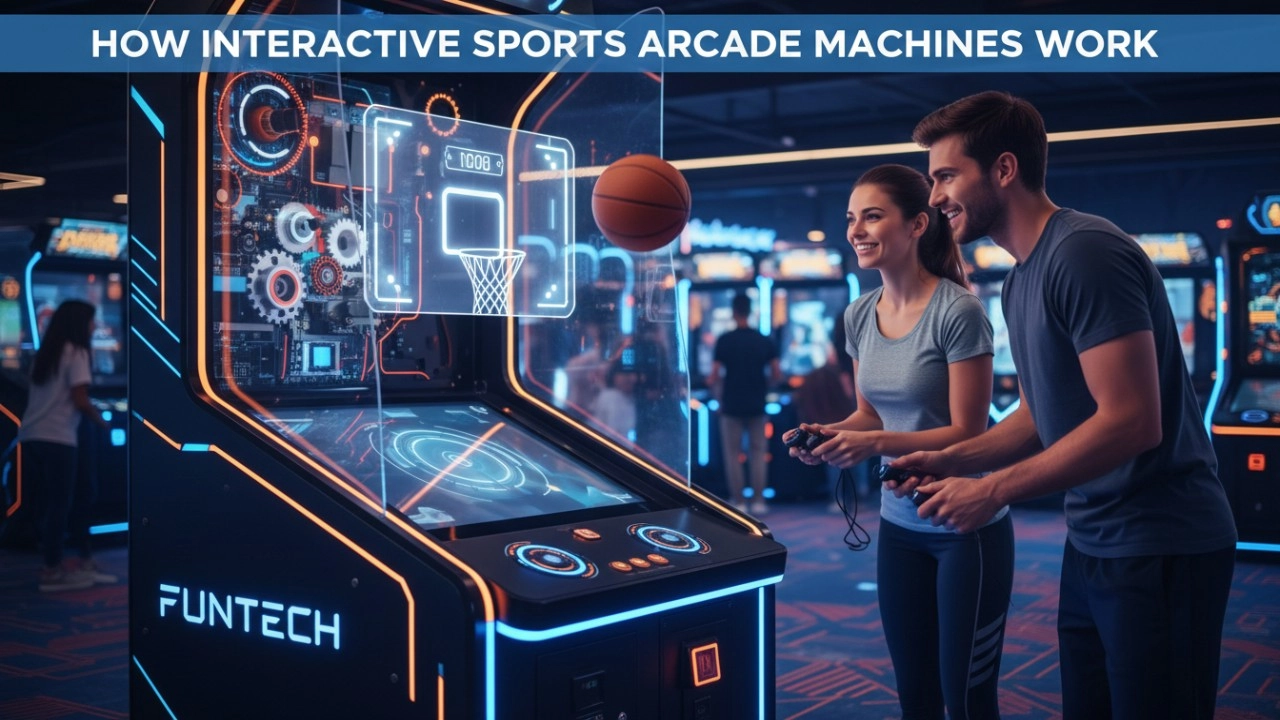
How Interactive Sports Arcade Machines Work (Sensors, Projection & AI) - 2026 Guide
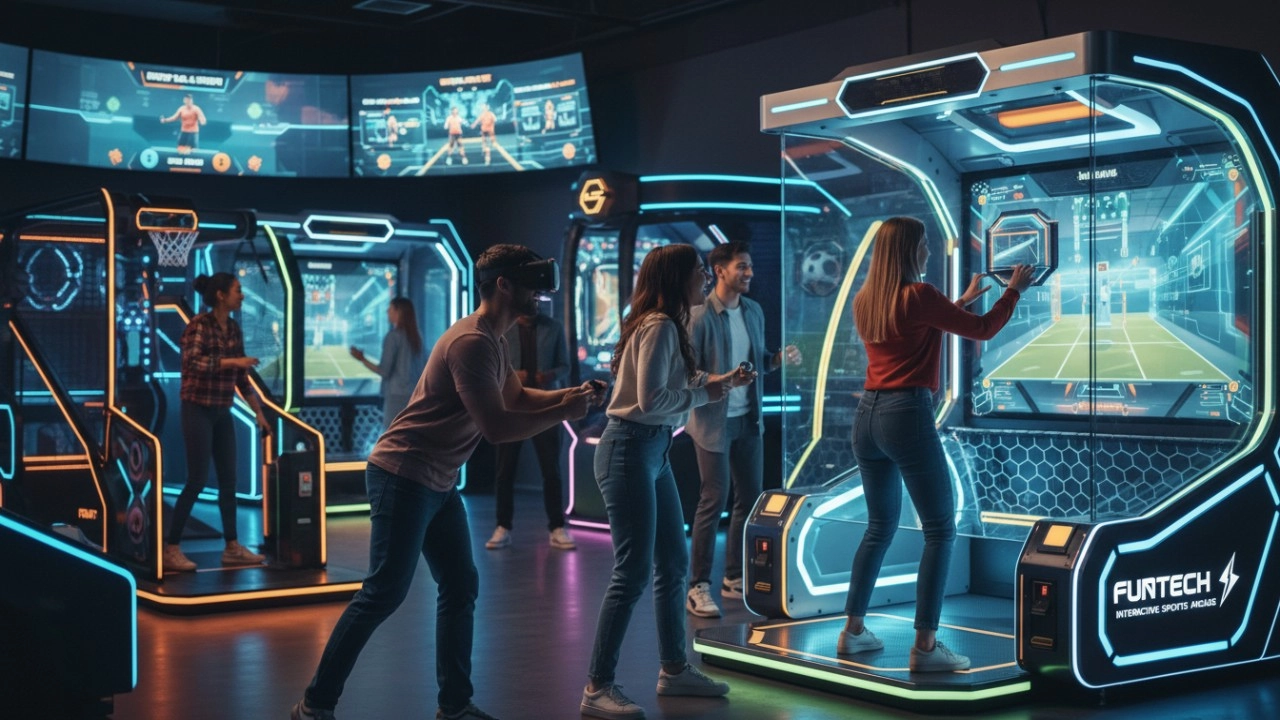
What Defines Interactive Sports Arcade Equipment in 2026?
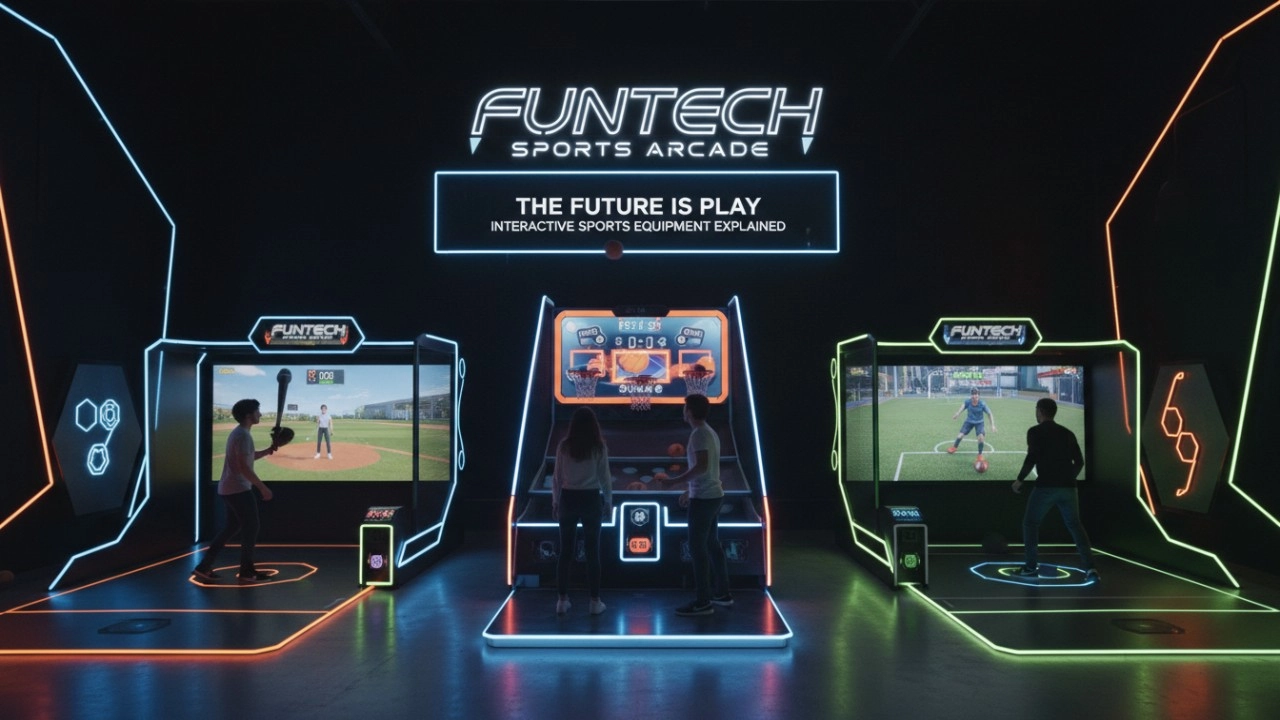
What Is Interactive Sports Arcade Equipment? Complete Beginner Guide (2026)
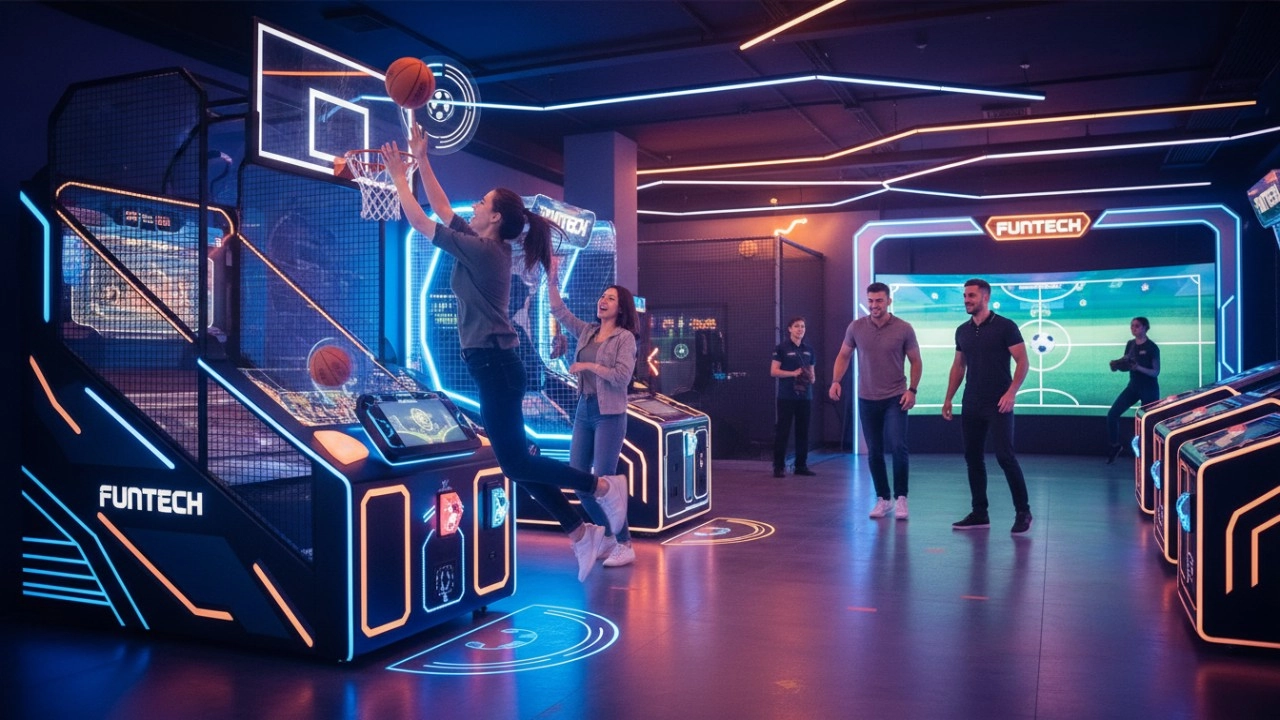
The Ultimate Guide to Interactive Sports Arcade Equipment for Commercial Entertainment (2026 Edition)
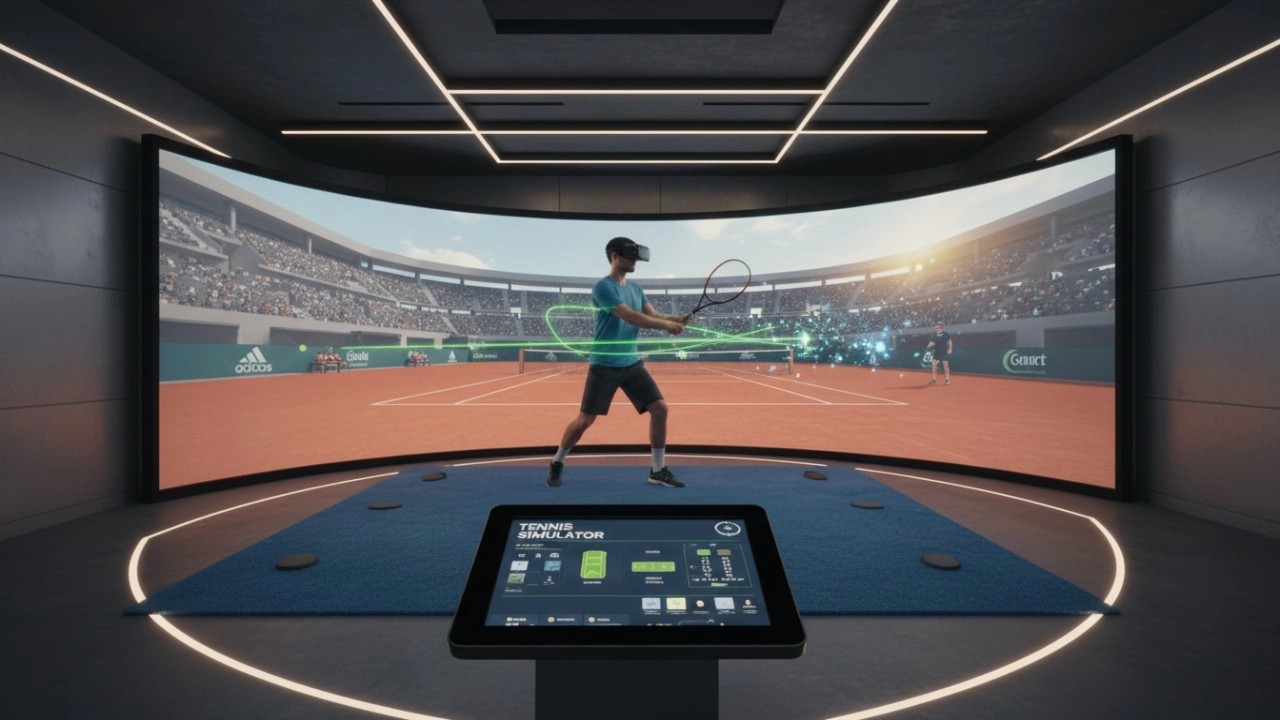
7 Reasons to Add a Tennis Simulator to Your Entertainment Venue Instead of Traditional Training Models (2026 Guide)
Holographic Light and Shadow Restaurant
What is the difference between holographic projection and ordinary projection?
Ordinary projection is the process of projecting a two-dimensional image onto a flat screen, where the viewer sees a flat image. Holographic projection can present real three-dimensional images, allowing viewers to observe different faces of objects from different angles, with a strong sense of three dimensionality and realism. In addition, ordinary projection usually only requires simple equipment such as projectors and screens, while holographic projection requires more complex optical systems and technologies to achieve.
FAQ
What requirements should a store manager of a digital sports hall have?
The store manager of a digital sports and entertainment center needs to have good management and communication skills, be familiar with the application of digital technology, and have an innovative spirit and a sense of teamwork
Products
What is the difference between purchasing equipment for commercial operations and personal training?
Commercial operations should consider the durability, ease of operation and attractiveness of the equipment, it is appropriate to choose cool appearance, can withstand high-frequency use, such as the target car running hundreds of times a day, high-intensity models, and easy to operate, easy for customers to get started. Personal training is more focused on cost-effective, according to their own training needs to choose the right tension of the bow, the right speed of movement of the target car.
Golf Simulator
What are the after-sales services after purchasing the equipment?
Generally, a 1-year warranty is provided. During the warranty period, parts damaged due to quality problems, such as motor failure, display problems, etc., will be repaired or replaced free of charge. There will also be technical support, including equipment installation and debugging guidance, operation training, to ensure the smooth use of the user, after-sales response time is usually within 24 - 48 hours.
Interactive Rollerball
How often does the equipment require maintenance?
For daily use, simple monthly maintenance, such as simple cosmetic cleaning and function checking after use, is sufficient. A more comprehensive quarterly maintenance is sufficient.
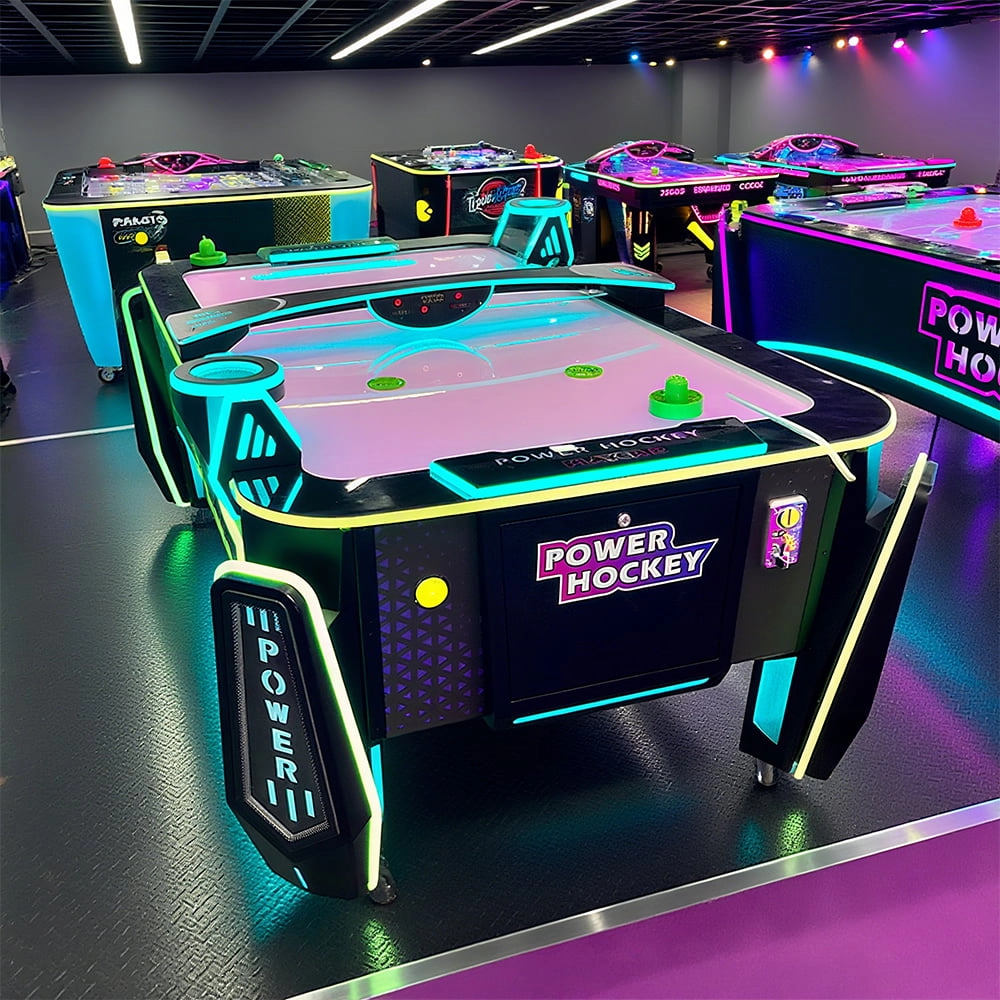
Arcade Hockey
FUNTECH is full of fun and exciting playgrounds! Air hockey, also known as air hockey, is a two-player competitive arcade game comprising a smooth, perforated playing surface, lightweight hockey sticks, a plastic puck, and an electronic scoreboard.
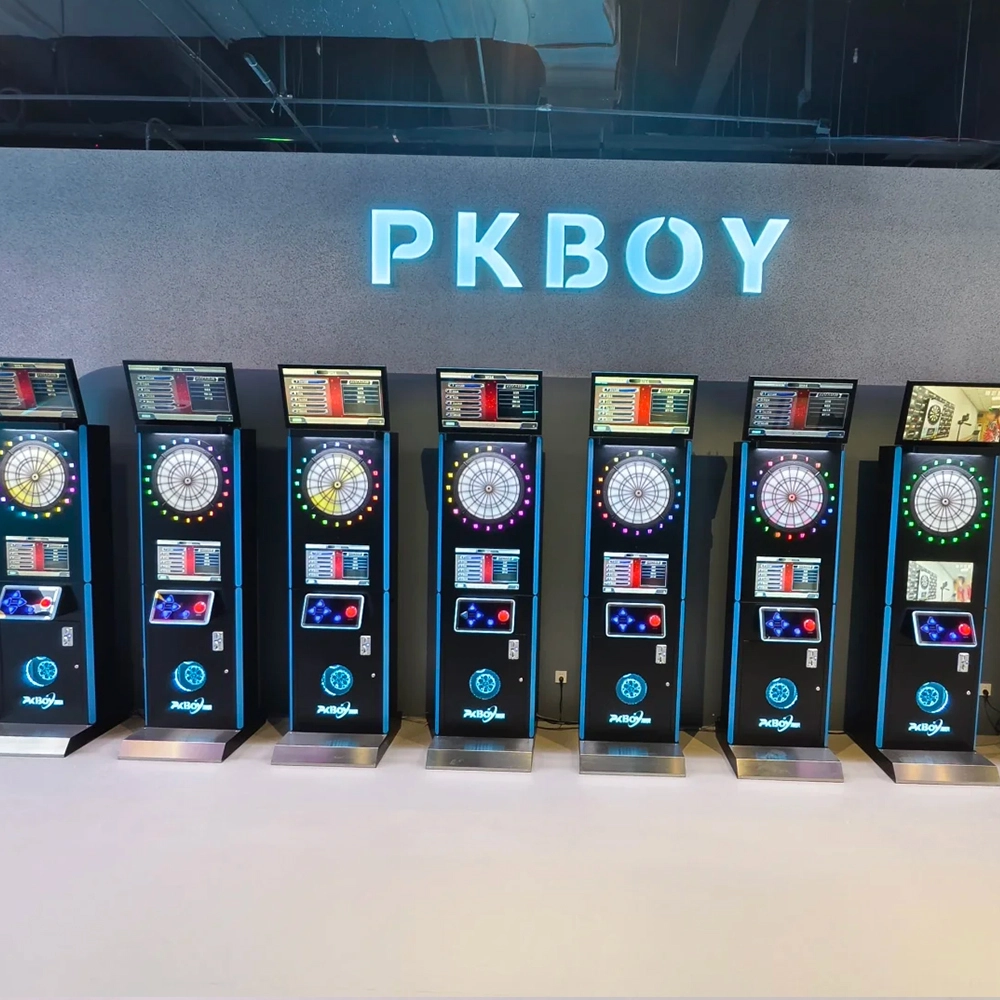
Dart Machines Bar Dart Machines
Joy Power is full of fun and excitement in the playground! The dart machine is suitable for all kinds of places, whether it is a bar, restaurant, KTV, or other entertainment venue, or a sports shop, club, or family leisure space, and can be perfectly adapted. In commercial venues, holding individual and team darts tournaments from time to time can attract more customers and increase the popularity and revenue of the venue, supplemented by various preferential activities, which can directly promote consumption and form a cycle of consumption of all the goods in the shop.
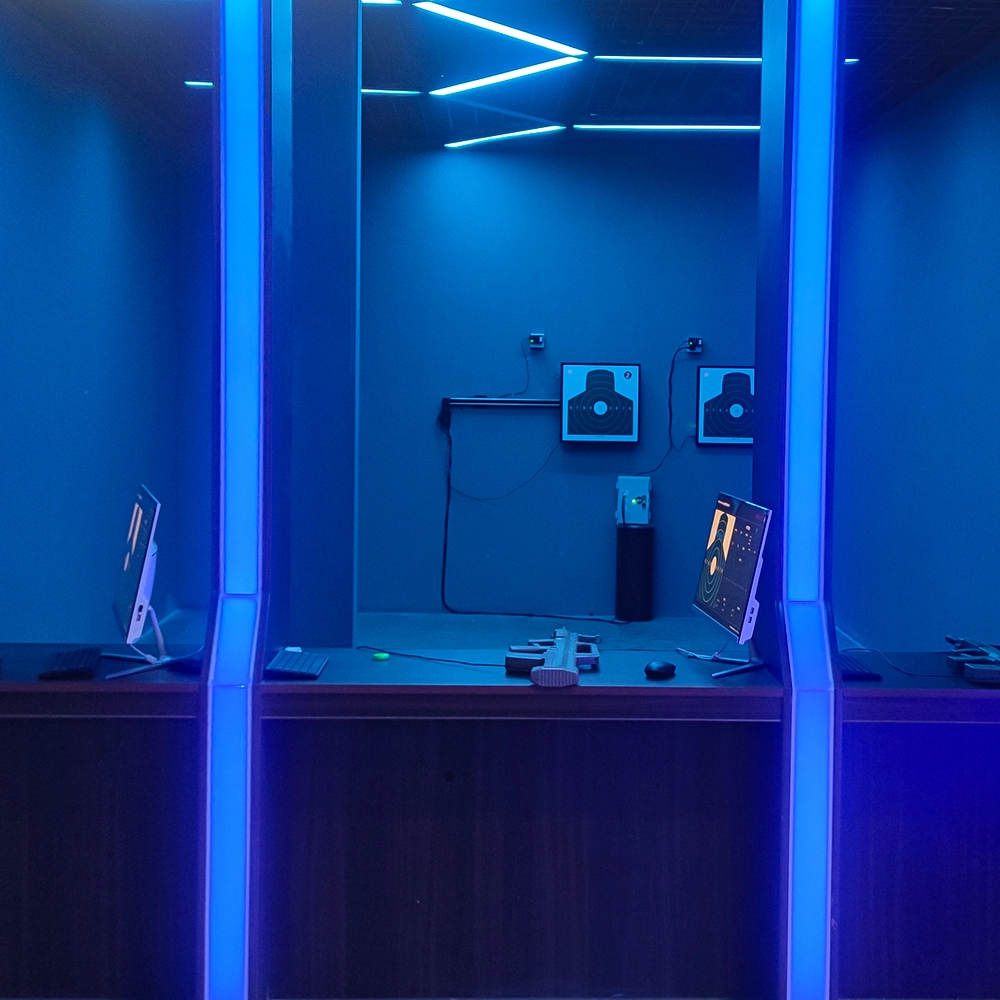
Infrared Shooting
Highly simulated simulation training analysis equipment, with advanced design concepts, fast system development, ease of operation and use, stable technical performance, less consumption of training, site dependence on a small group training is highly interesting, safe, and reliable, and other outstanding features. Product design to solve the basic skills of light weapons precision shooting as a starting point, to improve the safety of shooting training and training efficiency as the fundamental purpose, highlighting the simulation, information technology, and combat training requirements, can be in small indoor and outdoor venues and does not use live ammunition to complete the basic shooting training.
Multi-Player Interactive Shooting Machine
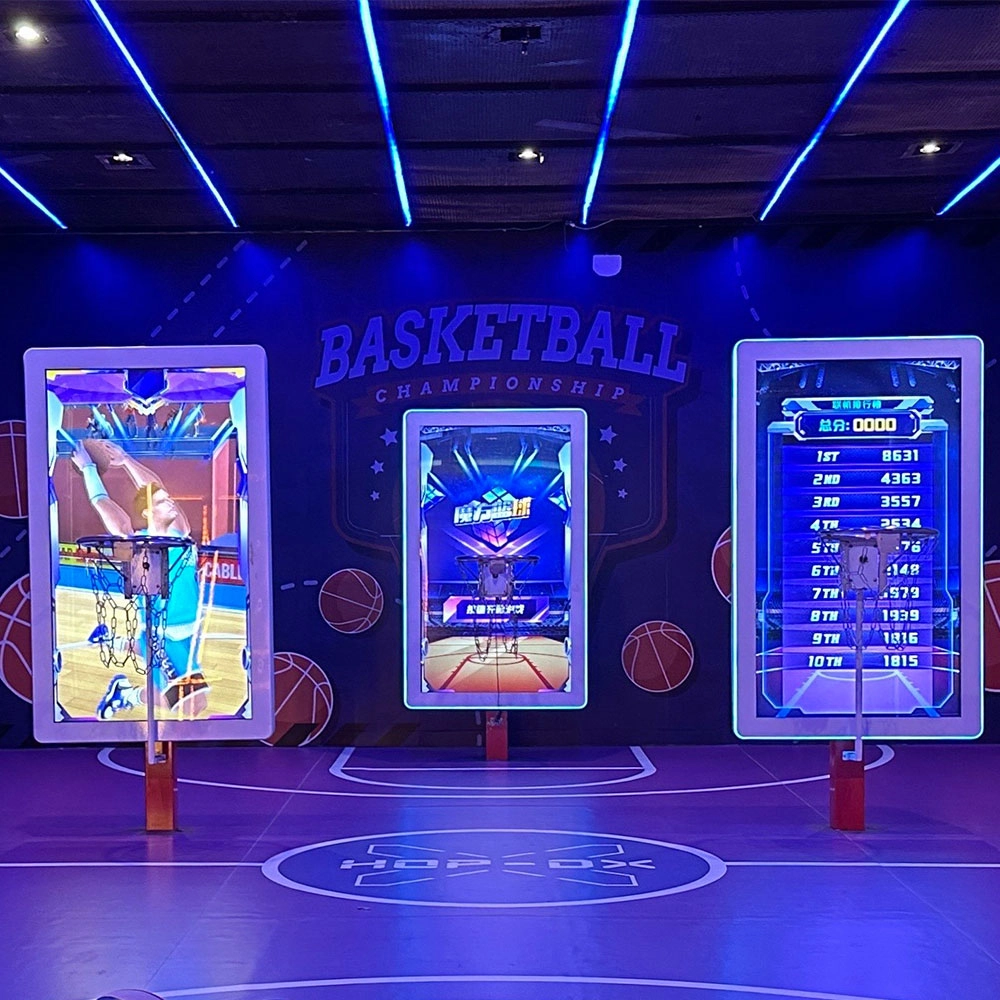
Joy Power is full of fun and exciting playgrounds! The basketball shooting machine is a classic amusement device integrating competition, entertainment, and interactivity. Based on the traditional basketball shooting sport, it integrates electronic scoring, sound and light effects, and challenge mechanisms to bring players an immersive game experience. The main body of the equipment is usually built with a metal frame, equipped with a standard-sized basket and a sturdy rim, with multiple sets of sensors to accurately capture the trajectory of the shot; when the player shoots the ball, the machine's built-in sensors count the score in real time and present the score, remaining time, and challenge goals through the LED display or LCD screen, with exciting sound effects and colorful lights to create a tense and exciting gaming atmosphere.
Ready to take your venue to the next level?
Leave us a message here, and our team will get back to you promptly.
Whether you're interested in custom orders, technical specifications, or partnership opportunities, we're here to assist you.
© 2025 FUNTECH ALL RIGHTS RESERVED

Weixia Lei
Fun_Tech-s
fun_tech20