
top questions to ask an air hockey arcade machine supplier? | Insights by FUNTECH
- 1. What is the realistic total landed cost (unit price + packing + freight + duties + inland logistics + handling) for importing a commercial air hockey table, and how can I avoid unexpected fees?
- 2. How do I verify the blower/fan airflow and noise performance the supplier claims, and what minimum specs should I expect for heavy-use arcade environments?
- 3. For a high-usage FEC or arcade, which spare parts should I keep on-hand and what MTTR (mean time to repair) should I expect for common failures?
- 4. What playing-surface material and air-hole pattern deliver the most durable, level play under heavy commercial use — HPL, HDPE, or phenolic?
- 5. What warranty coverage and on-site response SLAs are realistic for commercial air hockey tables, and how can I negotiate extended coverage or local service options?
- 6. How do I verify the machine meets local electrical safety and EMC requirements (UL/ETL for US, CE/EMC for EU) and ensure the supplier’s test reports are legitimate?
- Conclusion — Advantages of working with a knowledgeable, transparent supplier
Top Questions to Ask an Air Hockey Arcade Machine Supplier — 6 Buyer-Focused FAQs
Buying commercial air hockey tables for arcades, family entertainment centers or FECs requires more than product photos and a price. Below are six long-tail, buyer-centered questions beginners rarely find strong answers to online — each followed by in-depth, actionable guidance you can use when vetting suppliers, negotiating terms, and planning installation and maintenance.
1. What is the realistic total landed cost (unit price + packing + freight + duties + inland logistics + handling) for importing a commercial air hockey table, and how can I avoid unexpected fees?
Pain point: New buyers are often surprised by shipping, customs, and inland-handling charges that push the actual acquisition cost far above the unit price quoted by suppliers.
What to ask your supplier and why it matters:
- Request itemized EXW/FOB/CIF quotes — insist the supplier breaks out: unit price, packaging (crating/pallet), palletizer fees, inland trucking to port, export documentation, and estimated freight (FCL/LCL/air) and insurance. Use these line items to compare apples-to-apples across suppliers.
- Ask the supplier for exact carton/pallet dimensions and gross weight per unit; these drive freight and port handling charges. Confirm how many units fit in a 20 ft and 40 ft container. (A 20 ft container internal volume ≈ 33 m³; a 40 ft ≈ 67 m³ — supply the supplier with container type to get accurate loading calculations.)
- Get the HS code and commercial invoice template. The HS code determines tariff classification and duties. Verify HS code with your customs broker rather than assuming the supplier's classification is correct.
- Clarify Incoterm responsibility and point of risk transfer (FOB vs CIF vs DDP). DDP quotes are higher but shift customs and local clearance risk to the supplier. FOB means you manage freight and import clearance.
- Factor in local import costs: customs clearance fee, port handling, local VAT/sales tax, broker fee, and any pre-delivery testing or quarantine inspection charges. Ask your broker for estimates before committing.
Risk reduction tactics:
- Obtain at least two freight quotes (LCL vs FCL) and a customs broker’s landed-cost estimate before purchase.
- Require the supplier to provide loading photos and a packing list at time of shipment so you can reconcile weight/dimensions for accurate arrival billing.
- Consider consolidation programs or DDP service for first-time imports to avoid surprises; after establishing volumes, negotiate FOB pricing with your trusted forwarder.
2. How do I verify the blower/fan airflow and noise performance the supplier claims, and what minimum specs should I expect for heavy-use arcade environments?
Pain point: Buyers receive vague blower claims (e.g., ‘strong airflow’) without test data. In high-traffic locations the blower is the single most critical mechanical component — failures, underperformance and excessive noise drive complaints and downtime.
What to request from the supplier:
- Technical sheet for the blower: manufacturer/brand, model, nominal airflow (CFM or m³/hr), static pressure (Pa or mmH2O), power draw (W), rated current (A), voltage, and RPM. Brand names and model numbers allow you to cross-check OEM datasheets.
- Sound-level measurement: request dB(A) at 1 meter and at operator distance under full-load operation. Insist on a short video showing the running machine with a handheld meter reading, or better, an accredited lab test report.
- Ask about bearings (ball vs sleeve), rotor balance, and motor thermal protection — these affect operational life and noise over time.
Practical acceptance criteria for commercial use (vendor-independent guidance):
- Blower documentation that lists measurable airflow and static pressure, not qualitative adjectives.
- Noise characterization: request baseline dB(A) measurements. For indoor arcades, lower is better — if a blower approaches industrial levels you will hear it above ambient music/noise. For safety and staff comfort, ensure cumulative noise (with multiple machines) is managed to avoid 85 dBA exposures in staff areas (OSHA guidance on noise exposure levels should be considered).
- Ask for references: photos and contact info for at least two existing arcade customers who operate identical blower models for verification of long-term performance.
3. For a high-usage FEC or arcade, which spare parts should I keep on-hand and what MTTR (mean time to repair) should I expect for common failures?
Pain point: Operators suffer long downtimes because they lack critical spares or the supplier has long lead times for replacement parts.
Core spare parts to insist upon and stocking guidance:
- Primary blower/fan assembly — keep at least one per 4–8 tables depending on supplier MTTR and your downtime tolerance.
- Coin-mech or payment modules (if coin-op) and spare PCBA for credit systems — coin mechs are high-failure items in public locations.
- Power supplies/fuses and LED score display modules — electronics fail and are critical to operation.
- Mechanical wear items: bearings, belts (if used), leg glides/foot pads, hinge sets and assembly fasteners.
- Play consumables: pucks, pushers (mallets), spare air mattress or playfield surfacing laminates if the supplier uses replaceable laminates.
SLA and MTTR expectations:
- Negotiate a parts lead time in the contract (for example, next-business-day air for critical parts where feasible) and clarify whether the supplier will maintain regional stock.
- Request a recommended spare-parts list from the supplier with suggested stocking quantities based on projected machines in-service and typical part lifetimes.
- Ask if local service partners or authorized technicians exist in your region to lower Mean Time To Repair; if none exist, consider a consignment parts agreement or vendor-managed inventory for critical spares.
4. What playing-surface material and air-hole pattern deliver the most durable, level play under heavy commercial use — HPL, HDPE, or phenolic?
Pain point: Manufacturers use different top-sheet materials and internal constructions, and some cheaper playfields warp, delaminate or lose flatness quickly under heavy use and humidity variations.
What matters for durability and play quality:
- Surface material: phenolic/resin-bonded surfaces and high-pressure laminate (HPL) bonded to a stable substrate are industry-preferred for commercial tables because they resist moisture and maintain a predictable puck bounce. HDPE surfaces give a low-friction finish but may require thicker panels and reinforcement to avoid sag.
- Substrate and edge construction: check whether the supplier uses moisture-stable MDF with a sealed perimeter or plywood/phenolic core. In high-humidity sites, sealed phenolic cores outperform untreated MDF.
- Air-hole pattern and hole diameter influence airflow uniformity. Ask for the air-hole layout and verify blower mounting and plenum design — poorly engineered plenums create hot/cold zones and uneven puck glide.
- Flatness tolerance: request factory flatness testing and tolerance criteria. Accept machines with documented flatness verification (ideally measured with laser or straightedge tests). Flatness should be maintained under normal load and after shipping; ask about shipping bracing and recommended re-leveling after install.
Verification steps before purchase:
- Ask for a sample playfield or high-resolution close-up photos and videos showing puck roll tests and full-speed play.
- Request references from customers in similar climate zones—if you’re in a humid environment, verify the supplier’s tables perform in the same conditions.
5. What warranty coverage and on-site response SLAs are realistic for commercial air hockey tables, and how can I negotiate extended coverage or local service options?
Pain point: A short or limited warranty can leave operators exposed to long repair cycles and high out-of-pocket costs. Many online product listings show ‘warranty’ but do not spell out response times, coverage list, or exclusions.
Key warranty and service terms to confirm in writing:
- Warranty length and scope — ask for a written warranty that covers mechanical and electrical components separately (e.g., blower, electronics, structural frame). Typical commercial equipment warranties often range from 12–24 months for parts and labor; confirm whether consumables are excluded.
- Service response SLA — request committed response times for support queries and on-site service dispatch (if offered). If the supplier cannot provide local technicians, request a clear parts RMA process and express shipping for critical parts.
- Training and documentation — get factory service manuals, wiring diagrams, and troubleshooting guides as part of the purchase. On-site or remote technician training can significantly reduce MTTR.
- Extended warranty and spare-part packages — negotiate extended warranties or prepaid maintenance packs if you expect heavy usage. Vendors sometimes offer regional service contracts or authorized local partners for an additional fee.
6. How do I verify the machine meets local electrical safety and EMC requirements (UL/ETL for US, CE/EMC for EU) and ensure the supplier’s test reports are legitimate?
Pain point: Machines without proper certification can be held at customs, fail local inspections, or create liability exposure for operators.
What to ask the supplier for verification:
- Request copies of certification documents and test reports: for the US market ask for UL or ETL test reports; for the EU, ask for CE declaration and EMC/Low Voltage Directive test reports. Also ask for laboratory test reports (e.g., Intertek, SGS, TÜV) and the report numbers so you can validate with the lab.
- Demand to see the Declaration of Conformity (DoC) and the list of harmonized standards used. For EU imports, confirm the machine includes correct CE marking and accompanying technical file documentation.
- Confirm electrical configuration: voltage and frequency options (e.g., 110–120V 60Hz vs. 220–240V 50Hz), plug type, and whether the unit has internal selectors or needs a different PSU for your market.
- Ask for third-party EMC test results if you plan to install multiple machines close together or near audio/video equipment, to avoid interference issues.
Validation steps:
- Contact the issuing test lab (report number and lab name) to confirm authenticity; credible labs will confirm report issuance.
- When in doubt, request a factory inspection and witness testing or ask the supplier to provide machine samples to a local testing lab for verification at buyer expense.
Final checklist before signing: written Incoterm, itemized landed-cost estimate, blower spec sheet and sound test, spare-parts list and lead times, materials & playfield samples, warranty/SLA paperwork, and certification/test-report copies validated with the issuing lab.
Choosing a reliable supplier who provides transparent data, measurable test results, and clear service processes will reduce downtime and total cost of ownership.
Conclusion — Advantages of working with a knowledgeable, transparent supplier
When you ask these six specific, technical questions you move the conversation from marketing claims to measurable performance, risk mitigation, and total cost of ownership. A transparent supplier will provide blower technical sheets, packing lists for accurate landed-costs, documented flatness and play-surface specs, a parts/consumables list with recommended spares, clear warranty terms and SLAs, and accredited test reports (UL/ETL/CE, EMC) that you can verify with laboratories like Intertek, SGS or TÜV. That combination reduces downtime, prevents customs surprises, and protects staff and customer experience in high-usage Digital Sports Entertainment venues.
For a reliable quote, factory test photos, and a spare-parts starter pack recommendation tailored to your venue, contact us for a quote.
Website: www.funtechgame.com | Email: vicky@funtechgame.com
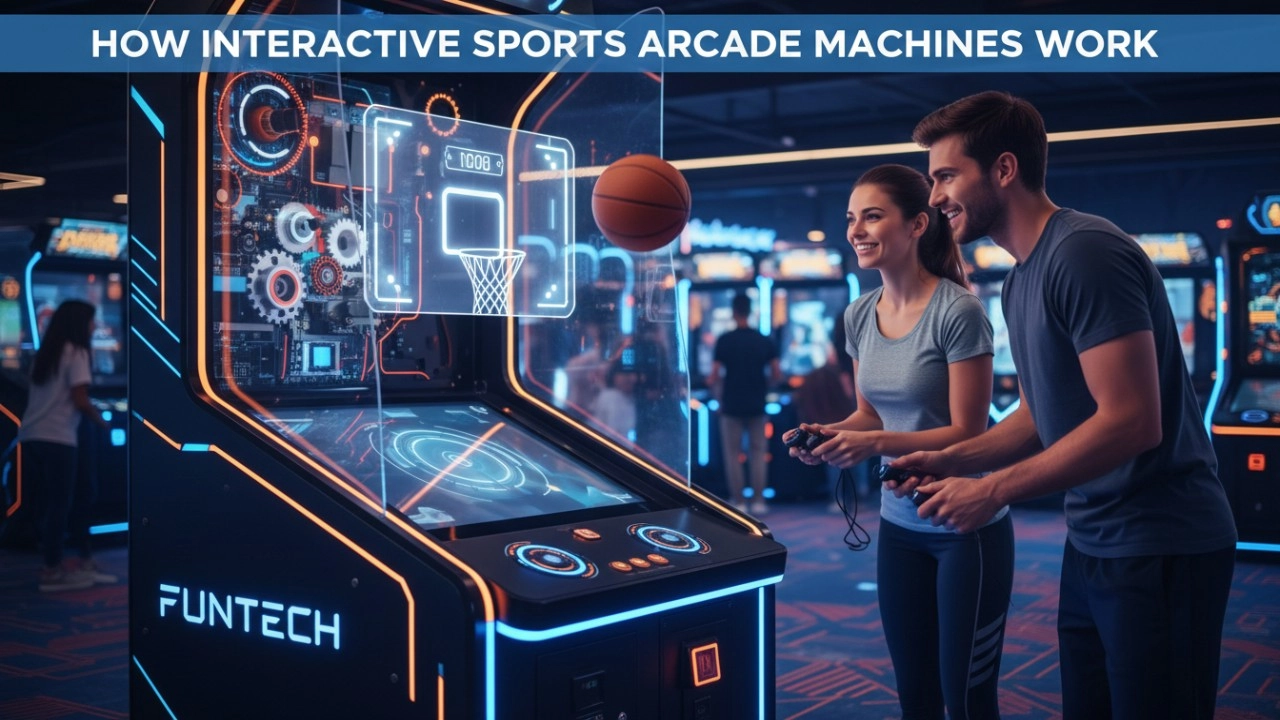
How Interactive Sports Arcade Machines Work (Sensors, Projection & AI) - 2026 Guide
What Defines Interactive Sports Arcade Equipment in 2026?
What Is Interactive Sports Arcade Equipment? Complete Beginner Guide (2026)
The Ultimate Guide to Interactive Sports Arcade Equipment for Commercial Entertainment (2026 Edition)
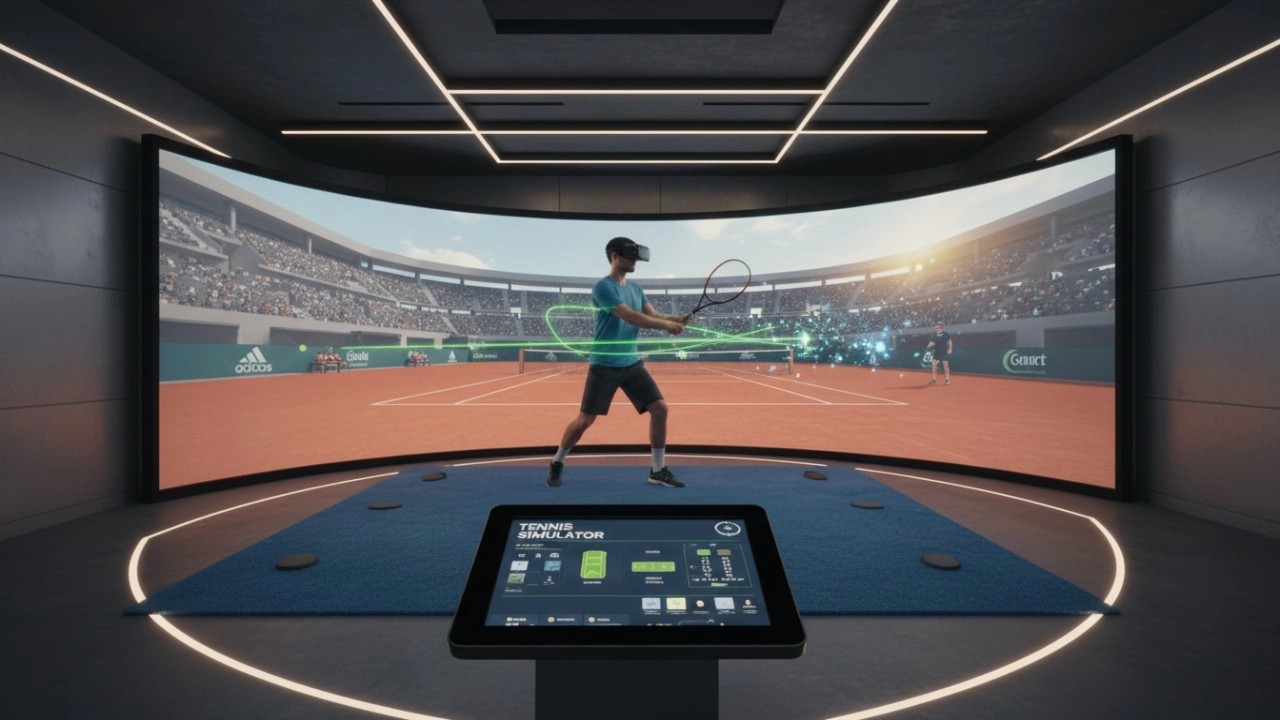
7 Reasons to Add a Tennis Simulator to Your Entertainment Venue Instead of Traditional Training Models (2026 Guide)
FAQ
What is the of process of design, construction and operation of digital sports entertainment hall?
The general steps for the design, construction and operation process of a digital sports entertainment center. Each step needs to be carefully planned and executed to ensure the smooth opening and long-term development of the digital sports entertainment center.
Football Simulator
Are there a lot of game modes in soccer simulation?
Very rich! There is a league mode which is exciting and can compete with players from all over the world, and there is also a leisure and fun game which is suitable for parents and children to share fun time, so as to satisfy the needs of different players.
Golf Simulator
What is the difference between purchasing equipment for commercial operations and personal training?
Commercial operations should consider the durability, ease of operation, and attractiveness of the equipment, and it is preferable to choose cool-looking equipment that can withstand high-frequency use.
Dart Machines Bar Dart Machines
What are the after-sales services after purchasing the equipment?
Generally, a 1-year warranty is provided. During the warranty period, parts damaged due to quality problems, such as motor failure, display problems, etc., will be repaired or replaced free of charge. There will also be technical support, including equipment installation and debugging guidance, operation training, to ensure the smooth use of the user, after-sales response time is usually within 24 - 48 hours.
Products
How to attract customers when operating the program in shopping malls?
Create a cool venue decoration style, incorporating trendy elements, such as fluorescent light strips, animation-themed murals, etc. o Create a new venue for the program. o Launch diversified marketing models such as parent-child packages and couple packages, combined with time-limited promotional activities, such as half-price experience in the first three days of opening, to attract different groups such as families and couples to stop by and participate in the program. o Create cool venue decoration styles and incorporate trendy elements, such as fluorescent light strips.
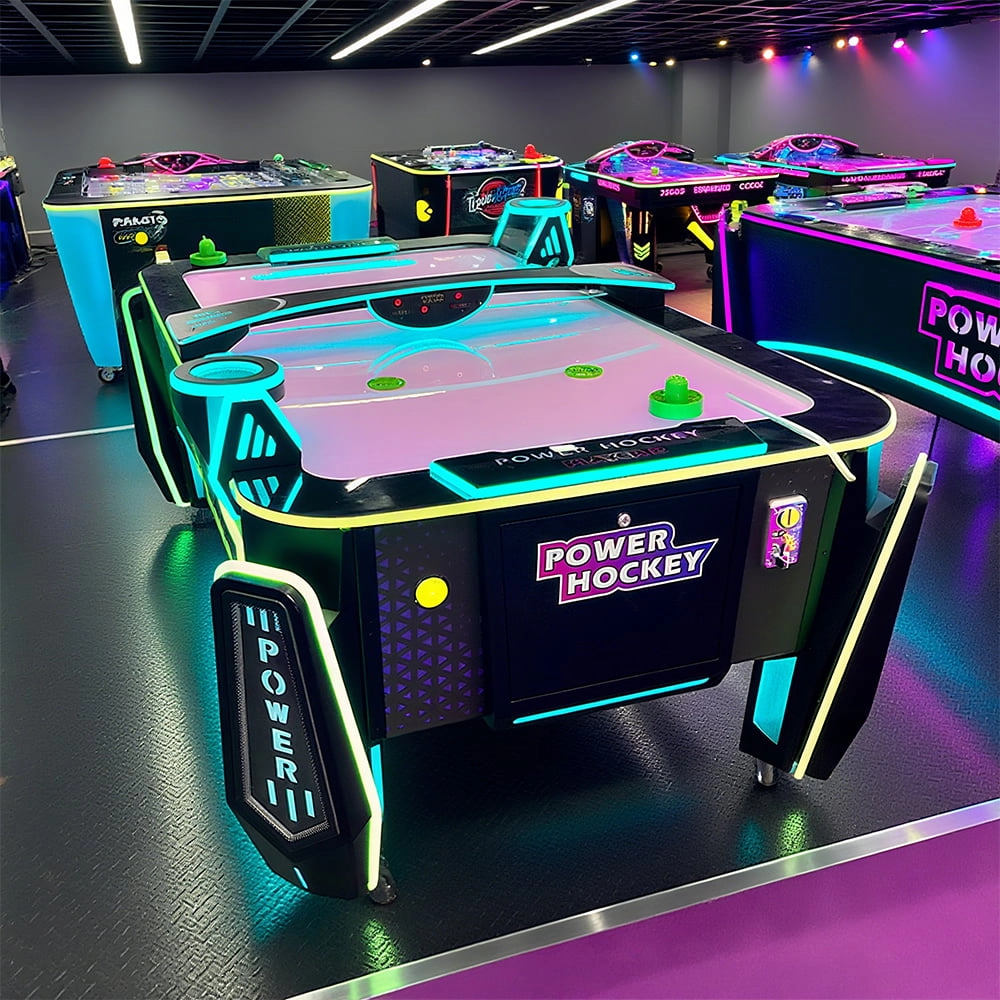
Arcade Hockey
FUNTECH is full of fun and exciting playgrounds! Air hockey, also known as air hockey, is a two-player competitive arcade game comprising a smooth, perforated playing surface, lightweight hockey sticks, a plastic puck, and an electronic scoreboard.
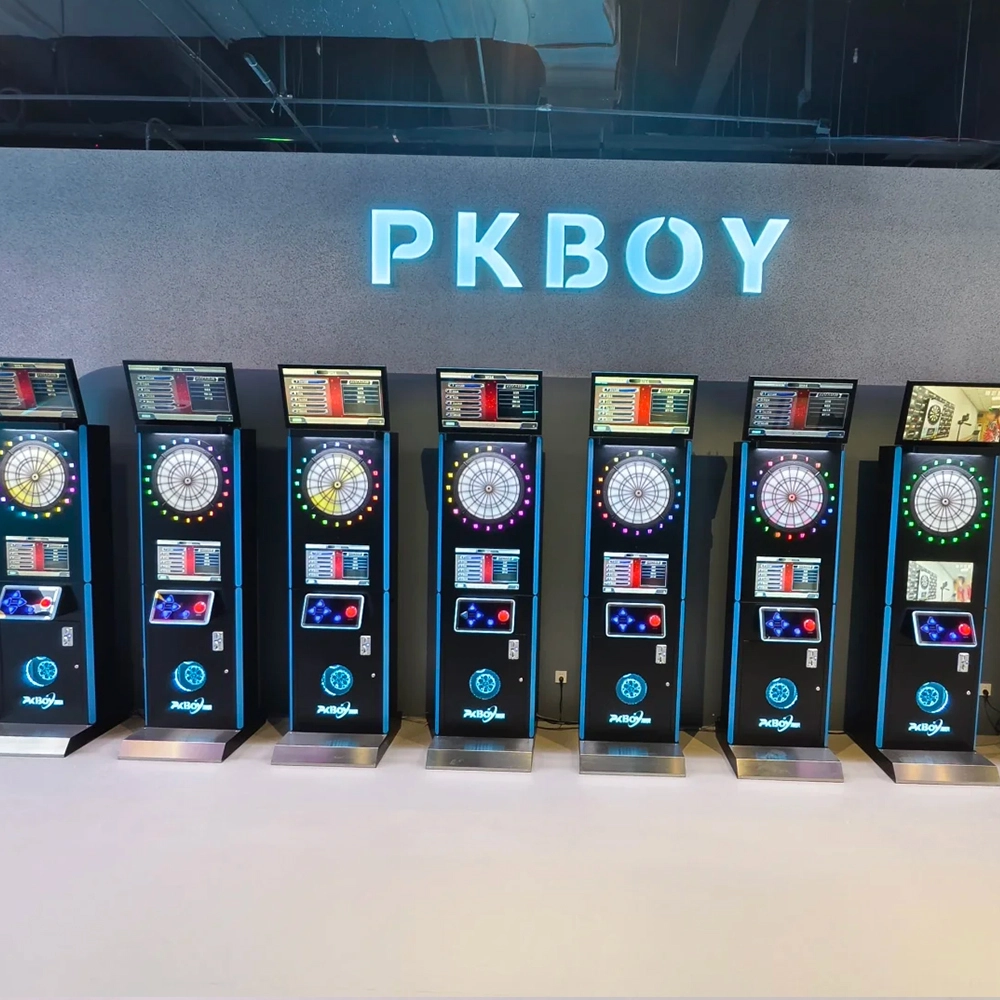
Dart Machines Bar Dart Machines
Joy Power is full of fun and excitement in the playground! The dart machine is suitable for all kinds of places, whether it is a bar, restaurant, KTV, or other entertainment venue, or a sports shop, club, or family leisure space, and can be perfectly adapted. In commercial venues, holding individual and team darts tournaments from time to time can attract more customers and increase the popularity and revenue of the venue, supplemented by various preferential activities, which can directly promote consumption and form a cycle of consumption of all the goods in the shop.
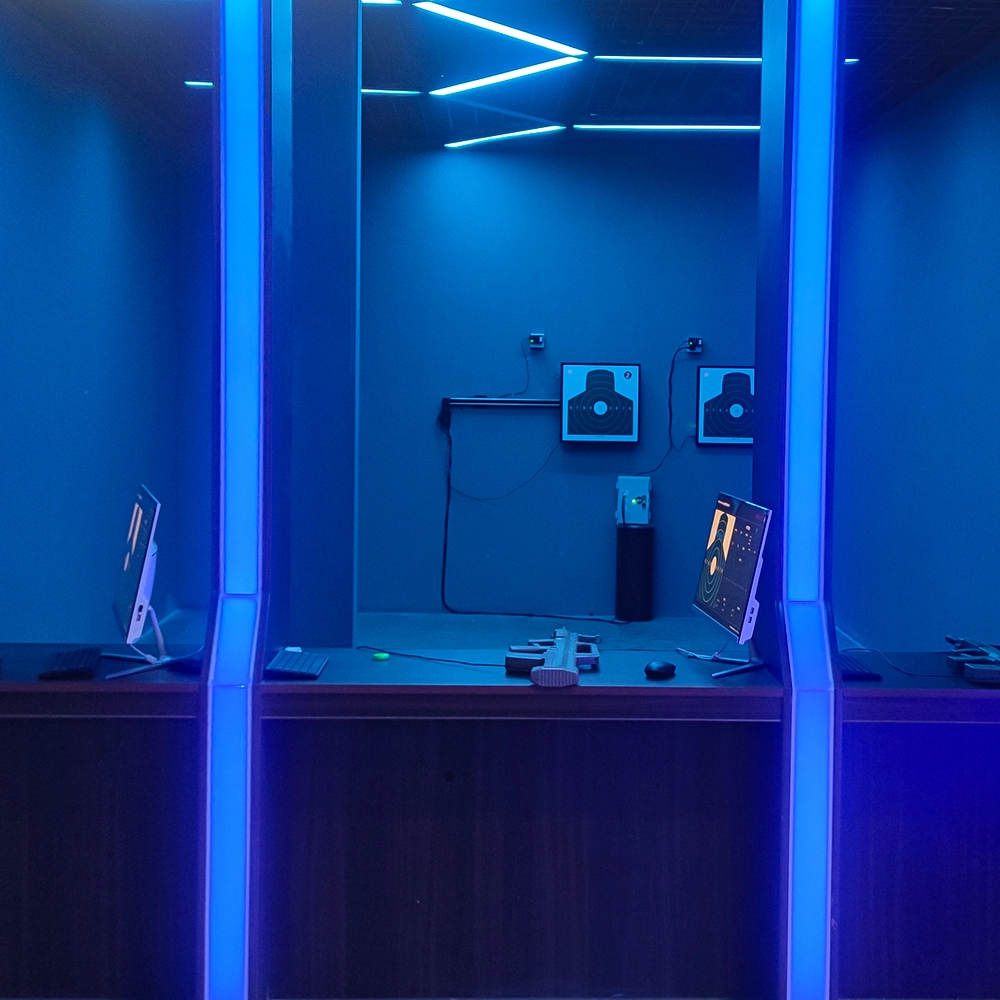
Infrared Shooting
Highly simulated simulation training analysis equipment, with advanced design concepts, fast system development, ease of operation and use, stable technical performance, less consumption of training, site dependence on a small group training is highly interesting, safe, and reliable, and other outstanding features. Product design to solve the basic skills of light weapons precision shooting as a starting point, to improve the safety of shooting training and training efficiency as the fundamental purpose, highlighting the simulation, information technology, and combat training requirements, can be in small indoor and outdoor venues and does not use live ammunition to complete the basic shooting training.
Multi-Player Interactive Shooting Machine
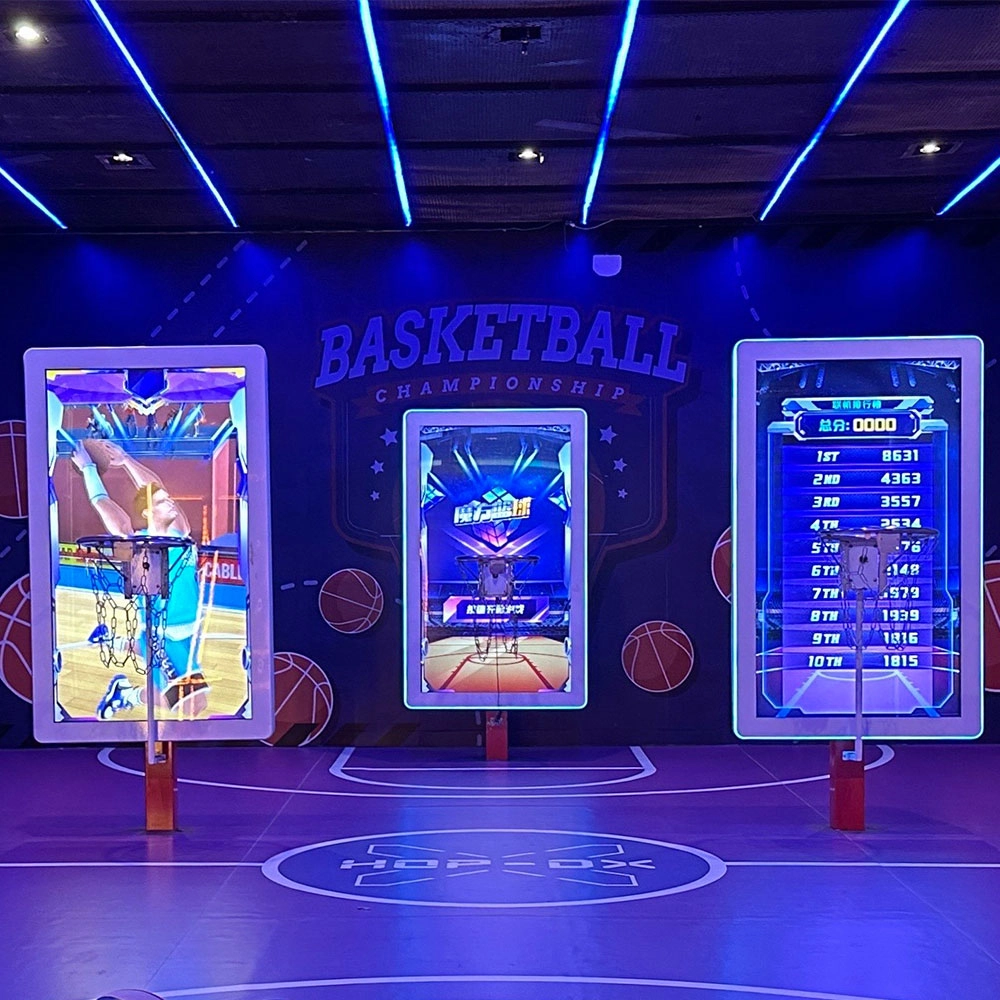
Joy Power is full of fun and exciting playgrounds! The basketball shooting machine is a classic amusement device integrating competition, entertainment, and interactivity. Based on the traditional basketball shooting sport, it integrates electronic scoring, sound and light effects, and challenge mechanisms to bring players an immersive game experience. The main body of the equipment is usually built with a metal frame, equipped with a standard-sized basket and a sturdy rim, with multiple sets of sensors to accurately capture the trajectory of the shot; when the player shoots the ball, the machine's built-in sensors count the score in real time and present the score, remaining time, and challenge goals through the LED display or LCD screen, with exciting sound effects and colorful lights to create a tense and exciting gaming atmosphere.
Ready to take your venue to the next level?
Leave us a message here, and our team will get back to you promptly.
Whether you're interested in custom orders, technical specifications, or partnership opportunities, we're here to assist you.
© 2025 FUNTECH ALL RIGHTS RESERVED

Weixia Lei
Fun_Tech-s
fun_tech20