
how to choose the best air hockey arcade machine supplier? | Insights by FUNTECH
- 1. How can I verify the build quality of an air hockey table’s playfield and airflow system before I place a large order?
- 2. What spare parts and lead-time guarantees should be in place to minimize downtime for coin-operated air hockey machines?
- 3. I want custom branding and cashless payment integration—what OEM capabilities and software support should I demand?
- 4. Which certifications and factory audits are essential to ensure compliance and safety for international markets?
- 5. How do I accurately calculate landed cost and choose the right shipping and incoterm strategy for air hockey tables?
- 6. For small operators, what realistic MOQ, payment terms and pilot/test order strategies reduce financial risk without sacrificing quality?
Choosing the right supplier for a commercial air hockey table affects uptime, player experience, and ROI for arcades, family entertainment centers, and digital sports entertainment venues. Below are six specific, pain-point oriented questions beginners ask but rarely find comprehensive answers to online.
1. How can I verify the build quality of an air hockey table’s playfield and airflow system before I place a large order?
Why it matters: The playfield and blower determine puck behavior, fairness of play and long-term durability. Cheap surfaces delaminate, fans lose CFM, and puck lift becomes uneven—leading to customer complaints and repairs.
What to ask the supplier and how to verify:
- Request detailed materials specs: surface substrate (e.g., multi-layer phenolic laminate, high-density MDF with wear coating, or aluminum composite), hole pattern density, and thickness of impact rails. High-use commercial tables typically use industrial-grade wear surfaces and reinforced rails to resist impact.
- Ask for blower specifications: motor type (brushless vs brushed), rated power, RPM and air flow measured in CFM. Don’t accept vague “powerful fan” claims—insist on figures and a blower curve or test report.
- Insist on test videos: supplier-run tests showing uniform puck glide in multiple areas of the table, blower start/stop cycles, and a noise measurement (dB) at 1 meter. Videos should include scaling or timestamped demonstrations.
- Independent inspection: for orders above a few units, commission a third-party pre-shipment inspection (SGS, Bureau Veritas or local QC agent) to test flatness tolerance, hole uniformity, and blower airflow across the surface.
- Ask about wear parts and resurfacing: confirm if the manufacturer supplies replacement playfields or resurfacing kits and estimated life under heavy commercial use (typical commercial tables require resurfacing or replacement after heavy use—confirm lead times).
How operators measure success: request performance benchmarks—average uptime, days-between-failure, and expected play cycles. If a supplier can provide data from existing clients (coin-operated revenue logs, usage hours), that’s strong evidence of proven durability.
2. What spare parts and lead-time guarantees should be in place to minimize downtime for coin-operated air hockey machines?
Why it matters: For arcades and entertainment centers, downtime directly reduces revenue. Fast replacement parts and clear RMA procedures are critical.
Key elements to negotiate and verify:
- Parts list: insist on a clear bill of materials (BOM) listing wear items—blower units, scoring electronics, coin acceptors or cashless readers, playfield panels, pucks, mallets, LEDs, power supplies and fasteners.
- Stock policy: confirm whether the supplier stocks critical spares globally or provides regional warehouses. For popular commercial models, reputable suppliers keep blower motors, controllers, and scoring boards in regional distribution centers to reduce lead time.
- Lead-time SLA: request a written Service Level Agreement for spare parts dispatch (e.g., parts shipped within X business days). For high-use venues, aim for a 72-hour or faster dispatch for critical components where possible.
- RMA and troubleshooting: ensure the supplier provides clear diagnostic guides, remote troubleshooting (phone/video), and an RMA workflow. Ask for example case timelines from existing customers.
- Repairability: prefer designs with modular electronics (plug-and-play scoring boards, removable blower housings) to simplify onsite repairs and reduce mean-time-to-repair.
Red flags: suppliers who require full-table returns to factory for common failures, ambiguous parts lists, or no regional parts stocking. These increase both downtime and total operating cost.
3. I want custom branding and cashless payment integration—what OEM capabilities and software support should I demand?
Why it matters: Custom panels and cashless systems affect branding, revenue capture and integration with your arcade management platform.
Technical and contractual points to confirm:
- Customization scope: confirm which areas can be branded (cabinet art, side panels, playfield borders, marquee, LED colors) and whether branding is factory-applied or a post-production service.
- OEM tooling and MOQ: ask if custom artwork requires new tooling or if vinyl wrap/printed panels are used. OEM tooling can increase costs and MOQ—confirm minimum quantities and expected additional lead times for custom runs.
- Cashless & telemetry: require support for industry-standard cashless readers (Nayax, MEI, MDB protocol convertors) and remote telemetry (coin-drop reporting, uptime, diagnostics). Confirm whether firmware updates are supported over-the-air or require physical access.
- API & integration: if you use an arcade management system or loyalty platform, obtain API documentation and integration support. Ask whether the supplier or their engineering partner will provide integration services and at what cost.
- Software ownership & updates: clarify who owns custom software/firmware modifications and what the update/support policy is. Get guarantees for security patches and compatibility for at least 12–24 months post-sale.
Operators planning multi-site deployments should negotiate branded production samples and a signed specification sheet to lock in artwork, payout behavior and software features before mass production.
4. Which certifications and factory audits are essential to ensure compliance and safety for international markets?
Why it matters: Electrical safety and regulatory compliance vary by market—non-compliant products can be held at customs, fined or banned from public venues.
Certifications and audits to insist on:
- Electrical safety: CE (Europe) or UL/ETL (North America) for mains-powered electronics. These are real, independent safety marks—ask to see test certificates and the issuing body details.
- Quality management: ISO 9001 certification indicates documented production and QC systems. While not a product safety mark, it shows a supplier’s quality processes.
- Component standards: RoHS compliance for restricted substances, especially if you operate in the EU or selling into locations with hazardous-materials restrictions.
- Factory audits: request recent third-party factory audits (SMETA, ICTI or customer-specific) and photos of assembly lines, testing stations and final test benches. Audits show capability for consistent production quality and fair labor practices.
- Documentation for customs: ensure supplier can provide CE declarations, test reports, packing lists, HS codes and certificates of origin to reduce customs delays and ensure correct tariff classification.
Action step: before confirming a large order, obtain copies of certificates and validate them with the issuing body when possible. Reputable suppliers will proactively share documentation and support your compliance checks.
5. How do I accurately calculate landed cost and choose the right shipping and incoterm strategy for air hockey tables?
Why it matters: Unit price is only part of cost. Freight, import duties, insurance and on-site assembly factor into total cost and ROI.
Practical steps to determine landed cost:
- Request detailed export packaging dimensions and gross weights per unit—containers are charged by dimensional weight for air and by volume for sea. Ask the supplier for palletization schemes and volumetric calculations.
- Choose incoterms carefully: FOB (Free On Board) means you control shipping and customs clearance; CIF/CFR shifts more responsibility to the supplier but can hide freight markups. For first-time buyers, CIF to a major port can simplify the process; for repeat buyers, FOB often lowers long-term costs.
- HS codes & duties: confirm the correct Harmonized System (HS) code for air hockey equipment to estimate import duties and VAT. Incorrect HS codes can create significant delays and fines.
- Local logistics: factor in inland trucking, customs broker fees, delivery to site and any assembly/installation labor. For coin-op machines, you may need certified electricians or technicians for installation—get supplier recommendations and a labor estimate.
- Insurance & inspection: consider pre-shipment inspection and marine cargo insurance. For expensive orders, insure for CIF value plus spare parts value to protect against loss or damage in transit.
Tip: ask potential suppliers for a sample landed cost calculation (FOB price + typical freight, duties, local delivery) to your target port so you can compare several suppliers on an apples-to-apples basis.
6. For small operators, what realistic MOQ, payment terms and pilot/test order strategies reduce financial risk without sacrificing quality?
Why it matters: Beginners and small arcades need to limit capital outlay while verifying machine performance and supplier reliability.
Best practices to minimize risk:
- Pilot orders: start with a 1–3 unit pilot from supplier stock models to validate build quality, coin/drop performance and local player acceptance before committing to a larger OEM run.
- MOQ reality check: many manufacturers offer lower MOQ on stocked models (often single units) but require higher MOQ for custom branding or tooling. Clarify MOQ for stocked vs. customized versions in writing.
- Payment terms: negotiate split payments—deposit (30–50%) on order, balance on inspection or before shipment. For new suppliers, avoid full upfront payments. Use secure payment methods—escrow, letter of credit for larger orders, or reputable payment gateways.
- Factory acceptance tests (FAT): require a documented FAT procedure and videos; for pilots, visit the factory if practical or hire a local QC inspector for on-site verification before funds release.
- Warranty & trial period: secure at least a 12-month commercial warranty on major components and ask for a limited satisfaction clause for pilot units (e.g., ability to return or replace if major defects appear within a short period).
By using pilot units, clear payment milestones, and a defined warranty/RMA process, small operators preserve capital while validating supplier claims.
Concluding summary: Selecting the right air hockey arcade machine supplier requires validating build quality (playfield and blower), confirming spare-part availability and SLAs, ensuring OEM and cashless integration support, checking certifications and factory audits, calculating true landed cost, and mitigating financial risk with pilot orders and sensible payment terms. A vetted supplier reduces downtime, increases player satisfaction, and protects your venue’s revenue stream—critical outcomes in digital sports entertainment and amusement center operations.
Advantages of partnering with a qualified supplier include predictable uptime, faster repairs via stocked spares, consistent player experience through quality playfields and blowers, reliable cashless/telemetry integrations for revenue tracking, and documented compliance to pass customs and safety inspections.
For a quote, pilot-unit pricing or factory documentation, contact us at www.funtechgame.com or email vicky@funtechgame.com — we’ll provide a tailored quote and sample specifications for your venue.
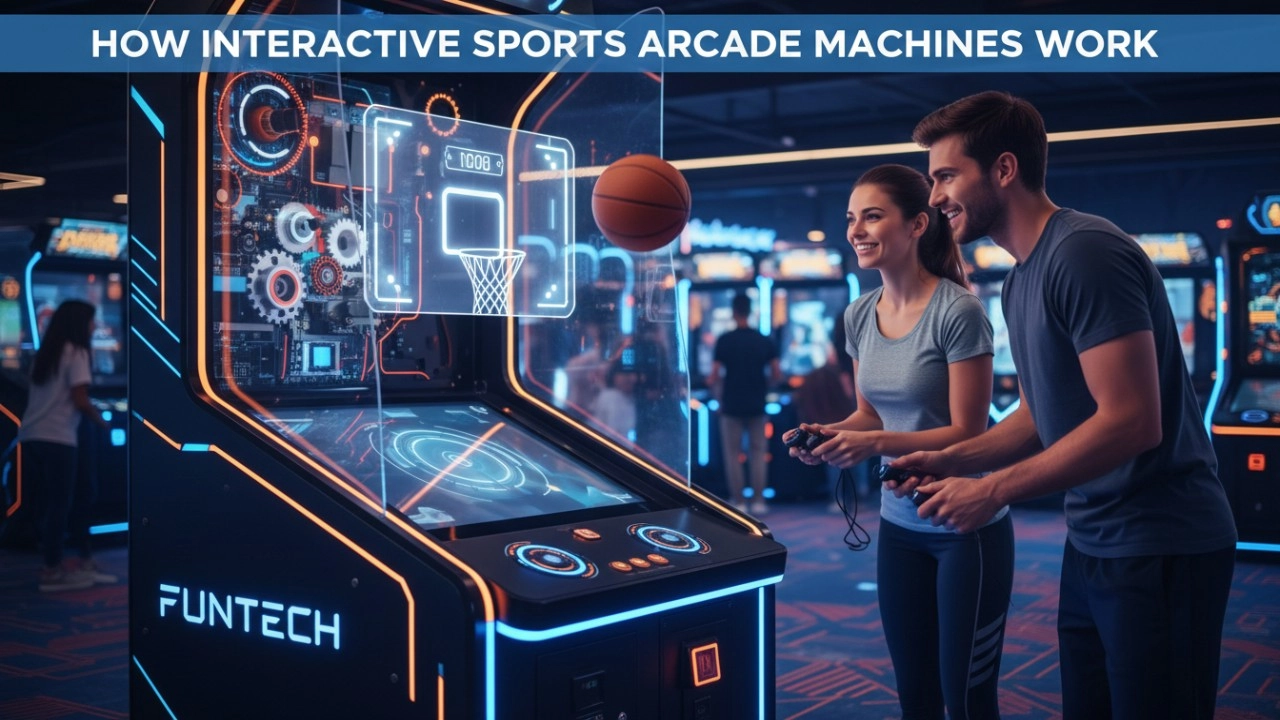
How Interactive Sports Arcade Machines Work (Sensors, Projection & AI) - 2026 Guide
What Defines Interactive Sports Arcade Equipment in 2026?
What Is Interactive Sports Arcade Equipment? Complete Beginner Guide (2026)
The Ultimate Guide to Interactive Sports Arcade Equipment for Commercial Entertainment (2026 Edition)
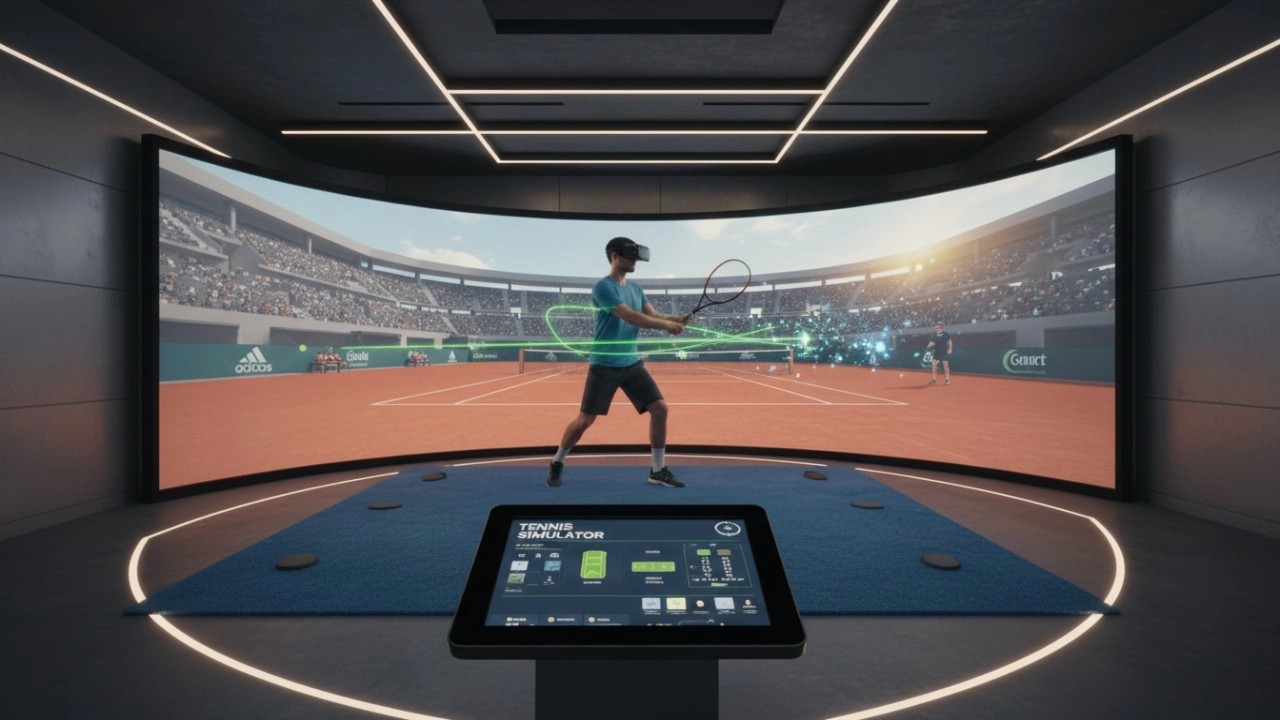
7 Reasons to Add a Tennis Simulator to Your Entertainment Venue Instead of Traditional Training Models (2026 Guide)
Football Simulator
How does the picture effect of simulation soccer achieve realism?
With the help of advanced technology, the green field is accurately reproduced with fine turf texture and realistic player movements. From the players running, passing to shooting, are lifelike, to give players a sense of immersion.
Interactive Rollerball
Why are sports arcades a hot spot for investment?
The traditional entertainment market (e.g., arcade, KTV) has become less attractive to generations, while digital hip playgrounds integrating technology, sports, and socialization are more in line with young people's needs, and the market size has exceeded 50 billion in 2023, with an annual growth rate of more than 30%.
Holographic Light and Shadow Restaurant
What is holographic projection?
Holographic projection is a technique that utilizes the principles of interference and diffraction to record and reproduce the true three-dimensional image of an object. It records the light information of an object on a hologram, and then uses a specific light source to illuminate the hologram, so that the three-dimensional image of the object can be presented in the air, and the audience can see the realistic stereoscopic image without wearing special glasses.
Golf Simulator
What are the after-sales services after purchasing the equipment?
Generally, a 1-year warranty is provided. During the warranty period, parts damaged due to quality problems, such as motor failure, display problems, etc., will be repaired or replaced free of charge. There will also be technical support, including equipment installation and debugging guidance, operation training, to ensure the smooth use of the user, after-sales response time is usually within 24 - 48 hours.
What is the difference between purchasing equipment for commercial operations and personal training?
Commercial operations should consider the durability, ease of operation, and attractiveness of the equipment, and it is preferable to choose cool-looking equipment that can withstand high-frequency use.
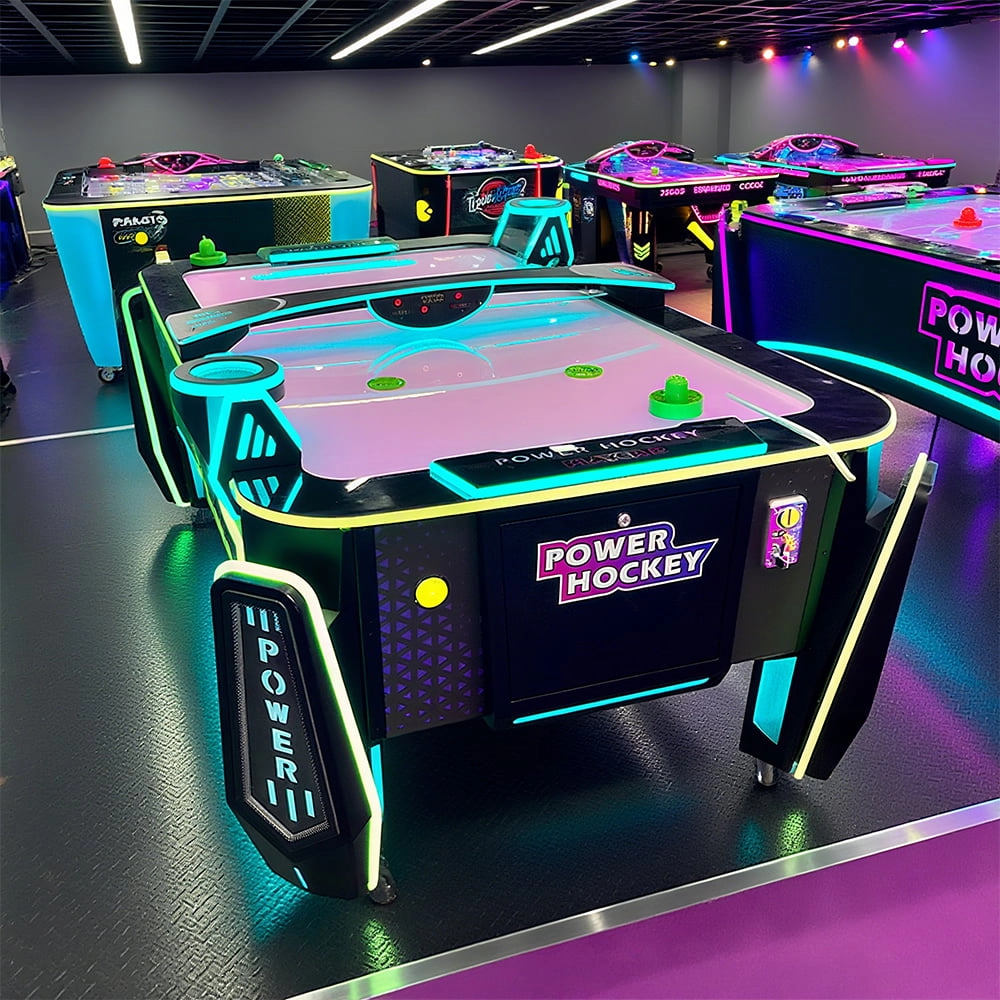
Arcade Hockey
FUNTECH is full of fun and exciting playgrounds! Air hockey, also known as air hockey, is a two-player competitive arcade game comprising a smooth, perforated playing surface, lightweight hockey sticks, a plastic puck, and an electronic scoreboard.
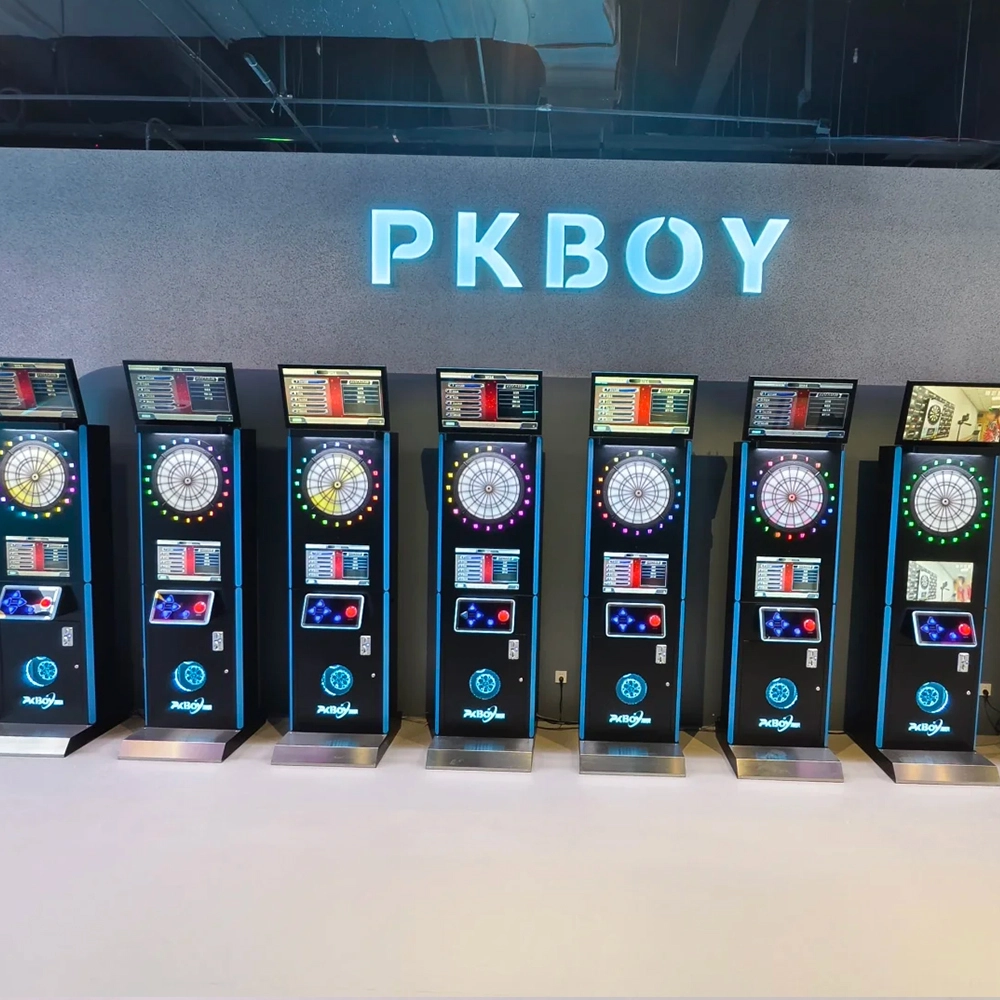
Dart Machines Bar Dart Machines
Joy Power is full of fun and excitement in the playground! The dart machine is suitable for all kinds of places, whether it is a bar, restaurant, KTV, or other entertainment venue, or a sports shop, club, or family leisure space, and can be perfectly adapted. In commercial venues, holding individual and team darts tournaments from time to time can attract more customers and increase the popularity and revenue of the venue, supplemented by various preferential activities, which can directly promote consumption and form a cycle of consumption of all the goods in the shop.
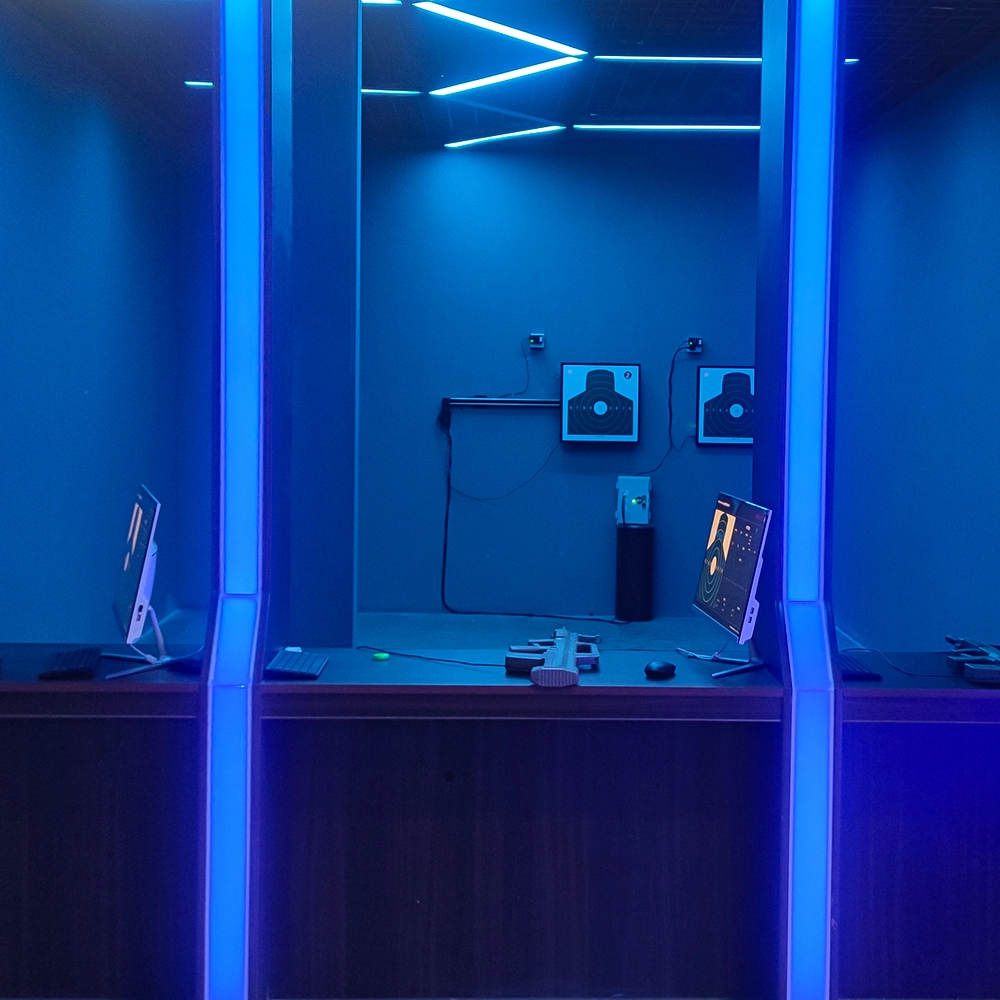
Infrared Shooting
Highly simulated simulation training analysis equipment, with advanced design concepts, fast system development, ease of operation and use, stable technical performance, less consumption of training, site dependence on a small group training is highly interesting, safe, and reliable, and other outstanding features. Product design to solve the basic skills of light weapons precision shooting as a starting point, to improve the safety of shooting training and training efficiency as the fundamental purpose, highlighting the simulation, information technology, and combat training requirements, can be in small indoor and outdoor venues and does not use live ammunition to complete the basic shooting training.
Multi-Player Interactive Shooting Machine
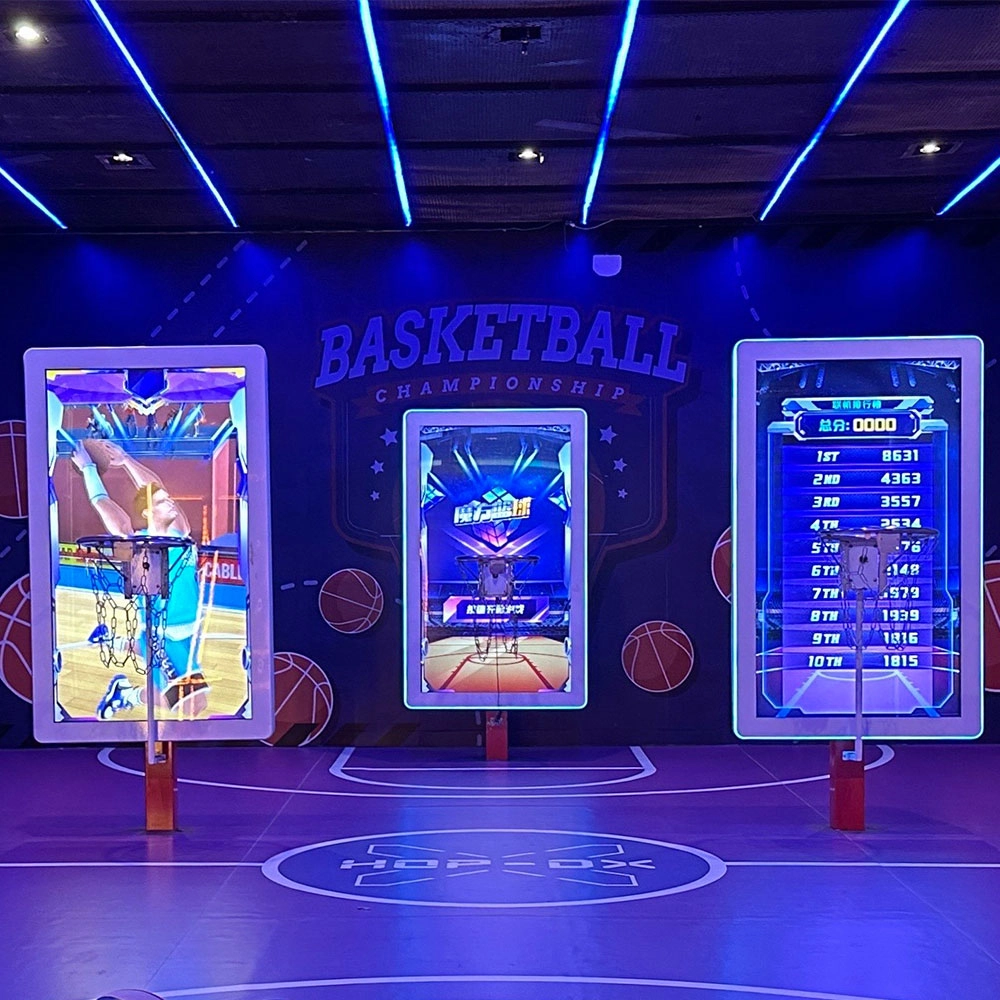
Joy Power is full of fun and exciting playgrounds! The basketball shooting machine is a classic amusement device integrating competition, entertainment, and interactivity. Based on the traditional basketball shooting sport, it integrates electronic scoring, sound and light effects, and challenge mechanisms to bring players an immersive game experience. The main body of the equipment is usually built with a metal frame, equipped with a standard-sized basket and a sturdy rim, with multiple sets of sensors to accurately capture the trajectory of the shot; when the player shoots the ball, the machine's built-in sensors count the score in real time and present the score, remaining time, and challenge goals through the LED display or LCD screen, with exciting sound effects and colorful lights to create a tense and exciting gaming atmosphere.
Ready to take your venue to the next level?
Leave us a message here, and our team will get back to you promptly.
Whether you're interested in custom orders, technical specifications, or partnership opportunities, we're here to assist you.
© 2025 FUNTECH ALL RIGHTS RESERVED

Weixia Lei
Fun_Tech-s
fun_tech20