
What features should buyers look for in commercial spinning bikes?
- 1) How can I verify and compare power-meter accuracy and calibration on commercial spinning bikes used for live instructor-led classes?
- 2) Which resistance system (eddy current vs electromagnetic vs mechanical friction) delivers the most consistent power delivery and lowest maintenance for 24/7 commercial use?
- 3) What connectivity, networking, and latency features must commercial spinning bikes have to support low-latency multiplayer and immersive events?
- 4) How do I evaluate frame durability, corrosion protection, and warranty for bikes installed in high-humidity boutique studios or resort gyms?
- 5) Which onboard sensors and metrics should I prioritize (FTP, cadence, heart rate), and how do I ensure reliable integration with platforms like Zwift or a custom content delivery system?
- 6) What service level agreements (SLAs), spare parts inventory, and remote-diagnostics should buyers require to minimize downtime in commercial spinning bike fleets?
- Concluding summary: Advantages of choosing commercially-graded, digitally-integrated spinning bikes
What Features Should Buyers Look for in Commercial Spinning Bikes? A Digital Sports Entertainment Guide
As studios and Digital Sports Entertainment operators invest in indoor cycling fleets, the technical and operational details behind each spinning bike determine guest experience, uptime, and integration with immersive content platforms. Below are six beginner-to-pro buyer questions that are often answered superficially online — each followed by an in-depth, practical response grounded in real industry practice and standards (ISO 20957 / EN 957 considerations, Bluetooth/ANT+ protocols, and manufacturer datasheets).
1) How can I verify and compare power-meter accuracy and calibration on commercial spinning bikes used for live instructor-led classes?
Pain point: studios see inconsistent watt readings across bikes, undermining fairness in leaderboards and frustrating power-based training.
Why it matters: Power (watts) is the primary objective metric for structured training and competition. Inconsistent or poorly calibrated readings harm athlete trust and training validity.
How to evaluate:
- Ask vendors for specified accuracy tolerances. Commercial-grade direct or crank-based power meters typically claim ±1–3% accuracy; many reliable indoor-bike power systems target ±1–2% under controlled conditions. If a vendor claims sub-1% without backing, request third-party test reports.
- Prefer bikes with true power sensors (strain-gauge or calibrated load-cell) over algorithmic/virtual power derived from resistance + cadence. Virtual power is cheaper but less repeatable across units.
- Check for a standardized calibration procedure: zero-offset, temperature compensation, and a documented FTP/erg-mode verification routine. Ensure bikes support user-triggered or scheduled calibration via Bluetooth/ANT+ or local UI.
- Request a factory calibration certificate for each bike and a recommended re-calibration frequency (commercial fleets often require quarterly checks in high-use environments).
- Plan cross-compare testing before deployment: use a calibrated reference power meter (crank or hub) on a test bike to verify claimed accuracy across a 50–400W range. Record results and require vendors to meet contract tolerances.
Operational tip: integrate a periodic automated calibration check into your maintenance SOP and log deviations. For leaderboards and e-sports events, allow a short warm-up/calibration window before competition to ensure parity.
2) Which resistance system (eddy current vs electromagnetic vs mechanical friction) delivers the most consistent power delivery and lowest maintenance for 24/7 commercial use?
Pain point: boutique studios and entertainment venues see variable feel, noisy bikes, and frequent pad replacements.
Comparison and recommendation:
- Friction (pad-on-flywheel): simple and inexpensive but high maintenance (pad replacement), audible noise, and inconsistent torque under heat. Not ideal for high-footfall commercial settings.
- Magnetic/eddy-current: contactless, wide torque range, minimal wear, and very consistent power delivery. Eddy-current systems (permanent magnets interacting with conductive flywheel) are common in commercial bikes for smooth, low-maintenance operation.
- Electromagnetic (active motor-driven resistance): uses coils and current control to produce torque. Offers the finest precision and fast response for ERG mode and slope simulation. Slightly higher initial cost and needs robust electronics and cooling, but excels when integrated with interactive software and multiplayer events.
For Digital Sports Entertainment and 24/7 commercial deployments, electromagnetic or eddy-current systems are preferred. Electromagnetic gives the best closed-loop control for exact watt targets and rapid resistance changes — important for synchronized classes and competitive gameplay. Ensure the bike’s specs include heat dissipation, serviceable electronics, and an IP rating for the drivetrain electronics (IP54 or better recommended if humidity or sweat exposure is expected).
3) What connectivity, networking, and latency features must commercial spinning bikes have to support low-latency multiplayer and immersive events?
Pain point: laggy leaderboards, dropped streams, and inconsistent data broadcast ruin real-time competitions and hybrid classes.
Key requirements:
- Dual-mode sensor broadcast: simultaneous Bluetooth Low Energy (BLE) and ANT+ FE-C or power/cadence broadcasting so bikes can connect to multiple platforms (Zwift, Peloton-like solutions, proprietary event servers).
- Ethernet + dual-band Wi-Fi (2.4 GHz & 5 GHz): Wi-Fi is convenient, but for guaranteed low latency and stability in dense installations, provide an Ethernet port as standard; 5 GHz reduces interference in crowded venues.
- Local network features: IGMP/multicast support, QoS tagging, and VLAN readiness so streaming and telemetry traffic can be prioritized on venue networks. For competitive events aim for network jitter < 20 ms and round-trip latency ideally < 50–100 ms end-to-end for leaderboards and synchronized cues.
- Edge/On-premise server support: for larger Digital Sports Entertainment deployments, bikes should support pairing to a local edge server that aggregates telemetry and reduces cloud round trips. This minimizes latency spikes and mitigates transient Internet issues.
- Firmware OTA updates and remote diagnostics: allow secure over-the-air updates and remote telemetry logs to quickly troubleshoot connectivity or sensor issues.
Operational tip: ask networking vendors to simulate peak load for all bikes and streams on-site. Demand a documented latency SLA in procurement contracts if you plan real-time competitions.
4) How do I evaluate frame durability, corrosion protection, and warranty for bikes installed in high-humidity boutique studios or resort gyms?
Pain point: rusted fasteners, flaky coatings, and shortened lifecycle in coastal or high-sweat environments.
What to inspect and require:
- Frame material & finish: commercial frames are typically steel or heavy-gauge aluminum. For high-humidity environments, prefer galvanized or aluminized steel with a multi-stage powder coat finish and epoxy primer to resist corrosion.
- Stainless fasteners and axles: specify stainless-steel (A2/A4) or zinc-plated hardware and sealed bearings in pedals and crank assemblies to prevent salt-corrosion.
- Protective seals for electronics: displays, motors, and power modules should meet an ingress protection standard (IP54 or higher recommended where sweat exposure is likely). Ask vendors for IP ratings and test reports.
- Warranty and service terms: commercial warranties usually differ from consumer ones. Expect 2–5 year frame warranties and 1–3 years on electronics/mechanics. Request an express clause for high-humidity environments if your venue accelerates wear.
- Maintenance plan recommendations: vendors should supply a preventive maintenance schedule (re-greasing intervals, belt tension checks) for commercial usage hours — typical studio bikes may get 8–16+ hours/day of use and require more frequent checks than home models.
Procurement tip: require a pre-delivery inspection (PDI) and corrosion-resistance certification for coastal deployments. Use vendor-recommended anti-corrosion kits and factor replacement schedules into TCO models.
5) Which onboard sensors and metrics should I prioritize (FTP, cadence, heart rate), and how do I ensure reliable integration with platforms like Zwift or a custom content delivery system?
Pain point: missing telemetry or incompatible data formats prevent seamless integration with training apps and interactive content.
Essential sensors and data streams:
- Power (watts): primary metric for structured workouts. Prefer true power meters with BLE & ANT+ FE-C broadcast.
- Cadence (rpm): required for accurate power calculations and cadence-targeted drills. Optical or magnet-based sensors with redundancy reduce dropouts.
- Heart rate: chest-strap HR (ANT+/BLE) is still more consistent than wrist-based optical HR for high-intensity sessions. Include compatibility and broadcast support for both.
- Speed/distance: useful for leaderboard displays; the platform should convert power to virtual speed consistently.
- User ID & session telemetry: secure pairing mechanisms (UUID, OAuth tokens) to bind bike telemetry to user accounts for personalized metrics and privacy tracking.
Integration checklist:
- Protocol support: ensure bikes broadcast simultaneously on BLE and ANT+ and specifically support FE-C (Fitness Equipment Control) for erg-mode automation by apps like Zwift. For custom platforms, confirm SDK/REST API availability.
- Data fidelity: request sample telemetry logs (timestamped power/cadence/hr) from the vendor; verify timestamps, data rate (1 Hz or higher for competitive use), and packet loss in your network.
- Data privacy & compliance: ensure the vendor supports local data anonymization options and complies with local data protection laws (e.g., GDPR in the EU) when streaming user metrics to third-party services.
6) What service level agreements (SLAs), spare parts inventory, and remote-diagnostics should buyers require to minimize downtime in commercial spinning bike fleets?
Pain point: extended outages during peak hours due to slow vendor service or lack of replacement parts.
SLA and maintenance essentials:
- Response and repair windows: require SLA tiers such as on-site response within 24–72 hours and replacement-part shipment within 24–48 hours for high-priority items. Define remedies/penalties for missed SLAs in the contract.
- Parts availability & local stocking: request a list of critical spare parts (pedal assemblies, belts, power modules, displays) and require vendor-maintained regional depots or authorized local resellers to keep these in stock. For large fleets, negotiate a local spares kit delivered with installation.
- Remote diagnostics: bikes should support secure remote logging and diagnostics so vendors can triage faults before dispatching technicians — this shortens MTTR (mean time to repair).
- Predictive maintenance telemetry: vendors that offer fault codes, running-hours counters, and wear predictions let you schedule preventive swaps (e.g., consumables like brake pads or belts) during off-hours rather than reacting to failures.
- Training & documentation: demand comprehensive maintenance manuals, quick-start field guides for technicians, and training sessions for your in-house maintenance staff.
Operational KPI suggestion: aim for fleet uptime > 98% for revenue-generating hours and require vendors to provide monthly uptime reports and incident logs.
Concluding summary: Advantages of choosing commercially-graded, digitally-integrated spinning bikes
Selecting the right commercial spinning bike — one with accurate power meters, electromagnetic or eddy-current resistance, robust network interfaces, and a proven SLA — delivers consistent athlete experiences, fair competition results, and reliable, low-downtime operation for studios and Digital Sports Entertainment venues. Prioritize IP-rated electronics and corrosion protection for humid or coastal sites, insist on dual-mode broadcast (BLE + ANT+ FE-C) for platform compatibility, and require factory calibration documentation and remote diagnostics to maintain parity across your fleet. These choices reduce operational costs, improve user satisfaction, and enable immersive multiplayer events with predictable latency and accurate leaderboards.
For a quote or to discuss fleet specifications for your studio or e-sports venue, contact us at www.funtechgame.com or vicky@funtechgame.com.
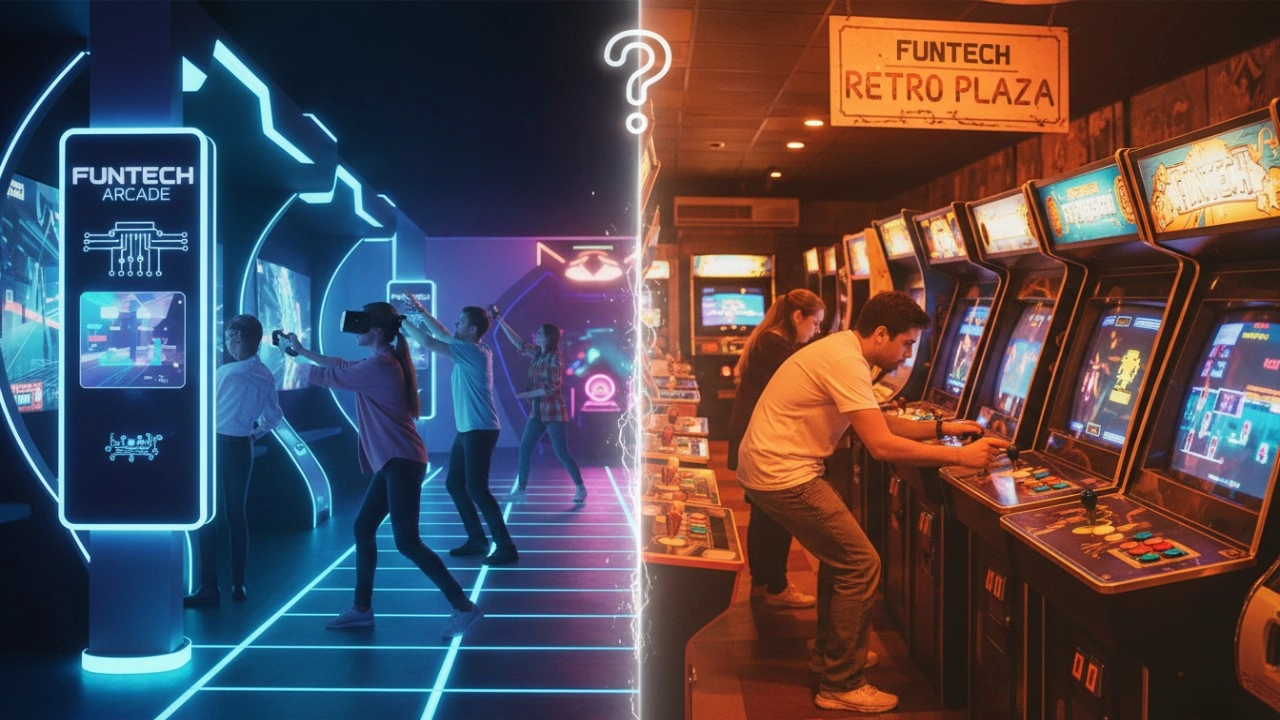
Interactive Sports Arcade vs Traditional Arcade Machines: Key Differences (2026 Guide)
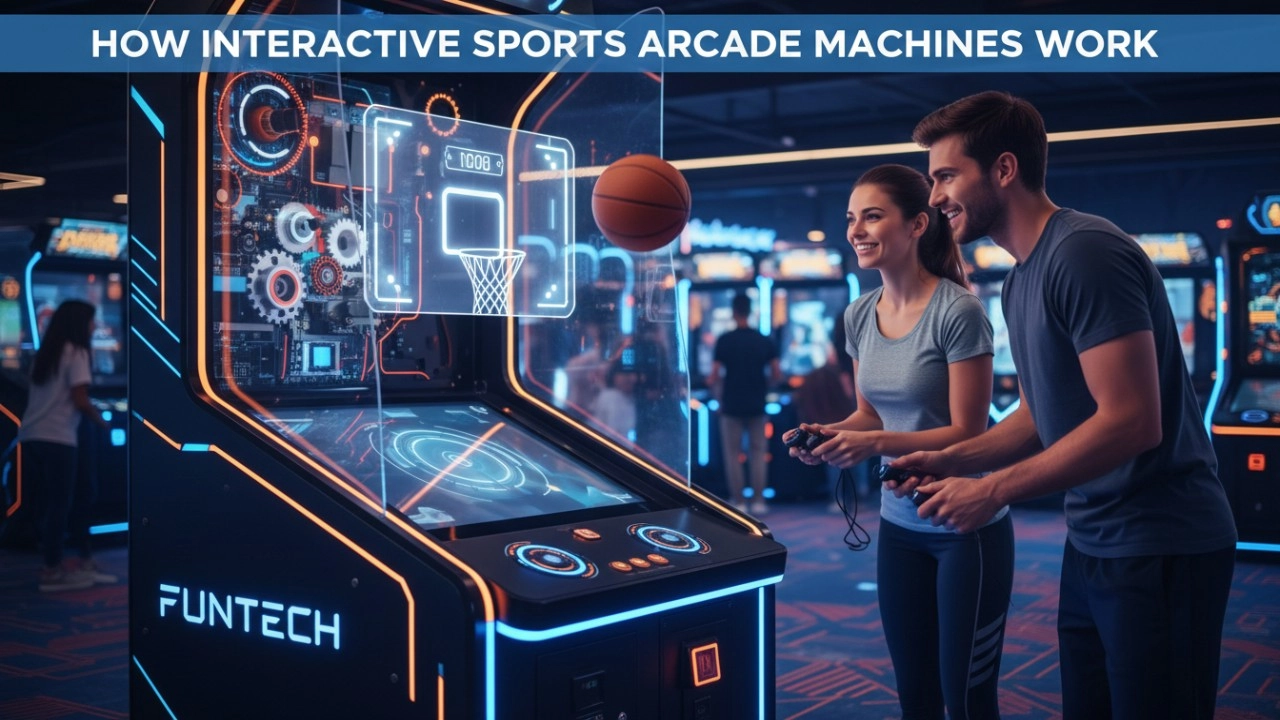
How Interactive Sports Arcade Machines Work (Sensors, Projection & AI) - 2026 Guide
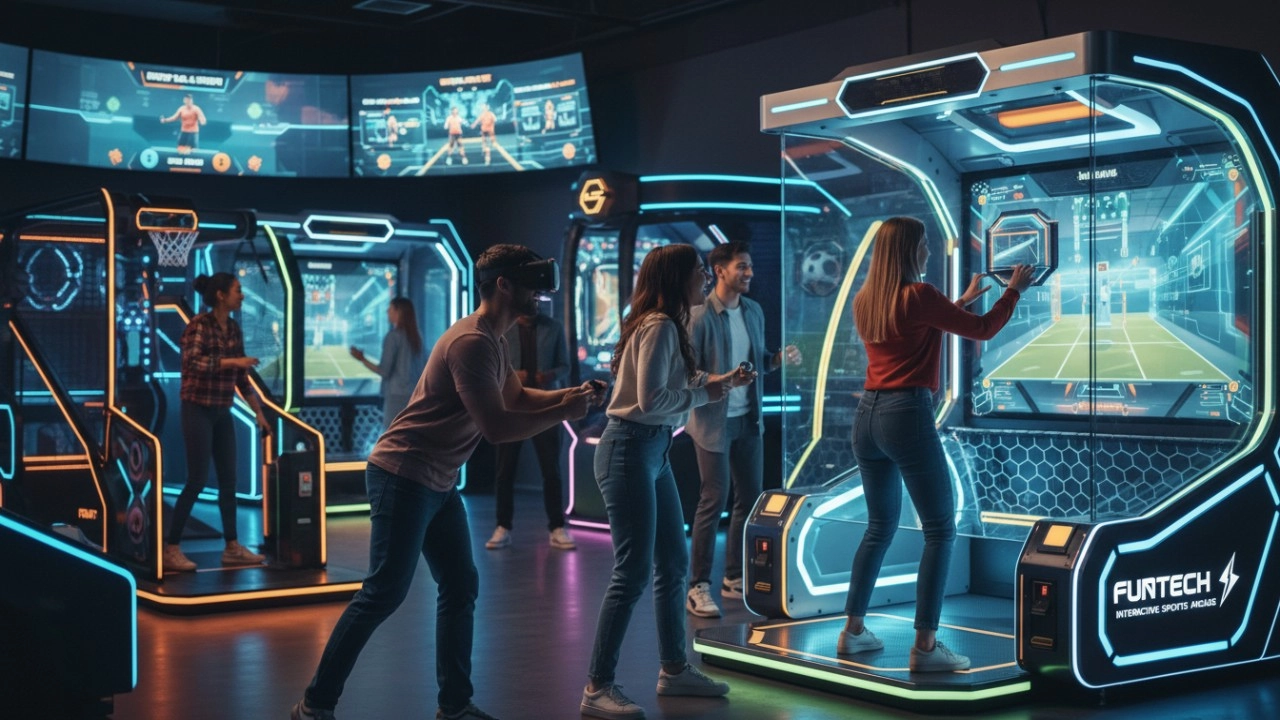
What Defines Interactive Sports Arcade Equipment in 2026?
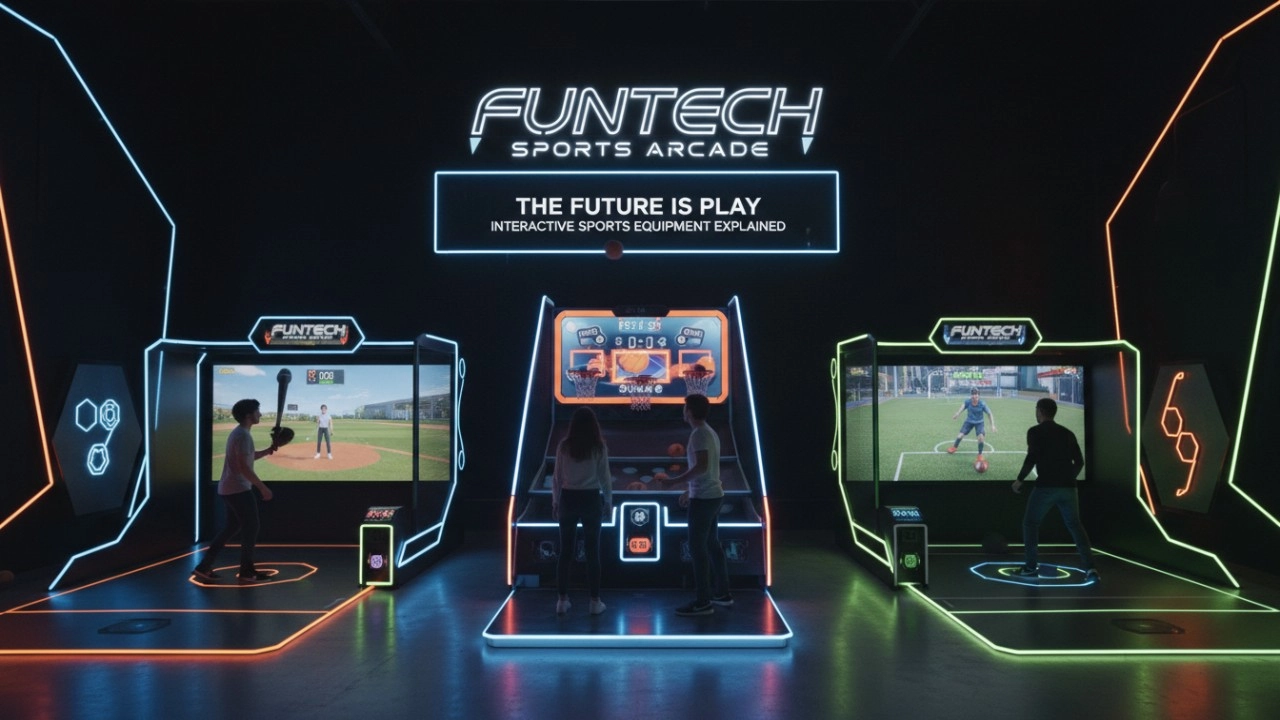
What Is Interactive Sports Arcade Equipment? Complete Beginner Guide (2026)
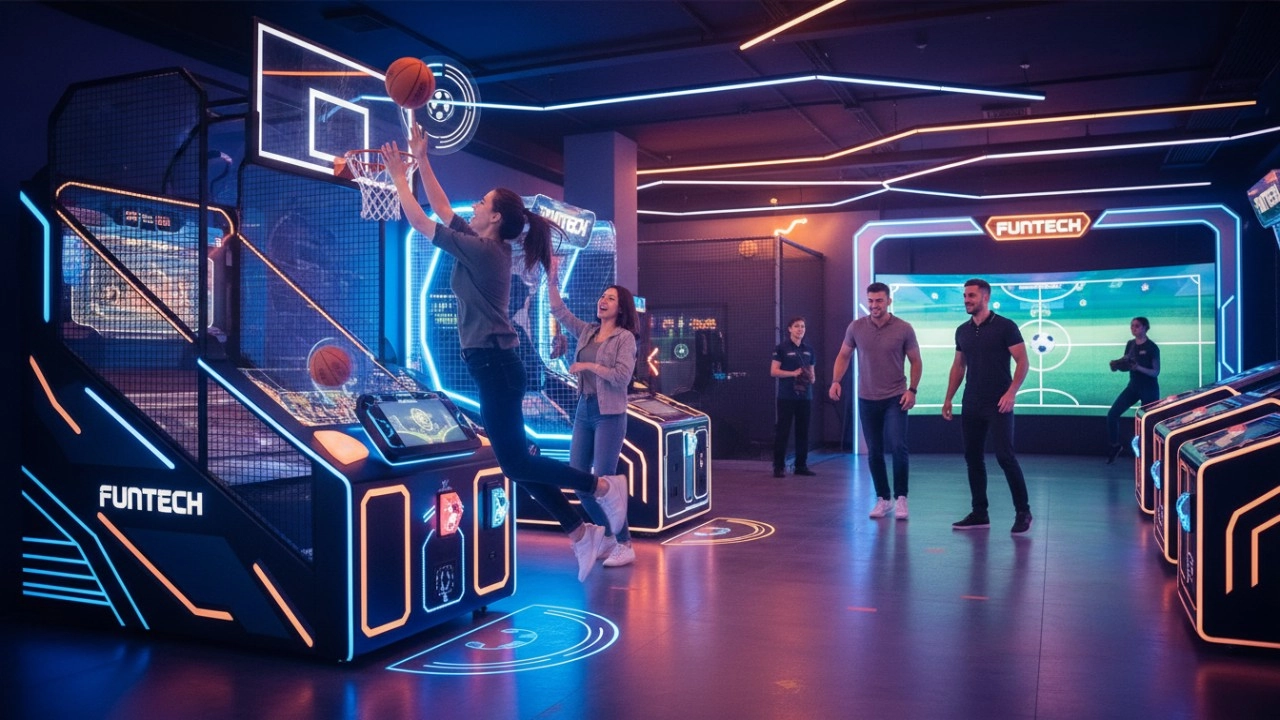
The Ultimate Guide to Interactive Sports Arcade Equipment for Commercial Entertainment (2026 Edition)
Holographic Light and Shadow Restaurant
What are the technical difficulties of holographic projection?
One is the resolution and clarity of the image. To achieve high-resolution and high-definition 3D image reproduction, advanced optical equipment and algorithms are required. The second is the control of light interference and diffraction, which requires precise control of the propagation and interference conditions of light rays to ensure the stability and accuracy of the image. The third is the complexity and cost of the system. Holographic projection systems are usually quite complex, including optical components, light sources, control systems, etc., with high costs, which limits their widespread adoption.
What is holographic projection?
Holographic projection is a technique that utilizes the principles of interference and diffraction to record and reproduce the true three-dimensional image of an object. It records the light information of an object on a hologram, and then uses a specific light source to illuminate the hologram, so that the three-dimensional image of the object can be presented in the air, and the audience can see the realistic stereoscopic image without wearing special glasses.
Golf Simulator
How to reduce operating costs?
Starting with equipment procurement, choose cost-effective, durable and easy-to-maintain products, which can save money for subsequent maintenance. Reasonable arrangement of staff, reduce the number of staff on duty during off-peak hours, train staff to have multi-skills, such as being able to operate the equipment and guide customers part-time, to improve the efficiency of manpower and reduce manpower costs.
Products
What is the most reasonable pricing for a mobile target archery program in a commercial setting?
If it is in shopping malls, scenic spots, and other places with high traffic flow, you can refer to the prices of similar entertainment programs in the surrounding area and combine them with your own costs, charging from $30 - $80 for a single session for a single person. If it is in a professional sports arena, for members or long-term training customers, packages can be introduced, such as monthly card 300 - 500 yuan, seasonal card 800 - 1200 yuan, according to different length and service content reasonable pricing.
FAQ
What requirements should a store manager of a digital sports hall have?
The store manager of a digital sports and entertainment center needs to have good management and communication skills, be familiar with the application of digital technology, and have an innovative spirit and a sense of teamwork
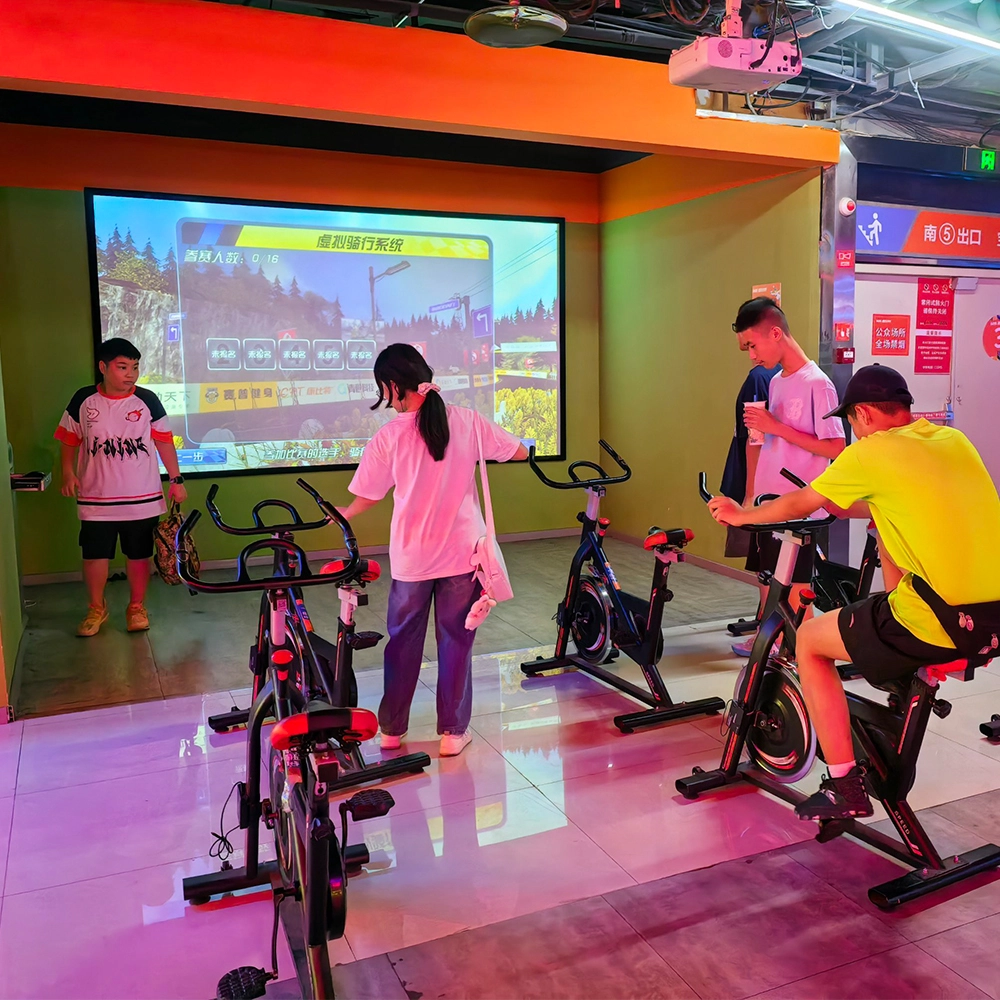
Spinning bike
Pleasure Power is full of fun and exciting rides! Diverse digital riding modes. Users can choose the virtual reality riding mode to follow the world-famous riding routes presented on the screen, such as the winding mountain passes in the Alps, the Tour de France classic track, etc., combined with 3D panoramic pictures and surround sound, as if immersed in the real scene. You can also turn on the competition mode for real-time riding competitions with the same venue or other users online, real-time updates of the leaderboard, adding to the fun and challenge of the sport! The leaderboard is updated in real time, adding to the fun and challenge of the sport. In addition, the bike is also equipped with an intelligent resistance adjustment system, which automatically adjusts the resistance according to the undulation of the terrain in the virtual scene and the progress of the race, simulating the real riding experience of climbing and descending slopes so that the user can get a more comprehensive workout in the process of cycling.
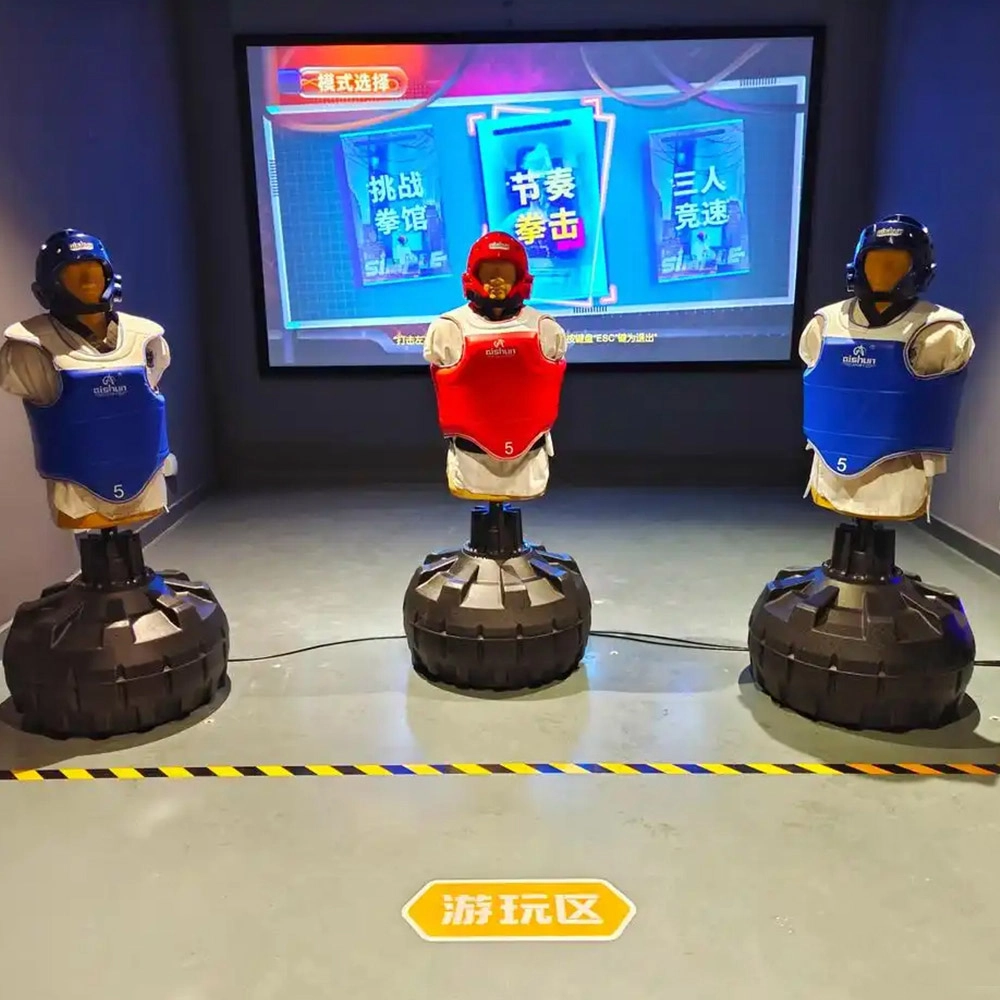
Indoor Boxing Equipment
FUNTECH is full of fun and exciting playgrounds! The indoor boxing simulation equipment combines pressure-sensitive boxing gloves with dynamic projection scenes, combining sports and fitness with entertainment and competitive attributes, supporting single-player training and two-player sparring modes, and accurately recording hitting data and generating sports reports, making it suitable for all-age experiences and safe and low-loss.
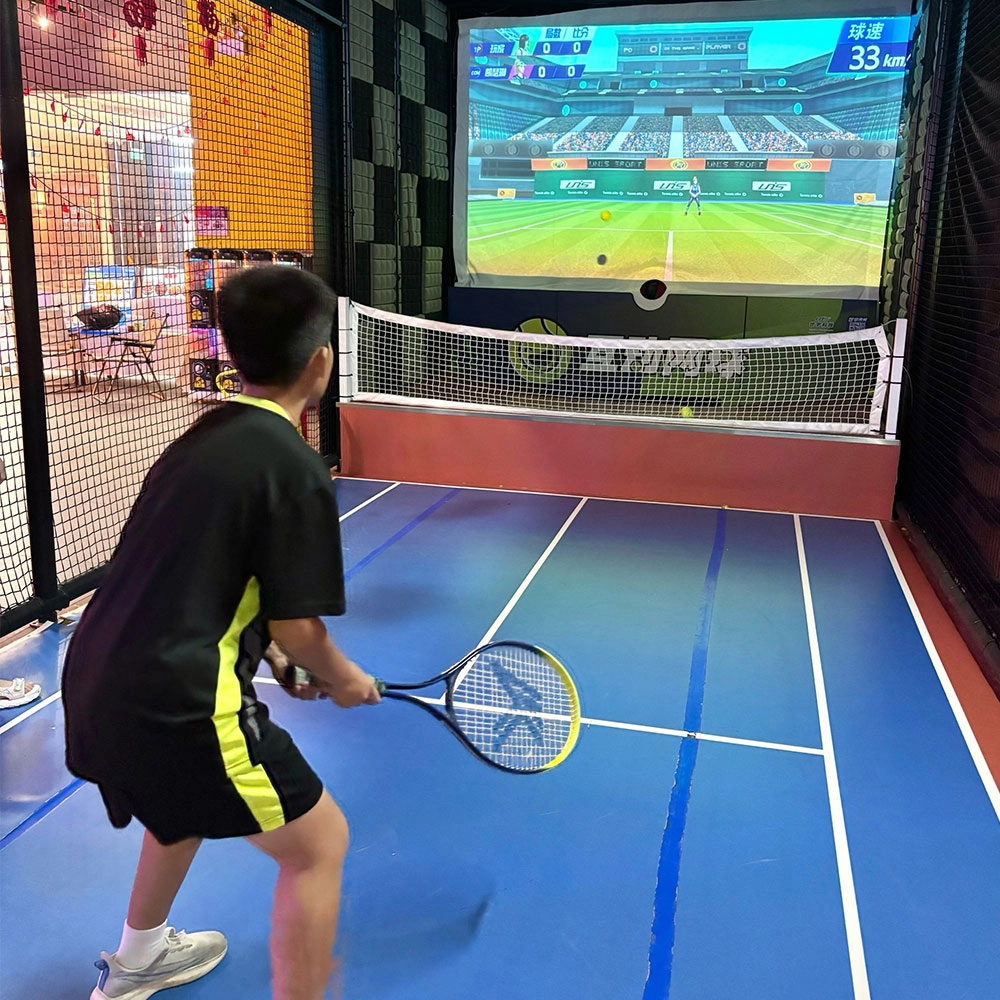
Indoor Tide Play Simulation Tennis Equipment
FUNTECH is full of fun and exciting playgrounds! With high-definition scene projection, force feedback racket, and intelligent scoring system, the simulated tennis equipment in the indoor arcade realizes immersive sports experiences and diversified interactive play, combining the advantages of safety and ease of use with high operational efficiency.
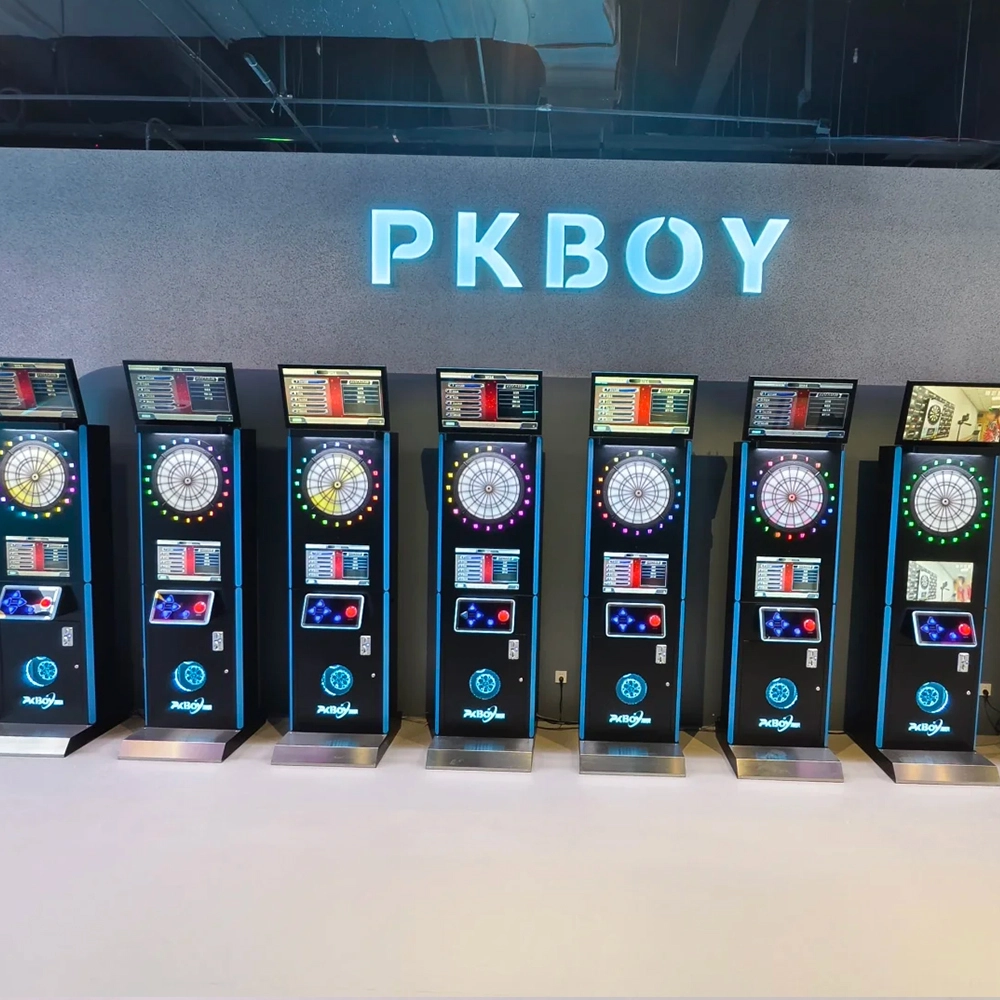
Dart Machines Bar Dart Machines
Joy Power is full of fun and excitement in the playground! The dart machine is suitable for all kinds of places, whether it is a bar, restaurant, KTV, or other entertainment venue, or a sports shop, club, or family leisure space, and can be perfectly adapted. In commercial venues, holding individual and team darts tournaments from time to time can attract more customers and increase the popularity and revenue of the venue, supplemented by various preferential activities, which can directly promote consumption and form a cycle of consumption of all the goods in the shop.
Ready to take your venue to the next level?
Leave us a message here, and our team will get back to you promptly.
Whether you're interested in custom orders, technical specifications, or partnership opportunities, we're here to assist you.
© 2025 FUNTECH ALL RIGHTS RESERVED

Weixia Lei
Fun_Tech-s
fun_tech20