
How to evaluate play modes in an arcade dart machine for sale?
- 1. How can I verify a vendor's claim of “multi-mode” or “league-ready” features on an arcade dart machine for sale before purchase?
- 2. What practical tests can I run onsite to measure scoring sensor accuracy and latency on an arcade dart machine for sale?
- 3. How do I evaluate which play modes will maximize dwell time and revenue for my venue type?
- 4. How can I test whether a machine's “adaptive difficulty” or “AI-assisted” modes are fair and truly skill-based?
- 5. What is the maintenance burden of advanced play modes (networked leaderboards, touchscreens, remote tournaments) on an arcade dart machine for sale?
- 6. How do I determine which play modes in an arcade dart machine for sale are best suited for my venue type (bar, FEC, arcade, hotel)?
1. How can I verify a vendor's claim of “multi-mode” or “league-ready” features on an arcade dart machine for sale before purchase?
Vendors often market machines as “multi-mode” or “league-ready,” but the real value lies in operator control, data export, and configuration depth. To validate claims on an electronic dartboard arcade or digital dart machine, follow this checklist during a demo or factory visit:
- Admin access: Ask for administrator login to the backend. Confirm you can create, edit, and delete game modes—check how many custom presets are allowed and whether settings are saved per cabinet.
- Custom game creation: Attempt to build a custom game (for example, a modified 701 with custom doubles rules). A true multi-game dartboard will let you adjust scoring rules, time limits, player counts, team settings, and win conditions.
- League/tournament tools: Verify tournament scheduling, bracket generation, and match import/export. Ask to see league mode in action: does it support round-robin, Swiss, and knockout formats? Can you assign home/away locations and print/export standings?
- Operator-set monetization: Confirm coin-op and cashless payment integration and whether play modes can be tied to different pricing (e.g., practice mode free for X minutes, competitive mode requires credit).
- Remote management & firmware updates: Check if software updates can be deployed centrally to multiple cabinets. A networked arcade game dart machine for sale with a management dashboard reduces onsite service time.
- Documentation and SDK/API: Request API docs or at least CSV/JSON export examples for match logs and player stats. This is essential for integrating leaderboards with venue websites or third-party tournament systems.
Red flags: mode claims without visible admin controls, modes limited to prepackaged presets only, or no export/logging facility. If you plan to buy arcade dart machines in quantity for FECs, bars, or leagues, insist on seeing full admin workflows and exportable logs during vendor demos.
2. What practical tests can I run onsite to measure scoring sensor accuracy and latency on an arcade dart machine for sale?
Sensory reliability is the backbone of an electronic dartboard arcade. Manufacturers use optical, magnetic, or pressure sensors — each has different failure modes. Use this pragmatic test protocol at the demo:
- Controlled spot test: Mark 10 consistent target locations (single, double, treble, bull, and outer regions). Have one experienced player throw 30 darts to those marked spots across multiple rounds. Record manual scores and compare to the machine's recorded scores for each throw.
- Error rate calculation: Count mismatches (misreads, no-reads, false-reads). Industry expectation for commercial-grade machines is high reliability; target an observed error rate of less than 1–2% during your test. Ask the vendor for their internal field failure rate or sensor MTBF (mean time between failures).
- Latency test: Use a smartphone video at 120 fps or higher to measure time between dart impact and on-screen score update. Aim for sub-200 ms latency for a natural player experience; anything over ~300 ms feels sluggish and hurts perceived responsiveness.
- Edge-case tests: Toss darts that graze wires or land between segments, and throw with slightly different velocities. This reveals sensor edge handling and the board’s dead-zone tolerance.
- Repeatability and temperature test: If possible, run a short play session for 30–60 minutes to see if misreads increase as components heat or after repeated impacts.
Also ask about replaceable sensor modules, spare parts availability, and whether the vendor logs sensor errors in diagnostics. For venues where uptime matters, prefer a coin-operated dart machine for sale with hot-swappable sensor boards and clear diagnostic error codes.
3. How do I evaluate which play modes will maximize dwell time and revenue for my venue type?
Different venues (bar, family entertainment center, arcade) require different game mixes. When evaluating an arcade dart machine for sale, use these business-driven criteria:
- Engagement drivers: Competitive head-to-head modes, team formats, and progressive tournaments typically increase session length and return visits versus simple practice modes. Machines with integrated leaderboards and matchmaking sustain longer dwell time.
- Monetization flexibility: Check if modes can be priced differently—e.g., quick practice (1 credit), competitive match (2 credits), tournament entry (special credit + ticket payout). Machines that support ticket redemption or configurable prizes also perform better in family entertainment centers.
- Social/visual appeal: Modes that trigger celebratory animations, lights, or ticket bonuses when milestones are hit increase social sharing and impulse plays. Evaluate the cabinet’s audiovisual feedback for viral appeal in social venues.
- Analytics-backed proof: Ask the vendor for anonymized case studies, cabinet KPIs (average plays per day, average session length, revenue per play) for similar venues. If they can't provide data, treat that as a weak signal.
- Modular mode library: A live-updatable mode library lets you trial new formats that might boost ARPU without replacing hardware. Machines that receive periodic mode updates typically maintain higher lifetime revenue.
Measure ROI before purchasing: calculate expected coin-in per day based on your foot traffic and preferred modes, and ensure the vendor’s recommended monetization strategy aligns with your venue (for example, ticket redemption and family-friendly modes for FECs; tournament and timed head-to-head for bars).
4. How can I test whether a machine's “adaptive difficulty” or “AI-assisted” modes are fair and truly skill-based?
Skill-based gaming needs to be transparent and provably consistent. To evaluate fairness on a candidate digital dart machine, follow this protocol:
- Understand the algorithm basics: Request vendor documentation describing the adaptive ruleset (does it scale opponent skill, alter scoring windows, or modify target sizes?). If the vendor refuses to share high-level logic, request logs demonstrating consistent behavior over many matches.
- Cross-skill testing: Run identical game sessions with novice, intermediate, and expert players. Track score distributions and any changes in difficulty. A fair adaptive system should make matches competitive but not artificially alter player successes (for instance, by changing scoring thresholds mid-game).
- Telemetry and logs: Ask whether the machine logs raw inputs (timestamped hits and segment IDs) and final scores. Raw logs allow independent verification and troubleshooting of perceived unfairness.
- Player perception test: Invite 10–15 players across skill levels and collect feedback. If advanced players consistently report unnatural scoring or novices feel “rubber-banded,” the adaptive model is suspect.
- Regulatory compliance: For pay-to-play skill games, confirm the vendor’s approach complies with local skill-game regulations (some jurisdictions require transparent odds and no hidden handicaps). Check for certifications or legal guidance the vendor provides for cashless and prize-linked play.
Prefer machines where adaptive modes are operator-configurable (on/off, sensitivity level) and where analytics are exportable for audit. That reduces operator risk and helps maintain trust with players.
5. What is the maintenance burden of advanced play modes (networked leaderboards, touchscreens, remote tournaments) on an arcade dart machine for sale?
Advanced modes add software complexity and hardware points of failure. To evaluate maintenance impact, ask these targeted questions and tests:
- Network design and resilience: Does the machine require constant internet access for core modes, or only for optional leaderboards? Machines that degrade gracefully offline are preferable for venues with intermittent connectivity.
- Remote diagnostics: Confirm the vendor provides a cloud dashboard with error logs, uptime reports, and remote reboot capability. This reduces on-site technician visits.
- Component modularity: Verify that touchscreens, PCB sensor modules, and payment modules are modular and user-replaceable. Ask for part numbers and the expected lead time for spares in your region.
- Service SLA and training: Ask about RMA turnaround times, local service partners, training materials for venue staff, and whether basic repairs (screen swap, sensor replacement) can be done in under an hour by trained staff.
- Firmware update safeguards: Ensure updates can be rolled back in case of failure and that updates are digitally signed to prevent unauthorized code. Check whether updates are pushed automatically or require operator approval.
Operationally, machines with a robust operator dashboard, hot-swappable modules, and clear diagnostics reduce total cost of ownership. For multi-site operators, networked dashboard analytics can lower technician dispatches and mean time to repair.
6. How do I determine which play modes in an arcade dart machine for sale are best suited for my venue type (bar, FEC, arcade, hotel)?
Match play modes to venue goals—revenue, dwell time, family suitability, or tournament hosting. Use this venue-fit matrix when evaluating a digital dart machine:
- Bars and pubs: Prioritize quick head-to-head, timed rounds, and league/tournament modes. Features to look for: compact cabinet footprint, cashless payment or coin-op, sound-level controls, and social display outputs for TVs.
- Family Entertainment Centers (FECs): Seek ticket redemption integration, kid-friendly rulesets, multi-player team modes, and safety features (short-throw detection). Modes should be easy to understand and offer progressive prizes.
- Arcades and FECs with mixed audiences: Value modular mode libraries, multi-game options, and networked leaderboards to keep diverse player types engaged. Multi-language UI is a plus in tourist locations.
- Hotels, casinos, and resorts: Look for tournament-ready modes, VIP account integration, remote billing, and white-labeling options. Verify electrical, fire, and safety certifications (CE, FCC, local approvals) for installation.
- Education and corporate: If used for events or team-building, prioritize practice/skill-tracking modes, anonymized analytics exports, and the ability to set private tournaments.
Test each mode with your typical customer profile in mind. Ask the vendor for regional case studies—machines performing well in a busy U.S. sports bar may be configured differently than those in a family center in Europe. Buy arcade dart machines for sale with mode sets that map directly to your venue’s KPIs.
Concluding summary of advantages: Choosing an arcade dart machine for sale with configurable, well-documented play modes delivers measurable advantages: higher engagement and dwell time, flexible monetization paths (coin, cashless, tickets), easier tournament and league hosting, and lower long-term maintenance through remote diagnostics and modular components. Machines that expose logs, support firmware updates, and offer operator dashboards reduce operational risk and improve customer satisfaction.
For a personalized quote and to arrange a demo of league-ready, multi-mode digital dart machines, contact us at vicky@funtechgame.com or visit our site at www.funtechgame.com.
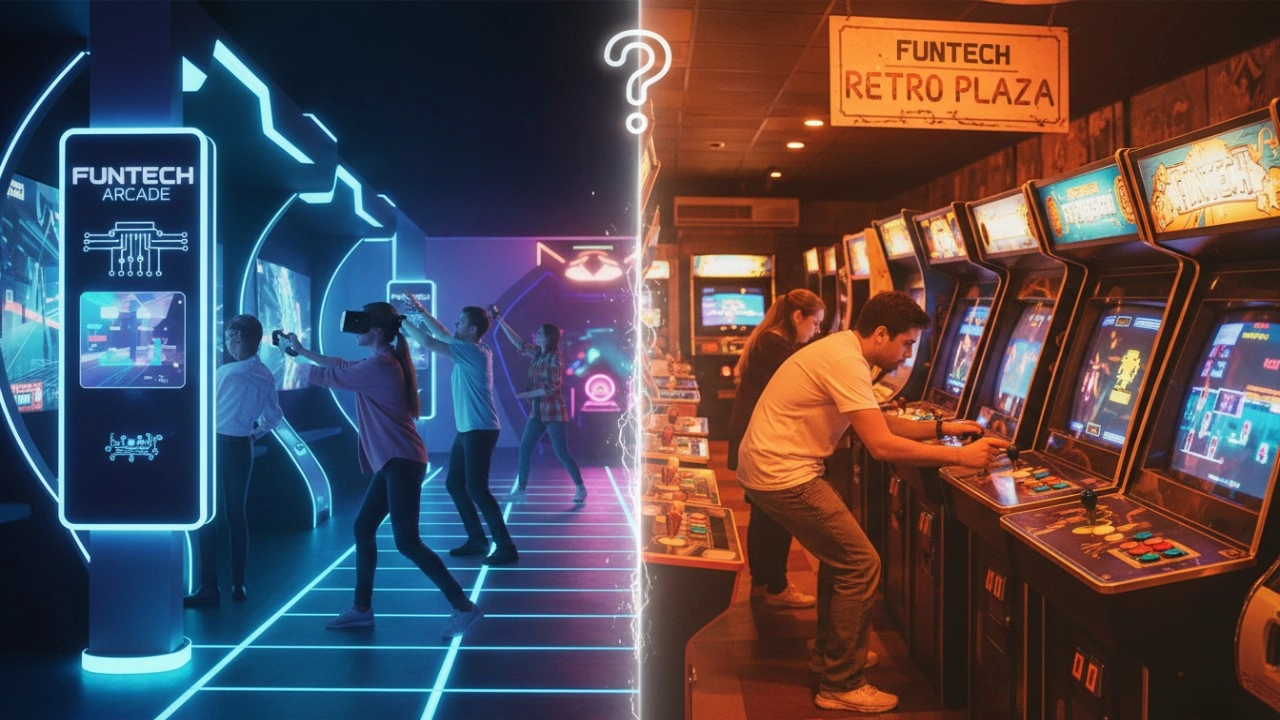
Interactive Sports Arcade vs Traditional Arcade Machines: Key Differences (2026 Guide)
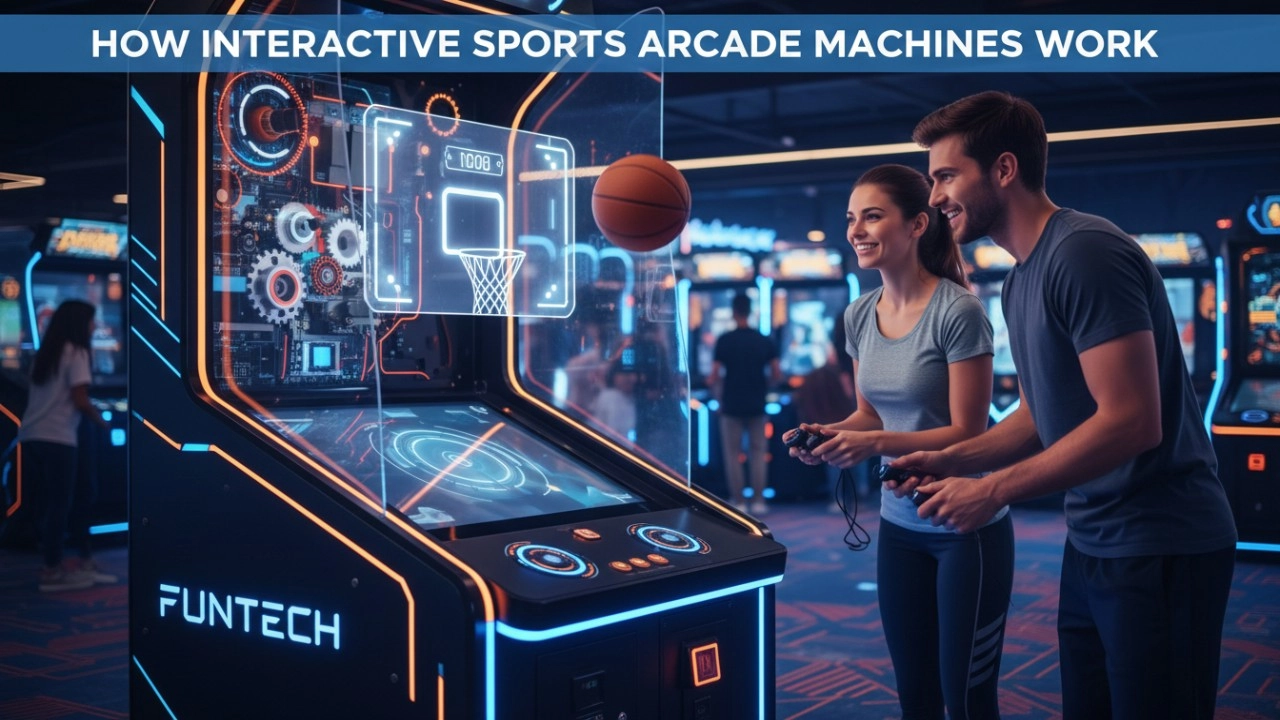
How Interactive Sports Arcade Machines Work (Sensors, Projection & AI) - 2026 Guide
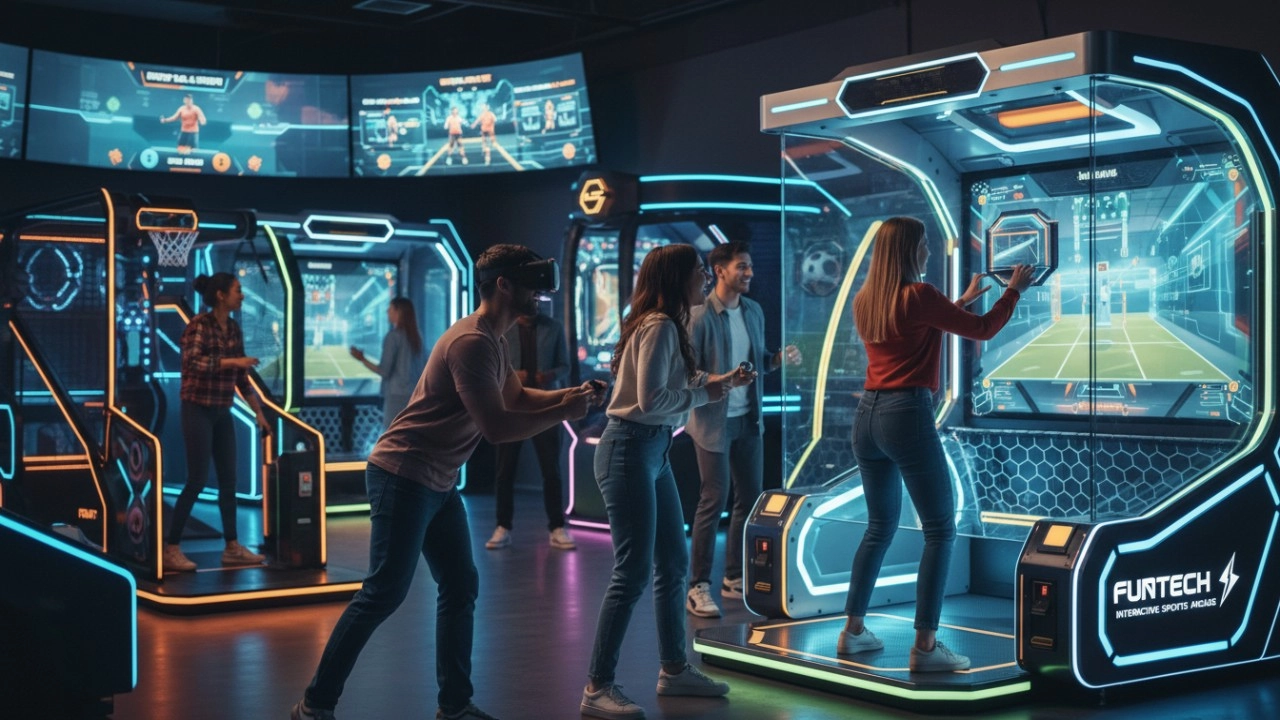
What Defines Interactive Sports Arcade Equipment in 2026?
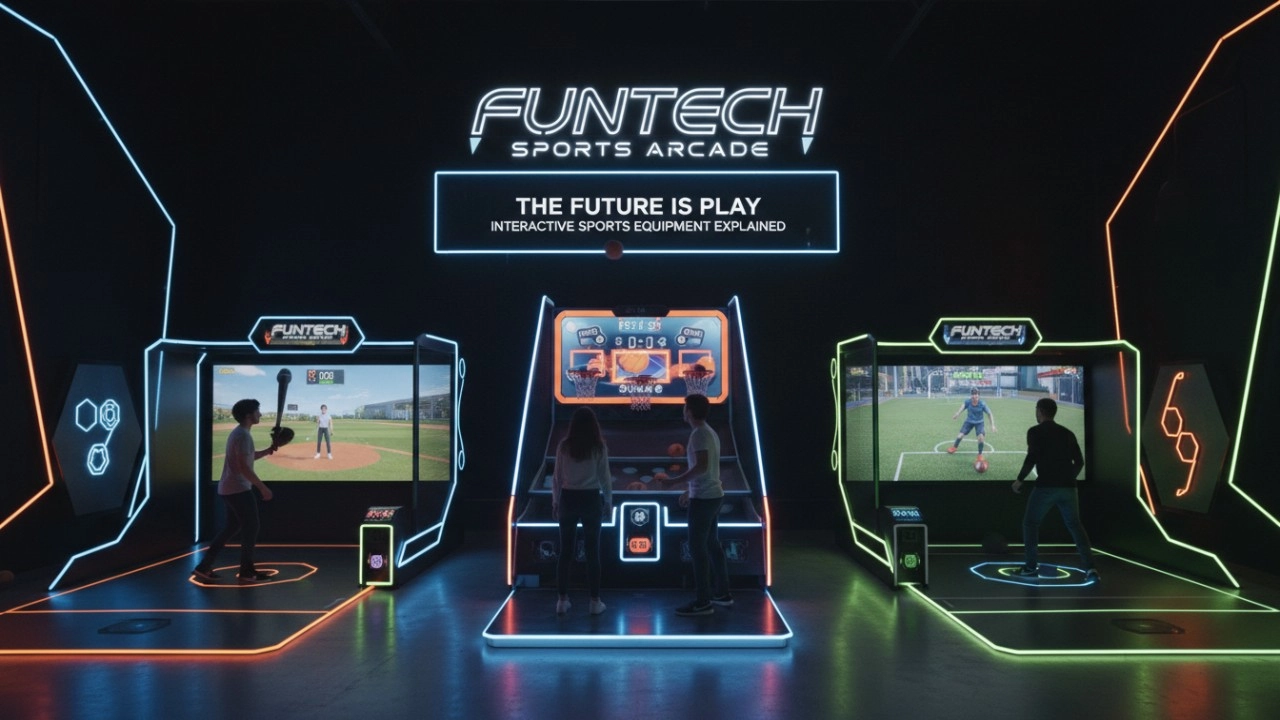
What Is Interactive Sports Arcade Equipment? Complete Beginner Guide (2026)
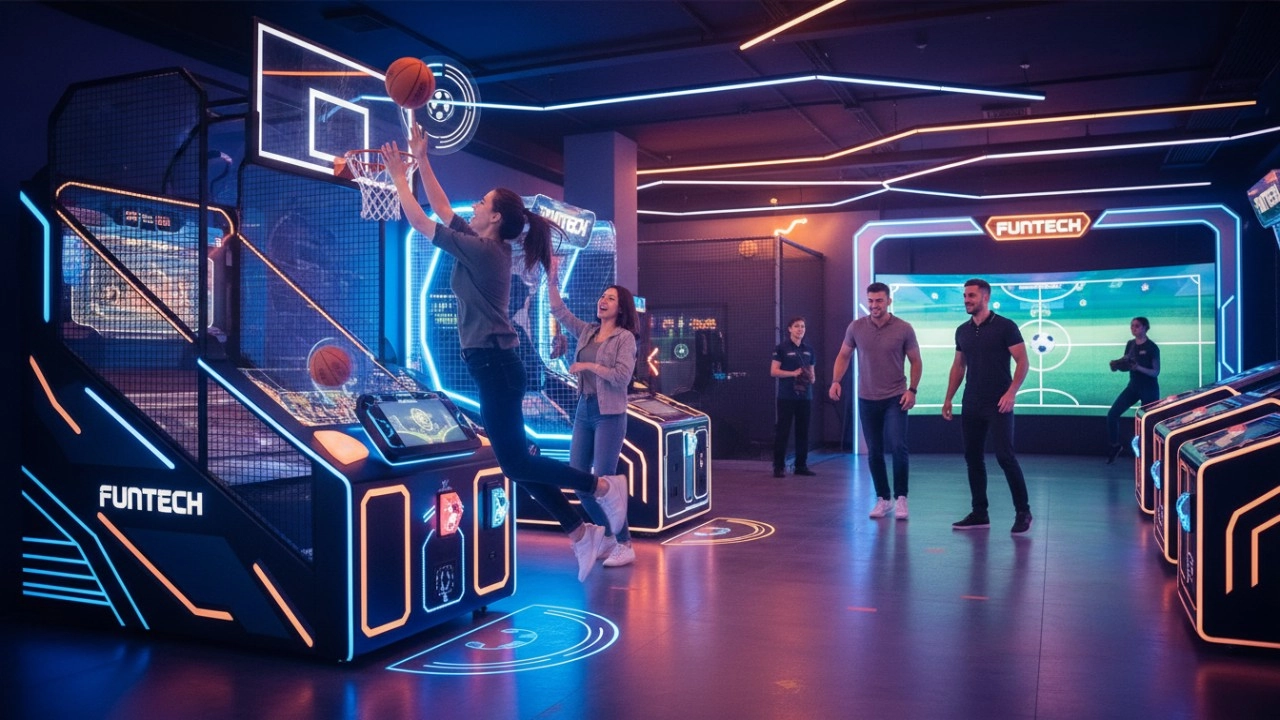
The Ultimate Guide to Interactive Sports Arcade Equipment for Commercial Entertainment (2026 Edition)
Holographic Light and Shadow Restaurant
What are the technical difficulties of holographic projection?
One is the resolution and clarity of the image. To achieve high-resolution and high-definition 3D image reproduction, advanced optical equipment and algorithms are required. The second is the control of light interference and diffraction, which requires precise control of the propagation and interference conditions of light rays to ensure the stability and accuracy of the image. The third is the complexity and cost of the system. Holographic projection systems are usually quite complex, including optical components, light sources, control systems, etc., with high costs, which limits their widespread adoption.
Interactive Rollerball
What are the after-sales services after purchasing the equipment?
Generally, a 1-year warranty is provided. During the warranty period, parts damaged due to quality problems, such as motor failure, display problems, etc., will be repaired or replaced free of charge. There will also be technical support, including equipment installation and debugging guidance, operation training, to ensure the smooth use of the user, after-sales response time is usually within 24 - 48 hours.
How to attract customers when operating the program in shopping malls?
Create a cool venue decoration style and incorporate trendy elements, such as fluorescent light strips and anime-themed murals. o Launch diversified marketing models such as parent-child packages and couple packages, combined with time-limited promotional activities, such as half-price experience in the first three days of opening, to attract different groups of people such as families and couples to stop by and participate.
Golf Simulator
What are the after-sales services after purchasing the equipment?
Generally, a 1-year warranty is provided. During the warranty period, parts damaged due to quality problems, such as motor failure, display problems, etc., will be repaired or replaced free of charge. There will also be technical support, including equipment installation and debugging guidance, operation training, to ensure the smooth use of the user, after-sales response time is usually within 24 - 48 hours.
Football Simulator
Are there a lot of game modes in soccer simulation?
Very rich! There is a league mode which is exciting and can compete with players from all over the world, and there is also a leisure and fun game which is suitable for parents and children to share fun time, so as to satisfy the needs of different players.
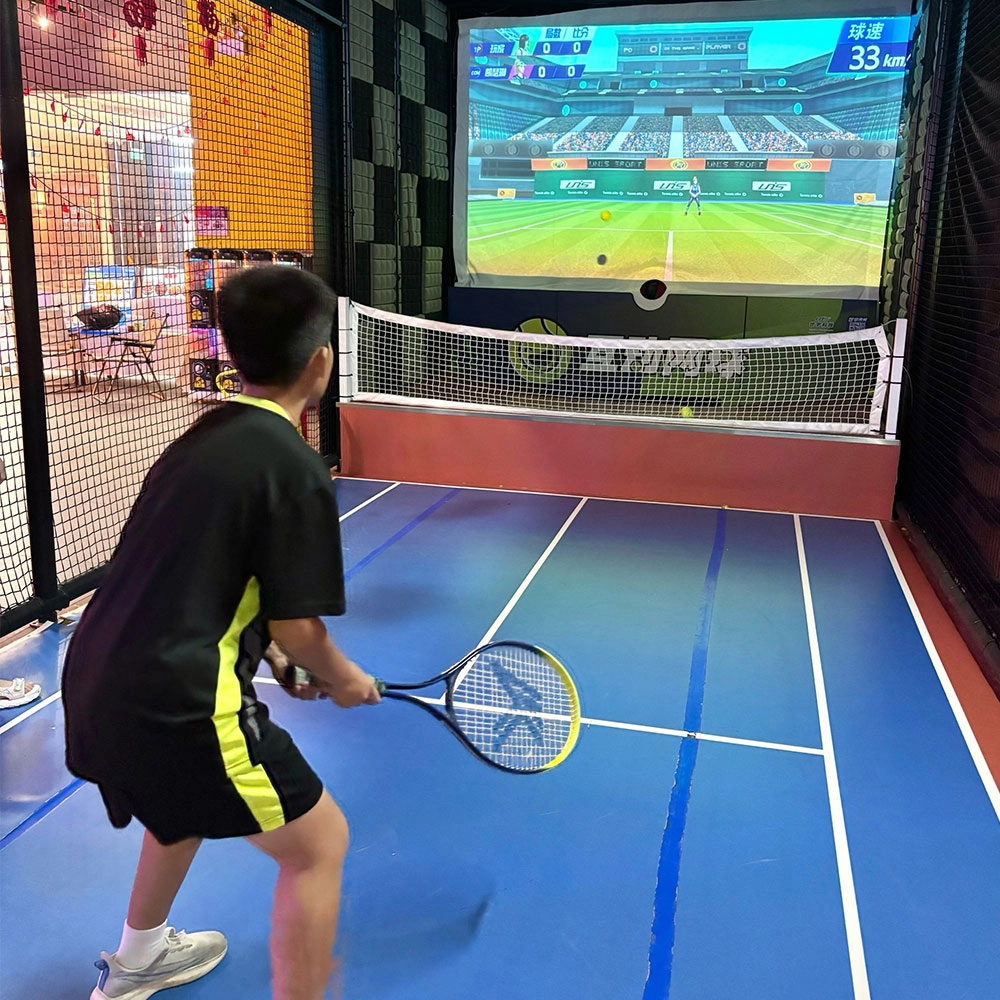
Indoor Tide Play Simulation Tennis Equipment
FUNTECH is full of fun and exciting playgrounds! With high-definition scene projection, force feedback racket, and intelligent scoring system, the simulated tennis equipment in the indoor arcade realizes immersive sports experiences and diversified interactive play, combining the advantages of safety and ease of use with high operational efficiency.
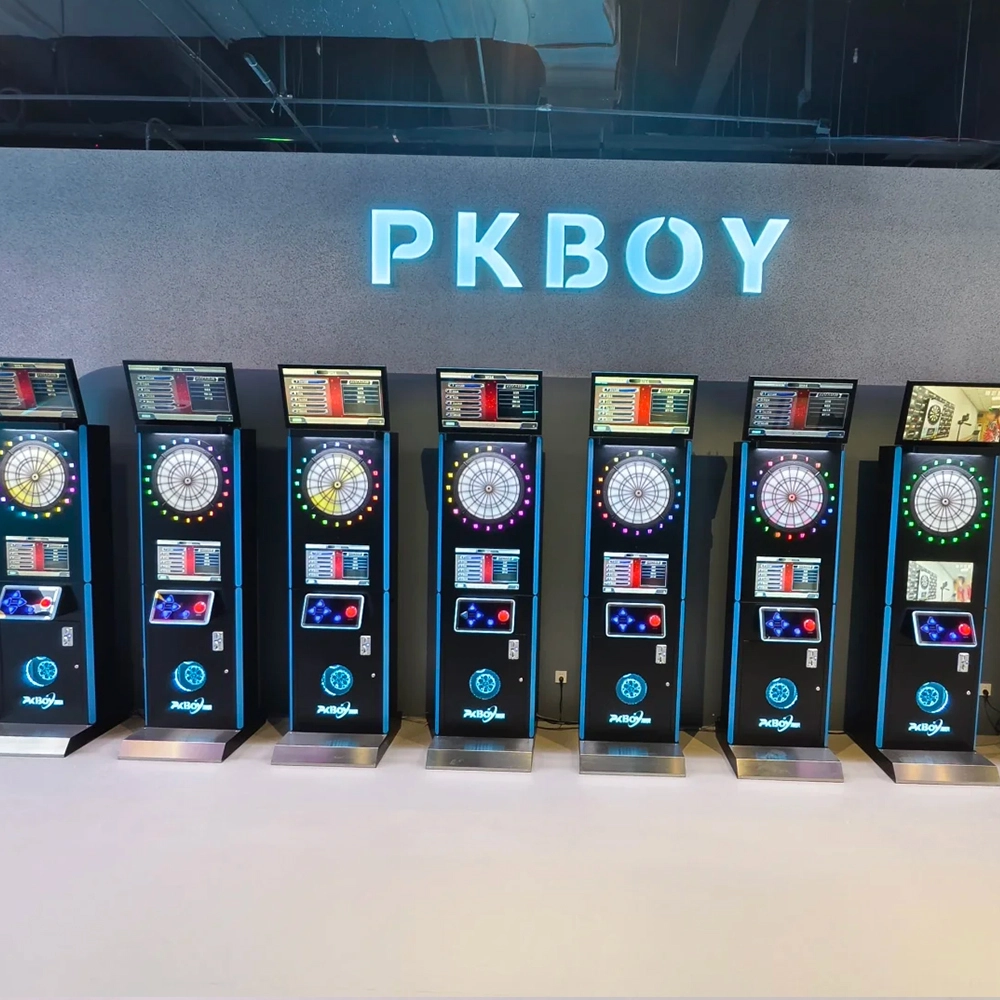
Dart Machines Bar Dart Machines
Joy Power is full of fun and excitement in the playground! The dart machine is suitable for all kinds of places, whether it is a bar, restaurant, KTV, or other entertainment venue, or a sports shop, club, or family leisure space, and can be perfectly adapted. In commercial venues, holding individual and team darts tournaments from time to time can attract more customers and increase the popularity and revenue of the venue, supplemented by various preferential activities, which can directly promote consumption and form a cycle of consumption of all the goods in the shop.
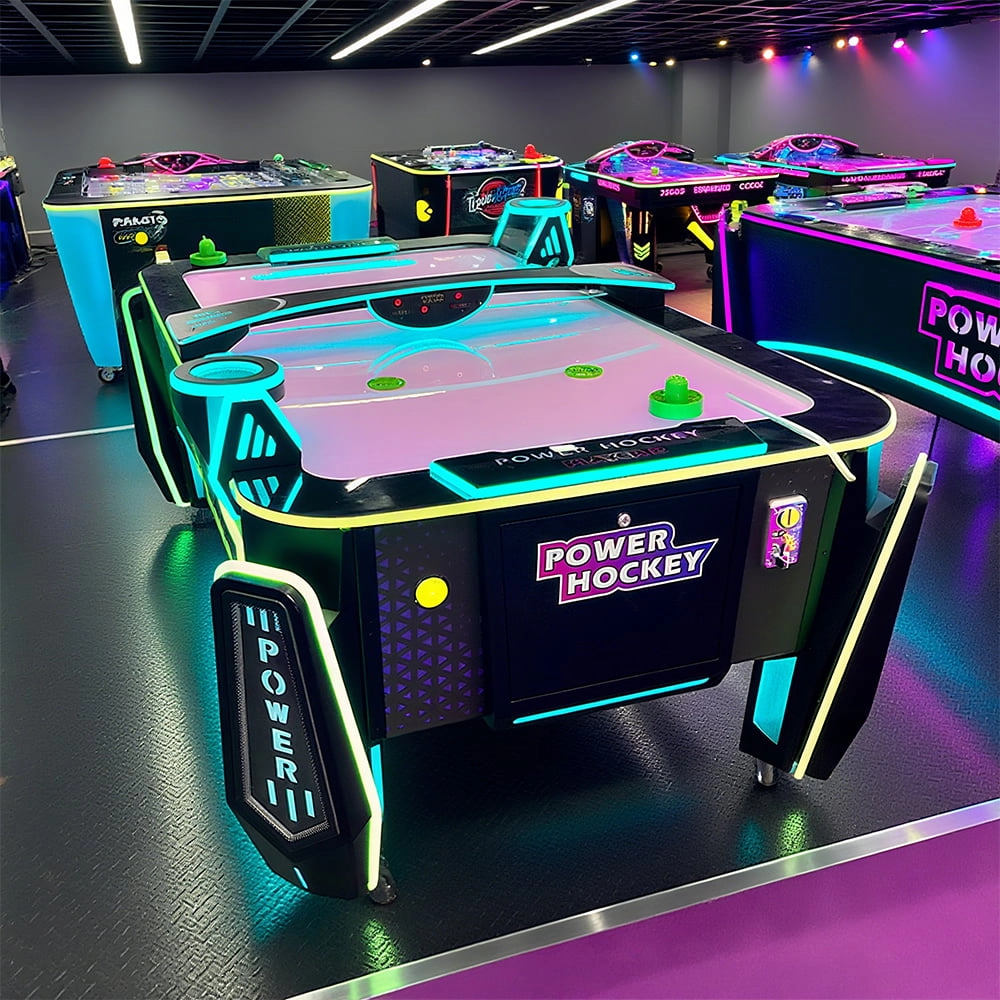
Arcade Hockey
FUNTECH is full of fun and exciting playgrounds! Air hockey, also known as air hockey, is a two-player competitive arcade game comprising a smooth, perforated playing surface, lightweight hockey sticks, a plastic puck, and an electronic scoreboard.
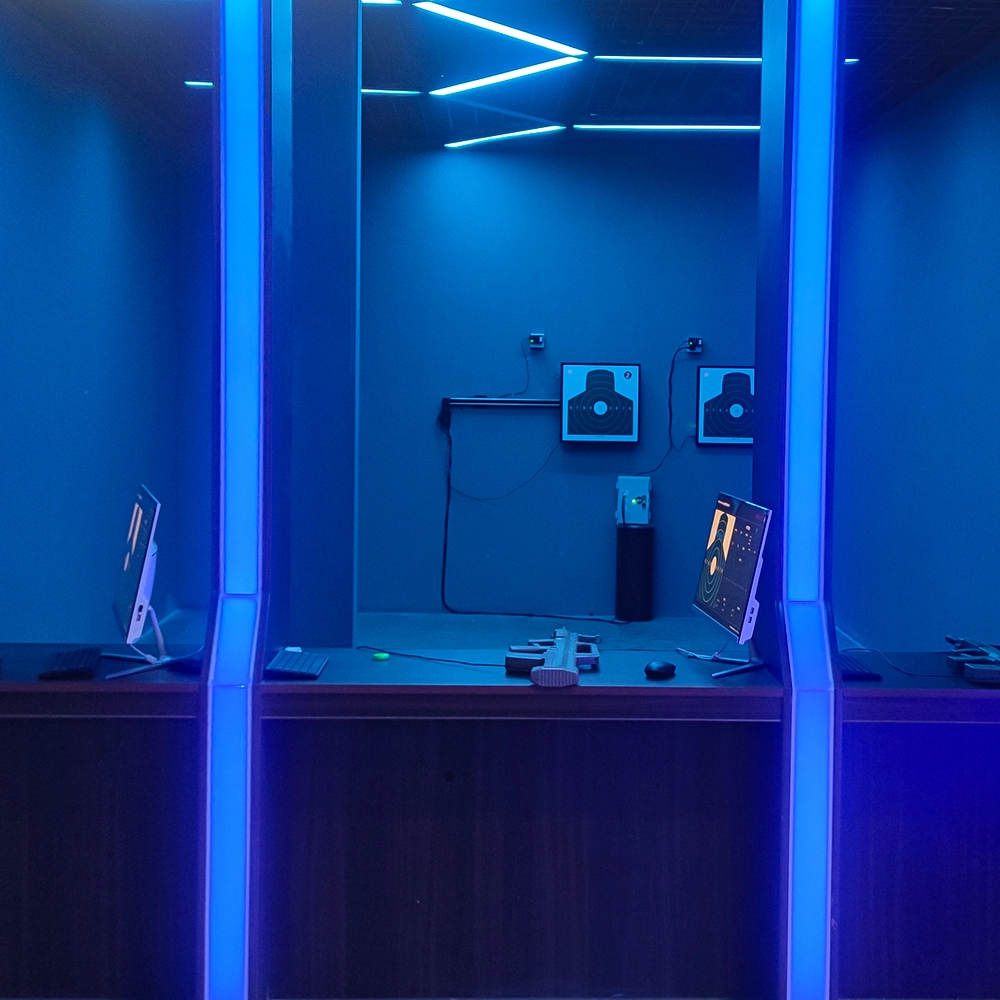
Infrared Shooting
Highly simulated simulation training analysis equipment, with advanced design concepts, fast system development, ease of operation and use, stable technical performance, less consumption of training, site dependence on a small group training is highly interesting, safe, and reliable, and other outstanding features. Product design to solve the basic skills of light weapons precision shooting as a starting point, to improve the safety of shooting training and training efficiency as the fundamental purpose, highlighting the simulation, information technology, and combat training requirements, can be in small indoor and outdoor venues and does not use live ammunition to complete the basic shooting training.
Ready to take your venue to the next level?
Leave us a message here, and our team will get back to you promptly.
Whether you're interested in custom orders, technical specifications, or partnership opportunities, we're here to assist you.
© 2025 FUNTECH ALL RIGHTS RESERVED

Weixia Lei
Fun_Tech-s
fun_tech20